Results by title
8642 books match the query '20th Century' and 1764 start with t
The Age of Aryamehr
Late Pahlavi Iran and Its Global EntanglementsEdited by Roham Alvandi
Gingko, 2025
The reign of the last Shah of Iran, Mohammad Reza Pahlavi (1941–79), marked the high point of Iran’s global interconnectedness. Never before had Iranians felt the impact of global political, social, economic, and cultural forces so intimately in their national and daily lives, nor had Iranian actors played such an important global role – on battlefields, barricades, and in board rooms far beyond Iran’s borders. Iranian intellectuals, technocrats, politicians, workers, artists, and students alike were influenced by the global ideas, movements, markets, and conflicts that they also helped to shape.
From the launch of the Shah’s White Revolution in 1963 to his overthrow in the popular revolution of 1978–79, Iran saw the longest period of sustained economic growth that the country had ever experienced. An entire generation took its cue from the shift from oil consumption to oil production to dream of, and aspire to, a modernized Iran, and the history of Iran in this period has tended to be presented as a prologue to the revolution. Those histories usually locate the political, social, and cultural origins of the revolution firmly within a national context, into which global actors intruded as Iranian actors retreated. While engaging with that national narrative, this volume is concerned with Iran’s place in the global history of the 1960s and ’70s. It examines and highlights the transnational threads that connected Pahlavi Iran to the world, from global traffic in modern art and narcotics to the embrace of American social science by Iranian technocrats and the encounter of European intellectuals with the Iranian Revolution.
The Age of the Gods
Christopher Dawson
Catholic University of America Press, 2012
The Akhmatova Journals
Volume 1: 1938-1941Lydia Chukovskaya
Northwestern University Press, 2002
The Allure of Labor
Workers, Race, and the Making of the Peruvian StatePaulo Drinot
Duke University Press, 2011
Although the vast majority of laboring peoples in Peru were indigenous, in the minds of social reformers indigeneity was not commensurable with labor: Indians could not be workers and were therefore excluded from the labor policies enacted in the 1920s and 1930s and, more generally, from elite conceptions of industrial progress. Drinot shows how the incommensurability of indigeneity with labor was expressed in the 1920 constitution, in specific labor policies, and in the activities of state agencies created to oversee collective bargaining and provide workers with affordable housing, inexpensive food, and social insurance. He argues that the racialized assumptions of the modernizing Peruvian state are reflected in the enduring inequalities of present-day Peru.
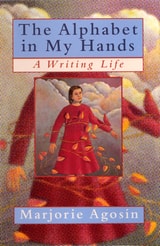
The Alphabet in My Hands
A Writing LifeAgosín, Marjorie
Rutgers University Press, 1999
Marjorie Agosín writes of a beloved childhood nanny: "Since I was Jewish she baptized me with holy water brought forth from the fonts of nearby churches. She told me to stay very still so I wouldn't sprout horns. . . . I was somewhere between taciturn and happy gazing into the mirror as if approaching the edge of a cliff . . . and I watched myself in the deep, transparent veil of this night of all nights." Many of the themes expressed in this vignette—cultural dissonance, family, and community—are poetically intertwined throughout The Alphabet in My Hands. Agosín takes us on a personal journey of discovery that is as much internal reflection as it is an exodus across continents and decades.
Agosín's childhood and early adolescence were spent with her Jewish family in Chile. While her family raised her to regard her Jewish heritage with loving awareness, they also participated in the dominant Catholic culture—an aunt organized Easter egg hunts and her mother admired the beauty of Chile's Catholic churches. The young Agosín became keenly aware of her dual identity in her country, both as a participant and an outsider.
The second half of The Alphabet in My Hands recounts the events that forced her family to emigrate to America: the overthrow of Salvador Allende by General Augusto Pinochet. Agosín writes of her new life in Athens, Georgia, of the sudden loss of all that was familiar. Ostracized as an emigrant—a "non-white" with a strange foreign accent—her high school years were made even more painful by the news from Chile: prisoners taken and classmates disappearing or shot.
Years later, Agosín goes back to Chile and she travels there with her own children. As she stares down at her old homeland from the plane, she writes: "Why do I love this place that forced us into exile, that punished my father for being a Jew?" And in the final chapter of The Alphabet in My Hands, this award-winning poet addresses two important topics: her current residence in New England and the central role of writing and literature in her life.

The Alpine Enlightenment
Horace-Bénédict de Saussure and Nature’s SensoriumKathleen Kete
University of Chicago Press, 2024
In The Alpine Enlightenment, historian Kathleen Kete takes us into the world of the Genevan geologist, physicist, inventor, and mountaineer Horace-Bénédict de Saussure. During his prodigious climbs into the upper ranges of the Alps, Saussure focused intensely on the natural phenomena he encountered—glaciers, crevasses, changes in the weather, and shifts in the color of the sky—and he described with great precision what he saw, heard, and touched. Kete uses Saussure’s evocative writings, which emphasized above all physical engagement with the earth, to uncover not just how people during the Enlightenment thought about nature, but how they experienced it. As Kete shows, Saussure thought with and through his body: he harnessed his senses to understand the forces that shaped the world around him. In so doing, he offered a vision of nature as worthy of respect independent of human needs, anticipating present-day concerns about the environment and our shared place within it.
The Ambuiguity of Being
Lonergan and the Problems of the SupernaturalJonathan R. Heaps
Catholic University of America Press, 2024
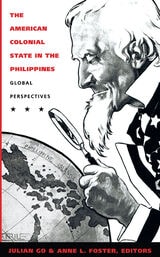
The American Colonial State in the Philippines
Global PerspectivesJulian Go and Anne L. Foster, eds.
Duke University Press, 2003
Written by social scientists and historians, these essays investigate various aspects of American colonial government through comparison with and contextualization within colonial regimes elsewhere in the world—from British Malaysia and Dutch Indonesia to Japanese Taiwan and America's other major overseas colony, Puerto Rico. Contributors explore the program of political education in the Philippines; constructions of nationalism, race, and religion; the regulation of opium; connections to politics on the U.S. mainland; and anticolonial resistance. Tracking the complex connections, circuits, and contests across, within, and between empires that shaped America's colonial regime, The American Colonial State in the Philippines sheds new light on the complexities of American imperialism and turn-of-the-century colonialism.
Contributors. Patricio N. Abinales, Donna J. Amoroso, Paul Barclay, Vince Boudreau, Anne L. Foster, Julian Go, Paul A. Kramer
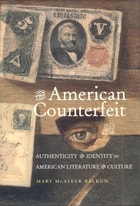
The American Counterfeit
Authenticity and Identity in American Literature and CultureMary McAleer Balkun
University of Alabama Press, 2006
Focusing on texts written between 1880 and 1930, Mary McAleer Balkun explores the concept of the “counterfeit,” both in terms of material goods and invented identities, and the ways that the acquisition of objects came to define individuals in American culture and literature. Counterfeiting is, in one sense, about the creation of something that appears authentic—an invented self, a museum display, a forged work of art. But the counterfeit can also be a means by which the authentic is measured, thereby creating our conception of the true or real.
When counterfeiting is applied to individual identities, it fosters fluidity in social boundaries and the games of social climbing and passing that have come to be representative of American culture: the Horatio Alger story, the con man or huckster, the social climber, the ethnically ambiguous.
Balkun provides new readings of traditional texts such as The Great Gatsby, Adventures of Huckleberry Finn, and The House of Mirth, as well as readings of less-studied texts, such as Walt Whitman’s Specimen Days and Nella Larsen’s Passing. In each of these texts, Balkun locates the presence of manufactured identities and counterfeit figures, demonstrating that where authenticity and consumerism intersect, the self becomes but another commodity to be promoted, sold, and eventually consumed.
The American Essay in the American Century
Ned Stuckey-French
University of Missouri Press, 2011

The American Girl Goes to War
Women and National Identity in U.S. Silent FilmLiz Clarke
Rutgers University Press, 2022
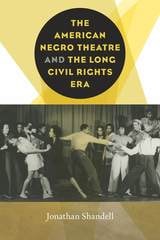
The American Negro Theatre and the Long Civil RIghts Era
Jonathan Shandell
University of Iowa Press, 2018
Jonathan Shandell provides the first in-depth study of the historic American Negro Theatre (ANT) and its lasting influence on American popular culture. Founded in 1940 in Harlem, the ANT successfully balanced expressions of African American consciousness with efforts to gain white support for the burgeoning civil rights movement. The theatre company featured innovative productions with emerging artists—Sidney Poitier, Harry Belafonte, Ruby Dee, and many others—who would become giants of stage, film, and television. In 1944, the ANT made theatrical history by creating the smash hit Anna Lucasta, the most popular play with an African American cast ever to perform on Broadway. Starting from a shoestring budget, the ANT grew into one of the most important companies in the history of African American theatre. Though the group folded in 1949, it continued to shape American popular culture through the creative work of its many talented artists.
Examining oral histories, playbills, scripts, production stills, and journalistic accounts, Shandell gives us the most complete picture to date of the theatre company by analyzing well-known productions alongside groundbreaking and now-forgotten efforts. Shedding light on this often-overlooked chapter of African American history, which fell between the New Negro Renaissance and the Black Arts Movement, Shandell reveals how the ANT became a valued community institution for Harlem—an important platform for African American artists to speak to racial issues—and a trailblazer in promoting integration and interracial artistic collaboration in the U.S. In doing so, Shandell also demonstrates how a small amateur ensemble of the 1940s succeeded in challenging, expanding, and transforming how African Americans were portrayed in the ensuing decades. The result is a fascinating and entertaining examination that will be of interest to scholars and students of African American and American studies and theatre history, as well as popular culture enthusiasts.
The American Newsroom
A History, 1920-1960Will Mari
University of Missouri Press, 2023
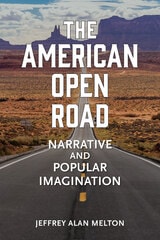
The American Open Road
Narrative and Popular ImaginationJeffrey Alan Melton
University of Alabama Press, 2025
WINNER OF THE ELIZABETH AGEE PRIZE IN AMERICAN LITERATURE
The rearview mirror perspective of a road trip across the American “open road.”
The American Open Road: Narrative and Popular Imagination offers a rich exploration of how the mythos of the open road has shaped, and been shaped by, American culture. Beginning with the post–World War II boom that solidified car culture as central to American life, Melton reflects on how roads, automobiles, and landscapes have been represented in literature, film, and other cultural texts, highlighting the interplay between mobility and narrative.
Drawing on a wide range of cultural texts, from traditional classic road novels and cinematic presentations, to advertisements, poetry, and prose, Melton examines how the open road functions as a symbol of autonomy, reinvention, and resistance. He highlights how road narratives have also exposed deeper tensions in American life—especially around race, gender, and power—and how historically marginalized voices have used the road to reclaim space and tell new stories.
From the romanticism of Route 66 to the political edge of modern road films, The American Open Road offers a thoughtful, engaging analysis of the narratives that continue to define American identity and longing. For readers interested in cultural history, travel literature, or the enduring pull of the highway, this book offers a compelling view from the passenger seat of America’s most iconic journeys.
The American Philosopher
Conversations with Quine, Davidson, Putnam, Nozick, Danto, Rorty, Cavell, MacIntyre, KuhnGiovanna Borradori
University of Chicago Press, 1993
Giovanna Borradori, in her substantial introduction, explains the history of the analytic movement in America and the home-grown reaction against it. In the late nineteenth and early twentieth centuries, American philosophy was a socially engaged interdisciplinary enterprise. In transcendentalism and pragmatism, then the dominant currents in American thought, philosophy was connected to history, psychology, and public issues. But in the 1930s, the imported European movement of logical positivism redefined philosophical discourse in terms of mathematical logic and theory of language. Under the influence of this analytic view, American philosophy became a professionalized discipline, divorced from public debate and intellectual history and antagonistic to the other, more humanistic tradition of continental thought.
The American Philosopher explores the opposition between analytic and continental thought and shows how recent American work has begun to bridge the gap between the two traditions. Through a reexamination of pragmatism, and through an attempt to understand philosophy in a more hermeneutical way, the participants narrow the distance between America's distinctly scientific philosophy and Europe's more literary approach.
Moving beyond classical analytic philosophy, the participants confront each other on a number of topics. The logico-linguistic orientations of Quine and Davidson come up against the more discursive, interdisciplinary agendas of Rorty, Putnam, and Cavell. Nozick's theory of pluralist anarchism goes face-to-face with the aesthetic neo-foundationalism of Danto. And Kuhn's hypothesis of paradigm shifts is measured against MacIntyre's ethics of "virtues."
Borradori's conversations offer an unconventional portrait of the way philosophers think about their work; scholars and students will not be its only beneficiaries, so will everyone who wonders about the current state of American philosophy.

The American Pipe Dream
Performance of Drug Addiction, 1890-1940Max Shulman
University of Iowa Press, 2022
Chapters look at how theatre, film, and popular culture linked the Chinese immigrant and opium smoking; the early attacks on doctors for their part in the creation of addicts; the legislation of addiction as a criminal condition; the comic portrayals of addiction; the intersection of Black, jazz, and drug cultures through cabaret performance; and the linkage between narcotic inebriation and artistic inspiration. The American Pipe Dream creates active connections between these case studies, demonstrating how this history has influenced our contemporary understanding, treatment, and legislation of drug use and addiction.
The American Poet at the Movies
A Critical HistoryLaurence Goldstein
University of Michigan Press, 1995
As an increasingly popular genre of modern poetry, and one that permits a unique view of this century's dominant art form, the movie poem has needed an explanatory book like this one. As cinema and television continue to wield extraordinary influence over the lives of all Americans, the efforts of poets to understand the visual culture will come to be appreciated as central to the task of modern and postmodern literature. This critical history is an important and timely contribution to the study of American literature and American institutions.
"One of the impressive things about the book is that while pursuing the seemingly narrow category of poems-about-movies, Goldstein is able to raise and illuminate virtually all the key issues surrounding the poetry of the period." - Roger Gilbert, Cornell University
". . . a discerning book, combining criticism and social history. It satisfies scholarly standards while appealing to general readers." - Philip French, coeditor of the Faber Book of Movie Verse
"In this work, [Goldstein] provides a new way of looking at American poets, both familiar and neglected. The approach is chronological and thematic, and films are seen from black, gay, Jewish, and feminist as well as middle-class white perspectives." Library Journal
Laurence Goldstein is editor of the Michigan Quarterly Review and Professor of English, University of Michigan.
The American Surveillance State
How the U.S. Spies on DissentDavid H. Price
Pluto Press, 2022
New evidence has come to light proving how far the FBI monitored its citizens throughout the Cold War and beyond
When the possibility of wiretapping first became known to Americans they were outraged. Now, in our post-9/11 world, it’s accepted that corporations are vested with human rights, and government agencies and corporations use computers to monitor our private lives. David H. Price pulls back the curtain to reveal how the FBI and other government agencies have always functioned as the secret police of American capitalism up to today, where they luxuriate in a near-limitless NSA surveillance of all.
Price looks through a roster of campaigns by law enforcement, intelligence agencies, and corporations to understand how we got here. Starting with J. Edgar Hoover and the early FBI’s alignment with business, his access to 15,000 pages of never-before-seen FBI files shines a light on the surveillance of Edward Said, Andre Gunder Frank and Alexander Cockburn, Native American communists, and progressive factory owners.
Price uncovers patterns of FBI monitoring and harassing of activists and public figures, providing the vital means for us to understand how these new frightening surveillance operations are weaponized by powerful governmental agencies that remain largely shrouded in secrecy.

The American Warfare State
The Domestic Politics of Military SpendingRebecca U. Thorpe
University of Chicago Press, 2014
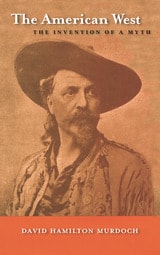
The American West
The Invention Of A MythDavid Hamilton Murdoch
University of Nevada Press, 2001
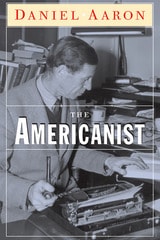
The Americanist
Daniel Aaron
University of Michigan Press, 2009
“I have read all of Daniel Aaron’s books, and admired them, but in The Americanist I believe he has composed an intellectual and social memoir for which he will be remembered. His self-portrait is marked by personal tact and admirable restraint: he is and is not its subject. The Americanist is a vision of otherness: literary and academic friends and acquaintances, here and abroad. Eloquently phrased and free of nostalgia, it catches a lost world that yet engendered much of our own.”
—Harold Bloom
“The Americanist is the absorbing intellectual autobiography of Daniel Aaron, who is the leading proponent and practitioner of American Studies. Written with grace and wit, it skillfully blends Daniel Aaron’s personal story with the history of the field he has done so much to create. This is a first-rate book by a first-rate scholar.”
—David Herbert Donald, Professor Emeritus, Harvard University
The Americanist is author and critic Daniel Aaron’s anthem to nearly a century of public and private life in America and abroad. Aaron, who is widely regarded as one of the founders of American Studies, graduated from the University of Michigan, received his Ph.D. from Harvard, and taught for over three decades each at Smith College and Harvard.
Aaron writes with unsentimental nostalgia about his childhood in Los Angeles and Chicago and his later academic career, which took him around the globe, often in the role of America’s accidental yet impartial critic. When Walt Whitman, whom Aaron frequently cites as a touchstone, wrote, “I am large, I contain multitudes,” he could have been describing Daniel Aaron—the consummate erudite and Renaissance individual whose allegiance to the truth always outweighs mere partisan loyalty.
Not only should Aaron’s book stand as a resplendent and summative work from one of the finest thinkers of the last hundred years, it also succeeds on its own as a first-rate piece of literature, on a par with the writings of any of its subjects. The Americanist is a veritable Who’s Who of twentieth-century writers Aaron interviewed, interacted with, or otherwise encountered throughout his life: Ralph Ellison, Robert Frost, Lillian Hellman, Richard Hofstadter, Alfred Kazin, Sinclair Lewis, Malcolm Muggeridge, John Crowe Ransom, Upton Sinclair, Edmund Wilson, Leonard Woolf, and W. B. Yeats, to name only a few.
Aaron’s frank and personal observations of these literary lights make for lively reading. As well, scattered throughout The Americanist are illuminating portraits of American presidents living and passed—miniature masterworks of astute political observation that offer dazzlingly fresh approaches to well-trod subjects.

The Americanization of Social Science
Intellectuals and Public Responsibility in the Postwar United StatesDavid Paul Haney
Temple University Press, 2008
A highly readable introduction to and overview of the postwar social sciences in the United States, The Americanization of Social Science explores a critical period in the evolution of American sociology’s professional identity from the late 1940s through the early 1960s. David Paul Haney contends that during this time leading sociologists encouraged a professional secession from public engagement in the name of establishing the discipline’s scientific integrity.
According to Haney, influential practitioners encouraged a willful withdrawal from public sociology by separating their professional work from public life. He argues that this separation diminished sociologists’ capacity for conveying their findings to wider publics, especially given their ambivalence towards the mass media, as witnessed by the professional estrangement that scholars like David Riesman and C. Wright Mills experienced as their writing found receptive lay audiences. He argues further that this sense of professional insularity has inhibited sociology’s participation in the national discussion about social issues to the present day.
The Americanization of the Global Village
Essays in Comparative Popular CultureRoger Rollin
University of Wisconsin Press, 1989
This collection of essays taken from a series of papers given at the Popular Culture division of the MLA convention in 1987 consists of a serious investigation of Popular Culture and in simplest terms investigates what people do and why they do it. Rolin's collection deals with the national identity of consumer countries and comes to grips with the fact that the consumption of foreign products could generate emoions of disjunction and displacement.
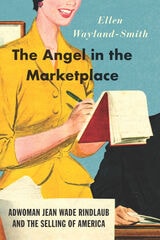
The Angel in the Marketplace
Adwoman Jean Wade Rindlaub and the Selling of AmericaEllen Wayland-Smith
University of Chicago Press, 2020
The Angel in the Marketplace is the story of one of America’s most accomplished advertising executives. It is also the story of how advertisers like Rindlaub sold a postwar American dream of capitalism and a Christian corporate order. Rindlaub was responsible for award-winning, mega sales-generating advertisements for all things domestic, including Oneida silverware, Betty Crocker cake mix, Campbell’s soup, and Chiquita bananas. Her success largely came from embracing, rather than subverting, the cultural expectations of women. She believed her responsibility as an advertiser was not to spring women from their trap, but to make that trap more comfortable.
Rindlaub wasn’t just selling silverware and cakes; she was selling the virtues of free enterprise. By following the arc of Rindlaub’s career from the 1920s through the 1960s, we witness how a range of cultural narratives—advertising chief among them—worked powerfully to shape women’s emotional and economic behavior in support of the free market system. Alongside Rindlaub’s story, Ellen Wayland-Smith provides a riveting history of how women were repeatedly sold the idea that their role as housewives was more powerful, and more patriotic, than any outside the home. And by buying into the image of morality through an unregulated market, many of these women helped fuel backlash against economic regulation and socialization efforts throughout the twentieth century.
The Angel in the Marketplace is a nuanced portrayal of a complex woman, one who both shaped and reflected the complicated cultural, political, and religious forces defining femininity in America at mid-century. This compelling account of one of advertising’s most fervent believers is a tale of a Mad Woman we haven’t been told.
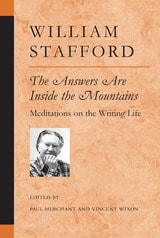
The Answers Are Inside the Mountains
Meditations on the Writing LifeWilliam Stafford, Edited by Paul Merchant & Vincent Wixon
University of Michigan Press, 2003
In this fourth collection of reflections on writing and the writing life, the late William Stafford's lifelong refusal to separate his work from the task of living responsibly -- "What a person is shows up in what a person does" -- rings clear.
The Answers Are Inside the Mountains collects unpublished interviews, poems, articles, aphorisms, and writing exercises from this great American man of letters and hugely prolific author, who kept a journal for nearly half a century and produced over 20,000 poems -- a staggering output by any standard.
The book begins with the words "To overwhelm by rightness," a phrase evoking the two demands Stafford made on himself: to write daily, and to live uprightly. The Answers Are Inside the Mountains lives up to those deceptively simple ethics, and confirms William Stafford's enduringly important voice for our uncertain age.
William Stafford (1914-93) authored more than thirty-five books of poetry and prose, including the highly acclaimed Writing the Australian Crawl, You Must Revise Your Life, Crossing Unmarked Snow: Further Views on the Writer's Vocation, and Traveling Through the Dark, winner of the National Book Award for Poetry.
The Anthropological Imagination in Latin American Literature
Amy Fass Emery
University of Missouri Press, 1996
In this examination of the cross between anthropology and literature in contemporary Latin America, Amy Fass Emery studies how Latin American writers' experiences and studies in the field of anthropology have shaped their representations of cultural Others in fiction. She approaches her subject first in broad terms and then in close textual readings of important writers such as Alejo Carpentier, José María Arguedas, and Miguel Barnet.
Emery develops the concept of an "anthropological imagination"--that is, the conjunction of anthropology and literature in twentieth-century Latin American literary texts. While exploring the uses of anthropology in contemporary narrative and fiction, Emery also gives consideration to documentary and testimonial writings.
The major focus of this engaging work is the study of the novel. Analyzing fictions by authors from Cuba, Argentina, Brazil, and Peru, Emery covers a wide geographical region, as well as a diverse group of topics. Subjects such as surrealist primitivism, the testimonio, the transcultural novel, and the relation of the anthropological imagination to the vexed question of postmodernism in the Latin American context are all given insightful deliberation.
As the first extended study of interrelations between anthropology and literature in Latin America, Emery's work will prove invaluable to a wide spectrum of Latin Americanists and to those with comparative interests in anthropology, twentieth-century literature, and postmodernism.
The Anti-American Century
Ivan Krastev
Central European University Press, 2007
The Antigay Agenda
Orthodox Vision and the Christian RightDidi Herman
University of Chicago Press, 1997
"A penetrating analysis of the Christian Right's antigay agenda and of how that agenda is derived from the Christian Right's peculiar vision of American history and the Christian faith."—Rev. Peter J. Gomes, Boston Book Review
"Public intellectualism at its best. . . . A comprehensive summary of the conservative Protestant worldview."—Michael Joseph Gross, Boston Phoenix Literary Section
"Presents considerable information not previously part of the nation's political discourse. . . . [Herman] dissects the Christian Right's antigay stance dispassionately giving, as it were, the devil his due. For anyone on either side of this passionate and important conflict, that is an impressive accomplishment."—Hastings Wyman, Jr., Washington Post Book World
The Antiquities Act
A Century of American Archaeology, Historic Preservation, and Nature ConservationEdited by David Harmon, Frances P. McManamon, and Dwight T. Pitcaithley
University of Arizona Press, 2006
Enacted in 1906, the Antiquities Act is one of the most important pieces of conservation legislation in American history and has had a far-reaching influence on the preservation of our nation’s cultural and natural heritage. Thanks to the foresight of thirteen presidents, parks as diverse as Acadia, Grand Canyon, and Olympic National Park, along with historic and archaeological sites such as Thomas Edison’s Laboratory and the Gila Cliff Dwellings, have been preserved for posterity.
A century after its passage, this book presents a definitive assessment of the Antiquities Act and its legacy, addressing the importance and breadth of the act—as well as the controversy it has engendered. Authored by professionals intimately involved with safeguarding the nation’s archaeological, historic, and natural heritage, it describes the applications of the act and assesses its place in our country’s future. With a scope as far-reaching as the resources the act embraces, this book offers an unparalleled opportunity for today’s stewards to reflect on the act’s historic accomplishments, to remind fellow professionals and the general public of its continuing importance, and to look ahead to its continuing implementation in the twenty-first century.
The Antiquities Act invites all who love America’s natural and cultural treasures not only to learn about the act’s rich legacy but also to envision its next hundred years.
The Anxieties of Affluence
Critiques of American Consumer Culture, 1939-1979Daniel Horowitz
University of Massachusetts Press, 2004
This book charts the reactions of prominent American writers to the unprecedented prosperity of the decades following World War II. It begins with an examination of Lewis Mumford's wartime call for “democratic” consumption and concludes with an analysis of the origins of President Jimmy Carter's “malaise” speech of 1979. Between these bookends, Daniel Horowitz documents a broad range of competing views, each in its own way reflective of a deep-seated ambivalence toward consumer culture.
The Apartment Plot
Urban Living in American Film and Popular Culture, 1945 to 1975Pamela Robertson Wojcik
Duke University Press, 2010
The Apathy of Empire
Cambodia in American GeopoliticsJames A. Tyner
University of Minnesota Press, 2024
What America’s intervention in Cambodia during the Vietnam War reveals about Cold War–era U.S. national security strategy
The Apathy of Empire reveals just how significant Cambodia was to U.S. policy in Indochina during the Vietnam War, broadening the lens to include more than the often-cited incursion in 1970 or the illegal bombing after the Paris Peace Accords in 1973. This theoretically informed and thoroughly documented case study argues that U.S. military intervention in Cambodia revealed America’s efforts to construct a hegemonic spatial world order.
James Tyner documents the shift of America’s post-1945 focus from national defense to national security. He demonstrates that America’s expansionist policies abroad, often bolstered by military power, were not so much about occupying territory but instead constituted the construction of a new normal for the exercise of state power. During the Cold War, Vietnam became the geopolitical lodestar of this unfolding spatial order. And yet America’s grand strategy was one of contradiction: to build a sovereign state (South Vietnam) based on democratic liberalism, it was necessary to protect its boundaries—in effect, to isolate it—through both covert and overt operations in violation of Cambodia’s sovereignty. The latter was deemed necessary for the former.
Questioning reductionist geopolitical understandings of states as central or peripheral, Tyner explores this paradox to rethink the formulation of the Cambodian war as sideshow, revealing it instead as a crucial site for the formation of this new normal.
Retail e-book files for this title are screen-reader friendly.

The Apocalyptic Century, Volume 29
Elinor Fuchs
Duke University Press, 0
Featuring previously unpublished texts and translations by Karl Kraus, Tennessee Williams, Heiner Müller, and David Cole, this collection shows that twentieth-century theater transformed many of the traditional elements of classical apocalyptic literature for modern ends. The volume’s contributors consider playwrights, theories, and movement spanning the past one hundred years, providing a startling new perspective on modern drama from Ibsen and Jarry to Adrienne Kennedy and Tony Kushner.
Contributors. Gabrielle Cody, Linda Dorff, Michael Evenden, Elinor Fuchs, Daniel Gerould, Sylvére Lotringer, Matthew Wilson Smith, Kirk Williams
The Apology and the Last Days
A NovelBorislav Pekic
Northwestern University Press, 2012
Originally published in 1975, The Apology and the Last Days is the final volume in a trilogy of novels—also including The Rise and Fall of Icarus Gubelkian and How to Quiet a Vampire—about the aftermath of World War II, by Borislav Pekić, one of the former Yugoslavia’s most important postwar writers. The narrator tells his story from prison, where he is serving time for the murder of a former Nazi official. As the novel unfolds, we learn that the victim was the same person whom the narrator, while a lifeguard during the war, saved from drowning, thus making him vulnerable to charges of collaboration. In this tragicomic tale, Pekić explores eternal questions of fate and individual responsibility.
The Appropriated Voice
Narrative Authority in Conrad, Forster, and WoolfBette London
University of Michigan Press, 1990
The Aquatic Frontier
Oysters and Aquaculture in the Progressive EraSamuel P. Hanes
University of Massachusetts Press, 2019
The Aquatic Frontier explores the forms this debate took between 1870 and 1920 in law enforcement, legislative advising, natural science, and oyster cartography. Samuel P. Hanes argues that the effort to centralize and privatize the industry failed due to a lack of understanding of the complex social-ecological systems in place—a common dilemma for environmental managers in this time period and for fisheries management confronting dangers from dwindling populations today.
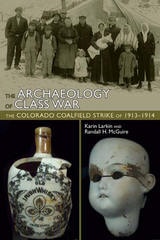
The Archaeology of Class War
The Colorado Coalfield Strike of 1913-1914Karin Larkin
University Press of Colorado, 2009
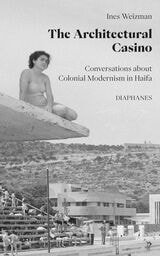
The Architectural Casino
Conversations about Modernism in HaifaInes Weizman
Diaphanes, 2026
After the First World War and under the British Mandate, Haifa grew from a small Ottoman port town into a regional metropolis and industrial center around a deep seaport. The city was part of an open space that extended from Cairo to Damascus through Beirut, in a region where Syria, Palestine, and Lebanon were part of the same fluid, interconnected space. During the Second World War, Haifa became a border town. Under French Vichy, the border between Lebanon and Syria ran sixty kilometers to the north and hardened only after the creation of Israel in 1948 and the wars with Lebanon. Haifa’s architectural modernism developed in relation to the city’s geopolitical environment. No building better manifests Haifa’s predicament than the modernist casino building, built in the city’s Bat Galim seafront district.

The Architecture of Aftermath
Terry Smith
University of Chicago Press, 2006
But after September 11, Smith asserts, late modern architecture suddenly seemed an indulgence. With close readings of key buildings—including Jørn Utzon’s Sydney Opera House, Minoru Yamasaki’s World Trade Center, Frank Gehry’s Guggenheim Museum Bilbao, and Richard Meier’s Getty Center—Smith traces the growth of the spectacular architecture of modernity and then charts its aftermath in the conditions of contemporaneity. Indeed, Smith focuses on the very culture of aftermath itself, exploring how global politics, clashing cultures, and symbolic warfare have changed the way we experience destination architecture.
Like other artists everywhere, architects are responding to the idea of aftermath by questioning the viability of their forms and the validity of their purposes. With his richly illustrated The Architecture of Aftermath, Smith has done so as well.
The Archival Turn in Feminism
Outrage in OrderKate Eichhorn
Temple University Press, 2014
A volume in the American Literatures Initiative
The Argentine Folklore Movement
Sugar Elites, Criollo Workers, and the Politics of Cultural Nationalism, 1900–1955Oscar Chamosa
University of Arizona Press, 2010
Oscar Chamosa combines intellectual history with ethnographic and sociocultural analysis to reconstruct the process by which mestizo culture—in Argentina called criollo culture—came to occupy the center of national folklore in a country that portrayed itself as the only white nation in South America. The author finds that the conservative plantation owners—the “sugar elites”—who exploited the criollo peasants sponsored the folklore movement that romanticized them as the archetypes of nationhood. Ironically, many of the composers and folk singers who participated in the landowner-sponsored movement adhered to revolutionary and reformist ideologies and denounced the exploitation to which those criollo peasants were subjected. Chamosa argues that, rather than debilitating the movement, these opposing and contradictory ideologies permitted its triumph and explain, in part, the enduring romanticizing of rural life and criollo culture, essential components of Argentine nationalism.
The book not only reveals the political motivations of culture in Argentina and Latin America but also has implications for understanding the articulation of local culture with national politics and entertainment markets that characterizes contemporary cultural processes worldwide today.
The Argentine Silent Majority
Middle Classes, Politics, Violence, and Memory in the SeventiesSebastián Carassai
Duke University Press, 2014
The Argument about Things in the 1980s
Goods and Garbage in an Age of NeoliberalismTim Jelfs
West Virginia University Press, 2018
Tim Jelfs’s The Argument about Things in the 1980s considers all this and more in a broad study of the literature and culture of the “long 1980s.” It contributes to of-the-moment scholarly debate about material culture, high finance, and ecological degradation, shedding new light on the complex relationship between neoliberalism and cultural life.
The Armenian Massacres in Ottoman Turkey
A Disputed GenocideGuenter Lewy
University of Utah Press, 2007
In 1915, the Ottoman government, then run by the Young Turks, deported most of its Armenian citizens from their eastern Anatolian lands. According to reliable estimates, close to forty percent of the prewar population perished, many in brutal massacres. Armenians call it the first genocide of the twentieth century. Turks speak of an instance of intercommunal warfare and wartime relocation made necessary by the treasonous conduct of their Armenian minority.
The voluminous literature on this tragic episode of World War I is characterized by acrimony and distortion in which both sides have simplified a complex historical reality and have resorted to partisan special pleading.
The Armenian Massacres in Ottoman Turkey examines the rich historical evidence without political preconceptions. Relying on archival materials as well as eye-witness testimony, Guenter Lewy avoids the sterile “was-it-genocide-or-not” debate and presents a detailed account of what actually happened. The result is a book that will open a new chapter in this contentious controversy and may help achieve a long-overdue reconciliation of Armenians and Turks.
The Armenian Rebellion at Van
McCarthy, Justin
University of Utah Press, 2006
Before World War I, the ancient city of Van in southeastern Anatolia had a population of approximately 100,000 people, while the population of Van Province was about 500,000. Armenians formed a large minority, with Kurdish tribes and Turks in the majority.
The Armenian Rebellion at Van presents a long-overdue examination of Van from the 1870s to 1919. As the authors state, "The Armenian Revolt was an integral part of the great disaster that overcame the people of the Ottoman East. The slaughter of Muslims that accompanied the Armenian revolt in Van Province inexorably led first to Kurdish reprisals on the Armenians, then to a general and mutual massacre of the people of the East."
The actions at Van offer a window into the far-reaching events that soon followed in other parts of Anatolia.
The Arrival of the Fittest
Biology's Imaginary Futures, 1900–1935Jim Endersby
University of Chicago Press, 2025
In the early twentieth century communities made creative use of the new theories of heredity in circulation at the time, including the now largely forgotten mutation theory of Hugo de Vries. Science fiction writers, socialists, feminists, and utopians are among those who seized on the amazing possibilities of rapid and potentially controllable evolution. De Vries’s highly respected scientific theory only briefly captured the attention of the scientific community, but its many fans appropriated it for their own wildly imaginative ends. Writers from H.G. Wells and Edith Wharton to Charlotte Perkins Gilman, J.B.S. Haldane, and Aldous Huxley created a new kind of imaginary future, which Jim Endersby calls the biotopia. It took the ambiguous possibilities of biology—utopian and dystopian—and reimagined them in ways that still influence the public’s understanding of the life sciences. The Arrival of the Fittest recovers the fascinating, long-forgotten origins of ideas that have informed works of fiction from Brave New World to the X-Men movies, all while reflecting on the lessons—positive and negative—that this period might offer us.

The Art Museums of Louis I. Kahn
Patricia C. Loud
Duke University Press, 1989
After a brief look at the development of a tradition in museum architecture, this study examines Kahn’s three art museums: the Yale University Art Gallery, the Kimbell Art Museum, and the Yale Center for British Art. It traces the development of each museum through museum through its various stages: the background of the institutions and the commissions, the programs for the buildings, their designs and evolutions, their constructions, and the evaluations of the completed buildings. Material on Kahn’s plans for a museum for the De Menil collection, begun shortly before his death, is also included.
Accompanying the text are illustrations of the buildings, including Kahn’s personal sketches, architectural plans and sections, and presentation perspective drawings. Photographs of the finished buildings present the transformed vision of the architect in tangible form, showing that the museums, while related, are individualized accomplishments. This is the first comprehensive study of Kahn’s museums.
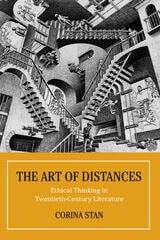
The Art of Distances
Ethical Thinking in Twentieth-Century LiteratureCorina Stan
Northwestern University Press, 2018
In The Art of Distances, Corina Stan identifies an insistent preoccupation with interpersonal distance in a strand of twentieth-century European and Anglophone literature that includes the work of George Orwell, Paul Morand, Elias Canetti, Iris Murdoch, Walter Benjamin, Annie Ernaux, Günter Grass, and Damon Galgut. Specifically, Stan shows that these authors all engage in philosophical meditations, in the realm of literary writing, on the ethical question of how to live with others and how to find an ideal interpersonal distance at historical moments when there are no obviously agreed-upon social norms for ethical behavior.
Bringing these authors into dialogue with philosophers such as Michel de Montaigne, Ralph Waldo Emerson, Friedrich Nietzsche, Sigmund Freud, Helmuth Plessner, Martin Heidegger, Jean-Luc Nancy, Emmanuel Levinas, Peter Sloterdijk, Guillaume le Blanc, and Pierre Zaoui, Stan shows how the question of the right interpersonal distance became a fundamental one for the literary authors under consideration and explores what forms and genres they proposed in order to convey the complexity of this question. Albeit unknowingly, she suggests, they are engaged in fleshing out what Roland Barthes called “a science, or perhaps an art, of distances.”
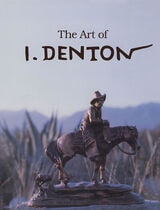
The Art of I. Denton
Ivan Denton
University of Arkansas Press, 1988
The remarkable detail and subtly stylized lines characterizing the artistry of celebrated woodcarver Ivan Denton are in abundant evidence in this beautifully illustrated volume of The Art of I. Denton. Behind each carving presented here, is its story from a piece of wood to a work of art, told in the words of Mr. Denton himself.
This is, in fact, a tour guided by Ivan Denton covering the best of his efforts, his love for the wood, and the process which turns a craftsman into an artist. As he says in describing his work: “Art exists only when you share it. When a tree falls in the woods, in school they said, ‘This tree doesn’t make a noise if someone doesn’t hear it.’ Because, you know, the sound waves don’t bump against the eardrum . . . The idea of not being able to get rid of a piece is basically the concept of an amateur. Not only does a professional need the money, and not only does he need his ego flattered, it’s just that the art doesn’t really exist until it’s shared. That’s an even deeper joy than the ego.”
Chosen from collections across the country, these pieces represent the masterworks from one of a disappearing breed of artisans. But The Art of I. Denton is more than a document of our cultural heritage, it is a tribute to the man and his art.
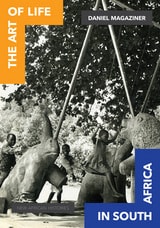
The Art of Life in South Africa
Daniel Magaziner
Ohio University Press, 2016
From 1952 to 1981, South Africa’s apartheid government ran an art school for the training of African art teachers at Indaleni, in what is today KwaZulu-Natal. The Art of Life in South Africa is the story of the students, teachers, art, and politics that circulated through a small school, housed in a remote former mission station. It is the story of a community that made its way through the travails of white supremacist South Africa and demonstrates how the art students and teachers made together became the art of their lives.
Daniel Magaziner radically reframes apartheid-era South African history. Against the dominant narrative of apartheid oppression and black resistance, as well as recent scholarship that explores violence, criminality, and the hopeless entanglements of the apartheid state, this book focuses instead on a small group’s efforts to fashion more fulfilling lives for its members and their community through the ironic medium of the apartheid-era school.
There is no book like this in South African historiography. Lushly illustrated and poetically written, it gives us fully formed lives that offer remarkable insights into the now clichéd experience of black life under segregation and apartheid.