Results by title
1677 books match the query 'Archaeology' and 332 start with t
The Compensations of Plunder
How China Lost Its TreasuresJustin M. Jacobs
University of Chicago Press, 2020
The Context of Ancient Drama
Eric Csapo and William J. Slater
University of Michigan Press, 1995
The Continuous Path
Pueblo Movement and the Archaeology of BecomingEdited by Samuel Duwe and Robert W. Preucel
University of Arizona Press, 2019
The Continuous Path challenges archaeologists to take Pueblo notions of movement seriously by privileging Pueblo concepts of being and becoming in the interpretation of anthropological data. In this volume, archaeologists, anthropologists, and Native community members weave multiple perspectives together to write histories of particular Pueblo peoples. Within these histories are stories of the movements of people, materials, and ideas, as well as the interconnectedness of all as the Pueblo people find, leave, and return to their middle places. What results is an emphasis on historical continuities and the understanding that the same concepts of movement that guided the actions of Pueblo people in the past continue to do so into the present and the future.
Movement is a never-ending and directed journey toward an ideal existence and a continuous path of becoming. This path began as the Pueblo people emerged from the underworld and sought their middle places, and it continues today at multiple levels, integrating the people, the village, and the individual.
The Cosmos Revealed
Precontact Mississippian Rock Art at Painted Bluff, AlabamaBy Jan F. Simek, Erin E. Dunsmore, Johannes Loubser, and Sierra M. Bow
University of Alabama Press, 2021
The definitive rock art book on Painted Bluff, Alabama and the visual language of a Native American cosmos.
Boasting more than 130 paintings and engravings, Painted Bluff is perhaps the most elaborate prehistoric pictograph site east of the Mississippi River. Positioned at several levels on a dramatic sandstone cliff along the Tennessee River in northern Alabama, the spectacular paintings and engravings depict mythical creatures, dancing humans, and mystical portals. The Cosmos Revealed: Precontact Mississippian Rock Art at Painted Bluff, Alabama is the first complete documentation of one of the most important archaeological sites in eastern North America. Through art, the site materializes a model or “cosmogram” of the Mississippian Native American view of the universe, offering connections between the visible and invisible worlds for Native spiritual leaders and other visitors.
Discovered by Euro-Americans in the early 1800s, the site became known as “Painted Bluff” because of its pictographs, but inexplicably it has only recently been subjected to the intensive archaeological study it deserves. Under the auspices of the Tennessee Valley Authority (TVA), the authors of this volume have documented and assessed the site since 2005, and efforts have been made to reverse some of the vandalism that has occurred over many decades and to stabilize natural degradation of the cliff and its artwork.
Including more than one hundred remarkable prehistoric paintings on the cliff face that have been recorded, mapped, and photographed, this book synthesizes the research done on Painted Bluff to date and documents the entire site. Richly illustrated chapters cover the historical background, geology and archaeology, documentation methods, types of rock art, stratigraphy, paint recipes, TVA management, graffiti removal, and a summary that broadly synthesizes the meaning, timeframe, artistry, organization, conceptual boundaries, and the cosmos revealed. This groundbreaking study features 113 color photographs and a complete catalog of the pictographs and petroglyphs at the site.
The Crable Site, Fulton County, Illinois
A Late Prehistoric Site in the Central Illinois ValleyHale Gilliam Smith
University of Michigan Press, 1951
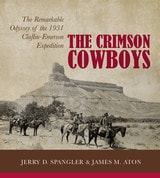
The Crimson Cowboys
The Remarkable Odyssey of the 1931 Claflin-Emerson ExpeditionJerry D. Spangler and James M. Aton
University of Utah Press, 2018
In 1931 a group from Harvard University’s Peabody Museum accomplished something that had never been attempted in the history of American archaeology: a six-week, four-hundred-mile horseback survey of Fremont prehistoric sites through some of the West’s most rugged terrain. The expedition was successful, but a report on the findings was never completed. What should have been one of the great archaeological stories in American history was relegated to boxes and files in the basement of the Peabody Museum at Harvard.
Now, based on over a thousand pages of documents (field journals, correspondence, and receipts) and over four hundred photographs, this book recounts the remarkable day-to-day adventures of this crew of one professor, five students, and three Utah guides who braved heat, fatigue, and the dangerous canyon wilderness to reveal vestiges of the Fremont culture in the Tavaputs Plateau and Uinta Basin areas. To better tell this story, authors Spangler and Aton undertook extensive fieldwork to confirm the sites; their recent photographs and those of the original expedition are shared on these pages. This engaging narrative situates the 1931 survey and its discoveries within the history of American archaeology.
Click here for a podcast with the APEX hour and Jim Aton about The Crimson Cowboys.
The Crown Games of Ancient Greece
Archaeology, Athletes, and HeroesDavid Lunt
University of Arkansas Press, 2022
The Crown Games were the apex of competition in ancient Greece. Along with prestigious athletic contests in honor of Zeus at Olympia, they comprised the Pythian Games for Apollo at Delphi, the Isthmian Games for Poseidon, and the Nemean Games, sacred to Zeus. For over nine hundred years, the Greeks celebrated these athletic and religious festivals, a rare point of cultural unity amid the fierce regional independence of the numerous Greek city-states and kingdoms.
The Crown Games of Ancient Greece examines these festivals in the context of the ancient Greek world, a vast and sprawling cultural region that stretched from modern Spain to the Black Sea and North Africa. Illuminating the unique history and features of the celebrations, David Lunt delves into the development of the contest sites as sanctuaries and the Panhellenic competitions that gave them their distinctive character. While literary sources have long been the mainstay for understanding the evolution of the Crown Games and ancient Greek athletics, archaeological excavations have significantly augmented contemporary understandings of the events. Drawing on this research, Lunt brings deeper context to these gatherings, which were not only athletics competitions but also occasions for musical contests, dramatic performances, religious ceremonies, and diplomatic summits—as well as raucous partying. Taken as a circuit, the Crown Games offer a more nuanced view of ancient Greek culture than do the well-known Olympian Games on their own. With this comprehensive examination of the Crown Games, Lunt provides a new perspective on how the ancient Greeks competed and collaborated both as individuals and as city-states.
The Culture and Acculturation of the Delaware Indians
William W. Newcomb, Jr.
University of Michigan Press, 1956
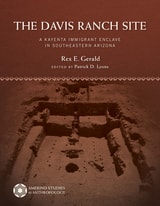
The Davis Ranch Site
A Kayenta Immigrant Enclave in Southeastern ArizonaRex E. Gerald, Edited by Patrick D. Lyons
University of Arizona Press, 2019
Annotations to Gerald’s original manuscript in the archives of the Amerind Museum and newly written material place Gerald’s work in the context of what is currently known regarding the late thirteenth-century Kayenta diaspora and the relationship between Kayenta immigrants and the Salado phenomenon. Data presented by Gerald and other contributors identify the site as having been inhabited by people from the Kayenta region of northeastern Arizona and southeastern Utah.
The results of Gerald’s excavations and Archaeology Southwest’s San Pedro Preservation Project (1990–2001) indicate that the people of the Davis Ranch Site were part of a network of dispersed immigrant enclaves responsible for the origin and spread of Roosevelt Red Ware pottery, the key material marker of the Salado phenomenon.
A companion volume to Charles Di Peso’s 1958 publication on the nearby Reeve Ruin, archaeologists working in the U.S. Southwest and other researchers interested in ancient population movements and their consequences will consider this work an essential case study.
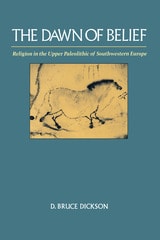
The Dawn of Belief
Religion in the Upper Paleolithic of Southwestern EuropeD. Bruce Dickson
University of Arizona Press, 1990
Based on the premises that all members of Homo sapiens sapiens share basically similar psychological processes and capabilities and that human culture is patterned, the author uses ethnographic analogy, inference from material patterns, and formal analysis to find in prehistoric imagery clues to the cosmology that lay behind them. The resulting book is an intriguing speculation on the nature of paleolithic religion, offering scholars a valuable synthesis of anthropological, archaeological, and sociological research, and general readers an accessible account of how our forebears may have regarded the unknown.
The Demography of the Semai Senoi
Alan G. Fix
University of Michigan Press, 1977
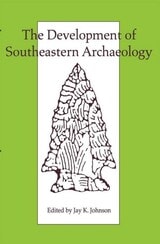
The Development of Southeastern Archaeology
Edited by Jay K. Johnson
University of Alabama Press, 1993
Ten scholars whose specialties range from ethnohistory to remote sensing and lithic analysis to bioarchaeology chronicle changes in the way prehistory in the Southeast has been studied since the 19th century. Each brings to the task the particular perspective of his or her own subdiscipline in this multifaceted overview of the history of archaeology in a region that has had an important but variable role in the overall development of North American archaeology.
Some of the specialties discussed in this book were traditionally relegated to appendixes or ignored completely in site reports more than 20 years old. Today, most are integral parts of such reports, but this integration has been hard won. Other specialties have been and will continue to be of central concern to archaeologists. Each chapter details the way changes in method can be related to changes in theory by reviewing major landmarks in the literature. As a consequence, the reader can compare the development of each subdiscipline.
As the first book of this kind to deal specifically with the region, it be will valuable to archaeologists everywhere. The general reader will find the book of interest because the development of southeastern archaeology reflects trends in the development of social science as a whole.
Contributors include:
Jay K. Johnson, David S. Brose, Jon L. Gibson, Maria O. Smith, Patricia K. Galloway, Elizabeth J. Reitz, Kristen J. Gremillion, Ronald L. Bishop, Veletta Canouts, and W. Fredrick Limp
The Durango South Project
Archaeological Salvage of Two Basketmaker III Sites in the Durango DistrictEdited by John D. Gooding
University of Arizona Press, 1980
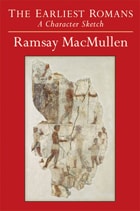
The Earliest Romans
A Character SketchRamsay MacMullen
University of Michigan Press, 2013
"A vibrant account that puts flesh on the bare bones of early Roman history."
---Celia Schultz, University of Michigan
The ancient Romans' story down to 264 B.C. can be made credible by stripping away their later myths and inventions to show how their national character shaped their destiny.
After many generations of scholarly study, consensus is clear: the account in writers like Livy is not to be trusted because their aims were different from ours in history-writing. They wanted their work to be both improving and diverting. It should grow out of the real past, yes, but if that reality couldn't be recovered, or was uncertain, their art did not forbid invention. It more than tolerated dramatic incidents, passions, heroes, heroines, and villains. If, however, all this resulting ancient fiction and adornment are pruned away, a national character can be seen in the remaining bits and pieces of credible information, to explain the familiar story at least in its outlines.
To doubt the written sources has long been acceptable, but this or that detail or narrative section must always be left for salvage by special pleading. To press home the logic of doubt is new. To reach beyond the written sources for a better support in excavated evidence is no novelty; but it is a novelty, to find in archeology the principal substance of the narrative---which is the choice in this book. To use this in turn for the discovery of an ethnic personality, a Roman national character, is key and also novel.
What is repeatedly illustrated and emphasized here is the distance traveled by the art or craft of understanding the past---"history" in that sense---over the course of the last couple of centuries. The art cannot be learned, because it cannot be found, through studying Livy and Company. Readers who care about either of the two disciplines contrasted, Classics and History, may find this argument of interest.
"Like Thucydides of the hyperactive Athenians and de Tocqueville of the nation-building Americans, MacMullen here draws a character sketch of the early Romans---the men who built Rome, conquered Italy, and created an empire. Based on profound familiarity with history, evidence, and their better-known descendants, attention to what they did and failed to do, remarkable insight, empathy, constructive imagination, and not without humor, he reconstructs the homo Romanus and thus helps us imagine what he was like, and understand why he achieved what he did. This little book is informative, full of important ideas, and delightful to read."
---Kurt Raaflaub, Brown University
Jacket image: Marcus Fabius and Quintus Tannius. Fresco. Musei Capitolini, Rome, Italy. Courtesy of Scala / Art Resource, NY..
The Early History of the Ancient Near East, 9000-2000 B.C.
Hans J. Nissen
University of Chicago Press, 1988
With a unique combination of material culture analysis written data, Nissan traces the emergence of the earliest isolated settlements, the growth of a network of towns, the emergence of city states, and finally the appearance of territorial states. From his synthesis of the prehistoric and literate periods comes a unified picture of the development of Mesopotamian economy, society, and culture. Lavishly illustrated, The Early History of the Ancient Near East, 9000-2000 B.C. is an authoritative work by one of the most insightful observers of the evolution and character of Mesopotamian civilization.
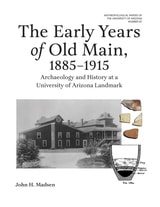
The Early Years of Old Main, 1885–1915
Archaeology and History at a University of Arizona LandmarkJohn H. Madsen
University of Arizona Press, 2026
The Early Years of Old Main, 1885–1915 details the archaeological discoveries revealed during the 2012–14 renovation of Old Main, which, due to its age and historic records, is on the National Register of Historic Places.
Thanks to detailed excavation work by a team of archaeologists, this work documents eight historic features of the building, ranging from equipment pads to drainage systems. Drawing on archaeological monitoring, artifact analysis, archival records, architectural drawings, and historic photographs, the narrative reconstructs how Old Main functioned during the university’s first decades and how its physical spaces supported early scientific instruction in mining, metallurgy, and agriculture.
More than a technical report, this volume offers a tangible glimpse into the material foundations of higher education in territorial and early statehood Arizona. Madsen’s careful documentation preserves knowledge of features that could not be saved during renovation and places them in the broader context of Old Main’s architectural evolution and its central role on campus. The result is an important resource for historians, archaeologists, preservationists, and anyone who values the University of Arizona’s heritage—demonstrating that even the most familiar buildings can still hold untold stories beneath their floors and landscapes.
The East Florida Expeditions of Clarence Bloomfield Moore
Clarence Bloomfield Moore, edited by Jeffrey M. Mitchem
University of Alabama Press, 1999
A Dan Josselyn Memorial Publication
This comprehensive compilation of Moore's archaeological publications on eastern Florida will prove an invaluable primary resource for Florida archaeologists.
Clarence B. Moore (1852-1936), a wealthy Philadelphia socialite, paper company heir, and photographer made the archaeology of the Southeast his passion beginning in the 1870s. This volume collects 17 of Moore's publications on East Florida, originally published between 1892 and 1903. These invaluable and copiously illustrated works document the results of Moore's numerous archaeological expeditions along Florida's eastern coastline from the Georgia border to Lake Okeechobee and focus primarily on sites along the St. Johns River and its tributaries. Moore's archaeological work in East Florida was arguably his best and most thorough research from a modern perspective.
Jeffrey Mitchem's introduction to this volume describes and analyzes Moore's work in East Florida, summarizes what we know about the sites Moore investigated, and surveys subsequent archaeological work conducted in this area since Moore's expeditions. Mitchem's introduction highlights the significance of Moore's work on the shell heaps along the St. Johns River. It led to the earliest recorded instance of a researcher noting the changes in pottery styles in the region, a major key to establishing chronologies.In 1894, Moore wrote of his hope "that the archaeology of Florida may be redeemed from the obscurity that has hitherto characterized it." Over a century later, this Press has aimed to fulfill Moore's wish by reprinting this and other collections of his archaeological publications.
The Economy of Prostitution in the Roman World
A Study of Social History and the BrothelThomas A. J. McGinn
University of Michigan Press, 2004
The Edges of the Medieval World
Gerhard Jaritz
Central European University Press, 2009
The Egyptian Renaissance
The Afterlife of Ancient Egypt in Early Modern ItalyBrian Curran
University of Chicago Press, 2007
Fascination with ancient Egypt is a recurring theme in Western culture, and here Brian Curran uncovers its deep roots in the Italian Renaissance, which embraced not only classical art and literature but also a variety of other cultures that modern readers don’t tend to associate with early modern Italy. Patrons, artists, and spectators of the period were particularly drawn, Curran shows, to Egyptian antiquity and its artifacts, many of which found their way to Italy in Roman times and exerted an influence every bit as powerful as that of their more familiar Greek and Roman counterparts.
Curran vividly recreates this first wave of European Egyptomania with insightful interpretations of the period’s artistic and literary works. In doing so, he paints a colorful picture of a time in which early moderns made the first efforts to decipher Egyptian hieroglyphs, and popes and princes erected pyramids and other Egyptianate marvels to commemorate their own authority. Demonstrating that the emergence of ancient Egypt as a distinct category of historical knowledge was one of Renaissance humanism’s great accomplishments, Curran’s peerless study will be required reading for Renaissance scholars and anyone interested in the treasures and legacy of ancient Egypt.
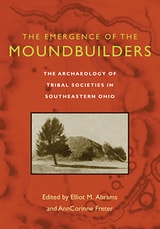
The Emergence of the Moundbuilders
The Archaeology of Tribal Societies in Southeastern OhioElliot M. Abrams
Ohio University Press, 2004
Native American societies, often viewed as unchanging, in fact experienced a rich process of cultural innovation in the millennia prior to recorded history. Societies of the Hocking River Valley in southeastern Ohio, part of the Ohio River Valley, created a tribal organization beginning about 2000 bc.
Edited by Elliot M. Abrams and AnnCorinne Freter, The Emergence of the Moundbuilders: The Archaeology of Tribal Societies in Southeastern Ohio presents the process of tribal formation and change in the region based on analyses of all available archaeological data from the Hocking River Valley. Drawing on the work of scholars in archaeology, anthropology, geography, geology, and botany, the collection addresses tribal society formation through such topics as the first pottery made in the valley, aggregate feasting by nomadic groups, the social context for burying their dead in earthen mounds, the formation of religious ceremonial centers, and the earliest adoption of corn.
Providing the most current research on indigenous societies in the Hocking Valley, The Emergence of the Moundbuilders is distinguished by its broad, comparative overview of tribal life.
The Entablo Manuscript
Water Rituals and Khipu Boards of San Pedro de Casta, PeruSarah Bennison
University of Texas Press, 2022
A unique study of an Andean community’s water rituals and the extraordinary document describing how they should be performed
In the dry season in the Andes, water from springs, lakes, reservoirs, and melting glaciers feeds irrigation canals that have sustained communities for thousands of years. Managing and maintaining these water infrastructures is essential, and in 1921, in the village of San Pedro de Casta, Peru, local authorities recorded their ritual canal-cleaning duties in a Spanish-language document called the Entablo. It is only the second book (along with the Huarochirí Manuscript) ever seen by scholars in which an Andean community explains its customs and ritual laws in its own words.
Sarah Bennison offers a critical introduction to the Entablo, a Spanish transcription of the document, and an English translation. Among its other revelations, the Entablo delves into the use of khipu boards, devices that meld the traditional knotted strings known as khipus with a written alphabet. Only in the Entablo do we learn that there were multiple khipu boards associated with a single canal-cleaning ritual, or that there were separate khipu records for men and women. The Entablo manuscript furnishes unparalleled insights into Andean rituals, religion, and community history at a historical moment when rural highland communities were changing rapidly.
The Ethnobotanical Laboratory at the University of Michigan
Melvin R. Gilmore
University of Michigan Press, 1932
The Evolution of Settlement Systems in the Region of Vohémar, Northeast Madagascar
Henry T. Wright, Robert E. Dewar, Chantal Radimilahy, and Lucien Marie Aimé Rakotozafy
University of Michigan Press, 2021
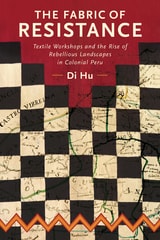
The Fabric of Resistance
Textile Workshops and the Rise of Rebellious Landscapes in Colonial PeruDi Hu
University of Alabama Press, 2022
Textiles as sites of power, production, and rebellion in the early modern Andes.
The Fabric of Resistance: Textile Workshops and the Rise of Rebellious Landscapes in Colonial Peru documents the impact of Spanish colonial institutions of labor on identity and social cohesion in Peru. Through archaeological and historical lines of evidence, Di Hu examines the long-term social conditions that enabled the large-scale rebellions in the late Spanish colonial period in Peru. Hu argues that ordinary people from different backgrounds pushed back against the top-down identity categories imposed by the Spanish colonial government and in the process created a cosmopolitan social landscape that later facilitated broader rebellion.
Hu’s case study is Pomacocha, the site of an important Spanish colonial hacienda (agricultural estate) and obraje (textile workshop). At its height, the latter had more than one hundred working families and sold textiles all over the Andes. Through analysis of this site, Hu explores three main long-term causes of rebellions against Spanish oppression. First, the Spanish colonial economy provided motivation and the social spaces for intercaste (indigenous, African, and mestizo) mixing at textile workshops. Second, new hybrid cultural practices and political solidarity arose there that facilitated the creation of new rebellious identities. Third, the maturation in the eighteenth century of popular folklore that reflected the harsh nature of Spanish labor institutions helped workers from diverse backgrounds gain a systemic understanding of exploitation.
This study provides a fresh archaeological and historical perspectives on the largest and most cosmopolitan indigenous-led rebellions of the Americas. Hu interweaves analyses of society at multiple scales including fine-grained perspectives of social networks, demography, and intimate details of material life in the textile workshop. She examines a wide range of data sources including artifacts, food remains, architectural plans, account books, censuses, court documents, contracts, maps, and land title disputes.

The Falls Creek Rock Shelters
Reanalysis, Repatriation, and ReconciliationEdited by Dawn M. Mulhern and Mona C. Charles
University of Utah Press, 2026
A fresh look at an iconic Southwest archaeological site
Discovered in 1937 amid a surge of pothunting in the American Southwest, the Falls Creek Rock Shelters in Durango, Colorado, quickly became one of the most significant archaeological sites in the region. With its remarkable preservation of perishable materials, the site attracted both amateur and professional archaeologists, culminating in Earl Morris and Robert Burgh’s 1954 landmark study on the Eastern Basketmakers.
This volume brings together experts in chronometry, rock art, bioarchaeology, and material culture to reexamine the site with fresh perspectives, advanced methodologies, and crucial tribal consultation. By integrating twenty-first<n>century research with historical records, it sheds new light on the Eastern Basketmaker II Tradition—both as part of a broader cultural landscape and as a distinct regional identity. A must-read for archaeologists, institutions reconciling legacy collections, and those interested in collaborative research, this book offers a groundbreaking, holistic view of one of the Southwest’s most fascinating prehistoric communities.
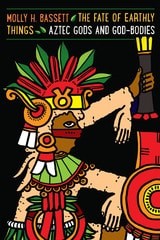
The Fate of Earthly Things
Aztec Gods and God-BodiesBy Molly H. Bassett
University of Texas Press, 2015
Following their first contact in 1519, accounts of Aztecs identifying Spaniards as gods proliferated. But what exactly did the Aztecs mean by a “god” (teotl), and how could human beings become gods or take on godlike properties? This sophisticated, interdisciplinary study analyzes three concepts that are foundational to Aztec religion—teotl (god), teixiptla (localized embodiment of a god), and tlaquimilolli (sacred bundles containing precious objects)—to shed new light on the Aztec understanding of how spiritual beings take on form and agency in the material world.
In The Fate of Earthly Things, Molly Bassett draws on ethnographic fieldwork, linguistic analyses, visual culture, and ritual studies to explore what ritual practices such as human sacrifice and the manufacture of deity embodiments (including humans who became gods), material effigies, and sacred bundles meant to the Aztecs. She analyzes the Aztec belief that wearing the flayed skin of a sacrificial victim during a sacred rite could transform a priest into an embodiment of a god or goddess, as well as how figurines and sacred bundles could become localized embodiments of gods. Without arguing for unbroken continuity between the Aztecs and modern speakers of Nahuatl, Bassett also describes contemporary rituals in which indigenous Mexicans who preserve costumbres (traditions) incorporate totiotzin (gods) made from paper into their daily lives. This research allows us to understand a religious imagination that found life in death and believed that deity embodiments became animate through the ritual binding of blood, skin, and bone.
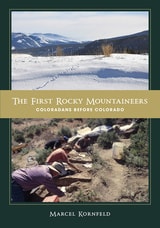
The First Rocky Mountaineers
Coloradans before ColoradoMarcel Kornfeld
University of Utah Press, 2013
Chosen by Foreword as the 2014 bronze winner in science.
The Fisher Site
Archaeological, Geological and Paleobotanical Studies at an Early Paleo-Indian Site in Southern Ontario, CanadaPeter L. Storck
University of Michigan Press, 1997
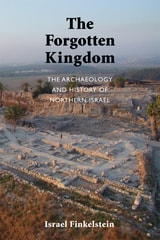
The Forgotten Kingdom
The Archaeology and History of Northern IsraelIsrael Finkelstein
SBL Press, 2013
A new understanding of the history of the northern kingdom from 1350 B.C.E. to 720 B.C.E.
Beginning with the Canaanite city-states, through the Saulide dynasty, to the fall of Israel, Finkelstein presents the first comprehensive history of Israel integrating the analysis of more than thirty years of archaeological work with interpretation of ancient Near Eastern and biblical texts. Though Judah dominates the pages of the Hebrew Bible and contemporary studies, Israel dominates here as Finkelstein reveals the glory of the Omride dynasty, outlines how the two kingdoms of Israel and Judah developed parallel to one another, and highlights Israel’s transformation from kingdom to foundational idea.
Features:
- Archaeological analysis of the region of the northern kingdom
- Primary and secondary textual analysis from the ancient Near East and the biblical narrative
- Maps, tables, and images
- Discussion of Israel’s legacy
The Fort Ancient Aspect
James Bennett Griffin
University of Michigan Press, 1943
The Foxie Otter Site
A Multicomponent Occupation North of Lake HuronChristopher C. Hanks
University of Michigan Press, 1988
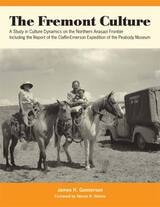
The Fremont Culture
A Study in Culture Dynamics on the Northern Anasazi Frontier, including the Report of the Claflin-Emerson Expedition of the Peabody MuseumJames H Gunnerson
University of Utah Press, 2009
Early expedition surveys and excavations conducted by Noel Morss would lead to a definition of the Fremont culture; later research would augment existing data on the Fremont by adding entirely new traits, disclosing new variations in architecture and basketry, and providing new information on the distribution of previously known traits.
In The Fremont Culture: A Study in Culture Dynamics on the Northern Anasazi Frontier, archaeologist James H. Gunnerson provides the results of his 1950s survey and excavation in the Utah area. He presents a functional synthesis of the Fremont culture and discusses the dynamics of its growth and decline.
Gunnerson’s report also uses the original field notes, maps, plans, photographs, sketches, and unpublished preliminary reports of the Claflin-Emerson expedition. Together, the reports of Morss and Gunnerson offer the most important and complete overview of the expedition available. They are fitting tributes to the men of that expedition, scientists who recognized the importance of an ancient people who once wrested a meager living from the rugged canyon country of the Green and Colorado Rivers.
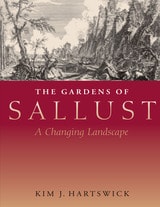
The Gardens of Sallust
A Changing LandscapeBy Kim J. Hartswick
University of Texas Press, 2003
Pleasure gardens, or horti, offered elite citizens of ancient Rome a retreat from the noise and grime of the city, where they could take their leisure and even conduct business amid lovely landscaping, architecture, and sculpture. One of the most important and beautiful of these gardens was the horti Sallustiani, originally developed by the Roman historian Sallust at the end of the first century B.C. and later possessed and perfected by a series of Roman emperors. Though now irrevocably altered by two millennia of human history, the Gardens of Sallust endure as a memory of beauty and as a significant archaeological site, where fragments of sculpture and ruins of architecture are still being discovered.
In this ambitious work, Kim Hartswick undertakes the first comprehensive history of the Gardens of Sallust from Roman times to the present, as well as its influence on generations of scholars, intellectuals, and archaeologists. He draws from an astonishing array of sources to reconstruct the original dimensions and appearance of the gardens and the changes they have undergone at specific points in history. Hartswick thoroughly discusses the architectural features of the garden and analyzes their remains. He also studies the sculptures excavated from the gardens and discusses the subjects and uses of many outstanding examples.
The Garnsey Spring Campsite
Late Prehistoric Occupation in Southeastern New MexicoWilliam J. Parry and John D. Speth
University of Michigan Press, 1984
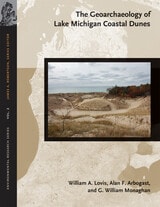
The Geoarchaeology of Lake Michigan Coastal Dunes
William A. Lovis, Alan F. Arbogast, and G. William Monaghan
Michigan State University Press, 2012
Complex sets of environmental factors have interacted over the past 5,000 years to affect how changes in climate, temperature, relative precipitation, and the levels of Lake Michigan influence the preservation of archaeological sites in coastal sand dunes along Lake Michigan. As a collaboration between earth scientists, archaeologists, and geoarchaeologists, this study draws on a wealth of research and multidisciplinary insights to explore the conditions necessary to safeguard ancient human settlements in these landscapes. A variety of contemporary and innovative techniques, including numerous dating methods and approaches, were employed to determine when and for how long sand dunes were active and when and for how long archaeological sites were occupied. Knowledge of dune processes and settlement patterns not only affects archaeological interpretations, but it is also consummately important to land planners responsible for managing heritage archaeological sites in the Lake Michigan coastal zone.
The Geoarchaeology of Whitewater Draw, Arizona
Michael R. Waters
University of Arizona Press, 1986
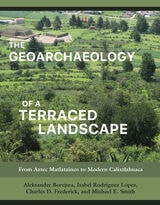
The Geoarchaeology of a Terraced Landscape
From Aztec Matlatzinco to Modern CalixtlahuacaAleksander Borejsza, Isabel Rodríguez López, Charles D. Frederick, and Michael E. Smith
University of Utah Press, 2021
Working at a settlement in the Toluca Valley of central Mexico, the authors used fieldwalking, excavation, soil and artifact analyses, maps, aerial photos, land deeds, and litigation records to reconstruct the changing landscape through time. Exploiting the methodologies and techniques of several disciplines, they bring context to eight centuries of the region’s agrarian history, exploring the effects of the Aztec and Spanish Empires, reform, and revolution on the physical shape of the Mexican countryside and the livelihoods of its people. Accessible to specialists and nonspecialists alike, this well-illustrated and well-organized volume provides a step-by-step guide that can be applied to the study of terraced landscapes anywhere in the world.
The four authors share an interest in terraced landscapes and have worked together and on their own on a variety of archaeological projects in Mesoamerica, the Mediterranean, Poland, and the United Kingdom.
The Georgia and South Carolina Coastal Expeditions of Clarence Bloomfield Moore
Clarence Bloomfield Moore, edited by Lewis Larson
University of Alabama Press, 1998
A Dan Josselyn Memorial Publication
This facsimile edition of Moore's Georgia and South Carolina expeditions includes an extensive new introduction from Georgia's senior archaeologist.
This compilation of Clarence Bloomfield Moore's investigations along the rich coastal and river drainages of Georgia and South Carolina makes
available in a single volume valuable works published a century ago. By modern standards Moore's excavation techniques were crude, but his results were nothing less than spectacular. He recorded data with care, and much information can be learned from his works. In some cases his publications are the only documentation extant for sites that have since been destroyed. In one case, relic collectors had destroyed six mounds at Mason's Plantation—the largest Mississippian center in the Savannah River valley—by the time Moore visited the site in 1897.
Moore also documented prehistoric urn burials, a ritual widely practiced in eastern North America but more frequently on the Gulf Coastal Plain
of Alabama and coastal sites in Georgia and South Carolina. In the introduction, Lewis Larson discusses Moore's investigations within the framework of the current understanding of Georgia and South Carolina coastal archaeological chronology.
The Global Spanish Empire
Five Hundred Years of Place Making and PluralismEdited by Christine D. Beaule and John G. Douglass
University of Arizona Press, 2020
The Spanish Empire was a complex web of places and peoples. Through an expansive range of essays that look at Africa, the Americas, Asia, the Caribbean, and the Pacific, this volume brings a broad range of regions into conversation. The contributors focus on nuanced, comparative exploration of the processes and practices of creating, maintaining, and transforming cultural place making within pluralistic Spanish colonial communities.
The Global Spanish Empire argues that patterned variability is necessary in reconstructing Indigenous cultural persistence in colonial settings. The volume’s eleven case studies include regions often neglected in the archaeology of Spanish colonialism. The time span under investigation is extensive as well, transcending the entirety of the Spanish Empire, from early impacts in West Africa to Texas during the 1800s. The contributors examine the making of a social place within a social or physical landscape. They discuss the appearance of hybrid material culture, the incorporation of foreign goods into local material traditions, the continuation of local traditions, and archaeological evidence of opportunistic social climbing. In some cases, these changes in material culture are ways to maintain aspects of traditional culture rather than signifiers of new cultural practices.
The Global Spanish Empire tackles broad questions about Indigenous cultural persistence, pluralism, and place making using a global comparative perspective grounded in the shared experience of Spanish colonialism.
Contributors
Stephen Acabado
Grace Barretto-Tesoro
James M. Bayman
Christine D. Beaule
Christopher R. DeCorse
Boyd M. Dixon
John G. Douglass
William R. Fowler
Martin Gibbs
Corinne L. Hofman
Hannah G. Hoover
Stacie M. King
Kevin Lane
Laura Matthew
Sandra Montón-Subías
Natalia Moragas Segura
Michelle M. Pigott
Christopher B. Rodning
David Roe
Roberto Valcárcel Rojas
Steve A. Tomka
Jorge Ulloa Hung
Juliet Wiersema
The Great Paleolithic War
How Science Forged an Understanding of America's Ice Age PastDavid J. Meltzer
University of Chicago Press, 2015
In The Great Paleolithic War, David J. Meltzer tells the story of a scientific quest that set off one of the longest-running feuds in the history of American anthropology, one so vicious at times that anthropologists were deliberately frightened away from investigating potential sites. Through his book, we come to understand how and why this controversy developed and stubbornly persisted for as long as it did; and how, in the process, it revolutionized American archaeology.
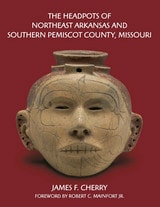
The Headpots of Northeast Arkansas and Southern Pemiscot County, Missouri
James F. Cherry
University of Arkansas Press, 2009
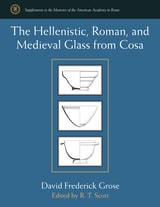
The Hellenistic, Roman, and Medieval Glass from Cosa
David Frederick Grose (R. T. Scott, editor)
University of Michigan Press, 2017
The research and analysis presented here are the work of the late David Frederick Grose, who began this project when no other city site excavations in Italy focused on ancient glass. He confirmed that the Roman glass industry began to emerge in the Julio-Claudian era, beginning in the principate of Augustus. His study traces the evolution of manufacturing techniques from core-formed vessels to free blown glass, and it documents changes in taste and style that were characteristic of the western glass industry throughout its long history.
At the time of Grose’s unexpected passing, his study was complete but not yet published. Nevertheless, the reputation of his work in this area has done much to establish the value and importance of excavating and researching Cosa’s glass. This volume, arranged and edited by R. T. Scott, makes Grose’s essential scholarship on the subject available for the first time.
The Henderson Site Burials
Glimpses of a Late Prehistoric Population in the Pecos ValleyThomas R. Rocek and John D. Speth
University of Michigan Press, 1986
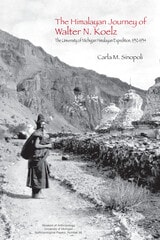
The Himalayan Journey of Walter N. Koelz
The University of Michigan Himalayan ExpeditionCarla M. Sinopoli
University of Michigan Press, 2013
In the fall of 1932, University of Michigan naturalist Walter N. Koelz traveled to northwest India to lead a scientific collecting expedition in the rugged Himalayan regions of Western Tibet. Some eighteen months later he returned to the United States with a remarkable collection of biological specimens and an array of objects—Buddhist paintings, ritual objects, textiles, and household goods—acquired from monasteries, households, and merchants. This book presents the diary entries Koelz wrote at the end of each day throughout his expedition, recounting in detail each day’s travels, bookended by a chapter contextualizing his acquisition of sacred Buddhist objects and an appendix that presents previously unpublished thangka paintings that he collected.
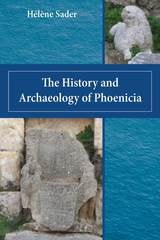
The History and Archaeology of Phoenicia
Hélène Sader
SBL Press, 2019
An insightful historical account of Phoenicia that illustrates its cities, culture, and daily life
Hélène Sader presents the history and archaeology of Phoenicia based on the available contemporary written sources and the results of archaeological excavations in Phoenicia proper. Sader explores the origin of the term Phoenicia; the political and geographical history of the city-states Arwad, Byblos, Sidon, and Tyre; and topography, climate, and natural resources of the Phoenician homeland. Her limited focus on Phoenicia proper, in contrast to previous studies that included information from Phoenician colonies, presents the bare realities of the opportunities and difficulties shaping Phoenician life. Sader’s evaluation and synthesis of the evidence offers a corrective to the common assumption of a unified Phoenician kingdom.
Features
- Historical as well as modern maps with the locations of all relevant archaeological sites
- Faunal and floral analyses that shed light on the Phoenician diet
- Petrographic analysis of pottery that sheds light on trading patterns and developments
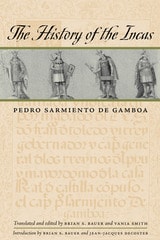
The History of the Incas
By Pedro Sarmiento de Gamboa
University of Texas Press, 2007
The History of the Incas may be the best description of Inca life and mythology to survive Spanish colonization of Peru. Pedro Sarmiento de Gamboa, a well-educated sea captain and cosmographer of the viceroyalty, wrote the document in Cuzco, the capital of the Inca Empire, just forty years after the arrival of the first Spaniards. The royal sponsorship of the work guaranteed Sarmiento direct access to the highest Spanish officials in Cuzco. It allowed him to summon influential Incas, especially those who had witnessed the fall of the Empire. Sarmiento also traveled widely and interviewed numerous local lords (curacas), as well as surviving members of the royal Inca families. Once completed, in an unprecedented effort to establish the authenticity of the work, Sarmiento's manuscript was read, chapter by chapter, to forty-two indigenous authorities for commentary and correction.
The scholars behind this new edition (the first to be published in English since 1907) went to similarly great lengths in pursuit of accuracy. Translators Brian Bauer and Vania Smith used an early transcript and, in some instances, the original document to create the text. Bauer and Jean-Jacques Decoster's introduction lays bare the biases Sarmiento incorporated into his writing. It also theorizes what sources, in addition to his extensive interviews, Sarmiento relied upon to produce his history. Finally, more than sixty new illustrations enliven this historically invaluable document of life in the ancient Andes.
The Hodges Ruin
A Hohokam Community in the Tucson BasinIsabel Kelly, James E. Officer, and Emil W. Haury
University of Arizona Press, 1977
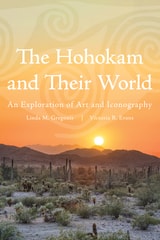
The Hohokam and Their World
An Exploration of Art and IconographyLinda M. Gregonis and Victoria R. Evans
University of Arizona Press, 2025
Southwest Books of the Year Pick
People traveling around the Sonoran Desert will see the traces of an ancient society, the Hohokam, through the material that they left behind—pottery, shell ornaments, carved stone, and rock imagery.
The Hohokam and Their World offers readers the opportunity to explore how these various images and objects may have been used by the Hohokam, and what the icons and objects may have meant, including how the Hohokam conveyed ideas about water, the Sonoran Desert, the ocean, travel, ancestors, and the cosmos.
Authors Linda M. Gregonis and Victoria R. Evans discuss how artists drew inspiration from their Sonoran Desert homeland and were also influenced by the cultures of western Mexico, the hunter-gatherers of the western desert, the Mogollon to the east, and the Pueblo cultures of the northern Southwest. Unlike traditional archaeological texts, this book takes a holistic approach by examining a diverse range of artistic expressions used by the Hohokam. From intricately crafted pottery to mesmerizing carvings in rock, each medium offers a unique glimpse into the Hohokam’s relationship with their environment and the wider world.
Whether you’re planning a visit to national parks or museums in the Southwest or simply intrigued by ancient civilizations, The Hohokam and Their World is a must-read. The work includes a glossary of key archaeological and anthropological terms, as well as endnotes and an extensive list of references for those who want to dig deeper.
The Hohokam
Desert Farmers and Craftsmen, Excavations at Snaketown, 1964–1965Emil W. Haury
University of Arizona Press, 1976