Results by title
178 books match the query 'Book' and 121 start with t

The Papers of the Bibliographical Society of America, volume 117 number 1 (March 2023)
The University of Chicago Press
University of Chicago Press Journals, 2023
The Papers of the Bibliographical Society of America, volume 117 number 3 (September 2023)
The University of Chicago Press
University of Chicago Press Journals, 2023

The Papers of the Bibliographical Society of America, volume 117 number 4 (December 2023)
The University of Chicago Press
University of Chicago Press Journals, 2023
The Papers of the Bibliographical Society of America, volume 118 number 1 (March 2024)
The University of Chicago Press
University of Chicago Press Journals, 2024
The Papers of the Bibliographical Society of America, volume 118 number 2 (June 2024)
The University of Chicago Press
University of Chicago Press Journals, 2024
The Papers of the Bibliographical Society of America, volume 118 number 3 (September 2024)
The University of Chicago Press
University of Chicago Press Journals, 2024
The Papers of the Bibliographical Society of America, volume 118 number 4 (December 2024)
The University of Chicago Press
University of Chicago Press Journals, 2024

The Papers of the Bibliographical Society of America, volume 119 number 1 (March 2025)
The University of Chicago Press
University of Chicago Press Journals, 2025

The Papers of the Bibliographical Society of America, volume 119 number 2 (June 2025)
The University of Chicago Press
University of Chicago Press Journals, 2025

The Papers of the Bibliographical Society of America, volume 119 number 3 (September 2025)
The University of Chicago Press
University of Chicago Press Journals, 2025

The Papers of the Bibliographical Society of America, volume 119 number 4 (December 2025)
The University of Chicago Press
University of Chicago Press Journals, 2025
The Papers of the Bibliographical Society of America, volume 120 number 1 (March 2026)
The University of Chicago Press
University of Chicago Press Journals, 2026
The Papers of the Bibliographical Society of America, volume 120 number 2 (June 2026)
The University of Chicago Press
University of Chicago Press Journals, 2026
The Papers of the Bibliographical Society of America, volume 120 number 3 (September 2026)
The University of Chicago Press
University of Chicago Press Journals, 2026
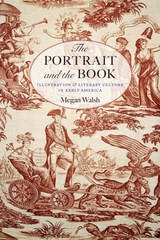
The Portrait and the Book
Illustration and Literary Culture in Early AmericaMegan Walsh
University of Iowa Press, 2017
Illustrations played a key role in American literary culture despite the fact there was little demand for books by American writers. Indeed, most of the illustrated books bought, sold, and shared by Americans were either imported British works or reprinted versions of those imported editions. As a result, in addition to embellishing books, illustrations provided readers with crucial information about the country’s status as a former colony.
Through an examination of readers’ portrait-collecting habits, writers’ employment of ekphrasis, printers’ efforts to secure American-made illustrations for periodicals, and engravers’ reproductions of British book illustrations, Walsh uncovers in late eighteenth-century America a dynamic but forgotten visual culture that was inextricably tied to the printing industry and to the early US literary imagination.
The Sorrow Psalms
A Book of Twentieth-Century ElegyLynn Strongin
University of Iowa Press, 2006
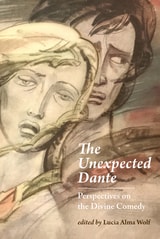
The Unexpected Dante
Perspectives on the Divine ComedyLucia Alma Wolf
Bucknell University Press, 2021
The Unexpected Dante brings together five leading scholars who offer fresh perspectives on the meanings and reception of The Divine Comedy. Some investigate Dante’s intentions by exploring the poem’s esoteric allusions to topics ranging from musical instruments to Roman law. Others examine the poem’s long afterlife and reception in the United States, with chapters showcasing new discoveries about Nicolaus de Laurentii’s 1481 edition of Commedia and the creative contemporary adaptations that have relocated Dante’s visions of heaven and hell to urban American settings.
This study also includes a guide that showcases selected treasures from the extensive Dante collections at the Library of Congress, illustrating the depth and variety of The Divine Comedy’s global influence. The Unexpected Dante is thus a boon to both Dante scholars and aficionados of this literary masterpiece.
Published by Bucknell University Press in association with the Library of Congress. Distributed worldwide by Rutgers University Press.
Theology and Anthropology in the Book of Sirach
Bonifatia Gesche
SBL Press, 2020
New research on Sirach for scholars and students
The present volume of English and German essays includes the proceedings of an international conference held in Eichstaett, Germany, in 2017. Themes of creation, emotions, life, death, wisdom, knowledge, the individual and society, family, gender, mercy, justice, and freedom are but a few of the topics that contributors explore in this new collection. Essays explore the rich intertextual connections between Sirach and other biblical texts.
Features:
- Attention to theological distinctions presented in the Hebrew, Greek, Syriac, and Latin versions of the book of Sirach
- Examination of the reception of Sirach in the New Testament and the early modern era
- English abstracts for German-language essays and German abstracts for English-language essays
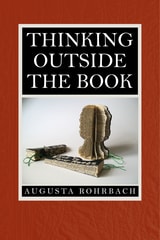
Thinking Outside the Book
Augusta Rohrbach
University of Massachusetts Press, 2014
In Thinking Outside the Book, Augusta Rohrbach works through the increasing convergences between digital humanities and literary studies to explore the meaning and primacy of the book as a literary, material, and cultural artifact. Rohrbach assembles a rather unlikely cohort of nineteenth-century women writers—Jane Johnston Schoolcraft, Sojourner Truth, Hannah Crafts, Augusta Evans, and Mary Chesnut—to consider the publishing culture of their period from the perspective of our current digital age, bringing together scholarly concepts from both print culture and new media studies.
In nineteenth-century America, women from a variety of racial and class affiliations were bombarding the print market with their literary productions, taking advantage of burgeoning rates of literacy and advances in publishing technology. Their work challenged prevailing modes of authorship and continues to do so today. Each chapter of Thinking Outside the Book positions a focal figure as both paradigmatic and problematic within the context of key terms that define the study of the book. In lieu of terms such as literacy, authorship, publication, edition, and editor, Rohrbach develops an alternate typology that includes mediation, memory, history, testimony, and loss. Recognizing that the field spans radio, cinema, television, and the Internet, she draws comparisons to the present day, when Web 2.0 allows writers from varying backgrounds and positions to seek out readers without “gatekeepers” limiting their exposure.
More than a literary history, this book takes up theories of recovery, literacy, authorship, narrative, the book, and new media in connection with race, gender, class, and region.
This Is Not the End of the Book
Jean-Claude Carriare and Umberto Eco
Northwestern University Press, 2012
A book lover today might sometimes feel like the fictional medieval friar William of Baskerville in Eco’s The Name of the Rose, watching the written word become lost to time. In This Is Not the End of the Book, that book’s author, Umberto Eco, and his fellow raconteur Jean-Claude Carriere sit down for a dazzling dialogue about memory and the pitfalls, blanks, omissions, and irredeemable losses of which it is made. Both men collect rare and precious books, and they joyously hold up books as hardy survivors, engaging in a critical, impassioned, and rollicking journey through book history, from papyrus scrolls to the e-book. Along the way, they touch upon science and subjectivity, dialectics and anecdotes, and they wear their immense learning lightly. A smiling tribute to what Marshall McLuhan called the Gutenberg Galaxy, this dialogue will be a delight for all readers and book lovers.
the book of webs
Jesse Kohn
University of Massachusetts Press, 2023
Honorable Mention, 2023 Big Other Readers’ Choice Award
Word spreads from one recovering self-inflicted eye surgery patient to the next of a mystical book capable of overturning the Burlingtonian empire.
Captivating and devious, the book of webs is constructed out of misremembered fragments, conflicting histories, and secrets whispered in the darkness. The insurgents tell of an enemy so powerful it owns the air, dictates reality, and has even managed to co-opt their thoughts. Their only hope is to conspire with the uprisings of their bodies: slips of the tongue, excretions, tics, bad hair days, and, most importantly, their dreams.
In this darkly comic and inventive debut novel, Jesse Kohn introduces a network of shape-shifters and misfits. A militant priestess broods over orphaned angel eggs. A post-punk band animates a messianic homunculus made of belly button lint. A failed dream journalist goes on a terrible first date to heaven. Each misadventure is a chapter in a book devised to oppose the despotic order of their enemy—the book of webs.