475 books match the query 'Catholic' and 126 start with t
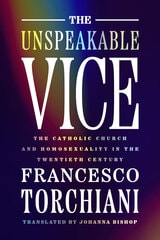
cover of The Unspeakable Vice: The Catholic Church and Homosexuality in the Twentieth Century

The Unspeakable Vice

The Catholic Church and Homosexuality in the Twentieth Century

Francesco Torchiani, Translated by Johanna Bishop

University of Wisconsin Press, 2026

As gay men and lesbian women increasingly gained recognition and acceptance in twentieth-century literature and film, and subsequently in social and political movements, the Catholic Church reacted by subtly moving away from its overt condemnation of homosexuality as an urgent moral problem and toward tacitly shunning homosexuality as an “unspeakable vice.” In this revealing history, Francesco Torchiani reconstructs the Catholic Church’s shifting attitudes toward homosexuality during this period by drawing on a vast array of internal documents and external accounts. This monograph expands the scholarship on the relationship between Catholicism and homosexuality in terms of both method and content, ultimately concluding that the Catholic Church continues to wholeheartedly condemn homosexuality despite making genuine efforts to reflect on and understand its social and cultural impact. The Unspeakable Vice therefore sheds new light on and places into historical perspective the questions the Catholic Church continues to reckon with regarding its role in contemporary society.
[more]
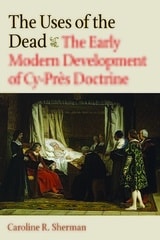
cover of The Uses of the Dead

The Uses of the Dead

Caroline R. Sherman

Catholic University of America Press, 2017

Cy-près doctrine, which allows the purpose of a failing or impractical charitable gift to be changed, has been understood since the eighteenth century as a medieval canon law principle, derived from Roman law, to rescue souls by making good their last charitable intentions. The Uses of the Dead offers an alternate origin story for this judicial power, grounded in modern, secular concerns.

Posthumous gifts, which required no sacrifice during life, were in fact broadly understood by canon lawyers and medieval donors themselves to have at best a very limited relationship to salvation. As a consequence, for much of the Middle Ages the preferred method for resolving impossible or impractical gifts was to try to reach a consensus among all of the interested parties to the gift, including the donor's heirs and the recipients, with the mediation of the local bishop.

When cy-près emerged in the seventeenth century, it cut a charitable gift o from return to the donor's estate in the event of failure. It also gave the interested parties to the gift (heirs, beneficiaries, or trustees) little authority over resolutions to problematic gifts, which were now considered primarily in relationship to the donor's intent—even as the intent was ultimately honored only in its breach. The Uses of the Dead shows how cy-près developed out of controversies over church property, particularly monastic property, and whether it might be legally turned over to fund education, poor relief, or national defense.

Renaissance humanists hoped to make better, more prudent uses of property; the Reformation sought to correct superstitious abuses of property and ultimately tended to prevent donors' heirs from recovering secularized ecclesiastical gifts; and the early modern state attempted to centralize poor relief and charitable efforts under a more rational, centralized supervision. These three factors combined to replace an older equitable ideal with a new equitable rule—one whose use has rapidly expanded in the modern era to allow assorted approximations and judicial redistributions of property.
[more]
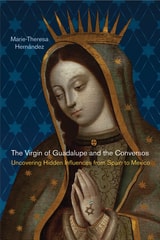
cover of The Virgin of Guadalupe and the Conversos: Uncovering Hidden Influences from Spain to Mexico

The Virgin of Guadalupe and the Conversos

Uncovering Hidden Influences from Spain to Mexico

Hernández, Marie-Theresa

Rutgers University Press, 2014

Hidden lives, hidden history, and hidden manuscripts. In The Virgin of Guadalupe and the Conversos, Marie-Theresa Hernández unmasks the secret lives of conversos and judaizantes and their likely influence onthe Catholic Churchin the New World.

The terms converso and judaizante are often used for descendants of Spanish Jews (the Sephardi, or Sefarditas as they are sometimes called), who converted under duress to Christianity in the fourteenth and fifteenth centuries. There are few, if any, archival documents that prove the existence of judaizantes after the Spanish expulsion of the Jews in 1492 and the Portuguese expulsion in 1497, as it is unlikely that a secret Jew in sixteenth-century Spain would have documented his allegiance to the Law of Moses, thereby providing evidence for the Inquisition.

On a Da Vinci Code – style quest, Hernández persisted in hunting for a trove of forgotten manuscripts at the New York Public Library. These documents, once unearthed, describe the Jewish/Christian religious beliefs of an early nineteenth-century Catholic priest in Mexico City, focusing on the relationship between the Virgin of Guadalupe and Judaism. With this discovery in hand, the author traces the cult of Guadalupe backwards to its fourteenth-century Spanish origins. The trail from that point forward can then be followed to its interface with early modern conversos and their descendants at the highest levels of the Church and the monarchy in Spain and Colonial Mexico. She describes key players who were somehow immune to the dangers of the Inquisition and who were allowed the freedom to display, albeit in a camouflaged manner, vestiges of their family's Jewish identity.

By exploring the narratives produced by these individuals, Hernández reveals the existence of those conversos and judaizantes who did not return to the “covenantal bond of rabbinic law,” who did not publicly identify themselves as Jews, and who continued to exhibit in their influential writings a covert allegiance and longing for a Jewish past. This is a spellbinding and controversial story that offers a fresh perspective on the origins and history of conversos.
[more]
cover of The Virtues

The Virtues

John H. Garvey

Catholic University of America Press, 2022
An ancient question asks what role moral formation ought to play in education. It leads to such questions as, do intellectual and moral formation belong together? Is it possible to form the mind and neglect the heart? Is it wise? These perennial questions take on new significance today, when education — especially, higher education — has become a defining feature in the lives of young people. Throughout his more than 40 years in academia, John Garvey has reflected on the relationship between intellectual and moral formation, especially in Catholic higher education. For 12 years as the President of The Catholic University of America, he made the cultivation of moral virtue a central theme on campus, highlighting its significance across all aspects of University culture, from University policy to campus architecture. During his two decades of presiding at commencement exercises, first as Dean of Boston College Law School and then as President of The Catholic University of America, Garvey made a single virtue the centerpiece of his remarks each year. The Virtues is the fruit of those addresses. More reflective than analytical, its purpose is to invite conversation about what it means to live well. Following Catholic tradition, The Virtues places the theological virtues of faith, hope, and love at the center of the moral life, and the cardinal virtues — justice, temperance, fortitude, and prudence — with them. Alongside these major virtues, Garvey considers a collection of “little virtues,” habits that assist and accompany us in small but important ways on the path to goodness. Though he treats each virtue individually, a common thread unites his reflections. “The intellectual life depends on the moral life,” Garvey writes. “Without virtue we cannot sustain the practices necessary for advanced learning. In fact, without virtue, it’s hard to see what the purpose of the university is. Learning begins with love (for the truth). If we don’t have that, it’s hard to know why we would bother with education at all.” The Virtues invites its readers, especially students, to appreciate that the cultivation of virtue is indispensable to success, academic or otherwise, and more importantly, essential to their ultimate aim, a life well lived.
[more]
cover of The Way of Humility: St. Augustine's Theology of Preaching

The Way of Humility

St. Augustine's Theology of Preaching

Charles J. Kim

Catholic University of America Press, 2023
For Augustine, that the Word became flesh transformed a merely human understanding of the virtues and grounds all virtue in humility. The Way of Humility: Augustine’s Theology of Preaching explores how this truth became a new paradigm for understanding the scriptures and thus, how Augustine embodied the virtue in the preaching of the scriptures. One of Augustine’s most devoted students, Possidius, said that anyone can learn from reading Augustine, but “those were able to profit still more who could hear him speak in church and see him with their own eyes. Truly, he was indeed one of those of whom it is written, ‘speak this way and act the same way.’” The Way of Humility searches for evidence of the virtue of humility in action through the preaching of the humble Word in the sermons of Augustine. Many know of Augustine through his more famous treatises but few have encountered the Doctor of Grace where he had his most immediate impact, preaching. The Way of Humility follows the sermons through several traditional theological loci, ecclesiology, Christology, soteriology to uncover what can be learned about Augustine’s theology through the way he preached to a mixed audience of urbanites and rustics, many of whom did not have the benefit of a formal education. Throughout the book, we see the interplay between Augustine’s action in speech and Augustine’s more direct statements on his theology of Preaching. Through handing over Christ in his sermons, he became himself an example of humility for the congregation on their journey toward the final end for all people, the Beatific Vision.
[more]
cover of The Winning Side: Why the Culture of Death Is Dying

The Winning Side

Why the Culture of Death Is Dying

Charles E. Rice

St. Augustine's Press, 0
[more]
cover of The Word of Truth, Sealed by the Spirit: Perspectives on the Inspiration and Truth of Sacred Scripture

The Word of Truth, Sealed by the Spirit

Perspectives on the Inspiration and Truth of Sacred Scripture

Matthew C. Genung

Saint Paul Seminary Press, 2022
The Word of Truth, Sealed by the Spirit is a collection of seven essays pertaining to the topic of biblical inspiration and truth. Two chapters provide a critical analysis of the Pontifical Biblical Commission’s 2014 document The Inspiration and Truth of Sacred Scripture and reflect upon its relevance and outcome. Five chapters respond to a particular aspect of this document by investigating a hermeneutical or exegetical question in order to advance the dialogue on the questions of biblical inspiration and truth. This book is intended not only for Catholic seminary and university professors and students but also Protestant scholars and students, as well as catechized lay people of all Christian denominations. Luis Sánchez-Navarro, DCJM, writes on the importance of understanding the relationship between revelation, biblical inspiration, and truth for both biblical interpretation and for Christian living. Michael Magee provides a critical analysis of the PBC document by situating it within the recent history of the Church’s attempts to clarify the theology of biblical inspiration and truth. Matthew C. Genung studies Exodus 19 in its context, showing that the Bible itself indicates that its nature as emended Scripture pertains to its inspired character. Anthony Pagliarini writes about the Book of Ezekiel as inspired Scripture given the non-fulfillment of Ezekiel’s prophetic vision of the restored Temple. Aaron Pidel, SJ, analyzes Joseph Ratzinger’s writings on hermeneutics and biblical theology, to propose a reliable methodology for determining the historicity of conflicting biblical reports. Marcin Kowalski, analyzing 1 Corinthians 11:2–16, addresses the question of the inspired character of a text at variance with changing gender roles in society. Kelly Anderson evaluates biblical texts depicting an inner-trinitarian dialogue in order to shed light on the relationship of inspired Scripture to the eternal dialogue of God.
[more]
cover of The third spring: G.K. Chesterton, Graham Greene, Christopher Dawson, and David Jones

The third spring

G.K. Chesterton, Graham Greene, Christopher Dawson, and David Jones

Adam Schwartz

Catholic University of America Press, 2005
This book is the first detailed examination of these four authors as part of a Roman Catholic, counter-modern community of discourse. It is informed by extensive research in the writers' works, scholarship on them, and their personal papers.
[more]
cover of Theology as an Ecclesial Discipline: Ressourcement and Dialogue

Theology as an Ecclesial Discipline

Ressourcement and Dialogue

J. Augustine Di Noia

Catholic University of America Press, 2024
The practice of theology depends in part on asking the right questions. Not any sorts of questions, not idle questions, nor questions framed entirely by our own experience or the great issues of our times, but good theological questions focus the mind of the inquirer on the endlessly intelligible self-revelation of God to which the Sacred Scripture bears witness. Our own questions and the great questions of our times have a place, as long as they are purged of the ideological outlooks that can suppress or obscure the questions that the sacra pagina itself presses upon us. Among the essays gathered in Theology as an Ecclesial Discipline, the first set directs the reader’s attention precisely to questions that trace the distinctive features of the nature of theology itself. What are the principles and scope of the field of theology as practiced by believers in an ecclesial context? Are historical-critical methods of exegesis compatible with a properly theological interpretation of the Scriptures? How can theology have a place in the academy as an intellectual discipline if the Magisterium seems to limit the scope of its inquiries? The second part considers a range of questions that preoccupy contemporary Protestant and Catholic theologians. Can the names Father, Son and Holy Spirit be replaced by more inclusive titles in doctrine and liturgy? By placing humanity at the center of theological investigation, is Christian humanism distinct from secular humanism? How can we be guilty of a sin committed by our first ancestors? Can the Christian vision of procreative human sexuality survive the cultural onslaught of the sexual revolution? The questions in the third part of this book arise from Catholic dialogue with non-Christian religions, or with other Christian communities, or with conceptions of a cosmos in ecological crisis. Is there a future for Catholic theology of religions? How can people who do not believe in Christ be saved? Is the cosmos a safe environment for human beings, or, alternatively, how can the cosmos be protected from human depredation? Can the concept of “church” stretch far enough to encompass Christian communities that see themselves as strictly local and independent bodies?
[more]
cover of Theology of Peter Damian

Theology of Peter Damian

Patricia Ranft

Catholic University of America Press, 2012
In the first comprehensive work based wholly on critical editions of Damian's writings, Ranft explores all 180 letters of Damian and his vita of Romuald.
[more]
cover of Thinking with St. John Paul II: JP2 Lectures, 2020/2021

Thinking with St. John Paul II

JP2 Lectures, 2020/2021

Darliusz Karlowicz

Angelicum University Press Fundacja Swietego Mik, 2021

[more]
cover of Thinking with St. John Paul II: Vol 2 (2021-2022)

Thinking with St. John Paul II

Vol 2 (2021-2022)

Dariusz Karlowicz

Angelicum University Press Fundacja Swietego Mik, 2025

Thinking with St. John Paul II vol. IIis a result of a series of monthly "JP2 Lectures" held in the academic year 2021/2022 at the Pontifical University of St. Thomas Aquinas-Angelicum in Rome. The "JP2 Lectures" have been introduced to the Angelicum's curriculum by the St. John Paul II Institute of Culture as lectures open to the public and promoting reflection on a wide range of topics in the light of St. John Paul II's intellectual and spiritual legacy. The authors of texts printed in this volume are some of the most prominent intellectuals of our time from across the world. Volume II is nine texts from John Lord Alderdice, Jean-Luc Marion, George Weigel, Andrea Riccardi, John Milbank, Carl A. Anderson, Ewa Thompson and Stanisław Grygiel. Topics include i.a. questions relating to the role of religion in modern European society, reflections of lessons drawn from JP's social and anthropological teaching and summaries of the pontificate from a historical perspective.
[more]
cover of Thinking with St. John Paul II: Vol. 3 (2022-2023)

Thinking with St. John Paul II

Vol. 3 (2022-2023)

Dariusz Karlowicz

Angelicum University Press Fundacja Swietego Mik, 2025

Thinking with St. John Paul II vol. III is a result of a series of monthly "JP2 Lectures" held in the academic year 2022/2023 at the Pontifical University of St. Thomas Aquinas-Angelicum in Rome. The "JP2 Lectures" have been introduced to the Angelicum's curriculum by the St. John Paul II Institute of Culture as lectures open to the public and promoting reflection on a wide range of topics in the light of St. John Paul II's intellectual and spiritual legacy. The authors of texts included in this volume are some of the most prominent intellectuals of our time from across the world. Volume III is eight texts from 2022/23 by Antoine Arjakovsky, Mirosława Grabowska, Vittorio Possenti, W.H. Weiler, s. Helen Alford, O.P., Dariusz Karłowicz, Rusty R. Reno, and Fr. Franciszek Longchamps de Berier. Topics include i.a. questions relating the theory and reality of secularisation and the crisis and polarisation of Europe in a Christian perspective.
[more]
cover of Thomas Aquinas Today: Still the Common Doctor?

Thomas Aquinas Today

Still the Common Doctor?

Andrew Hofer

Catholic University of America Press, 2026
[more]
cover of Thomas Aquinas and Medieval Canon Law

Thomas Aquinas and Medieval Canon Law

Justin M. Anderson

Catholic University of America Press, 2025

Thomas Aquinas and Medieval Canon Law bridges, for the first time, two worlds of scholarship that have never been explored in book-length form and investigates an under-researched area in Thomistic studies, namely the question of how Thomas Aquinas engaged the ecclesiastical law and jurisprudence of his day. Neither historians of medieval canon law nor experts on Thomas's thought have previously paid much attention to the canon law tradition as a source for Thomas's work and an influence on his thought. But, as this volume shows, his consideration of mendicant life, law, justice, oaths, penance, clerical orders, the Eucharist, baptism, property, commerce, marriage and more reveal engagement with key canon law texts and concepts and with the jurisprudence of major canonists. The book uncovers how Aquinas encountered canonical regulations and jurisprudence as a Dominican, an educator in both theology and pastoral care, and a participant in the secular-mendicant controversy. In his life, education, community, and his way of thought, Thomas Aquinas could not avoid and necessarily encountered and dealt with the canonical tradition. He did so in a distinctive way, working as he did with his theological and philosophical source material to craft his own great synthesis. What this volume shows, if nothing else, is that the canon law tradition should be taken into consideration when assessing Thomas's synthetic thought. Following the editors' introduction, thirteen scholarly contributions and an epilogue explore Aquinas's interaction with medieval canon law through four major themes: Dominican Matters; Foundations Matters of Faith, Truth, and Law; Moral Matters; and Sacramental Matters. Approximately half the contributors are specialists from the field of medieval canon law, and half are grounded in Thomistic tradition. The result is a unique and scholarly contribution to two major research areas that may open avenues for similar studies of other key figures in the scholastic tradition.
[more]
cover of Thomas Aquinas as Spiritual Teacher

Thomas Aquinas as Spiritual Teacher

Michael A. Dauphinais

Sapientia Press of Ave Maria University, 2023
St. Thomas Aquinas preaches in his sermon Puer Jesus "Just as your father begot you bodily, your teacher begets you spiritually." St. Thomas himself has been blessed with prodigious fecundity through the centuries for his teaching in the Holy Spirit. Always, he leads us to think of the Blessed Trinity and all things from God's own view. With new insights into St. Thomas's spiritual teaching in its sources, context, breadth, wisdom, and influences, Thomas Aquinas as Spiritual Teacher presents chapters inspired by an international conference co-sponsored by the Aquinas Center for Theological Renewal at Ave Maria University and the Thomistic Institute of the Dominican House of Studies. The volume, like its conference, honors Archbishop J. Augustine Di Noia, OP, adjunct secretary of the Dicastery for the Doctrine of the Faith, for his dedication to the spiritual teaching of St. Thomas in several decades of service to the Church and the academy. Luis F. Cardinal Ladaria, SJ, prefect of the Dicastery for the Doctrine of the Faith, contributed the volume's foreword.
[more]
cover of Thomas Shields and the Renewal of Catholic Education

Thomas Shields and the Renewal of Catholic Education

Leonardo Franchi

Catholic University of America Press, 2023
This book explores the contribution of the Rev Dr Thomas Shields (1862-1921) to Catholic education in the United States of America in the late 19th and early 20th century. Fr Shields was a pioneer in combining a career as an academic in Catholic University of America with the publication of many resources for schools. Given his pioneering role in aligning Catholic educational thought with emerging insights in the sciences, and his multi-layered commitment to Catholic education as scholar, author of textbooks and founder of initiatives in the field of Teacher Education, it seems fitting that his considerable body of work should be the subject of fresh scholarly investigation. The book is in five parts. Part 1, “Catholicism as an Educational Movement”, sets out the contours of the intellectual climate in which Shields operated and presents Catholicism as a dynamic educational movement. Part 2, “Responding to Progressive Thought”, explores the relationship between Progressivism and Catholic Education, showing how the Catholic Church responded to the challenges presented by Progressive thought. Part 3, “Shields and the Reform of Pedagogy”, examines both Shields’ general pedagogical principles and how they relate to Catholic education. Part 4, “Forming Teachers in Heart and Mind”, considers Shields’ ideas on Catholic Teacher Formation, exploring issues such as culture, vocation, method and curriculum. Part 5, “The Catholic Education Series”, explores selected examples from Shields’ Catholic Education Series to identify how his material for schools reflected, to a greater or lesser extent, his wider educational ideas. As the present age is also witness to considerable and deep-rooted challenges to Catholic education and, indeed to the Catholic understanding of the human person, Shields’ work will inspire contemporary reform-minded Catholic educators to reassess and develop the mission of Catholic education in light of the traditions of the Church.
[more]
cover of Three Christological Treatises

Three Christological Treatises

Catholic University of America Press, 2014
Twenty-nine in all, these letters cover all but three of Cyril's years as a bishop. The first twelve were published in 2009 (Fathers of the Church 118). The present volume completes the set. Festal letters were used in Alexandria primarily to announce the beginning of Lent and the date of Easter. They also served a catechetical purpose, however, allowing the Patriarch an annual opportunity to write pastorally not just about issues facing the entire see, but also about the theological issues of the day. Thus, in these letters we catch a glimpse of Cyril the pastor writing about complex theology in an uncomplicated way. These letters also illuminate other realities of the ancient church in Alexandria, especially the relationship with the Jewish community and the rising influence of asceticism.
[more]
cover of Tolkien, Philosopher of War

Tolkien, Philosopher of War

Graham McAleer

Catholic University of America Press, 2024

Book sales of the works of J.R.R. Tolkien keep pace with those of the Koran and the Bible. TV companies pay hundreds of millions to the Tolkien Trust to make adaptations of his work. In the UK, he routinely tops the list of the nation’s favorite authors. An estimated 2 million war gamers use The Lord of the Rings figurines in their RPG. It is incontestable that Tolkien is the most influential Catholic writer of the last century. Tolkien, Philosopher of War fills a gap in the scholarship. It is the first book addressing the philosophical and theological understanding of war in Tolkien and will interest readers of Catholic Studies, the philosophy and theology of literature, war studies, Tolkien Studies, English studies, political theory, and aesthetics. In popular imagination, Tolkien is a Luddite, but recent scholarship has identified Tolkien’s extensive modern sympathies. Tolkien, Philosopher of War contributes to this growing literature. His is a modern critique of Enlightenment thinking, specifically those philosophies of history that wrest the initiative from God in divinizing man. His worry is apocalyptic politics, those political movements that take Christ’s "Be ye therefore perfect, even as your Father which is in heaven is perfect" (Matt. 5: 48) out of the realm of grace and make it a platform for political action. Tolkien, Philosopher of War has three core theses: metaphysical, political, and aesthetic. In this, Tolkien is comparable to Cormac McCarthy, especially his Blood Meridian. Tolkien took note of a tight analytical connection between the vanity driving commercial civilization – which Hume, Smith, and Ferguson all identified – and the vanity driving the Promethean fantasies of apocalyptic politics. War – indeed, total war – is a predictable outcome of this analytical connection. The three theses run: 1) metaphysical: the apocalyptic anxiety of Tolkien’s lore is traceable to the gnostic rejection of the analogy of being typical of the philosophies of history that dominated his day; 2) political: in the English context, Tolkien sided with the Tories against Whiggery, defending monarchy as a counterweight to the vanity driving progressive philosophy of history; 3) aesthetic: Futurism’s philosophy of history celebrated the Machine; inverting the value order, the Futurism art movement encoded anti-Christianity, fascist politics, and apocalyptic war. Tolkien’s “cosmogonical drama,” with its pastoralism and portraits of angels (Gandalf) and gods (Nienna), dramatizes an aesthetic resistance to Futurism.
[more]
cover of Tradition in Act: Development and Its Counterfeits After Newman

Tradition in Act

Development and Its Counterfeits After Newman

Reinhard Hütter

Catholic University of America Press, 2027

Tradition in Act addresses the present crisis over a proper understanding of the development of doctrine in contemporary Catholic theology and thus is a critical as well as constructive theological intervention in arguably the most central controversy in contemporary Catholic theology. The concept of “tradition in act” provides an approach that enables a recovered understanding of the development of doctrine for the theologian, and one that avoids the Scylla of antiquarianism and the Charybdis of presentism. The concept of “tradition in act” (drawing on the distinction between act and potency) is understood as the active undergoing of the continuously unfolding of the History of Salvation in the Church by way of the living paradosis of the doctrina evangelii in the Eucharistic liturgy, the life, and teaching of the Church. If doctrine is to develop at all, it must do so as the unfolding of a revelation once delivered to the apostles and entrusted to the Church as a sacred deposit. Hence it is required that subsequent formulations, however diverse in expression or circumstance, remain one with their antecedents—homogeneous with them, cognate to them in meaning and intention. This necessary continuity is identity. Without such identity, development degenerates into alteration and hence corruption; the line of transmission is broken, and the Church no longer hands on what she has herself received. The unfolding argument utilizes both the work and the approach of John Henry Newman to propose the criteria of identity of doctrine understood in terms of St Vincent of Lerins’ second rule, as presented by Newman, as constitutive of authentic development. The notion of authentic development of doctrine understood in terms of “tradition in act” offers a novel approach that avoids entirely the inherent risks in the historical consciousness of how doctrine has developed, in short, it is meant to offer an antidote to the historicism at large. Tradition in Act assays a contemporary Catholic theological articulation of the development of doctrine in the spirit of Gustav Mahler’s famous statement that “Tradition is not the worship of ashes, but the preservation of fire.”
[more]
cover of Transformed in Christ

Transformed in Christ

John S. Grabowski

Catholic University of America Press, 2017
[more]
cover of Treatises on Noah and David

Treatises on Noah and David

Brian P. St. Ambrose

Catholic University of America Press, 2020

These sermons by Ambrose of Milan (340–397 AD) provide a window into the preaching and scriptural exegesis of the legendary bishop, whose exposition of the Old Testament was instrumental in the conversion of Augustine of Hippo and in the development of Latin theology. In his treatise On Noah and his two Defenses for David, Ambrose borrows from influential Greek theologians, including Philo of Alexandria, Origen, and Didymus the Blind, while developing his own commentary on the exemplary patriarchs. Ambrose’s exegesis typifies both his attention to the letter of Scripture as well as his spiritual and allegorical reading of the holy figures or “saints” who lived before Christ.

The first treatise presents Noah as a model just man, as Ambrose pairs the literal and the higher or spiritual meaning of the Genesis flood narrative to address topics ranging from the Genesis narrative to Stoic ethics to the Incarnation. In his defense of David to the emperor Theodosius, Ambrose ties David’s sin and repentance to his own close reading of Psalm 51(50), David’s plea for himself in his famous “Miserere.” While the authenticity of the third treatise included in the volume, the Second Apology of David, has long been challenged, recent scholarship suggests that it transmits Ambrose’s own preaching, which applies the lessons of David’s life to the situation of gentile unbelievers, Jews, and the church; even if it is the work of a later imitator, the Second Apology is a compelling and systematic treatment of the David’s sin and repentance as relevant to Christian morality and doctrine.

The three treatises, previously unavailable in English translation, broaden our understanding of exegesis in the Latin West and our interpretation of Ambrose as preacher and exegete.
[more]
cover of Trinitarian Ecclesiology: Charles Journet, the Divine Missions, and the Mystery of the Church

Trinitarian Ecclesiology

Charles Journet, the Divine Missions, and the Mystery of the Church

John F. O'Neill

Catholic University of America Press, 2023
Venerable Fulton Sheen once famously said that “There are not one hundred people in the United States who hate the Catholic Church, but there are millions who hate what they wrongly perceive the Catholic Church to be – which is, of course, quite a different thing.” What is the true understanding of the mystery of the Church? In Lumen Gentium, the Church famously identifies herself as the sacrament of salvation, and various attempts have been made at developing an ecclesiology rooted in this idea. Another approach, nevertheless, prominent in the opening chapter of Lumen Gentium, is the relation of the Church to the Trinity in light of the divine missions, especially those of the Incarnation and Pentecost. Trinitarian Ecclesiology is an example of this approach to the mystery of the Church that places the divine missions at the head and the heart of the work. The order of Journet's work is based on the four causes of the Church. Journet situates the treatise on the hierarchy in its proper place as belonging to the efficient cause of the Church in order to treat the more central mystery of the Church in her formal and material causes, namely the sanctifying gift of fully Christic charity and its visible manifestation. While Journet’s magisterial work may already be identified as a Trinitarian Ecclesiology, recent research into the Trinitarian theology of St. Thomas Aquinas has deepened our understanding of his teaching, particularly in the way that creatures can relate to the divine persons in the divine missions. With a clearer understanding of the relation of creatures to the divine persons rooted in grace and its effects, a deeper vision of the mystery of the Church emerges, one that sees the Church as the visible mission of the Holy Spirit, inseparably joined with the visible mission of the Son in the Incarnation. The Great Mystery of Christ and the Church is the unity of the visible missions of the Son and the Spirit who have been sent into the world for our salvation.
[more]
cover of Trinitarian Explorations in Systematic Theology: Unpacking Lonergan's Four-Point Hypothesis

Trinitarian Explorations in Systematic Theology

Unpacking Lonergan's Four-Point Hypothesis

Neil Ormerod

Catholic University of America Press, 2026
In his Latin theological textbook, Bernard Lonergan proposed a way of correlating the four trinitarian relations (paternity, filiation, active spiration and passive spiration) with four distinct participations in the divine nature vis. the Incarnation, the beatific vision, sanctifying grace and the habit of charity. This book uncovers the genetic origins of this hypothesis in Augustine and Aquinas, its significance in terms of the grace-nature debate, and the insights it provides to key Christian doctrines such as Christology, ecclesiology, the nature of holiness, and the beatific vision. The author engages with contemporary theological literature to demonstrate the explanatory power of Lonergan’s construct in relation to competing proposals. Vatican I taught that the role of systematic theology is to understand divine mysteries through analogy and through the nexus between these mysteries. This work argues that Lonergan’s hypothesis perfectly fulfils the second of these tasks and thus provides a needed unification of the diverse topics that confront systematic theologians. Each individual chapter has appeared in leading theological journals: Theological Studies, Irish Theological Quarterly and Louvain Studies. The chapters are ordered here not in terms of publication date, but in such a way as to guide the reader through a more synthetic grasp of the issues involved.
[more]
cover of Truth on Trial: The Rise and Fall of the Integrated Humanities Program at the University of Kansas

Truth on Trial

The Rise and Fall of the Integrated Humanities Program at the University of Kansas

Robert K. Carlson

Catholic University of America Press, 2026
In this reprinting of Truth on Trial, Robert Carlson outlines the sad state of higher education in America, where “learning” is increasingly disconnected from the pursuit of truth, goodness, and beauty that has always been its most important heritage, replaced by an environment where any view that is not ‘politically correct’ is persecuted and disdained. Drawing upon his own experiences in the transformational Integrated Humanities Program (IHP) at the University of Kansas (KU), Carlson details the crisis that faces education today, and uses the lessons learned through that program’s meteoric rise (and eventual demise) to propose a solution to that same crisis. Launching in the early 1970’s, the IHP was the “Great Books” brainchild of a trio of KU professors—Dennis Quinn, Franklyn Nelick, and John Senior—who understood that wonder is not only the beginning but also the sustaining principle of the best education, and who sought to offset the radical disintegration permeating Western culture in general and higher education in particular. Convinced that the fragmentation of such major cultural institutions as the family, the church, and the world of education was profoundly affecting students, these three teachers invited freshmen and sophomores at the public university to join their fledgling program, where they would study, hear, and discuss the classics of ancient and medieval literature, listen to their professors converse on “the greatest that has been thought and said,” memorize poems, stargaze, take courses in Latin and rhetoric, and much more. The program’s growth was immediate and rapid—student enrollment increased from 20 in 1970 to 140 in 1971, and 186 in 1972—but its counter-cultural stance put it on fragile ground at KU, and within a year, it was under intense scrutiny, culminating in a public, quasi-judicial proceeding in which a dean-appointed committee sought to determine whether the IHP should continue to exist. Quinn, Nelick, and Senior, professors with a combined total of 90+ years in teaching, were now on trial at the university, not because they had taught poorly, but because they had taught too well. On January 20, 1979, the Advisory Committee charged with investigating the Program rendered its verdict, placing it under the administration of a new Humanities Committee, effectively annihilating the IHP. While its initial trial felt like a defeat, God had other plans in store. Thankfully (and to paraphrase Twain’s famous words), the effects of the IHP’s death were greatly exaggerated. In the years since its untimely demise on the KU campus, its impact on the world of Catholic education has only grown stronger—the fruitfulness of its alumni and friends serving as the ultimate proof of its vision’s great worth. Since the program’s closing in 1979, it has inspired the founding of both Clear Creek Abbey and Wyoming Catholic College, as well as St. Gregory’s Academy in Pennsylvania (which eventually led to Gregory the Great Academy), and St. Martin’s Academy in Kansas. Perhaps most tellingly of all, its clear call to make wonder, beauty, and experience vital parts of any educational program has impacted countless homeschooling families, private and public school teachers, and educational programs in the subsequent years.
[more]
cover of Two Years in the Pontifical Zouaves: A Narrative of Travel, Residence, and Experience in the Roman States

Two Years in the Pontifical Zouaves

A Narrative of Travel, Residence, and Experience in the Roman States

Joseph Powell

Catholic University of America Press, 2026

Following the formation of the kingdom of Italy in 1860, the new Italian government, led by its King, Victor Emmanuel II, turned its attention to the city it intended to make its capital, the Eternal City, Caput Mundi, Rome. One major obstacle stood in their path, the Papal States, under the leadership of Pius IX and under the protection of French soldiers sent by Emperor Napoleon III. For the Italian nationalist leader Giuseppe Garibaldi, a ferocious anticlerical who had an uneasy alliance with the monarchial Italian government, the Papacy would no longer be allowed to hold back Italy's progress into the modern world. As French commitments to preserve the independence of the Vatican waned, it increasingly fell to one of the most remarkable military units in the history of modern Europe to protect the center of Western Christendom. This unit was the Papal Zouaves, soldiers and officers from all over the world drawn by their Catholic faith to fight on behalf of the Pope against an Italian government which was ruthless in enforcing its authority. They came from as near as Switzerland and Belgium and as far away as Canada and China. This is the memoir of one of the, and Englishmen named Joseph Powell. His story is a chronicle of one of the most tragic clashes of church and state, and how ancient institutions fought to protect their existence against the ruthless waves of modernity.
[more]