Results by title
851 books match the query 'Congresses' and 169 start with t
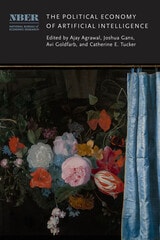
The Political Economy of Artificial Intelligence
Edited by Ajay Agrawal, Joshua Gans, Avi Goldfarb, and Catherine E. Tucker
University of Chicago Press, 2026
An authoritative look at how artificial intelligence both shapes and is shaped by the political and economic forces of the modern world.
As the effects of artificial intelligence are felt across economies and societies, many of its ramifications are still emerging. This volume brings together economists and political scientists to examine how AI intersects with regulation, military power, and political identity—offering analytical frameworks and identifying key open questions for future research.
The contributions address topics such as the allocation of property rights for AI inputs, trade-offs among alternative regulatory regimes, and the role of interest groups in shaping the technology’s trajectory. They explore how AI-related capabilities influence military effectiveness, resource allocation, and bargaining power among nations, and consider AI’s effects on political preferences, from the influence of AI-curated information on polarization to the implications of targeted political advertising and personalized education for national identity formation. The volume highlights key trade-offs that arise in AI’s political economy, and points toward empirical strategies and theoretical models that can advance understanding in this emerging field.
Drawing on diverse disciplinary perspectives, the collection provides a foundation for rigorous inquiry into how AI both shapes and is shaped by political and economic forces.
The Political Economy of Tax Reform
Edited by Takatoshi Ito and Anne O. Krueger
University of Chicago Press, 1992
Experts from Taiwan, Korea, the Philippines, Japan, and Thailand, as well as the United States, Canada, and Israel examine the major tax programs of the 1980s and their domestic and international economic effects. The analyses reveal similarities between the United States and countries in East Asia in political constraints on policy making, and taken together they show how growing interdependence interacts with domestic economic and political concerns to affect issues as politically vital as tax reform. Economists, policymakers, and members of the business community will benefit from these studies.
The Political Economy of Trade Protection
Edited by Anne O. Krueger
University of Chicago Press, 1995
In case studies of trade barriers imposed during the 1980s to help the steel, semiconductor, automobile, lumber, wheat, and textile and apparel industries, the contributors trace the evolution of efforts to obtain protection, protectionist measures, and their results. A chapter assessing the common themes that emerge from the studies concludes that the focus of current trade law is exclusively on the individual protection-seeking industries, with little regard for indirect effects on using industries or for consumers. Reform could usefully take these effects into account.
This volume will interest policymakers, business executives, and anyone interested in trade policy formulation and practice.
The Politics of Liberal Education
Darryl Gless and Barbara Herrnstein Smith, eds.
Duke University Press, 1992
Within this area of consensus, however, the contributors display a wide range of approaches, illuminating the issues from the perspectives of their particular disciplines—classics, education, English, history, and philosophy, among others—and their individual experiences as teachers. Among the topics they discuss are canon-formation in the ancient world, the idea of a “common culture,” and the educational implications of such social movements as feminism, technological changes including computers and television, and intellectual developments such as “theory.” Readers interested in the controversies over American education will find this volume an informed alternative to sensationalized treatments of these issues.
Contributors. Stanley Fish, Phyllis Franklin, Henry Louis Gates Jr., Henry A. Giroux, Darryl J. Gless, Gerald Graff, Barbara Herrnstein Smith, George A. Kennedy, Bruce Kuklick, Richard A. Lanham, Elizabeth Kamarck Minnich, Alexander Nehamas, Mary Louise Pratt, Richard Rorty, Eve Kosofsky Sedgwick
The Postclassic Mesoamerican World
Michael E Smith
University of Utah Press, 2003
Edited by Michael E. Smith and Frances F. Berdan
Anthropology and Archaeology
The past two decades have seen an explosion of research on Postclassic Mesoamerican societies. In this ambitious new volume, the editors and contributors seek to present a complete picture of the middle and late Postclassic period (ca. AD 1100-1500) employing a new theoretical framework.
Mesoamerican societies after the collapse of the great city-states of Tula and Chichen Itza stand out from earlier societies in a number of ways. They had larger regional populations, smaller polities, a higher volume of long-distance trade, greater diversity of trade goods, a more commercialized economy, and new standardized forms of pictorial writing and iconography. The emerging archaeological record reveals larger quantities of imported goods in Postclassic contexts, and ethnohistoric accounts describe marketplaces, professional merchants, and the use of money throughout Mesoamerica by the time of the Spanish conquest. The integration of this commercial economy with new forms of visual communication produced a dynamic world system that reached every corner of Mesoamerica.
Thirty-six focused articles by twelve authors describe and analyze the complexity of Postclassic Mesoamerica. After an initial theoretical section, chapters are organized by key themes: polities, economic networks, information networks, case studies, and comparisons. Covering a region from western Mexico to Yucatan and the southwestern Maya highlands, this volume should be in the library of anyone with a serious interest in ancient Mexico.
The Prehistoric Pueblo World, A.D. 1150-1350
Edited by Michael A. Adler
University of Arizona Press, 1996
1. "The Great Period": The Pueblo World During the Pueblo III Period, A.D. 1150 to 1350, Michael A. Adler
2. Pueblo II-Pueblo III Change in Southwestern Utah, the Arizona Strip, and Southern Nevada, Margaret M. Lyneis
3. Kayenta Anasazi Settlement Transformations in Northeastern Arizona: A.D. 1150 to 1350, Jeffrey S. Dean
4. The Pueblo III-Pueblo IV Transition in the Hopi Area, Arizona, E. Charles Adams
5. The Pueblo III Period along the Mogollon Rim: The Honanki, Elden, and Turkey Hill Phases of the Sinagua, Peter J. Pilles, Jr.
6. A Demographic Overview of the Late Pueblo III Period in the Mountains of East-central Arizona, J. Jefferson Reid, John R. Welch, Barbara K. Montgomery, and María Nieves Zedeño
7. Southwestern Colorado and Southeastern Utah Settlement Patterns: A.D. 1100 to 1300, Mark D. Varien, William D. Lipe, Michael A. Adler, Ian M. Thompson, and Bruce A. Bradley
8. Looking beyond Chaco: The San Juan Basin and Its Peripheries, John R. Stein and Andrew P. Fowler
9. The Cibola Region in the Post-Chacoan Era, Keith W. Kintigh
10. The Pueblo III Period in the Eastern San Juan Basin and Acoma-Laguna Areas, John R. Roney
11. Southwestern New Mexico and Southeastern Arizona, A.D. 900 to 1300, Stephen H. Lekson
12. Impressions of Pueblo III Settlement Trends among the Rio Abajo and Eastern Border Pueblos, Katherine A. Spielman
13. Pueblo Cultures in Transition: The Northern Rio Grande, Patricia L. Crown, Janet D. Orcutt, and Timothy A. Kohler
14. The Role of Warfare in the Pueblo III Period, Jonathan Haas and Winifred Creamer
15. Agricultural Potential and Carrying Capacity in Southwestern Colorado, A.D. 901 to 1300, Carla R. Van West
16. Big Sites, Big Questions: Pueblos in Transition, Linda S. Cordell
17. Pueblo III People and Polity in Relational Context, David R. Wilcox
Appendix: Mapping the Puebloa
The Psalms of Solomon
Language, History, TheologyEberhard Bons
SBL Press, 2015
A fresh analysis of that sheds new light on the Psalms of Solomon
Researchers whose work focuses on the Psalms of Solomon, experts on the Septuagint, and scholars of Jewish Hellenistic literature take a fresh look at debates surrounding the text. Authors engage linguistic, historical, and theological issues including the original language of the psalms, their historical setting, and their theological intentions with the goal of expanding our understanding of first-century BCE Jewish theology.
Features:
- New methods applied to open questions of authorship and historical context
- Focusd scholarly attention on a work of theological and literary importance
- Revised essays originally presented at the First International Meeting on the Psalms of Solomon

The Public Trust and the First Americans
Ruthann Knudson
Oregon State University Press, 1995
The Public in the Picture
Involving the Beholder in Antique, Islamic, Byzantine, Western Medieval and Renaissance ArtEdited by Beate Fricke and Urte Krass
Diaphanes, 2015
With The Public in the Picture, contributors describe this shift, with each essay focusing on a specific group of works created at a different moment in history. Together, the contributions explore the political, religious, and social contexts of the publics depicted and relate this shift to the rise of perspectival representation. Contributors to The Public in the Picture include Andrew Griebler, Annette Haug, Henrike Haug, Christiane Hille, Christopher Lakey, Andrea Lermer, Cornelia Logemann, Anja Rathmann-Lutz, Alberto Saviello, and Daniela Wagner.
The Punitive Imagination
Law, Justice, and ResponsibilityAustin Sarat
University of Alabama Press, 2014
From the Gospel of Matthew to numerous US Supreme Court justices, many literary and legal sources have observed that how a society metes out punishment reveals core truths about its character. The Punitive Imagination is a collection of essays that engages and contributes to debates about the purposes and meanings of punishment in the United States.
The Punitive Imagination examines some of the critical assumptions that frame America's approach to punishment. It explores questions such as:
· What is the place of concern for human dignity in our prevailing ideologies of punishment?
· Can we justly punish the socially disadvantaged?
· What assumptions about persons, social institutions, and the ordering of social space provide the basis for American punitiveness?
· Who, if anyone, can be held responsible for excessively punitive criminal sentences?
· How does punishment depend on prevailing views of free will, responsibility, desert, blameworthiness?
· Where/how are those views subject to challenge in our punitive practices?
As Sarat posits in his introduction, the way a society punishes demonstrates its commitment to standards of judgment and justice, its distinctive views of blame and responsibility, its understandings of mercy and forgiveness, and its particular ways of responding to evil. He goes on to discuss the history of punishment in the United States and what it reveals about assumptions made about persons that “undergird” the American system of punishment.
The five additional contributors to The Punitive Imagination seek to illuminate what American practices of punishment tell us about who we are as a nation. Synthesizing cultural, sociological, philosophical, and legal perspectives, they offer a distinctive take on the meaning of punishment in America.
The Quest for the Historical Israel
Debating Archaeology and the History of Early IsraelIsrael Finkelstein
SBL Press, 2007
The Rate and Direction of Inventive Activity Revisited
Edited by Josh Lerner and Scott Stern
University of Chicago Press, 2012
While the importance of innovation to economic development is widely understood, the conditions conducive to it remain the focus of much attention. This volume offers new theoretical and empirical contributions to fundamental questions relating to the economics of innovation and technological change while revisiting the findings of a classic book. Central to the development of new technologies are institutional environments, and among the topics discussed here are the roles played by universities and other nonprofit research institutions and the ways in which the allocation of funds between the public and private sectors affects innovation. Other essays examine the practice of open research and how the diffusion of information technology influences the economics of knowledge accumulation. Analytically sophisticated and broad in scope, this book addresses a key topic at a time when economic growth is all the more topical.
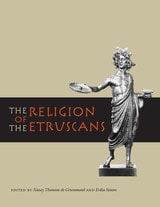
The Religion of the Etruscans
Edited by Nancy Thomson de Grummond and Erika Simon
University of Texas Press, 2006
Devotion to religion was the distinguishing characteristic of the Etruscan people, the most powerful civilization of Italy in the Archaic period. From a very early date, Etruscan religion spread its influence into Roman society, especially with the practice of divination. The Etruscan priest Spurinna, to give a well-known example, warned Caesar to beware the Ides of March. Yet despite the importance of religion in Etruscan life, there are relatively few modern comprehensive studies of Etruscan religion, and none in English. This volume seeks to fill that deficiency by bringing together essays by leading scholars that collectively provide a state-of-the-art overview of religion in ancient Etruria.
The eight essays in this book cover all of the most important topics in Etruscan religion, including the Etruscan pantheon and the roles of the gods, the roles of priests and divinatory practices, votive rituals, liturgical literature, sacred spaces and temples, and burial and the afterlife. In addition to the essays, the book contains valuable supporting materials, including the first English translation of an Etruscan Brontoscopic Calendar (which guided priests in making divinations), Greek and Latin sources about Etruscan religion (in the original language and English translation), and a glossary. Nearly 150 black and white photographs and drawings illustrate surviving Etruscan artifacts and inscriptions, as well as temple floor plans and reconstructions.
The Rising Tide of Cultural Pluralism
The Nation-State at Bay?Edited by Crawford Young
University of Wisconsin Press, 1993
Crawford Young opens with an overview of the dramatic rise in the political significance of cultural pluralism and of scholars’ changing understanding of what drives and shapes ethnic identification. Mark Beissinger brilliantly explains the demise of the last great empire-state, the USSR, while Edward Friedman notes growing challenges to the apparent cultural homogeneity of China. Nader Entessar suggests intriguing contrasts in Azeri identity politics in Iran and the ex-USSR. Ronald Schmidt and Noel Kent explore the language and racial dimensions of the rising multicultural currents in the United States. Douglas Spitz shows the extent of the decline of the old secular vision of India of the independence generation; Alan LeBaron traces the recent emergence of an assertive Mayan identity among a submerged populace in Guatemala, long thought to be destined for Ladinoization. A case study of the diversity and uncertain future of Ethiopia dramatically emerges from four contrasting contributions: Tekle Woldemikael looks at the potential cultural tensions in Eritrea, Solomon Gashaw offers a central Ethiopian nationalist perspective, Herbert Lewis reflects the perspectives of a restless and disaffected periphery, and James Quirin provides an arresting explanation of the construction of identity amongst the Beta Israel (Ethiopian Jews). Virginia Sapiro steps back from specific regions, offering an original analysis of the interaction between cultural pluralism and gender.
The Risk of Economic Crisis
Edited by Martin Feldstein
University of Chicago Press, 1991
In this accessible and thought-provoking volume, Benjamin M. Friedman investigates the origins of financial crisis in domestic capital markets, Paul Krugman examines the international origins and transmission of financial and economic crises, and Lawrence H. Summers explores the transition from financial crisis to economic collapse. In the introductory essay, Martin Feldstein reviews the major financial problems of the 1980s and discusses lessons to be learned from this experience. The book also contains provocative observations by senior academics and others who have played leading roles in business and government.
The Risks of Financial Institutions
Edited by Mark Carey and René M. Stulz
University of Chicago Press, 2007
Until about twenty years ago, the consensus view on the cause of financial-system distress was fairly simple: a run on one bank could easily turn to a panic involving runs on all banks, destroying some and disrupting the financial system. Since then, however, a series of events—such as emerging-market debt crises, bond-market meltdowns, and the Long-Term Capital Management episode—has forced a rethinking of the risks facing financial institutions and the tools available to measure and manage these risks.
The Risks of Financial Institutions examines the various risks affecting financial institutions and explores a variety of methods to help institutions and regulators more accurately measure and forecast risk. The contributors--from academic institutions, regulatory organizations, and banking--bring a wide range of perspectives and experience to the issue. The result is a volume that points a way forward to greater financial stability and better risk management of financial institutions.
The Role of Foreign Direct Investment in East Asian Economic Development
Edited by Takatoshi Ito and Anne O. Krueger
University of Chicago Press, 2000
The Role of the Judge in International Trade Regulation
Experience and Lessons for the WTOThomas Cottier and Petros C. Mavroidis, Editors
University of Michigan Press, 2003
The book develops along three lines: the first a search for cases submitted to the WTO where the judge exceeded its authority; the second a comparison of the WTO with the operations of national judicial systems having different levels of integration, specifically the United States (federal level) and the EC (quasi-federal level); and the third an exploration of directions for the future of dispute settlement in the WTO.
Reflecting the diversity of its contributors, this book addresses questions of economics, political science, and law, bringing an unusual level of multidisciplinarity to this topic and context. It is designed for both academic readers and practitioners, who will find it full of practical insights as well as rich and detailed analysis.
Thomas Cottier is Professor of European and International Economic Law, University of Bern, and Managing Director, World Trade Institute, University of Bern.
Petros C. Mavroidis is Professor of Law, University of Neuchâtel. He formerly worked in the Legal Affairs Division of the World Trade Organization.
Patrick Blatter is Mavroidiss scientific collaborator.
The Roles of Immigrants and Foreign Students in US Science, Innovation, and Entrepreneurship
Edited by Ina Ganguli, Shulamit Kahn, and Megan MacGarvie
University of Chicago Press, 2020
The Roma - A Minority in Europe
Historical, Political and Social PerspectivesYehuda Bauer
Central European University Press, 2007
The main issues arising from the encounter between Roma people and surrounding European society since the time of their arrival in Medieval Europe until today are discussed in this work. The history of their persecution and genocide during the Nazi era, in particular, is central to the present volume. Significantly, some authors sought to emphasize the continuing history of prejudice and persecution, which reached a peak during the Nazi era and persisted after the war. Current questions of social integration in Europe, as well as that of ethnic definition and the construction of ethnic-national identity constitute another principal pillar of the book. The complexity of issues involved, such as collective memory, myth-making and social constructionism, trigger intense debate among researchers dealing with Romani studies.
The Rule of Women in Early Modern Europe
Edited by Anne J. Cruz and Mihoko Suzuki
University of Illinois Press, 2008
Drawing on early modern literature and historical documents, this study investigates the various political, discursive, and symbolic measures employed to negotiate and support female sovereignty by both early modern writers and the rulers themselves. The detailed analysis of the women's responses--or inability to respond--to these strictures underscores the relationship between early modern authors and sovereigns and the complex and vexed situation of European women rulers.
Contributors are Tracy Adams, Anne J. Cruz, Éva Deák, Mary C. Ekman, Catherine L. Howey, Elizabeth Ketner, Carole Levin, Sandra Logan, Magdalena S. Sánchez, Mihoko Suzuki, and Barbara F. Weissberger.
The Search for Mabila
The Decisive Battle between Hernando de Soto and Chief TascalusaEdited by Vernon James Knight Jr.
University of Alabama Press, 2009
The Shotgun Method
The Demography of the Ancient Greek City-State CultureMogens Herman Hansen
University of Missouri Press, 2006
Although the polis, or city-state, defined the essence of classical Greek civilization, evidence of its most basic characteristics is woefully inadequate. Now a leading scholar in the evaluation of data from the ancient world sheds new light on how those units were constituted.
The Sleep of Reason
Erotic Experience and Sexual Ethics in Ancient Greece and RomeEdited by Martha C. Nussbaum and Juha Sihvola
University of Chicago Press, 2002
The Sleep of Reason brings together an international group of philosophers, philologists, literary critics, and historians to consider two questions normally kept separate: how is erotic experience understood in classical texts of various kinds, and what ethical judgments and philosophical arguments are made about sex? From same-sex desire to conjugal love, and from Plato and Aristotle to the Roman Stoic Musonius Rufus, the contributors demonstrate the complexity and diversity of classical sexuality. They also show that the ethics of eros, in both Greece and Rome, shared a number of commonalities: a focus not only on self-mastery, but also on reciprocity; a concern among men not just for penetration and display of their power, but also for being gentle and kind, and for being loved for themselves; and that women and even younger men felt not only gratitude and acceptance, but also joy and sexual desire.
Contributors:
* Eva Cantarella
* Kenneth Dover
* Chris Faraone
* Simon Goldhill
* Stephen Halliwell
* David M. Halperin
* J. Samuel Houser
* Maarit Kaimio
* David Konstan
* David Leitao
* Martha C. Nussbaum
* A. W. Price
* Juha Sihvola
The Social Benefits of Education
Jere R. Behrman and Nevzer Stacey, Editors
University of Michigan Press, 1997
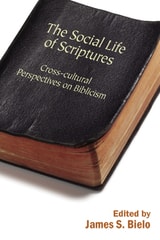
The Social Life of Scriptures
Cross-Cultural Perspectives on BiblicismEdited and with an introduction by James S. Bielo
Rutgers University Press, 2009
Contributors offer a collection of closely analyzed and carefully conducted ethnographic and historical case studies, covering a range of geographic, theological, and cultural territory, including: American evangelicals and charismatics; Jamaican Rastafarians; evangelical and Catholic Mayans; Northern Irish charismatics; Nigerian Anglicans; and Chinese evangelicals in the United States.
The Social Life of Scriptures is the first book to present an eclectic, cross-cultural, and comparative investigation of Bible use. Moreover, it models an important movement to outline a framework for how scriptures are implicated in organizing social structures and meanings, with specific foci on gender, ethnicity, agency, and power.

The Social Lives of Forests
Past, Present, and Future of Woodland ResurgenceEdited by Susanna B. Hecht, Kathleen D. Morrison, and Christine Padoch
University of Chicago Press, 2014
Focusing on the history and current use of woodlands from India to the Amazon, The Social Lives of Forests attempts to build a coherent view of forests sited at the nexus of nature, culture, and development. With chapters covering the effects of human activities on succession patterns in now-protected Costa Rican forests; the intersection of gender and knowledge in African shea nut tree markets; and even the unexpectedly rich urban woodlands of Chicago, this book explores forests as places of significant human action, with complex institutions, ecologies, and economies that have transformed these landscapes in the past and continue to shape them today. From rain forests to timber farms, the face of forests—how we define, understand, and maintain them—is changing.

The Structure of Scientific Theories
Edited by Frederick Suppe
University of Illinois Press, 1977
The Study of Signed Languages
Essays in Honor of William C. StokoeDavid F. Armstrong
Gallaudet University Press, 2002
In 1999, many of today’s notable researchers assembled at a special conference in honor of William C. Stokoe to explore the remarkable research that grew out of his original insights on American Sign Language. The Study of Signed Languages presents the fascinating findings from that conference.
Part 1, Historical Perspectives, begins with a description of the decline of sign language studies in the 1800s. Past research on signed languages and its relationship to language origins theory follows, along with a consideration of modality and conflicting agendas for its study.
In Part 2, Language Origins, the first entry intrigues with the possibility that sign language could answer conundrums posed by Noam Chomsky’s linguistic theories. The next essay considers how to build a better language model by citing continuity, ethology, and Stokoe’s work as key elements. Stokoe’s own research on the gestural theory of language origins is examined in the section’s closing chapter.
Part 3, Diverse Populations, delineates the impact of sign language research on black deaf communities in America, on deaf education, on research into variation in sign language, and even on sign communication and the motor functioning of autistic children and others. In its wide-ranging, brilliant scholarship, The Study of Signed Languages serves as a fitting tribute to William C. Stokoe and his work.
The Symbolic Construction of Reality
The Legacy of Ernst CassirerEdited by Jeffrey Andrew Barash
University of Chicago Press, 2008

The Tbilisi Symposium on Logic, Language and Computation
Selected PapersEdited by Jonathan Ginzburg, Zurab Khasidashvili, Carl Vogel, Jean-Jacques Lévy,
CSLI, 1998
The Three Cs of Higher Education
Competition, Collaboration and ComplementarityMark O'Hara
Central European University Press, 2019
The Transition in Eastern Europe, Volume 1
Edited by Olivier Jean Blanchard, Kenneth A. Froot, and Jeffrey D. Sachs
University of Chicago Press, 1994
Volume 1, Country Studies, gives an in-depth, country-by-country analysis of various reform experiences, including historical backgrounds and discussions of policies and results to date. The countries analyzed are Poland, Czechoslovakia, Hungary, eastern Germany, Slovenia, and Russia. Written by leading economists, some of whom helped shape local and national reforms, this volume identifies common progress, common difficulties, and tentative solutions to the problems of economic transition.
Volume 2, Restructuring, focuses on specific issues of transition, including how to design labor market institutions, privatization, new fiscal structures, and bankruptcy laws; how to reorganize foreign trade; and how to promote foreign direct investment. The articles, written by experts in the field, will be of direct help to those involved in the transition process.
These volumes provide a standard reference on economic transition in the region for policymakers in Eastern Europe and in western countries, for international agencies concerned with the transition process, and for anyone interested in learning about the dramatic changes that have recently occurred in Eastern Europe.
The Transition in Eastern Europe, Volume 2
RestructuringEdited by Olivier Jean Blanchard, Kenneth A. Froot, and Jeffrey D. Sachs
University of Chicago Press, 1994
Volume 1, Country Studies, gives an in-depth, country-by-country analysis of various reform experiences, including historical backgrounds and discussions of policies and results to date. The countries analyzed are Poland, Czechoslovakia, Hungary, eastern Germany, Slovenia, and Russia. Written by leading economists, some of whom helped shape local and national reforms, this volume identifies common progress, common difficulties, and tentative solutions to the problems of economic transition.
Volume 2, Restructuring, focuses on specific issues of transition, including how to design labor market institutions, privatization, new fiscal structures, and bankruptcy laws; how to reorganize foreign trade; and how to promote foreign direct investment. The articles, written by experts in the field, will be of direct help to those involved in the transition process.
These volumes provide a standard reference on economic transition in the region for policymakers in Eastern Europe and in western countries, for international agencies concerned with the transition process, and for anyone interested in learning about the dramatic changes that have recently occurred in Eastern Europe.
The U.S. National Income and Product Accounts
Selected TopicsMurray F. Foss
University of Chicago Press, 1983
The Ukrainian Challenge
Reforming Labour Market and Social PolicyILO-CEET ILO-CEET
Central European University Press, 1995
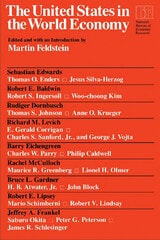
The United States in the World Economy
Edited by Martin Feldstein
University of Chicago Press, 1988
The Urban Crisis
Linking Research to ActionBurton Weisbrod and James C. Worthy
Northwestern University Press, 1997
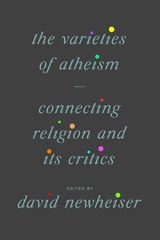
The Varieties of Atheism
Connecting Religion and Its CriticsEdited by David Newheiser
University of Chicago Press, 2022
The Varieties of Atheism reveals the diverse nonreligious experiences obscured by the combative intellectualism of Sam Harris, Richard Dawkins, and Christopher Hitchens. In fact, contributors contend that narrowly defining atheism as the belief that there is no god misunderstands religious and nonreligious persons altogether. The essays show that, just as religion exceeds doctrine, atheism also encompasses every dimension of human life: from imagination and feeling to community and ethics. Contributors offer new, expansive perspectives on atheism’s diverse history and possible futures. By recovering lines of affinity and tension between particular atheists and particular religious traditions, this book paves the way for fruitful conversation between religious and non-religious people in our secular age.
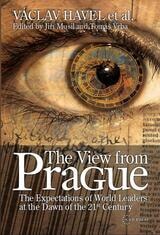
The View from Prague
The Expectations of World Leaders at the Dawn of the 21st CenturyJirí Musil
Central European University Press, 2007
The WTO as an International Organization
Edited by Anne O. Krueger
University of Chicago Press, 1997
"[T]his book is a tour de force, with consistently fine papers by leading experts, and it is worthy of any bookshelf." —Joel P. Trachtman, American Journal of International Law
"This latest conference volume from the National Bureau of Economic Research is likely to be the definitive reference work on the WTO for years to come. . . . Specialists and non-specialists alike will gain a great deal from a careful reading of this impressive volume." —John Ravenhill, Australian Journal of Political Science
"For anyone who is interested in the further development of the rule system for the world economy, this book is a must." —Horst Siebert, Review of World Economics
The Welfare State in Transition
Reforming the Swedish ModelEdited by Richard B. Freeman, Robert H. Topel, and Birgitta Swedenborg
University of Chicago Press, 1997
This volume presents ten essays that examine Sweden's economic problems from a U.S. perspective. Exploring such diverse topics as income equalization and efficiency, welfare and tax policy, wage determination and unemployment, and international competitiveness and growth, they consider how Sweden's welfare state succeeded in eliminating poverty and became a role model for other countries. They then reflect on Sweden's past economic problems, such as the increase in government spending and the fall in industrial productivity, warning of problems to come. Finally they review the consequences of the collapse of Sweden's economy in the early 1990s, exploring the implications of its efforts to reform its welfare state and reestablish a healthy economy.
This volume will be of interest to policymakers and analysts, social scientists, and economists interested in welfare states.
The Wit of Seventeenth-Century Poetry
Edited by Claude J. Summers & Ted-Larry Pebworth
University of Missouri Press, 1994
As the twelve original essays collected in this volume demonstrate, to study the wit of seventeenth-century poetry is necessarily to address concerns at the very heart of the period's shifting literary culture. It is a topic that raises persistent questions of thematics and authorial intent, even as it interrogates a wide spectrum of cultural practices. These essays by some of the most renowned scholars in seventeenth-century studies illuminate important authors and engage issues of politics and religion, of secular and sacred love, of literary theory and poetic technique, of gender relations and historical consciousness, of literary history and social change, as well as larger concerns of literary production and smaller ones of local effects. Collectively, they illustrate the vitality of the topic, both in its own right and as a means of understanding the complexity and range of seventeenth-century English poetry.
The Writer and Religion
Edited by William H. Gass and Lorin Cuoco
Southern Illinois University Press, 2000
“Every significant religious system stands upon a sacred text. This text is indeed its temple. Inside, its heroes and their history are enshrined. Although leaders of varying degrees of divinity are always involved in the creation of a new sect, they usually have short lives, often come to bad ends, and their influence, diluted by disciples, soon disappears as water does in sand. What the leader leaves behind is Mein Kampf or its equivalent: his testament. Occasionally, by the indolent, an existent text is chosen, or a compilation selected—a golden treasury. From time to time, other writings may be dubbed divine, as though knighted. This is not a simple social thing, however. It is more important than a nation adding to its territories. Any addition to the divine canon will approve, proscribe, or admit new thoughts, new practices, and in consequence elevate different people to positions of privilege and power.”—William H. Gass
These essays and panel discussions made up The Writer and Religion Conference held at Washington University in St. Louis. The six essays, all by writers of international stature, were followed by panel discussions, with audience participation.
The Youth Labor Market Problem
Its Nature, Causes, and ConsequencesEdited by Richard B. Freeman and David A. Wise
University of Chicago Press, 1982
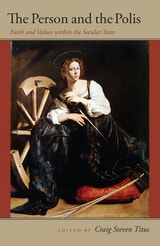
The person and the polis
faith and values within the secular stateCraig Steven Titus
Catholic University of America Press, 2006
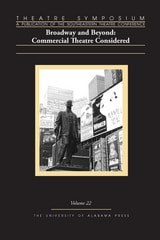
Theatre Symposium, Vol. 22
Broadway and Beyond: Commercial Theatre ConsideredDavid S. Thompson
University of Alabama Press, 2014
The eleven contributors to this fascinating collection illuminate many aspects of commercial theatre and how best to examine it. George Pate analyzes the high-stakes implication of a melodramatic legal battle. Christine Woodworth recounts the difficulties encountered by British actresses near the turn of the twentieth century, while Boone J. Hopkins considers newly found images of Margo Jones along with the commercial appeal they represent.
The volume continues with articles that follow developments with ties to commercial theatre, such as the interplay between Broadway companies and regional theatres, musical productions in communist Poland, and the influence of Korean popular culture on theatre and the unique production arrangements that have resulted. Other essays investigate alternative concepts related to commercial themes with regard to audience interaction and the burgeoning world of geek theatre.
Edited by David S. Thompson, this latest publication by the largest regional theatre organization in the United States collects the most current scholarship on theatre history and theory.
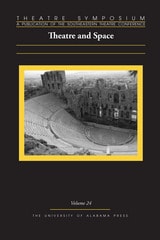
Theatre Symposium, Vol. 24
Theatre and SpaceEdited by Becky K. Becker
University of Alabama Press, 2016
Exploring the dynamic intersections of performance and place.
At a time when so many options exist for access to theatrical entertainments, it is no surprise that theatre practitioners and scholars are often preoccupied with the role of the audience. While space undoubtedly impacts the rehearsal and production processes, its greater significance seems to rest in the impact a specific location has on the audience.
This volume provides diverse viewpoints on theatre and space, as well as its relationship to the audience. Sebastian Trainor and Samuel T. Shanks offer contemporary perspectives on two ancient theatre spaces, while Lisa Marie Bowler describes the Globe Theatre, a replica of the original, as embodying a kind of absence despite its rich link to the past. Focusing on distinctly different periods and settings, both Andrew Gibb and Christine Woodworth describe a politics of space in which specific players gain prestige and power. Chase Bringardner identifies the audience as playing an important role in creating a space for parody in a historic Nashville venue, while Arnab Banerji describes an exhausting process for members of the Bengali group theatre who must continually move from space to space. Finally, Alicia Corts discusses virtual performance spaces and the degree to which participants are able to control their online identities within virtual performances. Bookending these eight essays are Marvin Carlson’s keynote presentation “Whose Space Is It Anyway?” and his closing remarks for the symposium, both of which allude to, and richly explicate, the ultimate arbiters of theatrical space: the audience.

Theoretical Principles in Astrophysics and Relativity
Norman R. Lebovitz, William H. Reid, and Peter O. Vandervoort
University of Chicago Press, 1981
"The book as a whole should be a gift from every research supervisor to every new graduate student in theoretical astronomy."—D. W. Sciama, Science

Theorizing Anglo-Saxon Stone Sculpture
CATHERINE E. KARKOV
West Virginia University Press, 2003
Theorizing Anglo-Saxon Stone Sculpture significantly advances the complex study of Anglo-Saxon carved monuments, such as the Ruthwell Cross, by adopting more explicit theoretical approaches to the subject. Scholars included here are explicit in describing how their approaches complement (or, more often, contradict) the work of others. This book comes as a shot across the bow of these vessels. Contributors include the best scholars on this subject matter in England, Ireland, and America.