Results by title
728 books match the query 'Economic aspects' and 164 start with t
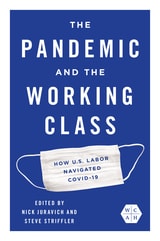
The Pandemic and the Working Class
How US Labor Navigated COVID-19Edited by Nick Juravich and Steve Striffler
University of Illinois Press, 2025
Nick Juravich and Steve Striffler edit a collection that examines the effects of the pandemic on workers. Sections of the book focus on specific impacts and government efforts to restructure the economy; the dramatic effect of the pandemic on the hospitality industry; educators’ response on behalf of themselves and their students; frontline healthcare workers; and the innovative forms of labor organizing that emerged during and after COVID.
Contributors: Carlos Aramayo, Kathleen Brown, Sandrine Etienne, Ismael García-Colón, Puya Gerami, Maura Hagan, Connor Harney, Devan Hawkins, Leigh Howard, Marian Moser Jones, Doris Joy, Nick Juravich, Eric Larson, Kathryn M. Meyer, Samir Sonti, Steve Striffler, Lia Warner, Andrew B. Wolf, and Jennifer Zelnick
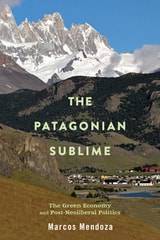
The Patagonian Sublime
The Green Economy and Post-Neoliberal PoliticsMendoza, Marcos
Rutgers University Press, 2019
Mendoza explores the fraught intersection of the green economy with the New Left politics of the Néstor Kirchner and Cristina Fernández de Kirchner governments. Mendoza documents the strategies of capitalist development, national representation, and political rule embedded in the “green productivist” agenda pursued by Kirchner and Fernández. Mendoza shows how Andean Patagonian communities have responded to the challenges of community-based conservation, the fashioning of wilderness zones, and the drive to create place-based monopolies that allow ecotourism destinations to compete in the global consumer economy.
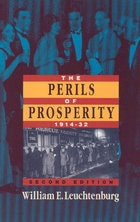
The Perils of Prosperity, 1914-1932
William E. Leuchtenburg
University of Chicago Press, 1993
William E. Leuchtenburg's lively yet balanced account of this hotly debated era in American history has been a standard text for many years. This substantial revision gives greater weight to the roles of women and minorities in the great changes of the era and adds new insights into literature, the arts, and technology in daily life. He has also updated the lists of important dates and resources for further reading.
“This book gives us a rare opportunity to enjoy the matured interpretation of an American Historian who has returned to the story and seen how recent decades have added meaning and vividness to this epoch of our history.”—Daniel J. Boorstin, from the Preface
The Persistence of Slavery
An Economic History of Child Trafficking in NigeriaRobin Phylisia Chapdelaine
University of Massachusetts Press, 2021
Despite efforts to abolish slavery throughout Africa in the nineteenth century, the coercive labor systems that constitute “modern slavery” have continued to the present day. To understand why, Robin Phylisia Chapdelaine explores child trafficking, pawning, and marriages in Nigeria's Bight of Biafra, and the ways in which British colonial authorities and Igbo, Ibibio, Efik, and Ijaw populations mobilized children's labor during the early twentieth century. Drawing on a wealth of primary sources that include oral interviews, British and Nigerian archival materials, newspaper holdings, and missionary and anthropological accounts, Chapdelaine argues that slavery's endurance can only be understood when we fully examine “the social economy of a child”—the broader commercial, domestic, and reproductive contexts in which children are economic vehicles.
The Persistence of Slavery provides an invaluable investigation into the origins of modern slavery and early efforts to combat it, locating this practice in the political, social, and economic changes that occurred as a result of British colonialism and its lingering effects, which perpetuate child trafficking in Nigeria today.
The Political Economy of Artificial Intelligence
Edited by Ajay Agrawal, Joshua Gans, Avi Goldfarb, and Catherine E. Tucker
University of Chicago Press, 2026
An authoritative look at how artificial intelligence both shapes and is shaped by the political and economic forces of the modern world.
As the effects of artificial intelligence are felt across economies and societies, many of its ramifications are still emerging. This volume brings together economists and political scientists to examine how AI intersects with regulation, military power, and political identity—offering analytical frameworks and identifying key open questions for future research.
The contributions address topics such as the allocation of property rights for AI inputs, trade-offs among alternative regulatory regimes, and the role of interest groups in shaping the technology’s trajectory. They explore how AI-related capabilities influence military effectiveness, resource allocation, and bargaining power among nations, and consider AI’s effects on political preferences, from the influence of AI-curated information on polarization to the implications of targeted political advertising and personalized education for national identity formation. The volume highlights key trade-offs that arise in AI’s political economy, and points toward empirical strategies and theoretical models that can advance understanding in this emerging field.
Drawing on diverse disciplinary perspectives, the collection provides a foundation for rigorous inquiry into how AI both shapes and is shaped by political and economic forces.

The Political Economy of Global Communication
An IntroductionPeter Wilkin
Pluto Press, 2001
To what extent do developments in global communication enhance or undermine autonomy? As the world's media companies continue to merge, we are moving towards an ever more commercially driven system of global information. Wilkin argues that private ownership provides an increasingly powerful obstacle to human autonomy, and that the neo-liberal institutional and policy framework – now a global tendency – raises major problems for the attainment of human security. At the same time it has provided the ideological justification for the extension of private power into ever wider areas of public life. Changes in global communication reflect wider tendencies to enhance the power of global elites at the expense of working people and the author illustrates how and why these changes have taken place and the forms of opposition that have arisen in response to them.
The Political Economy of Israel's Occupation
Repression Beyond ExploitationShir Hever
Pluto Press, 2010
The Israeli occupation of the Palestinian territories since 1967 has many important economic aspects that are often overlooked. In this highly original book, Shir Hever shows that understanding the economic dimensions of the occupation is crucial to unravelling the Israeli-Palestinian conflict.
Hever rejects the premise that Israel keeps control over Palestinian territories for material gain, and also the premise that Israel is merely defending itself from Palestinian aggression. Instead, he argues that the occupation has reached an impasse, with the Palestinian resistance making exploitation of the Palestinians by Israeli business interests difficult, but the Israeli authorities reluctant to give up control.
With traditional economic analysis failing to explain this turn of events, this book will be invaluable for students, activists and journalists struggling to make sense of the complex issues surrounding Israel's occupation.
The Political Economy of NGOs
State Formation in Sri Lanka and BangladeshJude L. Fernando
Pluto Press, 2011
Jude L. Fernando explores the paradoxical relationship between NGOs and capitalism, showing that supposedly progressive organisations often promote essentially the same policies and ideas as existing governments.
The book examines how a diverse group of NGOs have shaped state formation in Bangladesh and Sri Lanka. It argues that, rather than influencing state formation for the better, NGOs have been integrated into the capitalist system and their language adopted to give traditional exploitative social relations a transformative appearance.
This enlightening study will give pause to those who see NGOs as drivers of true social change and will encourage students of development studies to make a deeper analysis of state formation.
The Political Economy of Pipelines
A Century of Comparative Institutional DevelopmentJeff D. Makholm
University of Chicago Press, 2012
The Political Economy of Regional Peacemaking
Edited by Steven E. Lobell and Norrin M. Ripsman
University of Michigan Press, 2016
The chapters that follow are grouped in three sections, corresponding to the three stages of peacemaking: reduction or management of regional conflict; peacemaking or progress toward a peace treaty; and maintenance of bilateral peace and the regionalization of the peace settlement. In each chapter, the contributors consider the five key questions from a variety of methodological, historical, cultural, and empirical perspectives, drawing data from the Pacific, the Middle East, Europe, Asia, and Latin America. The conclusion expands on several themes found in the chapters and proposes an agenda for future research.
The Political Origins of Inequality
Why a More Equal World Is Better for Us AllSimon Reid-Henry
University of Chicago Press, 2015
The problem of inequality, Reid-Henry argues, is a problem that manifests between places as well as over time. This is one reason why it cannot be resolved by the usual arguments of left versus right, bound as they are to the national scale alone. Most of all, however, it is why the level of inequality that confronts us today is indicative of a more general crisis in political thought. Modern political discourse has no place for public reason or the common good. Equality is yesterday’s dream. Yet the fact that we now accept such a world—a world that values security over freedom, special treatment over universal opportunity, and efficiency over fairness—is ultimately because we have stopped even trying in recent decades to build the political architecture the world actually requires.
Our politics has fallen out of step with the world, then, and at the every moment it is needed more than ever. Yet it is within our power to address this. Doing so involves identifying and then meeting our political responsibilities to others, not just offering them the selective charity of the rich. It means looking beyond issues of economics and outside our national borders. But above all it demands of us that we reinvent the language of equality for a modern, global world: and then institute this. The world is not falling apart. Different worlds, we all can see, are colliding together. It is our capacity to act in concert that is falling apart. It is this that needs restoring most of all.
The Politics of Operations
Excavating Contemporary CapitalismSandro Mezzadra and Brett Neilson
Duke University Press, 2019
The Politics of Scale
A History of Rangeland ScienceNathan F. Sayre
University of Chicago Press, 2017
During the late 1880s and early 1890s, a variety of forces—from the Homestead Act of 1862 to the extermination of bison, foreign investment, and lack of government regulation—promoted free-for-all access to and development of the western range, with disastrous environmental consequences. To address the crisis, government agencies turned to scientists, but as Nathan F. Sayre shows, range science grew in a politically fraught landscape. Neither the scientists nor the public agencies could escape the influences of bureaucrats and ranchers who demanded results, and the ideas that became scientific orthodoxy—from fire suppression and predator control to fencing and carrying capacities—contained flaws and blind spots that plague public debates about rangelands to this day. Looking at the global history of rangeland science through the Cold War and beyond, The Politics of Scale identifies the sources of past conflicts and mistakes and helps us to see a more promising path forward, one in which rangeland science is guided less by capital and the state and more by communities working in collaboration with scientists.
The Politics of Value
Three Movements to Change How We Think about the EconomyJane L. Collins
University of Chicago Press, 2017
Each case shows how the concrete actions of a group of citizens can prompt us to reflect on what is needed for a just and sustainable economic system. In one case, activists raised questions about the responsibilities of business, in the second about the significance of local economies, and in the third about the contributions of the public sector. Through these movements, Jane L. Collins maps a set of cultural conversations about the types of investments and activities that contribute to the health of the economy. Compelling and persuasive, The Politics of Value offers a new framework for viewing economic value, one grounded in thoughtful assessment of the social division of labor and the relationship of the state and the market to civil society.

The Poor Are Not Us
Poverty and Pastoralism in Eastern AfricaDavid M. Anderson
Ohio University Press, 1999
Eastern African pastoralists often present themselves as being egalitarian, equating cattle ownership with wealth. By this definition “the poor are not us”, poverty is confined to non-pastoralist, socially excluded persons and groups.
Exploring this notion means discovering something about self-perceptions and community consciousness, how pastoralist identity has been made in opposition to other modes of production, how pastoralists want others to see them and how they see themselves.
This collection rejects the premise of pastoral egalitarianism and poses questions about the gradual creep of poverty, changing patterns of wealth and accumulation, the impact of diminishing resources on pastoral communities and the impact of external values of land, labor, and livestock.
The Poverty Law Canon
Exploring the Major CasesMarie A. Failinger and Ezra Rosser, Editors
University of Michigan Press, 2016
Noted legal scholars explain the legal precedent created by each case and set the case within its historical and political context in a way that will assist students and advocates in poverty-related disciplines in their understanding of the implications of these cases for contemporary public policy decisions in poverty programs. Whether the focus is on the clients, on the lawyers, or on the justices, the stories in The Poverty Law Canon illuminate the central legal themes in federal poverty law of the late 20th century and the role that racial and economic stereotyping plays in shaping American law.
The Price of Independence
The Economics of Early AdulthoodSheldon Danziger
Russell Sage Foundation, 2007
The Price of Our Values
The Economic Limits of Moral LifeAugustin Landier and David Thesmar
University of Chicago Press, 2025
The economic case for self-interest at the outer limits of being morally good.
Modern life is an exercise in discomfort. In the face of endless injustice, how much selfishness is permissible? How do we square suffering elsewhere with our hope to thrive at home? How does one strive for the greater good while guarding one's personal interests? The Price of Our Values argues that the answers to these questions are economic: by weighing our sense of the personal costs associated with the outer limits of our moral beliefs.
These tradeoffs—the want to be good, the personal costs of being good, and the points at which people abandon goodness due to its costs—are somewhat unsettling. But as economists Augustin Landier and David Thesmar show, they are highly predictable, even justified. Our values guide us, but we are also forced to consider economic costs to settle decisions.
The Price of Our Values is an economic reckoning with the universal unease of contemporary moral life. Wielding insights from the philosophical founders of the field, Landier and Thesmar provide frameworks for thinking about the place of values—justice, freedom, beauty— in the decisions of modern life. They do so in terms that seek to be consistent with both our good intentions and their limits.
The Price of Prestige
Conspicuous Consumption in International RelationsLilach Gilady
University of Chicago Press, 2018
In The Price of Prestige, Gilady shows how many seemingly wasteful government expenditures that appear to contradict the laws of demand actually follow the pattern for what are known as Veblen goods, or positional goods for which demand increases alongside price, even when cheaper substitutes are readily available. From flashy space programs to costly weapons systems a country does not need and cannot maintain to foreign aid programs that offer little benefit to recipients, these conspicuous and strategically timed expenditures are intended to instill awe in the observer through their wasteful might. And underestimating the important social role of excess has serious policy implications. Increasing the cost of war, for example, may not always be an effective tool for preventing it, Gilady argues, nor does decreasing the cost of weapons and other technologies of war necessarily increase the potential for conflict, as shown by the case of a cheap fighter plane whose price tag drove consumers away. In today’s changing world, where there are high levels of uncertainty about the distribution of power, Gilady also offers a valuable way to predict which countries are most likely to be concerned about their position and therefore adopt costly, excessive policies.
The Privatisation of Israeli Security
Shir Hever
Pluto Press, 2017
The Production of Living Knowledge
The Crisis of the University and the Transformation of Labor in Europe and North AmericaGigi Roggero
Temple University Press, 2011
Evaluating higher education institutions—particularly the rise of the “global university”—and their rapidly changing role in the global era, Gigi Roggero finds the system in crisis. In his groundbreaking book, The Production of Living Knowledge, Roggero examines the university system as a key site of conflict and transformation within “cognitive capitalism”—a regime in which knowledge has become increasingly central to the production process at large. Based on extensive fieldwork carried out through the activist method of conricerca, or “co-research,” wherein researchers are also subjects, Roggero’s book situates the crisis of the university and the changing composition of its labor force against the backdrop of the global economic crisis.
Combining a discussion of radical experiments in education, new student movements, and autonomist Marxian (or post-operaista) social theory, Roggero produces a distinctly transnational and methodologically innovative critique of the global university from the perspective of what he calls “living knowledge.”
In light of new student struggles in the United States and across the world, this first English-language edition is particularly timely.
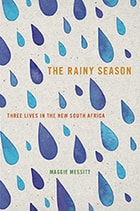
The Rainy Season
Three Lives in the New South AfricaMaggie Messitt
University of Iowa Press, 2015
The Rainy Season tells the stories of three generations in the Rainbow Nation one decade after its first democratic elections. This multi-threaded narrative follows Regina, a tapestry weaver in her sixties, standing at the crossroads where her Catholic faith and the AIDS pandemic crash; Thoko, a middle-aged sangoma (traditional healer) taking steps to turn her shebeen into a fully licensed tavern; and Dankie, a young man taking his matriculation exams, coming of age as one of Mandela’s Children, the first academic class educated entirely under democratic governance.
Home to Shangaan, Sotho, and Mozambican Tsonga families, Rooiboklaagte sits in a village where an outdoor butchery occupies an old petrol station and a funeral parlor sits in the attached garage. It’s a place where an AIDS education center sits across the street from a West African doctor selling cures for the pandemic. It’s where BMWs park outside of crumbling cement homes, and the availability of water changes with the day of the week. As the land shifts from dusty winter blond to lush summer green and back again, the duration of northeastern South Africa’s rainy season, Regina, Thoko, and Dankie all face the challenges and possibilities of the new South Africa.
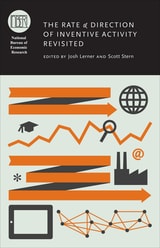
The Rate and Direction of Inventive Activity Revisited
Edited by Josh Lerner and Scott Stern
University of Chicago Press, 2012
While the importance of innovation to economic development is widely understood, the conditions conducive to it remain the focus of much attention. This volume offers new theoretical and empirical contributions to fundamental questions relating to the economics of innovation and technological change while revisiting the findings of a classic book. Central to the development of new technologies are institutional environments, and among the topics discussed here are the roles played by universities and other nonprofit research institutions and the ways in which the allocation of funds between the public and private sectors affects innovation. Other essays examine the practice of open research and how the diffusion of information technology influences the economics of knowledge accumulation. Analytically sophisticated and broad in scope, this book addresses a key topic at a time when economic growth is all the more topical.

The Realms of Oblivion
An Excavation of the Davies Manor Historic Site's Omitted StoriesAndrew C. Ross
Vanderbilt University Press, 2024
Winner of the Tennessee History Book Award (Tennessee Historical Society and Tennessee Historical Commission), 2024
The Realms of Oblivion explores the complexities involved in reconciling competing versions of history, channeled through Davies Manor, a historic site near Memphis that once centered a wealthy slave-owning family’s sprawling cotton plantation. Interrogating the forces of memorialization that often go unquestioned in the stories we believe about ourselves and our communities, this book simultaneously tells an informative and engrossing bottom-up history—of the Davies family, of the Black families they enslaved and exploited across generations, and of Memphis and Shelby County—while challenging readers to consider just what upholds the survival of that history into the present day.
Written in an engaging and critical style, The Realms of Oblivion is grounded in a rich source base, ranging from nineteenth-century legal records to the personal papers of the Davies family to twentieth-century African American oral histories. Author Andrew C. Ross uses these sources to unearth the stark contrast between the version of Davies Manor’s history that was built out of nostalgia, and the version that records have proven to actually be true. As a result, Ross illuminates the ongoing need for a deep and honest reckoning with the history of the South and of the United States, on the part of both individuals and community institutions such as local historic sites and small museums.

The Rent of Form
Architecture and Labor in the Digital AgePedro Fiori Arantes
University of Minnesota Press, 2019
A critique of prominent architects’ approach to digitally driven design and labor practices over the past two decades
With the advent of revolutionary digital design and production technologies, contemporary architects and their clients developed a taste for dramatic, unconventional forms. Seeking to amaze their audiences and promote their global brands, “starchitects” like Herzog & de Meuron and Frank Gehry have reaped substantial rewards through the pursuit of spectacle enabled by these new technologies. This process reached a climax in projects like Gehry’s Guggenheim Bilbao and the “Bilbao effect,” in which spectacular architectural designs became increasingly sought by municipal and institutional clients for their perceived capacity to enhance property values, which author Pedro Fiori Arantes calls the “rent of form.”
Analyzing many major international architectural projects of the past twenty years, Arantes provides an in-depth account of how this “architecture of exception” has come to dominate today’s industry. Articulating an original, compelling critique of the capital and labor practices that enable many contemporary projects, Arantes explains how circulation (via image culture), consumption (particularly through tourism), the division of labor, and the distribution of wealth came to fix a certain notion of starchitecture at the center of the industry.
Significantly, Arantes’s viewpoint is not that of Euro-American capitalism. Writing from the Global South, this Brazilian theorist offers a fresh perspective that advances ideas less commonly circulated in dominant, English-language academic and popular discourse. Asking key questions about the prevailing logics of finance capital, and revealing inconvenient truths about the changing labor of design and the treatment of construction workers around the world, The Rent of Form delivers a much-needed reevaluation of the astonishing buildings that have increasingly come to define world cities.
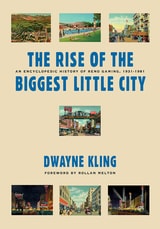
The Rise Of The Biggest Little City
An Encyclopedic History Of Reno Gaming, 1931-1981Dwayne Kling
University of Nevada Press, 2010
The history of Reno during the first half century is to a great degree the history of Reno’s gaming industry. Between 1931 and 1981, the economy, skyline, and lifestyle of “the Biggest Little City in the World” were strongly influenced by the city’s casinos and the people who created and operated them. In The Rise of the Biggest Little City, longtime Reno gaming executive Dwayne Kling records the fruits of his fourteen years of research into the history of Reno’s casinos, from the backroom (and often illegal) dives of the industry’s beginnings to the elegant casino-hotels of today. Arranged in encyclopedic form with historic photographs (many never before published), the book offers the stories of such famous establishments as Harolds Club, the Cal-Neva, the Sands, and Harrah’s, as well as defunct clubs like the Cedars, the Silver Spur, and the Bank Club. We also find the stories of the men and women who created Reno’s gaming industry—such as James McKay and Bill Graham, who came from the rough-and-tumble saloons of boom-town Tonopah and developed a chain of illegal gambling clubs and brothels into Reno’s first major casino, the Bank Club; the Smith family—Raymond I. “Pappy,” Harold Sr., Raymond A., and Harold Jr.—whose Harolds Club was a prime downtown attraction for over fifty years and brought Reno national fame as a destination for fun and gambling; Bill Bailey, an African-American whose Harlem Club—one of the first integrated casinos in Reno—attracted such show-business luminaries as Louis Armstrong and Pearl Bailey (his cousin) for late-night jam sessions; William Harrah, who parleyed a string of small bingo parlors into a major gaming empire; and Jack Douglass, a slot-route operator in the early days of legal gaming who became a major figure in Reno’s modern casino industry. There are more. Kling records the stories of hundreds of gaming establishments, most of them long forgotten, stretching geographically from the Mount Rose Highway to the north end of town, from Verdi to Sparks; and of dozens of men and women who shaped the industry, for better and for worse. We learn from that Reno was the true pioneer of the gambling industry. It was here that big-name entertainment was first offered in a casino setting; that elegant hotel rooms and fine dining were first offered as amenities of the casino experience; that a casino corporation first traded its stock on the New York Stock Exchange; that ethnic minorities first owned and operated casinos, and first integrated them. The Rise of the Biggest Little City will engage readers with its authoritative account of the rise of modern Reno and of the colorful history that lies beneath today’s neon and glitz.
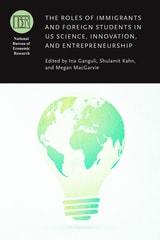
The Roles of Immigrants and Foreign Students in US Science, Innovation, and Entrepreneurship
Edited by Ina Ganguli, Shulamit Kahn, and Megan MacGarvie
University of Chicago Press, 2020

The Scene of Foreplay
Theater, Labor, and Leisure in 1960s New YorkGiulia Palladini
Northwestern University Press, 2017
Matching an original approach to historical materials and theoretical reflection, Palladini addresses the peculiar forms of production, reproduction, and consumption developed in the 1960s as labors of love, creating for artists a condition of “preliminarity” toward professional work and also functioning as a counterforce within productive economy, as a prelude where value is not yet assigned to labor.
The Scene of Foreplay proposes that such labors of love can be considered both as paradigmatic for contemporary forms of precarious labor and also resonating with echoes from marginal histories of the performing arts, in a nonlinear genealogy of queer resistance to ideas of capitalist productivity and professionalism. The book offers much for those interested in performance theory as well asin the history of theater and performance arts in the 1960s.

The Scientific Life
A Moral History of a Late Modern VocationSteven Shapin
University of Chicago Press, 2008
Conventional wisdom has long held that scientists are neither better nor worse than anyone else, that personal virtue does not necessarily accompany technical expertise, and that scientific practice is profoundly impersonal. Shapin, however, here shows how the uncertainties attending scientific research make the virtues of individual researchers intrinsic to scientific work. From the early twentieth-century origins of corporate research laboratories to the high-flying scientific entrepreneurship of the present, Shapin argues that the radical uncertainties of much contemporary science have made personal virtues more central to its practice than ever before, and he also reveals how radically novel aspects of late modern science have unexpectedly deep historical roots. His elegantly conceived history of the scientific career and character ultimately encourages us to reconsider the very nature of the technical and moral worlds in which we now live.
Building on the insights of Shapin’s last three influential books, featuring an utterly fascinating cast of characters, and brimming with bold and original claims, The Scientific Life is essential reading for anyone wanting to reflect on late modern American culture and how it has been shaped.
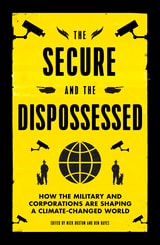
The Secure and the Dispossessed
How the Military and Corporations Are Shaping a Climate-Changed WorldEdited by Nick Buxton and Ben Hayes
Pluto Press, 2015
The Secure and the Dispossessed gathers together essays by high-profile journalists, academics, and activists, including Christian Parenti, Nafeez Ahmed, and policy analyst Oscar Reyes. They offer a close and critical guide to questions about climate change, showing how they converge with questions about international security and global economic power, as new natural resources become available. This book is an essential guide to the key environmental and political debates which will shape future policies and elections: how managing the world’s supply of oil and gas can be squared with the environmental impact of our continued reliance on those very same fossil fuels.
The Solidarity Economy
Jean-Louis Laville
University of Minnesota Press, 2023
Questioning the boundaries between politics and economics
Jean-Louis Laville’s large body of work has focused on an intellectual history of the concept of solidarity since the Industrial Revolution. In The Solidarity Economy, his most famous distillation of this work, Laville establishes how the formations of economic solidarities (unions, activism, and other forms of associationalism) reveal that the boundaries between politics and economics are porous and structured such that politics, ideally a pure expression of ethics and values, is instead integrated with economic concerns.
Exploring the possibilities and long histories of association, The Solidarity Economy identifies the power of contemporary social and solidarity movements and examines the history of postcapitalist practices in which democratic demands invade the heart of the economy. The Solidarity Economy ranges in focus from workers associations in France dating back to the nineteenth century, to associations of African Americans and feminists in the United States in the late nineteenth and early twentieth centuries, to a Brazilian landless-worker coalition in the twentieth century.
Studying solidarity associations over time allows us to examine how we can recombine the economic and political spheres to address dependencies and inequalities. Ultimately, The Solidarity Economy has global scope and inspiring examples of associations that deepen democracy.

The Spectacular Generic
Pharmaceuticals and the Simipolitical in MexicoCori Hayden
Duke University Press, 2023
The Spirit of 1976
Commerce, Community, and the Politics of CommemorationTammy S. Gordon
University of Massachusetts Press, 2013
The most important national commemoration of the twentieth century, the 1976 bicentennial celebration gave rise to a broad-ranging debate over how the American Revolution should be remembered and represented. Federal planners seeking an uncritical glorification of the nation's founding came up against an array of constituencies with other interests and objectives. Inspired by the “new social history” that looked at the past “from the bottom up,” Americans who had previously been disenfranchised by traditional national narratives—African Americans, women, American Indians, workers, young people—demanded a voice and representation in the planning. Local communities, similarly suspicious of federal direction, sought control over their own bicentennial events. Corporate representatives promoted an approach that championed the convergence of patriotism and private enterprise, while commercial interests applied the marketing techniques of an expanding consumerism to hawk every imaginable kind of patriotic souvenir to all of these groups.
The end result of these competing efforts, Tammy S. Gordon shows, was a national celebration that reflected some common themes, including a mistrust of federal power, an embrace of decentralized authority, and a new cultural emphasis on the importance of the self. The American Revolution Bicentennial can thus be seen as both a product of the social and political changes of the 1960s and a harbinger of things to come. After 1976, the postwar myth of a consensus view of American history came to an end, ensuring that future national commemorations would continue to be contested.
The Supreme Court and the NCAA
The Case for Less Commercialism and More Due Process in College SportsBrian L. Porto
University of Michigan Press, 2013
Two Supreme Court decisions, NCAA v. Board of Regents (1984) and NCAA v. Tarkanian (1988), have shaped college sports by permitting the emergence of a supercharged commercial enterprise with high financial stakes for institutions and individuals, while failing to guarantee adequate procedural protections for persons charged with wrongdoing within that enterprise. Brian L. Porto examines the conditions that led to the cases, the reasoning behind the justices' rulings, and the consequences of those rulings.
Arguing that commercialized college sports should be compatible with the goals of higher education and fair to all participants, Porto suggests that the remedy is a federal statute. His proposed College Sports Legal Reform Act would grant the NCAA a limited "educational exemption" from the antitrust laws, enabling it to enhance academic opportunities for athletes. The Act would also afford greater procedural protections to accused parties in NCAA disciplinary proceedings. Porto's prescription for reform in college sports makes a significant contribution to the debate about how best to address perennial problems in college sports such as cost containment, access to a meaningful education for athletes, and fairness in rule enforcement.
The Tanner Lectures on Human Values
Volume 33Mark Matheson
University of Utah Press, 2014
William G. Bowen, “Costs and Productivity in Higher Education” and “Prospects for an Online Fix: Can We Harness Technology in the Service of Our Aspirations?”
Craig Calhoun, “The Problematic Public: Revisiting Dewey, Arendt, and Habermas”
Michael Ignatieff, “Representation and Responsibility: Ethics and Public Office”
F. M. Kamm, “Who Turned the Trolley?” and “How Was the Trolley Turned?”
Claude Lanzmann, “Resurrection”
Robert Post, “Representative Democracy: The Constitutional Theory of Campaign Finance Reform” and “Campaign Finance Reform and the First Amendment”
Michael J. Sandal, “The Moral Economy of Speculation: Gambling, Finance, and the Common Good”
The Theory of Peasant Economy
A. V. Chayanov
University of Wisconsin Press, 1986
The work of A. V. Chayanov is today drawing more attention among Western scholars than ever before. Largely ignored in his native Russia because they differed from Marxist-Leninist theory, and neglected in the West for more than forty years, Chayanov’s sophisticated theories were at last published in English in 1966. That trenchant is reprinted in this Wisconsin paperback edition, which includes a new introduction by the sociologist Teodor Shanin, of the University of Manchester, one of the world’s leading Chayanov scholars. The Wisconsin edition will be essential reading for political scientists, anthropologists, and all whose interests include peasant studies, Third World development, and women’s studies.
"The past two decades have seen the emergence of a whole new field called 'peasant studies' and, along with those of Karl Marx, Chayanov's ideas have been central to its development. . . . The publishers are to be commended for re-issuing the book with both old and new introductions and making it available as an affordable paperback for students. The work is a classic."—Times Higher Education Supplement
The Two-Parent Privilege
How Americans Stopped Getting Married and Started Falling BehindMelissa S. Kearney
University of Chicago Press, 2023
In The Two-Parent Privilege, Melissa S. Kearney makes a provocative, data-driven case for marriage by showing how the institution’s decline has led to a host of economic woes—problems that have fractured American society and rendered vulnerable populations even more vulnerable. Eschewing the religious and values-based arguments that have long dominated this conversation, Kearney shows how the greatest impacts of marriage are, in fact, economic: when two adults marry, their economic and household lives improve, offering a host of benefits not only for the married adults but for their children. Studies show that these effects are today starker, and more unevenly distributed, than ever before. Kearney examines the underlying causes of the marriage decline in the US and draws lessons for how the US can reverse this trend to ensure the country’s future prosperity.
Based on more than a decade of economic research, including her original work, Kearney shows that a household that includes two married parents—holding steady among upper-class adults, increasingly rare among most everyone else—functions as an economic vehicle that advantages some children over others. As these trends of marriage and class continue, the compounding effects on inequality and opportunity grow increasingly dire. Their effects include not just children’s behavioral and educational outcomes, but a surprisingly devastating effect on adult men, whose role in the workforce and society appears intractably damaged by the emerging economics of America’s new social norms.
For many, the two-parent home may be an old-fashioned symbol of the idyllic American dream. But The Two-Parent Privilege makes it clear that marriage, for all its challenges and faults, may be our best path to a more equitable future. By confronting the critical role that family makeup plays in shaping children’s lives and futures, Kearney offers a critical assessment of what a decline in marriage means for an economy and a society—and what we must do to change course.
The Type V City
Codifying Material Inequity in Urban AmericaJeana Ripple
University of Texas Press, 2025
How building codes shaped material, social, and environmental landscapes in American cities.
Almost every American city contains neighborhoods dominated by wood frame construction—light, cheap, combustible, and requiring the lowest upfront investment of labor and material in the building industry. Known as a Type V (five) construction in the terminology of building codes, these buildings became ubiquitous in the American urban landscape thanks to the abundance of timber, housing affordability aspirations, and the adoption of a uniform code.
In The Type V City, Jeana Ripple examines the social and spatial history of building codes and material patterns in five cities—New York, Tampa, Chicago, Philadelphia, and Seattle—to reframe the stories of America’s building priorities, methods, negotiations, and assumptions. By examining the development of building materials and codes alongside the environmental, social, economic, and political context of each city’s development, Ripple reveals previously overlooked connections between the power structures underpinning regulatory evolution and the impacts that lay just beyond the frame of city builders’ priorities. Handsomely illustrated and informed by both archival research and insights enabled by contemporary data analysis, The Type V City critiques the homogenous construction practices underlying US urbanization and raises pointed questions for future generations of data-driven city planners and architects.
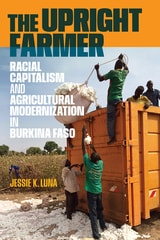
The Upright Farmer
Racial Capitalism and Agricultural Modernization in Burkina FasoJessie K. Luna
Duke University Press, 2026
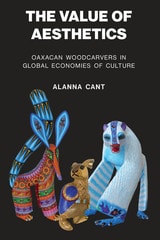
The Value of Aesthetics
Oaxacan Woodcarvers in Global Economies of CultureBy Alanna Cant
University of Texas Press, 2019
Unlike many other handicrafts in the Mexican state of Oaxaca, which have long cultural and historical trajectories, Oaxacan woodcarving began in the second half of the twentieth century and has always been done for the commercial market. In The Value of Aesthetics, Alanna Cant explores how one family’s workshop in the village of San Martín Tilcajete has become the most critically and economically successful, surpassing those of neighbors who use similar materials and techniques. The dominance of this family is tied to their ability to produce a new aesthetic that appeals to three key “economies of culture”: the tourist market for souvenirs, the national market for traditional Mexican artesanías, and the international market for indigenous art.
Offering a new analytical model by which anthropologists can approach visual aesthetics and conceptualize the power of artworks as socially active objects, The Value of Aesthetics shows how aesthetic practices produce and redefine social and political relationships. By investigating the links between aesthetics and issues of production, authorship, ownership, and identity, Cant shows aesthetic change to be a process that ultimately repackages everyday life into commodified objects in Oaxaca.
The Vanishing Newspaper [2nd Ed]
Saving Journalism in the Information AgePhilip Meyer
University of Missouri Press, 2009

The Victorious Counterrevolution
The Nationalist Effort in the Spanish Civil WarMichael Seidman
University of Wisconsin Press, 2011
This groundbreaking history of the Spanish Civil War (1936–39) examines, for the first time in any language, how General Francisco Franco and his Nationalist forces managed state finance and economic production, and mobilized support from elites and middle-class Spaniards, to achieve their eventual victory over Spanish Republicans and the revolutionary left.
The Spanish Nationalists are exceptional among counter-revolutionary movements of the twentieth century, Michael Seidman demonstrates, because they avoided the inflation and shortages of food and military supplies that stymied not only their Republican adversaries but also their counter-revolutionary counterparts—the Russian Whites and Chinese Nationalists. He documents how Franco’s highly repressive and tightly controlled regime produced food for troops and civilians; regular pay for soldiers, farmers, and factory workers; and protection of property rights for both large and small landowners. These factors, combined with the Nationalists’ pro-Catholic and anti-Jewish propaganda, reinforced solidarity in the Nationalist zone.
Seidman concludes that, unlike the victorious Spanish Nationalists, the Russian and Chinese bourgeoisie were weakened by the economic and social upheaval of the two world wars and succumbed in each case to the surging revolutionary left.

The Whites Are Enemies of Heaven
Climate Caucasianism and Asian Ecological ProtectionMark W. Driscoll
Duke University Press, 2020

The World and the Wild
Expanding Wilderness Conservation Beyond its American RootsEdited by David Rothenberg and Marta Ulvaeus
University of Arizona Press, 2001
Foreword: Whither World Wilderness? / Vance G. Martin
Introduction: Wilderness in the Rest of the World / David Rothenberg
How Can Four Trees Make a Jungle? / Pramod Parajuli
The Unpaintable West / Zeese Papanikolas
Restoring Wilderness or Reclaiming Forests? / Sahotra Sarkar
For Indian Wilderness / Philip Cafaro and Monish Verma
In the Dust of Kilimanjaro / David Western
Why Conservation in the Tropics Is Failing / John Terborgh
"Trouble in Paradise": An Exchange / David Western and John Terborgh
Zulu History / Ian Player
Bruno Manser and the Penan / William W. Bevis
Roads Where There Have Long Been Trails / Kathleen Harrison
Volcano Dreams / Tom Vanderbilt
Recycled Rain Forest Myths / Antonio Carlos Diegues
The Park of Ten Thousand Waterfalls / Dan Imhoff
Mapping the Wild / Edward A. Whitesell
Earth Jazz / Evan Eisenberg
They Trampled on Our Taboos / Damien Arabagali
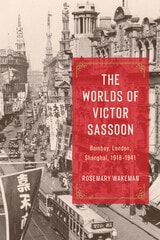
The Worlds of Victor Sassoon
Bombay, London, Shanghai, 1918–1941Rosemary Wakeman
University of Chicago Press, 2024
In this book, historian Rosemary Wakeman brings to life the frenzied, crowded streets, markets, ports, and banks of Bombay, London, and Shanghai. In the early twentieth century, these cities were at the forefront of the sweeping changes taking the world by storm as it entered an era of globalized commerce and the unprecedented circulation of goods, people, and ideas. Wakeman explores these cities and the world they helped transform through the life of Victor Sassoon, who in 1924 gained control of his powerful family’s trading and banking empire. She tracks his movements between these three cities as he grows his family’s fortune and transforms its holdings into a global juggernaut. Using his life as its point of entry, The Worlds of Victor Sassoon paints a broad portrait not just of wealth, cosmopolitanism, and leisure but also of the discrimination, exploitation, and violence wreaked by a world increasingly driven by the demands of capital.
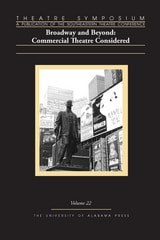
Theatre Symposium, Vol. 22
Broadway and Beyond: Commercial Theatre ConsideredDavid S. Thompson
University of Alabama Press, 2014
The eleven contributors to this fascinating collection illuminate many aspects of commercial theatre and how best to examine it. George Pate analyzes the high-stakes implication of a melodramatic legal battle. Christine Woodworth recounts the difficulties encountered by British actresses near the turn of the twentieth century, while Boone J. Hopkins considers newly found images of Margo Jones along with the commercial appeal they represent.
The volume continues with articles that follow developments with ties to commercial theatre, such as the interplay between Broadway companies and regional theatres, musical productions in communist Poland, and the influence of Korean popular culture on theatre and the unique production arrangements that have resulted. Other essays investigate alternative concepts related to commercial themes with regard to audience interaction and the burgeoning world of geek theatre.
Edited by David S. Thompson, this latest publication by the largest regional theatre organization in the United States collects the most current scholarship on theatre history and theory.
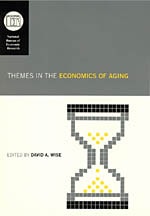
Themes in the Economics of Aging
Edited by David A. Wise
University of Chicago Press, 2001
This volume begins by looking at the implications of private and public personal retirement plans, focusing in particular on the impact of 401(k) programs on retirement strategies in light of potential social security reform and factors such as annuitization and on asset accumulation. Next, the often-observed relationship between health and wealth is dissected from two different perspectives and correlated with striking increases in health-care spending over the past two decades, despite the improved health of older populations. The volume concludes with an investigation of the retirement effects of various social security provisions in both U.S. and German systems.
This carefully developed collection expands the current investigative focus and broadens the dialogue on a rapidly growing area of social and economic concern.
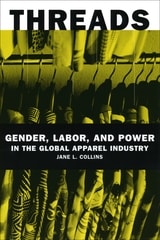
Threads
Gender, Labor, and Power in the Global Apparel IndustryJane L. Collins
University of Chicago Press, 2003
To dispel these misunderstandings, Jane L. Collins visited two very different apparel firms and their factories in the United States and Mexico. Moving from corporate headquarters to factory floors, her study traces the diverse ties that link First and Third World workers and managers, producers and consumers. Collins examines how the transnational economics of the apparel industry allow firms to relocate or subcontract their work anywhere in the world, making it much harder for garment workers in the United States or any other country to demand fair pay and humane working conditions.
Putting a human face on globalization, Threads shows not only how international trade affects local communities but also how workers can organize in this new environment to more effectively demand better treatment from their distant corporate employers.
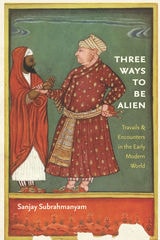
Three Ways to Be Alien
Travails and Encounters in the Early Modern WorldSanjay Subrahmanyam
Brandeis University Press, 2011
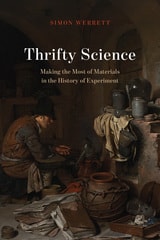
Thrifty Science
Making the Most of Materials in the History of ExperimentSimon Werrett
University of Chicago Press, 2018
Thrifty Science explores this distinctive culture of experiment and demonstrates how the values of the household helped to shape an array of experimental inquiries, ranging from esoteric investigations of glowworms and sour beer to famous experiments such as Benjamin Franklin’s use of a kite to show lightning was electrical and Isaac Newton’s investigations of color using prisms. Tracing the diverse ways that men and women put their material possessions into the service of experiment, Werrett offers a history of practices of recycling and repurposing that are often assumed to be more recent in origin. This thriving domestic culture of inquiry was eclipsed by new forms of experimental culture in the nineteenth century, however, culminating in the resource-hungry science of the twentieth. Could thrifty science be making a comeback today, as scientists grapple with the need to make their research more environmentally sustainable?