Results by title
748 books match the query 'Influence' and 172 start with t
The Pandemic and the Working Class
How US Labor Navigated COVID-19Edited by Nick Juravich and Steve Striffler
University of Illinois Press, 2025
Nick Juravich and Steve Striffler edit a collection that examines the effects of the pandemic on workers. Sections of the book focus on specific impacts and government efforts to restructure the economy; the dramatic effect of the pandemic on the hospitality industry; educators’ response on behalf of themselves and their students; frontline healthcare workers; and the innovative forms of labor organizing that emerged during and after COVID.
Contributors: Carlos Aramayo, Kathleen Brown, Sandrine Etienne, Ismael García-Colón, Puya Gerami, Maura Hagan, Connor Harney, Devan Hawkins, Leigh Howard, Marian Moser Jones, Doris Joy, Nick Juravich, Eric Larson, Kathryn M. Meyer, Samir Sonti, Steve Striffler, Lia Warner, Andrew B. Wolf, and Jennifer Zelnick
The Passage to Cosmos
Alexander von Humboldt and the Shaping of AmericaLaura Dassow Walls
University of Chicago Press, 2009
Explorer, scientist, writer, and humanist, Alexander von Humboldt was the most famous intellectual of the age that began with Napoleon and ended with Darwin. With Cosmos, the book that crowned his career, Humboldt offered to the world his vision of humans and nature as integrated halves of a single whole. In it, Humboldt espoused the idea that, while the universe of nature exists apart from human purpose, its beauty and order, the very idea of the whole it composes, are human achievements: cosmos comes into being in the dance of world and mind, subject and object, science and poetry.
Humboldt’s science laid the foundations for ecology and inspired the theories of his most important scientific disciple, Charles Darwin. In the United States, his ideas shaped the work of Emerson, Thoreau, Poe, and Whitman. They helped spark the American environmental movement through followers like John Muir and George Perkins Marsh. And they even bolstered efforts to free the slaves and honor the rights of Indians.
Laura Dassow Walls here traces Humboldt’s ideas for Cosmos to his 1799 journey to the Americas, where he first experienced the diversity of nature and of the world’s peoples—and envisioned a new cosmopolitanism that would link ideas, disciplines, and nations into a global web of knowledge and cultures. In reclaiming Humboldt’s transcultural and transdisciplinary project, Walls situates America in a lively and contested field of ideas, actions, and interests, and reaches beyond to a new worldview that integrates the natural and social sciences, the arts, and the humanities.
To the end of his life, Humboldt called himself “half an American,” but ironically his legacy has largely faded in the United States. The Passage to Cosmos will reintroduce this seminal thinker to a new audience and return America to its rightful place in the story of his life, work, and enduring legacy.
The Path to a Modern South
Northeast Texas between Reconstruction and the Great DepressionBy Walter L. Buenger
University of Texas Press, 2001
The forces that turned Northeast Texas from a poverty-stricken region into a more economically prosperous area.
Winner, Texas State Historical Association Coral H. Tullis Memorial Award for best book on Texas history, 2001
Federal New Deal programs of the 1930s and World War II are often credited for transforming the South, including Texas, from a poverty-stricken region mired in Confederate mythology into a more modern and economically prosperous part of the United States. By contrast, this history of Northeast Texas, one of the most culturally southern areas of the state, offers persuasive evidence that political, economic, and social modernization began long before the 1930s and prepared Texans to take advantage of the opportunities presented by the New Deal and World War II.
Walter L. Buenger draws on extensive primary research to tell the story of change in Northeast Texas from 1887 to 1930. Moving beyond previous, more narrowly focused studies of the South, he traces and interconnects the significant changes that occurred in politics, race relations, business and the economy, and women's roles. He also reveals how altered memories of the past and the emergence of a stronger identification with Texas history affected all facets of life in Northeast Texas.
The Pipes of Pan
Intertextuality and Literary Filiation in the Pastoral Tradition from Theocritus to MiltonThomas K. Hubbard
University of Michigan Press, 1999
Pastoral poetry highlights the didactic relationship of older and younger shepherds, whether as rivals or as patron and successor. As such it is an ideal form for young poets' self-representation vis-à-vis their elders, whose work they simultaneously appropriated and transformed, even as the elder poets were represented in the new texts. This influence is reenacted in every generation: Theocritus vs. his Alexandrian forebears, Vergil vs. Theocritus, Calpurnius vs. Vergil, Nemesianus vs. Vergil and Calpurnius, Petrarch vs. Vergil, Boccaccio vs. Petrarch, Spenser vs. Vergil, along with Chaucer and Milton vs. Spenser.
The Pipes of Pan combines multiple strands of contemporary intertextual theory with reception aesthetics and Harold Bloom's theory of intersubjective conflict between generations of poets. It also provides one of the first systematic studies of intertextual and intersubjective dynamics within a whole genre.
This work will be of interest to classicists, students of literary theory, comparative literature, medieval and Renaissance literature, Italian humanism, and English literature of the sixteenth and seventeenth centuries. All texts are translated.
Thomas Hubbard is Associate Professor of Classics, University of Texas at Austin.
The Platonic Tradition
Peter Kreeft
St. Augustine's Press, 2016
In the first of his eight lectures, Peter Kreeft defines Platonism and its “Big Idea,” the idea of a transcendent reality that the history of philosophy has labeled “Platonic Ideas” or Platonic Forms. In the second lecture, he briefly explores Plato’s two basic predecessors or sources, myth and Socrates; and then looks at 12 applications of the Forms in Plato’s own dialogues. The third lecture covers the three most important modifications or additions to Plato himself in the Platonic tradition: Aristotle, Plotinus, and Augustine, each of whom gave the Forms a new metaphysical address. The fourth lecture explores six Christian Platonists, three in the New Testament and three philosophers, Justin Martyr, Bonaventure, and Aquinas.

The Poetics of Indeterminacy
Rimbaud to CageMarjorie Perloff
Northwestern University Press, 1999
The Poetics of Scale
From Apollinaire to Big DataConrad Steel
University of Iowa Press, 2024
The Poetics of Scale takes us back to the years before the First World War in Paris, where the poet Guillaume Apollinaire claimed to have invented a new mode of poetry large enough to take on the challenges of the coming twentieth century. This history follows Apollinaire’s ideas across the Atlantic and examines how and why his work became such a vital source of inspiration for American poets through the era of intensive American economic expansion and up to the present day. Threading together Apollinaire’s work in the 1910s with three of his American successors—Louis Zukofsky in the 1930s, Allen Ginsberg in the 1950s, and Alice Notley from the 1970s onward—it shows how poetry as a cultural technique became the crucial test case for the scale of our collective imagination.

The Poetics of Transition
Emerson, Pragmatism, and American Literary ModernismJonathan Levin
Duke University Press, 1999
Levin draws on the pragmatist and neopragmatist writings of William James, John Dewey, George Santayana, Richard Rorty, and Cornel West to illuminate the work of modernist literature. In turn, he illuminates the poetic imperatives of pragmatism by tracing the ways in which Henry James, Gertrude Stein, and Wallace Stevens capture the moment of transition—a paradoxical moment that, once it is represented in language or art, requires its own perpetual overcoming. Throughout, he explores how modernist writers, who are masters at recording such “illegible” moments of transition in their poetry and prose, significantly contribute to an expanded understanding of pragmatism and its underlying aesthetics. By linking Emerson with the progressive philosophy of turn-of-the-century pragmatism and the experimentation of American literary modernism, Levin offers new insight into Emerson’s lasting influence on later American philosophers, novelists, and poets.
The Poetics of Transition will interest scholars and students in the fields of literary criticism, neopragmatism, literary modernism, and American literature.
The Poetry and Poetics of Olga Sedakova
Origins, Philosophies, Points of ContentionEdited by Stephanie Sandler, Maria Khotimsky, Margarita Krimmel, and Oleg Novikov
University of Wisconsin Press, 2019
Essayists from Russia, Ukraine, Germany, Italy, and the United States show how Sedakova has contributed to ongoing aesthetic and cultural debates. Like Sedakova's own work, the volume affirms the capacity of words to convey meaning and to change our understanding of life itself. The volume also includes dozens of elegant new translations of Sedakova's poems.
The Politics of Utopia
A New History of John Law's System, 1695–1795Arnaud Orain
University of Chicago Press, 2024
The Scottish economist John Law has been described as the architect of modern central banking. His “System,” established in Regency France between 1716 and 1720, saw the founding of a bank issuing paper money and the establishment of state commercial and colonial enterprises aimed at consolidating public debt. What at first seemed like financial wizardry, however, resulted in rampant speculation and, ultimately, economic collapse. In The Politics of Utopia, historian Arnaud Orain offers a provocative rereading of this well-known episode.
Starting his story in the seventeenth century, Orain reconstructs the figures and ideas, long predating Law, that anticipated and laid the groundwork for the System, which, he argues, is best understood as a failed social utopia aimed at the total transformation of society. Overturning familiar narratives of this seismic event, this book rewrites a stunning chapter in economic history by dealing with the cultural, colonial, religious, and political dimensions of the (in)famous System up to the French Revolution, revealing new lessons for today’s fraught financial landscape.
The Posthumous Career of Emiliano Zapata
Myth, Memory, and Mexico's Twentieth CenturyBy Samuel Brunk
University of Texas Press, 2008
Before there was Che Guevara, there was Emiliano Zapata, the charismatic revolutionary who left indelible marks on Mexican politics and society. The sequel to Samuel Brunk's 1995 biography of Zapata, The Posthumous Career of Emiliano Zapata traces the power and impact of this ubiquitous, immortalized figure.
Mining the massive extant literature on Zapata, supplemented by archival documents and historical newspaper accounts, Brunk explores frameworks of myth and commemoration while responding to key questions regarding the regime that emerged from the Zapatista movement, including whether it was spawned by a genuinely "popular" revolution.
Blending a sophisticated analysis of hegemonic systems and nationalism with lively, accessible accounts of ways in which the rebel is continually resurrected decades after his death in a 1919 ambush, Brunk delves into a rich realm of artistic, geographical, militaristic, and ultimately all-encompassing applications of this charismatic icon.
Examining all perspectives, from politicized commemorations of Zapata's death to popular stories and corridos, The Posthumous Career of Emiliano Zapata is an eloquent, engaging portrait of a legend incarnate.
The Power of the Steel-tipped Pen
Reconstructing Native Hawaiian Intellectual HistoryNoenoe K. Silva
Duke University Press, 2017
The Printed Reader
Gender, Quixotism, and Textual Bodies in Eighteenth-Century BritainAmelia Dale
Bucknell University Press, 2019
The Printed Reader explores the transformative power of reading in the eighteenth century, and how this was expressed in the fascination with Don Quixote and in a proliferation of narratives about quixotic readers, readers who attempt to reproduce and embody their readings. Through intersecting readings of quixotic narratives, including work by Charlotte Lennox, Laurence Sterne, George Colman, Richard Graves, and Elizabeth Hamilton, Amelia Dale argues that literature was envisaged as imprinting—most crucially, in gendered terms—the reader’s mind, character, and body. The Printed Reader brings together key debates concerning quixotic narratives, print culture, sensibility, empiricism, book history, and the material text, connecting developments in print technology to gendered conceptualizations of quixotism. Tracing the meanings of quixotic readers’ bodies, The Printed Reader claims the social and political text that is the quixotic reader is structured by the experiential, affective, and sexual resonances of imprinting and impressions.
Published by Bucknell University Press. Distributed worldwide by Rutgers University Press.
The Promise of Progress
The Life and Work of Lewis Henry MorganDaniel Noah Moses
University of Missouri Press, 2009

The Pseudoscience Wars
Immanuel Velikovsky and the Birth of the Modern FringeMichael D. Gordin
University of Chicago Press, 2012

The Reagan Range
The Nostalgic Myth in American PoliticsJames Combs
University of Wisconsin Press, 1993
This book is an attempt to make sense out of Ronald Reagan by linking him to various grassroots dimensions of American popular mythology and mind. It attempts to utilize a variety of sources from American and popular culture studies, works on Reagan, and popular materials such as movies to offer an interpretation of reagan as an exemplar of the political relevance and power of popular culture.
The Renaissance Rediscovery of Intimacy
Kathy Eden
University of Chicago Press, 2012
In 1345, when Petrarch recovered a lost collection of letters from Cicero to his best friend Atticus, he discovered an intimate Cicero, a man very different from either the well-known orator of the Roman forum or the measured spokesman for the ancient schools of philosophy. It was Petrarch’s encounter with this previously unknown Cicero and his letters that Kathy Eden argues fundamentally changed the way Europeans from the fourteenth through the sixteenth centuries were expected to read and write.
The Renaissance Rediscovery of Intimacy explores the way ancient epistolary theory and practice were understood and imitated in the European Renaissance.Eden draws chiefly upon Aristotle, Cicero, and Seneca—but also upon Plato, Demetrius, Quintilian, and many others—to show how the classical genre of the “familiar” letter emerged centuries later in the intimate styles of Petrarch, Erasmus, and Montaigne. Along the way, she reveals how the complex concept of intimacy in the Renaissance—leveraging the legal, affective, and stylistic dimensions of its prehistory in antiquity—pervades the literary production and reception of the period and sets the course for much that is modern in the literature of subsequent centuries. Eden’s important study will interest students and scholars in a number of areas, including classical, Renaissance, and early modern studies; comparative literature; and the history of reading, rhetoric, and writing.
The Riot Report and the News
How the Kerner Commission Changed Media Coverage of Black AmericaThomas J. Hrach
University of Massachusetts Press, 2016
On July 28, 1967, President Lyndon B. Johnson established the National Advisory Commission on Civil Disorders to investigate the causes of unrest in urban black communities during the 1960s. Chaired by Illinois governor Otto Kerner Jr., the commission ominously warned, “Our nation is moving toward two societies, one black, one white—separate and unequal.” And it aimed its sharpest criticism at the mainstream media, concluding: “The press has too long basked in a white world, looking out of it, if at all, with white men's eyes and a white perspective.” Major news media responded by expanding and diversifying their coverage of black communities and increasing the number of African Americans in their newsrooms.
Although much has been written about the Kerner Commission, the analysis has focused primarily on its affect on the American press. In The Riot Report and the News, Thomas J. Hrach instead explores how the commission came to its conclusions, in order to understand why and how its report served as a catalyst for change. Hrach finds that such government criticism of the media can have a long-term and positive influence on the nation, an insight that remains important as the news continues to struggle with how to cover issues of race.
The Rise of Constitutional Government in the Iberian Atlantic World
The Impact of the Cádiz Constitution of 1812Scott Eastman
University of Alabama Press, 2015
Exploring the constitution that transformed governance, citizenship, and political culture across the Hispanic Atlantic world.
In March 1812, while Napoleon’s brother Joseph sat on the throne of Spain and the armies of France occupied much of the country, legislators elected from Spain and its overseas territories met in the Andalusian city of Cádiz. There, as the cornerstone of a government in exile, they drafted and adopted the first liberal constitution in the Hispanic world, a document that became known as the Cádiz Constitution of 1812.
The 1812 Constitution was extremely influential in and beyond Europe, and this collection of essays explores how its enduring legacy not only shaped the history of state-building, elections, and municipal governance in Iberian America, but also affected national identities and citizenship as well as the development of race and gender in the region.
A bold blueprint for governing a global, heterogeneous monarchy, the Constitution represented a rupture with Spain’s Antiguo Régimen (Old Regime) in numerous ways—in the limits it placed on the previously autocratic Bourbon monarchs, in the admission to its governing bodies of deputies from Spain’s American viceroyalties as equals, and in its framers’ vociferous debate over the status of castas (those of mixed ancestry) and slaves. The Rise of Constitutional Government in the Iberian Atlantic World covers these issues and adopts a transatlantic perspective that recovers the voices of those who created a vibrant political culture accessible to commoners and elite alike.
The bicentenary of the Constitution of 1812 offered scholars an excellent moment to reexamine the form and role of constitutions across the Spanish-speaking world. Constitutionalism remains a topic of intense debate in Latin America, while contemporary Spain itself continues to seek ways to balance a strong central government with centripetal forces in its regions, notably the Basque and Catalan provinces. The multifaceted essays compiled here by Scott Eastman and Natalia Sobrevilla Perea both shed new light on the early, liberal Hispanic societies and show how the legacies of those societies shape modern Spain and Latin America.

The Rise of Trump
America's Authoritarian SpringMatthew C. MacWilliams
Amherst College Press, 2016

The Romance of Individualism in Emerson and Nietzsche
David Mikics
Ohio University Press, 2027
The great American thinker Ralph Waldo Emerson and the influential German philosopher Friedrich Nietzsche, though writing in different eras and ultimately developing significantly different philosophies, both praised the individual’s wish to be transformed, to be fully created for the first time. Emerson and Nietzsche challenge us to undertake the task of identity on our own, in order to see (in Nietzsche’s phrase) “how one becomes what one is.”
David Mikics’s The Romance of Individualism in Emerson and Nietzsche examines the argument, as well as the affinity, between these two philosophers. Nietzsche was an enthusiastic reader of Emerson and inherited from him an interest in provocation as a means of instruction, an understanding of the permanent importance of moods and transitory moments in our lives, and a sense of the revolutionary character of impulse. Both were deliberately outrageous thinkers, striving to shake us out of our complacency.
Rather than choosing between Emerson and Nietzsche, Mikics attends to Nietzsche’s struggle with Emerson’s example and influence. Elegant in its delivery, The Romance of Individualism in Emerson and Nietzsche offers a significant commentary on the visions of several contemporary theorists whose interests intersect with those of Emerson and Nietzsche, especially Stanley Cavell, Jacques Lacan, Slavoj Zizek, and Harold Bloom.
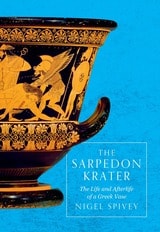
The Sarpedon Krater
The Life and Afterlife of a Greek VaseNigel Spivey
University of Chicago Press, 2019
Spivey takes the reader on a dramatic journey, beginning with the krater’s looting from an Etruscan tomb in 1971 and its acquisition by the Metropolitan Museum of Art, New York, followed by a high-profile lawsuit over its status and its eventual return to Italy. He explains where, how, and why the vase was produced, retrieving what we know about the life and legend of Sarpedon. Spivey also pursues the figural motif of the slain Sarpedon portrayed on the vase and traces how this motif became a standard way of representing the dead and dying in Western art, especially during the Renaissance.
Fascinating and informative, The Sarpedon Krater is a multifaceted introduction to the enduring influence of Greek art on the world.
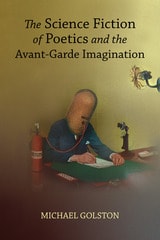
The Science Fiction of Poetics and the Avant-Garde Imagination
Michael Golston
University of Alabama Press, 2024
This insightful, playful monograph from Golston does exactly what it advertises: modeling poetics based on how poetry (and some parallel artistic endeavors) has filtered through a century-plus of science fiction. This is not a book about science fiction in and of itself, but it is a book about the resonances of science-fiction tropes and ideas in poetic language.
The germ of Golston’s project is a throwaway line in Robert Smithson’s Entropy and the New Monuments about how cinema supplanted nature as inspiration for many of his fellow artists: “The movies give a ritual pattern to the lives of many artists, and this induces a kind of ‘low budget’ mysticism, which keeps them in a perpetual trance.” Golston charts how the demotic appeal of sci-fi, much like that of the B-movie, cross-pollinated into poetry and other branches of the avant garde.
Golston creates what he calls a “regular Rube Goldberg machine” of a critical apparatus, drawing on Walter Benjamin, Roman Jakobson, and Gilles Deleuze. He starts by acknowledging that, per the important work of Darko Suvin to situate science fiction critically, the genre is premised on cognitive estrangement. But he is not interested in the specific nuts and bolts of science fiction as it exists but rather how science fiction has created a model not only for other poets but also for musicians and landscape artists.
Golston’s critical lens moves around quite a bit, but he begins with familiar enough subjects: Edgar Rice Burroughs, Mina Loy, William S. Burroughs. From there he moves into more “alien” terrain: Ed Dorn’s long poem Gunslinger, the discombobulated work of Clark Coolidge. Sun Ra, Ornette Coleman, and Jimi Hendrix all come under consideration. The result of Golston’s restless, rich scholarship is the first substantial monograph on science fiction and avant-garde poetics, using Russian Formalism, Frankfurt School dialectics, and Deleuzian theory to show how the avant-garde inherently follows the parameters of sci fi, in both theme and form.
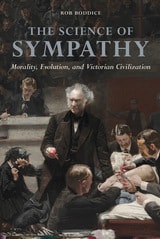
The Science of Sympathy
Morality, Evolution, and Victorian CivilizationRob Boddice
University of Illinois Press, 2016

The Sciences in Enlightened Europe
Edited by William Clark, Jan Golinski, and Simon Schaffer
University of Chicago Press, 1999
The contributors examine the production of new disciplines through work with instruments and techniques; consider how institutions of public taste and conversation helped provide a common frame for the study of human and nonhuman natures; and explore the regional operations of scientific culture at the geographical fringes of Europe.
Implicated in the rise of both fascism and liberal secularism, the moral and political values that shaped the Enlightenment remain controversial today. Through careful scrutiny of how these values influenced and were influenced by the concrete practices of its sciences, this book gives us an entirely new sense of the Enlightenment.

The Scientific-Military State
How Enlightened Engineers Reinvented Early American GovernmentSveinn M. Jóhannesson
University of Chicago Press, 2026
In The Scientific-Military State, Sveinn M. Jóhannesson charts the emergence of a new kind of governance in early-nineteenth-century America: the scientific-military state. Federal officials used mathematics, science, and other forms of enlightened knowledge to launch the nation’s very first experiments in scientific education and expert administration. These figures forged a new intellectual elite that socially elevated itself above ordinary soldiers, workers, and civilians and reshaped the military state itself beyond familiar models of standing army or militia. Originating primarily from the US Military Academy at West Point, these experts, who were often engineers, debated statecraft, analyzed topography, designed fortifications, manufactured weapons, built infrastructure, and exercised military power as the United States spread across the continent. But the even deeper result was a transformed relationship between the government and its citizens, one that echoes today.
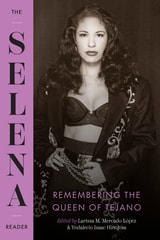
The Selena Reader
Remembering the Queen of TejanoEdited by Larissa M. Mercado-López and Yndalecio Isaac Hinojosa
University of Texas Press, 2026
A literary collection honoring and memorializing Selena, the Queen of Tejano.
Thirty years after her death, Selena Quintanilla-Pérez remains a cherished figure of Mexican American popular culture, her music and celebrity resounding across the decades. This unique collection of creative and scholarly works traces Selena’s lasting impact as an entertainer and focal point of community and identity.
Assembling essays, memoir, short stories, and poems, The Selena Reader memorializes a beloved singer while also exploring the politics and personal meaning of what we remember. Selena’s devoted admirers tell us what they took from her lyrics and stage presence, the official and fan tributes, and the media and products she inspired. In one essay, Tejana coming-of-age is sharply refracted through the prism of Selena’s art and social status. Another piece considers how Selena’s body and distinctive clothing have shaped the author’s sense of queer self. Honey Avila (aka Honey Andrews), the renowned Selena impersonator, shares vivid recollections of her hero. A father and daughter describe how their conversations about Selena changed their relationship and contributed to Chicana feminist consciousness in their lives. All told, this anthology amplifies the gratitude of generations who have loved, and learned from, Selena.
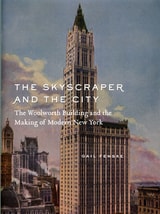
The Skyscraper and the City
The Woolworth Building and the Making of Modern New YorkGail Fenske
University of Chicago Press, 2008
Fenske shows here that the building’s multiplicity of meanings reflected the cultural contradictions that defined New York City’s modernity. For Frank Woolworth—founder of the famous five-and-dime store chain—the building served as a towering trademark, for advocates of the City Beautiful movement it suggested a majestic hotel de ville, for technological enthusiasts it represented the boldest of experiments in vertical construction, and for tenants it provided an evocative setting for high-style consumption. Tourists, meanwhile, experienced a spectacular sightseeing destination and avant-garde artists discovered a twentieth-century future. In emphasizing this faceted significance, Fenske illuminates the process of conceiving, financing, and constructing skyscrapers as well as the mass phenomena of consumerism, marketing, news media, and urban spectatorship that surround them.
As the representative example of the skyscraper as a “cathedral of commerce,” the Woolworth Building remains a commanding presence in the skyline of lower Manhattan, and the generously illustrated Skyscraper and the City is a worthy testament to its importance in American culture.
The Social Life of Scriptures
Cross-Cultural Perspectives on BiblicismEdited and with an introduction by James S. Bielo
Rutgers University Press, 2009
Contributors offer a collection of closely analyzed and carefully conducted ethnographic and historical case studies, covering a range of geographic, theological, and cultural territory, including: American evangelicals and charismatics; Jamaican Rastafarians; evangelical and Catholic Mayans; Northern Irish charismatics; Nigerian Anglicans; and Chinese evangelicals in the United States.
The Social Life of Scriptures is the first book to present an eclectic, cross-cultural, and comparative investigation of Bible use. Moreover, it models an important movement to outline a framework for how scriptures are implicated in organizing social structures and meanings, with specific foci on gender, ethnicity, agency, and power.
The Story upon a Hill
The Puritan Myth in Contemporary American FictionChristopher Leise
University of Alabama Press, 2017
The Story upon a Hill: The Puritan Myth in Contemporary American Fiction analyzes the work of several of the most important contemporary writers in the United States as reinterpreting commonplace narratives of the country’s origins with a keen eye on the effects of inclusion and exclusion that Puritan myths promote. In 1989, Ronald Reagan recalled the words of Massachusetts Bay Colony governor John Winthrop, who imagined the colony as a “city upon a hill” for future nations to emulate. In Reagan’s speech, Winthrop’s signature rhetoric became an emblem of American idealism, and for many Americans, the Puritans’ New England was the place where the United States forged its original identity.
But what if Winthrop never gave that speech? What if he did not even write it? Historians cannot definitively answer these questions. In fact, no group that we refer to as American Puritans thought of themselves as Puritans. Rather, they were a group of dissident Christians often better defined by their disagreements than their shared beliefs.
Literary scholars interested in Anglo-American literary production from the seventeenth century through the present, historians, and readers interested in how ideas about Christianity circulate in popular culture will find fascinating the ways in which William Gaddis, Kurt Vonnegut, Thomas Pynchon, and Marilynne Robinson repurpose so-called Puritan forms of expression to forge a new narrative of New England’s Congregationalist legacy in American letters. Works by Colson Whitehead, Paul Auster, Toni Morrison, and others are also considered. The Story upon a Hill raises a provocative question: if the Puritans never existed as we understand them, what might American history look like in that context?
The Summer the Archduke Died
On Wars and WarriorsLouis D. Rubin, Jr.
University of Missouri Press, 2008
The Toni Morrison Book Club
Juda Bennett
University of Wisconsin Press, 2020
Framing their book club around collective secrets, the group bears witness to how Morrison’s works and words can propel us forward while we sit with uncomfortable questions about race, gender, and identity. How do we make space for black vulnerability in the face of white supremacy and internalized self-loathing? How do historical novels speak to us now about the delicate seams that hold black minds and bodies together?
This slim and brilliant confessional offers a radical vision for book clubs as sites of self-discovery and communal healing. The Toni Morrison Book Club insists that we find ourselves in fiction and think of Morrison as a spiritual guide to our most difficult thoughts and ideas about American literature and life.
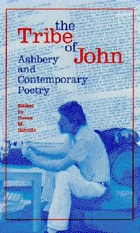
The Tribe of John
Ashbery and Contemporary PoetrySusan M. Schultz
University of Alabama Press, 1995
This concentration on Ashbery's influence on contemporary American poetry provides new methods for interpreting and understanding his poetic achievement.
The Triumph of the Therapeutic
Uses of Faith after FreudPhilip Rieff
University of Chicago Press, 1987
"A triumphantly successful exploration of certain key themes in cultural life. Rieff's incidental remarks are not only illuminating in themselves; they suggest whole new areas of inquiry."—Alasdair MacIntyre, Guardian
The Underground Poetry Metro Transportation System for Souls
Essays on the Cultural Life of PoetryTony Hoagland
University of Michigan Press, 2019
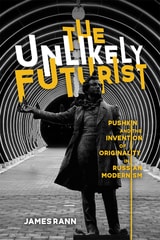
The Unlikely Futurist
Pushkin and the Invention of Originality in Russian ModernismJames Rann
University of Wisconsin Press, 2020
Through systematic and detailed readings of Futurist texts, James Rann offers the first book-length study of the tensions between the outspoken literary group and the great national poet. He observes how those in the movement engaged with and invented a new Pushkin, who by turns became a founding father to rebel against, a source of inspiration to draw from, a prophet foreseeing the future, and a monument to revive.
Rann's analysis contributes to the understanding of both the Futurists and Pushkin's complex legacy. The Unlikely Futurist will appeal broadly to scholars of Slavic studies, especially those interested in literature and modernism.

The Victory Album
Reflections on the Good Life after the Good WarPhilip D. Beidler
University of Alabama Press, 2010

The Villas of Pliny from Antiquity to Posterity
Pierre de la Ruffinière du Prey
University of Chicago Press, 1994
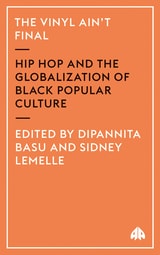
The Vinyl Ain't Final
Hip Hop and the Globalization of Black Popular CultureDipannita Basu and Sidney Lemelle
Pluto Press, 2006
From the front lines of hip hop culture and music in the USA, Britain, France, Japan, Germany, Hawaii, Tanzania, Cuba, Samoa and South Africa, academics, poets, practitioners, journalists, and political commentators explore hip hop -- both as a culture and as a commodity. From the political economy of the South African music industry to the cultural resistance forged by Afro-Asian hip hop, this potent mix of contributors provides a unique critical insight into the implications of hip hop globally and locally. Indispensable for fans of hip hop culture and music, this book will also appeal to anyone interested in cultural production, cultural politics and the implications of the huge variety of forms hip hop encompasses.
Dipa Basu is and Associate Professor of Sociology and Black Studies at Pitzer College, Claremont, California. Her recent publications include 'Sociology of the Color Line' in Peter Ratcliffe, ed. The Politics of Social Science Research: Race, Ethnicity and Social Change (Palgrave Press, 2001).
Sidney Lemelle is an Associate Professor of Black Studies at Pomona College, Claremont, California. He has co-edited with Robin D.G Kelley, Imagining Home: Class, Culture and Nationalism in the African Diaspora (Verso, 1994).
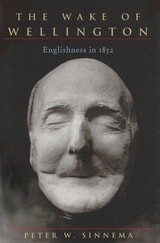
The Wake of Wellington
Englishness in 1852Peter W. Sinnema
Ohio University Press, 2006
Soldier, hero, and politician, the Duke of Wellington is one of the best-known figures of nineteenth-century England. From his victory at Waterloo over Napoleon in 1815, he rose to become prime minister of his country. But Peter Sinnema finds equal fascination in Victorian England’s response to the duke’s death.
The Wake of Wellington considers Wellington’s spectacular funeral pageant in the fall of 1852—an unprecedented event that attracted one and a half million spectators to London—as a threshold event against which the life of the soldier-hero and High Tory statesman could be re-viewed and represented.
Canvassing a profuse and dramatically proliferating Wellingtoniana, Sinnema examines the various assumptions behind, and implications of, the Times’s celebrated claim that the Irish-born Wellington “was the very type and model of an Englishman.” The dead duke, as Sinnema demonstrates, was repeatedly caught up in interpretive practices that stressed the quasi-symbolic relations between hero and nation.
The Wake of Wellington provides a unique view of how in death Wellington and his career were promoted as the consummation of a national destiny intimately bound up with Englishness itself, and with what it meant to be English at midcentury.
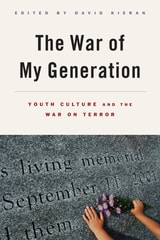
The War of My Generation
Youth Culture and the War on TerrorKieran, David
Rutgers University Press, 2015
The War of My Generation is the first essay collection to focus specifically on how the terrorist attacks and their aftermath have shaped these new generations of Americans. Drawing from a variety of disciplines, including anthropology, sociology, cultural studies, and literary studies, the essays cover a wide range of topics, from graphic war images in the classroom to computer games designed to promote military recruitment to emails from parents in the combat zone. The collection considers what cultural factors and products have shaped young people's experience of the 9/11 attacks, the wars that have followed, and their experiences as emerging citizen-subjects in that moment. Revealing how young people understand the War on Terror—and how adults understand the way young people think—The War of My Generation offers groundbreaking research on catastrophic events still fresh in our minds.
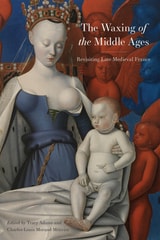
The Waxing of the Middle Ages
Revisiting Late Medieval FranceCharles-Louis Morand-Métivier
University of Delaware Press, 2023
The Waxing of the Middle Ages sets out to provide a rich, complex, and diverse study of these developments and to reassert that late medieval France is crucial in its own right. The collection argues for an approach that views the late medieval period not as an afterthought, or a blind spot, but as a period that is key in understanding the fluidity of time, traditions, culture, and history. Each essay explores some “cultural form,” to borrow Huizinga’s expression, to expose the false divide that has dominated modern scholarship.
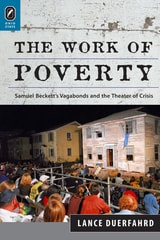
The Work of Poverty
Samuel Beckett's Vagabonds and the Theater of CrisisLance Duerfahrd
The Ohio State University Press, 2013
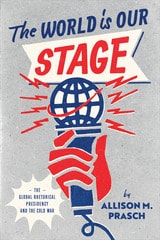
The World Is Our Stage
The Global Rhetorical Presidency and the Cold WarAllison M. Prasch
University of Chicago Press, 2023
Crowds swarm when US presidents travel abroad, though many never hear their voices. The presidential body, moving from one secured location to another, communicates as much or more to these audiences than the texts of their speeches. In The World is Our Stage, Allison M. Prasch considers how presidential appearances overseas broadcast American superiority during the Cold War. Drawing on extensive archival research, Prasch examines five foundational moments in the development of what she calls the “global rhetorical presidency:” Truman at Potsdam, Eisenhower’s “Goodwill Tours,” Kennedy in West Berlin, Nixon in the People’s Republic of China, and Reagan in Normandy. In each case, Prasch reveals how the president’s physical presence defined the boundaries of the “Free World” and elevated the United States as the central actor in Cold War geopolitics.
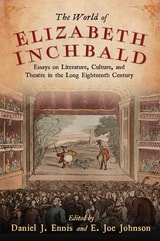
The World of Elizabeth Inchbald
Essays on Literature, Culture, and Theatre in the Long Eighteenth CenturyDaniel J. Ennis
University of Delaware Press, 2022
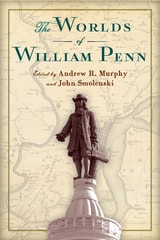
The Worlds of William Penn
Murphy, Andrew R
Rutgers University Press, 2019
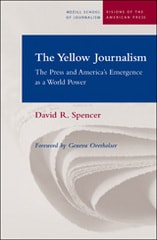
The Yellow Journalism
The Press and America's Emergence as a World PowerDavid R. Spencer
Northwestern University Press, 2007
Most notable among Hearst's competitors was New York City's The World, owned and managed by a European Jewish immigrant named Joseph Pulitzer. The Yellow Journalism describes how these two papers and others exploited the scandal, corruption, and crime among the city's most influential citizens, and its most desperate inhabitants--a policy that made this "journalism of action" remarkably effective, not just as a commercial force, but also as an advocate for the city's poor and defenseless. Spencer shows how many of the innovations first introduced during this period--from investigative reporting to the use of color, entertainment news, and cartoons in papers--have had a lasting effect on journalism; and how media in our day reflects the Yellow Press's influence, but also its threatened irrelevance within the broader realities of contemporary society.
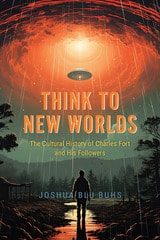
Think to New Worlds
The Cultural History of Charles Fort and His FollowersJoshua Blu Buhs
University of Chicago Press, 2024
Flying saucers. Bigfoot. Frogs raining from the sky. Such phenomena fascinated Charles Fort, the maverick writer who scanned newspapers, journals, and magazines for reports of bizarre occurrences: dogs that talked, vampires, strange visions in the sky, and paranormal activity. His books of anomalies advanced a philosophy that saw science as a small part of a larger system in which truth and falsehood continually transformed into one another. His work found a ragged following of skeptics who questioned not only science but the press, medicine, and politics. Though their worldviews varied, they shared compelling questions about genius, reality, and authority. At the center of this community was adman, writer, and enfant terrible Tiffany Thayer, who founded the Fortean Society and ran it for almost three decades, collecting and reporting on every manner of oddity and conspiracy.
In Think to New Worlds, Joshua Blu Buhs argues that the Fortean effect on modern culture is deeper than you think. Fort’s descendants provided tools to expand the imagination, explore the social order, and demonstrate how power is exercised. Science fiction writers put these ideas to work as they sought to uncover the hidden structures undergirding reality. Avant-garde modernists—including the authors William Gaddis, Henry Miller, and Ezra Pound, as well as Surrealist visual artists—were inspired by Fort’s writing about metaphysical and historical forces. And in the years following World War II, flying saucer enthusiasts convinced of alien life raised questions about who controlled the universe.
Buhs’s meticulous and entertaining book takes a respectful look at a cast of oddballs and eccentrics, plucking them from history’s margins and spotlighting their mark on American modernism. Think to New Worlds is a timely consideration of a group united not only by conspiracies and mistrust of science but by their place in an ever-expanding universe rich with unexplained occurrences and visionary possibilities.

Thinking Orthodox in Modern Russia
Culture, History, ContextEdited by Patrick Lally Michelson and Judith Deutsch Kornblatt
University of Wisconsin Press, 2014
Volume editors Patrick Lally Michelson and Judith Deutsch Kornblatt provide a historical overview of Russian Orthodox thought and a critical essay on the current state of scholarship about religious thought in modern Russia. The contributors explore a wide range of topics, including Orthodox claims to a unique religious Enlightenment, contests over authority within the Russian Church, tensions between faith and reason in academic Orthodoxy, the relationship between sacraments and the self, the religious foundations of philosophical and legal categories, and the effect of Orthodox categories in the formation of Russian literature.
Third-Generation Holocaust Representation
Trauma, History, and MemoryVictoria Aarons and Alan L. Berger
Northwestern University Press, 2017