Results by title
303 books match the query 'Time' and 103 start with t
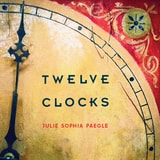
Twelve Clocks
Julie Sophia Paegle
University of Arizona Press, 2015
From the fall of Troy recorded at the beginning of Western poetry to the ongoing mass extinction of species, Twelve Clocks meditates on the temporality of loss across the many scales of our experience and knowledge. Framed by central images of beginnings and ends, this collection searches six cities and intervals of time for the measures of loss, labor, and care. Through formal innovations derived from the second, the minute, the hour, etc., and the methods of their measure, these poems move from the stark violence of Homer’s tale to the terrible precision and power of the atomic age.
As the reader is transported from Las Vegas to Argentina to the landscapes of Ancient Greek epic poetry, Twelve Clocks explores the connections between song, ancestry, family, loss, and time. If the imagery of the collection hints Troy might be an image of the wrecked Argentine economy under neoliberal economics, the poems eschew the abstractions of politics in favor of a vivid and sensuous lyricism.
The interconnectivity of the poems in Twelve Clocks is mirrored by different elements’ transcendence throughout the collection. The clock that goes missing in one poem turns up in another, characters vanish and reappear, matter destroyed in one poem reoccurs as energy in another, and then matter and energy both go missing. Taken together, the poems confront the literary legacy of Western poetic tradition and our shared future.
[more]
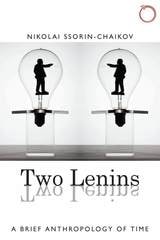
Two Lenins
A Brief Anthropology of TimeNikolai Ssorin-Chaikov
HAU, 2017
Highly innovative and theoretically incisive, Two Lenins is the first book-length anthropological examination of how social reality can be organized around different yet concurrent ideas of time.
Nikolai Ssorin-Chaikov grounds his theoretical exploration in fascinating ethnographic and historical material on two Lenins: the first is the famed Soviet leader of the early twentieth century, and the second is a Siberian Evenki hunter—nicknamed “Lenin”—who experienced the collapse of the USSR during the 1990s. Through their intertwined stories, Ssorin-Chaikov unveils new dimensions of ethnographic reality by multiplying our notions of time.
Ssorin-Chaikov examines Vladimir Lenin at the height of his reign in 1920s Soviet Russia, focusing especially on his relationship with American businessperson Armand Hammer. He casts this scene against the second Lenin—the hunter on the far end of the country, in Siberia, at the far end of the century, the 1990s, who is tasked with improvising postsocialism in the economic and political uncertainties of post-Soviet transition. Moving from Moscow to Siberia to New York, and traveling form the 1920s to the 1960s to the 1990’s, Ssorin-Chaikov takes readers beyond a simple global history or cross-temporal comparison, instead using these two figures to enact an ethnographic study of the very category of time that we use to bridge different historical contexts.
[more]

Tyranny of the Moment
Fast and Slow Time in the Information AgeThomas Hylland Eriksen
Pluto Press, 2001
[more]