Results by title
8642 books match the query '20th century' and 1764 start with t
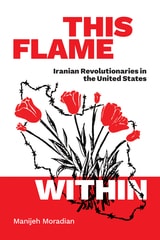
This Flame Within
Iranian Revolutionaries in the United StatesManijeh Moradian
Duke University Press, 2022
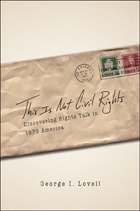
This Is Not Civil Rights
Discovering Rights Talk in 1939 AmericaGeorge I. Lovell
University of Chicago Press, 2012

This Is Not Dixie
Racist Violence in Kansas, 1861-1927Brent M.S. Campney
University of Illinois Press, 2018
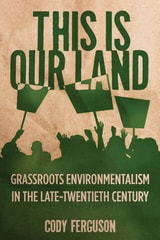
This Is Our Land
Grassroots Environmentalism in the Late Twentieth CenturyFerguson, Cody
Rutgers University Press, 2015
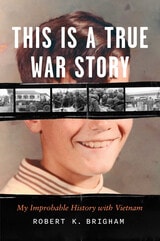
This Is a True War Story
My Improbable History with VietnamRobert K. Brigham
University of Chicago Press, 2026
Robert K. Brigham has had a substantial career as a historian of the Vietnam War, with a hand in nine books, a documentary, public history projects, and more. While many a historian has felt compelled at some point to write about a subject close to them personally, Brigham did not think he was doing that. But, at age fifty-eight, Brigham, who had long known he was adopted, discovered that he’d improbably and unknowingly been studying and talking about his biological father for decades. That man, Bruce Atwell, was a Marine Corps photographer who took some of that war’s most indelible and widely reproduced pictures. Brigham had used those images over and over again in decades’ worth of classes and public lectures, never knowing the truth.
Both Brigham and Atwell were products of the American foster care and adoption system, and both were defined professionally by Vietnam. In a story shot through with echoes and shadows, Brigham not only reveals his own history as an adoptee but opens a startlingly fresh vantage on the fragility of American families; the power of social norms and taboos to shape lives; and the forces that inequitably disrupt families, not least of them war. The result is an accessible and moving book that is at once both a powerful personal story and an illuminating social critique.
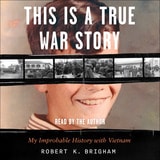
This Is a True War Story
My Improbable History with VietnamRobert K. Brigham
University of Chicago Press, 2026
Robert K. Brigham has had a substantial career as a historian of the Vietnam War, with a hand in nine books, a documentary, public history projects, and more. While many a historian has felt compelled at some point to write about a subject close to them personally, Brigham did not think he was doing that. But, at age fifty-eight, Brigham, who had long known he was adopted, discovered that he’d improbably and unknowingly been studying and talking about his biological father for decades. That man, Bruce Atwell, was a Marine Corps photographer who took some of that war’s most indelible and widely reproduced pictures. Brigham had used those images over and over again in decades’ worth of classes and public lectures, never knowing the truth.
Both Brigham and Atwell were products of the American foster care and adoption system, and both were defined professionally by Vietnam. In a story shot through with echoes and shadows, Brigham not only reveals his own history as an adoptee but opens a startlingly fresh vantage on the fragility of American families; the power of social norms and taboos to shape lives; and the forces that inequitably disrupt families, not least of them war. The result is an accessible and moving book that is at once both a powerful personal story and an illuminating social critique.
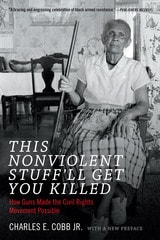
This Nonviolent Stuff'll Get You Killed
How Guns Made the Civil Rights Movement PossibleCharles E. Cobb Jr.
Duke University Press, 2015
This Thing Called the World
The Contemporary Novel as Global FormDebjani Ganguly
Duke University Press, 2016
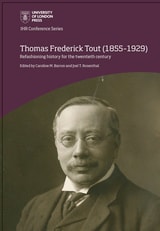
Thomas Frederick Tout (1855–1929)
refashioning history for the twentieth centuryEdited by Joel T. Rosenthal and Caroline M. Barron
University of London Press, 2019
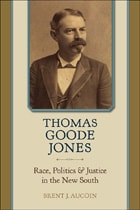
Thomas Goode Jones
Race, Politics, and Justice in the New SouthBrent J. Aucoin
University of Alabama Press, 2016
Thomas Goode Jones of Alabama is the first comprehensive biography of a key Alabama politician and federal jurist whose life and times embody the conflicts and transformations in the Deep South between the Civil War and World War I.
A man who both represented and differed from his class, Thomas Goode Jones offers contemporary readers and scholars an ideal subject of study to understand a period of southern history that still shapes American life today. Often overshadowed by the pharaonic antebellum period, the Civil War, and the luminous heights of the civil rights movement, the deceptively placid decades at the turn of the century were, in fact, a period when southerners fiercely debated the course of the South’s future. In tracing Jones’s career, Brent J. Aucoin offers vivid accounts of the great events and trends of that pivotal period: Reconstruction, the birth of the “Solid South,” the Populist Revolt, and the establishment of racial disenfranchisement and segregation.
Born in 1844, Jones served in the Confederate army and after the war identified as a conservative “Bourbon” Democrat. He served as Alabama's governor from 1890 to 1894 and as a federal judge from 1901 until his death in 1914. As a veteran, politician, and judge, Jones embodied numerous roles in the shifting political landscape of the South.
Jones was not, however, a reflexive conformist and sometimes pursued policies at odds with his party. Jones’s rhetoric and support of African American civil rights were exceptional and earned him truculent criticism from unrepentant racist factions in his party. His support was so fearless that it inspired Booker T. Washington to recommend Jones to Republican president Theodore Roosevelt as a federal judge. On the bench, Jones garnered national attention for his efforts to end peonage and lynching, and yet he also enabled the establishment of legalized segregation in Alabama, confounding attempts easily to categorize him as an odious reactionary or fearless progressive.
Thomas Hardy's Brains
Psychology, Neurology, and Hardy's ImaginationSuzanne Keen
The Ohio State University Press, 2014
This study reveals how Hardy made sense of diverse sources of an affective human psychology, a discipline that expanded significantly during Hardy’s working life. From the 1870s to the turn of the twentieth century, the tools and techniques for studying the structures and function of the nervous system developed rapidly. Simultaneously, Hardy moved steadily toward realizing a more physiologically accurate rendering of brains and nerves.
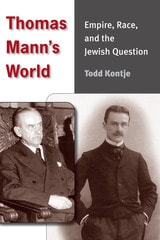
Thomas Mann's World
Empire, Race, and the Jewish QuestionTodd Kontje
University of Michigan Press, 2011
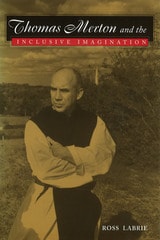
Thomas Merton and the Inclusive Imagination
Ross Labrie
University of Missouri Press, 2001
Thomas Merton (1915-1968) was a Roman Catholic priest, a Trappist monk, a social activist, and a poet. Author of the celebrated autobiography The Seven Storey Mountain, Merton has been described as the most important American religious writer of the past hundred years. One of the notable characteristics of Merton's writing, both in poetry and in prose, was his seamless intermingling of religious and Romantic elements, an intermingling that, because of his gifts as a writer and because of his enormous influence, has had the effect of making widespread a distinctive form of religious thought and expression. In Thomas Merton and the Inclusive Imagination, Ross Labrie reveals the breadth of Merton's intellectual reach by taking an original and systematic look at Merton's thought, which is generally regarded as eclectic and unsystematic.
What captured Merton's attention about Romanticism and mysticism and what held his attention virtually all his life was his consciousness of the ontological significance of unity and wholeness. Even though he was far from being a systematic thinker, Merton's writings form a coherent whole when considered from the point of view of his emphasis on unity and wholeness. Labrie skillfully examines Merton's letters, journals, and individual works to show the full expanse of his contribution. By using insights from the Romantic literary tradition and from the mystical tradition, the author is able to make sense of Merton's writings from all periods of his life. Although Labrie covers such sweeping topics as consciousness, self, being, nature, time, myth, culture, and individuation, remaining focused on Merton's specific, unique contributions in each area.
This thought-provoking work, which takes into account material from the recent full publication of Merton's journals and from his Columbia University notebooks on Romanticism, not only shows Merton's intellectual growth but provides a look at his expansive interests as well. Thomas Merton and the Inclusive Imagination will make a significant contribution to Merton studies.
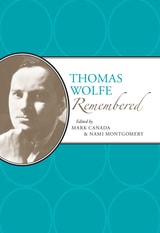
Thomas Wolfe Remembered
Edited by Mark Canada and Nami Montgomery
University of Alabama Press, 2018
A collection of reminiscences captures the private life of a great American writer.
Thomas Wolfe’s life may seem to be an open book. A life that, after all, was the source for his best-known works, including the novels Look Homeward, Angel and Of Time and the River, as well as his numerous short stories and dramas. Since his death in 1938, scholars and admirers of Wolfe have relied largely on these texts to understand the man himself.
Thomas Wolfe Remembered provides something new: a rich, multifaceted portrait painted by those who knew him (casually or intimately), loved him (or didn’t), and saw, heard, and experienced the literary (and literal) giant. This volume gathers in one place for the first time dozens of reminiscences by friends, family members, colleagues, and casual acquaintances, adding color and fine details to the self-portrait the author created in his novels.
Wolfe found plenty to challenge and frustrate him throughout his life, from his boyhood in Asheville, North Carolina, to his education at the University of North Carolina and Harvard University, through his time in New York and Europe, his travels through the American West, and his death in Baltimore. He experienced two distracted parents in a loveless marriage, the premature death of a beloved brother, a minor stutter, and the difficulties of controlling a mercurial temper. Yet Wolfe’s exuberance, perceptiveness, memory, and compulsion to record virtually all that he experienced made for an extravagance of material that sometimes angered the people whose lives he used as source material.
Editors Mark Canada and Nami Montgomery have collected dozens of remembrances, many unpublished or long forgotten, including pieces from Julia Wolfe, Margaret Roberts, Frederick Koch, Maxwell Perkins, Elizabeth Nowell, Edward Aswell, and Martha Dodd. Some are endearing, others are disturbing, and many are comical. All provide glimpses into the vibrant, haunted, boyish, paranoid, disheveled, courteous, captivating, infuriating, and altogether fascinating giant who was Thomas Wolfe.
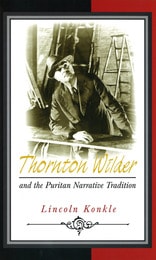
Thornton Wilder and the Puritan Narrative Tradition
Lincoln Konkle
University of Missouri Press, 2005
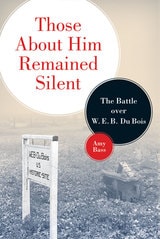
Those About Him Remained Silent
The Battle over W. E. B. Du BoisAmy Bass
University of Minnesota Press, 2012
On the eve of Martin Luther King Jr.’s 1963 March on Washington, W. E. B. Du Bois died in exile in Ghana at the age of 95, more than a half century after cofounding the NAACP. Five years after his death, residents of Great Barrington, the small Massachusetts town where Du Bois was born in 1868, proposed recognizing his legacy through the creation of a memorial park on the site of his childhood home. Supported by the local newspaper and prominent national figures including Harry Belafonte and Sydney Poitier, the effort to honor Du Bois set off an acrimonious debate that bitterly divided the town. Led by the local chapter of the Veterans of Foreign Wars, opponents compared Du Bois to Hitler, vilifying him as an anti-American traitor for his communist sympathies, his critique of American race relations, and his pan-Africanist worldview.
In Those About Him Remained Silent, Amy Bass provides the first detailed account of the battle over Du Bois and his legacy, as well as a history of Du Bois’s early life in Massachusetts. Bass locates the roots of the hostility to memorialize Du Bois in a cold war worldview that reduced complicated politics to a vehement hatred of both communism and, more broadly, anti-Americanism. The town’s reaction was intensified, she argues, by the racism encoded within cold war patriotism.
Showing the potency of prevailing, often hidden, biases, Those About Him Remained Silent is an unexpected history of how racism, patriotism, and global politics played out in a New England community divided on how—or even if—to honor the memory of its greatest citizen.
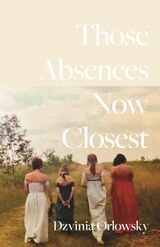
Those Absences Now Closest
Dzvinia Orlowsky
Carnegie Mellon University Press, 2024
In her newest collection, Ukrainian American poet Dzvinia Orlowsky is a witness, never a bystander, ready to stare down the demons, to “cut yourself with a dull razor.” She sets up house among the nightmares of intergenerational trauma and, as far as anyone can, humanizes them. Through her work, Orlowsky prompts us to enter our own histories instead of just watching.
Those Without A Country
The Political Culture of Italian American SyndicalistsMichael Miller Topp
University of Minnesota Press, 2001
In the first book-length history of the Italian American syndicalist movement—the Italian Socialist Federation—Michael Miller Topp presents a new way of understanding the Progressive Era labor movement in relation to migration, transnationalism, gender, and class identity. Those without a Country demonstrates that characterizations of "old" (pre-1960s) social movements as predominantly class-based are vastly oversimplified—and contribute to current debates about the implications of identity politics for the American Left and American culture generally.
Topp traces the rise and fall of the Italian American syndicalist movement from the turn of the twentieth century to the executions of Sacco and Vanzetti in 1927. His use of Italian-language sources, combined with his attention to transnationalism and masculinity, provides new vantage points on a range of related topics, including the 1912 Lawrence, Massachusetts, textile workers’ strike, the impact of World War I on this immigrant community, and the genesis of both fascism and antifascism. Those without a Country brings forward fascinating new material to revise and refine our views of not only Progressive Era radicalism but immigration, gender, and working-class history as well.
Thought Crime
Ideology and State Power in Interwar JapanMax M. Ward
Duke University Press, 2019
Thousands of Broadways
Dreams and Nightmares of the American Small TownRobert Pinsky
University of Chicago Press, 2009
Broadway, the main street that runs through Robert Pinsky’s home town of Long Branch, New Jersey, was once like thousands of other main streets in small towns across the country. But for Pinsky, one of America’s most admired poets and its former Poet Laureate, this Broadway is the point of departure for a lively journey through the small towns of the American imagination. Thousands of Broadways explores the dreams and nightmares of such small towns—their welcoming yet suffocating, warm yet prejudicial character during their heyday, from the early nineteenth century through World War II.
The citizens of quintessential small towns know one another extensively and even intimately, but fail to recognize the geniuses and criminal minds in their midst. Bringing the works of such figures as Mark Twain, William Faulkner, Alfred Hitchcock, Thornton Wilder, Willa Cather, and Preston Sturges to bear on this paradox, as well as reflections on his own time growing up in a small town, Pinsky explores how such imperfect knowledge shields communities from the anonymity and alienation of modern life. Along the way, he also considers how small towns can be small minded—in some cases viciously judgmental and oppressively provincial. Ultimately, Pinsky examines the uneasy regard that creative talents like him often have toward the small towns that either nurtured or thwarted their artistic impulses.
Of living in a small town, Sherwood Anderson once wrote that "the sensation is one never to be forgotten. On all sides are ghosts, not of the dead, but of living people." Passionate, lyrical, and intensely moving, Thousands of Broadways is a rich exploration of this crucial theme in American literature by one of its most distinguished figures.
Threatening Anthropology
McCarthyism and the FBI’s Surveillance of Activist AnthropologistsDavid H. Price
Duke University Press, 2004
Price draws on extensive archival research including correspondence, oral histories, published sources, court hearings, and more than 30,000 pages of fbi and government memorandums released to him under the Freedom of Information Act. He describes government monitoring of activism and leftist thought on college campuses, the surveillance of specific anthropologists, and the disturbing failure of the academic community—including the American Anthropological Association—to challenge the witch hunts. Today the “war on terror” is invoked to license the government’s renewed monitoring of academic work, and it is increasingly difficult for researchers to access government documents, as Price reveals in the appendix describing his wrangling with Freedom of Information Act requests. A disquieting chronicle of censorship and its consequences in the past, Threatening Anthropology is an impassioned cautionary tale for the present.
Three American Architects
Richardson, Sullivan, and Wright, 1865-1915James F. O'Gorman
University of Chicago Press, 1991
[A] brilliant analysis . . . a major contribution to our understanding of the beginnings of modern American architecture."—David Hamilton Eddy, Times Higher Education Supplement.

Three Civilizations, Two Cultures, One State
Canada's Political TraditionsDouglas Verney
Duke University Press, 1986
Three Modern Italian Poets
Saba, Ungaretti, MontaleJoseph Cary
University of Chicago Press, 1993

Three Sons
Franz Kafka and the Fiction of J. M. Coetzee, Philip Roth, and W. G. SebaldDaniel L. Medin
Northwestern University Press, 2010
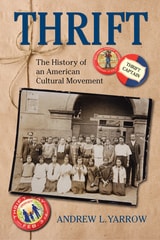
Thrift
The History of an American Cultural MovementAndrew L. Yarrow
University of Massachusetts Press, 2014
In this lively and engaging book, Andrew L. Yarrow tells the story of a national movement that promoted an amalgam of values and practices ranging from self-control, money management, and efficiency to conservation, generosity, and planning for the future—all under the rubric of “thrift.” Emerging in tandem and in tension with the first flowerings of consumer society, the thrift movement flourished during the 1910s and 1920s and then lingered on the outskirts of American culture from the Depression to the prosperous mid-twentieth century.
The movement brought together a diverse array of social actors with widely divergent agendas—the YMCA, the Boy and Girl Scouts, temperance crusaders, and others seeking to strengthen the moral fiber of urban young men and boys in particular, and to tamp down the appeal of radicalism. It also attracted credit union and other progressive activists wanting to empower the working class economically, bankers desiring to broaden their customer base, conservationists and efficiency proponents denouncing “waste,” and government leaders, school teachers, and economists who believed that encouraging saving was in the economic interests of both individuals and the nation.
A post–World War II culture that centered on spending and pleasure made the early-twentieth-century thrift messages seem outdated. Nonetheless, echoes of thrift can be found in currently popular ideas of “sustainability,” “stewardship,” and “simplicity” and in efforts to curtail public and private debt.
Through French Windows
An Introduction to France in the NinetiesJames Corbett
University of Michigan Press, 1994
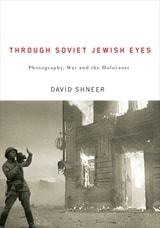
Through Soviet Jewish Eyes
Photography, War, and the HolocaustShneer, David
Rutgers University Press, 2012
These wartime photographers were the first liberators to bear witness with cameras to Nazi atrocities, three years before Americans arrived at Buchenwald and Dachau. In this passionate work, David Shneer tells their stories and highlights their work through their very own images-he has amassed never-before-published photographs from families, collectors, and private archives.
Through Soviet Jewish Eyes helps us understand why so many Jews flocked to Soviet photography; what their lives and work looked like during the rise of Stalinism, during and then after the war; and why Jews were the ones charged with documenting the Soviet experiment and then its near destruction at the hands of the Nazis.
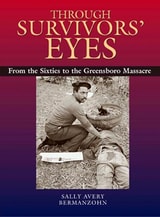
Through Survivors' Eyes
From the Sixties to the Greensboro MassacreSally Avery Bermanzohn
Vanderbilt University Press, 2003
In passionate first-person accounts, Through Survivors' Eyes tells the story of six remarkable people who set out to change the world. The survivors came of age as the "protest generation," joining the social movements of the 1960s and 1970s. They marched for civil rights, against war, for textile and healthcare workers, and for black power and women's liberation. As the mass mobilizations waned in the mid-1970s, they searched for a way to continue their activism, studied Marxism, and became communists.
Nelson Johnson, who grew up on a farm in eastern North Carolina in a family proud of its African American heritage, settled in Greensboro in the 1960s and became a leader of the Black Liberation Movement and a decade later the founder of the Faith Community Church. Willena Cannon, the daughter of black sharecroppers, witnessed a KKK murder as a child and was spurred to a life of activism. Her son, Kwame Cannon, was only ten when he saw the Greensboro killings. Marty Nathan, who grew up the daughter of a Midwestern union organizer and came to the South to attend medical school, lost her husband to the Klan/Nazi gunfire. Paul Bermanzohn, the son of Jewish Holocaust survivors, was permanently injured during the shootings. Sally Avery Bermanzohn, a child of the New York suburbs who came south to join the Civil Rights Movement, watched in horror as her friends were killed and her husband was wounded.
Through Survivors' Eyes is the story of people who abandoned conventional lives to become civil rights activists and then revolutionaries. It is about blacks and whites who united against Klan/Nazi terror, and then had to overcome unbearable hardship, and persist in seeking justice. It is also a story of one divided southern community, from the protests of black college students of the late 1960s to the convening this January of a Truth and Community Reconciliation Project (on the South African model) intended to reassess the Massacre.
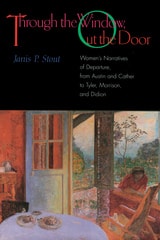
Through the Window, Out the Door
Women's Narratives of Departure, from Austin and Cather to Tyler, Morrison, and DidionJanis P. Stout
University of Alabama Press, 1998
This informative and provocative study focuses on the centrality of departure in the texts of five major American women novelists.
An important moment in many novels and poems by American women writers occurs when a central character looks out a window or walks out the door of a house. These acts of departure serve to convey such values as the rejection of constraining social patterns, the search for individual fulfillment, and the entry into the political.
Janis Stout examines such moments and related patterns of venture and travel in the fiction of five major American novelists of the 20th century: Mary Austin, Willa Cather, Anne Tyler, Toni Morrison, and Joan Didion. Stout views these five writers within a spectrum of narrative engagements with issues of home and departure—a spectrum anchored at one end by Sarah Orne Jewett and at the other by Marilynne Robinson, whose Housekeeping posits a vision of female transience.
Through the Window, Out the Door ranges over an expansive territory. Moving between texts as well as between texts and contexts, Stout shows how women writers have envisioned the walls of physical and social structures (including genres) as permeable boundaries, drawing on both a rhetoric of liberation and a rhetoric of domesticity to construct narrative arguments for women's right to move freely between the two. Stout concludes with a personal essay on the dilemmas of domesticity and the ambivalence of departure.
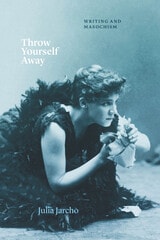
Throw Yourself Away
Writing and MasochismJulia Jarcho
University of Chicago Press, 2024
In a series of readings that engage American and European works of fiction, drama, and theory from the late nineteenth through the early twenty-first centuries, critic and playwright Julia Jarcho argues that these works conceive writing itself as masochistic, and masochism as sexuality enacted in writing. Throw Yourself Away is distinctive in its sustained focus on masochism as an engine of literary production across multiple authors and genres. In particular, Jarcho shows that theater has played a central role in modern erotic fantasies of the literary.
Jarcho foregrounds writing as a project of distressed subjects: When masochistic writing is examined as a strategy of response to injurious social systems, it yields a surprisingly feminized—and less uniformly white—image of both masochism and authorship. Ultimately, Jarcho argues that a retheorized concept of masochism helps us understand literature itself as a sex act and shows us how writing can tend to our burdened, desirous bodies. With startling insights into such writers as Henry James, Henrik Ibsen, Mary Gaitskill, and Adrienne Kennedy, Throw Yourself Away furnishes a new masochistic theory of literature itself.
Thunder on the Stage
The Dramatic Vision of Richard WrightBruce Allen Dick
University of Illinois Press, 2024
Drawing on decades of research and interviews with Wright’s family and Wright scholars, Bruce Allen Dick uncovers the theatrical influence on Wright’s oeuvre--from his 1930s boxing journalism to his unpublished one-acts on returning Black GIs in WWII to his unproduced pageant honoring Vladimir Lenin. Wright maintained rewarding associations with playwrights, writers, and actors such as Langston Hughes, Theodore Ward, Paul Robeson, and Lillian Hellman, and took particular inspiration from French literary figures like Jean-Paul Sartre. Dick’s analysis also illuminates Wright’s direct involvement with theater and film, including the performative aspects of his travel writings; the Orson Welles-directed Native Son on Broadway; his acting debut in Native Son’s first film version; and his play “Daddy Goodness,” a satire of religious charlatans like Father Divine, in the 1930s.
Bold and original, Thunder on the Stage offers a groundbreaking reinterpretation of a major American writer.
Thursday Night Lights
The Story of Black High School Football in TexasBy Michael Hurd
University of Texas Press, 2019
At a time when “Friday night lights” shone only on white high school football games, African American teams across Texas burned up the gridiron on Wednesday and Thursday nights. The segregated high schools in the Prairie View Interscholastic League (the African American counterpart of the University Interscholastic League, which excluded black schools from membership until 1967) created an exciting brand of football that produced hundreds of outstanding players, many of whom became college All-Americans, All-Pros, and Pro Football Hall of Famers, including NFL greats such as “Mean” Joe Green (Temple Dunbar), Otis Taylor (Houston Worthing), Dick “Night Train” Lane (Austin Anderson), Ken Houston (Lufkin Dunbar), and Bubba Smith (Beaumont Charlton-Pollard).
Thursday Night Lights tells the inspiring, largely unknown story of African American high school football in Texas. Drawing on interviews, newspaper stories, and memorabilia, Michael Hurd introduces the players, coaches, schools, and towns where African Americans built powerhouse football programs under the PVIL leadership. He covers fifty years (1920–1970) of high school football history, including championship seasons and legendary rivalries such as the annual Turkey Day Classic game between Houston schools Jack Yates and Phillis Wheatley, which drew standing-room-only crowds of up to 40,000, making it the largest prep sports event in postwar America. In telling this story, Hurd explains why the PVIL was necessary, traces its development, and shows how football offered a potent source of pride and ambition in the black community, helping black kids succeed both athletically and educationally in a racist society.
Thyra J. Edwards
Black Activist in the Global Freedom StruggleGregg Andrews
University of Missouri Press, 2011
Edwards, granddaughter of runaway slaves, grew up in Jim Crow–era Houston and started her career there as a teacher. She moved to Gary, Indiana, and Chicago as a social worker, then to New York as a journalist, and later became involved with the Communist Party, attracted by its stance on race and labor. She was mentored by famed civil rights leader A. Philip Randolph, who became her special friend and led her to pursue her education. She obtained scholarships to college, and after several years of study in the U.S. and then in Denmark, she became a women’s labor organizer and a union publicist.
In the 1930s and 1940s, she wrote about international events for black newspapers, traveling to Europe, Mexico, and the Soviet Union and presenting an anti-imperialist critique of world affairs to her readers. Edwards’s involvement with the Loyalists in the Spanish Civil War, her work in a Jewish refugee settlement in Italy, and her activities with U.S. communists drew the attention of the FBI. She was harassed by government intelligence organizations until she died at the age of just fifty-five. Edwards contributed as much to the radical foundations of the modern civil rights movements as any other woman of her time.
This fascinating new biography details Thyra Edwards’s lifelong journey and myriad achievements, describing both her personal and professional sides and the many ways they intertwined. Gregg Andrews used Edwards’s official FBI file—along with her personal papers, published articles, and civil rights manuscript collections—to present a complete portrait of this noteworthy activist. An engaging volume for the historian as well as the general reader, Thyra J. Edwards explores the complete domestic and international impact of her life and actions.
Ticket to Minto
Stories of India and AmericaHomi Sohrab Fracis
University of Iowa Press, 2001
Ticket to Minto, Sohrab Homi Fracis's premier fiction collection, offers readers a passage to an unfamiliar destination-a world suspended between East and West, India and America, home and away.
With piercing insight, Fracis expertly reveals the underlying differences between immersion in India's culture-Hindu, Muslim, or Parsi-and life as an Indian in America. Alternating between East and West, the stories in Ticket to Minto serve as companion pieces, interrelated across continents in both theme and content. A middle-aged man's search for love in Bombay is contrasted with an Indian American family's hopes for the marriage of their westernized daughter. A university student rushes to save the life of a servant in his homeland only to find his own life threatened while attending graduate school in America.
Poignant and daring, Ticket to Minto underlines the harsh realization that the immigrant never truly arrives but is in constant limbo between two worlds. As one character relates, "There's a part of me that's American and a part that's Indian. I'm clear about that and comfortable with it, except that sometimes people want me to be just the one or the other."

Tides Of War
World News Reporting 1931-1945Robert W. Desmond
University of Iowa Press, 1984
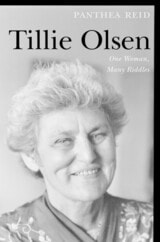
Tillie Olsen
One Woman, Many RiddlesReid, Panthea
Rutgers University Press, 2011
Born in Omaha, Nebraska, Tillie Olsen spent her young adulthood there, in Kansas City, and in Faribault, Minnesota. She relocated to California in 1933 and lived most of her life in San Francisco. From 1962 on, she sojourned frequently in Massachusetts, New Hampshire, Santa Cruz, and Soquel, California. She was a 1920s "hell-cat"; a 1930s revolutionary; an early 1940s crusader for equal pay for equal work and a war-relief patriot; an ex-GI's ideal wife in the later 1940s; a victim of FBI surveillance in the 1950s;a civil rights and antiwar advocate during the 1960s and 1970s; and a life-long orator for universal human rights.
The enigma of Tillie Olsen is intertwined with that of the twentieth century. From the rebellions in Czarist Russia, through the terrors of the Depression and the hopes of the New Deal, to World War II, the Nuremberg Trials, and the United Nations' founding, to the cold war and House Un-American Activities Committee hearings, to later progressive and repressive movements, the story of Olsen's life brings remote events into focus.
In her classic short story "I Stand Here Ironing" and her groundbreaking Tell Me a Riddle, Yonnondido, and Silences, Olsen scripted powerful, moving prose about ordinary people's lives, exposing the pervasive effects of sexism, racism, and classism and elevating motherhood and women's creativity into topics of study. Popularly referred to as "Saint Tillie," Olsen was hailed by many as the mother of modern feminism.
Based on diaries, letters, manuscripts, private documents, resurrected public records, and countless interviews, Reid's artfully crafted biography untangles some of the puzzling knots of the last century's triumphs and failures and speaks truth to legend, correcting fabrications and myths about and also by Tillie Olsen.
Time Passages
Collective Memory and American Popular CultureGeorge Lipsitz
University of Minnesota Press, 2001
The classic work on collective memory and popular culture in the United States.
Probes the complicated relationship between postwar America between historical memory and commercial culture—popular television, music, and film.
Time for Childhoods
Young Poets and Questions of AgencyRachel Conrad
University of Massachusetts Press, 2020
Time for Childhoods presents a selection of striking twentieth-and twenty-first-century American poetry written by young people, and highlights how young poets imagined and shaped time for their own poetic purposes. Through close engagement with archival materials, as well as select interviews and correspondence with adult mentors, Conrad discerns how young writers figured social realities and political and racial injustices, and discusses what important advocates such as Gwendolyn Brooks and June Jordan can teach us about supporting the agency of young poets. This essential study demonstrates that young poets have much to contribute to ongoing conversations about time and power.
Time in the Ditch
American Philosophy and the McCarthy EraJohn McCumber
Northwestern University Press, 2023
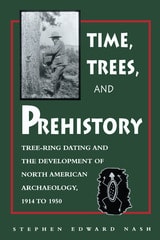
Time, Trees, and Prehistory
Tree Ring dating and the Development of NA Archaeology 1914 to 1950Stephen E Nash
University of Utah Press, 2006
Dendrochronology, the science of assigning precise calendar dates to annual growth rings in trees, provided accurate dates at a time when North American archaeologists had no absolute dating techniques available to guide their analyses. Time, Trees, and Prehistory examines the growth, development, application, and interpretive implications of North American archaeological tree-ring dating from 1914 to 1950.
The development of dendrochronology forced archaeologists to radically revise their understanding of the prehistoric past, compressing by nearly fifty percent the time scale of the archaeological record. Basketmaker sites, for instance, were once thought to be four thousand years old; tree-ring application demonstrated that these sites dated well into the present millennium. Classic sites in Chaco Canyon and Mesa Verde were believed occupied for nearly a thousand years, but tree-ring dates demonstrated that such sites were often built, occupied, and abandoned in just over a century. Other similar changes in temporal scale forced archaeologists to reconsider their interpretations of the rate of prehistoric cultural change, population growth, and the degree of social and political complexity in the Southwest.
Time, Trees, and Prehistory examines archaeological practices of the 1920s, 30s, and 40s and demonstrates that tree-ring dating set the stage that enabled revolutionary developments in archaeological method and theory in succeeding decades.
Times of Upheaval
Four Medievalists in Twentieth-Century Central Europe. Conversations with Jerzy Kloczowski, János M. Bak, František Šmahel, and Herwig WolframPavlína Rychterová
Central European University Press, 2019
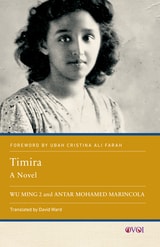
Timira
A NovelWu Ming Wu Ming 2
Rutgers University Press, 2027
Isabella Marincola lived between two cultures. The child of an Italian military officer father and a Somali mother, she was never fully part of either culture. In Somalia, she was seen as a child of the ruling colonizers, while in Italy her darker skin made her an object of both fascination and contempt. Even as she worked as an actress and model in postwar Italy, she was valued for her exotically beautiful body, not her keen mind or her captivating voice.
Titled after Isabella’s Somali name, Timira is a unique combination of novel, archival sources, and oral history. It finally gives her a chance to articulate her experiences of being a Black Italian woman in different epochs of Italian history, from Fascism to the 1990s, in all of which italianità was assumed to be exclusively white.
Cowritten by her son Antar Mohamed Marincola and a founding member of the Wu Ming writers’ collective, it is based on a series of writings and interviews Isabella gave towards the end of her long, eventful life. A compelling novel rooted in truth, Timira reflects on Italy’s colonial legacy and ingrained racism, while telling the story of a courageous woman and her struggles to assert herself in a nation unprepared to accommodate its Black citizens.
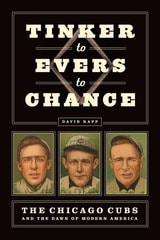
Tinker to Evers to Chance
The Chicago Cubs and the Dawn of Modern AmericaDavid Rapp
University of Chicago Press, 2018
Tinker to Evers to Chance examines this pivotal moment in American history, when baseball became the game we know today. Each man came from a different corner of the country and brought a distinctive local culture with him: Evers from the Irish-American hothouse of Troy, New York; Tinker from the urban parklands of Kansas City, Missouri; Chance from the verdant fields of California’s Central Valley. The stories of these early baseball stars shed unexpected light not only on the evolution of baseball and on the enthusiasm of its players and fans all across America, but also on the broader convulsions transforming the US into a confident new industrial society. With them emerged a truly national culture.
This iconic trio helped baseball reinvent itself, but their legend has largely been relegated to myths and barroom trivia. David Rapp’s engaging history resets the story and brings these men to life again, enabling us to marvel anew at their feats on the diamond. It’s a rare look at one of baseball’s first dynasties in action.
Titan II
A History of a Cold War Missile ProgramDavid K. Stumpf
University of Arkansas Press, 2002
This is the richly detailed story of the Titan II missile and the men and women who developed and operated the system. David K. Stumpf uses a wide range of sources, drawing upon interviews with and memoirs by engineers and airmen as well as recently declassified government documents and other public materials. Over 170 drawings and photographs, most of which have never been published, enhance the narrative. The three major accidents of the program are described in detail for the first time using authoritative sources.
Titan II will be welcomed by librarians for its prodigious reference detail, by technology history professionals and laymen, and by the many civilian and Air Force personnel who were involved in the program—a deterrent weapons system that proved to be successful in defending America from nuclear attack.
Titanic Calling
Wireless Communications during the Great DisasterEdited by Michael Hughes and Katherine Bosworth
Bodleian Library Publishing, 2012
Published in commemoration of the one-hundredth anniversary of the Titanic’s sinking, this book tells the story of that fateful night from an unusual angle: through the many wireless communications sent to and from the land stations and the ships involved as the tragic events unfolded.
To Be At Music
Essays & TalksNorma Cole
Omnidawn, 2010
To Be in This Number
Alane Rollings
Northwestern University Press, 2005
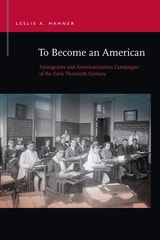
To Become an American
Immigrants and Americanization Campaigns of the Early Twentieth CenturyLeslie A. Hahner
Michigan State University Press, 2017
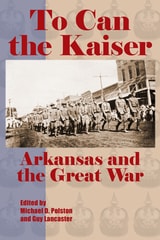
To Can the Kaiser
Arkansas and the Great WarMichael D. Polston
Butler Center for Arkansas Studies, 2015