Results by title
28167 books match the query 'History' and 6372 start with t
The Economy of Prostitution in the Roman World
A Study of Social History and the BrothelThomas A. J. McGinn
University of Michigan Press, 2004
The Ecuador Reader
History, Culture, PoliticsCarlos de la Torre and Steve Striffler, eds.
Duke University Press, 2008
The voices and creations of Ecuadorian politicians, writers, artists, scholars, activists, and journalists fill the Reader, from José María Velasco Ibarra, the nation’s ultimate populist and five-time president, to Pancho Jaime, a political satirist; from Julio Jaramillo, a popular twentieth-century singer, to anonymous indigenous women artists who produced ceramics in the 1500s; and from the poems of Afro-Ecuadorians, to the fiction of the vanguardist Pablo Palacio, to a recipe for traditional Quiteño-style shrimp. The Reader includes an interview with Nina Pacari, the first indigenous woman elected to Ecuador’s national assembly, and a reflection on how to balance tourism with the protection of the Galápagos Islands’ magnificent ecosystem. Complementing selections by Ecuadorians, many never published in English, are samples of some of the best writing on Ecuador by outsiders, including an account of how an indigenous group with non-Inca origins came to see themselves as definitively Incan, an exploration of the fascination with the Andes from the 1700s to the present, chronicles of the less-than-exemplary behavior of U.S. corporations in Ecuador, an examination of Ecuadorians’ overseas migration, and a look at the controversy surrounding the selection of the first black Miss Ecuador.
The Edda
A Collection of EssaysR.J. Glendinning
University of Manitoba Press, 1983
The Edge of Change
Women in the Twenty-First-Century PressEdited by June O. Nicholson, Pamela J. Creedon, Wanda S. Lloyd, and Pamela J. Jo: Foreword by Ellen Goodman
University of Illinois Press, 2008
Prominent female voices in journalism provide critical perspectives on the challenges women face in today's news organizations, such as connecting with diverse audiences, educating readers about international issues and cultures, maintaining credibility, negotiating media consolidation and corporate pressures, and overcoming the persistent barriers to professional advancement. A powerful and complex assessment of how women are transforming the news industry, The Edge of Change explores how the news industry might implement further reforms aimed at creating a more inclusive journalistic community.
Contributors are Catalina Camia, Kathleen Carroll, Pamela J. Creedon, Paula Lynn Ellis, Helen E. Fisher, Dorothy Butler Gilliam, Ellen Goodman, Sharon Grigsby, Carol Guzy, Kirsten Scharnberg Hampton, Cathy Henkel, Pamela J. Johnson, Jane Kirtley, Jan Leach, Caroline Little, Wanda S. Lloyd, Arlene Notoro Morgan, June O. Nicholson, Geneva Overholser, Marty Petty, Deb Price, Donna M. Reed, Sandra Mims Rowe, Peggy Simpson, Margaret Sullivan, Julia Wallace, and Keven Ann Willey.
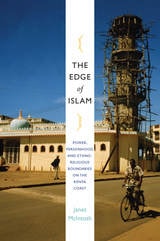
The Edge of Islam
Power, Personhood, and Ethnoreligious Boundaries on the Kenya CoastJanet McIntosh
Duke University Press, 2009
The Edge of Islam explores themes as wide-ranging as spirit possession, divination, healing rituals, madness, symbolic pollution, ideologies of money, linguistic code-switching, and syncretism and its alternatives. McIntosh shows how the differing versions of Islam practiced by Swahili and Giriama, and their differing understandings of personhood, have figured in the growing divisions between the two groups. Her ethnographic analysis helps to explain why Giriama view Islam, a supposedly universal religion, as belonging more deeply to certain ethnic groups than to others; why Giriama use Islam in their rituals despite the fact that so many do not consider the religion their own; and how Giriama appropriations of Islam subtly reinforce a distance between the religion and themselves. The Edge of Islam advances understanding of ethnic essentialism, religious plurality, spirit possession, local conceptions of personhood, and the many meanings of “Islam” across cultures.
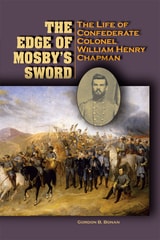
The Edge of Mosby’s Sword
The Life of Confederate Colonel William Henry ChapmanGordon B. Bonan
Southern Illinois University Press, 2009
The Edge of Mosby’s Sword is the first scholarly volume to delve into the story of one of John Singleton Mosby’s most trusted and respected officers, Colonel William Henry Chapman. Presenting both military and personal perspectives of Chapman’s life, Gordon B. Bonan offers an in-depth understanding of a man transformed by the shattering of his nation. This painstakingly researched account exposes a soldier and patriot whose convictions compelled him to battle fiercely for Southern independence; whose quest for greatness soured when faced with the brutal realities of warfare; and who sought to heal his wounded nation when the guns of war were silenced.
Born into a wealthy slave-owning family, Chapman was a student of the fiery secessionist rhetoric of antebellum Virginia who eagerly sought glory and adventure on the battlefields of the Civil War. Bonan traces Chapman’s evolution from an impassioned student at the University of Virginia to an experienced warrior and leader, providing new insight into the officer’s numerous military accomplishments. Explored here are Chapman’s previously overlooked endeavors as a student warrior, leader of the Dixie Artillery, and as second-in-command to Mosby, including his participation in the capture of Harpers Ferry, the battering of Union forces at Second Manassas, and his ferocious raids during the 1864 Shenandoah Valley campaign. Bonan reveals fresh perspectives on the intrepid maneuvers of Mosby’s Rangers, the hardships of war, and Chapman’s crucial role as the right hand of the “Gray Ghost.” But while Mosby recognized him for his bravery and daring, the fame Chapman sought always eluded him. Instead, with his honors and successes came disillusionment and sorrow, as he watched comrades and civilians alike succumb to the terrible toll of the war.
The end of the struggle between North and South saw Chapman accept defeat with dignity, leading the Rangers to their official surrender and parole at Winchester. With the horrors of the war behind him, he quickly moved to embrace the rebuilding of his country, joining the Republican party and beginning a forty-two-year career at the IRS enforcing Federal law throughout the South. In the end, Chapman’s life is a study in contradictions: nationalism and reconciliation; slavery and liberty; vengeance and chivalry.
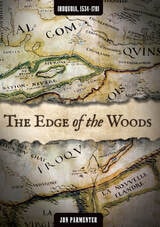
The Edge of the Woods
Iroquoia, 1534-1701Jon Parmenter
Michigan State University Press, 2010
The Edges of the Medieval World
Gerhard Jaritz
Central European University Press, 2009
The Editor Function
Literary Publishing in Postwar AmericaAbram Foley
University of Minnesota Press, 2021
Offering the everyday tasks of literary editors as inspired sources of postwar literary history
Michel Foucault famously theorized “the author function” in his 1969 essay “What Is an Author?” proposing that the existence of the author limits textual meaning. Abram Foley shows a similar critique at work in the labor of several postwar editors who sought to question and undo the corporate “editorial/industrial complex.” Marking an end to the powerful trope of the editor as gatekeeper, The Editor Function demonstrates how practices of editing and publishing constitute their own kinds of thought, calling on us to rethink what we read and how.
The Editor Function follows avant-garde American literary editors and the publishing practices they developed to compete against the postwar corporate consolidation of the publishing industry. Foley studies editing and publishing through archival readings and small press and literary journal publishing lists as unique sites for literary inquiry. Pairing histories and analyses of well- and lesser-known figures and publishing formations, from Cid Corman’s Origin and Nathaniel Mackey’s Hambone to Dalkey Archive Press and Semiotext(e), Foley offers the first in-depth engagement with major publishing initiatives in the postwar United States.
The Editor Function proposes that from the seemingly mundane tasks of these editors—routine editorial correspondence, line editing, list formation—emerge visions of new, better worlds and new textual and conceptual spaces for collective action.
The Educated Eye
Visual Culture and Pedagogy in the Life SciencesEdited by Nancy Anderson
Dartmouth College Press, 2012
The Educated Mind
How Cognitive Tools Shape Our UnderstandingKieran Egan
University of Chicago Press, 1997
"A carefully argued and readable book. . . . Egan proposes a radical change of approach for the whole process of education. . . . There is much in this book to interest and excite those who discuss, research or deliver education."—Ann Fullick, New Scientist
"A compelling vision for today's uncertain educational system."—Library Journal
"Almost anyone involved at any level or in any part of the education system will find this a fascinating book to read."—Dr. Richard Fox, British Journal of Educational Psychology
"A fascinating and provocative study of cultural and linguistic history, and of how various kinds of understanding that can be distinguished in that history are recapitulated in the developing minds of children."—Jonty Driver, New York Times Book Review
The Education Alibi
Tracing Education's Entanglements Across Contemporary AfricaElizabeth Cooper, Erdmute Alber, and Wandia Njoya, Editors
University of Michigan Press, 2025
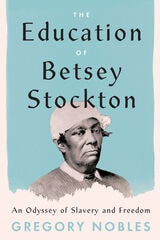
The Education of Betsey Stockton
An Odyssey of Slavery and FreedomGregory Nobles
University of Chicago Press, 2022
The life of Betsey Stockton (ca. 1798–1865) is a remarkable story of a Black woman’s journey from slavery to emancipation, from antebellum New Jersey to the Hawai‘ian Islands, and from her own self-education to a lifetime of teaching others—all told against the backdrop of the early United States’ pervasive racism. It’s a compelling chronicle of a critical time in American history and a testament to the courage and commitment of a woman whose persistence grew into a potent form of resistance.
When Betsey Stockton was a child, she was “given, as a slave” to the household of Rev. Ashbel Green, a prominent pastor and later the president of what is now Princeton University. Although she never went to school, she devoured the books in Green’s library. After being emancipated, she used that education to benefit other people of color, first in Hawai‘i as a missionary, then Philadelphia, and, for the last three decades of her life, Princeton—a college town with a genteel veneer that never fully hid its racial hostility. Betsey Stockton became a revered figure in Princeton’s sizeable Black population, a founder of religious and educational institutions, and a leader engaged in the day-to-day business of building communities.
In this first book-length telling of Betsey Stockton’s story, Gregory Nobles illuminates both a woman and her world, following her around the globe, and showing how a determined individual could challenge her society’s racial obstacles from the ground up. It’s at once a revealing lesson on the struggles of Stockton’s times and a fresh inspiration for our own.
The Education of Historians for Twenty-first Century
Thomas Bender, Philip M. Katz, Colin Palmer, and the Committee on Graduate Education (AHA)
University of Illinois Press, 2004
An examination and analysis of history education in American colleges and universities
In 1958, the American Historical Association began a study to determine the status and condition of history education in U.S. colleges and universities. Published in 1962 and addressing such issues as the supply and demand for teachers, student recruitment, and training for advanced degrees, that report set a lasting benchmark against which to judge the study of history thereafter. Now, more than forty years later, the AHA has commissioned a new report. The Education of Historians for the Twenty-first Century documents this important new study's remarkable conclusions.
Both the American academy and the study of history have been dramatically transformed since the original study, but doctoral programs in history have barely changed. This report from the AHA explains why and offers concrete, practical recommendations for improving the state of graduate education. The Education of Historians for the
Twenty-first Century stands as the first investigation of graduate training for historians in more than four decades and the best available study of doctoral education in any major academic discipline.
Prepared for the AHA by the Committee on Graduate Education, the report represents the combined efforts of a cross-section of the entire historical profession. It draws upon a detailed review of the existing studies and data on graduate education and builds upon this foundation with an exhaustive survey of history doctoral programs. This included actual visits to history departments across the country and consultations with scores of individual historians, graduate students, deans, academic and non-academic employers of historians, as well as other stakeholders in graduate education.
As the ethnic and gender composition of both graduate students and faculty has changed, methodologies have been refined and the domains of historical inquiry expanded. By addressing these revolutionary intellectual and demographic changes in the historical profession, The Education of Historians for the Twenty-first Century breaks important new ground. Combining a detailed historical snapshot of the profession with a rigorous analysis of these intellectual changes, this volume is ideally positioned as the definitive guide to strategic planning for history departments. It includes practical recommendations for handling institutional challenges as well as advice for everyone involved in the advanced training of historians, from department chairs to their students, and from university administrators to the AHA itself.
Although focused on history, there are lessons here for any department. The Education of Historians for the Twenty-first Century is a model for in-depth analysis of doctoral education, with recommendations and analyses that have implications for the entire academy. This volume is required reading for historians, graduate students, university administrators, or anyone interested in the future of higher education.
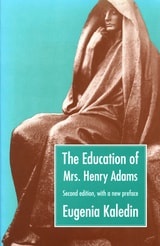
The Education of Mrs. Henry Adams
Eugenia Kaledin
University of Massachusetts Press, 1994
Marian Hooper Adams—Clover, as her friends called her—was an accomplished photographer and a witty, irreverent free spirit who moved easily within the cultural circles of nineteenth-century Boston. Why, then, in 1882, at the age of forty-two, did she swallow a lethal dose of potassium cyanide? And why did her husband of thirteen years fail even to mention her in his autobiography, The Education of Henry Adams?
These and other questions are explored in this first paperback edition of Eugenia Kaledin's pathbreaking biography. The book recreates the intense intellectual, cultural, and moral life of Boston and New England before, during, and after the Civil War and helps us to understand what could drive such a gifted, intelligent, and privileged woman to take her own life. Included is a portfolio of Adams's photographs of her husband and his famous circle.

The Education of Phillips Brooks
John F. Woolverton
University of Illinois Press, 1995
The Education of Phillips Brooks probes the formative years of one of the best-known figures of Victorian America's "Gilded Age". Rigorously researched, bringing as yet untapped archival material into play, John F. Woolverton's book is an extremely readable and fascinating look at a gifted, persuasive clergyman and public figure. The sermon Brooks delivered at his Holy Trinity Church in Philadelphia while Abraham Lincoln's body lay in state overnight in Independence Hall was published, making him nationally famous overnight. He also is known for penning the lyrics to "O Little Town of Bethlehem". Although Brooks was not a major theologian, he was nurtured in an atmosphere of serious religious thought. In the crisis era of pre-Civil War America, he sought a religious and cultural ideal in the "perfect manhood" of Jesus Christ and consequently "won a name" for himself, as his slightly envious cousin, Henry Adams, once remarked. Woolverton places Brooks in his cultural context and shows how this religious leader was shaped psychologically and by his times and how those factors helped him forge a spiritual ideal for a troubled nation.
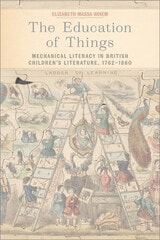
The Education of Things
Mechanical Literacy in British Children's Literature, 1762–1860Elizabeth Massa Hoiem
University of Massachusetts Press, 2023
Finalist for the 2025 SHARP Book History Book Prize
Winner of the 2025 Justin G. Schiller Prize for Bibliographical Work on Children’s Books from The Bibliographical Society of America
By the close of the eighteenth century, learning to read and write became closely associated with learning about the material world, and a vast array of games and books from the era taught children how to comprehend the physical world of “things.” Examining a diverse archive of popular science books, primers, grammars, toys, manufacturing books, automata, and literature from Maria Edgeworth, Jean-Jacques Rousseau, and Anna Letitia Barbauld, The Education of Things attests that material culture has long been central to children’s literature.
Elizabeth Massa Hoiem argues that the combination of reading and writing with manual tinkering and scientific observation promoted in late eighteenth- and early nineteenth-century Britain produced new forms of “mechanical literacy,” competencies that were essential in an industrial era. As work was repositioned as play, wealthy children were encouraged to do tasks in the classroom that poor children performed for wages, while working-class children honed skills that would be crucial to their social advancement as adults.
The Education of a Christian Woman
A Sixteenth-Century ManualJuan Luis Vives
University of Chicago Press, 2000
Praised by Erasmus and Thomas More, Vives advocated education for all women, regardless of social class and ability. From childhood through adolescence to marriage and widowhood, this manual offers practical advice as well as philosophical meditation and was recognized soon after publication in 1524 as the most authoritative pronouncement on the universal education of women. Arguing that women were intellectually equal if not superior to men, Vives stressed intellectual companionship in marriage over procreation, and moved beyond the private sphere to show how women's progress was essential for the good of society and state.
The Education of a Radical
An American Revolutionary in Sandinista NicaraguaBy Michael Johns
University of Texas Press, 2012
“I went to Nicaragua with nothing but a tourist visa, $1,500 in cash, the name of someone at the Agrarian Reform Ministry, and the idea of being a revolutionary intellectual. . . . The idea took hold in a simple character flaw: wanting to believe that I knew better than everyone else.” —From the preface
When Michael Johns joined a Sandinista militia in 1983, a fellow revolutionary dubbed him a rábano, a radish: red on the outside but white on the inside. Now, more than twenty-five years later, Johns appreciates the wisdom of that label as he revisits the questions of identity he tried to resolve by working with the Sandinistas at that point in his life. In The Education of a Radical, Johns recounts his immersion in Marxism and the Nicaraguan sojourn it led to, with a painful maturation process along the way.
His conversion began in college, where he joined a student group called the Latin American Solidarity Association and traveled to Chiapas, Mexico, for research on his senior thesis. Overwhelmed by the poverty he witnessed (and fascinated by a new friend named Maricela who was trying to turn peasants into revolutionaries and who carried a heavily highlighted copy of Late Capitalism), he experienced an ideological transformation. When a Marxist professor later encouraged him to travel to Nicaragua, the real internal battle began for him, a battle that was intensified by the U.S. invasion of Grenada and its effect on the Sandinistas, who believed they were the next target for an imminent American invasion. Before he knew it, Johns was digging trenches and learning how to use an AK-47. His intellectual ideals came face-to-face with revolutionary facts, and the results would perplex him for years to come.
Bringing to life a vivid portrait of the sometimes painful process of reconciling reality with romanticized principles, The Education of a Radical encapsulates a trove of truths about humanity, economics, and politics in one man’s memorable journey.
The Education of an Anti-Imperialist
Robert La Follette and U.S. ExpansionRichard Drake
University of Wisconsin Press, 2013
“An excellent book. . . . As Drake fully documents, La Follette's warnings about [World War I] profiteers and the lust for power were fully justified. Then as now, the American people were lied to by the government and media and manipulated into the stink and blood of war."—Mark Taylor, The Daily Call
“Scholars will . . . value the insights into La Follette's foreign policy education.”—The Historian
The Education of the Eye
History of the Royal Polytechnic Institution 1838-1881Brenda Weeden
University of Westminster Press, 2008
The Royal Polytechnic Institution's story is the first episode in the long, diverse history of the University of Westminster. Drawing on an extensive range of primary and secondary sources this book explores the Institution's reputation for visual spectacle and the popularisation of science. It is lavishly illustrated with contemporary images.
The Effective Republic
Administration and Constitution in the Thought of Alexander HamiltonHarvey Flaumenhaft
Duke University Press, 1992
Although Hamilton exterted an extraordinary influence on American institutions, his contribution and the thinking behind it often have been obscured and misconstrued by piecemeal approaches to his voluminous writings. Here, Flaumenhaft draws upon more than two dozen volumes of Hamilton’s papers to produce a comprehensive account of his thought on the principles of politics—the account which Hamilton himself hoped to give in a multivolume treatise, but died before producing.
Beginning with a discussion of the place of general principles in Hamilton’s thought, The Effective Republic proceeds to his views on popular representation as a safeguard of individual liberty. Flaumenhaft then elaborates on Hamilton’s thinking about efficacious administration, especially how the President and Senate meet the requirements of unity and duration in a republic, and on the importance of an independent judiciary for constitutional integrity. What emerges clearly as Hamilton’s chief concern is the need to make government not only safe but effective—hindered from doing harm by its popular base, but also, through the differentiation of administrative powers and tasks, capable of doing good.
Interpreting, linking, and, and arranging Hamilton’s words, Flaumenhaft allows Hamilton to speak for himself, to explain his benificiaries his vision of what the republican experiment needed in order to succeed.
The Egyptian Labor Corps
Race, Space, and Place in the First World WarKyle J. Anderson
University of Texas Press, 2021
During World War I, the British Empire enlisted half a million young men, predominantly from the countryside of Egypt, in the Egyptian Labor Corps (ELC) and put them to work handling military logistics in Europe and the Middle East. British authorities reneged on their promise not to draw Egyptians into the war, and, as Kyle Anderson shows, the ELC was seen by many in Egypt as a form of slavery. The Egyptian Labor Corps tells the forgotten story of these young men, culminating in the essential part they came to play in the 1919 Egyptian Revolution.
Combining sources from archives in four countries, Anderson explores Britain’s role in Egypt during this period and how the ELC came to be, as well as the experiences and hardships these men endured. As he examines the ways they coped—through music, theater, drugs, religion, strikes, and mutiny—he illustrates how Egyptian nationalists, seeing their countrymen in a state akin to slavery, began to grasp that they had been racialized as “people of color.” Documenting the history of the ELC and its work during the First World War, The Egyptian Labor Corps also provides a fascinating reinterpretation of the 1919 revolution through the lens of critical race theory.
The Egyptian Renaissance
The Afterlife of Ancient Egypt in Early Modern ItalyBrian Curran
University of Chicago Press, 2007
Fascination with ancient Egypt is a recurring theme in Western culture, and here Brian Curran uncovers its deep roots in the Italian Renaissance, which embraced not only classical art and literature but also a variety of other cultures that modern readers don’t tend to associate with early modern Italy. Patrons, artists, and spectators of the period were particularly drawn, Curran shows, to Egyptian antiquity and its artifacts, many of which found their way to Italy in Roman times and exerted an influence every bit as powerful as that of their more familiar Greek and Roman counterparts.
Curran vividly recreates this first wave of European Egyptomania with insightful interpretations of the period’s artistic and literary works. In doing so, he paints a colorful picture of a time in which early moderns made the first efforts to decipher Egyptian hieroglyphs, and popes and princes erected pyramids and other Egyptianate marvels to commemorate their own authority. Demonstrating that the emergence of ancient Egypt as a distinct category of historical knowledge was one of Renaissance humanism’s great accomplishments, Curran’s peerless study will be required reading for Renaissance scholars and anyone interested in the treasures and legacy of ancient Egypt.
The Egyptians
Edited by Sergio Donadoni
University of Chicago Press, 1997
Read consecutively, the portraits merge to create a larger picture of Egyptian culture, state, and society. The framework of the Egyptian state, in particular, is touched upon in each essay, describing the meticulous administration and well-organized hierarchical system that fostered centuries of stability and prosperity.

The Eight Months of Prague Spring 1968
Jirí Hoppe
Karolinum Press, 2026
A detailed, empirically grounded account of the Prague Spring.
Prague Spring 1968 focuses on the key political and social developments between January and August, while situating them within the broader context of the deepening crisis of Czechoslovak state socialism since 1967. Structured chronologically into five parts, the book traces the fall of Antonín Novotný, the rise of Alexander Dubček and the reform project known as “socialism with a human face,” the rapid emancipation of media and civil society, the escalating conflict with the Soviet Union and its allies, and the Warsaw Pact invasion, followed by the Moscow negotiations. Drawing primarily on edited archival sources and critically engaging with extensive Czech and international scholarship, the study analyzes the Prague Spring as a distinctive democratization process centered on the transformation of the Communist Party’s leading role. Emphasizing empathetic historical interpretation, it provides a nuanced portrayal of key actors and decision-making dynamics, highlighting both the possibilities and structural limits of reform within a non-democratic socialist system.
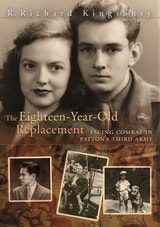
The Eighteen-Year-Old Replacement
Facing Combat in Patton's Third ArmyR. Richard Kingsbury
University of Missouri Press, 2008
When the United States entered the Second World War, eighteen-year-old enlistees were routinely assigned temporary duties and not sent into battle until they turned nineteen. But as the fighting dragged on, America was eventually forced to draft younger men into combat to replace wounded troops—and following the Battle of the Bulge, more than 300,000 eighteen-year-olds were sent as replacements to the army’s decimated divisions.
In The Eighteen-Year-Old Replacement, Richard Kingsbury brings an often-overlooked perspective to the annals of World War II. Torn from an ordinary teenager’s life in the Midwest, young Dick was drafted six weeks after D-Day and rushed with other eighteen-year-olds to the Siegfried Line to bolster Patton’s 94th Infantry Division. His reminiscence provides a moving, diarylike account of what he endured both physically and emotionally—and tells how he went from boyhood to manhood almost overnight.
In prose that is both succinct and evocative, Kingsbury recounts his experiences as a rifleman during the final bloody battles in Germany, giving readers a real feel for what combat was like for a raw recruit. He recalls his first night in a foxhole on the front line and the “unbelievable luxury” of sleeping in a barn’s hayloft. He relives freezing cold at the Bulge, which permanently damaged his legs, and the pounding of enemy artillery during Patton’s breakthrough of the German West Wall, which affected his hearing for life.
More poignantly, Kingsbury shares his anxieties over killing—as well as the distinct possibility of being killed as Wehrmacht tanks mercilessly blasted individual foxholes at Bannholz Woods. He vividly recalls Patton’s attack on Ludwigshafen, on the west bank of the Rhine, where he took a German bullet in his chest—and where three of the six newly arrived eighteen-year-olds were killed.
Interspersed with the accounts of battle are letters between Dick and Mary Jo, his sweetheart back home, capturing the blossoming of romance that transcended both distance and bloodshed. His book casts a new light on war—and courtship—in an era when boys were rushed from the home front to the front lines. By showing how crucial the contribution of these young men was to the war effort, this book gives the eighteen-year-old replacements the recognition they have long deserved.
The Eighth
Mahler and the World in 1910Stephen Johnson
University of Chicago Press, 2020
September 12, 1910: The world premiere of Gustav Mahler’s Eighth Symphony and the artistic breakthrough for which the composer had yearned all his life. Munich’s new Musik Festhalle was filled to capacity on two successive evenings for the performances, which were received with rapturous applause. Representatives of many European royal houses were in attendance, along with an array of stars from the musical and literary world, including Thomas Mann and the young Arnold Schoenberg. Also present were Alma Mahler, the composer’s wife, and Alma’s longtime lover, the architect Walter Gropius. Knowledge of their relationship would precipitate an emotional crisis in Mahler that, compounded with his heart condition and the loss of his young daughter Maria, would lead to his premature death the next year.
In The Eighth, Stephen Johnson provides a masterful account of the symphony’s far-reaching consequences and its effect on composers, conductors, and writers of the time. The Eighth looks behind the scenes at the demanding one-week rehearsal period leading up to the premiere—something unheard of at the time—and provides fascinating insight into Mahler’s compositional habits, his busy life as a conductor, his philosophical and literary interests, and his personal and professional relationships. Johnson expertly contextualizes Mahler’s work among the prevailing attitudes and political climate of his age, considering the art, science, technology, and mass entertainment that informed the world in 1910. The Eighth is an absorbing history of a musical masterpiece and the troubled man who created it.

The El Mozote Massacre
Anthropology and Human RightsLeigh Binford
University of Arizona Press, 1996
Such reportage, argues anthropologist Leigh Binford, sustains the perception that the lives of Third World people are only newsworthy when some great tragedy strikes. He critiques the practices of journalists and human rights organizations for their dehumanizing studies of "subjects" and "victims." Binford suggests that such accounts objectify the people involved through statistical analyses and bureaucratic body counts while the news media sensationalize the motives and personalities of the perpetrators.
In relating the story of this tragic event, Binford restores a sense of history and social identity to the fallen people of this Salvadoran village. Drawing on interviews he conducted with El Mozote-area residents, he offers a rich ethnographic and personal account of their lives prior to the tragedy. He provides an overview of the history and culture of the area and tells how such a massacre could have happened, why it was covered up, and why it could happen again.
The El Mozote Massacre
Human Rights and Global Implications Revised and Expanded EditionLeigh Binford
University of Arizona Press, 2016
Almost two decades later, the consequences of the massacre continue to reverberate through the country’s legal and socioeconomic systems. The El Mozote Massacre, 2nd Edition brings together new evidence to address reconstruction, historical memory, and human rights issues resulting from what may be the largest massacre in modern Latin American history.
With a multitude of additions, including three new chapters, an extended chronology, discussion of the hearing and ruling of the Inter-American Court of Human Rights in 2012, and evidence gathered throughout half a dozen field trips made by the author, Binford presents a current perspective on the effects of this tragic moment in history. Thanks to geographically expanded fieldwork, Binford offers critical discussion of postwar social, economic, religious, and social justice in El Mozote, and adds important new regional, national, and global contexts.
The El Mozote Massacre, 2nd Edition maintains the crucial presence of the massacre in human rights discussions for El Salvador, Latin America, and the world.
The Elaine Massacre and Arkansas
A Century of Atrocity and Resistance, 1819-1919Guy Lancaster
Butler Center for Arkansas Studies, 2018
We cannot fully understand what happened at Elaine without examining the one hundred years leading up to the massacre. An analysis of the years from 1819, when Arkansas officially became an American territory, to 1919 provides the historical foundation for understanding one of the bloodiest manifestations of racial violence in U.S. history.
During the antebellum years, slaveholders grew paranoid about possible “insurrections,” and after the Civil War and Emancipation, these fears lingered and led to numerous atrocities long before Elaine. At the same time, African Americans—particularly fieldworkers—worked to organize themselves to resist oppression, setting the stage for the farmers’ union that was the target for mob and military wrath during the Elaine Massacre.
These essays provide the larger history necessary for understanding what happened at Elaine in 1919—and thus provide a window into the current state of Arkansas and the nation at large. Contributors include Richard Buckelew, Nancy Snell Griffith, Matthew Hild, Adrienne Jones, Kelly Houston Jones, Cherisse Jones-Branch, Brian K. Mitchell, William H. Pruden III, and Steven Teske.
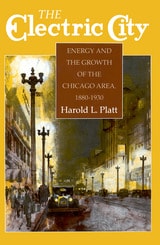
The Electric City
Energy and the Growth of the Chicago Area, 1880-1930Harold L. Platt
University of Chicago Press, 1991
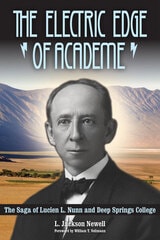
The Electric Edge of Academe
The Saga of Lucien L. Nunn and Deep Springs CollegeL. Jackson Newell
University of Utah Press, 2015
Here is a look at the life and legacy of an irrepressible innovator. Pushing against both social convention and technological boundaries, L.L. Nunn left enduring marks on economic and social history, labor development, and, educational reform. The Electric Edge of Academe is a bold portrayal of this progressive-era hydroelectric power magnate who, driven by a dynamic conscience, also became a force for social change and educational experimentation.
In 1891, Nunn, working with Tesla and Westinghouse, pioneered the world’s first commercial production of high-tension alternating current (AC) for long-distance transmission—something Thomas Edison deemed dangerous and irresponsible. After creating the Telluride Power Company, Nunn constructed the state-of-the-art Olmsted Power Plant in Provo Canyon and the Ontario Power Works at Niagara Falls. To support this new technology, he developed an imaginative model of industrial training that became so compelling that he ultimately abandoned his entrepreneurial career to devote his wealth and talents to experimenting with a new model of liberal education. In 1917, Nunn founded Deep Springs College in eastern California. The school remains one of the most daring, progressive, and selective institutions of higher learning in America. Newell examines how Nunn’s radical educational ideas have survived internal and external challenges for nearly a century and explores their relevance today.
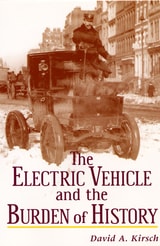
The Electric Vehicle and the Burden of History
Kirsch, David A
Rutgers University Press, 2000
In the late 1890s, at the dawn of the automobile era, steam, gasoline, and electric cars all competed to become the dominant automotive technology. By the early 1900s, the battle was over and internal combustion had won. Was the electric car ever a viable competitor? What characteristics of late nineteenth-century American society led to the choice of internal combustion over its steam and electric competitors? And might not other factors, under slightly differing initial conditions, have led to the adoption of one of the other motive powers as the technological standard for the American automobile?
David A. Kirsch examines the relationship of technology, society, and environment to choice, policy, and outcome in the history of American transportation. He takes the history of the Electric Vehicle Company as a starting point for a vision of an “alternative” automotive system in which gasoline and electric vehicles would have each been used to supply different kinds of transport services. Kirsch examines both the support—and lack thereof—for electric vehicles by the electric utility industry. Turning to the history of the electric truck, he explores the demise of the idea that different forms of transportation technology might coexist, each in its own distinct sphere of service.
A main argument throughout Kirsch’s book is that technological superiority cannot be determined devoid of social context. In the case of the automobile, technological superiority ultimately was located in the hearts and minds of engineers, consumers and drivers; it was not programmed inexorably into the chemical bonds of a gallon of refined petroleum. Finally, Kirsch connects the historic choice of internal combustion over electricity to current debates about the social and environmental impacts of the automobile, the introduction of new hybrid vehicles, and the continuing evolution of the American transportation system.

The Elefánthy
The Hungarian Nobleman and His KindredErik Fügedi
Central European University Press, 1998
In an exploration of the life and customs of the Hungarian nobility, this book compares historical reality and legal literature on the example of one noble family--the Elefánthy kindred from northern Hungary (present-day Slovakia). The author begins by outlining the customary law regarding noble status, inheritance and marriage, as summarized in the famous code of Stephen Werbőczy (1514). He then compares these norms with the documentary evidence and establishes the fact that the legal literature differs in regard to social mobility and kindred solidarity.
With this frame of reference in mind, the fate of the Elefánthy family is traced through several generations, enabling the author to make some general statistical statements on inheritance, the rise and fall of various branches, marriage strategies, and the "survival skills" of the kindred. In his summary, the author outlines some of the major avenues for further research, including the peculiar Hungarian form of retainership (familiaritas), and the relationships between noble families and between the nobility and local communities.
The Elementary Forms of Corruption
Moral Imagination and Political Change in BrazilAaron Ansell
HAU, 2025
The Elementary Forms of Corruption is an ethnographic history of rural Brazilians’ shifting moral imagination in the context of their country’s recent corruption scandals and political crises. The book explores how Brazil’s cosmopolitan models of corruption, both left-wing and right-wing varieties, found their way to a small sertanejo (hinterland) municipality in the northeast, where people understood corruption very differently. Reckoning with both the leftist Workers’ Party, which sought to liberate sertanejos from patron-client relations, and the New Right populists who sought to stamp out the “communists” threatening the patriarchal family, the people of the sertanejo made recourse to older ideas about corruption—such as the betrayal of kinship obligations and communal trust—to decipher and shape national politics.
Challenging the discipline’s current aversion to generalizable, analytic categories that are useful for comparison across cultures or historical periods, The Elementary Forms of Corruption posits a general framework for understanding corruption at its most elementary level: the degradation of a moral gradient through the transgressive rechanneling of those currencies (e.g., gifts, favors) that sustain communal bonds when properly directed.
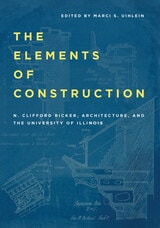
The Elements of Construction
N. Clifford Ricker, Architecture, and the University of IllinoisN. Clifford Ricker. Edited by Marci S. Uihlein
University of Illinois Press, 2025
In addition to providing the full text, Uihlein and the contributors trace Ricker’s career and delve into his practice of teaching. Subject experts explore specific topics. Thomas Leslie surveys contemporary construction practices in Chicago. Tom F. Peters considers Ricker’s writings in the context of the time while Rachel Will looks at masonry know-how and testing. Donald Friedman examines the teaching of iron and steel construction.
An illuminating look at a field and a legacy, The Elements of Construction rediscovers a figure that shaped the teaching of architecture and trained a generation that forever changed Chicago.
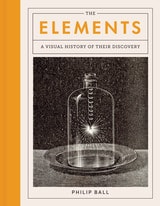
The Elements
A Visual History of Their DiscoveryPhilip Ball
University of Chicago Press, 2021
The Elements is a stunning visual journey through the discovery of the chemical building blocks of our universe. By piecing together the history of the periodic table, Ball explores not only how we have come to understand what everything is made of, but also how chemistry developed into a modern science. Ball groups the elements into chronological eras of discovery, covering seven millennia from the first known to the last named. As he moves from prehistory and classical antiquity to the age of atomic bombs and particle accelerators, Ball highlights images and stories from around the world and sheds needed light on those who struggled for their ideas to gain inclusion. By also featuring some elements that aren’t true elements but were long thought to be—from the foundational prote hyle and heavenly aetherof the ancient Greeks to more recent false elements like phlogiston and caloric—The Elements boldly tells the full history of the central science of chemistry.
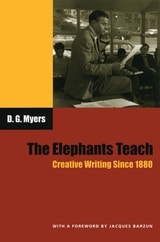
The Elephants Teach
Creative Writing Since 1880David Gershom Myers
University of Chicago Press, 2006
Myers explores more than a century of debate over how writing should be taught and whether it can or should be taught in a classroom at all. Along the way, he incorporates insights from a host of poets and teachers, including Henry Wadsworth Longfellow, Ralph Waldo Emerson, Robert Frost, John Berryman, John Dewey, Lionel Trilling, Robert Lowell, Ezra Pound, and Saul Bellow. And from his exhaustive research, Myers extracts relevant background information on nineteenth-century educational theory; shifts in technology, publishing, and marketing; the growth of critical theory in this country; and the politics of higher education. While he shows how creative writing has become a machine for creating more creative writing programs, Myers also suggests that its history supplies a precedent for something different—a way for creativity and criticism, poetry and scholarship, to join together to produce not just writing programs but good writers.
Updated with fresh commentary on what’s happened to creative writing in the academy since the first edition was published ten years ago, The Elephants Teach will be indispensable for students and teachers of writing, literature, and literary history.
The Ella E. Hall Recipe Book
Ella E. Hall Foreword by Jessica Kenyatta Walker
University of Michigan Press, 2026
Ella E. Hall, a Black cook and landlord in Ann Arbor, Michigan, collected her favorite recipes in a journal between 1920 and 1939. Published for the first time, Hall’s recipe book contains not only recipes from family and friends, but also articles, clippings, and advertisements, which provide a glimpse into the food culture and daily life of the time. The book includes over 50 recipes that will interest and delight food historians, like sour milk griddle cakes, Lady Baltimore cake, pepper hash, green tomatoes pickles, campfire pineapple ham, and beverages such as root beer, ginger ale, and even home-brewed beer. This recipe book has been held in the Janice Bluestein Longone Culinary Archive within the Special Collections Research Center at the University of Michigan Library, and this first published edition makes Hall’s charming collection accessible to more readers. Introductory essays by Jessica Kenyatta Walker, scholar of African American history and foodways, and Susan Wineberg, who found and donated the recipe collection to the Special Collections Research Center, flesh out Ella Hall’s story and help position this book in the context of Ann Arbor in the first half of the twentieth century.
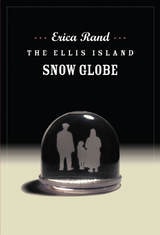
The Ellis Island Snow Globe
Erica Rand
Duke University Press, 2005
Rand notes that portrayals of the Statue of Liberty as a beacon for immigrants tend to suppress the Statue’s connections to people brought to this country by force. She examines what happened to migrants at Ellis Island whose bodies did not match the gender suggested by the clothing they wore. In light of contemporary ideas about safety and security, she examines the “Decide an Immigrant’s Fate” program, which has visitors to Ellis Island act as a 1910 board of inspectors hearing the appeal of an immigrant about to be excluded from the country. Rand is a witty, insightful, and open-minded tour guide, able to synthesize numerous diverse ideas—about tourism, immigration history, sexuality, race, ethnicity, commodity culture, and global capitalism—and to candidly convey her delight in her Ellis Island snow globe. And pen. And lighter. And back scratcher. And golf ball. And glittery pink key chain.
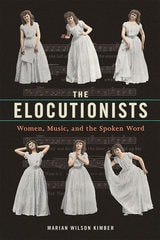
The Elocutionists
Women, Music, and the Spoken WordMarian Wilson Kimber
University of Illinois Press, 2017
Marian Wilson Kimber restores elocution with music to its rightful place in performance history. Gazing through the lenses of gender and genre, Wilson Kimber argues that these female artists transgressed the previous boundaries between private and public domains. Their performances advocated for female agency while also contributing to a new social construction of gender. Elocutionists, proud purveyors of wholesome entertainment, pointedly contrasted their "acceptable" feminine attributes against those of morally suspect actresses. As Wilson Kimber shows, their influence far outlived their heyday. Women, the primary composers of melodramatic compositions, did nothing less than create a tradition that helped shape the history of American music.
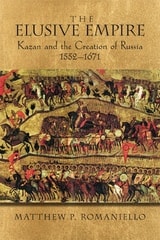
The Elusive Empire
Kazan and the Creation of Russia, 1552–1671Matthew P. Romaniello
University of Wisconsin Press, 2012
In 1552, Muscovite Russia conquered the city of Kazan on the Volga River. It was the first Orthodox Christian victory against Islam since the fall of Constantinople, a turning point that, over the next four years, would complete Moscow’s control over the river. This conquest provided a direct trade route with the Middle East and would transform Muscovy into a global power. As Matthew Romaniello shows, however, learning to manage the conquered lands and peoples would take decades.
Russia did not succeed in empire-building because of its strength, leadership, or even the weakness of its neighbors, Romaniello contends; it succeeded by managing its failures. Faced with the difficulty of assimilating culturally and religiously alien peoples across thousands of miles, the Russian state was forced to compromise in ways that, for a time, permitted local elites of diverse backgrounds to share in governance and to preserve a measure of autonomy. Conscious manipulation of political and religious language proved more vital than sheer military might. For early modern Russia, empire was still elusive—an aspiration to political, economic, and military control challenged by continuing resistance, mismanagement, and tenuous influence over vast expanses of territory.
The Elusive Ideal
Equal Educational Opportunity and the Federal Role in Boston's Public Schools, 1950-1985Adam R. Nelson
University of Chicago Press, 2005
An ambitious study that spans more than thirty years and covers all facets of educational policy, from legal battles to tax strategies, The Elusive Ideal provides a model from which future inquiries will proceed. A probing and provocative work of urban history with deep relevance for urban public schools today, Nelson's book reveals why equal educational opportunity remains such an elusive ideal.
The Elusive Promise of Indigenous Development
Rights, Culture, StrategyKaren Engle
Duke University Press, 2010
Conceiving indigenous rights as cultural rights, Engle argues, has largely displaced or deferred many of the economic and political issues that initially motivated much indigenous advocacy. She contends that by asserting static, essentialized notions of indigenous culture, indigenous rights advocates have often made concessions that threaten to exclude many claimants, force others into norms of cultural cohesion, and limit indigenous economic, political, and territorial autonomy.
Engle explores one use of the right to culture outside the context of indigenous rights, through a discussion of a 1993 Colombian law granting collective land title to certain Afro-descendant communities. Following the aspirations for and disappointments in this law, Engle cautions advocates for marginalized communities against learning the wrong lessons from the recent struggles of indigenous peoples at the international level.
The Emancipation Circuit
Black Activism Forging a Culture of FreedomThulani Davis
Duke University Press, 2022
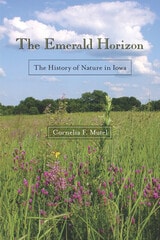
The Emerald Horizon
The History of Nature in IowaCornelia F. Mutel
University of Iowa Press, 2008
In The Emerald Horizon, Cornelia Mutel combines lyrical writing with meticulous scientific research to portray the environmental past, present, and future of Iowa. In doing so, she ties all of Iowa's natural features into one comprehensive whole.
Since so much of the tallgrass state has been transformed into an agricultural landscape, Mutel focuses on understanding today's natural environment by understanding yesterday's changes. After summarizing the geological, archaeological, and ecological features that shaped Iowa's modern landscape, she recreates the once-wild native communities that existed prior to Euroamerican settlement. Next she examines the dramatic changes that overtook native plant and animal communities as Iowa's prairies, woodlands, and wetlands were transformed. Finally she presents realistic techniques for restoring native species and ecological processes as well as a broad variety of ways in which Iowans can reconnect with the natural world. Throughout, in addition to the many illustrations commissioned for this book, she offers careful scientific exposition, a strong sense of respect for the land, and encouragement to protect the future by learning from the past.
The "emerald prairie" that "gleamed and shone to the horizon's edge," as botanist Thomas Macbride described it in 1895, has vanished. Cornelia Mutel's passionate dedication to restoring this damaged landscape—and by extension the transformed landscape of the entire Corn Belt—invigorates her blend of natural history and human history. Believing that citizens who are knowledgeable about native species, communities, and ecological processes will better care for them, she gives us hope—and sound suggestions—for the future.
The Emergence of Dialectical Theory
Philosophy and Political InquiryScott Warren
University of Chicago Press, 1984
Scott Warren’s ambitious and enduring work sets out to resolve the ongoing identity crisis of contemporary political inquiry. In the Emergence of Dialectical Theory, Warren begins with a careful analysis of the philosophical foundations of dialectical theory in the thought of Kant, Hegel, and Marx. He then examines how the dialectic functions in the major twentieth-century philosophical movements of existentialism, phenomenology, neomarxism, and critical theory. Numerous major and minor philosophers are discussed, but the emphasis falls on two of the greatest dialectical thinkers of the previous century: Maurice Merleau-Ponty and Jürgen Habermas.
Warren’s shrewd critique is indispensable to those interested in the history of social and political thought and the philosophical foundations of political theory. His work offers an alternative for those who find postmodernism to be at a philosophical impasse.
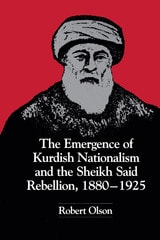
The Emergence of Kurdish Nationalism and the Sheikh Said Rebellion, 1880–1925
By Robert Olson
University of Texas Press, 1989
The last quarter of the nineteenth century was crucial for the development of Kurdish nationalism. It coincided with the reign of Abdulhamid II (1876-1909), who emphasized Pan-Islamic policies in order to strengthen the Ottoman Empire against European and Russian imperialism, The Pan-Islamic doctrines of the Ottoman Empire enabled sheikhs (religious leaders) from Sheikh Ubaydallah of Nehri in the 1870s and 1880s to Sheikh Said in the 1920s-to become the principal nationalist leaders of the Kurds. This represented a new development in Middle Eastern and Islamic history and began an important historical pattern in the Middle East long before the emergence of the religiousnationalist leadership of Ayatollah Khomeini in Iran.
This is the first work in any Western language dealing with the development of Kurdish nationalism during this period and is supported with documentation not previously utilized, principally from the Public Record Office in Great Britain. In addition, the author provides much new material on Turkish, Armenian, Iranian, and Arab history and new insights into Turkish-Armenian relations during the most crucial era of the history of these two peoples.

The Emergence of Social Space
Rimbaud and the Paris CommuneKristin RossForeword by Terry Eagleton
University of Minnesota Press, 1989
Central to her analysis of the Commune as social space and oppositional culture is a close textual reading of Arthur Rimbaud’s poetry. His poems - a common thread running through the book - are one set of documents among many in Ross’s recreation of the Communard experience. Rimbaud, Paul Lafargue, and the social geographer Elisee Reclus serve as emblematic figures moving within and on the periphery of the Commune; in their resistance to the logic and economy of a capitalist conception of work, in their challenge to work itself as a term of identity, all three posed a threat to the existing order. Ross looks at these and other emancipator notions as aspects of Communard life, each with an analogous strategy in Rimbaud’s poetry. Applying contemporary theory to a wealth of little-known archival material, she has written a fresh, persuasive, and original book.