Results by title
22279 books match the query 'Social Science' and 4007 start with t
The Journey
Stories by K. C. DasPhyllis Granoff, Translator
University of Michigan Press, 2000
The Juan Pardo Expeditions
Exploration of the Carolinas and Tennessee, 1566-1568Charles Hudson. Afterword by David G. Moore, Robin A. Beck Jr., and Christopher B. Rodning
University of Alabama Press, 2005
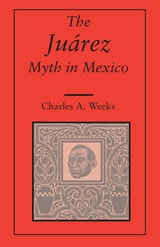
The Juarez Myth In Mexico
Charles A. Weeks
University of Alabama Press, 1987
Like many capitals the city of Mexico is a place of monuments-large monuments, small, ancient monuments, and new, representational monuments, and allegorical monuments—each bearing a message from the past. Among them is the Hemiciclo. It stands in a spacious, old, beautiful park, the Alameda Central, where the young and old of the city still promenade on Sundays and holidays as people do in the plazas throughout the country and, indeed, as people do in many parts of the world. Amid green trees and a great variety of flowers and shrubs and flanked by a semicircle of twelve doric columns of white Carrara marble stands the central pedestal of the Hemiciclo supporting the statues of three figures. One statue represents a former president of the republic, Benito Juarez, who appears solemn and grim as a Roman proconsul administering justice. Juarez the Lawgiver is seated, and surrounding him are two allegorical figures, also of marble, one representing Glory, who is placing a crown on Juarez’s head, and the other, the Republic, who stands behind, resting her sword on the ground to signify the end of a gigantic struggle. The letters of the pedestal read: “Al Benemerito Benito Juarez. La Patria.” Many years have passed since 1910, when the Mexican government built and dedicated the Hemiciclo after a design by the architect Guillermo Heredia.
Like many other such monuments it is the embodiment of a myth. In life Juarez offered little to the mythologizers-he was never able to boast a military career, he often impressed people as reserved or even impassive. he stood a little over five feet; with small hands and feet and dark staring eyes, a coppery complexion that helped disguise a large scar across his face, of Zapotec Indian parentage, he was no striking figure. He did, however, lead Mexican liberals in the I 850s and 1860s in their titanic struggle against formidable opposition, both foreign and domestic, and in the years since his death his worshipers have gathered at the Hemiciclo, at his tomb, or in many other places in Mexico sacred to his memory, usually on anniversaries of his birth or death. For them Juarez is, in agreement with the golden inscription on the central pedestal of the Hemiciclo, “Benemerito de la Patria” or even “Benemerito de las Americas.”
Development of a Juarez myth has had all the classic characteristics of myths and mythmaking, especially the subjective view or image of a reality, whether it be of an historical figure, as in the case of Juarez, an event, an institution, or even a geographical region. Image or meaning ascribed to what is assumed to be a reality constitutes one of the main elements of myth and when manipulated to promote a cause assumes a reality of its own. The apotheosis of Juarez projected a subjective view or image of the historical reality. In all myths, to be sure, the assumed reality is a feature useful to an individual or a group.
The Juggler
RachildeHawthorne, Melanie C
Rutgers University Press, 1990
The Juggler (La Jongleuse) is a "decadent" novel that was first published in 1900. Its author, Marguerite Vallette-Eymery (1860-1953), who used the pseudonym Rachilde, was a prolific novelist (over sixty works of fiction), playwright, literary critic and reviewer, and a forceful presence in French literary society of her time.
The protagonist of the novel, Eliante Donalger, is in some sense an exaggerated double for her creator--bizarre in appearance, clothing, and interests. Instinctively grasping a medical and psychological truth that the turn-of-the-century scientific world was only beginning to understand, Eliante maintains that there is nothing "natural" about human sexual expression. She claims to be in love with an inanimate (though anthropomorphic and sexually ambiguous) object, a Greek amphora, and the novel traces the rivalry between this faithful partner and an ardent human suitor, a young medical student. It is only through juggling, both literally and metaphorically, that Eliante is able to use her seductive power to maintain desire. The surprise ending challenges the limits of such power in a controversial and surprising twist.
Although Rachilde's work has been neglected in the past, the women's movement and feminist criticism have stimulated renewed interest in her fiction. The Juggler is a major rediscovery.
The Jumanos
Hunters and Traders of the South PlainsBy Nancy Parrott Hickerson
University of Texas Press, 1994
In the late sixteenth century, Spanish explorers described encounters with North American people they called "Jumanos." Although widespread contact with Jumanos is evident in accounts of exploration and colonization in New Mexico, Texas, and adjacent regions, their scattered distribution and scant documentation have led to long-standing disagreements: was "Jumano" simply a generic name loosely applied to a number of tribes, or were they an authentic, vanished people?
In the first full-length study of the Jumanos, anthropologist Nancy Hickerson proposes that they were indeed a distinctive tribe, their wide travel pattern linked over well-established itineraries. Drawing on extensive primary sources, Hickerson also explores their crucial role as traders in a network extending from the Rio Grande to the Caddoan tribes' confederacies of East Texas and Oklahoma.
Hickerson further concludes that the Jumanos eventually became agents for the Spanish colonies, drafted as mercenary fighters and intelligence-gatherers. Her findings reinterpret the cultural history of the South Plains region, bridging numerous gaps in the area's comprehensive history and in the chronicle of these elusive people.
The Juntunen Site and the Late Woodland Prehistory of the Upper Great Lakes Area
Alan McPherron
University of Michigan Press, 1967
The Justice We Demand
Voices from the Indigenous Anti-Rape RevolutionSarah Deer
University of Minnesota Press, 2027
Sharing stories by Indigenous survivors of sexual violence to reconceptualize justice beyond punishment and remediation
The Justice We Demand asks a profound and urgent question: What does justice truly mean for rape survivors? To address sexual violence, two dominant frameworks of justice persist: carceral justice, which centers punishing perpetrators through the criminal legal system, and restorative justice, which emphasizes repairing interpersonal relationships to resolve tensions between perpetrator and victim. Indigenous survivors and their communities, however, do not view justice as a neat binary between carceralism or restoration. Instead, they navigate complex legal and social systems across federal, state, local, and tribal jurisdictions, and they imagine justice in the form of ceremony, apology, banishment, and more, remedies that often fall outside the formal, colonialist legal system.
Centering the importance of storytelling in addressing trauma, Sarah Deer and Melinda Chen listen to the stories of fifty-one Indigenous women and Two-Spirit survivors of sexual violence to understand their versions of justice. Through their felt experiences, Indigenous survivors challenge conventional criminal justice paradigms that persist in Tribal Nations and settler colonial states, cultivating sovereign approaches to punishment and healing.
With actionable insight and resounding truth, The Justice We Demand urges us to reconsider what justice means and envisions a constellation of remedies led by each survivor’s needs, rooted in their own terms, bodies, and land.
Retail e-book files for this title are screen-reader friendly with images accompanied by short alt text and/or extended descriptions.
The Kagero Diary
A Woman’s Autobiographical Text from Tenth-Century JapanTranslated with an Introduction and Notes by Sonja Arntzen
University of Michigan Press, 1997
The Karankawa Indians of Texas
An Ecological Study of Cultural Tradition and ChangeBy Robert A. Ricklis
University of Texas Press, 1996
Popular lore has long depicted the Karankawa Indians as primitive scavengers (perhaps even cannibals) who eked out a meager subsistence from fishing, hunting and gathering on the Texas coastal plains. That caricature, according to Robert Ricklis, hides the reality of a people who were well-adapted to their environment, skillful in using its resources, and successful in maintaining their culture until the arrival of Anglo-American settlers.
The Karankawa Indians of Texas is the first modern, well-researched history of the Karankawa from prehistoric times until their extinction in the nineteenth century. Blending archaeological and ethnohistorical data into a lively narrative history, Ricklis reveals the basic lifeway of the Karankawa, a seasonal pattern that took them from large coastal fishing camps in winter to small, dispersed hunting and gathering parties in summer. In a most important finding, he shows how, after initial hostilities, the Karankawa incorporated the Spanish missions into their subsistence pattern during the colonial period and coexisted peacefully with Euroamericans until the arrival of Anglo settlers in the 1820s and 1830s. These findings will be of wide interest to everyone studying the interactions of Native American and European peoples.
The Keepers of Water and Earth
Mexican Rural Social Organization and IrrigationBy Kjell I. Enge and Scott Whiteford
University of Texas Press, 1989
Agrarian reforms transformed the Mexican countryside in the late twentieth century but without, in many cases, altering fundamental power relationships. This study of the Tehuacán Valley in the state of Puebla highlights different strategies to manipulate the local implementation of federal government programs. With their very differing successes in the struggle to regain and maintain control of land and water rights, these strategies raise important questions about the meaning of the phrase "locally controlled development."
Because Mexico is dependent on irrigation for 45 percent of its cash crop production, national policy has focused on developing vast government controlled and financed irrigation systems. In the Tehuacán Valley, however, the inhabitants have developed a complex irrigation system without government aid or supervision. Yet, in contrast to most parts of Mexico, water rights can be bought and sold as a commodity, leading to accumulation, stratification, and emergence of a regional elite whose power is based on ownership of land and water. The analysis provides an important contribution to the understanding of local control.
The findings of this study will be important to a wide audience involved in the study of irrigation, local agricultural systems, and the interplay between local power structures and the national government in developing countries. The book also presents unique material on gravity-fed, horizontal wells, known as qanat in the Middle East, which had been unknown in the literature on Latin America before this book.
The Keloids We Heal
Trauma, Spirituality, and Black Modernity in LiteratureSarah Soanirina Ohmer
University of Illinois Press, 2025
Women of colors and a literature written in corporeal and spiritual scars
The corporeal and spiritual healing in literature by women of colors can be seen to redefine modern thought and printed text. Sarah Soanirina Ohmer traces the impact of colonization and enslavement on Black women and Black women’s contributions to colonial, nineteenth, and twentieth century literature in the US, Brazil, and the Caribbean.
Drawing on intersectional analysis, Ohmer focuses on portrayals of trauma and spirituality in works by Toni Morrison, Conceição Evaristo, Maryse Condé, Gloria Anzaldúa, the Quilombhoje poets, and María de los Reyes Castillo. Ohmer compares literature from different countries along four thematic pathways: ghosts, mirrors, naming, and motherhood. Her analysis unlocks the literature’s power to heal through gut-wrenching descriptions of wounds and thrilling passages of hope and liberation. Throughout, Ohmer weaves in her life story as a Black woman as she reflects on how colonialism, racism, sexism, and capitalism have impacted her work, traumas, and faith journey.

The Kennedy Family
Edward Shorter
Temple University Press, 2000
Long a generous benefactor of MR-related organizations, Joseph P. Kennedy made MR the special charitable interest of the family foundation he set up in the 1950s. Although he gave all of his children official roles, he involved his daughter Eunice in performing its actual work -- identifying appropriate recipients of awards and organizing the foundation's activities. With unique access to family and foundation papers, Shorter brings to light the Kennedy family's strong commitment to public service, showing that Rose and Joe taught their children by precept and example that their wealth and status obligated them to perform good works. Their parents expected each of them to apply their considerable energies to making a difference.
Eunice Kennedy Shriver took up that charge and focused her organizational and rhetorical talent on putting MR on the federal policy agenda. As a sister of the President of the United States, she had access to the most powerful people in the country and drew their attention to the desperate situation of families affected by mental retardation. Her efforts made an enormous difference, resulting in unprecedented public attention to MR and new approaches to coordinating medical and social services. Along with her husband, R. Sargent Shriver, she made the Special Olympics an international, annual event in order to encourage people with mental retardation to develop their skills and discover the joy of achievement. She emerges from these pages as a remarkable and dedicated advocate for people with developmental disabilities.
Shorter's account of mental retardation presents an unfamiliar view of the Kennedy family and adds a significant chapter to the history of disability in this country.
The Kentucky Trace
A Novel of the American RevolutionHarriette Simpson Arnow
Michigan State University Press, 2012
A gripping portrait of life in the hard-bitten wilderness of Revolutionary Kentucky, Harriette Simpson Arnow’s The Kentucky Trace follows surveyor William David Leslie Collins as he struggles to survive. Collins finds his fellow settlers to be almost as inscrutable as the weather—at times, they are allies, and at others, they are adversaries. Collins battles nature, bad luck, and the quickly shifting political tides to make his way in a changing world. Showcasing Arnow’s ear for dialogue and offering a wealth of historical detail, The Kentucky Trace is a masterful work of fiction by a preeminent Appalachian writer.
The Kidney and the Cane
Planetary Health and Plantation Labor in NicaraguaAlex M. Nading
Duke University Press, 2025
The Killing of Jane McCrea
An American Tragedy on the Revolutionary FrontierPaul Staiti
Westholme Publishing, 2027
FINALIST FOR THE 2026 GEORGE WASHINGTON PRIZE
Winner of the 2026 Book of the Year Award, George Washington American Revolution Round Table, Washington, DC
The killing of Jane McCrea on July 26, 1777, on the outskirts of a village in the northern Hudson Valley, would unexpectedly rupture the British advance from Canada that was meant to crush the American Revolution in one knockout blow. On that day, twenty-five-year-old McCrea, an unremarkable person preparing for an impending marriage, was assaulted, scalped, and killed by a group of Native Americans in the employ of British general John Burgoyne. Though the murder was but one of many civilian deaths in a fierce war zone, McCrea’s killing had far-reaching consequences for each of the three major parties involved in the Northern Campaign of 1777. In America, she became the great cause célèbre of the Revolution, the sympathetic female victim of the war symbolizing the righteousness of The Cause. In Britain, she was a human-rights tragedy that tarnished the polished surface of British honor and galvanized Whig politicians who shouted out her name in Parliament as an example of how low the nation had fallen. For Native peoples, recruited by both the British and the Americans, and caught in the middle of a war staged on ancestral grounds, McCrea’s killing was the opening salvo in a vicious chain of bloody retribution that led to the disintegration of the venerable Iroquois Confederacy and the obliteration of Native homelands. After the war, the nightmarish image of a young Jane McCrea slaughtered on the New York frontier would obsess white Americans who came to fear Native peoples as irredeemable savages. Her murder would help justify the expulsion of Indigenous tribes and open the doors for an expansionary United States that was fully intent on transforming the American continent into its own image.
The Killing of Jane McCrea: An American Tragedy on the Revolutionary Frontier by distinguished historian Paul Staiti undertakes for the first time a comprehensive investigation into McCrea’s life, death, and especially her long and strange afterlife. Using both visual arts and written records, the author reassembles the scattered fragments to illuminate a historical terrain long since shrouded in misinformation, mired in controversy, and relegated to mythology. Coming into view is a major portrait of the persons, cultures, actions, and motives that fatally converged on that hot July morning in 1777.
The Kin Who Count
Family and Society in Ottoman Aleppo, 1770-1840By Margaret L. Meriwether
University of Texas Press, 1999
The history of the Middle Eastern family presents as many questions as there are currently answers. Who lived together in the household? Who married whom and for how long? Who got a piece of the patrimonial pie? These are the questions that Margaret Meriwether investigates in this groundbreaking study of family life among the upper classes of the Ottoman Empire in the pre-modern and early modern period.
Meriwether recreates Aleppo family life over time from records kept by the Islamic religious courts that held jurisdiction over all matters of family law and property transactions. From this research, she asserts that the stereotype of the large, patriarchal patrilineal family rarely existed in reality. Instead, Aleppo's notables organized their families in a great diversity of ways, despite the fact that they were all members of the same social class with widely shared cultural values, acting under the same system of family law. She concludes that this had important implications for gender relations and demonstrates that it gave women more authority and greater autonomy than is usually acknowledged.
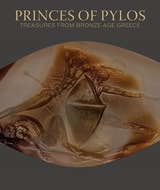
The Kingdom of Pylos
Warrior-Princes of Mycenaean GreeceSharon R. Stocker
J. Paul Getty Trust, The, 2025
Ancient Pylos has long captivated travelers, archaeologists, and historians familiar with Homer’s Iliad and Odyssey and his account of King Nestor, the prudent elder counselor in the Trojan War. Excavations begun in 1939 unearthed the storied Palace of Nestor in Messenia, an epicenter of Mycenaean civilization.
The Kingdom of Pylos features spectacular arts and crafts, many recently excavated at sites across Messenia, including goldwork of unparalleled artistry, masterfully carved sealstones, weapons, and wall paintings. Essays by international scholars examine the latest discoveries, including the Linear B tablets—the earliest written form of the Greek language—which document the political, religious, and economic organization of the prosperous Pylian realm. New research and cutting-edge science cast light on the 2015 find of the grave of the Griffin Warrior, an extraordinary, intact burial that held thousands of artifacts, including the celebrated Pylos Combat Agate, perhaps the finest work of art from the prehistoric Aegean. With over 300 illustrations, this is the first major publication in English to reconstruct the society of Pylos and settlements in its orbit during the Late Bronze Age (1700–1070 BCE).
This volume is published to accompany an exhibition on view at the Archaeological Museum of Messenia in Kalamata from February 15 to April 27, 2025, the J. Paul Getty Museum at the Getty Villa from June 25, 2025, to January 12, 2026, and the Hellenic National Archaeological Museum in Athens from March 1 to June 30, 2026.

The Kinky Renaissance
Edited by Gillian Knoll and Joseph Gamble
Arizona Center for Medieval and Renaissance Studies, 2024
The Kinky Renaissance is a groundbreaking collection of essays that explore kink as a theoretical analytic, a historical formation, and an aesthetic mode. The essays in this work expand the sexual archive and its lexicon by introducing new vocabularies to familiar sexual scenes in early modern literature and culture and by bringing lesser-known scenes to bear on the study of sexuality in the period. Providing a capacious theory of sexuality and historical precedents for contemporary kinky practices, The Kinky Renaissance explores the erotic potential of early modern literature and pauses over various kinks nestled between and beside them. The collection boldly argues for a broader concept of a kinky Renaissance—one which reorients the terms of both the history of sexuality and queer theory more broadly.
The Knowable and the Unknowable
Modern Science, Nonclassical Thought, and the "Two Cultures"Arkady Plotnitsky
University of Michigan Press, 2002
Plotnitsky highlights those points at which the known gives way to the unknown (and unknowable). These points are significant, he argues, because they push the boundaries of thought and challenge the boundaries of disciplinarity. One of the book's most interesting observations is that key figures in science, in order to push toward a framing of the unknown, actually retreated into a conservative disciplinarity. Plotnitsky's informed, interdisciplinary approach is more productive than the disparaging attacks on postmodernism or scientism that have hitherto characterized this discourse.
Arkady Plotnitsky is Professor of English and Director, Theory and Cultural Studies Program, Purdue University. Trained in both mathematics and literary theory, he is author of several books, including In the Shadow of Hegel: Complementarity, History and the Unconscious and Reconfigurations: Critical Theory and General Economy.
The Komedie Stamboel
Popular Theater in Colonial Indonesia, 1891–1903Matthew Isaac Cohen
Ohio University Press, 2006
Originating in 1891 in the port city of Surabaya, the Komedie Stamboel, or Istanbul-style theater, toured colonial Indonesia, Singapore, and Malaysia by rail and steamship. The company performed musical versions of the Arabian Nights, European fairy tales and operas such as Sleeping Beauty and Aida, as well as Indian and Persian romances, Southeast Asian chronicles, true crime stories, and political allegories. The actors were primarily Eurasians, the original backers were Chinese, and audiences were made up of all races and classes. The Komedie Stamboel explores how this new hybrid theater pointed toward possibilities for the transformation of self in a colonial society and sparked debates on moral behavior and mixed-race politics.
While audiences marveled at spectacles involving white-skinned actors, there were also racial frictions between actors and financiers, sexual scandals, fights among actors and patrons, bankruptcies, imprisonments, and a murder.
Matthew Isaac Cohen's evocative social history situates the Komedie Stamboel in the culture of empire and in late nineteenth-century itinerant entertainment. He shows how the theater was used as a symbol of cross-ethnic integration in postcolonial Indonesia and as an emblem of Eurasian cultural accomplishment by Indische Nederlanders. A pioneering study of nineteenth-century Southeast Asian popular culture, The Komedie Stamboel gives a new picture of the region's arts and culture and explores the interplay of currents in global culture, theatrical innovation, and movement in colonial Indonesia.ABOUT THE AUTHOR---Matthew Isaac Cohen is senior lecturer in Drama and Theatre Studies at Royal Holloway University of London. His articles on Southeast Asian performance have appeared in New Theatre Quarterly, Asian Theatre Journal, Journal of the Royal Asiatic Society, and Archipel. As a practicing shadow puppeteer, he has performed in the United States, Europe, and Asia.
The Korean Popular Culture Reader
Kyung Hyun Kim and Youngmin Choe, eds.
Duke University Press, 2014
Contributors. Jung-hwan Cheon, Michelle Cho, Youngmin Choe, Steven Chung, Katarzyna J. Cwiertka, Stephen Epstein, Olga Fedorenko, Kelly Y. Jeong, Rachael Miyung Joo, Inkyu Kang, Kyu Hyun Kim, Kyung Hyun Kim, Pil Ho Kim, Boduerae Kwon, Regina Yung Lee, Sohl Lee, Jessica Likens, Roald Maliangkay, Youngju Ryu, Hyunjoon Shin, Min-Jung Son, James Turnbull, Travis Workman

The Korean-American Dream
Portraits of a Successful Immigrant CommunityJames Flanigan
University of Nevada Press, 2018
In The Korean-American Dream, respected and distinguished business journalist James Flanigan uncovers the struggles and contributions of the people who have made Los Angeles the largest Korean city outside of Seoul.
This intimate account illustrates how Korean immigrants have preserved their culture and history as well as adapted to the American culture of E Pluribus Unum, the radical promise of “out of many, one.” Flanigan shows how Los Angeles emerged as a capital of the Asia Pacific region.
At less than 2 million, Korean Americans are a relatively small group compared to new Americans from China, the Philippines, and India. But with energy and drive, they are building landmarks in New York as well as L.A., lobbying for causes in Washington, founding businesses, heading universities and hospitals, and holding public office in all parts of the U.S.
Flanigan’s compelling narrative told largely through personal interviews provides a front-row seat to the economic, business, and cultural developments of the Korean American Community. At a time of spirited debate about immigration, their energy and ambition serve as a ringing reminder of the promise of the American mosaic.
The Kowoj
Identity, Migration, and Geopolitics in Late Postclassic Petén, GuatemalaPrudence M. Rice
University Press of Colorado, 2009
Chapters in The Kowoj address the question "Who are the Kowoj?" from varied viewpoints: archaeological, archival, linguistic, ethnographic, and bioarchaeological. Using data drawn primarily from the peninsular site of Zacpetén, the authors illuminate Kowoj history, ritual components of their self-expressed identity, and their archaeological identification. These data support the Kowoj claim of migration from Mayapán in Yucatán, where they were probably affiliated with the Xiw, in opposition to the Itza. These enmities extended into Petén, culminating in civil warfare by the time of final Spanish conquest in 1697.
The first volume to consider Postclassic Petén from broadly integrative anthropological, archaeological, and historical perspectives, The Kowoj is an important addition to the literature on late Maya culture and history in the southern lowlands. It will be of particular interest to archaeologists, historians, ethnohistorians, art historians, and epigraphers.
The Krio of West Africa
Islam, Culture, Creolization, and Colonialism in the Nineteenth CenturyGibril R. Cole
Ohio University Press, 2013
Sierra Leone’s unique history, especially in the development and consolidation of British colonialism in West Africa, has made it an important site of historical investigation since the 1950s. Much of the scholarship produced in subsequent decades has focused on the “Krio,” descendants of freed slaves from the West Indies, North America, England, and other areas of West Africa, who settled Freetown, beginning in the late eighteenth century. Two foundational and enduring assumptions have characterized this historiography: the concepts of “Creole” and “Krio” are virtually interchangeable; and the community to which these terms apply was and is largely self-contained, Christian, and English in worldview.
In a bold challenge to the long-standing historiography on Sierra Leone, Gibril Cole carefully disentangles “Krio” from “Creole,” revealing the diversity and permeability of a community that included many who, in fact, were not Christian. In Cole’s persuasive and engaging analysis, Muslim settlers take center stage as critical actors in the dynamic growth of Freetown’s Krio society.
The Krio of West Africa represents the results of some of the first sustained historical research to be undertaken since the end of Sierra Leone’s brutal civil war. It speaks clearly and powerfully not only to those with an interest in the specific history of Sierra Leone, but to histories of Islam in West Africa, the British empire, the Black Atlantic, the Yoruban diaspora, and the slave trade and its aftermath.

The Krobo People of Ghana to 1892
A Political and Social HistoryLouis E. Wilson
Ohio University Press, 1991

The Ku Klux Klan in 1920s Arkansas
How Protestant White Nationalism Came to Rule a StateKenneth C. Barnes
University of Arkansas Press, 2021
Winner, 2022 J.G. Ragsdale Book Award, Arkansas Historical Association
The Ku Klux Klan established a significant foothold in Arkansas in the 1920s, boasting more than 150 state chapters and tens of thousands of members at its zenith. Propelled by the prominence of state leaders such as Grand Dragon James Comer and head of Women of the KKK Robbie Gill Comer, the Klan established Little Rock as a seat of power second only to Atlanta. In The Ku Klux Klan in 1920s Arkansas, Kenneth C. Barnes traces this explosion of white nationalism and its impact on the state’s development.
Barnes shows that the Klan seemed to wield power everywhere in 1920s Arkansas. Klansmen led businesses and held elected offices and prominent roles in legal, medical, and religious institutions, while the women of the Klan supported rallies and charitable activities and planned social gatherings where cross burnings were regular occurrences. Inside their organization, Klan members bonded during picnic barbeques and parades and over shared religious traditions. Outside of it, they united to direct armed threats, merciless physical brutality, and torrents of hateful rhetoric against individuals who did not conform to their exclusionary vision.
By the mid-1920s, internal divisions, scandals, and an overzealous attempt to dominate local and state elections caused Arkansas’s Klan to fall apart nearly as quickly as it had risen. Yet as the organization dissolved and the formal trappings of its flamboyant presence receded, the attitudes the Klan embraced never fully disappeared. In documenting this history, Barnes shows how the Klan’s early success still casts a long shadow on the state to this day.
The Kurdish Women’s Movement
History, Theory, PracticeDilar Dirik
Pluto Press, 2021
'One the foremost writers and participants in the Kurdish women's movement' - Harsha Walia
The Kurdish women's movement is at the heart of the most exciting revolutionary experiment in the world today: Rojava. Forged over decades of struggle, most recently in the fight against ISIS, Rojava embodies a radical commitment to ecology, democracy and gender equality. But while striking images of Kurdish women in desert fatigues proliferate, a true understanding of the women's movement remains elusive.
Taking apart the superficial and Orientalist frameworks that dominate, Dilar Dirik offers instead an empirically rich account of the women's movement in Kurdistan. Drawing on original research and ethnographic fieldwork, she surveys the movement's historical origins, ideological evolution, and political practice over the past forty years. Going beyond abstract ideas, Dirik locates the movement's culture and ideology in its concrete work for women's liberation and radical democracy.
Taking the reader from the guerrilla camps in the mountains to radical women's academies and self-organized refugee camps, the book invites readers around the world to engage with the revolution in Kurdistan, both theoretically and practically, as a vital touchstone in the wider struggle for a militant anti-fascist, anti-capitalist feminist internationalism.
The Lab Book
Situated Practices in Media StudiesDarren Wershler
University of Minnesota Press, 2021
An important new approach to the study of laboratories, presenting a practical method for understanding labs in all walks of life
From the “Big Science” of Bell Laboratories to the esoteric world of séance chambers to university media labs to neighborhood makerspaces, places we call “labs” are everywhere—but how exactly do we account for the wide variety of ways that they produce knowledge? More than imitations of science and engineering labs, many contemporary labs are hybrid forms that require a new methodological and theoretical toolkit to describe. The Lab Book investigates these vital, creative spaces, presenting readers with the concept of the “hybrid lab” and offering an extended—and rare—critical investigation of how labs have proliferated throughout culture.
Organized by interpretive categories such as space, infrastructure, and imaginaries, The Lab Book uses both historical and contemporary examples to show how laboratories have become fundamentally connected to changes in the contemporary university. Its wide reach includes institutions like the MIT Media Lab, the Tuskegee Institute’s Jesup Wagon, ACTLab, and the Media Archaeological Fundus. The authors cover topics such as the evolution and delineation of lab-based communities, how labs’ tools and technologies contribute to defining their space, and a glossary of key hybrid lab techniques.
Providing rich historical breadth and depth, The Lab Book brings into focus a critical, but often misunderstood, aspect of the contemporary arts and humanities.
The Labor of Care
Filipina Migrants and Transnational Families in the Digital AgeValerie Francisco-Menchavez
University of Illinois Press, 2018
The Labor of Faith
Gender and Power in Black Apostolic PentecostalismJudith Casselberry
Duke University Press, 2017
The Lady and the Virgin
Image, Attitude, and Experience in Twelfth-Century FrancePenny Schine Gold
University of Chicago Press, 1985
Vividly recreating the rich texture of medieval life, Gold effectively and eloquently goes beyond a simple equation of social context and representation. In the process. she challenges equally simple judgments of historical periods as being either "good" or "bad" for women.
"[The Lady and the Virgin] presents its findings in a form that should attract students as well as their instructors. The careful and controlled use of so many different kinds of sources . . . offers us a valuable medieval case study in the inner-relationship between the segments of society and its ethos or value system."—Joel T. Rosenthal, The History Teacher
"Something of a tour de force in an interdisciplinary approach to history."—Jo Ann McNamara, Speculum
"[A] well-written, extremely well-researched book. . . . The Lady and the Virgin is useful, readable, and well informed."—R. Howard Bloch, Modern Philology
The Laissez-Faire Peasant
Post-Socialist Rural Development in SerbiaJovana Dikovic
University College London, 2025
The Laissez-Faire Peasant: Post-Socialist Rural Development in Serbia subverts conventional wisdom on rural development by shifting the focus from state-led planning to the agency of peasants themselves. Rejecting the notion that rural populations are passive victims of top-down policies, Jovana Dikovic presents a compelling ethnographic study of three Serbian villages, where autonomy and local cooperation drive economic and social resilience. She introduces the concept of the “laissez-faire peasant”—a figure who thrives outside rigid government schemes, shaping rural development on their own terms. By examining the friction between state policies and the everyday strategies of rural communities, Dikovic uncovers how peasant autonomy not only resists external intervention but fosters sustainable and self-sufficient growth.
The first in-depth study of contemporary Serbian peasantry, this book reframes rural life as a site of innovation rather than stagnation. An area of interest for scholars of post-socialist transitions, rural development, and economic anthropology, The Laissez-Faire Peasant provides a new lens on how rural communities survive and adapt in a rapidly changing world.
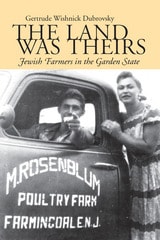
The Land Was Theirs
Jewish Farmers in the Garden StateGertrude W. Dubrovsky
University of Alabama Press, 1992
A historical account of Jewish agricultural colonies in New Jersey that examines how immigrants built farming communities in early America.
The Land Was Theirs is about Farmingdale, New Jersey, a community of Jewish farming communities in the United States established with the help of the Jewish Agricultural Society. The 50 year history of Farmingdale provides a perspective on the pressures, problems, and satisfactions of rural Jewish life as experienced in one community.
Beginning in 1919, the community grew around the small town of Farmingdale, when two Jewish families pooled their resources to establish a farm. The community evolved gradually as unrelated individuals with no previous farm experience settled and then created the institutions and organizations they needed to sustain their Jewish life. By 1945 Farmingdale was one of the leading egg-producing communities in the United States, and contributed in large measure to New Jersey’s reputation as the “egg basket of America.”
The Land Was Theirs draws from life-history interviews with 120 farmers, from the author’s personal experiences, and from a variety of private and community papers and documents. They are the pieces from which a full picture of a single Jewish farm community emerges.
The Land and the Loom
Peasants and Profit in Northern France, 1680–1800Liana Vardi
Duke University Press, 1993
Drawing on evidence culled from parish registers, notarial records, and judicial archives, Liana Vardi outlines the development of the linen weaving trade in Montigny and details the local peasants' participation. The peasants that emerge from her study are not the figures of tradition, driven solely by symbolic attachment to the land and unreasonably devoted to village solidarities. Instead they reveal remarkable flexibility and diversity, not only improving farming methods and raising yields during the eighteenth century, but also using land to finance investments in industry and to develop local business, far-flung commercial networks and complex credit mechanisms. The eighteenth-century French countryside appears as a region and time of capitalist experimentation, cut short by pre-Revolutionary and Revolutionary crises.
Meticulously documented, broadly interpretive, and beautifully written, this fascinating book will permenantly alter conventional perceptions of peasant life and rural industry and, ultimately, the way ordinary people are seen in seemingly distant times and places.
The Land of Houlouf
Genesis of a Chadic Polity, 1900 B.C.–A.D. 1800Augustin F. C. Holl
University of Michigan Press, 2002
The Land of Milk and Uncle Honey
Memories from the Farm of My YouthAlan Guebert with Mary Grace Foxwell
University of Illinois Press, 2015
Here are Guebert's tireless parents, measuring the year not in months but in seasons for sewing, haying, and doing the books; Jackie the farmhand, needing ninety minutes to do sixty minutes' work and cussing the entire time; Hoard the dairyman, sore fingers wrapped in electrician's tape, sharing wine and the prettiest Christmas tree ever; and the unflappable Uncle Honey, spreading mayhem via mistreated machinery, flipped wagons, and the careless union of diesel fuel and fire.
Guebert's heartfelt and humorous reminiscences depict the hard labor and simple pleasures to be found in ennobling work, and show that in life, as in farming, Uncle Honey had it right with his succinct philosophy for overcoming adversity: "the secret's not to stop."
https://www.youtube.com/watch?v=DooGQqUlXI4&index=1&list=FLPxtuez-lmHxi5zpooYEnBg
The Land of My Fathers
A Son's Return to the Basque CountryRobert Laxalt
University of Nevada Press, 2024
In 1960, renowned Nevada writer Robert Laxalt moved himself and his family to a small Basque village in the French Pyrenees. The son of Basque emigrants, Laxalt wanted to learn as much as he could about the ancient and mysterious people from which he was descended and about the country from which his parents came. Thanks to his Basque surname and a wide network of family connections, Laxalt was able to penetrate the traditional reserve of the Basques in a way that outsiders rarely can. In the process, he gained rare insight into the nature of the Basques and the isolated, beautiful mountain world where they have lived for uncounted centuries. Based on Laxalt’s personal journals of this and a later sojourn in 1965, The Land of My Fathers is a moving record of a people and their homeland. Through Laxalt’s perceptive eyes and his wife Joyce’s photographs, we observe the Basques’ market days and festivals, join their dove hunts and harvests, share their humor and history, their deep sense of nationalism, their abiding pride in their culture and their homes, and discover the profound sources of the Basques’ strength and their endurance as a people. Photography by Joyce Laxalt.
The Landscape of Rural Service Learning, and What It Teaches Us All
Randy Stoecker
Michigan State University Press, 2016

The Language of Planning
Essays on the Origins and Ends of American Planning ThoughtAlbert Z. Guttenberg
University of Illinois Press, 1993

The Language of Political Incorporation
Chinese Migrants in EuropeAmy Liu
Temple University Press, 2021
In this groundbreaking study, The Language of Political Incorporation, Amy Liu focuses on Chinese migrants in Central-Eastern Europe and their varying levels of political incorporation in the local community. She examines the linguistic diversity of migrant networks, finding institutional trust and civic engagement depend not on national identity, but on the network’s linguistic diversity—namely, whether the operating language is a migrant’s mother tongue or a lingua franca.
The Language of Political Incorporation uses original survey data to assess when the Chinese engage positively with the authorities and when they become civic minded. The results are surprising. In Hungary, the Chinese community has experienced high levels of political incorporation in part because they have not been targeted by anti-immigrant rhetoric and policies. In contrast, migrants in Romania sought the assistance of the Chinese embassy to fight an effort to collect back taxes.
Liu also compares the Chinese experiences in Central-Eastern Europe with those of Muslims in the region, as well as how the Chinese are treated in Western Europe. Additionally, she considers how the local communities perceive the Chinese. The Language of Political Incorporation concludes by offering best practices for how governments can help migrants become more trusting of—and have greater involvement with—locals in their host countries. Ultimately, Liu demonstrates the importance of linguistic networks for the incorporation of immigrants.

The Language of Sex
Five Voices from Northern France around 1200John W. Baldwin
University of Chicago Press, 1994
John Baldwin introduces five representative voices from the turn of the twelfth century in northern France: Pierre the Chanter speaks for the theological doctrine of Augustine; the Prose Salernitan Questions, for the medical theories of Galen; Andre the Chaplain, for the Ovidian literature of the schools; Jean Renart, for the contemporary romances; and Jean Bodel, for the emerging voices of the fabliaux. Baldwin juxtaposes their views on a range of essential subjects, including social position, the sexual body, desire and act, and procreation. The result is a fascinating dialogue of how they agreed or disagreed with, ignored, imitated, or responded to each other at a critical moment in the development of European ideas about sexual desire, fulfillment, morality, and gender.
These spokesmen allow us into the discussion of sexuality inside the church and schools of the clergy, in high and popular culture of the leity. This heterogeneous discussion also offers a startling glimpse into the construction of gender specific to this moment, when men and women enjoyed equal status in sexual matters, if nowhere else.
Taken together, these voices extend their reach, encompass their subject, and point to a center where social reality lies. By articulating reality at its varied depths, this study takes its place alongside groundbreaking works by James Brundage, John Boswell, and Leah Otis in extending our understanding of sexuality and sexual behavior in the Middle Ages.
"Superb work. . . . These five kinds of discourse are not often treated together in scholarly writing, let alone compared and contrasted so well."—Edward Collins Vacek, Theological Studies
"[Baldwin] has made the five voices speak to us in a language that is at one and the same time familiar and alien in its resonance and accents. This is a truly exceptional book, interdisciplinary in the real sense of the word, which is surely destined to become a landmark in medieval studies."—Keith Busby, Bryn Mawr Reviews
"[Baldwin's] attempt to 'listen' to these distant voices and translate their language of sex into our own raises challenging methodological questions that will be of great interest to historians and literary scholars alike."—John P. Dalton, Comitatus

The Languages of Native America
Historical and Comparative AssessmentEdited by Lyle Campbell and Marianne Mithun
University of Texas Press, 1979
These essays were drawn from the papers presented at the Linguistic Society of America's Summer Institute at the State University of New York at Oswego in 1976. The contents are as follows:
- Lyle Campbell and Marianne Mithun, "Introduction: North American Indian Historical Linguistics in Current Perspective"
- Ives Goddard, "Comparative Algonquian"
- Marianne Mithun, "Iroquoian"
- Wallace L. Chafe, "Caddoan"
- David S. Rood, "Siouan"
- Mary R. Haas, "Southeastern Languages"
- James M. Crawford, "Timucua and Yuchi: Two Language Isolates of the Southeast"
- Ives Goddard, "The Languages of South Texas and the Lower Rio Grande"
- Irvine Davis, "The Kiowa-Tanoan, Keresan, and Zuni Languages"
- Susan Steele, "Uto-Aztecan: An Assessment for Historical and Comparative Linguistics"
- William H. Jacobsen, Jr., "Hokan lnter-Branch Comparisons"
- Margaret Langdon, "Some Thoughts on Hokan with Particular Reference to Pomoan and Yuman"
- Michael Silverstein, "Penutian: An Assessment"
- Laurence C. Thompson, "Salishan and the Northwest"
- William H. Jacobsen, Jr., "Wakashan Comparative Studies"
- William H. Jacobsen, Jr., "Chimakuan Comparative Studies"
- Michael E. Krauss, "Na-Dene and Eskimo-Aleut"
- Lyle Campbell, "Middle American Languages"
- Eric S. Hamp, "A Glance from Now On"
The Last "Darky"
Bert Williams, Black-on-Black Minstrelsy, and the African DiasporaLouis Chude-Sokei
Duke University Press, 2006
Chude-Sokei makes the crucial argument that Williams’s minstrelsy negotiated the place of black immigrants in the cultural hotbed of New York City and was replicated throughout the African diaspora, from the Caribbean to Africa itself. Williams was born in the Bahamas. When performing the “darky,” he was actually masquerading as an African American. This black-on-black minstrelsy thus challenged emergent racial constructions equating “black” with African American and marginalizing the many diasporic blacks in New York. It also dramatized the practice of passing for African American common among non-American blacks in an African American–dominated Harlem. Exploring the thought of figures such as Booker T. Washington, W. E. B. Du Bois, Marcus Garvey, and Claude McKay, Chude-Sokei situates black-on-black minstrelsy at the center of burgeoning modernist discourses of assimilation, separatism, race militancy, carnival, and internationalism. While these discourses were engaged with the question of representing the “Negro” in the context of white racism, through black-on-black minstrelsy they were also deployed against the growing international influence of African American culture and politics in the twentieth century.
The Last Cannibals
A South American Oral HistoryBy Ellen B. Basso
University of Texas Press, 1995
An especially comprehensive study of Brazilian Amazonian Indian history, The Last Cannibals is the first attempt to understand, through indigenous discourse, the emergence of Upper Xingú society. Drawing on oral documents recorded directly from the native language, Ellen Basso transcribes and analyzes nine traditional Kalapalo stories to offer important insights into Kalapalo historical knowledge and the performance of historical narratives within their nonliterate society.
This engaging book challenges the familiar view of biography as a strictly Western literary form. Of special interest are biographies of powerful warriors whose actions led to the emergence of a more recent social order based on restrained behaviors from an earlier time when people were said to be fierce and violent.
From these stories, Basso explores how the Kalapalo remember and understand their past and what specific linguistic, psychological, and ideological materials they employ to construct their historical consciousness. Her book will be important reading in anthropology, folklore, linguistics, and South American studies.
The Last Civilized Place
Sijilmasa and Its Saharan DestinyBy Ronald A. Messier and James A. Miller
University of Texas Press, 2015
Set along the Sahara’s edge, Sijilmasa was an African El Dorado, a legendary city of gold. But unlike El Dorado, Sijilmasa was a real city, the pivot in the gold trade between ancient Ghana and the Mediterranean world. Following its emergence as an independent city-state controlling a monopoly on gold during its first 250 years, Sijilmasa was incorporated into empire—Almoravid, Almohad, and onward—leading to the “last civilized place” becoming the cradle of today’s Moroccan dynasty, the Alaouites. Sijilmasa’s millennium of greatness ebbed with periods of war, renewal, and abandonment. Today, its ruins lie adjacent to and under the modern town of Rissani, bypassed by time.
The Moroccan-American Project at Sijilmasa draws on archaeology, historical texts, field reconnaissance, oral tradition, and legend to weave the story of how this fabled city mastered its fate. The authors’ deep local knowledge and interpretation of the written and ecological record allow them to describe how people and place molded four distinct periods in the city’s history. Messier and Miller compare models of Islamic cities to what they found on the ground to understand how Sijilmasa functioned as a city. Continuities and discontinuities between Sijilmasa and the contemporary landscape sharpen questions regarding the nature of human life on the rim of the desert. What, they ask, allows places like Sijilmasa to rise to greatness? What causes them to fall away and disappear into the desert sands?
The Last Deployment
How a Gay, Hammer-Swinging Twentysomething Survived a Year in IraqBronson Lemer
University of Wisconsin Press, 2011
In 2003, after serving five and a half years as a carpenter in a North Dakota National Guard engineer unit, Bronson Lemer was ready to leave the military behind. But six months short of completing his commitment to the army, Lemer was deployed on a yearlong tour of duty to Iraq. Leaving college life behind in the Midwest, he yearns for a lost love and quietly dreams of a future as an openly gay man outside the military. He discovers that his father’s lifelong example of silent strength has taught him much about being a man, and these lessons help him survive in a war zone and to conceal his sexuality, as he is required to do by the U.S. military.
Finalist, Minnesota Book Awards
Finalist, Over the Rainbow Selection, American Library Association
Amazon Top Ten 10 Gay & Lesbian Books of 2011
The Last Earth
A Palestinian StoryRamzy Baroud
Pluto Press, 2018
Ordinary Palestinians have rarely narrated their own history. In this groundbreaking book, acclaimed author Ramzy Baroud draws on dozens of interviews to produce vivid, intimate and beautifully written accounts of Palestinian lives - in villages, refugee camps, prisons and cities, in the lands of their ancestors and in exile. Baroud's empathetic and lyrical approach reveals new human dimensions of the Palestinian saga, telling it as it has never before been told.
Against dominant narratives, the last earth reclaims Palestine's past - and present - for all its people.
The Last Frontier
The Contemporary Configuration of the U.S.-Mexico Border, Volume 105Jane Juffer, ed.
Duke University Press, 0
Covering a range of disciplinary perspectives—geography, political science, anthropology, American studies, literary studies, and environmental studies—these essays contend that U.S. policies to curtail immigration and drug trafficking along the Mexican border are ineffective. George W. Bush’s call for a volunteer security force has legitimized a vigilante presence through the formation of Minutemen civilian border patrols, in addition to larger numbers of Border Patrol agents and expanded detention centers. One contributor argues that, due to the increasingly dangerous border-crossing conditions, more undocumented immigrants are remaining in the United States year-round rather than following the traditional seasonal pattern of work and returning to Mexico. Another contributor interviews drug smugglers and government officials, revealing the gap between reality and the claims of success by the U.S. government in the “war on drugs.” Focusing on the social justice movement Ni Una Mas (Not One More), one essay delves into the controversy over the unsolved murders of hundreds of young women in the border town of Ciudad Juárez and the refusal of the government to investigate these murders properly. Other essays consider instances of resistance and activism—ranging from political movements and protests by NGOs to artistic expression through alternative narratives, poetry, and photography—against the consequences of neoliberalism on the border and its populations.
Contributors. Ana M. Manzanas Calvo, Alicia Schmidt Camacho, Arturo Dávila, Sarah Hill, Jane Juffer, Laura Lewis, Alejandro Lugo, Tony Payan, Claudia Sadowski-Smith, Santiago Vaquera, Melissa Wright

The Last Generation
Work and Life in the Textile Mills of Lowell, Massachusetts, 1910-1960Mary H. Blewett
University of Massachusetts Press, 1990
Oral histories of many of the last generation of Lowell, MA, textile mill workers preceded by two introductory sections. The first presents the historic setting of economic development and subsequent decline of the textile industry in Lowell. The second is a brief explanation of the production process wherein the last generation of mill workers expended so many of their skills and so much of their energy.

The Last Half-Century
Societal Change and Politics in AmericaMorris Janowitz
University of Chicago Press, 1978
For Janowitz, social control denotes a society's capacity to regulate itself within a moral framework that transcends simple self-interest. He poses urgent questions: Why has social control been so drastically weakened in our advanced industrial society? And what strategies can we use to strengthen it again?
The expanation rests in part on the changes in social structure which make it more and more complicated for citizens to calculate their political self-interest. At the same time, complex economic and defense problems also strain an already overburdened legislative system, making effective, responsive political rule increasingly difficult.
Janowitz concludes by assessing the response of the social sciences to the pressing problem of social control and asserts that new forms of citizen participation in the government must be found.