Results by title
8642 books match the query '20th Century' and 1764 start with t

Twentieth-Century Spanish American Fiction
By Naomi Lindstrom
University of Texas Press, 1994
Spanish American fiction became a world phenomenon in the twentieth century through multilanguage translations of such novels as Gabriel Garcia Marquez's One Hundred Years of Solitude, Manuel Puig's Kiss of the Spider Woman, Octavio Paz's Labyrinth of Solitude, and Isabel Allende's House of the Spirits. Yet these "blockbusters" are only a tiny fraction of the total, rich outpouring of Spanish-language literature from Latin America.
In this book, Naomi Lindstrom offers English-language readers a comprehensive survey of the century's literary production in Latin America (excluding Brazil). Discussing movements and trends, she places the famous masterworks in historical perspective and highlights authors and works that deserve a wider readership. Her study begins with Rodó's famous essay Ariel and ends with Rigoberta Menchú's 1992 achievement of the Nobel Prize. Her selection of works is designed to draw attention, whenever possible, to works that are available in good English translations.
A special feature of the book is its treatment of the "postboom" period. In this important concluding section, Lindstrom discusses documentary narratives, the new interrelations between popular culture and literary writing, and underrepresented groups such as youth cultures, slum dwellers, gays and lesbians, and ethnic enclaves. Written in accessible, nonspecialized language, Twentieth-Century Spanish American Fiction will be equally useful for general readers as a broad overview of this vibrant literature and for scholars as a reliable reference work.

Twentieth-Century Texas
A Social and Cultural HistoryJohn W. Storey
University of North Texas Press, 2008

Twenty Acres
A Seventies Childhood in the WoodsSarah Neidhardt
University of Arkansas Press, 2023
"A memoir infused with both empathy and inquiry."
—Wendy J. Fox, Electric Literature
“Twenty Acres is an engaging, thoughtful memoir of growing up in an off-the-grid cabin as part of the 1970s back-to-the-land movement. Sarah Neidhardt captures her subject beautifully and offers a compelling portrait of a highly specific, historically significant time and place.”
—Kate Daloz, author of We Are As Gods: Back to the Land in the 1970s on the Quest for a New America
Sarah Neidhardt grew up in the woods. When she was an infant, her parents left behind comfortable, urbane lives to take part in the back-to-the-land movement. They moved their young family to an isolated piece of land deep in the Arkansas Ozarks where they built a cabin, grew crops, and strove for eight years to live self-sufficiently.
In this vivid memoir Neidhardt explores her childhood in wider familial and social contexts. Drawing upon a trove of family letters and other archival material, she follows her parents’ journey from privilege to food stamps—from their formative youths, to their embrace of pioneer homemaking and rural poverty, to their sudden and wrenching return to conventional society—and explores the back-to-the-land movement of the 1970s as it was, and as she lived it.
A story of strangers in a strange land, of class, marriage, and family in a changing world, Twenty Acres: A Seventies Childhood in the Woods is part childhood idyll, part cautionary tale. Sarah Neidhardt reveals the treasures and tolls of unconventional, pastoral lives, and her insightful reflections offer a fresh perspective on what it means to aspire to pre-industrial lifestyles in a modern world.

Twilight of the American State
Pierre Schlag
University of Michigan Press, 2023
Finalist: 2024 Order of the Coif Book Award | March 3, 2025
The sudden emergence of the Trump nation surprised nearly everyone, including journalists, pundits, political consultants, and academics. When Trump won in 2016, his ascendancy was widely viewed as a fluke. Yet time showed it was instead the rise of a movement—angry, militant, revanchist, and unabashedly authoritarian.
How did this happen? Twilight of the American State offers a sweeping exploration of how law and legal institutions helped prepare the grounds for this rebellious movement. The controversial argument is that, viewed as a legal matter, the American state is not just a liberal democracy, as most Americans believe. Rather, the American state is composed of an uneasy and unstable combination of different versions of the state—liberal democratic, administered, neoliberal, and dissociative. Each of these versions arose through its own law and legal institutions. Each emerged at different times historically. Each was prompted by deficits in the prior versions. Each has survived displacement by succeeding versions. All remain active in the contemporary moment—creating the political-legal dysfunction America confronts today.
Pierre Schlag maps out a big picture view of the tribulations of the American state. The book abjures conventional academic frameworks, sets aside prescriptions for quick fixes, dispenses with lamentations about polarization, and bypasses historical celebrations of the American Spirit.

Twin Towers
Gillespie, Angus K
Rutgers University Press, 1999
A readable account of both the history of the construction of the Twin Towers and the life of the people who work there.
The Twin Towers of the World Trade Center are more than office buildings. They are symbols of America, just as the Eiffel Tower and Big Ben represent their countries. Commissioned in 1962 and completed in 1976, these edifices are still the tallest man-made structures in New York City. Indeed, the builders intended the towers to make a statement about the importance of the Port of New York and New Jersey. The complex rises like Emerald City, with fountains and sculpture from what was once a dilapidated area of half-abandoned stores.
Folklorist Angus Gillespie takes us on a tour that goes back in time and continues to the present day. He recounts the political maneuvering necessary to get the State of New Jersey to agree to situate the project at its present location. Deftly presenting portraits of the men responsible for mooring the World Trade Center at its present location, Gillespie provides ample evidence that the World Trade Center backers were “second to none in self promotion.”
Twin Towers also demonstrates how engineers prepared the site and solved complex problems (wind patterns, elevator placement, ground-water complications) in order to erect the towers, each with 110 stories. And he discusses the contrast between the architectural community’s almost universal disdain for the towers’ design and the public’s enthusiastic acceptance of the buildings as a symbol of New York.
There is more to the Twin Towers than its architecture, however. People give this complex life, purpose, vibrancy, Gillespie points out. The World Trade Center houses more than 400 businesses and organizations from some 60 different countries engaged in a broad range of international business activities. Through his numerous first-hand interviews conducted with the people who daily work there, Gillespie vividly portrays the world of bankers, shippers, freight forwarders, and traders. With skill and insight, he captures what happens during a normal 24-hour day in the Twin Towers, starting with early morning food deliveries and ending with the patrols of nighttime security guards.
Twin Towers is both a fitting tribute and careful analysis of one of the most resonating symbols in American culture.
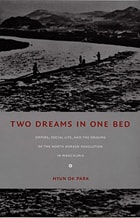
Two Dreams in One Bed
Empire, Social Life, and the Origins of the North Korean Revolution in ManchuriaHyun Ok Park
Duke University Press, 2005
Drawing on a rich archive of Korean, Japanese, and Chinese sources, Park describes how Koreans negotiated the contradictory demands of national and colonial powers. She demonstrates that the dynamics of global capitalism led the Chinese and Japanese to pursue capitalist expansion while competing for sovereignty. Decentering the nation-state as the primary analytic rubric, her emphasis on the role of global capitalism is a major innovation for understanding nationalism, colonialism, and their immanent links in social space.
Through a regional and temporal comparison of Manchuria from the late nineteenth century until 1945, Park details how national and colonial powers enacted their claims to sovereignty through the regulation of access to land, work, and loans. She shows that among Korean migrants, the complex connections among Chinese laws, Japanese colonial policies, and Korean social practices gave rise to a form of nationalism in tension with global revolution—a nationalism that laid the foundation for what came to be regarded as North Korea’s isolationist politics.

Two Minds of a Western Poet
David Mason
University of Michigan Press, 2011
Praise for David Mason
“. . . richly evocative and rare . . .”
—Publishers Weekly
“David Mason has succeeded in restoring to poetry some of the territory lost over recent centuries to prose fiction.”
—Paul Lake, First Things
In this new collection of essays, award-winning poet David Mason further broadens his exploration of Western and frontier themes. Beginning with the subject of poetry in and about the American West, he then widens his canvas to examine poets as diverse as James Wright, Anthony Hecht, and B. H. Fairchild, as well as taking up the idea of “the West” in global terms.
The title essay builds on a product of Mason’s upbringing in the American West—his “two minds” about the life of poetry, one aware that he needs and loves the art, and one equally aware that he understands a world outside cultural definitions. These two minds coexist throughout each lively, evocative essay, while Mason delves into family history and his efforts to connect himself to place, narrative poets of the American West, and farther-flung topics such as literary movements, post-colonial studies, and favorite Greek writers. In each of these meditations, Mason pursues a personal voice, connecting what he reads to a life outside books and making poetry accessible to the common reader.
Two-Party Politics in the One-Party South
Alabama's Hill Country, 1874–1920Samuel L. Webb
University of Alabama Press, 1997
A challenge to the long-held view that the only important and influential politicians in post-Reconstruction Deep South states were Democrats.
In this insightful and exhaustively researched volume, Samuel L. Webb presents new evidence that, contrary to popular belief, voters in at least one Deep South state did not flee en masse from the Republican party after Reconstruction. As Webb demonstrates conclusively, the party gained strength among white voters in Upcountry areas of northern Alabama between 1896 and 1920. Not only did GOP presidential candidates win more than a dozen area counties but Republican congressional candidates made progress in Democratic strongholds, and local GOP officials gained control of several county courthouses.
Nor were these new Republicans simply the descendants of anti-Confederate families, as some historians have claimed. Rather, they were former independents, Greenbackers, and Populists, who, in keeping with the 1890s Populist movement, were reacting against what they perceived as the control of the Democratic party by "moneyed elites" and planter landlords. Webb also breaks with previous historical opinion by showing that ex-Populists in the Hill Country, who had been radical reformers during the 1890s, remained reform minded after 1900.
Webb's ground-breaking reassessment of Alabama state politics from Reconstruction to the 1920s describes a people whose political culture had strong roots in the democratic and egalitarian Jacksonian ideology that dominated north Alabama in the antebellum period. These people carried forward elements of Jacksonianism into the late 19th century, with its tenets continuing to influence them well into the early 20th century.

Type 42 destroyer Southampton
Jantinus Mulder
Amsterdam University Press, 2023

Type 47B Destroyer Drenthe
Jantinus Mulder
Amsterdam University Press, 2021

Type 47B Destroyer Drenthe
Jantinus Mulder
Amsterdam University Press, 2023
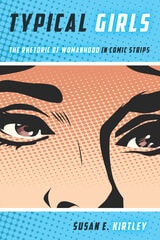
Typical Girls
The Rhetoric of Womanhood in Comic StripsSusan E. Kirtley
The Ohio State University Press, 2021
In the years following 1975, a group of female-created comic strips came to national attention in a traditionally male-dominated medium. Typical Girls: The Rhetoric of Womanhood in Comic Strips uncovers the understudied and developing history of these strips, defining and exploring the ramifications of this expression of women’s roles at a time of great change in history and in comic art. This impressive, engaging, and timely study illustrates how these comics express the complexities of women’s experiences, especially as such experiences were shaped by shifting and often competing notions of womanhood and feminism. Including the comics of Lynn Johnston (For Better or For Worse), Cathy Guisewite (Cathy), Nicole Hollander (Sylvia), Lynda Barry (Ernie Pook’s Comeek), Barbara Brandon-Croft (Where I’m Coming From), Alison Bechdel (Dykes to Watch Out For), and Jan Eliot (Stone Soup), Typical Girls is an important history of the representation of womanhood and women’s rights in popular comic strips.

Typologies of Humor in African Literatures
Adwoa A. Opoku-Agyemang
University of Michigan Press, 2024
The book analyzes four comedic archetypes: the Trickster, who is unapologetically amoral and entertaining; the Mimic, whose everyday dealings exude ambiguity; the Interpreter, who demonstrates the comic potential of language differences while showing how a single message can mean contrasting things; and the Deviant, who throws norms into question all the while reinforcing them. These character types and the humor they produce present a constant pursuit of balance between contrasting worldviews and frames of reference within the imbrication of different languages, classes, political factions, genders, and (un)officialdoms. The product of these rowdy relations are people who take the weirdness and run with it to generate diegetic and intradiegetic laughs. By analyzing Francophone and Anglophone African writing and how it overlays local languages, Opoku-Agyemang contributes a uniquely African voice to the primarily Western-dominated field of humor studies.

Typophoto
New Typography and the Reinvention of Photographybrier
University of Minnesota Press, 2025
Unveiling the avant-garde fusion of photography and modern graphic design
The concept Typophoto, the synthesis of photography and typography, was coined by renowned Bauhaus artist and theorist László Moholy-Nagy and played a foundational role in the modernist graphic design movement known as the New Typography. Jessica D. Brier examines how Typophoto was embraced by early graphic designers—a group who ultimately reinvented photography as a tool of modern consumerism.
Typophoto embodied designers’ belief in photography as an efficient form of visual communication, merging the material and the visual by abstracting both typographic and photographic form and transmuting photography into graphic material through the halftone process. Uniquely situating 1920s advertising discourse alongside avant-garde theory and significant interwar photographic concepts, Brier positions Typophoto as an analytical framework for considering how photography—as process, image, material, and metaphor—was effectively reconceived through the professionalization of graphic design in Europe and the United States. This was particularly true in Germany, where the capitalist ethos driving the country’s economic recovery bolstered the belief that graphics could create ideal reader-consumers.
Tracing Typophoto from its inception through New Typography’s experiments with the medium, Brier demonstrates how photography was used as a tool for manipulating perception as it became a visual language of modern life.