Results by title
22279 books match the query 'Social Science' and 4007 start with t
The Library of Ancient Wisdom
Mesopotamia and the Making of the Modern WorldSelena Wisnom
University of Chicago Press, 2025
A tour of an ancient library transports us to Mesopotamia, introducing us to its people, their ideas, and their humanity.
The library of Ashurbanipal, Assyria’s last great king, held an astonishing collection at the forefront of knowledge in its day, from ancient traditions in religion and literature to the latest developments in magic and medicine. When the Assyrian empire fell, the library burned to the ground, and its contents, clay tablets inscribed with cuneiform writing, lay buried for thousands of years until a team of Victorian archaeologists discovered the remnants in modern-day Iraq. The clay had baked and hardened; the very fire that consumed the library had helped its texts to survive for millennia.
In The Library of Ancient Wisdom, scholar Selena Wisnom, one of only a few hundred experts able to read cuneiform script today, guides us inside this important collection and, through its contents, brings ancient Mesopotamia and its people to life. Introducing us to Ashurbanipal and his family, scribes, astrologers, physicians, and more, Wisnom explores the library’s tablets and the details they divulge about how these ancient people thought about the world. Like us, they had concerns about job security, jealous rivalries, and profound friendships, and questions about the meaning of life. Wisnom ushers us into a world where magic was commonplace, where the gods spoke to you in dreams, and where the secrets of the universe were revealed through puns—taking us to the heart of what it means to be human.
Offering a close look at a major historical landmark as well as a readable account of the world’s earliest civilizations, The Library of Ancient Wisdom lays bare the ideas, hopes, fears, and desires that survive on humble clay.
The Licit Life of Capitalism
US Oil in Equatorial GuineaHannah Appel
Duke University Press, 2019
The Lies of the Land
Seeing Rural America for What It Is—and Isn’tSteven Conn
University of Chicago Press, 2023
It seems everyone has an opinion about rural America. Is it gripped in a tragic decline? Or is it on the cusp of a glorious revival? Is it the key to understanding America today? Steven Conn argues that we’re missing the real question: Is rural America even a thing? No, says Conn, who believes we see only what we want to see in the lands beyond the suburbs—fantasies about moral (or backward) communities, simpler (or repressive) living, and what it means to be authentically (or wrongheadedly) American. If we want to build a better future, Conn argues, we must accept that these visions don’t exist and never did.
In The Lies of the Land, Conn shows that rural America—so often characterized as in crisis or in danger of being left behind—has actually been at the center of modern American history, shaped by the same forces as everywhere else in the country: militarization, industrialization, corporatization, and suburbanization. Examining each of these forces in turn, Conn invites us to dispense with the lies and half-truths we’ve believed about rural America and to pursue better solutions to the very real challenges shared all across our nation.
The Life Course Reader
Individuals and Societies across TimeEdited by Walter R. Heinz, Ansgar Weymann, and Johannes Huinik
Campus Verlag, 2009
The course of human lives in Western society is inescapably shaped by political, cultural, and economic factors. Changes in these spheres inevitably lead to changes in our conceptions of everything from childhood and adulthood to family structures and living arrangements. The nineteen articles collected in The Life Course Reader offer a range of both theoretical and empirical studies of changing conceptions of the life course. Drawing on data from North America and Europe, the Reader will be indispensable for anyone studying human development and the twenty-first century family.
The Life Worth Living
Disability, Pain, and MoralityJoel Michael Reynolds
University of Minnesota Press, 2022
A philosophical challenge to the ableist conflation of disability and pain
More than 2,000 years ago, Aristotle said: “let there be a law that no deformed child shall live.” This idea is alive and well today. During the past century, Supreme Court Justice Oliver Wendell Holmes Jr. argued that the United States can forcibly sterilize intellectually disabled women and philosopher Peter Singer argued for the right of parents to euthanize certain cognitively disabled infants. The Life Worth Living explores how and why such arguments persist by investigating the exclusion of and discrimination against disabled people across the history of Western moral philosophy.
Joel Michael Reynolds argues that this history demonstrates a fundamental mischaracterization of the meaning of disability, thanks to the conflation of lived experiences of disability with those of pain and suffering. Building on decades of activism and scholarship in the field, Reynolds shows how longstanding views of disability are misguided and unjust, and he lays out a vision of what an anti-ableist moral future requires.
The Life Worth Living is the first sustained examination of disability through the lens of the history of moral philosophy and phenomenology, and it demonstrates how lived experiences of disability demand a far richer account of human flourishing, embodiment, community, and politics in philosophical inquiry and beyond.
Accessibility features: Retail e-book files for this title are screen-reader friendly with images accompanied by short alt text and/or extended descriptions.
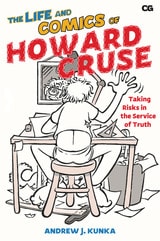
The Life and Comics of Howard Cruse
Taking Risks in the Service of TruthAndrew J. Kunka
Rutgers University Press, 2022
The Life and Comics of Howard Cruse tells the remarkable story of how a self-described “preacher’s kid” from Birmingham, Alabama, became the so-called “Godfather of Gay Comics.” This study showcases a remarkable fifty-year career that included working in the 1970s underground comics scene, becoming founding editor of the groundbreaking anthology series Gay Comix, and publishing the graphic novel Stuck Rubber Baby, partially based on his own experience of coming of age in the Civil Rights era.
Through his exploration of Cruse’s life and work, Andrew J. Kunka also chronicles the dramatic ways that gay culture changed over the course of Cruse’s lifetime, from Cold War-era homophobia to the gay liberation movement to the AIDS crisis to the legalization of gay marriage. Highlighting Cruse’s skills as a trenchant satirist and social commentator, Kunka explores how he cast a queer look at American politics, mainstream comics culture, and the gay community’s own norms.
Lavishly illustrated with a broad selection of comics from Cruse’s career, this study serves as a perfect introduction to this pioneering cartoonist, as well as an insightful read for fans who already love how his work sketched a new vision of gay life.
The Life and Death of Gus Reed
A Story of Race and Justice in Illinois during the Civil War and ReconstructionThomas Bahde
Ohio University Press, 2014
Gus Reed was a freed slave who traveled north as Sherman’s March was sweeping through Georgia in 1864. His journey ended in Springfield, Illinois, a city undergoing fundamental changes as its white citizens struggled to understand the political, legal, and cultural consequences of emancipation and black citizenship. Reed became known as a petty thief, appearing time and again in the records of the state’s courts and prisons. In late 1877, he burglarized the home of a well-known Springfield attorney—and brother of Abraham Lincoln’s former law partner—a crime for which he was convicted and sentenced to the Illinois State Penitentiary.
Reed died at the penitentiary in 1878, shackled to the door of his cell for days with a gag strapped in his mouth. An investigation established that two guards were responsible for the prisoner’s death, but neither they nor the prison warden suffered any penalty. The guards were dismissed, the investigation was closed, and Reed was forgotten.
Gus Reed’s story connects the political and legal cultures of white supremacy, black migration and black communities, the Midwest’s experience with the Civil War and Reconstruction, and the resurgence of nationwide opposition to African American civil rights in the late nineteenth century. These experiences shaped a nation with deep and unresolved misgivings about race, as well as distinctive and conflicting ideas about justice and how to achieve it.
The Life and Death of Texas German
Eileen Boris, ed.
Duke University Press, 0
By comparing and contrasting present-day data with data from the German dialects brought to Texas since the 1840s, the volume offers an in-depth analysis of mutual interaction between the German-speaking community and English-speaking Texans, long-term accommodation of Texas German speakers in this new community, and language hybridization on the Texas frontier. The volume also analyzes a number of phonological, syntactic, and morphological changes in Texas German over the past century and examines sociolinguistic aspects of the Texas German community from its foundation to today, providing insight into the dynamics underlying new-dialect formation, diglossia, language shift, language maintenance, and language death. Finally, the volume investigates the rapid disappearance of languages, which has global social and cultural implications for areas beyond linguistics.
The Life and Thought of Hans Jonas
Jewish DimensionsChristian Wiese
University Press of New England, 2010
The Life and Times of Grandfather Alonso
Culture and History in the Upper AmazonMuratorio, Blanca
Rutgers University Press, 1991
In Blanca Muratorio's book, we are introduced to Rucuyaya Alonso, an elderly Quichua Indian of the Upper Ecuadorean Amazon. Alonso is a hunter, but like most Quichuas, he has done other work as well, bearing loads, panning gold, tapping rubber trees, and working for Shell Oil. He tells of his work, his hunting, his marriage, his fights, his fears, and his dreams. His story covers about a century because he incorporates the oral tradition of his father and grandfather along with his own memories. Through his life story, we learn about the social and economic life of that region.
Chapters of Alonso's life history and oral tradition alternate with chapters detailing the history of the world around him--the domination of missionaries, the white settlers' expropriation of land, the debt system workers were subjected to, the rubber boom, the world-wide crisis of the 1930s, and the booms and busts of the international oil market. Muratorio explains the larger social, economic, and ideological bases of white domination over native peoples in Amazonia. She shows how through everyday actions and thoughts, the Quichua Indians resisted attacks against their social identity, their ethnic dignity, and their symbolic systems. They were far from submissive, as they have often been portrayed.
The Life and Times of Louis Lomax
The Art of Deliberate DisunityThomas Aiello
Duke University Press, 2021
The Life and Times of T. H. Gallaudet
Edna Edith Sayers
University Press of New England, 2017
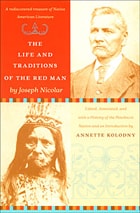
The Life and Traditions of the Red Man
A rediscovered treasure of Native American literatureJoseph Nicolar
Duke University Press, 2007
The Life and Traditions of the Red Man has not been widely available until now, largely because Nicolar passed away just a few months after the printing of the book was completed, and shortly afterwards most of the few hundred copies that had been printed were lost in a fire. This new edition has been prepared with the assistance of Nicolar’s descendants and members of the Penobscot Nation. It includes a summary history of the tribe; an introduction that illuminates the book’s narrative strategies, the aims of its author, and its key themes; and annotations providing historical context and explaining unfamiliar words and phrases. The book also contains a preface by Nicolar’s grandson, Charles Norman Shay, and an afterword by Bonnie D. Newsom, former Director of the Penobscot Nation’s Department of Cultural and Historic Preservation. The Life and Traditions of the Red Man is a remarkable narrative of Native American culture, spirituality, and literary daring.
The Life and Work of Francis Willey Kelsey
Archaeology, Antiquity, and the ArtsJohn Griffiths Pedley
University of Michigan Press, 2011
President of the Archaeological Institute of America, professor at the University of Michigan from 1889 to 1927, and president of the American Philological Association, Francis Kelsey was crucially involved in the founding or growth of major educational institutions. He came to maturity in a period of great technological change in communications, transportation, and manufacturing. Kelsey took full advantage of such innovations in his ceaseless drive to promote education for all, to further the expansion of knowledge, and to champion the benefits of the study of antiquity.
A vigorous traveler around the United States, Europe, and the Mediterranean, Kelsey strongly believed in the value of personally viewing sites ancient and modern and collecting artifacts that could be used by the new museums and universities that were springing up in the United States. This collecting habit put him in touch with major financiers of the day, including Charles Freer, Andrew Carnegie, and J. P. Morgan, as he sought their help for important projects.
Drawing heavily on Kelsey's daily diaries now held at the University of Michigan's Bentley Historical Library, John Griffiths Pedley gives us a biography that records the wide-ranging activities of a gifted and energetic scholar whose achievements mirrored the creative and contributive innovations of his contemporary Americans.
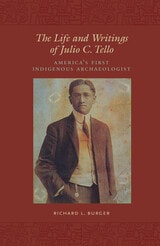
The Life and Writings of Julio C. Tello
America's First Indigenous ArchaeologistRichard L. Burger
University of Iowa Press, 2009
Tello’s vision remains unique, and his work has taken on additional interest as contemporary scholars have turned their attention to the relationship among nationalism, ethnicity, and archaeology. Unfortunately, many of his most important works were published in small journals or newspapers in Peru and have not been available even to those with a reading knowledge of Spanish. This volume thus makes available for the first time a broad sampling of Tello’s writings as well as complementary essays that relate these writings to his life and contributions.
Essays about Tello set the stage for the subsequent translations. Editor Richard Burger assesses his intellectual legacy, Richard Daggett outlines his remarkable life and career, and John Murra places him in both national and international contexts. Tello’s writings focus on such major discoveries as the Paracas mummies, the trepanation of skulls from Huarochirí, Andean iconography and cosmology, the relation between archaeology and nationhood, archaeological policy and preservation, and the role of science and museums in archaeology. Finally, the bibliography gives the most complete and accurate listing of Tello’s work ever compiled.
With its abundance of coups, wars, political dramas, class struggle, racial discrimination, looters, skulls, mummies, landslides, earthquakes, accusations, and counteraccusations, The Life and Writings of Julio C. Tello will become an indispensable reference for Andeanists.
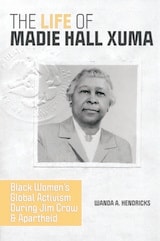
The Life of Madie Hall Xuma
Black Women's Global Activism during Jim Crow and ApartheidWanda A. Hendricks
University of Illinois Press, 2022
The Life of Our Language
Kaqchikel Maya Maintenance, Shift, and RevitalizationBy Susan Garzon, R. McKenna Brown, Julia Becker Richards, and Wuqu’ Ajpub’
University of Texas Press, 1998
The native Maya peoples of Mexico, Guatemala, Honduras, and Belize have been remarkably successful in maintaining their cultural identity during centuries of contact with and domination by outside groups. Yet change is occurring in all Mayan communities as contact with Spanish-speaking Ladino society increases. This book explores change and continuity in one of the most vital areas of Mayan culture—language use.
The authors look specifically at Kaqchikel, one of the most commonly spoken Mayan languages. Following an examination of language contact situations among indigenous groups in the Americas, the authors proceed to a historical overview of the use of Kaqchikel in the Guatemalan Highlands. They then present case studies of three highland communities in which the balance is shifting between Kaqchikel and Spanish. Wuqu' Ajpub', a native Kaqchikel speaker, gives a personal account of growing up negotiating between the two languages and the different world views they encode. The authors conclude with a look at the Mayan language revitalization movement and offer a scenario in which Kaqchikel and other Mayan languages can continue to thrive.
The Life of Selina Campbell
A Fellow Soldier in the Cause of RestorationLoretta M. Long Hunnicutt
University of Alabama Press, 2001
This first biography of Selina Campbell opens a window onto the experience of women in one of the most dynamic religious groups of 19th-century America
Loretta M. Long examines the life and influence of Selina Campbell, one of the most visible women in the 19th-century Disciples of Christ movement. Best known as the wife of Alexander Campbell, founder of the Disciples, Selina Campbell both shaped and exemplified the role of women in this dynamic religious group (also known as the Stone-Campbell movement). Her story demonstrates the importance of faith in the lives of many women during this era and adds a new dimension to the concept of the “separate spheres” of men and women, which women like Campbell interpreted in the context of their religious beliefs.
A household manager, mother, writer, and friend, Campbell held sway primarily in the domestic sphere, but she was not held captive by it. Her relationship with her husband was founded on a deep sense of partnership conditioned by their strong faith in an all-powerful God. Each of them took on complementary roles according to the perceived natural abilities of their genders: Alexander depended on Selina to manage his property and raise the children while he traveled the country preaching. Campbell outlived her husband by 30 years, and during that time published several newspaper articles and supported new causes, such as women in missions.
In the end, as Long amply demonstrates, Selina Campbell was neither her husband’s shadow nor solely a domestic worker. She was, in her husband’s eyes, a full partner and a “fellow soldier” in the cause of Restoration.
The Life-Giving Stone
Ethnoarchaeology of Maya MetatesMichael T. Searcy
University of Arizona Press, 2011
Although many archaeologists have regarded these artifacts simply as common everyday tools and therefore unremarkable, Searcy’s methodology reveals how, for the ancient Maya, the manufacture and use of grinding stones significantly impacted their physical and economic welfare. In tracing the life cycle of these tools from production to discard for the modern Maya, Searcy discovers rich customs and traditions that indicate how metates and manos have continued to sustain life—not just literally, in terms of food, but also in terms of culture. His research is based on two years of fieldwork among three Mayan groups, in which he documented behaviors associated with these tools during their procurement, production, acquisition, use, discard, and re-use.
Searcy’s investigation documents traditional practices that are rapidly being lost or dramatically modified. In few instances will it be possible in the future to observe metates and manos as central elements in household provisioning or follow their path from hand-manufacture to market distribution and to intergenerational transmission. In this careful inquiry into the cultural significance of a simple tool, Searcy’s ethnographic observations are guided both by an interest in how grinding stone traditions have persisted and how they are changing today, and by the goal of enhancing the archaeological interpretation of these stones, which were so fundamental to pre-Hispanic agriculturalists with corn-based cuisines.
The Light of the Home
An Intimate View of the Lives of Women in Victorian AmericaHarvey Green
University of Arkansas Press, 2003
The Lightning Stick
Arrows, Wounds, And Indian LegendsH. Henrietta Stockel
University of Nevada Press, 1995
More than simply a history of the bow and arrow, The Lightening Stick brings together a broad range of significant people and events, spiritual usages, medicinal treatments, and an unusual array of subject matter related to the weapon itself. Henrietta Stockel conveys a host of information derived from primary documents and provides readers with a fascinating book. Her descriptive storytelling—serious, humorous, and even gory at times—takes the reader from modern uses of bows and arrows (including a previously little-known incident in the atomic city of Los Alamos, New Mexico) to an early era of western history, before guns changed the frontier forever.
The Limits of Market Organization
Richard R. Nelson
Russell Sage Foundation, 2005
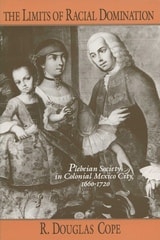
The Limits of Racial Domination
Plebeian Society in Colonial Mexico City, 1660–1720R. Douglas Cope
University of Wisconsin Press, 1994
In this distinguished contribution to Latin American colonial history, Douglas Cope draws upon a wide variety of sources—including Inquisition and court cases, notarial records and parish registers—to challenge the traditional view of castas (members of the caste system created by Spanish overlords) as rootless, alienated, and dominated by a desire to improve their racial status. On the contrary, the castas, Cope shows, were neither passive nor ruled by feelings of racial inferiority; indeed, they often modified or even rejected elite racial ideology. Castas also sought ways to manipulate their social "superiors" through astute use of the legal system. Cope shows that social control by the Spaniards rested less on institutions than on patron-client networks linking individual patricians and plebeians, which enabled the elite class to co-opt the more successful castas.
The book concludes with the most thorough account yet published of the Mexico City riot of 1692. This account illuminates both the shortcomings and strengths of the patron-client system. Spurred by a corn shortage and subsequent famine, a plebeian mob laid waste much of the central city. Cope demonstrates that the political situation was not substantially altered, however; the patronage system continued to control employment and plebeians were largely left to bargain and adapt, as before.
A revealing look at the economic lives of the urban poor in the colonial era, The Limits of Racial Domination examines a period in which critical social changes were occurring. The book should interest historians and ethnohistorians alike.
The Limits to Union
Same-Sex Marriage and the Politics of Civil RightsJonathan Goldberg-Hiller
University of Michigan Press, 2004
"The Limits to Union is a superb book about the complexities of recent political struggles over same-sex marriage. Goldberg-Hiller offers a sophisticated account of egalitarian rights advocacy and the reaction it has generated from established majorities animated by a 'new common sense' of exclusionary sovereign authority. The author's analysis is multidimensional and nuanced, but the core argument is bold, important, and well-supported. I recommend it very highly to everyone interested in understanding the character, possibilities, and constraints of civil rights amid our contemporary culture wars."
-Michael McCann, author of Rights at Work: Pay Equity Reform and the Politics of Legal Mobilization
"In this excellent book, Goldberg-Hiller uses Hawaii's experience to examine the interaction between courts and the political system. . . . Relying on briefs, legislative statements, and interviews with activists from both sides of the question, he views this familiar debate . . . through the unfamiliar prism of gay marriage, which allows him to gauge the viability and the pliability of the American civil rights ideal, and how gay and lesbian issues fit (or don't fit) within that ideal."
-Willian Heinzen, New York Law Journal
"Goldberg-Hiller presents the history of the same-sex marriage question since it first sparked debate in Hawaii. He follows the shifting debate through court cases, state propositions, and state and federal legislatures, considering questions about the constitutionality of the Defense of Marriage Act and the concept of equal protection under the law for gays and lesbians. This detailed treatment of the legal issues surrounding same-sex marriages is highly recommended."
-R. L. Abbott, University of Evansville
"[A] valuable contribution to the field, situating the gay marriage debate in broader contexts of theory, law and practice. [S]ame-sex marriage is an important issue...that finds itself caught in the friction points of much larger debates over the nature of rights, the limits of sovereignty and the proper role of courts and law in a democratic society. The Limits to Union should therefore be of interest even to those who do not think of themselves as interested in gay and lesbian rights issues."
-Evan Gerstmann, Loyola Marymount University, Law and Politics Book Review

The Limits to Union
Same-Sex Marriage and the Politics of Civil RightsJonathan Goldberg-Hiller
University of Michigan Press, 2002
"The Limits to Union is a superb book about the complexities of recent political struggles over same-sex marriage. Goldberg-Hiller offers a sophisticated account of egalitarian rights advocacy and the reaction it has generated from established majorities animated by a 'new common sense' of exclusionary sovereign authority. The author's analysis is multidimensional and nuanced, but the core argument is bold, important, and well-supported. I recommend it very highly to everyone interested in understanding the character, possibilities, and constraints of civil rights amid our contemporary culture wars."
-Michael McCann, author of Rights at Work: Pay Equity Reform and the Politics of Legal Mobilization
"In this excellent book, Goldberg-Hiller uses Hawaii's experience to examine the interaction between courts and the political system. . . . Relying on briefs, legislative statements, and interviews with activists from both sides of the question, he views this familiar debate . . . through the unfamiliar prism of gay marriage, which allows him to gauge the viability and the pliability of the American civil rights ideal, and how gay and lesbian issues fit (or don't fit) within that ideal."
-Willian Heinzen, New York Law Journal
"Goldberg-Hiller presents the history of the same-sex marriage question since it first sparked debate in Hawaii. He follows the shifting debate through court cases, state propositions, and state and federal legislatures, considering questions about the constitutionality of the Defense of Marriage Act and the concept of equal protection under the law for gays and lesbians. This detailed treatment of the legal issues surrounding same-sex marriages is highly recommended."
-R. L. Abbott, University of Evansville
"[A] valuable contribution to the field, situating the gay marriage debate in broader contexts of theory, law and practice. [S]ame-sex marriage is an important issue...that finds itself caught in the friction points of much larger debates over the nature of rights, the limits of sovereignty and the proper role of courts and law in a democratic society. The Limits to Union should therefore be of interest even to those who do not think of themselves as interested in gay and lesbian rights issues."
-Evan Gerstmann, Loyola Marymount University, Law and Politics Book Review
The Lindbergh Case
A Story of Two LivesFisher, Jim
Rutgers University Press, 1987
The Linguistic Turn in Contemporary Japanese Literary Studies
Politics, Language, TextualityEdited and with an Introduction by Michael K. Bourdaghs
University of Michigan Press, 2010
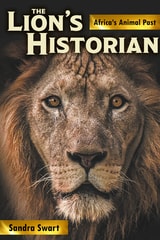
The Lion's Historian
Africa's Animal PastSandra Swart
Ohio University Press, 2025
“Until the lion has a historian of his own, the tale of the hunt will always glorify the hunter.” Sandra Swart takes up the challenge of that African proverb and, with this book, becomes the lion’s historian. As a species, humans are not alone; but our history has been written as though we were. Swart insists on a multispecies retelling of our more-than-human past as she reconstructs a shifting series of significant interspecies relationships, from quirky, idiosyncratic connections to others that triggered major changes. Embracing a radical interdisciplinarity informed by a background in history and environmental studies, Swart combines the natural sciences with the social sciences, oral history, indigenous knowledge, and archival research. She blends current thinking about animal sentience, agency, cognition, and emotion to offer a new way to understand animals’ role in our shared history. The animals in this book—baboons, cows, elephants, hippos, horses, jackals, lions, Nazi cattle, okapi, police dogs, quagga, sheep, and white ants—exemplify different facets of our shared past. With this animal-centric lens, decades of research are brought together in a collection that takes animals seriously. It is a book with claws and fangs, tearing through conventional narratives to ask, Are we prepared to move beyond the convention that “history” is the story of only our own species? The entanglements between humans and other animals have shaped our past, but they suggest something more. The possibility of our shared future pivots on a reckoning with our shared pasts. Swart shows what human-animal history can do, not only to understand our place in the world better but to make our world—however slightly—a better place.
The Literary Voices of Winnifred Eaton
Redefining Ethnicity and AuthenticityCole, Jean Lee
Rutgers University Press, 2002
Eaton attempted to disguise her Chinese heritage by writing under a hypothetically Japanese pen name. In legal documents, she usually claimed a "white" racial identity. In her fiction, Eaton portrayed Japanese, Chinese, Irish, and American characters, relying on the accepted stereotypes of the day. Jean Lee Cole shows that the many voices Eaton adopted show her deep preoccupations with "American" identity as a whole. The author attempts to reconcile all of these "voices," examining how Eaton survived in a climate hostile to minority writers in the early twentieth century, and how her seemingly anomalous works conjoin Asian American and American literary history.
The Lithic Industries of the Illinois Valley in the Early and Middle Woodland Period
Anta Montet-White
University of Michigan Press, 1968
The Little Community and Peasant Society and Culture
Robert Redfield
University of Chicago Press, 1989
The Little Database
A Poetics of Media FormatsDaniel Scott Snelson
University of Minnesota Press, 2025
A poetics for reading the everyday objects that populate a hard drive
Bespoke online archives like PennSound and Eclipse host an astounding array of “old media” artifacts, posing a handcrafted counterpoint to the immense databases aggregated by digital titans like Google and Facebook. In The Little Database, Daniel Scott Snelson argues for the significance of these comparatively “small” collections, exploring how digital archives dramatically transform the artifacts they host and how they might help us better understand our own private collections in turn.
Examining curated collections such as Textz, UbuWeb, and the Electronic Poetry Center, Snelson explores media-specific works by poets and artists, including William Carlos Williams, Tracie Morris, bill bissett, Nam June Paik, and Vicki Bennett. He develops creative tools and contingent methods for reading cultural data, whether found on the internet or in our own collections of TXT, JPG, MP3, and MOV artifacts, presenting case studies to show how these objects have come to find revised meaning in their digital contexts. Along the way, experimental poetic interludes give readers practical entry points into the creative practice of producing new meanings in any given little database.
Inventive and interdisciplinary, The Little Database grapples with the digitized afterlives of cultural objects, showing how the past is continually reconfigured to shape the present. It invites readers to find playful and personal means for unpacking their own data collections, in the process discovering idiosyncratic ways to explore and connect with digital archives.
Retail e-book files for this title are screen-reader friendly with images accompanied by short alt text and/or extended descriptions.
The Live-Action Animated Film
Kyle Meikle
Rutgers University Press, 2026
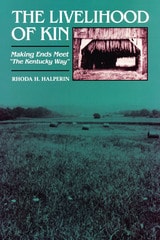
The Livelihood of Kin
Making Ends Meet "The Kentucky Way"By Rhoda H. Halperin
University of Texas Press, 1990
Rural Appalachians in Kentucky call it "The Kentucky Way"—making a living by doing many kinds of paid and unpaid work and sharing their resources within extended family networks. In fact, these strategies are practiced by rural people in many parts of the world, but they have not been studied extensively in the United States. In The Livelihood of Kin, Rhoda Halperin undertakes a detailed exploration of this complex, family-oriented economy, showing how it promotes economic well-being and a sense of identity for the people who follow it.
Using actual life and work histories, Halperin shows how people make a living "in between" the cash economy of the city and the agricultural subsistence economy of the country. In regionally based, three-generation kin networks, family members work individually and jointly at many tasks: small-scale agricultural production, food processing and storage, odd jobs, selling used and new goods in marketplaces, and wage labor, much of which is temporary. People can make ends meet even in the face of job layoffs and declining crop subsidies. With these strategies people win a considerable degree of autonomy and control over their lives.
Halperin also examines how such multiple livelihood strategies define individual identity by emphasizing a person’s role in the family network over an occupation. She reveals, through psychiatric case histories, what damage can result when individuals leave the family network for wage employment in the cities, as increasing urbanization has forced many people to do.
While certainly of interest to scholars of Appalachian studies, this lively and readable study will also be important for economic anthropologists and urban and rural sociologists.
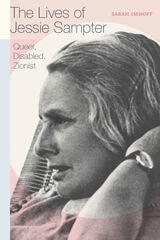
The Lives of Jessie Sampter
Queer, Disabled, ZionistSarah Imhoff
Duke University Press, 2022
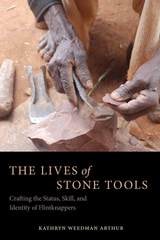
The Lives of Stone Tools
Crafting the Status, Skill, and Identity of FlintknappersKathryn Weedman Arthur
University of Arizona Press, 2018
Anthropologist Kathryn Weedman Arthur offers insights from her more than twenty years working with the Gamo. She deftly addresses historical and present-day experiences and practices, privileging the Gamo’s perspectives. Providing a rich, detailed look into the world of lithic technology, Arthur urges us to follow her into a world that recognizes Indigenous theories of material culture as valid alternatives to academic theories. In so doing, she subverts long-held Western perspectives concerning gender, skill, and lifeless status of inorganic matter.
The book offers the perspectives that, contrary to long-held Western views, stone tools are living beings with a life course, and lithic technology is a reproductive process that should ideally include both male and female participation. Only individuals of particular lineages knowledgeable in the lives of stones may work with stone technology. Knappers acquire skill and status through incremental guided instruction corresponding to their own phases of maturation. The tools’ lives parallel those of their knappers from birth (procurement), circumcision (knapping), maturation (use), seclusion (storage), and death (discardment).
Given current expectations that the Gamo’s lithic technology may disappear with the next generation, The Lives of Stone Tools is a work of vital importance and possibly one of the last contemporaneous books about a population that engages with the craft daily.
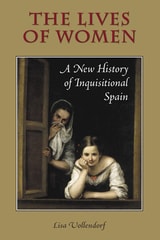
The Lives of Women
A New History of Inquisitional SpainLisa Vollendorf
Vanderbilt University Press, 2007
During this period, more women wrote for the public book market and participated in literary culture than ever before. In addition, the rise in convents and female education contributed to a marked increase in texts produced by and about women in religious orders. Vollendorf argues that, in conjunction with Inquisition and legal documents, this wealth of writing offers unprecedented access to women's perspectives on life in early modern Spain, and that those perspectives encompass diverse ethnic backgrounds and class differences. Many of the documents touch on issues of sex and intimacy; others provide new ways of understanding religious practice in the period. Perhaps most important, these writings give a richly textured view of how women reacted to the dominant culture's attempts to define, limit, and contain femininity. Vollendorf shows that the texts reflect a shared preoccupation with redefining gender and creating legitimate spaces for women.
As The Lives of Women vividly illustrates, hundreds, if not thousands, of women's stories await rediscovery in archives. The book provides a roadmap for understanding the experiences and concerns of wives, widows, sisters, and daughters who lived in a key moment in the development of the Spanish nation and the Hispanic world. At its core, The Lives of Women argues for a reconceptualization of history, one that will rely on the experiences of women and minorities as much as on the words and actions of kings and conquistadors.

The Lobster Gangs of Maine
James M. Acheson
University Press of New England, 1988
The Locavore’s Kitchen
A Cook’s Guide to Seasonal Eating and PreservingMarilou K. Suszko
Ohio University Press, 2011
More and more Americans are becoming dedicated locavores, people who prefer to eat locally grown or produced foods and who enjoy the distinctive flavors only a local harvest can deliver. The Locavore’s Kitchen invites readers to savor homegrown foods that come from the garden, the farm stand down the road, or local farmers’ markets through cooking and preserving the freshest ingredients.
In more than 150 recipes that highlight seasonal flavors, Marilou K. Suszko inspires cooks to keep local flavors in the kitchen year round. From asparagus in the spring to pumpkins in the fall, Suszko helps readers learn what to look for when buying seasonal homegrown or locally grown foods as well as how to store fresh foods, and which cooking methods bring out fresh flavors and colors. Suszko shares tips and techniques for extending seasonal flavors with detailed instructions on canning, freezing, and dehydrating and which methods work best for preserving texture and flavor.
The Locavore’s Kitchen is an invaluable reference for discovering the delicious world of fresh, local, and seasonal foods.

The Logic of Invention
Roy Wagner
HAU, 2018
Wagner explores what he calls “the reciprocity of perspectives” through a journey between Euro-American bodies of knowledge and his in-depth knowledge of Melanesian modes of thought. This logic grounds variants of the subject/object transformation, as Wagner works through examples such as the figure-ground reversal in Gestalt psychology, Lacan’s theory of the mirror-stage formation of the Ego, and even the self-recursive structure of the aphorism and the joke. Juxtaposing Wittgenstein’s and Leibniz’s philosophy with Melanesian social logic, Wagner explores the cosmological dimensions of the ways in which different societies develop models of self and the subject/object distinction. The result is a philosophical tour de force by one of anthropology’s greatest mavericks.
The Logic of Social Research
Arthur L. Stinchcombe
University of Chicago Press, 2005
The Logic of Social Research orients students to a set of logical problems that all methods must address to study social causation. Almost all sociological theory asserts that some social conditions produce other social conditions, but the theoretical links between causes and effects are not easily supported by observation. Observations cannot directly show causation, but they can reject or support causal theories with different degrees of credibility. As a result, sociologists have created four main types of methods that Stinchcombe terms quantitative, historical, ethnographic, and experimental to support their theories. Each method has value, and each has its uses for different research purposes.
Accessible and astute, The Logic of Social Research offers an image of what sociology is, what it's all about, and what the craft of the sociologist consists of.

The Logic of the Lure
John Paul Ricco
University of Chicago Press, 2002
The Lonely Letters
Ashon T. Crawley
Duke University Press, 2020
The Lonely Veteran's Guide to Companionship
Bronson Lemer
University of Wisconsin Press, 2025
Lemer’s distinct take on the veteran’s story boldly engages the intersection of military narratives and queer culture, including examinations into the role of thirst traps in contemporary dating culture, the fears of long-term health damage caused by military service, and the ways in which intimate relationships can lead to a loss of self. Taken together, his essays illustrate how one queer veteran managed to carve out a path that led him, however awkwardly at times, closer to the person he wanted to be.
The Long 2020
Richard Grusin
University of Minnesota Press, 2022
Sharply intelligent, often personal reflections on the global crises of 2020 that are still ongoing
By all accounts, 2020 was the longest year in recent memory, as people in the United States and across the globe careened from one unfolding catastrophe to another. The consequences of this devastating year are sure to impact the planet for decades, if not centuries, to come. This collection considers the question of that long 2020 from the perspective of the lived experience of the year, its long and deep roots in various human and nonhuman pasts, and the transformation of our sense of the future.
The Long 2020 assembles a strikingly interdisciplinary group of scholars and thinkers to address how the many crises of 2020—epidemiological, political, ecological, and social—have unfolded, examining both their origins as well as their ongoing effects. The contributors address questions of time, history, and scale as they have played out, and continue to play out; the relationship between home and environment, with a focus on architecture, breathing, and human–nonhuman relations; and the experience of cultural, political, and social life, deploying cultural and political theory to explore questions of race, gender and sexuality, and democracy.
The global pandemic has still not abated, reflecting the need to rethink our interrelatedness to viruses and other species. In bringing together this diverse group of authors, The Long 2020 offers a variety of perspectives on the impacts of that fraught year, the effects of which continue to permeate daily life.
Contributors: Stacy Alaimo, U of Oregon; Elisabeth Anker, George Washington U; Janelle Baker, Athabasca U, Alberta, Canada; Daniel A. Barber, U of Pennsylvania Weitzman School of Design; Adia Benton, Northwestern U; Levi R. Bryant, Collin College; Beatriz Colomina, Princeton U; William E. Connolly, Johns Hopkins U; Cary Gabriel Costello, U of Wisconsin–Milwaukee; Megan Craig, Stony Brook U; Wai Chee Dimock, Harvard U; Paulla Ebron, Stanford U; Nirmala Erevelles, U of Alabama; Roderick A. Ferguson, Yale U; Rosa E. Ficek, U of Puerto Rico at Cayey; Stefanie Fishel, U of the Sunshine Coast in Queensland; Jonathan Flatley, Wayne State U; Jennifer Gabrys, U of Cambridge; David Gissen, Parsons School of Design and the New School, New York; Dehlia Hannah, The Royal Danish Academy of Fine Arts; Karen Ho, U of Minnesota; Bonnie Honig, Brown U; Frédéric Keck, Laboratory of Social Anthropology (CNRS Paris); Eben Kirksey, Deakin Institute in Melbourne, Australia; Bernard C. Perley, U of British Columbia, Vancouver; Tom Rademacher; Renya Ramirez, U of California, Santa Cruz; Zoe Todd (Métis); Anna Tsing, U of California, Santa Cruz; Sarah E. Vaughn, U of California, Berkeley; Rebecca Wanzo, Washington U; McKenzie Wark, Eugene Lang College, New York City.
The Long Emancipation
Moving toward Black FreedomRinaldo Walcott
Duke University Press, 2021
The Long Journey of Gracia Mendes
Marianna D. Birnbaum
Central European University Press, 2003
The Long Life and Swift Death of Jewish Rechitsa
A Community in Belarus, 1625–2000Albert Kaganovitch
University of Wisconsin Press, 2013
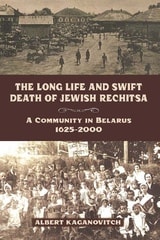
Based on extensive use of Soviet and Israeli archives, interviews, memoirs, and secondary sources, Kaganovitch’s acclaimed work, originally published in Russian, is presented here in a significantly revised English translation by the author. Details of demographic, social, economic, and cultural changes in Rechitsa’s evolution, presented over the sweep of centuries, reveal a microcosm of daily Jewish life in Rechitsa and similar communities. Kaganovitch looks closely at such critical developments as the spread of Chabad Hasidism, the impact of multiple political transformations and global changes, and the mass murder of Rechitsa’s remaining Jews by the German army in November to December 1941.
Kaganovitch also documents the evolving status of Jews in the postwar era, starting with the reconstitution of a Jewish community in Rechitsa not long after liberation in 1943 and continuing with economic, social, and political trends under Stalin, Khrushchev, and Brezhnev, and finally emigration from post-Soviet Belarus. The Long Life and Swift Death of Jewish Rechitsa is a major achievement.
Winner, Helen and Stan Vine Canadian Jewish Book Award for Scholarship, Koffler Centre of the Arts

The Long Road of Woman's Memory
Jane Addams
University of Illinois Press, 2001
These women, usually rather withdrawn from the community, seemed to spring to life in response to this apocryphal story--and to be inspired to tell stories of their own. The tales they shared with Addams in the wake of the Devil Baby were more personal and revealing than any they had previously told her: stories of abusive mates, lost or neglectful children, and endless, ill-paid menial labor endured on behalf of loved ones. In response to these sometimes wrenching conversations, Addams wrote The Long Road of Woman's Memory, an extended musing on the role of memory and myth in women's lives.
As Addams records the difficult recollections of these women she ponders the transformation of their experiences--so debilitating and full of anguish--into memories devoid of rancor and pain. She explores the catalytic function of cautionary tales in reviving older women's sense of agency. Through moving conversations with women who had lost sons on the battlefield, she emphasizes the importance of voicing a female perspective on war. The women's stories, graphically depicting the conditions in which they lived and labored and the purposefulness that sustained them, are gracefully woven together with Addams's insights on the functioning and purpose of memory.
Seen in the context of Addams's personal connection with these diverse women and their stories, her larger efforts to bring about equity and social justice appear all the more courageous and vital. Charlene Haddock Seigfried's new introduction sets Addams's observations in the context of pragmatist and feminist traditions.
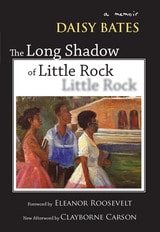
The Long Shadow of Little Rock
A MemoirDaisy Bates
University of Arkansas Press, 2007