Results by title
805 books match the query '18th century' and 209 start with t
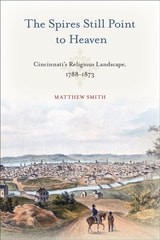
The Spires Still Point to Heaven
Cincinnati's Religious Landscape, 1788–1873Matthew Smith
Temple University Press, 2023
A case study about the formation of American pluralism and religious liberty, The Spires Still Point to Heaven explores why—and more importantly how—the early growth of Cincinnati influenced the changing face of the United States. Matthew Smith deftly chronicles the urban history of this thriving metropolis in the mid-nineteenth century. As Protestants and Catholics competed, building rival domestic missionary enterprises, increased religious reform and expression shaped the city. In addition, the different ethnic and religious beliefs informed debates on race, slavery, and immigration, as well as disease, temperance reform, and education.
Specifically, Smith explores the Ohio Valley’s religious landscape from 1788 through the nineteenth century, examining its appeal to evangelical preachers, abolitionists, social critics, and rabbis. He traces how Cincinnati became a battleground for newly energized social reforms following a cholera epidemic, and how grassroots political organizing was often tied to religious issues. He also illustrates the anti-immigrant sentiments and anti-Catholic nativism pervasive in this era.
The first monograph on Cincinnati’s religious landscape before the Civil War, The Spires Still Point to Heaven highlights Cincinnati’s unique circumstances and how they are key to understanding the cultural and religious development of the nation.
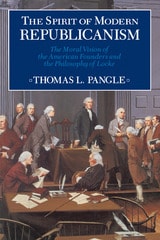
The Spirit of Modern Republicanism
The Moral Vision of the American Founders and the Philosophy of LockeThomas L. Pangle
University of Chicago Press, 1988
"A work of extraordinary ambition, written with great intensity. . . . [Pangle offers] a trenchant analysis of Locke's writings, designed to demonstrate their remarkable originality and to clarify by doing so as much as the objective predicament as the conscious intentions of the Founding Fathers themselves."—John Dunn, Times Higher Education Supplement
"A forcefully argued study of the Founding Fathers' debt to Locke. . . . What distinguishes Pangle's study from the dozens of books which have challenged or elaborated upon the republican revision is the sharpness with which he exposes the errors of the revisionists while at the same time leaving something of substantive value for the reader to consider."—Joyce Appleby, Canadian Journal of History
"Breathtaking in its daring and novelty. . . . Pangle's book is tense and tenacious, a stunning meditation on America's political culture."—John Patrick Diggins, Transactions of the C. S. Peirce Society
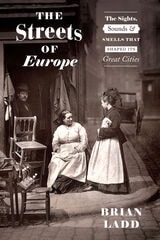
The Streets of Europe
The Sights, Sounds, and Smells That Shaped Its Great CitiesBrian Ladd
University of Chicago Press, 2020
Merchants’ shouts, jostling strangers, aromas of fresh fish and flowers, plodding horses, and friendly chatter long filled the narrow, crowded streets of the European city. As they developed over many centuries, these spaces of commerce, communion, and commuting framed daily life. At its heyday in the 1800s, the European street was the place where social worlds connected and collided.
Brian Ladd recounts a rich social and cultural history of the European city street, tracing its transformation from a lively scene of trade and crowds into a thoroughfare for high-speed transportation. Looking closely at four major cities—London, Paris, Berlin, and Vienna—Ladd uncovers both the joys and the struggles of a past world. The story takes us up to the twentieth century, when the life of the street was transformed as wealthier citizens withdrew from the crowds to seek refuge in suburbs and automobiles. As demographics and technologies changed, so did the structure of cities and the design of streets, significantly shifting our relationships to them. In today’s world of high-speed transportation and impersonal marketplaces, Ladd leads us to consider how we might draw on our history to once again build streets that encourage us to linger.
By unearthing the vivid descriptions recorded by amused and outraged contemporaries, Ladd reveals the changing nature of city life, showing why streets matter and how they can contribute to public life.
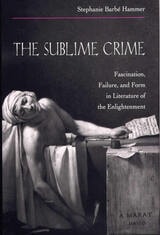
The Sublime Crime
Fascination, Failure, and Form in Literature of the EnlightenmentStephanie Barbe Hammer
Southern Illinois University Press, 1993
In this hermeneutic analysis of seven literary texts, Stephanie Barbé Hammer studies the roles of criminal protagonists in the dramas of George Lillo (The London Merchant) and Friedrich Schiller (The Robbers) and in the narratives of Abbé de Prévost (Manon Lescaut), Henry Fielding (Jonathan Wild), Marquis de Sade (Justine), William Godwin (Caleb Williams), and Heinrich von Kleist (Michael Kohlhaas).
Hammer reflects the current interest in cultural critique by utilizing the social theories of Michel Foucault and the feminist approaches of Hélène Cixous and Eve Sedgwick to redefine the Enlightenment as a movement of thought rather than as a strictly defined period synonymous with the eighteenth century. In addition, through the examination of the works of three post–World War II authors (Jean Genet, Anthony Burgess, and Peter Handke), Hammer suggests that the Enlightenment’s artistic representations of criminality are unparalleled by subsequent modern literature.
Hammer explains that the seven works she focuses on have been dismissed as failures by readers who have misunderstood the texts’ aesthetic elements. While claiming that the form of these works breaks down under the pressure of their criminal protagonists, she asserts that this formal failure actually contributes to the success of the works as art. The works "fail" because, like the criminal characters themselves, they break laws. The criminal protagonist effectively sabotages the official story that the text seeks to tell by deflecting the plot, style, and formal requirements in question, subverting its message—be it moral, sentimental, or libertine— through a kind of structural undermining, forcing the text beyond its own formal boundaries. For example, Hammer maintains that the presence of the criminal figure, Millwood, in Lillo’s bourgeois tragedy actually makes the play covertly antibourgeois.
Hammer insists that the criminal’s subversive presence in these seven works inaugurates new insight, and her analysis thereby challenges late twentieth-century readers to continue the investigation that the works themselves have begun.
This book will prove indispensable to scholars of comparative literature, especially eighteenth-century specialists, as well as to all individuals interested in cultural critique.
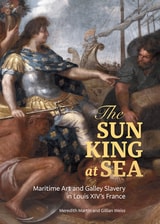
The Sun King at Sea
Maritime Art and Galley Slavery in Louis XIV's FranceMeredith Martin
J. Paul Getty Trust, The, 2022
Winner of the 2023 Leo Gershoy Award
2023 Winner of The David H. Pinkney Prize
Honorable Mention for The Mediterranean Seminar Best Book Prize 2023
Winner of the 2022 Kenshur Prize
Shortlisted for Apollo Magazine's 2022 Book of the Year
This richly illustrated volume, the first devoted to maritime art and galley slavery in early modern France, shows how royal propagandists used the image and labor of enslaved Muslims to glorify Louis XIV.
Mediterranean maritime art and the forced labor on which it depended were fundamental to the politics and propaganda of France’s King Louis XIV (r. 1643–1715). Yet most studies of French art in this period focus on Paris and Versailles, overlooking the presence or portrayal of galley slaves on the kingdom’s coasts. By examining a wide range of artistic productions—ship design, artillery sculpture, medals, paintings, and prints—Meredith Martin and Gillian Weiss uncover a vital aspect of royal representation and unsettle a standard picture of art and power in early modern France.
With an abundant selection of startling images, many never before published, The Sun King at Sea emphasizes the role of esclaves turcs (enslaved Turks)—rowers who were captured or purchased from Islamic lands—in building and decorating ships and other art objects that circulated on land and by sea to glorify the Crown. Challenging the notion that human bondage vanished from continental France, this cross-disciplinary volume invites a reassessment of servitude as a visible condition, mode of representation, and symbol of sovereignty during Louis XIV’s reign.

The Surprising Effects of Sympathy
Marivaux, Diderot, Rousseau, and Mary ShelleyDavid Marshall
University of Chicago Press, 1988
Placing novels in the context of eighteenth-century writing about theater, fiction, and painting, Marshall argues that an unusual variety of authors and texts were concerned with the possibility of entering into someone else's thoughts and feelings. He shows how key eighteenth-century works reflect on the problem of how to move, touch, and secure the sympathy of readers and beholders in the realm of both "art" and "life." Marshall discusses the demands placed upon novels to achieve certain effects, the ambivalence of writers and readers about those effects, and the ways in which these texts can be read as philosophical meditations on the differences and analogies between the experiences of reading a novel, watching a play, beholding a painting, and witnessing the spectacle of someone suffering. The Surprising Effects of Sympathy traces the interaction of sympathy and theater and the artistic and philosophical problems that these terms represent in dialogues about aesthetics, moral philosophy, epistemology, psychology, autobiography, the novel, and society.
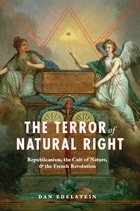
The Terror of Natural Right
Republicanism, the Cult of Nature, and the French RevolutionDan Edelstein
University of Chicago Press, 2009
Natural right—the idea that there is a collection of laws and rights based not on custom or belief but that are “natural” in origin—is typically associated with liberal politics and freedom. In The Terror of Natural Right, Dan Edelstein argues that the revolutionaries used the natural right concept of the “enemy of the human race”—an individual who has transgressed the laws of nature and must be executed without judicial formalities—to authorize three-quarters of the deaths during the Terror. Edelstein further contends that the Jacobins shared a political philosophy that he calls “natural republicanism,” which assumed that the natural state of society was a republic and that natural right provided its only acceptable laws. Ultimately, he proves that what we call the Terror was in fact only one facet of the republican theory that prevailed from Louis’s trial until the fall of Robespierre.
A highly original work of historical analysis, political theory, literary criticism, and intellectual history, The Terror of Natural Right challenges prevailing assumptions of the Terror to offer a new perspective on the Revolutionary period.
The Theological Basis of Liberal Modernity in Montesquieu's "Spirit of the Laws"
Thomas L. Pangle
University of Chicago Press, 2010
The Spirit of the Laws—Montesquieu’s huge, complex, and enormously influential work—is considered one of the central texts of the Enlightenment, laying the foundation for the liberally democratic political regimes that were to embody its values. In his penetrating analysis, Thomas L. Pangle brilliantly argues that the inherently theological project of Enlightenment liberalism is made more clearly—and more consequentially— in Spirit than in any other work.
In a probing and careful reading, Pangle shows how Montesquieu believed that rationalism, through the influence of liberal institutions and the spread of commercial culture, would secularize human affairs. At the same time, Pangle uncovers Montesquieu’s views about the origins of humanity’s religious impulse and his confidence that political and economic security would make people less likely to sacrifice worldly well-being for otherworldly hopes. With the interest in the theological aspects of political theory and practice showing no signs of diminishing, this book is a timely and insightful contribution to one of the key achievements of Enlightenment thought.
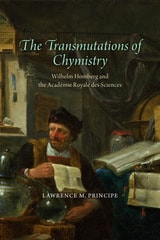
The Transmutations of Chymistry
Wilhelm Homberg and the Académie Royale des SciencesLawrence M. Principe
University of Chicago Press, 2020
Principe, the leading authority on the subject, recounts how Homberg’s radical vision promoted chymistry as the most powerful and reliable means of understanding the natural world. Homberg’s work at the Académie and in collaboration with the future regent, Philippe II d’Orléans, as revealed by a wealth of newly uncovered documents, provides surprising new insights into the broader changes chymistry underwent during, and immediately after, Homberg. A human, disciplinary, and institutional biography, The Transmutations of Chymistry significantly revises what was previously known about the contours of chymistry and scientific institutions in the early eighteenth century.
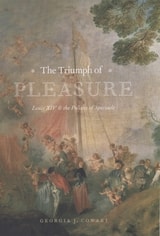
The Triumph of Pleasure
Louis XIV and the Politics of SpectacleGeorgia J. Cowart
University of Chicago Press, 2008
With bold revisionist strokes, Cowart traces this strain of artistic dissent through the comedy-ballets of Jean-Baptiste Lully and Molière, the late operatic works of Lully and the operas of his sons, the opera-ballets of André Campra and his contemporaries, and the related imagery of Antoine Watteau’s well-known painting The Pilgrimage to Cythera. She contends that through a variety of means, including the parody of old-fashioned court entertainments, these works reclaimed traditional allegories for new ideological aims, setting the tone for the Enlightenment. Exploring these arts from the perspective of spectacle as it emerged from the court into the Parisian public sphere, Cowart ultimately situates the ballet and related genres as the missing link between an imagery of propaganda and an imagery of political protest.
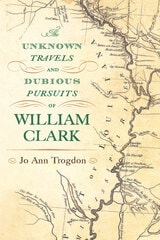
The Unknown Travels and Dubious Pursuits of William Clark
Jo Ann Trogdon
University of Missouri Press, 2023
In this vivid history, Jo Ann Trogdon reveals William Clark’s highly questionable activities during the years before his famous journey west of the Mississippi. Delving into the details of Clark’s diary and ledger entries, Trogdon investigates evidence linking Clark to a series of plots—often called the Spanish Conspiracy—in which corrupt officials sought to line their pockets with Spanish money and to separate Kentucky from the United States. The Unknown Travels and Dubious Pursuits of William Clark gives readers a more complex portrait of the American icon than has been previously written.
The Unvarnished Doctrine
Locke, Liberalism, and the American RevolutionSteven M. Dworetz
Duke University Press, 1990
The Unwritten Enlightenment
Literature between Ideology and the UnconsciousNathan Gorelick
Northwestern University Press, 2024
Nathan Gorelick’s The Unwritten Enlightenment: Literature between Ideology and the Unconscious traces the relations between literary criticism and psychoanalysis to their shared origins in the Enlightenment era’s novels and novelistic discourse, where the period’s efforts to invent new notions of subjectivity and individualism are most apparent. Gorelick shows how modern concepts of literature and the unconscious were generated in response to these efforts and by an ethical concern for what the language of the Enlightenment excludes, represses, or struggles to erase. Troubling the idea of the Enlightenment on its own terms, subverting its supposed authority from within, Gorelick thus reveals the workings of unconscious fantasy at the foundations of our contemporary political realities. The Unwritten Enlightenment makes clear that to criticize the Enlightenment’s deficiencies, ambiguities, and legacies of violence without regard for the unconscious fantasies that drive them risks reproducing the very patterns of thought, action, and imagination that the Enlightenment novel already unsettles.
The Utility of Splendor
Ceremony, Social Life, and Architecture at the Court of Bavaria, 1600-1800Samuel John Klingensmith
University of Chicago Press, 1993
Drawing on a broad range of sources, including building documents, correspondence, diaries, and court regulations, Klingensmith investigates the intricacies of Bavarian court practice and shows that Versailles was only one among several influences on German palace planning. Klingensmith offers a cogent, detailed understanding of the relations between architectural spaces and the ceremonial, social, and private life that both required and used them. Handsomely illustrated with photographs and plans, The Utility of Splendor will appeal to anyone interested in how life was lived among the nobility during the last centuries of the old regime.
Samuel John Klingensmith (1949-1986) was assistant professor of art history at Tulane University.
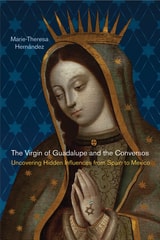
The Virgin of Guadalupe and the Conversos
Uncovering Hidden Influences from Spain to MexicoHernández, Marie-Theresa
Rutgers University Press, 2014
The terms converso and judaizante are often used for descendants of Spanish Jews (the Sephardi, or Sefarditas as they are sometimes called), who converted under duress to Christianity in the fourteenth and fifteenth centuries. There are few, if any, archival documents that prove the existence of judaizantes after the Spanish expulsion of the Jews in 1492 and the Portuguese expulsion in 1497, as it is unlikely that a secret Jew in sixteenth-century Spain would have documented his allegiance to the Law of Moses, thereby providing evidence for the Inquisition.
On a Da Vinci Code – style quest, Hernández persisted in hunting for a trove of forgotten manuscripts at the New York Public Library. These documents, once unearthed, describe the Jewish/Christian religious beliefs of an early nineteenth-century Catholic priest in Mexico City, focusing on the relationship between the Virgin of Guadalupe and Judaism. With this discovery in hand, the author traces the cult of Guadalupe backwards to its fourteenth-century Spanish origins. The trail from that point forward can then be followed to its interface with early modern conversos and their descendants at the highest levels of the Church and the monarchy in Spain and Colonial Mexico. She describes key players who were somehow immune to the dangers of the Inquisition and who were allowed the freedom to display, albeit in a camouflaged manner, vestiges of their family's Jewish identity.
By exploring the narratives produced by these individuals, Hernández reveals the existence of those conversos and judaizantes who did not return to the “covenantal bond of rabbinic law,” who did not publicly identify themselves as Jews, and who continued to exhibit in their influential writings a covert allegiance and longing for a Jewish past. This is a spellbinding and controversial story that offers a fresh perspective on the origins and history of conversos.
The Virginal Mother in German Culture
From Sophie von La Roche and Goethe to MetropolisLauren Nossett
Northwestern University Press, 2019
Examining the virginal mother in the first novel by a German woman (Sophie von La Roche), canonical texts by Goethe, nineteenth-century popular fiction, autobiographical works, and Thea von Harbou’s novel Metropolis and Fritz Lang’s film by the same name, this book highlights the virginal mother at pivotal moments in German history and cultural development: the entrance of women into the literary market, the Goethezeit, the foundation of the German Empire, and the volatile Weimar Republic. The Virginal Mother in German Culture will be of interest to students and scholars of German literature, history, cultural and social studies, and women’s studies.
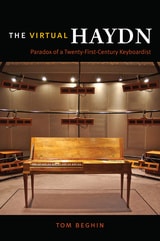
The Virtual Haydn
Paradox of a Twenty-First-Century KeyboardistTom Beghin
University of Chicago Press, 2015
With The Virtual Haydn, Tom Beghin—himself a professional keyboard player—delves deeply into eighteenth-century history and musicology to help us hear a properly complex Haydn. Unusually for a scholarly work, the book is presented in the first person, as Beghin takes us on what is clearly a very personal journey into the past. When a discussion of a group of Viennese sonatas, for example, leads him into an analysis of the contemporary interest in physiognomy, Beghin applies what he learns about the role of facial expressions during his own performance of the music. Elsewhere, he analyzes gesture and gender, changes in keyboard technology, and the role of amateurs in eighteenth-century musical culture.
The resulting book is itself a fascinating, bravura performance, one that partakes of eighteenth-century idiosyncrasy while drawing on a panoply of twenty-first-century knowledge.
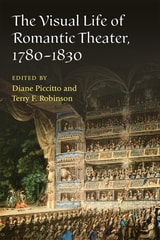
The Visual Life of Romantic Theater, 1780-1830
Edited by Diane Piccitto and Terry F. Robinson
University of Michigan Press, 2023
The Visual Life of Romantic Theater examines the dynamism and vibrancy of stage spectacle and its impact in an era of momentous social upheaval and aesthetic change. Situating theatrical production as key to understanding visuality ca. 1780-1830, this book places the stage front and center in Romantic scholarship—a field in a period long defined by its focus on poetry—by reenvisioning traditional approaches to artistic and social production. How, it asks, did dramaturgy and stagecraft influence aesthetic and sociopolitical concerns? How does a focus on visuality expand our understanding of the historical experience of theatergoing? In what ways did stage performance converge with visual culture beyond the theater? How did extra-theatrical genres engage with theatrical sight and spectacle? Finally, how does a focus on dramatic vision change the way we conceive of Romanticism itself? The volume’s essays by emerging and established scholars provide exciting and suggestive answers to these questions, along with a more capacious conception of Romantic theater as a locus of visual culture that reached well beyond playhouse walls.
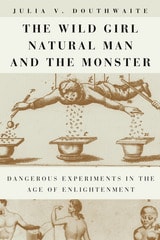
The Wild Girl, Natural Man, and the Monster
Dangerous Experiments in the Age of EnlightenmentJulia V. Douthwaite
University of Chicago Press, 2002
A variety of educational experiments failed to tame these feral children by the standards of the day. After telling their stories, Douthwaite turns to literature that reflects on similar experiments to perfect human subjects. Her examples range from utopian schemes for progressive childrearing to philosophical tales of animated statues, from revolutionary theories of regenerated men to Gothic tales of scientists run amok. Encompassing thinkers such as Rousseau, Sade, Defoe, and Mary Shelley, Douthwaite shows how the Enlightenment conceived of mankind as an infinitely malleable entity, first with optimism, then with apprehension. Exposing the darker side of eighteenth-century thought, she demonstrates how advances in science gave rise to troubling ethical concerns, as parents, scientists, and politicians tried to perfect mankind with disastrous results.
The Word Unheard
Legacies of Anti-Semitism in German Literature and CultureMartha B. Helfer
Northwestern University Press, 2011
The publication of Martha B. Helfer’s The Word Unheard: Legacies of Anti-Semitism in German Literature and Culture marks a stunningly original new direction in the interpretation of canonical works of eighteenth- and nineteenth-century German literature.
Between 1749 and 1850—the formative years of the so-called Jewish Question in Germany—the emancipation debates over granting full civil and political rights to Jews provided the topical background against which all representations of Jewish characters and concerns in literary texts were read. Helfer focuses sharply on these debates and demonstrates through close readings of works by Gotthold Lessing, Friedrich Schiller, Achim von Arnim, Annette von Droste- Hülshoff, Adalbert Stifter, and Franz Grillparzer how disciplinary practices within the field of German studies have led to systematic blind spots in the scholarship on anti-Semitism to date.
While all the authors discussed are well known and justly celebrated, the particular works addressed represent an effective mix of enduring classics and less recognized, indeed often scandalously overlooked, texts whose consideration leads to a reevaluation of the author’s more mainstream oeuvre. Although some of the works and authors chosen have previously been noted for their anti-Semitic proclivities, the majority have not, and some have even been marked by German scholarship as philo-Semitic—a view that The Word Unheard undertakes not so much to refute as to complicate, and in the process to question not only these texts but also the deafness of the German scholarly tradition. With implications that reach into many disciplines, The Word Unheard will be a foundational study for all scholars of modern Germany.
The Wordsworth Circle, volume 52 number 4 (Autumn 2021)
The University of Chicago Press
University of Chicago Press Journals, 2021
The Wordsworth Circle, volume 53 number 1 (Winter 2022)
The University of Chicago Press
University of Chicago Press Journals, 2022
The Wordsworth Circle, volume 53 number 2 (Spring 2022)
The University of Chicago Press
University of Chicago Press Journals, 2022
The Wordsworth Circle, volume 53 number 3 (Summer 2022)
The University of Chicago Press
University of Chicago Press Journals, 2022
The Wordsworth Circle, volume 53 number 4 (Autumn 2022)
The University of Chicago Press
University of Chicago Press Journals, 2022
The Wordsworth Circle, volume 54 number 1 (Winter 2023)
The University of Chicago Press
University of Chicago Press Journals, 2023
The Wordsworth Circle, volume 54 number 3 (Summer 2023)
The University of Chicago Press
University of Chicago Press Journals, 2023
The Wordsworth Circle, volume 54 number 4 (Autumn 2023)
The University of Chicago Press
University of Chicago Press Journals, 2023
The Wordsworth Circle, volume 55 number 1 (Winter 2024)
The University of Chicago Press
University of Chicago Press Journals, 2024
The Wordsworth Circle, volume 55 number 2 (Spring 2024)
The University of Chicago Press
University of Chicago Press Journals, 2024
The Wordsworth Circle, volume 55 number 3 (Summer 2024)
The University of Chicago Press
University of Chicago Press Journals, 2024
The Wordsworth Circle, volume 55 number 4 (Autumn 2024)
The University of Chicago Press
University of Chicago Press Journals, 2024
The Wordsworth Circle, volume 56 number 1 (Winter 2025)
The University of Chicago Press
University of Chicago Press Journals, 2025
The Wordsworth Circle, volume 56 number 2 (Spring 2025)
The University of Chicago Press
University of Chicago Press Journals, 2025
The Wordsworth Circle, volume 56 number 3 (Summer 2025)
The University of Chicago Press
University of Chicago Press Journals, 2025
The Wordsworth Circle, volume 56 number 4 (Autumn 2025)
The University of Chicago Press
University of Chicago Press Journals, 2025
The Wordsworth Circle, volume 57 number 1 (Winter 2026)
The University of Chicago Press
University of Chicago Press Journals, 2026
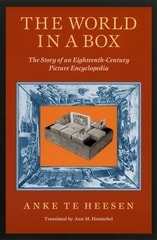
The World in a Box
The Story of an Eighteenth-Century Picture EncyclopediaAnke te Heesen
University of Chicago Press, 2002
As Anke te Heesen demonstrates, Stoy and his world in a box epitomized the Enlightenment concern with the creation and maintenance of an appropriate moral, intellectual, and social order. The box, and its images from nature, myth, and biblical history, were intended to teach children how to collect, store, and order knowledge. te Heesen compares the Academy with other aspects of Enlightenment material culture, such as commercial warehouses and natural history cabinets, to show how the kinds of collecting and ordering practices taught by the Academy shaped both the developing middle class in Germany and Enlightenment thought. The World in a Box, illustrated with a multitude of images of and from Stoy's Academy, offers a glimpse into a time when it was believed that knowledge could be contained and controlled.
The World of Elizabeth Inchbald
Essays on Literature, Culture, and Theatre in the Long Eighteenth CenturyDaniel J. Ennis
University of Delaware Press, 2022
The Writing Life of Hugh Kelly
Politics, Journalism, and Theatre in Late-Eighteenth-Century LondonRobert R. Bataille
Southern Illinois University Press, 2000
Robert R. Bataille demonstrates convincingly that between 1767 and 1777, Anglo-Irish writer Hugh Kelly made major contributions in three areas of British culture: politics, journalism, and theater. Bataille shows how all three activities were integrated in Kelly’s life, suggesting that such interrelationships often existed in the rough and ready London culture during the early reign of King George III.
When he discovered several newspaper campaigns that Kelly orchestrated as a paid political propagandist for George III and his ministers, Bataille understood in part how important Kelly was to his era. In his capacity as propagandist, Kelly defended Hanoverian colonial policies on the eve of the American Revolution, served as a key opponent of the radical Wilkites, and promoted the acceptance of the 1774 Quebec Bill, which established, among other things, the right of the recently defeated French citizens of Quebec to maintain the French language.
A belletristic journalist, Kelly published theater reviews and essays that played a major role in shaping the taste of his era. He wrote in defense of the controversial sentimental drama, and whenever he could, he promoted the major theatrical figure of the age, David Garrick. Under his editorship, the newspaper Public Ledger became a leading source of theater information. Seeking to raise the status of the profession of journalism, he wrote essays and articles that provided his middle-class readers with an insider’s view of the operations of the journalist.
Assessing Kelly’s contributions to the novel and drama, Bataille argues that this powerful journalist stands in the vanguard in the larger struggle against traditional attitudes supporting male superiority and aristocratic privilege. Kelly wrote in favor of gender equality and middle-class respectability, striving to inculcate what modern scholars refer to as the values of sensibility. Bataille also argues, however, that Kelly knew his audience. Instrumental in the rise of professional writing and popular culture, he understood that he had to observe the needs of his audience, detecting cultural trends and using the skills of the rhetorician.
Theater Enough
American Culture and the Metaphor of the World Stage, 1607–1789Jeffrey H. Richards
Duke University Press, 1991
The rhetoric, or discourse, of early American theater emerged out of the figures of speech that permeated the colonists’ lives and literary productions. Jeffrey H. Richards examines a variety of texts—histories, diaries, letters, journals, poems, sermons, political tracts, trial transcripts, orations, and plays—and looks at the writings of such authors as John Winthrop and Mercy Otis Warren. Richards places the American usage of theatrum mundi—the world depicted as a stage—in the context of classical and Renaissance traditions, but shows how the trope functions in American rhetoric as a register for religious, political, and historical attitudes.
Theology and Literature in the Age of Johnson
Resisting SecularismMelvyn New
University of Delaware Press, 2012
Published by University of Delaware Press. Distributed worldwide by Rutgers University Press.

Theory as Practice
A Critical Anthology of Early German Romantic WritingsJochen Schulte-Sasse, Haynes Horne, Elizabeth Mittman, Lisa C. Roetzel, Andreas Michel, Assenka Oksiloff, and Mary R. Strand, EditorsTranslated by Jochen Schulte-Sasse
University of Minnesota Press, 1997
Theory as Practice was first published in 1997. Minnesota Archive Editions uses digital technology to make long-unavailable books once again accessible, and are published unaltered from the original University of Minnesota Press editions.
In light of recent, dramatic revisions in criticism of European-particularly German-Romanticism, this anthology brings together key texts of the movement, especially those written in the last quarter of the eighteenth century by a small, influential circle centered at Jena.
In their introductory essays, the editors locate writings by Fichte, Schelling, Novalis, August Wilhelm Schlegel, and Friedrich Schlegel, among others, in this context. The selections include extensive excerpts from the correspondence of the Jena Romantics, their commentaries on each other's work, their most pertinent essays, fragments, and dialogues as well as diary entries and reviews. These works, together with the editors' articulation and elaboration of their significance, provide a new perspective on the provenance of postmodern thought and literary theory.
Jochen Schulte-Sasse is professor of German and comparative literature at the University of Minnesota and coeditor (with Wlad Godzich) of the Theory and History of Literature series at the University of Minnesota Press. Haynes Horne (University of Alabama), Andreas Michel (Indiana University), Assenka Oksiloff (New York University), Elizabeth Mittman (Michigan State University), Lisa C. Roetzel (University of Rochester), and Mary R. Strand each received a Ph.D. from the University of Minnesota.
Things, Thoughts, Words, and Actions
The Problem of Language in Late Eighteenth-Century British Rhetorical TheoryH. Lewis Ulman
Southern Illinois University Press, 1994
H. Lewis Ulman here examines the roles of language theory in eighteenth-century British rhetorics, linking those roles to philosophical issues informing twentieth-century rhetorical theory. In doing so, Ulman develops a general model of the "problem of language" for rhetorical theory, a model that transcends the impasse between realism and skepticism that marks both eighteenth- and twentieth-century rhetorical theory.
The nature of language was never more central to rhetorical theory than in the second half of the eighteenth century. Yet, until now, the articulation of theories of language and the arts of rhetoric in eighteenth-century Britain has received little attention. Ulman examines the role of grammar and theories of language in the formation of eighteenth-century rhetorical theory, investigating the significance of language theory for such key concerns of eighteenth-century rhetoric as verbal criticism, style, and elocution. His study highlights what he understands as the central motive of late eighteenth-century British rhetoricians—to construct for their particular cultural context philosophically rigorous accounts of verbal communication based on carefully articulated theories of thought and language.
Toward this end, Ulman examines three eighteenth-century British rhetorical treatises: George Campbell’s Philosophy of Rhetoric, Hugh Blair’s Lectures on Rhetoric and Belles Lettres, and Thomas Sheridan’s Course of Lectures on Elocution. He then identifies the continuities and discontinuities between the problem of language for eighteenth- and twentieth-century rhetorical theory and proposes a pluralistic stance toward the problem of language in rhetoric as an alternative to the theoretical standoff that currently characterizes the debate between realist and antirealist rhetorics.
This Is Enlightenment
Edited by Clifford Siskin and William Warner
University of Chicago Press, 2010
Debates about the nature of the Enlightenment date to the eighteenth century, when Imanual Kant himself addressed the question, “What is Enlightenment?” The contributors to this ambitious book offer a paradigm-shifting answer to that now-famous query: Enlightenment is an event in the history of mediation. Enlightenment, they argue, needs to be engaged within the newly broad sense of mediation introduced here—not only oral, visual, written, and printed media, but everything that intervenes, enables, supplements, or is simply in between.
With essays addressing infrastructure and genres, associational practices and protocols, this volume establishes mediation as the condition of possibility for enlightenment. In so doing, it not only answers Kant’s query; it also poses its own broader question: how would foregrounding mediation change the kinds and areas of inquiry in our own epoch? This Is Enlightenment is a landmark volumewith the polemical force and archival depth to start a conversation that extends across the disciplines that the Enlightenment itself first configured.
Thomas Holcroft’s Revolutionary Drama
Reception and AfterlivesAmy Garnai
Bucknell University Press, 2023
Thrifty Science
Making the Most of Materials in the History of ExperimentSimon Werrett
University of Chicago Press, 2018
Thrifty Science explores this distinctive culture of experiment and demonstrates how the values of the household helped to shape an array of experimental inquiries, ranging from esoteric investigations of glowworms and sour beer to famous experiments such as Benjamin Franklin’s use of a kite to show lightning was electrical and Isaac Newton’s investigations of color using prisms. Tracing the diverse ways that men and women put their material possessions into the service of experiment, Werrett offers a history of practices of recycling and repurposing that are often assumed to be more recent in origin. This thriving domestic culture of inquiry was eclipsed by new forms of experimental culture in the nineteenth century, however, culminating in the resource-hungry science of the twentieth. Could thrifty science be making a comeback today, as scientists grapple with the need to make their research more environmentally sustainable?
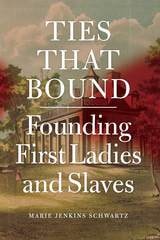
Ties That Bound
Founding First Ladies and SlavesMarie Jenkins Schwartz
University of Chicago Press, 2017
Unlike other histories that treat the stories of the First Ladies’ slaves as separate from the lives of their mistresses, Ties That Bound closely examines the relationships that developed between the First Ladies and their slaves. For elite women and their families, slaves were more than an agricultural workforce; slavery was an entire domestic way of life that reflected and reinforced their status. In many cases slaves were more constant companions to the white women of the household than were their husbands and sons, who often traveled or were at war. By looking closely at the complicated intimacy these women shared, Schwartz is able to reveal how they negotiated their roles, illuminating much about the lives of slaves themselves, as well as class, race, and gender in early America.
By detailing the prevalence and prominence of slaves in the daily lives of women who helped shape the country, Schwartz makes it clear that it is impossible to honestly tell the stories of these women while ignoring their slaves. She asks us to consider anew the embedded power of slavery in the very earliest conception of American politics, society, and everyday domestic routines.
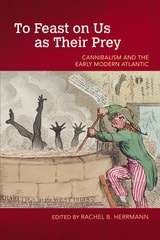
To Feast on Us as Their Prey
Cannibalism and the Early Modern AtlanticRachel B. Herrmann
University of Arkansas Press, 2019
Winner, 2020 Association for the Study of Food and Society Book Award, Edited Volume
Long before the founding of the Jamestown, Virginia, colony and its Starving Time of 1609–1610—one of the most famous cannibalism narratives in North American colonial history—cannibalism played an important role in shaping the human relationship to food, hunger, and moral outrage. Why did colonial invaders go out of their way to accuse women of cannibalism? What challenges did Spaniards face in trying to explain Eucharist rites to Native peoples? What roles did preconceived notions about non-Europeans play in inflating accounts of cannibalism in Christopher Columbus’s reports as they moved through Italian merchant circles?
Asking questions such as these and exploring what it meant to accuse someone of eating people as well as how cannibalism rumors facilitated slavery and the rise of empires, To Feast on Us as Their Prey posits that it is impossible to separate histories of cannibalism from the role food and hunger have played in the colonization efforts that shaped our modern world.
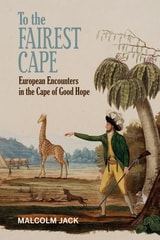
To the Fairest Cape
European Encounters in the Cape of Good HopeJack, Malcolm
Bucknell University Press, 2019
Published by Bucknell University Press. Distributed worldwide by Rutgers University Press.