Results by title
1229 books match the query 'Library & Information Science' and 234 start with t

The Neal-Schuman Guide to Recommended Children's Books and Media for Use with Every Elementary Subject
American Library Association, 2010
The Neal-Schuman Library Technology Companion
A Basic Guide for Library StaffJohn J. Burke
American Library Association, 2013
The Neal-Schuman Technology Management Handbook for School Library Media Centers
American Library Association, 2010
The New Information Professional
Your Guide to Careers in the Digital AgeKelly Kowatch
American Library Association, 2010
The New Instruction Librarian
A Workbook for Trainers and LearnersCandice Benjes-Small
American Library Association, 2016
The New Isearch, You Search, We All Learn to Research
A How-To-Do-It Manual for Teaching Research Using Web 2.0 Tools and Digital ResourcesAmerican Library Association, 2012
The Newbery and Caldecott Awards
A Guide to the Medal and Honor BooksAmerican Library Association, 2015
The Newbery and Caldecott Awards
A Guide to the Medal and Honor BooksAmerican Library Association, 2011
The Newbery and Caldecott Awards
A Guide to the Medal and Honor BooksAmerican Library Association, 2012
The Newbery and Caldecott Awards
A Guide to the Medal and Honor BooksAmerican Library Association, 2013
The Newbery and Caldecott Awards
A Guide to the Medal and Honor BooksAmerican Library Association, 2014
The No Shelf Required Guide to E-book Purchasing
Sue Polanka
American Library Association, 2011
The Official YALSA Awards Guidebook
American Library Association, 2008
The One-Shot Library Instruction Survival Guide
Heidi E. Buchanan
American Library Association, 2017
The One-Shot Library Instruction Survival Guide
Heidi E. Buchanan
American Library Association, 2021
When done well, one-shot library instruction allows you to build solid relationships with faculty while also making positive first impressions with students. Good pedagogy, collaboration with faculty, assessment, and reflection are all imminently possible in the one-shot. So is incorporating the big ideas of the ACRL Framework. This new edition of a trusted resource will guide you in active, student-centered one-shots that connect to courses’ learning outcomes. Demonstrated using vignettes that share teaching experiences drawn from librarians and instructors in the field, you’ll get succinct, hands-on advice on such topics as
- why threshold concepts are well suited to one-shot instruction;
- online instruction-specific engagement strategies and talking points;
- a one-shot version of curriculum mapping to help you prioritize;
- quick and easy activities to work into sessions;
- how to mix and match the three types of instruction best suited to one-shots;
- losing the list, ditching the script, and other strategies for student-centered teaching;
- common classroom management mishaps and what to do about them;
- talking points for the instruction interview;
- how and when to say no; and
- 5 ways to use assessment to improve your instructional style.
The Personal Librarian
Richard Moniz
American Library Association, 2022
The Power of Data
An Introduction to Using Local, State, and National Data to Support School Library ProgramsSandra D. Andrews
American Library Association, 2012
The Power of Play
Designing Early Learning SpacesDorothy Stoltz
American Library Association, 2015
The Practical Handbook of Library Architecture
Creating Building Spaces that WorkFred Schlipf
American Library Association, 2018
The Public Librarian's Guide to Answering Health Questions
Bobbi L. Newman and Carolyn Martin
American Library Association, 2026
It often starts with a patron’s simple question. Librarians play a central role in helping people navigate information, evaluate sources, and find answers they can trust. That includes health information, something many people come to the library looking for every day. Maybe they need more information about a diagnosis, a medication, or something they came across online. Perhaps they’re helping a family member with a medical issue or trying to better understand their own health. These are everyday interactions in libraries. And this book is about helping you approach them with confidence, clarity, and a strong sense of your role. You do not need a medical background to provide excellent health information service — just the right frameworks, tools, and reassurance to apply your core skills in a health context. No matter your comfort level or prior experience, you will
- understand why health information work is both practical and people-centered, requiring an approach that combines information skills with communication and care;
- gain an overview of health information and the role libraries play in supporting health literacy;
- learn about evaluating health information and identifying trustworthy, evidence-based sources;
- receive guidance on building and maintaining a relevant, reliable collection;
- walk through health reference interview scenarios, bolstered with strategies for effective and respectful interactions;
- discover reflection prompts to help you consider your own approach, your library’s practices, and the ways you can continue to build confidence over time;
- grasp the ethical and legal considerations related to health information work, such as privacy, boundaries, and professional responsibilities;
- find practical wisdom for sustaining yourself in this work and building practices that support your own long-term well-being; and
- get access to a companion website that provides checklists, tools, and additional resources you can use in your day-to-day work.
The Public Library Director's Toolkit
Kate Hall and Kathy Parker
American Library Association, 2019
New public library directors quickly learn what seasoned directors already know: running a library means you’ve always got your hands full—balancing the needs of staff, patrons, facilities, library boards, and other stakeholders with professional responsibilities like community interactions, legal and financial requirements, and whole lot else that wasn’t exactly in the job description. Whether you are considering becoming a public library director, are brand new to the role, or have settled in but find yourself thinking “there’s got to be a better way,” authors Hall and Parker are here to help. This book walks you through the core components of getting up to speed and then provides templates, sample documents, checklists, and other resources that will make your job easier. Gleaned from their own decades of experience in library leadership positions, in this toolkit they
- cover such key topics as employees, trustees, finances, legal issues, library policies, emergency planning, and technology;
- discuss strategic planning and share advice on keeping up with trends;
- offer nearly two dozen ready-to-use resources, including a Director’s Report Template, a Social Media Policy, an Employee Exit Questionnaire, a Library Cleaning Checklist, a Vision Statement worksheet, and more; and
- suggest additional learning opportunities in each chapter to help you continue your learning journey.
The Purpose-Based Library
Finding Your Path to Survival, Success, and GrowthJohn J. Huber
American Library Association, 2015
The Quality Infrastructure
Measuring, Analyzing, and Improving Library ServicesSarah Anne Murphy
American Library Association, 2013
The Quality Library
A Guide to Self-Improvement, Better Efficiency, and Happier CustomersSara Laughlin
American Library Association, 2008
The Readers' Advisory Guide to Genre Blends
Megan M. McArdle
American Library Association, 2014
The Readers' Advisory Guide to Genre Blends
Megan McArdle
American Library Association, 2022
The Readers' Advisory Guide to Genre Fiction
Neal Wyatt
American Library Association, 2018
Everyone’s favorite guide to fiction that’s thrilling, mysterious, suspenseful, thought-provoking, romantic, and just plain fun is back—and better than ever in this completely revamped and revised edition. A must for every readers’ advisory desk, this resource is also a useful tool for collection development librarians and students in LIS programs. Inside, RA experts Wyatt and Saricks
- cover genres such as Psychological Suspense, Horror, Science Fiction, Fantasy, Romance, Mystery, Literary and Historical Fiction, and introduce the concepts of Adrenaline and Relationship Fiction;
- include everything advisors need to get up to speed on a genre, including its appeal characteristics, key authors, sure bets, and trends;
- demonstrate how genres overlap and connect, plus suggestions for guiding readers among genres; and
- tie genre fiction to the whole collection, including nonfiction, audiobooks, graphic novels, film and TV, poetry, and games.
Both insightful and comprehensive, this matchless guidebook will help librarians become familiar with many different fiction genres, especially those they do not regularly read, and aid library staff in connecting readers to books they’re sure to love.
The Readers' Advisory Guide to Genre Fiction
Joyce G. Saricks
American Library Association, 2009
The Readers' Advisory Guide to Genre Fiction
Neal Wyatt
American Library Association, 2001
The Readers' Advisory Guide to Graphic Novels
Francisca Goldsmith
American Library Association, 2017
The first edition of this readers' advisory represented a pioneering effort to provide help and encouragement to librarians diving into this exciting format, and since then the popularity of graphic novels has continued apace. Goldsmith has updated her guide to encompass a bounty of new titles, authors, and styles, ensuring its continued usefulness as a tool for both RA and collection development. Suitable for newbies and hardcore fans alike, this book
- sketches in the history of graphic novels, tracing their evolution and showing what makes them unique;
- explores traditional and cutting edge titles most friendly to children, teens, and adults, reflecting the burgeoning and maturing publishing efforts made for each of these audiences;
- discusses common themes, topics, and the place of diversity in graphic novels;
- gives in-depth guidance on ways to connect readers to titles they'll be sure to love;
- offers ideas for media tie-ins, displays, programming, book clubs, and more;
- includes annotated bibliographies, with appeal characteristics noted, and multiple indexes to ensure that locating the right graphic novel is a snap; and
- provides detailed tips for keeping current and aware of new titles and trends.
Spotlighting this expanding body of intellectual, aesthetic, and engaging literature, Goldsmith's guide will entertain as well as inform.
The Readers' Advisory Guide to Historical Fiction
Jennifer S. Baker
American Library Association, 2014
The Readers' Advisory Guide to Horror
Becky Siegel Spratford
American Library Association, 2012
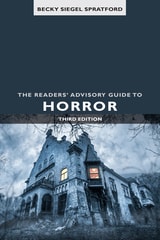
The Readers' Advisory Guide to Horror
Becky Siegel Spratford
American Library Association, 2021
Like the zombies, ghouls, and vampires which inhabit many of its books, the popularity of horror fiction is unstoppable. Even if you don’t happen to be a fan yourself, you won’t be “scared” to advise readers on finding their next great fright thanks to the astute guidance provided by horror expert Spratford in her updated guide. This definitive resource for library workers at any level of experience or familiarity with horror fiction
- details the state of the genre right now, including its appeal factors and key authors, assisting readers in getting up to speed quickly;
- presents ten annotated lists of suggested titles, all published since 2000, each with a short introduction providing historical context;
- delves into horror movies, TV shows, podcasts, and other formats; and
- offers abundant marketing advice, programming options, and pointers on additional resources.
The Readers' Advisory Guide to Mystery
John Charles
American Library Association, 2012
The Readers' Advisory Guide to Nonfiction
Neal Wyatt
American Library Association, 2007
The Readers' Advisory Guide to Street Literature
Vanessa Irvin Morris
American Library Association, 2011
The Readers' Advisory Guide to Teen Literature
Angela Carstensen
American Library Association, 2018
The Readers' Advisory Handbook
Jessica E. Moyer
American Library Association, 2010
The Reference Guide to Data Sources
Julia Bauder
American Library Association, 2014
The Rise of AI
Implications and Applications of Artificial Intelligence in Academic LibrariesSandy Hervieux
Assoc of College & Research Libraries, 2022
The Rise of AI collects projects, collaborations, and future uses from academic librarians who have begun to embrace AI in their work. In three parts—User Services, Collections and Discovery, and Toward Future Applications—it explores:
- machine translation
- creating incubation spaces
- robotics
- combining information literacy initiatives with AI literacy
- fostering partnerships with other on-campus groups
- integrating AI technology into collections to enhance discoverability
- using AI to refine metadata for images, articles, and theses
- machine learning
The Rise of AI introduces implications and applications of artificial intelligence in academic libraries and hopes to provoke conversations and inspire new ways of engaging with the technology. As the discussion surrounding ethics, bias, and privacy in AI continues to grow, librarians will be called to make informed decisions and position themselves as leaders in this discourse.
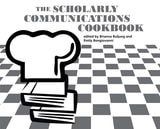
The Scholarly Communications Cookbook
Brianna Buljung
Assoc of College & Research Libraries, 2021
The Scholarly Communications Cookbook features 84 recipes that can help you establish programs, teach concepts, conduct outreach, and use scholarly communications technologies in your library. The book is divided into 4 thorough sections:
- Taking Your Program to the Next Level
- Open Educational Resources
- Publishing Models and Open Access
- Tools, Trends, and Best Practices for Modern Researchers
The Scholarly Workflow in the Digital Age
Steven Weiland
Against the Grain, LLC, 2021
As this Briefing explains, the workflow features planning and structure, and a recognizable sequence of activities. But so too is there room for imagination, improvisation, and serendipity. Science and scholarship are human activities and the workflow in all disciplines reflects both convention and innovation as scholars discover the extent and meanings of their professional interactions with technology. In the digital age the workflow is in a new stage of representing what scholars do to advance knowledge and their careers, at the same time it displays the durability of traditional research practices.

The Self As Subject
Autoethnographic Research IntoAnneMarie Deitering
Assoc of College & Research Libraries, 2017
The Six-Step Guide to Library Worker Engagement
Elaina Norlin
American Library Association, 2021
Gallup’s 2019 State of the American Workplace Report found that 70 percent of employees are disengaged at work. Why is worker engagement so important? Engaged workers lead to engaged libraries — vibrant institutions that nurture their workers’ dedication, creativity, and innovation so they can serve their communities most effectively. This guide walks library managers and administrators through concrete steps to change their organization’s culture so that it fosters worker engagement, using first-hand accounts from library staff to illustrate both successes and failures. Readers will discover
- why libraries often fall short at hiring good leadership and ways to develop better recruitment strategies moving forward;
- how lack of trust pushes workplace culture towards incivility, hostility, and lower morale, and what library leaders can do to rebuild it;
- methods for using recognition and praise as tools for sustaining a positive work environment;
- the rationale for eliminating annual performance reviews in favor of less formal one-on-one conversations and “just in time” continuous feedback;
- the secrets behind high performing teams, strategies to support dysfunctional teams, and tips on how to develop remote teamwork; and
- why viewing diversity, equity, and inclusion (DEI) as separate from workplace culture is counterproductive, since it is actually the positive result of a strong foundation, with advice on combating the factors that contribute to low retention rates of BIPOC librarians.
The Small And Rural Academic L Library
Leveraging ResourcesKaetrena Davis Kendrick
Assoc of College & Research Libraries, 2016
The Small to Mid-Size Academic Library
Collaborations and OutreachCamille Abdeljawad
Assoc of College & Research Libraries, 2024
—From the Foreword by Peter Felten and Joan D. Ruelle
Small to mid-size academic libraries often operate with reduced staffing, smaller budgets, and competing priorities. These limitations reduce the resources that can be allocated to programming and outreach efforts.
The Small to Midsize Academic Library: Collaborations and Outreach captures how academic library workers at these institutions are providing engagement and outreach opportunities for students by partnering with other entities across their campuses. In three parts, chapters provide easy-to-implement ideas and strategies for course, campus, and community outreach.
- Part 1: Collaborations
- Cross-Campus Initiatives
- External Collaborations
- Part 2: Academic Success Initiatives
- Writing and Composition
- Orientation and Programming
- Part 3: Evolving Roles of Libraries in Student Success
- Student Wellness
- Emerging Roles for Librarians
The Student's Survival Guide to Research
Monty L. McAdoo
American Library Association, 2015
The Subject Liaison's Survival Guide to Technical Services
Krista Schmidt
American Library Association, 2016
The Successful Library Trustee Handbook
Mary Y. Moore
American Library Association, 2010
The Sudden Selector's Guide to Anthropology Resources
Miriam Rigby and John Russell
American Library Association, 2022
Anthropology is arguably one of the most diverse fields in academe. It ranges in focus from archaeology to evolution and primate studies, to linguistics, and to observation of current cultural practices. Methodologically, it may include any combination of lab work, library and archival research, and fieldwork. The materials vary significantly, including visual records such as film and photography, sound recordings, ancient artifacts, dusty notebooks, digital records, and biological materials. In practice it is highly interdisciplinary, intersecting with biology, political science, geography, art history, literature, religion, sociology, history, and more. Collection development for any subject can be a challenging task; anthropology, with its many subfields, may exceed the typical challenge. Whether you are brand new to anthropology, or well-versed in many of its facets, Sudden Selector’s Guide to Anthropology is designed to provide you with an access point to the diverse realms of the field and the resources that will allow you to build and maintain strong collections to serve your community, no matter where their research interests lie.
The Sudden Selector’s series is designed to help library workers become acquainted with the tools, resources, individuals, and organizations that can assist in developing collections in new or unfamiliar subject areas. This guide is designed to facilitate collection development processes in two ways: it is a bibliography of resources and can be used as a mini-course in anthropology librarianship.