Results by title
1441 books match the query 'World' and 310 start with t
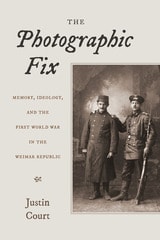
The Photographic Fix
Memory, Ideology, and the First World War in the Weimar RepublicJustin Court
University of Michigan Press, 2026

The Pillar of the World
“Antony and Cleopatra” in Shakespeare’s DevelopmentJulian Markels
The Ohio State University Press, 1900
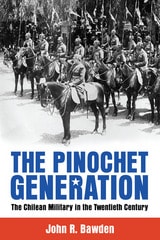
The Pinochet Generation
The Chilean Military in the Twentieth CenturyJohn R. Bawden
University of Alabama Press, 2016
Understanding the military generation that transformed modern Chile.
Chilean soldiers in the twentieth century appear in most historical accounts, if they appear at all, as decontextualized figures or simply as a single man: Augusto Pinochet. In his incisive study The Pinochet Generation: The Chilean Military in the Twentieth Century, John R. Bawden provides compelling new insights into the era and posits that Pinochet and his men were responsible for two major transformations in Chile’s constitution as well as the political and economic effects that followed.
Determined to refocus what he sees as a “decontextualized paucity” of historical information on Chile’s armed forces, Bawden offers a new perspective to explain why the military overthrew the government in 1973 as well as why and how Chile slowly transitioned back to a democracy at the end of the 1980s. Standing apart from other views, Bawden insists that the Chilean military’s indigenous traditions and customs did more than foreign influences to mold their beliefs and behavior leading up to the 1973 coup of Salvador Allende.
Drawing from defense publications, testimonial literature, and archival materials in both the United States and Chile, The Pinochet Generation characterizes the lens through which Chilean officers saw the world, their own actions, and their place in national history. This thorough analysis of the Chilean services’ history, education, values, and worldview shows how this military culture shaped Chilean thinking and behavior, shedding light on the distinctive qualities of Chile’s armed forces, the military’s decision to depose Allende, and the Pinochet dictatorship’s resilience, repressiveness, and durability.
Bawden’s account of Chile’s vast and complex military history of the twentieth century will appeal to political scientists, historians, faculty and graduate students interested in Latin America and its armed forces, students of US–Latin American diplomacy, and those interested in issues of human rights.

The Pliant Public
Ideology and Public Opinion in ChinaJason Y. Wu
University of Michigan Press, 2027
The Chinese Communist Party has long depended on ideology to set the agenda, communicate its priorities, and legitimize its rule. The Pliant Public argues that for Chinese citizens, however, ideology is in short supply. Surveys show that public opinion is depolarized. Ordinary people have little sense of what ideological labels like “left” and “right” mean, and most of the people who put themselves on the right have the scale backwards. Since a depolarized public is ill-equipped to check the state, China’s leaders can make massive changes to government policy without triggering much backlash.
But depolarization does not always strengthen the state. When citizens lack clear ideological commitments, it is easier for them to set aside their differences. If China’s leaders lost their performance legitimacy, then depolarization could facilitate a broader challenge to party rule.
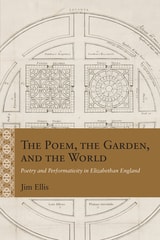
The Poem, the Garden, and the World
Poetry and Performativity in Elizabethan EnglandJim Ellis
Northwestern University Press, 2023
How an early modern understanding of place and movement are embedded in a performative theory of literature
How is a garden like a poem? Early modern writers frequently compared the two, and as Jim Ellis shows, the metaphor gained strength with the arrival of a spectacular new art form—the Renaissance pleasure garden—which immersed visitors in a political allegory to be read by their bodies’ movements. The Poem, the Garden, and the World traces the Renaissance-era relationship of place and movement from garden to poetry to a confluence of both. Starting with the Earl of Leicester’s pleasure garden for Queen Elizabeth’s 1575 progress visit, Ellis explores the political function of the entertainment landscape that plunged visitors into a fully realized golden world—a mythical new form to represent the nation. Next, he turns to one of that garden’s visitors: Philip Sidney, who would later contend that literature’s golden worlds work to move us as we move through them, reorienting readers toward a belief in English empire. This idea would later be illustrated by Edmund Spenser’s Faerie Queen; as with the pleasure garden, both characters and readers are refashioned as they traverse the poem’s dreamlike space. Exploring the artistic creations of three of the era’s major figures, Ellis argues for a performative understanding of literature, in which readers are transformed as they navigate poetic worlds.
The Point is to Change the World
Selected Writings of AndaiyeAlissa Andaiye
Pluto Press, 2020
Through essays, letters and journal entries, Andaiye's thinking on the intersections of gender, race, class and power are profoundly articulated, Caribbean histories emerge, and stories from a life lived at the barricades are revealed. We learn about the early years of the Working People's Alliance, the meaning and impact of the murder of Walter Rodney and the fall of the Grenada Revolution. Throughout, we bear witness to Andaiye's acute understanding of politics rooted in communities and the daily lives of so-called ordinary people.
Featuring forewords by Clem Seecharan and Robin DG Kelley, these texts will become vital tools in our own struggles to 'overturn the power relations which are embedded in every unequal facet of our lives'.
The Political Economy of Latin America in the Postwar Period
Edited by Laura Randall
University of Texas Press, 1998
The historic and increasing interdependence of the Latin American and U.S. economies makes an understanding of the political economies of Latin American nations particularly timely and important. After World War II, many nations initially implemented import substituting industrialization policies. Their outcomes, and the shift in policies, are related to the domestic policies and world economic conditions that led to government deficits, inflation, foreign borrowing, debt renegotiation, and renewed emphasis on common markets and other devices to stimulate trade and investment.
In The Political Economy of Latin America in the Postwar Period, important policy measures are evaluated, such as indexation of prices and contracts; special provisions for financing the government through the Central Bank; stabilization; and deregulation of the economy.
The introduction presents trends in Latin American growth and the factors that influence them. This is followed by parallel studies of the economic development of Argentina, Brazil, Chile, Cuba, Ecuador, Mexico, and Peru from 1945 to the mid-1990s. Noted experts bring their considerable experience to analyzing the content and impact of the economic theories that guided policymaking and their effects on output, income, and quality of life.
The Political Economy of the Brazilian State, 1889–1930
By Steven Topik
University of Texas Press, 1987
In this first overview of the Brazilian republican state based on extensive primary source material, Steven Topik demonstrates that well before the disruption of the export economy in 1929, the Brazilian state was one of the most interventionist in Latin America. This study counters the previous general belief that before 1930 Brazil was dominated by an export oligarchy comprised of European and North American capitalists and that only later did the state become prominent in the country’s economic development.
Topik examines the state’s performance during the First Republic (1889–1930) in four sectors—finance, the coffee trade, railroads, and industry. By looking at the controversies in these areas, he explains how domestic interclass and international struggles shaped policy and notes the degree to which the state acted relatively independently of civil society.
Topik’s primary concern is the actions of state officials and whether their decisions reflected the demands of the ruling class. He shows that conflicting interests of fractions of the ruling class and foreign investors gradually led to far greater state participation than any of the participants originally desired, and that the structure of the economy and of society—not the intentions of the actors—best explains the state’s economic presence.
The Political Evolution of the Mexican People
By Justo Sierra
University of Texas Press, 1969
Are the Mexican people the children of Moctezuma or the children of Cortés? This question, long the central problem of Mexican historians, Justo Sierra answered by saying, "The Mexicans are the sons of the two peoples, of the two races … to this we owe our soul."
Because Sierra recognized the dual parentage, he was able to view his country's history as an evolutionary process. Formed in both the indigenous past and the colonial past, the Mexican people, after three hundred years of slow and painful gestation, were finally born with the arrival of Independence. They came of age when the Reform, the Republic, and the nation achieved a single identity.
This classical synthesis, written on the eve of the Mexican Revolution, gave direction to the generation that furnished the Revolution's intellectual leaders. Although the author was Secretary of Public Instruction in the dictatorial regime of Porfirio Díaz, he was the first historian to show sympathy for the plight of the masses, and his book ends with the warning that political evolution has lost its way unless the result is freedom.
As Edmundo O'Gorman points out in an important essay on Mexican historiography, written especially for this edition, Sierra was also the first to write a history of his nation in a sincere endeavor to get at the truth, instead of shaping his account to prove a thesis or to preach some political faith. And yet, his work "owes its originality and its lasting merit to his vigorous interpretation of Mexico's history in the light of his convictions, of his keen insight, even of his fears." Though the chapters on the pre-Columbian Indian have been rendered obsolete by later archeological discoveries, the rest of the history is still valid and needs only to be brought up to date.
The Political Influence of Business in the European Union
Andreas Dür, David Marshall, and Patrick Bernhagen
University of Michigan Press, 2019
The Politics of Decolonial Investigations
Walter D. Mignolo
Duke University Press, 2021
The Politics of Fantasy
Magic, Children's Literature, and Fandom in Putin's RussiaEliot Borenstein
University of Wisconsin Press, 2025
With crisp, engaging prose, Eliot Borenstein leaps from Harry Potter into an exploration of the culture wars and moral panics sparked in Russia by Western-inspired children’s literature, extending back into the Soviet period and through the invasion of Ukraine. As cultural products pitched ostensibly to children, the Harry Potter books and films became the perfect objects for criticism, translation, adaptation, parody, attack, mimicry, and meme-making, allowing Russians to carve out their own space in the worldwide market of magical multiverses.
The Politics of India under Modi
An Introduction to India’s Democracy, Economy, and Foreign PolicyVikash Yadav and Jason A. Kirk
Lever Press, 2023
Since the right-wing, Hindu-nationalist government of Narendra Modi’s Bharatiya Janata Party (BJP) came to power at the national level in 2014, and with its consolidation of power in the 2019 general election, India has witnessed a significant realignment of its national politics and a shift toward the right of the political spectrum. The Politics of India under Modi provides a detailed overview of India’s political trends, economic prospects, and international relations in the twenty-first century.
This book is designed as a supplement and update for existing syllabi that trace India’s political economy from the birth of the republic to the quest for economic liberalization and great power status. Undergraduates and scholars interested in India’s foreign policy and political reform will find value in this timely book.
“The subject of this book is extremely compelling and important, as well as timely. BJP rule and the Modi regime, it is now clear, represent some critical turning points in Indian politics, which have yet to be analyzed in depth academically by experts. I see this book as a key first step in this process.”
-Rina Verma Williams, School of Public and International Affairs at the University of Cincinnati
The Politics of International Marriage in Japan
Viktoriya Kim
Rutgers University Press, 2022
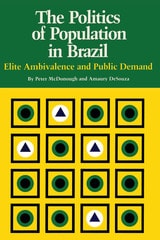
The Politics of Population in Brazil
Elite Ambivalence and Public DemandBy Peter McDonough and Amaury DeSouza
University of Texas Press, 1981
The population of Brazil increased tenfold, from 10 to over 100 million, between 1880 and 1980, nearly half of this increase occurring since the end of World War II. The Politics of Population in Brazil examines the attitudes toward population planning of Brazilian government officials and other elites—bishops, politicians, labor leaders, and business owners—in comparison with mass public opinion. The authors' findings that elites seriously underestimate the desire for family planning services, while the public views birth control as a basic issue, represent an important contribution on a timely issue.
A major reason for this disparity is that the elites tend to define the issue as a matter of national power and collective growth, and the public sees it as a bread-and-butter question affecting the daily lives of families. McDonough and DeSouza document not only the real gulf between elite and mass opinion but also the propensity of the elites to exaggerate this gap through their stereotyping of public opinion as conservative and disinterested in family planning.
Despite these differences, the authors demonstrate that population planning is less conflict ridden than many other controversies in Brazilian politics and probably more amenable to piecemeal bargaining than some earlier studies suggest. In part, this is because attitudes on the issue are not closely identified with opinions regarding left-versus-right disputes. In addition, for the public in general, religious sentiment affects attitudes toward family planning only indirectly. This separation, which reflects the historical lack of penetration of Brazilian society on the part of the church, further attenuates the issue's potential for galvanizing deep-seated antagonisms. As the authors note, this situation stands in contrast to the fierce debates that moral issues have generated in Spain and Ireland.
The study is noteworthy not only for its original approach—the incorporation of mass and elite data and the departure from the standard concerns with fertility determinants in population—but also for its sophisticated methodology and lucid presentation.
The Politics of Puerto Rican University Students
By Arthur Liebman
University of Texas Press, 1970
In the 1960s, when students everywhere were coming alive politically, and when the Latin American student activist in particular became as archetypal of radicalism as the Latin American dictator was of repression, Puerto Rican students remained strangely silent. With the exception of FUPI, a radical student group with only a small following, student political behavior conformed to that of Puerto Rican society in general—center to conservative.
Historically, Puerto Rico has been economically and politically dominated first by Spain and then by the United States. But unlike other colonial dependencies in Latin America, Puerto Rico has never rebelled. Puerto Rican politics centers on the status issue—independence, statehood, or association for the island. But no legendary victories, no heroic defeats offer a battle cry for nationalists, leftists, and independistas. Overwhelming foreign influence in the Church, the schools, the economy, and eventually the mass media deprived the island of any strong indigenous institutions that might foster nationalism. Militancy lies outside the mainstream of Puerto Rican tradition.
Against this historical and cultural backdrop, Arthur Liebman closely examines the social background and political activity of students at the Rio Piedras campus of the University of Puerto Rico. Based on personal interviews with students, faculty, and administrators, as well as on a survey of the student body, his study reveals the strength of political inheritance among university students in Puerto Rico. The student left is small and weak largely because the left of the parents’ generation is small and weak. To date, Puerto Rican students have been the children of their parents and of their society.
Within a university that emphasizes practicality, the nonmilitant majority of the students study education, business, engineering, and medicine, being trained to participate in and to reap the rewards of the status quo. Student leftists, in the minority, generally study history, economics, sociology, and law—fields that open wider perspectives on their society and its problems and offer no immediate guarantee of its benefits. Brighter, less religious, and more dissatisfied with their role as a student, the student leftists stand apart from their cohort at the University of Puerto Rico. Like their adult counterparts, they are an anomaly in an acquisitive, relatively conservative society.
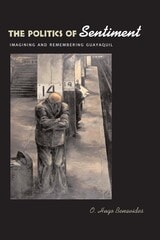
The Politics of Sentiment
Imagining and Remembering GuayaquilBy O. Hugo Benavides
University of Texas Press, 2006
Between 1890 and 1930, the port city of Guayaquil, Ecuador, experienced a liberal revolution and a worker's movement—key elements in shaping the Ecuadorian national identity. In this book, O. Hugo Benavides examines these and other pivotal features in shaping Guayaquilean identity and immigrant identity formation in general in transnational communities such as those found in New York City.
Turn-of-the-century Ecuador witnessed an intriguing combination of transformations: the formation of a national citizenship; extension of the popular vote to members of a traditional underclass of Indians and those of African descent; provisions for union organizing while entering into world market capitalist relations; and a separation of church and state that led to the legalization of secular divorces. Assessing how these phenomena created a unique cultural history for Guayaquileans, Benavides reveals not only a specific cultural history but also a process of developing ethnic attachment in general. He also incorporates a study of works by Medardo Angel Silva, the Afro-Ecuadorian poet whose singular literature embodies the effects of Modernism's arrival in a locale steeped in contradictions of race, class, and sexuality.
Also comprising one of the first case studies of Raymond Williams's hypothesis on the relationship between structures of feeling and hegemony, this is an illuminating illustration of the powerful relationships between historically informed memories and contemporary national life.
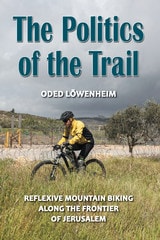
The Politics of the Trail
Reflexive Mountain Biking along the Frontier of JerusalemOded Löwenheim
University of Michigan Press, 2014
In The Politics of the Trail, Löwenheim confronts this tension by focusing on his encounters with three places along the trail: the separation fence between Israel and the Palestinians; the ruins of the Palestinian village Qalunya, demolished in 1948; and the trail connecting the largest 9/11 memorial site outside of the U.S. with a top-secret nuclear-proof bunker for the Israeli cabinet. He shares the stories of the people he meets along the way and considers how his own subjectivity is shaped by the landscape and culture of conflict. Moreover, he deconstructs, challenges, and resists the concepts and institutions that constitute such a culture and invites conversation about the idea of conflict as a culture.
The Politics of the Welfare State in Turkey
How Social Movements and Elite Competition Created a Welfare StateErdem Yörük
University of Michigan Press, 2022

The Postcolonial Careers of Santha Rama Rau
Antoinette Burton
Duke University Press, 2007
Drawing on archival research and interviews with Rama Rau, historian Antoinette Burton opens Rama Rau’s career into an examination of orientalism in the postwar United States, the changing idioms of cosmopolitanism in the postcolonial era, and the afterlife of British colonialism in the American public sphere. Burton describes how Rama Rau’s career was shaped by gendered perceptions of India and “the East” as well as by the shifting relationships between the United States, India, Pakistan, and Great Britain during the Cold War. Exploring how Rama Rau positioned herself as an expert on both India and the British empire, Burton analyzes the correspondence between Rama Rau and her Time-Life editors over the contents of her book The Cooking of India (1969), and Rama Rau’s theatrical adaptation of E. M. Forster’s A Passage to India, which played on Broadway in 1961 and was the basis for David Lean’s 1985 film. Burton assesses the critical reception of Rama Rau’s play as well as her correspondence with Forster and Lean.
The Postcolonial State in Africa
Fifty Years of Independence, 1960–2010Crawford Young
University of Wisconsin Press, 2012
Young identifies three cycles of hope and disappointment common to many of the African states (including those in North Africa) over the last half-century: initial euphoria at independence in the 1960s followed by disillusionment with a lapse into single-party autocracies and military rule; a period of renewed confidence, radicalization, and ambitious state expansion in the 1970s preceding state crisis and even failure in the disastrous 1980s; and a phase of reborn optimism during the continental wave of democratization beginning around 1990. He explores in depth the many African civil wars—especially those since 1990—and three key tracks of identity: Africanism, territorial nationalism, and ethnicity.
Only more recently, Young argues, have the paths of the fifty-three African states begun to diverge more dramatically, with some leading to liberalization and others to political, social, and economic collapse—outcomes impossible to predict at the outset of independence.
“This book is the best volume to date on the politics of the last 50 years of African independence.”—International Affairs
“The book shares Young’s encyclopedic knowledge of African politics, providing in a single volume a comprehensive rendering of the first 50 years of independence. The book is sprinkled with anecdotes from his vast experience in Africa and that of his many students, and quotations from all of the relevant literature published over the past five decades. Students and scholars of African politics alike will benefit immensely from and enjoy reading The Postcolonial State in Africa.”—Political Science Quarterly
“The study of African politics will continue to be enriched if practitioners pay homage to the erudition and the nobility of spirit that has anchored the engagement of this most esteemed doyen of Africanists with the continent.”—African History Review
“The book’s strongest attribute is the careful way that comparative political theory is woven into historical storytelling throughout the text. . . . Written with great clarity even for all its detail, and its interwoven use of theory makes it a great choice for new students of African studies.”—Australasian Review of African Studies

The Potential of a Middle Power
Romania's Foreign Policy in Central Asia within the Context of EU MembershipAna-Maria Anghelescu
Central European University Press, 0
The large member states of the European Union have clear priorities when it comes to EU-level decisions, while the small member states hold veto power when decisions need to be taken unanimously. This book focuses on the potential of middle powers in EU decision-making using the example of Romania's relations with Central Asia. The author examines how Romania's diplomatic activities as a medium-sized member state - and as a newer member - can affect EU foreign policy. Ana-Maria-Andreea Anghelescu conducted a quantitative study of three hard power indices, as well as the soft presence dimension of the Elcano Index of Global Presence. The latter includes tourism, sport, culture, science, education, information, and migration. The statistical results were complemented by qualitative field research in Kyrgyzstan involving all five Central Asian countries.
The volume’s analysis concludes that Romania underperforms in using its robust hard faculties to benefit the country's soft capabilities. Central Asia is a region where the EU must work hard to maintain its influence. By strengthening their presence in the region beyond bilateral partnerships, the EU's middle powers can play a key role in asserting Europe's pragmatic and normative interests.T
The Power of Dialogue between Israelis and Palestinians
Stories of Change from the School for PeaceSonnenschein, Nava
Rutgers University Press, 2019
The Pre-occupation of Postcolonial Studies
Fawzia Afzal-Khan and Kalpana Seshadri-Crooks, eds.
Duke University Press, 2000
Since it burst on the academic scene as the “hot” new disciplinary field during the final decade of the twentieth century, postcolonial studies has faced criticism from those who question its “troubling” trajectories, its sometimes suspect epistemological and pedagogical methods, and its relatively narrow focus. With diverse essays that emerge from such disciplines as South Asian, Latin American, Arab, and Jewish studies, this volume responds to skeptics and adherers alike, addressing not only the broad theoretical issues at stake within the field but also the position of the field itself within the academy, as well as its relationship to modern, postmodern, and Marxist discourses. Contributors offer critiques on ahistorical and universalizing tendencies in postcolonial work and confront the need for scholars to attend to issues of class, ideology, and the effects of neocolonial practices. Seeking to broaden the field’s traditionally literary spectrum of methodologies, these essayists take up large thematic issues to examine specific sites of colonial activities with all of their historical, political, and cultural significance. Closing the volume is an insightful interview with Homi Bhabha, in which he discusses postcolonial studies in the context of contemporary cultural politics and theory.
The Pre-Occupation of Postcolonial Studies not only offers an overview of the discipline but also pushes and pulls at the edges of postcolonial studies, offering a comprehensive view of the field’s diversity of thought and envisioning clear pathways for its future.
Contributors. Fawzia Afzal-Khan, Ali Behdad, Homi Bhabha, Daniel Boyarin, Neil Larsen, Saree Makdisi, Joseph Massad, Walter Mignolo, Hamid Naficy, Ngugi Wa Thingo, Timothy B. Powell, R. Radhakrishnan, Bruce Robbins, Kalpana Seshadri-Crooks, Ella Shohat, Rajeswari Sunder Rajan
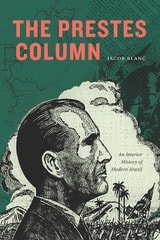
The Prestes Column
An Interior History of Modern BrazilJacob Blanc
Duke University Press, 2024
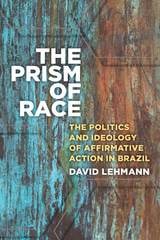
The Prism of Race
The Politics and Ideology of Affirmative Action in BrazilDavid Lehmann
University of Michigan Press, 2018
Brazil has developed a distinctive response to the injustices inflicted by the country’s race relations regime. Despite the mixed racial background of most Brazilians, the state recognizes people’s racial classification according to a simple official scheme in which those self-assigned as black, together with “brown” and “indigenous” (preto-pardo-indigena), can qualify for specially allocated resources, most controversially quota places at public universities. Although this quota system has been somewhat successful, many other issues that disproportionately affect the country’s black population remain unresolved, and systemic policies to reduce structural inequality remain off the agenda.
In The Prism of Race, David Lehmann explores, theoretically and practically, issues of race, the state, social movements, and civil society, and then goes beyond these themes to ask whether Brazilian politics will forever circumvent the severe problems facing the society by co-optation and by tinkering with unjust structures. Lehmann disrupts the paradigm of current scholarly thought on Brazil, placing affirmative action disputes in their political and class context, bringing back the concept of state corporatism, and questioning the strength and independence of Brazilian civil society.

The Privatisation of Israeli Security
Shir Hever
Pluto Press, 2017
The Production of Local Knowledge
History and Politics in the Work of René Zavaleta MercadoLuis Tapia Mealla
Seagull Books, 2016
The Prose of the World
Maurice Merleau-Ponty
Northwestern University Press, 1973
The Provincial Deputation in Mexico
Harbinger of Provincial Autonomy, Independence, and FederalismBy Nettie Lee Benson
University of Texas Press, 1992
Mexico and the United States each have a constitution and a federal system of government. This fact has led many historians to assume that the Mexican system of government, established in the 1820s, is an imitation of the U.S. model. But it is not.
First published in Spanish in 1955 and now translated by the author and amplified with new material, this interpretation of the independence movement tells the true story of Mexico's transition from colonial status to federal state. Benson traces the Mexican government's beginning to events in Spain in 1808–1810, when provincial juntas, or deputations, were established to oppose Napoleon's French rule and govern the provinces of Spain and its New World dominions during the Spanish monarch's imprisonment.
It was the provincial deputation, not the United States federal system, that provided the model for the state legislative bodies that were eventually formed after Mexico won its independence from Spain in 1821. This finding—the result of years of painstaking archival research—strongly confirms the independence of Mexico's political development from U.S. influence. Its importance to a study of Mexican history cannot be overstated.
The Public Life of History, Volume 20
Bain Attwood, Dipesh Chakrabarty, and Claudio Lomnitz, eds.
Duke University Press, 0
Gathering scholars involved in prominent debates regarding the shifting expectations of the rule of history, this special issue is a sustained engagement with historical experience, public discussion, and historical truth in a variety of global sites. One article considers what happens to the ideal of truth telling when truth commissions attempt to authenticate a complex mix of history and memory that is not always historically verifiable. Another article asks if history can continue to play an adjudicatory role in contemporary democracies when matters relating to the past are disputed in public life, as they are in India where the claims of scientific history are pitted against the culture-based history of Hindus. Still another contributor delves into the concept of “stolen generations” to explore the way indigenous people in Australia have laid claims in the present based on a historical wound.
Contributors. Bain Attwood, Neeladri Bhattacharya, Dipesh Chakrabarty, George Chauncey, Miranda Johnson, Claudio Lomnitz, Deborah Posel
The Quality of Divided Democracies
Minority Inclusion, Exclusion, and Representation in the New EuropeLicia Cianetti
University of Michigan Press, 2019
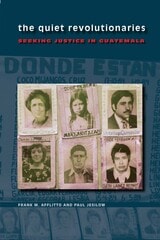
The Quiet Revolutionaries
Seeking Justice in GuatemalaBy Frank M. Afflitto and Paul Jesilow
University of Texas Press, 2007
The last three decades of the twentieth century brought relentless waves of death squads, political kidnappings, and other traumas to the people of Guatemala. Many people fled the country to escape the violence. Yet, at the same moment, a popular movement for justice brought together unlikely bands of behind-the-scenes heroes, blurring ethnic, geographic, and even class lines.
The Quiet Revolutionaries is drawn from interviews conducted by Frank Afflitto in the early 1990s with more than eighty survivors of the state-sanctioned violence. Gathered under frequently life-threatening circumstances, the observations and recollections of these inspiring men and women form a unique perspective on collective efforts to produce change in politics, law, and public consciousness. Examined from a variety of perspectives, from sociological to historical, their stories form a rich ethnography. While it is still too soon to tell whether stable, long-term democracy will prevail in Guatemala, the successes of these fascinating individuals provide a unique understanding of revolutionary resistance.
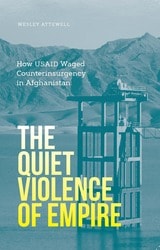
The Quiet Violence of Empire
How USAID Waged Counterinsurgency in AfghanistanWesley Attewell
University of Minnesota Press, 2023
How the U.S. empire-state transformed post-1945 Afghanistan into a key site for reimagining development
Established in 1961 by President Kennedy, the United States Agency for International Development (USAID) is often viewed as an extension of the security state, playing a constant role on the ground in Afghanistan since the early sixties. The Quiet Violence of Empire traces USAID’s long and bloody history of development work in the region, revealing an empirically rich account of the transnational entanglements of imperialism and racial capitalism.
Wesley Attewell carefully analyzes three chronological moments of development as counterinsurgency in action: the Helmand Valley Project, the Soviet–Afghan conflict, and the post-9/11 occupation in Afghanistan. These case studies expose how USAID’s very public commitment to bringing seemingly inclusionary forms of self-help, technical assistance, and market development to Afghanistan has been undergirded by longer-standing infrastructures of race war and racial management. Attewell exposes how one of the net effects of USAID’s development mission to Afghanistan has been to constrain the life chances of Afghan beneficiaries while simultaneously diverting development capital back to U.S. contractors, deftly underscoring the notion of development as a form of slow violence.
The Quiet Violence of Empire asks the critical question: how might we refuse the ruse of USAID and its endlessly deferred promise of development? Thinking relationally across the fields of human geography, global studies, and critical ethnic studies, it uncovers the explicitly racial underpinnings of international development theory and praxis.
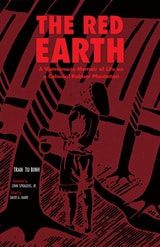
The Red Earth
A Vietnamese Memoir of Life on a Colonial Rubber PlantationBinh Tu Tran
Ohio University Press, 1985
Phu Rieng was one of many French rubber plantations in colonial Vietnam; Tran Tu Binh was one of 17,606 laborers brought to work there in 1927, and his memoir is a straightforward, emotionally searing account of how one Vietnamese youth became involved in revolutionary politics. The connection between this early experience and later activities of the author becomes clear as we learn that Tran Tu Binh survived imprisonment on Con Son island to help engineer the general uprising in Hanoi in 1945.
The Red Earth is the first of dozens of such works by veterans of the 1924–45 struggle in Vietnam to be published in English translation. It is important reading for all those interested in the many-faceted history of modern Vietnam and of communism in the non-Western world.
The Regional Roots of Russia's Political Regime
William M. Reisinger and Bryon J. Moraski
University of Michigan Press, 2017
By analyzing successive federal elections, Reisinger and Moraski show that regions that led the way in delivering votes in Putin’s favor were those that had been both more independent and more authoritarian during the Yeltsin era. These authoritarian enclaves under Yeltsin became models of behavior in the Putin regime, which prized deferential election results. Other regions were quick to follow this lead, functioning during Putin’s ascendancy as “swing states.” Still, Russia’s regimes continued to exhibit regime diversity, with democratic enclaves resisting the push to become cogs in the Kremlin’s electoral authoritarian wheel.
While motivated by scholarly questions about authoritarianism, democracy, and the influence of subnational forces on national regime trajectories, Reisinger and Moraski also consider policy-relevant questions.
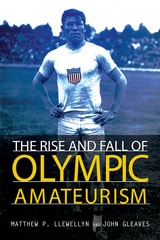
The Rise and Fall of Olympic Amateurism
Matthew P. Llewellyn and John Gleaves
University of Illinois Press, 2016
Matthew P. Llewellyn and John Gleaves analyze how this astonishing transformation took place. Drawing on Olympic archives and a wealth of research across media, the authors examine how an elite--white, wealthy, often Anglo-Saxon--controlled and shaped an enormously powerful myth of amateurism. The myth assumed an air of naturalness that made it seem unassailable and, not incidentally, served those in power. Llewellyn and Gleaves trace professionalism's inroads into the Olympics from tragic figures like Jim Thorpe through the shamateur era of under-the-table cash and state-supported athletes. As they show, the increasing acceptability of professionals went hand-in-hand with the Games becoming a for-profit international spectacle. Yet the myth of amateurism's purity remained a potent force, influencing how people around the globe imagined and understood sport.
Timely and vivid with details, The Rise and Fall of Olympic Amateurism is the first book-length examination of the movement's foundational ideal.
The Rise of China and the Demise of the Capitalist World-Economy
Minqi Li
Pluto Press, 2008
Minqi Li examines the future global prospects from the perspectives of Marxism, world-system theories, and ecological limits to growth. He argues that China is likely to exacerbate many of the major contradictions of world capitalism, which could lead to the demise of the existing world-system.
This is an essential text for students of political economy, economics and global politics.
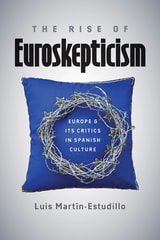
The Rise of Euroskepticism
Europe and Its Critics in Spanish CultureLuis Martín-Estudillo
Vanderbilt University Press, 2018
Covering from 1915 to the present, this book deals with the role that artists and intellectuals have played regarding projects of European integration. Consciously or not, they partake of a tradition of Euroskepticism. Because Euroskepticism is often associated with the discourse of political elites, its literary and artistic expressions have gone largely unnoticed. This book addresses that gap.
Taking Spain as a case study, author Luis Martín-Estudillo analyzes its conflict over its own Europeanness or exceptionalism, as well as the European view of Spain. He ranges from canonical writers like Unamuno, Ortega y Gasset, and Zambrano to new media artists like Valeriano López, Carlos Spottorno, and Santiago Sierra. Martín-Estudillo provides a new context for the current refugee crisis, the North-South divide among EU countries, and the generalized disaffection toward the project of European integration.
The eclipsed critical tradition he discusses contributes to a deeper understanding of the notion of Europe and its institutional embodiments. It gives resonance to the intellectual and cultural history of Europe's "peripheries" and re-evaluates Euroskeptic contributions as one of the few hopes left to imagine ways to renew the promise of a union of the European nations.
The Rise of the West
A History of the Human CommunityWilliam H. McNeill
University of Chicago Press, 1991
One of the most important works of history from the twentieth century, The Rise of the West, winner of the National Book Award in 1964, is famous for its ambitious scope and intellectual rigor. In it, William H. McNeill challenges the then-prevalent view that a number of separate civilizations pursued essentially independent careers, and argues instead that human cultures interacted at every stage of their history. McNeill argues instead that from the Neolithic beginnings of grain agriculture to the present major social changes in all parts of the world were triggered by new or newly important foreign stimuli, and he presents a persuasive narrative of world history to support this claim.
In a retrospective essay titled "The Rise of the West after Twenty-five Years," McNeill shows how his book was shaped by the time and place in which it was written (1954-63). He discusses how historiography subsequently developed and suggests how his portrait of the world's past in The Rise of the West should be revised to reflect these changes.
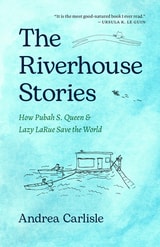
The Riverhouse Stories
How Pubah S. Queen and Lazy LaRue Save the WorldAndrea Carlisle
Oregon State University Press, 1986
40th anniversary edition of a rediscovered classic
When Pubah and Lazy LaRue move to a houseboat on an Oregon river, they find themselves immersed in a life filled with whimsical adventures. Even though their dwelling is ancient, tippy, and in need of endless repairs, their affection for it, for river life, and for one another does not wane. These linked stories teem with life and with love for their friends and for new neighbors—other houseboat people, ducks, beavers, muskrats, and all else the river has to offer. Lazy LaRue writes stories; Pubah is an apprentice electrician. Their world encompasses the mundane and the fanciful—from lassoing logs and rewiring a houseboat to dreaming of new inventions and traveling in a hot air balloon.
Filled with humor, optimism, and playful exploration, the stories in these pages bring warmth and inspiration. Illustrations by Mary Narkiewicz capture the quirky quality of the tales with splendid charm and add to the dreamlike quality of the storytelling. A new afterword by the author reflects on writing The Riverhouse Stories and on the cultural climate of the time, showing how much the world has changed over four decades.
The Rock of Arles
Richard Klein
Duke University Press, 2024
The Roundtable Talks of 1989
The Genesis of Hungarian DemocracyAndrás Bozóki
Central European University Press, 2002
This is the first book in English which provides comprehensive analysis and documentary history on the Roundtable talks, the major event of the “negotiated revolution” of Hungary. These negotiations occurred during the summer months of 1989 between the representatives of the Communist Party, the Opposition Roundtable, and the so-called Third Side (which brought some pro-Communist satellite organizations together).
The authors offer much more than just a detailed account on the negotiations: they also put the process of constitutional revolution into a comparative and historical perspective. They believe that the Roundtable Talks amounted to much more than just a sideshow and in fact they constituted the hub of the revolutionary transformation.
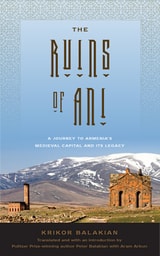
The Ruins of Ani
A Journey to Armenia's Medieval Capital and its LegacyKrikor Balakian
Rutgers University Press, 2019
From the tenth to the thirteenth centuries, the city of Ani was the jewel of the Armenian kingdom, renowned far and wide for its magnificent buildings. Known as the city of 1001 churches, Ani was a center for artistic innovation, and its architecture is a potential missing link between Byzantine and Gothic styles. By the fifteenth century, Ani was virtually abandoned, its stunning buildings left to crumble. Yet its ruins have remained a symbol of cultural accomplishment that looms large in the Armenian imagination.
The Ruins of Ani is a unique combination of history, art criticism, and travel memoir that takes readers on a thousand-year journey in search of past splendors. Today, Ani is a popular tourist site in Turkey, but the city has been falsified in its presentation by the Turkish government in order to erase Armenian history in the wake of the Armenian Genocide. This timely publication also raises questions about the preservation of major historic monuments in the face of post atrocity campaigns of cultural erasure.
Originally written by young priest Krikor Balakian in 1910, just a few years before the Armenian genocide, this book offers a powerful and poignant counterpart to Balakian’s acclaimed genocide memoir Armenian Golgotha. This new translation by the author’s great-nephew, Pulitzer Prize-winning poet Peter Balakian, eloquently renders the book’s vivid descriptions and lyrical prose into English. Including a new introduction that explores Ani’s continued relevance in the twenty-first century, The Ruins of Ani will give readers a new appreciation for this lost city’s status as a pinnacle of both Armenian civilization and human achievement.
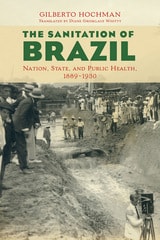
The Sanitation of Brazil
Nation, State, and Public Health, 1889-1930Gilberto Hochman
University of Illinois Press, 2016

The Scourge of War
New Extensions on an Old ProblemPaul F. Diehl, Editor
University of Michigan Press, 2004
The Second Conquest of Latin America
Coffee, Henequen, and Oil during the Export Boom, 1850-1930Edited by Steven C. Topik and Allen Wells
University of Texas Press, 1997
Between 1850 and 1930, Latin America's integration into the world economy through the export of raw materials transformed the region. This encounter was nearly as dramatic as the conquistadors' epic confrontation with Native American civilizations centuries before. An emphasis on foreign markets and capital replaced protectionism and self-sufficiency as the hemisphere's guiding principles. In many ways, the means employed during this period to tie Latin America more closely to western Europe and North America resemble strategies currently in vogue. Much can be learned from analyzing the first time that Latin Americans embraced export-led growth.
This book focuses on the impact of three key export commodities: coffee, henequen, and petroleum. The authors concentrate on these rather than on national economies because they illustrate more concretely the interaction between the environment, natural and human resources, and the world economy. By analyzing how different products spun complex webs of relationships with their respective markets, the essays in this book illuminate the tensions and contradictions found in the often conflictive relationship between the local and the global, between agency and the not-so-invisible hand. Ultimately, the contributors argue that the results of the "second conquest" were not one-sided as Latin Americans and foreigners together forged a new economic order—one riddled with contradictions that Latin America is still attempting to resolve today.
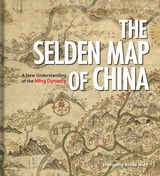
The Selden Map of China
A New Understanding of the Ming DynastyHongping Annie Nie
Bodleian Library Publishing, 2019
Exploring the commercial aims of the Ming Dynasty, the port city of Quanzhou and its connections with the voyages of the early traveler Zheng He, this book describes the historical background of the era in which the map was used. It also includes an analysis of the skills and techniques involved in Chinese map-making and the significance of the compass bearings, scale, and ratios found on the map, all of which combine to represent a breakthrough in cartographic techniques.
The enthralling story revealed by this extraordinary artifact sheds light on the long history of China’s relationship with the sea and with the wider world.
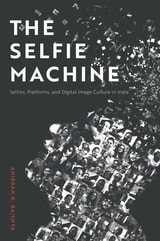
The Selfie Machine
Selfies, Platforms, and Digital Image Culture in IndiaAnirban K. Baishya
Rutgers University Press, 2027
The Selfie Machine offers novel insight into personalized communication practices in the digital age through the medium of the selfie. While the selfie has achieved notoriety due to pop-psychology accounts of Narcissism-related selfie "disorders," this book examines the selfie as a mode of meaning making and self-presentation that includes not just still images, but also short videos, hashtag practices and economies of liking and following. In taking India as the starting point of its investigation, The Selfie Machine inverts the "West-then-the-rest" model of understanding global digital media practices. The book considers selfie culture’s impact on personal and public digital practices and trends—ranging from cellphone markets, to influencer entrepreneurship and microcelebrity, to the conduct of politics and protest. In doing so, it not only offers an expanded definition of selfies in digital media culture, but also demonstrates how “global” digital media (including selfies) cannot be understood as a monolith.
The Sense of the World
Nancy, Jean-Luc
University of Minnesota Press, 1998
Is there a “world” anymore, let alone any “sense” to it? Acknowledging the lack of meaning in our time, and the lack of a world at the center of meanings we try to impose, Jean-Luc Nancy presents a rigorous critique of the many discourses-from philosophy and political science to psychoanalysis and art history-that talk and write their way around these gaping absences in our lives.
In an original style befitting his search for a new mode of thought, Nancy offers fragmentary readings of writers such as Nietzsche, Hegel, Marx, Lévinas, Lacan, Derrida, and Deleuze insofar as their work reflects his concern with sense and the world. Rather than celebrate or bemoan the loss of meaning or attempt to install a new one, his book seeks to reposition both sense and the world between the presence and absence of meaning, between objectivity and subjectivity. Nancy’s project entails a reconception of the field of philosophy itself, a rearticulation of philosophical practice. Neither recondite nor abstract, it is concerned with the existence and experience of freedom-the actuality of existence as experienced by contemporary communities of citizens, readers, and writers.
Combining aesthetic, political, and philosophical considerations to convey a sense of the world between meaning and reality, ideal content and material form, this book offers a new way of understanding-and responding to-“the end of the world.”
Jean-Luc Nancy teaches at the University of Human Sciences in Strasbourg. His books in English include The Literary Absolute (with Philip Lacoue-Labarthe, 1988), The Inoperative Community (Minnesota, 1991), The Birth to Presence (1993), The Experience of Freedom (1993), and The Muses (1996).
Jeffrey S. Librett is associate professor of modern languages and literatures at Loyola University of Chicago.