Results by title
8642 books match the query '20th century' and 1764 start with t
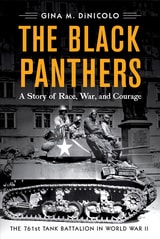
The Black Panthers
A Story of Race, War, and Courage—the 761st Tank Battalion in World War IIGina M. DiNicolo
Westholme Publishing, 2014
Known primarily for being the first African American armored unit to see combat in World War II and as future baseball star Jackie Robinson’s onetime outfit, the 761st Tank Battalion was forged in a devil’s cauldron of heat and prejudice at Camp Claiborne, Louisiana. Here, most viewed the tankers as tokens in a racial experiment, rather than as fellow American soldiers who would actually be deployed to fight a common enemy. Led by a small cadre of white and black officers, the 761st trained to the pinnacle of its craft. The Black Panthers, as they soon were called, proved their battle prowess against other units bound for combat on the parched Texas training fields. For this, they earned a coveted assignment to fight under General George S. Patton and go head-to-head with the best of Hitler’s arsenal. Moving to the front in November 1944, trial by fire soon shook the unit to its core. Ambushed by a veteran German force, the 761st suffered heavy casualties in the confusion as they cut their way out of the trap. But the men rallied to overcome self-doubt and vindicate their losses. Quickly battle hardened, the tankers saw intense combat through November and when Germany launched its last-ditch offensive through the Ardennes in December, the 761st fought side-by-side with Patton’s Third Army. Moving swiftly, the unit helped check the German advance, cut resupply routes to the forces surrounding beleaguered Bastogne, and drove the enemy back, recapturing towns crucial to the final defeat of Germany.
In The Black Panthers: A Story of Race, War, and Courage—the 761st Tank Battalion in World War II, historian Gina M. DiNicolo tells the full and unvarnished history of this important American fighting force. Relying on extensive archival research, including documents that had not been consulted in previous accounts, and interviews with surviving soldiers and family members, the author describes the unit’s training, deployment, combat, and individuals, such as Sgt. Ruben Rivers, one of only seven African American men awarded the Medal of Honor for World War II heroism. The professionalism, dedication, and courage of the 761st and other non-white units made clear that the strength of the American army in the future lay with integration—one of the enduring accomplishments of these servicemen.
The Black Student Protest Movement at Rutgers
Richard P. McCormick
Rutgers University Press, 1990
Richard P. McCormick has chronicled the black student protest movement at Rutgers University, from the 1960s to today. He examines the forces that produced the protest movement, the tactics that were employed, and the qualified gains that were achieved. He tells us about demonstrations, building occupations, committee hearings, and countless meetings, but he also paints portraits of the many student leaders who mobilized protest. This is the story of a lot of pain, some blunders, and some successes.
In the mid-sixties, the University established committees to recruit black students and to add more blacks to the faculty. These efforts produced only modest results. By 1968, there were still not enough black students on campus, but there were enough to create a political presence for the first time. They were committed to acting against the racism they perceived within the University. To respond to their protests, in March 1969 the Board of Governors passed a dramatically new and controversial policy to encourage disadvantaged students who lived in Camden, Newark, and New Brunswick to apply to Rutgers, where they would take college-preparatory classes as unmatriculated students, and then enter Rutgers as matriculated students. This program, never very successful, lasted only two years.
Unrest did not end with the sixties. During the seventies, black students sporadically voiced protests against what they perceived to be an unsupportive environment. During the eighties, black enrollment actually declined, as did the black graduation rate. In conclusion, McCormick points to the effort that has been made but even more to the effort that still needs to be made and the social cost of ignoring the problem.
The Blackademic Life
Academic Fiction, Higher Education, and the Black IntellectualLavelle Porter
Northwestern University Press, 2019
The Blackademic Life critically examines academic fiction produced by black writers. Lavelle Porter evaluates the depiction of academic and campus life in literature as a space for black writers to produce counternarratives that celebrate black intelligence and argue for the importance of higher education, particularly in the humanistic tradition. Beginning with an examination of W. E. B. Du Bois’s creative writing as the source of the first black academic novels, Porter looks at the fictional representations of black intellectual life and the expectations that are placed on faculty and students to be racial representatives and spokespersons, whether or not they ever intended to be. The final chapter examines blackademics on stage and screen, including in the 2014 film Dear White People and the groundbreaking television series A Different World.
The Blitz Companion
Aerial Warfare, Civilians and the City since 1911Mark Clapson
University of Westminster Press, 2019

The Bloody Sunday Inquiry
The Families Speak OutEdited by Eamonn McCann
Pluto Press, 2005
Twenty-one wounded survivors and relatives of the dead describe the campaign which led to the establishment of the Inquiry under Lord Saville. They reveal their bitterness at the 'whitewash' of the first inquiry under Lord Chief Justice Widgery, and describe the frustrations and elations of their long struggle to force the British Government to launch a new search for the truth.
The relatives comment sharply on Saville’s performance, and on the attitudes of British and Irish politicians, the media and an array of celebrity lawyers. They reflect on whether soldiers and leading politicians should now be prosecuted for murder, and discuss whether the outcome of the Inquiry is likely to hinder or enhance the peace process. Will the truth about Bloody Sunday raise more ghosts than it sets to rest?
This is the story of the longest legal proceedings in British or Irish history in the raw words of those most intimately involved. What they have to say puts a new focus on the significance of State atrocities in shaping perceptions of the past and aspirations for the future in Ireland.
The Blue Light
Hussein Barghouthi
Seagull Books, 2023
Hussein Bargouthi tells his story with Bari, a Turkish American Sufi, during Bargouthi’s years as a graduate student at the University of Washington in the late 1980s. The Blue Light has several beginnings and many returns—from Beirut’s traumatic sea to musings on color and identity, from Buddhist paths to Rajneesh disciples, from military rule to colonial insanity, from drug addiction to sacred rock. Written and lived between Arabic and English, this is a unique book whose depth is as clear as its surface. It will tempt you to dismiss it as it compels you to devour it for illumination. Merging memoir with fiction, and the hallowed with the profane, The Blue Light is a meditation on and liberation from madness—a brilliant, inimitable literary achievement.
The Blue Period
Black Writing in the Early Cold WarJesse McCarthy
University of Chicago Press, 2024
In the years after World War II, to be a black writer was to face a stark predicament. The contest between the Soviet Union and the United States was a global one—an ideological battle that dominated almost every aspect of the cultural agenda. On the one hand was the Soviet Union, espousing revolutionary communism that promised egalitarianism while being hostile to conceptions of personal freedom. On the other hand was the United States, a country steeped in racial prejudice and the policies of Jim Crow.
Black writers of this time were equally alienated from the left and the right, Jesse McCarthy argues, and they channeled that alienation into remarkable experiments in literary form. Embracing racial affect and interiority, they forged an aesthetic resistance premised on fierce dissent from both US racial liberalism and Soviet communism. From the end of World War II to the rise of the Black Power movement in the 1960s, authors such as Richard Wright, James Baldwin, Gwendolyn Brooks, and Paule Marshall defined a distinctive moment in American literary culture that McCarthy terms the Blue Period.
In McCarthy’s hands, this notion of the Blue Period provides a fresh critical framework that challenges long-held disciplinary and archival assumptions. Black writers in the early Cold War went underground, McCarthy argues, not to depoliticize or liberalize their work, but to make it more radical—keeping alive affective commitments for a future time.
The Blues Detective
A Study of African American Detective FictionStephen Soitos
University of Massachusetts Press, 1996
This illuminating book makes the case for a tradition of African American detective fiction—novels written by black Americans about black detectives and incorporating distinctly African American tropes and themes. Beginning with Pauline Hopkins in 1901, black authors consciously altered and subverted the formulas of detective fiction in significant ways. Such writers as J. E. Bruce, Rudolph Fisher, Chester Himes, Ishmael Reed, and Clarence Major created a new genre that responded to the social and political concerns of the black community.
Examining the work of these authors, Stephen Soitos frames his analysis in terms of four uniquely African American tropes: altered detective personas, double-consciousness detection, black vernaculars, and hoodoo. He argues that black writers created sleuths who were in fact “blues detectives,” engaged not only in solving crimes, but also in exploring the mysteries of black life and culture.
Soitos grounds his study in African American literary theory, particularly the work of Houston Baker, Bernard Bell, and Henry Louis Gates, Jr. He offers both a new way of conceiving black detective fiction and a series of insightful readings of books in this genre.
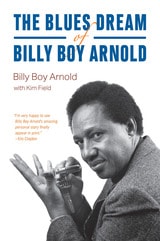
The Blues Dream of Billy Boy Arnold
Billy Boy Arnold with Kim Field
University of Chicago Press, 2021
Simply put, Billy Boy Arnold is one of the last men standing from the Chicago blues scene’s raucous heyday. What’s more, unlike most artists in this electrifying melting pot, who were Southern transplants, Arnold—a harmonica master who shared stages with Bo Diddley, Muddy Waters, and Howlin’ Wolf, plus a singer and hitmaker in his own right who first recorded the standards “I Wish You Would” and “I Ain’t Got You”—was born right here and has lived nowhere else. This makes his perspective on Chicago blues, its players, and its locales all the rarer and all the more valuable. Arnold has witnessed musical generations come and go, from the decline of prewar country blues to the birth of the electric blues and the worldwide spread of rock and roll. Working here in collaboration with writer and fellow musician Kim Field, he gets it all down. The Blues Dream of Billy Boy Arnold is a remarkably clear-eyed testament to more than eighty years of musical love and creation, from Arnold’s adolescent quest to locate the legendary Sonny Boy Williamson, the story of how he named Bo Diddley Bo Diddley, and the ups and downs of his seven-decade recording career. Arnold’s tale—candidly told with humor, insight, and grit—is one that no fan of modern American music can afford to miss.

The Body and the Song
Elizabeth Bishop's PoeticsMarilyn May Lombardi
Southern Illinois University Press, 1995
In this original contribution to Elizabeth Bishop studies, Marilyn May Lombardi uses previously unpublished materials (letters, diaries, notebooks, and unfinished poems) to shed new light on the poet’s published work. She explores the ways Bishop’s lesbianism, alcoholism, allergic illnesses, and fear of mental instability affected her poetry—the ways she translated her bodily experiences into poetic form.
A cornerstone of The Body and the Song is the poet’s thirty-year correspondence with her physician, Dr. Anny Baumann, who was both friend and surrogate mother to Bishop. The letters reveal Bishop’s struggles to understand the relation between her physical and creative drives. "Dr. Anny" also helped Bishop unravel the connections in her life between psychosomatic illness and early maternal deprivation—her mother was declared incurably insane and institutionalized in 1916, when Bishop was five years old. Effectively an orphan, she spent the rest of her childhood with relatives.
In addition to these letters, Lombardi uses Bishop’s unpublished notebooks to demonstrate the poet’s resolve to "face the facts"—to confront her own emotional, intellectual, and physical frailties—and translate them into poetry that is clear-eyed and economical in its form.
Lombardi argues that in her subtle way, Bishop explores the same issues that preoccupy the current generation of women writers. A deeply private artist, Bishop never directly refers to her homosexuality in her published work, but the metaphors she draws from her carnal desires and aversions confront stifling cultural prescriptions for personal and erotic expression. In choosing restraint over confession, Bishop parted company with her friend Robert Lowell, but Lombardi shows that her reticence becomes a powerful artistic strategy resulting in poetry remarkable for its hermeneutic potential.
Informed by recent gender criticism, Lombardi’s lucid argument advances our understanding of the ways the material circumstances of life can be transformed into art.
The Bohemian Body
Gender and Sexuality in Modern Czech CultureAlfred Thomas
University of Wisconsin Press, 2007
By re-examining the work of key Czech male and female writers and poets from the National Revival to the Velvet Revolution, Alfred Thomas exposes the tendency of Czech literary criticism to separate the political and the personal in modern Czech culture. He points instead to the complex interplay of the political and the personal across ethnic, cultural, and intellectual lines and within the works of such individual writers as Karel Hynek Mácha, Bozena Nemcová, and Rainer Maria Rilke, resulting in the emergence and evolution of a protean modern identity. The product is a seemingly paradoxical yet nuanced understanding of Czech culture (including literature, opera, and film), long overlooked or misunderstood by Western scholars.
The Bonds of Inequality
Debt and the Making of the American CityDestin Jenkins
University of Chicago Press, 2021
In this passionate and deeply researched book, Destin Jenkins shows in vivid detail how, beyond the borrowing decisions of American cities and beneath their quotidian infrastructure, there lurks a world of politics and finance that is rarely seen, let alone understood. Focusing on San Francisco, The Bonds of Inequality offers a singular view of the postwar city, one where the dynamics that drove its creation encompassed not only local politicians but also banks, credit rating firms, insurance companies, and the national municipal bond market. Moving between the local and the national, The Bonds of Inequality uncovers how racial inequalities in San Francisco were intrinsically tied to municipal finance arrangements and how these arrangements were central in determining the distribution of resources in the city. By homing in on financing and its imperatives, Jenkins boldly rewrites the history of modern American cities, revealing the hidden strings that bind debt and power, race and inequity, democracy and capitalism.
The Book Smugglers
Partisans, Poets, and the Race to Save Jewish Treasures from the NazisDavid E. Fishman
University Press of New England, 2018
The Book of Samuel
Essays on Poetry and ImaginationMark Rudman
Northwestern University Press, 2009
Crisis, breakdown, rejuvenation: this is the territory of poetry that Rudman takes readers into with this set of essays. Constructed as a series of character studies, the essays are rooted in autobiographical material with biographical counterpoints, tying the poets distinctly to places. Even as they are placed, however, they are displaced: Rudman's subjects, from D.H. Lawrence to Czeslaw Milosz to T. S. Eliot, are almost all exiles, either geographically or within themselves. This exile spins anger into energy, transmuting emotion into imagination the same way that Passaic Falls, known to William Carlos Williams, turns water into power.
The mosaic style of the essays touches on nerve after nerve, avoiding the snags of academic jargon to ease towards an illuminating truth about the artists' shifting work and worlds. Some of the Samuels—Beckett and Fuller—were able to navigate these shifts, while others--Coleridge and Johnson--are shown to be less able to transmute their energy into motion.
The Book of the Dead
Muriel Rukeyser
West Virginia University Press, 2018
Published for the first time alongside photographs by Nancy Naumburg, who accompanied Rukeyser to Gauley Bridge in 1936, this edition of The Book of the Dead includes an introduction by Catherine Venable Moore, whose writing on the topic has been anthologized in Best American Essays.

The Bop Apocalypse
The Religious Visions of Kerouac, Ginsberg, and BurroughsJohn Lardas
University of Illinois Press, 2000
Presenting a religious biography of the Beats from the mid-1940s to the late 1950s, John Lardas shows that in rejecting many of the cultural tenets of postwar America, Kerouac, Ginsberg, and Burroughs created new visions of both self and country, visions they articulated through distinctive literary forms. Lardas examines how the Beat writers distilled a theology of experience--a religious vision that animated their everyday existence as well as their art--from a flurry of disparate influences that included the saxophone wails of Charlie Parker and Lester Young, the psychology of Wilhelm Reich, the linguistic theories of Alfred Korzybski, the hipster dialects of New York City, and especially the prophecies of Oswald Spengler. Revisiting the major works the Beats produced in the 1950s in terms of critical content, Lardas considers how their lived religion was incorporated into the way they wrote.
The first sustained treatment of Beat religiosity, The Bop Apocalypse takes a sophisticated look beyond the cartoonish reductions of the Beat counterculture. The Bop Apocalypse takes the Beats at face value, interpreting their sexual openness, drug use, criminality, compulsion to travel, and madness as the logical, physical enactments of a religious representation of the world. Far from dallying irrelevantly on the fringes of society, Lardas asserts, the Beats engaged America on moral grounds through the discourse of public religion.
The Border of Lights Reader
Bearing Witness to Genocide in the Dominican RepublicMegan Jeanette Myers
Amherst College Press, 2021
"By bringing together in one volume poetry, visual arts, literary analysis, in-depth interviews and historical analysis this volume will provide its readers with a comprehensive view of the causes and the aftermath of the massacre." —Ramón Antonio Victoriano-Martínez, University of British Columbia
Contributions by Julia Alvarez, Amanda Alcántara, DeAndra Beard, Nancy Betances, Jésula Blanc, Matías Bosch Carcuro, Cynthia Carrión, Raj Chetty, Catherine DeLaura, Magaly Colimon, Juan Colón, Robin Maria DeLugan, Lauren Derby, Rosa Iris Diendomi Álvarez, Polibio Díaz, Rana Dotson, Rita Dove, Rhina P. Espaillat, Maria Cristina Fumagalli, Saudi García, Scherezade García, Juan Carlos González Díaz, Kiran C. Jayaram, Pierre Michel Jean, Nehanda Loiseau Julot, Jake Kheel, Carlos Alomia Kollegger, Jackson Lorrain “Jhonny Rivas”, Radio Marién, Padre Regino Martínez Bretón, Sophie Maríñez, April J. Mayes, Jasminne Mendez, Komedi Mikal PGNE, Osiris Mosquea, Megan Jeanette Myers, Rebecca Osborne, Ana Ozuna, Edward Paulino, John Presimé, Laura Ramos, Amaury Rodríguez, Doña Carmen Rodríguez de Paulino, The DREAM Project, Silvio Torres-Saillant, Ilses Toribio, Deisy Toussaint, Évelyne Trouillot, Richard Turits, William Vazquez, Chiqui Vicioso, Bridget Wooding, and Óscar Zazo.

The Borderlands of Race
Mexican Segregation in a South Texas TownBy Jennifer R. Nájera
University of Texas Press, 2015
Throughout much of the twentieth century, Mexican Americans experienced segregation in many areas of public life, but the structure of Mexican segregation differed from the strict racial divides of the Jim Crow South. Factors such as higher socioeconomic status, lighter skin color, and Anglo cultural fluency allowed some Mexican Americans to gain limited access to the Anglo power structure. Paradoxically, however, this partial assimilation made full desegregation more difficult for the rest of the Mexican American community, which continued to experience informal segregation long after federal and state laws officially ended the practice.
In this historical ethnography, Jennifer R. Nájera offers a layered rendering and analysis of Mexican segregation in a South Texas community in the first half of the twentieth century. Using oral histories and local archives, she brings to life Mexican origin peoples’ experiences with segregation. Through their stories and supporting documentary evidence, Nájera shows how the ambiguous racial status of Mexican origin people allowed some of them to be exceptions to the rule of Anglo racial dominance. She demonstrates that while such exceptionality might suggest the permeability of the color line, in fact the selective and limited incorporation of Mexicans into Anglo society actually reinforced segregation by creating an illusion that the community had been integrated and no further changes were needed. Nájera also reveals how the actions of everyday people ultimately challenged racial/racist ideologies and created meaningful spaces for Mexicans in spheres historically dominated by Anglos.
The Bosses' Union
How Employers Organized to Fight Labor before the New DealVilja Hulden
University of Illinois Press, 2023
Vilja Hulden reveals how this tension provided the opening for pro-business organizations to shift public attention from concerns about inequality and dangerous working conditions to a belief that unions trampled on an individual's right to work. Inventing the term closed shop, employers mounted what they called an open-shop campaign to undermine union demands that workers at unionized workplaces join the union. Employer organizations lobbied Congress to resist labor's proposals as tyrannical, brought court cases to taint labor's tactics as illegal, and influenced newspaper coverage of unions. While employers were not a monolith nor all-powerful, they generally agreed that unions were a nuisance. Employers successfully leveraged money and connections to create perceptions of organized labor that still echo in our discussions of worker rights.
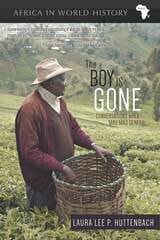
The Boy Is Gone
Conversations with a Mau Mau GeneralLaura Lee P. Huttenbach
Ohio University Press, 2015
A story with the power to change how people view the last years of colonialism in East Africa, The Boy Is Gone portrays the struggle for Kenyan independence in the words of a freedom fighter whose life spanned the twentieth century’s most dramatic transformations. Born into an impoverished farm family in the Meru Highlands, Japhlet Thambu grew up wearing goatskins and lived to stand before his community dressed for business in a pressed suit, crisp tie, and freshly polished shoes. For most of the last four decades, however, he dressed for work in the primary school classroom and on his lush tea farm.
The General, as he came to be called from his leadership of the Mau Mau uprising sixty years ago, narrates his life story in conversation with Laura Lee Huttenbach, a young American who met him while backpacking in Kenya in 2006. A gifted storyteller with a keen appreciation for language and a sense of responsibility as a repository of his people’s history, the General talks of his childhood in the voice of a young boy, his fight against the British in the voice of a soldier, and his long life in the voice of shrewd elder. While his life experiences are his alone, his story adds immeasurably to the long history of decolonization as it played out across Africa, Asia, and the Americas.
The Boy Next Door
My Sixty Year Friendship with Bill ClintonCarolyn Yedell Staley
Parkhurst Brothers, Inc., 2025
The Brazil Chronicles
Stephen G. Bloom
University of Missouri Press, 2024
As a young journalist at the Brazil Herald from 1979-81, Stephen G. Bloom spent his early professional years working in Rio’s seedy Lapa district, surrounded by fugitives, drug runners, pornographers, and stealth CIA agents. Bloom shares the wild story of this English-language newspaper in The Brazil Chronicles. The expat newspaper was a breeding ground for a different kind of storyteller — audacious risk-takers who told madcap tales of Amazon plantations, Confederate emigres, and lost Indian tribes. Several renown journalists cut their teeth at the Brazil Herald, including acclaimed New York Times correspondent Tad Szulc, Huffington Post CEO Eric Hippeau, and an untamed Gonzo reporter by the name of Hunter S. Thompson.
Drawing from extensive archival research and more than 150 interviews with his former colleagues, Bloom’s eye-opening narrative dive is both entertaining and academically rigorous. With a backdrop of coups, nonstop political instability, censorship, hyper-inflation, and weekends at sultry Ipanema Beach, The Brazil Chronicles doubles as a coming-of-age memoir, following young Bloom as he embarks on his quest to become a foreign correspondent, relocating to a foreign country to pursue under-the-radar stories and tall tales. His firsthand experience provides an insider, eye-witness account of the newspaper’s colorful history, transporting the reader to its sweltering newsroom and delving into the multifarious lives of its eclectic, trailblazing, polyglot staff.
Even as Bloom weaves between personal narrative, history, and accounts from journalism luminaries, it’s clear who the book’s main character is: the one-of-a-kind newspaper itself.
The Brazilian Photographs of Genevieve Naylor, 1940–1942
Robert M. Levine
Duke University Press, 1998
Working under the constraints of the Vargas dictatorship, the instructions of her employers, and a chronic shortage of film and photographic equipment, Naylor took advantage of the freedom granted her as an employee of the U.S. government. Traveling beyond the fashionable neighborhoods of Rio de Janeiro, she conveys in her work the excitement of an outside observer for whom all is fresh and new—along with a sensibility schooled in depression-era documentary photography of Dorothea Lange and Walker Evans, as well as the work of Cartier-Bresson and filmmaker Serge Eisenstein. Her subjects include the very rich and the very poor, black Carnival dancers, fishermen, rural peasants from the interior, workers crammed into trolleys—ordinary Brazilians in their own setting—rather than simply Brazilian symbols of progress as required by the dictatorship or a population viewed as exotic Latins for the consumption of North American travelers.
With Levine’s text providing details of Naylor’s life, perspectives on her photographs as social documents, and background on Brazil’s wartime relationship with the United States, this volume, illustrated with more than one hundred of Naylor’s Brazilian photographs will interest scholars of Brazilian culture and history, photojournalists and students of photography, and all readers seeking a broader perspective on Latin American culture during World War II.
Genevieve Naylor began her career as a photojournalist with Time, Fortune, and the Associated Press before being sent to Brazil. In 1943, upon her return, she became only the second woman to be the subject of a one-woman show at New York’s Museum of Modern Art. She served as Eleanor Roosevelt’s personal photographer and, in the 1950s and 1960s became well known for her work in Harper’s Bazaar, primarily as a fashion photographer and portraitist. She died in 1989.
The Brink of Freedom
Improvising Life in the Nineteenth-Century Atlantic WorldDavid Kazanjian
Duke University Press, 2016
The British Army of the Rhine
Turning Nazi Enemies into Cold War PartnersPeter Speiser
University of Illinois Press, 2016
Peter Speiser charts the BAOR's fraught transformation from occupier to ally by looking at the charged nexus where British troops and their families interacted with Germany's civilian population. Examining the relationship on many levels, Speiser ranges from how British mass media representations of Germany influenced BAOR troops to initiatives taken by the Army to improve relations. He also weighs German perceptions, surveying clashes between soldiers and civilians and comparing the popularity of the British services with that of the other occupying powers. As Speiser shows, the BAOR's presence did not improve the relationship between British servicemen and the German populace, but it did prevent further deterioration during a crucial and dangerous period of the early Cold War.
An incisive look at an under-researched episode, The British Army of the Rhine sheds new light on Anglo-German diplomatic, political, and social relations after 1945, and evaluates their impact on the wider context of European integration in the postwar era.
The British Blues Network
Adoption, Emulation, and CreativityAndrew Kellett
University of Michigan Press, 2017
The Brodsky Center at Rutgers University
Three Decades, 1986-2017Ferris Olin
Rutgers University Press, 2024
Published in partnership with the Zimmerli Museum.

The Brown Plague
Travels in Late Weimar and Early Nazi GermanyDaniel Guérin
Duke University Press, 1994
Guérin’s travels took him across the countryside and into the cities of Germany. He describes with extraordinary clarity, for example, his encounters with large groups of unemployed workers in Berlin and the spectacle of Goering presiding over the Reichstag. Staying in youth hostels, Guérin met individuals representing a range of various groups and movements, including the Wandervögel, leftist brigades, Hitler Youth, and the strange, semicriminal sexual underground of the Wild-frei. Devoting particular attention to the cultural politics of fascism and the lure of Nazism for Germany’s disaffected youth, he describes the seductive rituals by which the Nazis were able to win over much of the population. As Robert Schwartzwald makes clear in his introduction, Guérin’s interest in Germany at this time was driven, in part, by a homoerotic component that could not be stated explicitly in his published material. This excellent companion essay also places The Brown Plague within a broad historical and literary context while drawing connections between fascism, aesthetics, and sexuality.
Informed by an epic view of class struggle and an admiration for German culture, The Brown Plague, a notable primary source in the literature of modern Europe, provides a unique view onto the rise of Nazism.
The Buck, the Black, and the Existential Hero
Refiguring the Black Male Literary Canon, 1850 to PresentJames B. Haile III
Northwestern University Press, 2020
The Buck, the Black, and the Existential Hero: Refiguring the Black Male Literary Canon, 1850 to Present combines philosophy, literary theory, and jazz studies with Africana studies to develop a theory of the black male literary imagination. In doing so, it seeks to answer fundamental aesthetic and existential questions: How does the experience of being black and male in the modern West affect the telling of a narrative, the shape or structure of a novel, the development of characters and plot lines, and the nature of criticism itself?
James B. Haile argues that, since black male identity is largely fluid and open to interpretation, reinterpretation, and misinterpretation, the literature of black men has developed flexibility and improvisation, termed the “jazz of life.” Our reading of this literature requires the same kind of flexibility and improvisation to understand what is being said and why, as well as what is not being said and why. Finally, the book attempts to offer this new reading experience by placing texts by well-known authors, such as Frederick Douglass, Ralph Ellison, and Colson Whitehead, in conversation with texts by those who are less well known and those who have, for the most part, been forgotten, in particular, Cecil Brown. Doing so challenges the reader to visit and revisit these novels with a new perspective about the social, political, historical, and psychic realities of black men.
The Burden of Responsibility
Blum, Camus, Aron, and the French Twentieth CenturyTony Judt
University of Chicago Press, 1998
Through the prism of the lives of Leon Blum, Albert Camus, and Raymond Aron, Judt examines pivotal issues in the history of contemporary French society—antisemitism and the dilemma of Jewish identity, political and moral idealism in public life, the Marxist moment in French thought, the traumas of decolonization, the disaffection of the intelligentsia, and the insidious quarrels rending Right and Left. Judt focuses particularly on Blum's leadership of the Popular Front and his stern defiance of the Vichy governments, on Camus's part in the Resistance and Algerian War, and on Aron's cultural commentary and opposition to the facile acceptance by many French intellectuals of communism's utopian promise. Severely maligned by powerful critics and rivals, each of these exemplary figures stood fast in their principles and eventually won some measure of personal and public redemption.
Judt constructs a compelling portrait of modern French intellectual life and politics. He challenges the conventional account of the role of intellectuals precisely because they mattered in France, because they could shape public opinion and influence policy. In Blum, Camus, and Aron, Judt finds three very different men who did not simply play the role, but evinced a courage and a responsibility in public life that far outshone their contemporaries.
"An eloquent and instructive study of intellectual courage in the face of what the author persuasively describes as intellectual irresponsibility."—Richard Bernstein, New York Times

The Burning And Other Stories
Jack Cady
University of Iowa Press, 1972
The Business State
Empire and Big Business in the Twentieth-Century British StateIan Kumekawa
University of Chicago Press, 2027
Narrates how big business guided policy and expanded the state in early twentieth-century Britain.
During World War I, British businessmen streamed into government service. When Britain faced unprecedented economic challenges after the war’s end, civil servants turned to the same businessmen with whom they had worked. The result was a durable public-private network of both bureaucrats and executives: the business state.
In this book, Ian Kumekawa throws light on the previously obscured and hidden world of the business state and the economic thinking of its administrators. He breaks new methodological ground by treating the state and business together as a single entity. Twentieth-century states, he argues, were porous networks in which lines between business and governance were not clearly defined. In liberal democracies, the term “business-friendly” has long been understood as synonymous with laissez-faire. The Business State explores the historical limits of that assumption by focusing on Britain, the self-identified small, liberal state par excellence. In doing so, the book shows how a liberal democracy was effectively co-opted by private interests and explores how actively assisting big business became not just acceptable—but a political necessity.
The Business of Crime
Italians and Syndicate Crime in the United StatesHumbert S. Nelli
University of Chicago Press, 1981
"A definitive history of organized crime in America."—American Historical Review
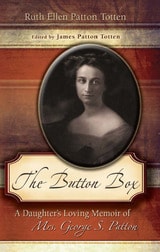
The Button Box
A Daughter's Loving Memoir of Mrs. George S. PattonRuth Ellen Patton Totten, Edited by James Patton Totten, Foreward by Carlo W. D'Este
University of Missouri Press, 2005
"There was never a moment in our lives that we were not reminded that our father was the finest, bravest, most gallant, and best-looking man who ever lived and that he was destined for unimaginable glory. This we took for granted. Being our father’s children was a special influence in all our lives, but the greatest, most pervasive, and most interesting influence in my life was Ma."
The Button Box is the loving memoir of Beatrice Ayer Patton (1886–1953), the wife of one of the greatest military figures in history, General George S. Patton, Jr. Written by the Pattons’ daughter, Ruth Ellen, the book covers Beatrice’s life from her youth in a wealthy New England family until her death, with an emphasis on her years of marriage to George Patton. A supportive and loving wife, Beatrice was accomplished in her own right as an equestrian, musician, lecturer, sailor, and internationally published author. Courageous and adventurous, Beatrice played a significant role in her husband’s life. Without her, General Patton might never have reached his own level of success.
The CIA in Ecuador
Marc Becker
Duke University Press, 2021
The Camera Does the Rest
How Polaroid Changed PhotographyPeter Buse
University of Chicago Press, 2016
Polaroid was often dismissed as a toy, but Buse takes it seriously, showing how it encouraged photographic play as well as new forms of artistic practice. Drawing on unprecedented access to the archives of the Polaroid Corporation, Buse reveals Polaroid as photography at its most intimate, where the photographer, photograph, and subject sit in close proximity in both time and space—making Polaroid not only the perfect party camera but also the tool for frankly salacious pictures taking.
Along the way, Buse tells the story of the Polaroid Corporation and its ultimately doomed hard-copy wager against the rising tide of digital imaging technology. He explores the continuities and the differences between Polaroid and digital, reflecting on what Polaroid can tell us about how we snap photos today. Richly illustrated, The Camera Does the Rest will delight historians, art critics, analog fanatics, photographers, and all those who miss the thrill of waiting to see what develops.
The Canals of Mars
A MemoirGary Fincke
Michigan State University Press, 2010
The Canals of Mars is a memoir that explores and ponders "weakness," which in Gary Fincke's family was the catch-all term for every possible human flaw-physical, psychological, or spiritual. Fincke grew up near Pittsburgh during the 1950s and 1960s, raised by blue-collar parents for whom the problems that beset people-from alcoholism to nearsightedness to asthma to fear of heights-were nothing but weaknesses.
In a highly engaging style, Fincke meditates on the disappointments he suffered-in his body, his mind, his work-because he was convinced that he had to be "perfect." Anything less than perfection was weakness and no one, he understood from an early age, wants to be weak.
Six of the chapters in the book have been cited in Best American Essays. The chapter that provides the book's title, The Canals of Mars, won a Pushcart Prize and was included in The Pushcart Book of Essays: The Best Essays from a Quarter Century of the Pushcart Prize.
The Capital Times
A Proudly Radical Newspaper’s Century Long Fight for Justice and for PeaceJohn Nichols
Wisconsin Historical Society Press, 2017
As Madison’s Capital Times marks its 100th anniversary in 2017, editors Dave Zweifel and John Nichols recall the remarkable history of a newspaper that served as the tribune of Robert M. La Follette and the progressive movement, earned the praise of Franklin Delano Roosevelt for its stalwart opposition to fascism, battled Joe McCarthy during the "Red Scare," championed civil rights, women’s rights, and LGBTQ rights, opposed the Vietnam War and the invasion of Iraq, and stood with Russ Feingold when he cast the only US Senate vote against the Patriot Act. The Capital Times did not do this from New York or Washington but from the middle of America, with a readership of farmers, factory workers, teachers, and shopkeepers who stood by The Cap Times when the newspaper was boycotted, investigated, and attacked for its determination.
At a point when journalism is under assault, when newspapers struggle to survive, and "old media" struggles to find its way in a digital age, The Capital Times remains unbowed—still living up to the description Lord Francis Williams, the British newspaper editor, wrote 50 years ago: "The vast majority of American papers are as dull as weed-covered ditch-water; vast Saharas of cheap advertising with occasional oases of editorial matter written to bring happiness to the Chamber of Commerce and pain and irritation to none; the bland leading the bland.… Just here and there are a few relics of the old fighting muckraking tradition of American journalism, like The Capital Times of Madison."
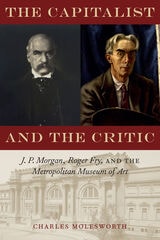
The Capitalist and the Critic
J. P. Morgan, Roger Fry, and the Metropolitan Museum of ArtBy Charles Molesworth
University of Texas Press, 2016
A skillful and fascinating retelling of the often testy relationship between J. P. Morgan and Roger Fry, two men who did more to establish the preeminence of the Metropolitan Museum of Art than any collector and curator before or since.
Shortly after the turn of the twentieth century, the Metropolitan Museum of Art began an ambitious program of collection building and physical expansion that transformed it into one of the world’s foremost museums, an eminence that it has maintained ever since. Two men of singular qualities and accomplishments played key roles in the Met’s transformation—J. P. Morgan, America’s leading financier and a prominent art collector, and Roger Fry, the headstrong English expert in art history who served as the Met’s curator of painting. Their complicated, often contentious relationship embodies and illuminates the myriad tensions between commerce and art, philanthropists and professional staff, that a great museum must negotiate to define and fulfill its mission.
In this masterful, multidisciplinary narrative, Charles Molesworth offers the first in-depth look at how Morgan and Fry helped to mold the cultural legacy of masterpieces of painting and the development of the “encyclopedic” museum. Structuring the book as a joint biography, Molesworth describes how Morgan used his vast wealth to bring European art to an American citizenry, while Fry brought high standards of art history from the world of connoisseurs to a general public. Their clashes over the purpose and functions of the Met, which ultimately led to Fry’s ouster, reveal the forces—personal and societal—that helped to shape the Metropolitan Museum and other major American cultural institutions during the twentieth century.
The Career of Nicodemus Dyzma
A NovelTadeusz Dolega-Mostowicz; Translated from the Polish by Ewa Malachowska-Pasek and Megan Thomas and with an introduction by Benjamin Paloff
Northwestern University Press, 2020
Winner of the 2021 Found in Translation Award
First published in Polish in 1932, The Career of Nicodemus Dyzma was Tadeusz Dołęga-Mostowicz’s breakout novel. Dyzma is an unemployed clerk who crashes a swanky party, where he makes an offhand crass remark that sets him on a new course. Soon high society—from government ministers to drug-fueled aristocrats—wants a piece of him. As Dyzma’s status grows, his vulgarity is interpreted as authenticity and strength. He is unable to comprehend complicated political matters, but his cryptic responses are celebrated as wise introspection. His willingness to do anything to hold on to power—flip-flopping on political positions, inventing xenophobic plots, even having enemies assaulted—only leads to greater success.
Dołęga-Mostowicz wrote his novel in a newly independent Poland rampant with political corruption and populist pandering. Jerzy Kosinski borrowed heavily from the novel when he wrote Being There, and readers of both books will recognize similarities between their plots. This biting political satire—by turns hilarious and disturbing, contemptuous and sympathetic—is an indictment of a system in which money and connections matter above all else, bluster and ignorance are valorized, and a deeply incompetent man rises to the highest spheres of government.
The Carnegie Maya III
Carnegie Institution of Washington Notes on Middle American Archaeology and Ethnology, 1940-1957John M. Weeks
University Press of Colorado, 2011
The series began in 1940 as an outlet for information that may have been considered too unimportant, brief, or restricted to be submitted for formal publication. However, these notes are often of great interest to the specialists for whom they are designed and to whom their distribution is restricted. The majority of the essays-most of which are on the Maya-are on archaeological subjects, epigraphy, ethnohistory and ethnography, and linguistics. As few original copies of the Notes series are known to exist in U.S. and Canadian libraries, the book will make these essays easily accessible to students, academics, and researchers in the field.
Purchase of the print book comes with free individual access to the Adobe Digital Editions Carnegie Maya Series Ebook, which contains the complete set of The Carnegie Maya, The Carnegie Maya II, The Carnegie Maya III and The Carnegie Maya IV, thus making hundreds of documents from the Carnegie Institution's Maya program available in one source.
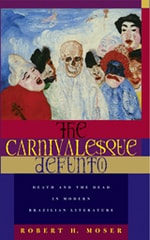
The Carnivalesque Defunto
Death and the Dead in Modern Brazilian LiteratureRobert H. Moser
Ohio University Press, 2008
Robert H. Moser details the emergence of a prominent motif in modern Brazilian literature, namely the carnivalesque defunto (the dead) that, in the form of a protagonist or narrator, returns to beseech, instruct, chastise, or even seduce the living. Drawing upon the works of esteemed Brazilian writers such as Machado de Assis, Érico Veríssimo, and Jorge Amado, Moser demonstrates how the defunto, through its mocking laughter and Dionysian resurrection, simultaneously subverts and inverts the status quo, thereby exposing underlying points of tension within Brazilian social and political history.
Incorporating elements of both a celestial advocate and an untrustworthy specter, the defunto also serves as a metaphor for one of modern Brazil’s greatest dilemmas: reconciling the past with the present.
The Carnivalesque Defunto offers a comparative framework by juxtaposing the Brazilian literary ghost with other Latin American, Caribbean, and North American examples. It also presents a cross-disciplinary approach toward understanding the complex relationship forged between Brazil’s spiritual traditions and literary expressions.
The Case That Never Dies
The Lindbergh KidnappingLloyd C. Gardner
Rutgers University Press, 2012
Winner of the 2004 New Jersey Studies Academic Alliance Book Award for Scholarly Non-Fiction | Named a 2005 Honor Book by the New Jersey Council for the Humanities
Essential reading for anyone interested in the most famous American crime of the twentieth century
Since its original publication in 2004, The Case That Never Dies has become the standard account of the Lindbergh kidnapping. Now, in a new afterword, historian Lloyd C. Gardner presents a surprise conclusion based on recently uncovered pieces of evidence that were missing from the initial investigation as well as an evaluation of Charles Lindbergh’s role in the search for the kidnappers. Out of the controversies surrounding the actions of Colonel Lindbergh, Norman Schwarzkopf, commander of the New Jersey State Police, and FBI director J. Edgar Hoover, Gardner presents a well-reasoned argument for what happened on the night of March 1, 1932.
The Case That NeverDies places the Lindbergh kidnapping, investigation, and trial in the context of the Depression, when many feared the country was on the edge of anarchy. Gardner delves deeply into the aspects of the case that remain confusing to this day, including Lindbergh’s dealings with crime baron Owney Madden, Al Capone’s New York counterpart, as well as the inexplicable exploits of John Condon, a retired schoolteacher who became the prosecution’s best witness. The initial investigation was hampered by Colonel Lindbergh, who insisted that the police not attempt to find the perpetrator because he feared the investigation would endanger his son’s life. He relented only when the child was found dead.
After two years of fruitless searching, Bruno Richard Hauptmann, a German immigrant, was discovered to have some of the ransom money in his possession. Hauptmann was arrested, tried, and sentenced to death. Throughout the book, Gardner pays special attention to the evidence of the case and how it was used and misused in the trial. Whether Hauptmann was guilty or not, Gardner concludes that there was insufficient evidence to convict him of first-degree murder.
Set in historical context, the book offers not only a compelling read, but a powerful vantage point from which to observe the United States in the 1930s as well as contemporary arguments over capital punishment.
The Changing Pattern of Black Politics in Britain
Kalbir Shukra
Pluto Press, 1998

The Changing Structure of Europe
Economic, Social, and Political TrendsRobert Beck
University of Minnesota Press, 1970
The Character of Truth
Historical Figures in Contemporary FictionNaomi Jacobs
Southern Illinois University Press, 1990
Can the novel survive in an age when tales of historical figures and contemporary personalities dominate the reading lists of the book-buying public?
Naomi Jacobs addresses this question in a study of writers such as William Styron, E. L. Doctorow, and Robert Coover, who challenge the dominance of nonfiction by populating their fictions with real people, living and dead. Jacobs explores the genesis, varieties, and implications of this trend in a prose as lively as that of the writers she critiques.
Using as a case study Robert Coover’s portrait of Richard Nixon in The Public Burning, Jacobs addresses the important legal and ethical questions raised by this trend and applies contemporary libel law to the fictionalization of living people, such as Richard Nixon. She closes her study by speculating on the future of this device and of the novel.

The Chattertooth Eleven
Eduard Bass
Karolinum Press, 2009
In 1922, the same year that saw the establishment of the Czechoslovak Football Association, a former singer and cabaret director from Prague published a novel about soccer. Eighty-six years later, that novel, Eduard Bass’s The Chattertooth Eleven, has been reprinted more than thirty times, has been made into a film, and has become one of the most popular works of Czech fiction.
The novel tells the extraordinary adventures of an ordinary father, Chattertooth, and his eleven sons—whom he has raised as an unbeatable soccer team. This humorous tale—set in the aftermath of World War I—celebrates fair play and perseverance while simultaneously taking a gently ironic stance towards the Czech infatuation with soccer. This edition, in a new graphic layout by Zdenek Ziegler, is accompanied by charming illustrations by Jirí Grus.
The Chekhovian Intertext
Dialogue with a ClassicLyudmila Parts
The Ohio State University Press, 2008
In The Chekhovian Intertext Lyudmila Parts explores contemporary Russian writers’ intertextual engagement with Chekhov and his myth. She offers a new interpretative framework to explain the role Chekhov and other classics play in constructing and maintaining Russian national identity and the reasons for the surge in the number of intertextual engagements with the classical authors during the cultural crisis in post-perestroika Russia.
The book highlights the intersection of three distinct concepts: cultural memory, cultural myth, and intertextuality. It is precisely their interrelation that explains how intertextuality came to function as a defense mechanism of culture, a reaction of cultural memory to the threat of its disintegration.
In addition to offering close readings of some of the most significant short stories by contemporary Russian authors and by Chekhov, as a theoretical case study the book sheds light on important processes in contemporary literature: it explores the function of intertextuality in the development of Russian literature, especially post-Soviet literature; it singles out the main themes in contemporary literature, and explains their ties to national cultural myths and to cultural memory. The Chekhovian Intertext may serve as a theoretical model and impetus for examinations of other national literatures from the point of view of the relationship between intertextuality and cultural memory.
The Chicago Black Renaissance and Women's Activism
Anne Meis Knupfer
University of Illinois Press, 2006
The book examines various groups of black female activists, including writers and actresses, social workers, artists, school teachers, and women's club members to document the impact of social class, gender, nativity, educational attainment, and professional affiliations on their activism. Together, these women worked to sponsor black history and literature, to protest overcrowded schools, and to act as a force for improved South Side housing and employment opportunities. Knupfer also reveals the crucial role these women played in founding and sustaining black cultural institutions, such as the first African American art museum in the country; the first African American library in Chicago; and various African American literary journals and newspapers. As a point of contrast, Knupfer also examines the overlooked activism of working-class and poor women in the Ida B. Wells and Altgeld Gardens housing projects.
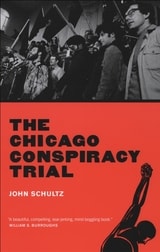
The Chicago Conspiracy Trial
Revised EditionJohn Schultz
University of Chicago Press, 2009
In 1969, the Chicago Seven were charged with intent to "incite, organize, promote, and encourage" antiwar riots during the chaotic 1968 Democratic National Convention in Chicago. The defendants included major figures of the antiwar and racial justice movements: Abbie Hoffman and Jerry Rubin, the madcap founders of the Yippies; Tom Hayden and Rennie Davis, longtime antiwar organizers; David Dellinger, a pacifist and chair of the National Mobilization Committee to End the War in Vietnam; and Bobby Seale, co-founder of the Black Panther Party, who would be bound and gagged in the courtroom before his case was severed from the rest.
The Chicago Conspiracy Trial is an electrifying account of the months-long trial that commanded the attention of a divided nation. John Schultz, on assignment for The Evergreen Review, witnessed the whole trial of the Chicago Seven, from the jury selection to the aftermath of the verdict. In his vivid account, Schultz exposes the raw emotions, surreal testimony, and judicial prejudice that came to define one of the most significant legal events in American history.
In October 2020, Aaron Sorkin's film, The Trial of the Chicago Seven, will bring this iconic trial to the screen.