Results by title
1713 books match the query '21st century' and 315 start with t
The Remains of Reason
On Meaning after LacanDominik Finkelde
Northwestern University Press, 2025
Unpacking the central role of the unconscious in the relationship between mind and world
Over a series of careful readings and accessible discussions, prefaced by a foreword from Eric Santner, Dominik Finkelde analyzes the central role of the unconscious in the relationship between mind and world. Moving beyond Freud, Kant, and Hegel and toward the contemporary work of the Ljubljana School, he explores how humans relate to facts and the influence of the unconscious on questions regarding truth, perception, and meaning.
Aspects of recognition and unconscious processes of transference are at stake in these fundamental questions of perception and knowledge, though these have been widely ignored in epistemological and ontological debates in contemporary philosophy. Finkelde draws on both the continental and analytic traditions, ultimately building from the work of current-day interlocutors to interrogate questions concerning the influence of enigmatic signifiers, the role of sublime objects of ideology, the importance of fantasy cultivation and transgression, and the power of jouissance as an ontological factor.
The Repoliticization of the Welfare State
Ian P. McManus
University of Michigan Press, 2022
The Repoliticization of the Welfare State grapples with the evolving nature of political conflict over social spending after the Great Recession. While the severity of the economic crisis encouraged strong social spending responses to protect millions of individuals, governments have faced growing pressure to reduce budgets and make deep cuts to the welfare state. Whereas conservative parties have embraced fiscal discipline and welfare state cuts, left-wing parties have turned away from austerity in favor of higher social spending. These political differences represent a return of traditional left-right beliefs over social spending and economic governance.
This book is one of the first to systematically compare welfare state politics before and after the Great Recession, arguing that a new and lasting post-crisis dynamic has emerged where political parties once again matter for social spending. At the heart of this repoliticization are intense ideological debates over market regulation, social inequality, redistribution, and the role of the state. The book analyzes social spending dynamics for 28 countries before and after the crisis. It also includes in-depth country case studies representing five distinct welfare state types: Germany, the United Kingdom, Sweden, Spain, and the Czech Republic.
The Resistance to Poetry
James Longenbach
University of Chicago Press, 2005
But the resistance to poetry is quite specifically the wonder of poetry. Considering a wide array of poets, from Virgil and Milton to Dickinson and Glück, Longenbach suggests that poems convey knowledge only inasmuch as they refuse to be vehicles for the efficient transmission of knowledge. In fact, this self-resistance is the source of the reader's pleasure: we read poetry not to escape difficulty but to embrace it.
An astute writer and critic of poems, Longenbach makes his case through a sustained engagement with the language of poetry. Each chapter brings a fresh perspective to a crucial aspect of poetry (line, syntax, figurative language, voice, disjunction) and shows that the power of poetry depends less on meaning than on the way in which it means—on the temporal process we negotiate in the act of reading or writing a poem. Readers and writers who embrace that process, Longenbach asserts, inevitably recoil from the exaggeration of the cultural power of poetry in full awareness that to inflate a poem's claim on our attention is to weaken it.
A graceful and skilled study, The Resistance to Poetry honors poetry by allowing it to be what it is. This book arrives at a critical moment—at a time when many people are trying to mold and market poetry into something it is not.
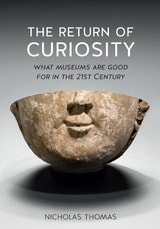
The Return of Curiosity
What Museums are Good For in the 21st CenturyNicholas Thomas
Reaktion Books, 2016
Reflecting on art galleries, science and history institutions, and collections all around the world, Nicholas Thomas argues that, in times marked by incredible insecurity and turbulence, museums help us sustain and enrich society. Moreover, they stimulate us to think in new ways about our world, compelling our curiosity and showing us the importance of understanding one another. Thomas looks at museums not simply as storehouses of old things but as the products of meaningful relationships between curators, the public, history, and culture. These relationships, he shows, don’t always go smoothly, but they do always offer new insights into the many ways we value—and try to preserve—the world we live in.
The result is a refreshing and hopeful look at museums as a cultural force, one that, by gathering together paintings, tropical birds, antiques, or even our own bodies, offers an illuminating reflection of who we are.
The Return of the Moguls
How Jeff Bezos and John Henry Are Remaking Newspapers for the Twenty-First CenturyDan Kennedy
University Press of New England, 2018
The Returned
Former U.S. Migrants’ Lives in Mexico CityClaudia Masferrer
Russell Sage Foundation, 2025
Masferrer, Hamilton, and Denier draw on interviews with former U.S. migrants living in Mexico City to better understand the experience of return migration to urban areas. Each of the migrants they spoke with lived in the United States for long periods with noncitizen status during the last four decades. During this time, U.S. immigration policy became increasingly focused on restriction and enforcement, which made it difficult for migrants to safely move back and forth across the border for work or to visit family without documentation. The authors find that upon their return, migrants in Mexico City felt disoriented and lost and had difficulty adapting to a massive urban environment where there is little support for returnees. They struggled to translate their work experience from their time in the U.S. to find quality jobs. Additionally, many found their family lives upended as they reunited with or formed families in the U.S.. Some found themselves separated from family members still in the U.S. with no ability to legally visit them. Others brought their families back to Mexico, some of whom were U.S. citizens and had never been to Mexico before. They, too, struggled to adapt and integrate to life in Mexico City.
The authors use the experiences of return migrants to discuss policies and practices that would improve their lives and ease their reintegration. To help with the disorientation they experience, returnees proposed ongoing psychological support with mental health professionals who have knowledge and training in the social and legal issues that return migrants face. Return migrants also advocated for policies to enhance skill matching, job creation, and entrepreneurship, as many felt the occupational skills they developed in the U.S. were undervalued in Mexico. To address family separation, returnees argued for legal and policy reform to accommodate family reunification.
The Returned is an illuminating account of the difficulties faced by return migrants and their families in Mexico City.
The Rise of Necro/Narco Citizenship
Belonging and Dying in the Southwest North American RegionCarlos G. Vélez-Ibáñez
University of Arizona Press, 2025
Carlos G. Vélez-Ibáñez’s latest work, The Rise of Necro/Narco Citizenship investigates the intricate and often harrowing dynamics that define the borderlands between the United States, Mexico, and beyond. This groundbreaking book provides a comprehensive cultural, economic, social, and political-ecological analysis, illustrating how various forms of violence and militarization have reshaped the daily lives and identities of the region’s inhabitants. Through meticulous ethnographic fieldwork, extensive archival research, and rigorous statistical data, Vélez-Ibáñez exposes the deeply entrenched networks of exploitation and conflict that have emerged in response to global capitalism’s pressures.
Vélez-Ibáñez builds on theorization about necrocitizenship to introduce the concept of necro/narco citizenship, which argues that pervasive violence and socioeconomic disruptions create a unique form of existence on both sides of the border. The author examines the dislocation of thousands, the persistent threat of violence, and the ways in which these forces compel individuals to navigate a reality steeped in addiction, self-destruction, and civil deterioration. This book reveals the transnational networks and the morally compromised political economies that sustain them, offering readers an unflinching look at the cost of survival in this tumultuous region.
This essential volume is not only a critical addition to the field of anthropology but also an invaluable resource for those interested in the sociopolitical landscape of the U.S.-Mexico border. Vélez-Ibáñez’s insights will resonate with scholars, students, and policymakers alike. The Rise of Necro/Narco Citizenship challenges us to rethink the narratives of violence, militarization, and resistance that define our understanding of the Southwest North American Region.
The Rise of the West in Presidential Elections
Jennifer L Robinson
University of Utah Press, 2010
The Rise of the West in Presidential Elections explores the changing role of the region in national elections. The prominence of Nevada as an early caucus state and Denver acting as the host city of the 2008 Democratic National Convention, as well as increased candidate visitation and media expenditure, point to the rising importance of the region, an importance that political candidates will increasingly need to recognize. The book examines the political advantages and barriers to the creation of a regional primary for western states, a move that could further change the influence of the West on the national agenda and highlight western issues and values.
The contributors to The Rise of the West in Presidential Elections analyze the process of nominating presidential candidates, review the issues that make western states a united region unique in the political process, and explore the changing political dynamics in the nation that enable these changes. The book will be of interest to every citizen looking to learn more about the primary process, as well as to the political junkie more focused on the nuances of political maneuvering between states jockeying for position at the front of the election process.
The Road to Citizenship
What Naturalization Means for Immigrants and the United StatesAptekar, Sofya
Rutgers University Press, 2015
The Ruse of Repair
US Neoliberal Empire and the Turn from CritiquePatricia Stuelke
Duke University Press, 2021
The Sacking of Fallujah
A People's HistoryRoss Caputi
University of Massachusetts Press, 2019
The Iraqi city of Fallujah has become an epicenter of geopolitical conflict, where foreign powers and non-state actors have repeatedly waged war in residential neighborhoods with staggering humanitarian consequences. The Sacking of Fallujah is the first comprehensive study of the three recent sieges of this city, including those by the United States in 2004 and the Iraqi-led operation to defeat ISIS in 2016.
Unlike dominant military accounts that focus on American soldiers and U.S. leaders and perpetuate the myth that the United States “liberated” the city, this book argues that Fallujah was destroyed by coalition forces, leaving public health crises, political destabilization, and mass civilian casualties in their wake. This meticulously researched account cuts through the propaganda to uncover the lived experiences of Fallujans under siege and occupation, and contextualizes these events within a broader history of U.S. policy in the Middle East. Relying on testimony from Iraqi civilians, the work of independent journalists, and documentation from human rights organizations, Ross Caputi, Richard Hil, and Donna Mulhearn place the experiences of Fallujah's residents at the center of this city's recent history.
The Scientific Literature
A Guided TourEdited by Joseph E. Harmon and Alan G. Gross
University of Chicago Press, 2007
The scientific article has been a hallmark of the career of every important western scientist since the seventeenth century. Yet its role in the history of science has not been fully explored. Joseph E. Harmon and Alan G. Gross remedy this oversight with The Scientific Literature, a collection of writings—excerpts from scientific articles, letters, memoirs, proceedings, transactions, and magazines—that illustrates the origin of the scientific article in 1665 and its evolution over the next three and a half centuries.
Featuring articles—as well as sixty tables and illustrations, tools vital to scientific communication—that represent the broad sweep of modern science, The Scientific Literature is a historical tour through both the rhetorical strategies that scientists employ to share their discoveries and the methods that scientists use to argue claims of new knowledge. Commentaries that explain each excerpt’s scientific and historical context and analyze its communication strategy accompany each entry.
A unique anthology, The Scientific Literature will allow both the scholar and the general reader to experience first hand the development of modern science.
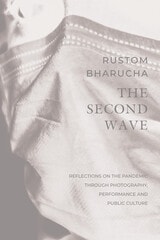
The Second Wave
Reflections on the Pandemic through Photography, Performance and Public CultureRustom Bharucha
Seagull Books, 2022
Focusing on the second wave of the Covid-19 pandemic in India between April and December 2021, Rustom Bharucha’s timely essay reflects on four interconnected realities that haunted this ongoing crisis—death, grief, mourning, and extinction. How do we cope with multiple deaths and the dislocation of rituals when the act of mourning is either postponed or denied? What roles do political surveillance, censorship, the regulation of lockdowns, and the sheer indifference to the lives of people play in the containment of civil liberties? Through vivid examples of photography, theater, dance, visual arts, and the cultures of everyday life, this meditative essay illuminates both the horror of the pandemic as well as its unexpected intimacies and revelations of shared suffering. Against the destruction of nature and the disrespect for the nonhuman, The Second Wave offers lessons in resilience through its reflections on the ethos of waiting and the need to re-envision breath as a vital resource of self-renewal and resistance.
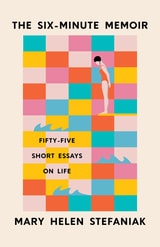
The Six-Minute Memoir
Fifty-Five Short Essays on LifeMary Helen Stefaniak
University of Iowa Press, 2022
What’s more, writing prompts at the end of the book invite readers to search their own lives for such moments—the kind that could be forgotten but instead are turned, by the gift of perspective and perfectly chosen detail, into treasure. The Six-Minute Memoir encourages people to tell their own stories even if they think they don’t have the kind of story that belongs in a memoir.
The Sky Is Incomplete
Travel Chronicles in PalestineIrmgard Emmelhainz
Vanderbilt University Press, 2023
In order to render the issue of representation, of speaking on behalf of the Palestinian ordeal in all its complexity, The Sky Is Incomplete is composed as a collage, gathering diary entries, letters, experimental passages, script, poetry, art criticism, political analysis, and other genres to convey an opaque view of the Palestine Question. Beyond representation in the sense of giving testimony or speaking on behalf of the Palestinians, however, the author’s parting point is relational: The Sky Is Incomplete is about encounters—with friends, mentors, interlocutors, lovers, children, activists, and soldiers (Israeli and Palestinian).
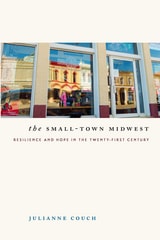
The Small-Town Midwest
Resilience and Hope in the Twenty-First CenturyJulianne Couch
University of Iowa Press, 2016
The people featured live—by choice or circumstances—in one of nine small communities in five states in the Midwest and Great Plains: Iowa, Kansas, Missouri, Nebraska, and Wyoming. Daily they witness people moving out, heading to more urban areas, small businesses closing down, connected infrastructure drying up, entrepreneurs becoming discouraged, and more people thinking about leaving. This is the story we hear in the news, the story told by abandoned farms, consolidated schools, and boarded-up Main Streets.
But it’s not the whole story. As Couch found in her travels throughout the Midwest, many people long to return to these towns, places where they may have deep family roots or where they can enjoy short commutes, familiar neighbors, and proximity to rural and wild places. And many of the residents of small midwestern towns are not just accepting the trend toward urbanization with a sigh. They are betting that the tide of rural population loss can’t go out forever, and they’re backing those bets with creatively repurposed schools, entrepreneurial innovation, and community commitment. From Bellevue, Iowa, to Centennial, Wyoming, the region’s small-town residents remain both hopeful and resilient.
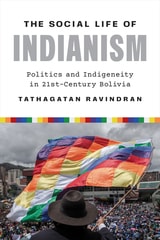
The Social Life of Indianism
Politics and Indigeneity in Twenty-First-Century BoliviaTathagatan Ravindran
University of Texas Press, 2025
A sophisticated analysis of an influential Indigenous political ideology.
When the political ideology known as “Indianism” developed in Bolivia in the 1960s, it was premised on a rejection of Bolivian nationalism. Over the ensuing decades, however, it underwent several mutations as it moved out of a close circle of intellectuals to grip the urban masses that brought Evo Morales—the first Indigenous president—to power in 2006.
The Social Life of Indianism offers a fresh perspective by examining Bolivian Indigenous politics through the lens of political ideology. Through an ethnographic study of Indianism in the city of El Alto, Tathagatan Ravindran shows how canonical Indianism—the original ideology that rejects Bolivia as enslaver of the Indian nation—provided philosophical ballast for exponents of a more popular folk Indianism that accommodates the Bolivian state and pursues Indigenous empowerment within it. Synthesizing approaches from several disciplines, Ravindran demonstrates how canonical Indianism was not refuted or supplanted; it refracted, in the broader public, into a new common sense. A sophisticated analysis of a complex political landscape, The Social Life of Indianism brings much-needed nuance to one of the most prominent forms of Indigenous ideology and offers a unique framework for analyzing political ideologies across the contemporary world.
The Sonic Episteme
Acoustic Resonance, Neoliberalism, and BiopoliticsRobin James
Duke University Press, 2019
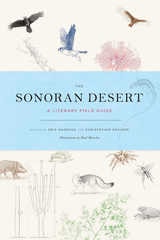
The Sonoran Desert
A Literary Field GuideEdited by Eric Magrane and Christopher Cokinos, Illustrations by Paul Mirocha
University of Arizona Press, 2016
Both literary anthology and hands-on field guide, The Sonoran Desert is a groundbreaking book that melds art and science. It captures the stunning biodiversity of the world’s most verdant desert through words and images. More than fifty poets and writers—including Christopher Cokinos, Alison Hawthorne Deming, Ken Lamberton, Eric Magrane, Jane Miller, Gary Paul Nabhan, Alberto Ríos, Ofelia Zepeda, and many others—have composed responses to key species of this striking desert. Each creative contribution is joined by an illustration by award-winning artist Paul Mirocha and scientific information about the creature or plant authored by the book’s editors.
From the saguaro to the mountain lion, from the black-tailed jackrabbit to the mesquite, the species represented here have evoked compelling and creative responses from each contributor. Just as writers such as Edward Abbey and Ellen Meloy have memorialized the desert, this collection is sure to become a new classic, offering up the next generation of voices of this special and beautiful place, the Sonoran Desert.
The Sound of Thinking
A Listener's Companion to Conceptual MusicCraig Dworkin
University of Chicago Press, 2026
An artist draws two octaves of pitches randomly from a hat, just enough to set each syllable of the dictionary definition of imprimer (to score, to print). Trawling the internet for cute videos of cats “playing” piano, an artist splices together a complete, note-perfect performance of Arnold Schoenberg’s Opus 11. Half a century after the release of Miles Davis’s album Kind of Blue, a jazz quintet spends months of focused practice to reproduce the original exactly. These performances share a common denominator: absolute fidelity to the outcome of a system. From Marcel Duchamp to Yoko Ono, Steve Reich to Sun Ra, The Sound of Thinking brings together a diverse array of musical or sonic works that are algorithmic, automatic, permutational, procedural, or otherwise structured in contrast to the creative expressivity typically associated with artistic production.
In twenty-six short essays, each keyed to a term that begins with a different letter of the alphabet, Dworkin discusses work composed or performed according to a predetermined rule, transforming artistic creation into a system running its course. The pieces detailed here, drawn from more than a century of musical experimentation, offer a fresh perspective on the history of innovative music by decoupling music from expression and by shunting creativity from the level of organizing sounds to the level of devising a system that can do the organizing. Not only does this book spotlight the critical role of music in twentieth-century conceptual art, but it also identifies previously overlooked links among diverse artists and movements.
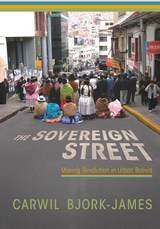
The Sovereign Street
Making Revolution in Urban BoliviaCarwil Bjork-James
University of Arizona Press, 2020
In the early twenty-first century Bolivian social movements made streets, plazas, and highways into the decisively important spaces for acting politically, rivaling and at times exceeding voting booths and halls of government. The Sovereign Street documents this important period, showing how indigenous-led mass movements reconfigured the politics and racial order of Bolivia from 1999 to 2011.
Drawing on interviews with protest participants, on-the-ground observation, and documentary research, activist and scholar Carwil Bjork-James provides an up-close history of the indigenous-led protests that changed Bolivia. At the heart of the study is a new approach to the interaction between protest actions and the parts of the urban landscape they claim. These “space-claiming protests” both communicate a message and exercise practical control over the city. Bjork-James interrogates both protest tactics—as experiences and as tools—and meaning-laden spaces, where meaning is part of the racial and political geography of the city.
Taking the streets of Cochabamba, Sucre, and La Paz as its vantage point, The Sovereign Streetoffers a rare look at political revolution as it happens. It documents a critical period in Latin American history, when protests made headlines worldwide, where a generation of pro-globalization policies were called into question, and where the indigenous majority stepped into government power for the first time in five centuries.
The Sovereign Trickster
Death and Laughter in the Age of DuterteVicente L. Rafael
Duke University Press, 2022

The Spider
Aurko Maitra
Seagull Books, 2025
In the largely undocumented sphere of political violence in eastern India, Qadir the Spider is a mythological killer and casanova, known for the various assassinations and liaisons he carries out across the region. His oldest son Rahim is the latest entry to the field. A 13-year-old killer, the boy bides his time like his father—killing, farming, and getting high as the battles go on around him. In this world where they only follow orders, mutilation becomes their only expression, the nature of violence their only meaningful form of autonomy in the various power struggles of interior Bengal.
After his first year in the field, as the child is groomed by his father to carry on the ways of their mercenary clan, he begins to confront the various legends surrounding the Spider. However, while roaming the strange, spectral forests surrounding the town, his chance encounter with a pair of wandering musicians leads him to question the killings that pattern his life. As he searches for the answers around him, he is slowly led to confront the man his father truly is, as well as the man he knows he will become.
A gripping tale of inherited violence and identity in politically volatile Bengal, Aurko Maitra’s The Spider contains powerful, disturbing parallels to modern-day conflicts. Boldly interrogating our concepts of autonomy and survival in chaos, this revelatory novel explores the impact of political violence and timeless issues of legacy and intergenerational violence.
The State of the American Mind
16 Leading Critics on the New Anti-IntellectualismMark Bauerlein
Templeton Press, 2015
That was over twenty years ago. Since then, the United States has experienced unprecedented wealth, more youth enrolling in higher education than ever before, and technology advancements far beyond what many in the 1980s dreamed possible. And yet, the state of the American mind seems to have deteriorated further. Benjamin Franklin’s “self-made man” has become a man dependent on the state. Independence has turned into self-absorption. Liberty has been curtailed in the defense of multiculturalism.
In order to fully grasp the underpinnings of this shift away from the self-reliant, well-informed American, editors Mark Bauerlein and Adam Bellow have brought together a group of cultural and educational experts to discuss the root causes of the decline of the American mind. The writers of these fifteen original essays include E. D. Hirsch, Nicholas Eberstadt, and Dennis Prager, as well as Daniel Dreisbach, Gerald Graff, Richard Arum, Robert Whitaker, David T. Z. Mindich, Maggie Jackson, Jean Twenge, Jonathan Kay, Ilya Somin, Steve Wasserman, Greg Lukianoff, and R. R. Reno. Their essays are compiled into three main categories:
- States of Mind: Indicators of Intellectual and Cognitive Decline
- These essays broach specific mental deficiencies among the population, including lagging cultural IQ, low Biblical literacy, poor writing skills, and over-medication.
- Personal and Cognitive Habits/Interests
- These essays turn to specific mental behaviors and interests, including avoidance of the news, short attention spans, narcissism, and conspiracy obsessions.
- National Consequences
- These essays examine broader trends affecting populations and institutions, including rates of entitlement claims, voting habits, and a low-performing higher education system.
The Story upon a Hill
The Puritan Myth in Contemporary American FictionChristopher Leise
University of Alabama Press, 2017
The Story upon a Hill: The Puritan Myth in Contemporary American Fiction analyzes the work of several of the most important contemporary writers in the United States as reinterpreting commonplace narratives of the country’s origins with a keen eye on the effects of inclusion and exclusion that Puritan myths promote. In 1989, Ronald Reagan recalled the words of Massachusetts Bay Colony governor John Winthrop, who imagined the colony as a “city upon a hill” for future nations to emulate. In Reagan’s speech, Winthrop’s signature rhetoric became an emblem of American idealism, and for many Americans, the Puritans’ New England was the place where the United States forged its original identity.
But what if Winthrop never gave that speech? What if he did not even write it? Historians cannot definitively answer these questions. In fact, no group that we refer to as American Puritans thought of themselves as Puritans. Rather, they were a group of dissident Christians often better defined by their disagreements than their shared beliefs.
Literary scholars interested in Anglo-American literary production from the seventeenth century through the present, historians, and readers interested in how ideas about Christianity circulate in popular culture will find fascinating the ways in which William Gaddis, Kurt Vonnegut, Thomas Pynchon, and Marilynne Robinson repurpose so-called Puritan forms of expression to forge a new narrative of New England’s Congregationalist legacy in American letters. Works by Colson Whitehead, Paul Auster, Toni Morrison, and others are also considered. The Story upon a Hill raises a provocative question: if the Puritans never existed as we understand them, what might American history look like in that context?
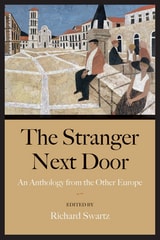
The Stranger Next Door
An Anthology from the Other EuropeRichard Swartz
Northwestern University Press, 2013
The Balkans have been so troubled by violence and misunderstanding that we have the verb “balkanize,” meaning to break up into smaller, warring components. While some of the region’s artists and thinkers have invariably fallen into nationalistic tendencies, the twenty-two prominent authors represented here, from the erstwhile Yugoslavia and its neighbors Albania and Bulgaria, have chosen to attempt to bridge these divides. The essays, biographical sketches, and stories in The Stranger Next Door form a project of understanding that picks up where politics fail. The English-language translation joins editions of the book that appeared concurrently in all of the participating countries.
The Strategy of Sanctions
From Antiquity to the 21st CenturyEdited by S.C.M. Paine and Anand Toprani
University of Michigan Press, 2026
In recent decades, sanctions have become the preferred tool for the nonviolent coercion of other nations. The US government employs sanctions and embargoes to pressure not only enemies but sometimes even its friends. Despite their ubiquity, the debate over their efficacy continues. Measuring their success is controversial since many sanctions are economic, while the desired outcomes are political. Under what circumstances can sanctions or embargoes deliver their intended policy objectives at an acceptable cost? How can they best be integrated with other available instruments of national power?
The Strategy of Sanctions uses case studies from antiquity to the present to evaluate the strategic utility of sanctions and embargoes. The authors utilize a blended approach combining earlier definitions of sanctions, concepts from teaching of strategy, as well as terms of their own creation. They apply a common framework for teaching strategy, which disaggregates operational-level from strategic-level goals, and goals from strategies. By examining sanctions in different eras and contexts, the book highlights the circumstances that are most conducive to their efficacy.

The Street Is My Pulpit
Hip Hop and Christianity in KenyaMwenda Ntarangwi
University of Illinois Press, 2016
Mwenda Ntarangwi explores the Kenyan hip hop scene through the lens of Juliani's life and career. A born-again Christian, Juliani produces work highlighting the tensions between hip hop's forceful self-expression and a pious approach to public life, even while contesting the basic presumptions of both. In The Street Is My Pulpit, Ntarangwi forges an uncommon collaboration with his subject that offers insights into Juliani's art and goals even as Ntarangwi explores his own religious experience and subjective identity as an ethnographer. What emerges is an original contribution to the scholarship on hip hop's global impact and a passionate study of the music's role in shaping new ways of being Christian in Africa.
The Struggle for Food Sovereignty
Alternative Development and the Renewal of Peasant Societies TodayEdited by Remy Herrera and Kin Chi Lau
Pluto Press, 2015
The Submerged State
How Invisible Government Policies Undermine American DemocracySuzanne Mettler
University of Chicago Press, 2011
“Keep your government hands off my Medicare!” Such comments spotlight a central question animating Suzanne Mettler’s provocative and timely book: why are many Americans unaware of government social benefits and so hostile to them in principle, even though they receive them? The Obama administration has been roundly criticized for its inability to convey how much it has accomplished for ordinary citizens. Mettler argues that this difficulty is not merely a failure of communication; rather it is endemic to the formidable presence of the “submerged state.”
In recent decades, federal policymakers have increasingly shunned the outright disbursing of benefits to individuals and families and favored instead less visible and more indirect incentives and subsidies, from tax breaks to payments for services to private companies. These submerged policies, Mettler shows, obscure the role of government and exaggerate that of the market. As a result, citizens are unaware not only of the benefits they receive, but of the massive advantages given to powerful interests, such as insurance companies and the financial industry. Neither do they realize that the policies of the submerged state shower their largest benefits on the most affluent Americans, exacerbating inequality. Mettler analyzes three Obama reforms—student aid, tax relief, and health care—to reveal the submerged state and its consequences, demonstrating how structurally difficult it is to enact policy reforms and even to obtain public recognition for achieving them. She concludes with recommendations for reform to help make hidden policies more visible and governance more comprehensible to all Americans.
The sad truth is that many American citizens do not know how major social programs work—or even whether they benefit from them. Suzanne Mettler’s important new book will bring government policies back to the surface and encourage citizens to reclaim their voice in the political process.
The Summers
Ronya Othmann, translated by Gary Schmidt
University of Wisconsin Press, 2023
Leyla’s sexual awakening proves far less traumatic than her growing disenchantment with her German classmates and friends, who appear completely indifferent to the fate of her Yazidi community. Thoughtful and poignant, The Summers addresses issues of gender, sexuality, cultural difference, politics, and identity. Othmann draws readers into multiple worlds, ultimately revealing the hopes and dreams that bind us all together when forces threaten to tear us apart.
The Surprising New Life of Magical Realism
Marvelous Ecologies and Postnatural Disasters in Latin AmericaCharlotte Rogers
University of Chicago Press, 2027
An exploration of magical realism’s contemporary resurgence, as writers attempt to capture the realities of climate change.
What literary mode could possibly convey the extent of today’s climate catastrophes? In The Surprising New Life of Magical Realism, Charlotte Rogers argues that the answer is magical realism, a genre whose defining characteristic is to make the unbelievable an unremarkable part of everyday life. She pairs classic works by Alejo Carpentier, Gabriel García Márquez, and Rosario Ferré with contemporary novels by Carlos Fonseca, Fernanda Melchor, and Rita Indiana to show how the techniques of magical realism enable new approaches to scenes of environmental collapse and social injustice. Challenging widespread accounts of the genre’s decline, Rogers shows that the signature aesthetics of magical realism—the marvelous, the amazing, the strange—are integral to twenty-first-century fiction.
The Swallow Anthology of New American Poets
David Yezzi
Ohio University Press, 2009
Groundbreaking anthologies of this kind come along once in a generation and, in time, define that generation. The Swallow Anthology of New American Poets identifies a group of poets who have recently begun to make an important mark on contemporary poetry, and their accomplishment and influence will only grow with time. The poets gathered here do not constitute a school or movement; rather they are a group of unique artists working at the top of their craft. As editor David Yezzi writes in his introduction, “Here is a group of writers who have, perhaps for the first time since the modernist revolution of the early twentieth century, returned to a happy détente between warring camps. This, I think, is a new—at least in our age—kind of poet, who, dissatisfied with the climate of extremes, has found a balance between innovation and received form, perceiving the terror beneath the classical and the unities girding romanticism. This new unified sensibility is no watered-down admixture, no pragmatic compromise worked out in departments of creative writing, but, rather, the vital spirit behind some of the most accomplished poetry being written by America’s new poets.”
Poets include: Craig Arnold, David Barber, Rick Barot, Priscilla Becker, Geoffrey Brock, Daniel Brown, Peter Campion, Bill Coyle, Morri Creech, Erica Dawson, Ben Downing, Andrew Feld, John Foy, Jason Gray, George Green, Joseph Harrison, Ernest Hilbert, Adam Kirsch, Joanie Mackowski, Eric McHenry, Molly McQuade, Joshua Mehigan, Wilmer Mills, Joe Osterhaus, J. Allyn Rosser, A. E. Stallings, Pimone Triplett, Catherine Tufariello, Deborah Warren, Rachel Wetzsteon, Greg Williamson, Christian Wiman, Mark Wunderlich, David Yezzi, and C. Dale Young.
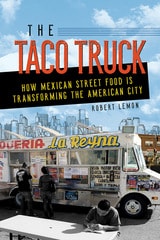
The Taco Truck
How Mexican Street Food Is Transforming the American CityRobert Lemon
University of Illinois Press, 2019
Drawing on interviews with taco truck workers and his own skills as a geographer, Robert Lemon illuminates new truths about foodways, community, and the unexpected places where ethnicity, class, and culture meet. Lemon focuses on the San Francisco Bay Area, Sacramento, and Columbus, Ohio, to show how the arrival of taco trucks challenge preconceived ideas of urban planning even as cities use them to reinvent whole neighborhoods. As Lemon charts the relationships between food practices and city spaces, he uncovers the many ways residents and politicians alike contest, celebrate, and influence not only where your favorite truck parks, but what's on the menu.
The Technique of Thought
Nancy, Laruelle, Malabou, and Stiegler after NaturalismIan James
University of Minnesota Press, 2019
Interrogating the work of four contemporary French philosophers to rethink philosophy’s relationship to science and science’s relationship to reality
The Technique of Thought explores the relationship between philosophy and science as articulated in the work of four contemporary French thinkers—Jean-Luc Nancy, François Laruelle, Catherine Malabou, and Bernard Stiegler. Situating their writings within both contemporary scientific debates and the philosophy of science, Ian James elaborates a philosophical naturalism that is notably distinct from the Anglo-American tradition. The naturalism James proposes also diverges decisively from the ways in which continental philosophy has previously engaged with the sciences. He explores the technical procedures and discursive methods used by each of the four thinkers as distinct “techniques of thought” that approach scientific understanding and knowledge experimentally.
Moving beyond debates about the constructed nature of scientific knowledge, The Technique of Thought argues for a strong, variably configured, and entirely novel scientific realism. By bringing together post-phenomenological perspectives concerning individual or collective consciousness and first-person qualitative experience with science’s focus on objective and third-person quantitative knowledge, James tracks the emergence of a new image of the sciences and of scientific practice.
Stripped of aspirations toward total mastery of the universe or a “grand theory of everything,” this renewed scientific worldview, along with the simultaneous reconfiguration of philosophy’s relationship to science, opens up new ways of interrogating immanent reality.
The Temp Economy
From Kelly Girls to Permatemps in Postwar AmericaAuthored by Erin Hatton
Temple University Press, 2010
Everyone knows that work in America is not what it used to be. Layoffs, outsourcing, contingent work, disappearing career ladders—these are the new workplace realities for an increasing number of people. But why? In The Temp Economy, Erin Hatton takes one of the best-known icons of the new economy—the temp industry—and finds that it is more than just a symbol of this degradation of work. The temp industry itself played an active role in this decline—and not just for temps. Industry leaders started by inventing the "Kelly Girl," exploiting 1950s gender stereotypes to justify low wages, minimal benefits, and chronic job insecurity. But they did not stop with Kelly Girls. From selling human"business machines" in the 1970s to "permatemps" in the 1990s, the temp industry relentlessly portrayed workers as profit-busting liabilities that hurt companies' bottom lines even in boom times. These campaigns not only legitimized the widespread use of temps, they also laid the cultural groundwork for a new corporate ethos of ruthless cost cutting and mass layoffs.
Succinct, highly readable, and drawn from a vast historical record of industry documents, The Temp Economy is a one-stop resource for anyone interested in the temp industry or the degradation of work in postwar America.
The Theater of Narration
From the Peripheries of History to the Main Stages of ItalyJuliet Guzzetta
Northwestern University Press, 2021
This book examines the theater of narration, an Italian performance genre and aesthetic that revisits historical events of national importance from local perspectives, drawing on the rich relationship between personal experiences and historical accounts. Incorporating original research from the private archives of leading narrators—artists who write and perform their work—Juliet Guzzetta argues that the practice teaches audiences how ordinary people aren’t simply witnesses to history but participants in its creation.
The theater of narration emerged in Italy during the labor and student protests, domestic terrorism, and social progress of the 1970s. Developing Dario Fo and Franca Rame’s style of political theater, influenced by Jerzy Grotowski and Bertolt Brecht, and following in the freewheeling actor‑author traditions of the commedia dell’arte, narrators created a new form of popular theater that grew in prominence in the 1990s and continues to gain recognition. Guzzetta traces the history of the theater of narration, contextualizing its origins—both political and intellectual—and centers the contributions of Teatro Settimo, a performance group overlooked in previous studies. She also examines the genre’s experiments in television and media.
The first full-length book in English on the subject, The Theater of Narration leverages close readings and a wealth of primary sources to examine the techniques used by narrators to remake history—a process that reveals the ways in which history itself is a theater of narration.
The Theater of Operations
National Security Affect from the Cold War to the War on TerrorJoseph Masco
Duke University Press, 2014
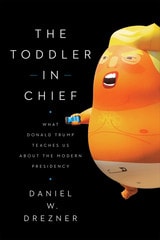
The Toddler in Chief
What Donald Trump Teaches Us about the Modern PresidencyDaniel W. Drezner
University of Chicago Press, 2020
Every president faces criticism and caricature. Donald Trump, however, is unique in that he is routinely characterized in ways more suitable for a toddler. What’s more, it is not just Democrats, pundits, or protestors who compare the president to a child; Trump’s staffers, subordinates, and allies on Capitol Hill also describe Trump like a small, badly behaved preschooler.
In April 2017, Daniel W. Drezner began curating every example he could find of a Trump ally describing the president like a toddler. So far, he’s collected more than one thousand tweets—a rate of more than one a day. In The Toddler-in-Chief, Drezner draws on these examples to take readers through the different dimensions of Trump’s infantile behavior, from temper tantrums to poor impulse control to the possibility that the President has had too much screen time. How much damage can really be done by a giant man-baby? Quite a lot, Drezner argues, due to the winnowing away of presidential checks and balances over the past fifty years. In these pages, Drezner follows his theme—the specific ways in which sharing some of the traits of a toddler makes a person ill-suited to the presidency—to show the lasting, deleterious impact the Trump administration will have on American foreign policy and democracy.
The “adults in the room” may not be able to rein in Trump’s toddler-like behavior, but, with the 2020 election fast approaching, the American people can think about whether they want the most powerful office turned into a poorly run political day care facility. Drezner exhorts us to elect a commander-in-chief, not a toddler-in-chief. And along the way, he shows how we must rethink the terrifying powers we have given the presidency.
The Transparent Traveler
The Performance and Culture of Airport SecurityRachel Hall
Duke University Press, 2015
The Turn to Transcendence
The Role of Religion in the Twenty-First CenturyGlenn Olsen
Catholic University of America Press, 2010
The Turn
A NovellaRachel Feder
Northwestern University Press, 2026
A contemporary gothic delving into the power of unmoored lust and familial bonds
When Baxter, a young writer and recent college graduate, accepts a live-in nanny position for an affluent professor’s family in the foothills of the Rocky Mountains, she rapidly becomes aware of strange happenings orbiting the family and their children, Quinn and Thebes. After the father becomes estranged and the mother disappears into the night with only one child, Baxter is left utterly lost and in charge of the baby, Thebes, as she struggles to make sense of the bizarre occurrences within the family, the house, and even her own body. But the unnatural occurrences are far from over, and as Baxter stumbles in the dark to protect the child, something sinister stalks the night, looking to sink in its teeth.
For fans of gothic classics such as The Turn of the Screw and Carmilla, The Turn is an eerie and magnificent modern gothic tale about the monstrous bond of love between caregiver and child.
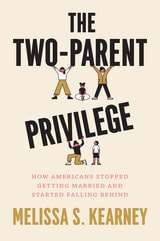
The Two-Parent Privilege
How Americans Stopped Getting Married and Started Falling BehindMelissa S. Kearney
University of Chicago Press, 2023
In The Two-Parent Privilege, Melissa S. Kearney makes a provocative, data-driven case for marriage by showing how the institution’s decline has led to a host of economic woes—problems that have fractured American society and rendered vulnerable populations even more vulnerable. Eschewing the religious and values-based arguments that have long dominated this conversation, Kearney shows how the greatest impacts of marriage are, in fact, economic: when two adults marry, their economic and household lives improve, offering a host of benefits not only for the married adults but for their children. Studies show that these effects are today starker, and more unevenly distributed, than ever before. Kearney examines the underlying causes of the marriage decline in the US and draws lessons for how the US can reverse this trend to ensure the country’s future prosperity.
Based on more than a decade of economic research, including her original work, Kearney shows that a household that includes two married parents—holding steady among upper-class adults, increasingly rare among most everyone else—functions as an economic vehicle that advantages some children over others. As these trends of marriage and class continue, the compounding effects on inequality and opportunity grow increasingly dire. Their effects include not just children’s behavioral and educational outcomes, but a surprisingly devastating effect on adult men, whose role in the workforce and society appears intractably damaged by the emerging economics of America’s new social norms.
For many, the two-parent home may be an old-fashioned symbol of the idyllic American dream. But The Two-Parent Privilege makes it clear that marriage, for all its challenges and faults, may be our best path to a more equitable future. By confronting the critical role that family makeup plays in shaping children’s lives and futures, Kearney offers a critical assessment of what a decline in marriage means for an economy and a society—and what we must do to change course.
The University in the Twenty-first Century
Teaching the New Enlightenment in the Digital AgeHannes Klöpper
Central European University Press, 2016
The Unruly Dead
Spirits, Memory, and State Formation in Timor-LesteLia Kent
University of Wisconsin Press, 2024
With generous, careful ethnography and incisive analysis, Kent challenges comfortable, linear narratives of transitional justice and argues that this memory work is reshaping the East Timorese social and political order—a process in which the dead are active, and sometimes disruptive, participants. Community ties and even the landscape itself are imbued with their presence and demands, and the horrific scale of mass death in recent times—at least a third of the population perished during the Indonesian occupation—means Timor-Leste’s dead have real, significant power in the country’s efforts to remember, recover, and reestablish itself.
The Vanishing Newspaper [2nd Ed]
Saving Journalism in the Information AgePhilip Meyer
University of Missouri Press, 2009
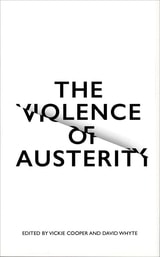
The Violence of Austerity
Edited by David Whyte and Vickie Cooper
Pluto Press, 2017
In The Violence of Austerity, David Whyte and Vickie Cooper bring together the passionate voices of campaigners and academics to show that rather than stimulating economic growth, austerity policies have led to a dismantling of the social systems that operated as a buffer against economic hardship. Chapters from major contributors—including Danny Dorling, Mary O’Hara and Rizwaan Sabir—show how austerity is a form of institutional violence more socially harmful and far-reaching than other more politicized and publicized forms of violence, such as terrorism or gun violence. Contributors expose highly significant cases of this institutional violence driven by public sector cuts: police attacks on the homeless, violent evictions of the rented sector, risks faced by people on workfare, and more. The Violence of Austerity is a devastating, authoritative study of the myriad ways austerity policies harm people in Britain that will resonate with anyone concerned with the increasing power of the political elite and the future of social welfare.
The Waiting Room Reader
Stories to Keep You CompanyJoan Cusack Handler
CavanKerry Press, 2010
The Waiting Room Reader
Words to Keep You CompanyRachel Hadas
CavanKerry Press, 2013
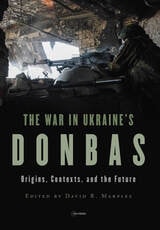
The War in Ukraine’s Donbas
Origins, Contexts, and the FutureDavid R. Marples
Central European University Press, 2022
This collective work analyzes the ongoing conflict in Ukraine, providing a coherent picture of Ukraine and Eastern Europe in the period 2013–2020. Giving voice to different social groups, scholarly communities and agencies relevant to Ukraine’s recent history, The War in Ukraine's Donbas goes beyond simplistic media interpretations that limit the analysis to Vladimir Putin and Russian aims to annex Ukraine. Instead, the authors identify the deeper roots linked to the autonomy and history of Donbas as a region. The contributions explore local society and traditions and the alienation from Ukraine caused by the events of Euromaidan, which saw the removal of the Donetsk-based president Viktor Yanukovych. Other chapters address the refugee crisis, the Minsk Accords in 2014 and the impact of the new president Volodymyr Zelensky and his efforts to bring the war to an end by negotiations among Russia, Ukraine, France, and Germany.
The book concludes with four proposals for a durable peace in Donbas: territorial power-sharing; the conversion of rebels into legitimate political parties; amnesty for all participants of the armed conflict; and a transitional period of several years until political institutions are fully re-established.