Results by title
2646 books match the query 'History & Criticism' and 549 start with t
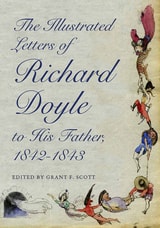
The Illustrated Letters of Richard Doyle to His Father, 1842–1843
Richard Doyle
Ohio University Press, 2015
Before he joined the staff of Punch and designed its iconic front cover, illustrator Richard “Dicky” Doyle was a young man whose father (political caricaturist John Doyle) charged him with sending a weekly letter, even though they lived under the same roof. This volume collects the fifty-three illustrated missives in their entirety for the first time and provides an uncommon peek into the intimate but expansive observations of a precocious social commentator and artist.
In a series of vivid manuscript canvases, Doyle observes Victorian customs and society. He visits operas, plays, and parades. He watches the queen visiting the House of Commons and witnesses the state funeral of the Duke of Sussex. He is caught up in the Chartist riots of August 1842 and is robbed during one of the melees. And he provides countless illustrations of ordinary people strolling in the streets and swarming the parks and picture galleries of the metropolis. The sketches offer a fresh perspective on major social and cultural events of London during the early 1840s by a keen observer not yet twenty years old.
Doyle’s epistles anticipate the modern comic strip and the graphic novel, especially in their experimentation with sequential narrative and their ingenious use of space. The letters are accompanied by a full biographical and critical introduction with new material about Doyle’s life.
The Image in Dispute
Art and Cinema in the Age of PhotographyEdited by Dudley Andrew
University of Texas Press, 1997
Photography, cinema, and video have irrevocably changed the ways in which we view and interpret images. Indeed, the mechanical reproduction of images was a central preoccupation of twentieth-century philosopher Walter Benjamin, who recognized that film would become a vehicle not only for the entertainment of the masses but also for consumerism and even communism and fascism.
In this volume, experts in film studies and art history take up the debate, begun by Benjamin, about the power and scope of the image in a secular age. Part I aims to bring Benjamin's concerns to life in essays that evoke specific aspects and moments of the visual culture he would have known. Part II focuses on precise instances of friction within the traditional arts brought on by this century's changes in the value and mission of images. Part III goes straight to the image technologies themselves—photography, cinema, and video—to isolate distinctive features of the visual cultures they help constitute.
As we advance into the postmodern era, in which images play an ever more central role in conveying perceptions and information, this anthology provides a crucial context for understanding the apparently irreversible shift from words to images that characterized the modernist period. It will be important reading for everyone in cultural studies, film and media studies, and art history.
The Immigrant Scene
Ethnic Amusements in New York, 1880–1920Sabine Haenni
University of Minnesota Press, 2008
Explores the relationship between immigrant and national culture
Yiddish melodramas about the tribulations of immigration. German plays about alpine tourism. Italian vaudeville performances. Rubbernecking tours of Chinatown. In the New York City of the late nineteenth and early twentieth centuries, these seemingly disparate leisure activities played similar roles: mediating the vast cultural, demographic, and social changes that were sweeping the nation’s largest city.
In The Immigrant Scene, Sabine Haenni reveals how theaters in New York created ethnic entertainment that shaped the culture of the United States in the early twentieth century. Considering the relationship between leisure and mass culture, The Immigrant Scene develops a new picture of the metropolis in which the movement of people, objects, and images on-screen and in the street helped residents negotiate the complexities of modern times. In analyzing how communities engaged with immigrant theaters and the nascent film culture in New York City, Haenni traces the ways in which performance and cinema provided virtual mobility—ways of navigating the socially complex metropolis—and influenced national ideas of immigration, culture, and diversity in surprising and lasting ways.
The Impossible Woman
Television, Feminism, and the FutureKristen Hoerl
Rutgers University Press, 2026
The Indecent Screen
Regulating Television in the Twenty-First CenturyChris, Cynthia
Rutgers University Press, 2019
The Inheritor
A PlayKate Bredeson and Thalia Wolff
Northwestern University Press, 2025
The first English-language translation of the 1968 activist play about inequality and access to education
In The Inheritor, surrealist imagery and experimental forms convey the radically different experience of two students, the Inheritor and the Non-Inheritor, as they prepare for a high-stakes exam. Revealing a world of privilege where “there is no such thing as luck,” the play features a beheaded knight, a talking record player, and a boisterous chorus of professors depicted as a flock of squawking birds.
Based on sociologists Pierre Bourdieu and Jean-Claude Passeron’s The Inheritors: French Students and Their Relations to Culture, the play was collectively created by Théâtre de l’Aquarium, a company then composed entirely of students. It proved a powerful success when it premiered in May 1968 amid student and worker protests in Paris, and it continues to speak forcefully to education inequity on campuses across anglophone countries today.
The Inquisition in Hollywood
Politics in the Film Community, 1930-60Larry Ceplair and Steven Englund
University of Illinois Press, 1979
The definitive work on the Hollywood blacklist era
The Inquisition in Hollywood examines the suppression of radical political activity in the film industry from the days of the Great Depression through the tumultuous House Un-American Activities Commission era to the waning days of the infamous blacklist.
Although this thirty-year period of American history is marked by widespread targeting of leftists in all areas of life, those in the film industry–-predominately screenwriters–-were considered to be in positions of great potential indoctrinating power, and found themselves under intense scrutiny as the Cold War hysteria mounted.
Ceplair and Englund trace the history of political struggle in Hollywood back to the formation of the Screen Writers Guild in 1933. Many of the blacklisted filmmakers were members of the Communist Party and all of the graylisted filmmakers had expressed their sympathy with progressive (mainly anti-fascist) causes.
Although no Hollywood Communist has ever been linked to espionage or sabotage, and charges of subversive indoctrination have no basis in documented fact, this book powerfully shows how devastating a mere suspicion or insinuation of guilt could be during the era of the Red Menace.
Twenty-two years after its initial publication, The Inquisition in Hollywood remains the definitive work on the blacklist era, and this new edition features a new introduction by the authors.

The Intellect Handbook of Documentary
Edited by Kate Nash and Deane Williams
Intellect Books, 2025
The Intellect Handbook of Documentary is an important go-to resource for practitioners, scholars, and students in this burgeoning field. It tackles key topics and debates including the role of documentary in post-truth culture, the rise of streaming giants, and the implications for national documentary cultures, as well as the shifting, increasingly hybrid, practices of documentary activism and the professionalization of impact. Featuring work by key figures in international documentary scholarship and talented emerging scholars, the Handbook is a landmark publication for documentary studies in the twenty-first century.
The Handbook is broad in its scope, incorporating historical, theoretical, empirical, and practical scholarship. It is organized around ten key themes and debates: What and where is documentary (studies); documentary in an age of epistemic uncertainty; documentary histories; documentary and the archive; audio and visualities; documentary relationalities; beyond the Anthropocene; digital and documentary practices; documentary and (new) politics; and a golden age of documentary distribution and funding. Importantly, the Handbook incorporates the voices and practices of practitioners from the Global South, challenging the dominance of Western voices in documentary scholarship.
The Interface
IBM and the Transformation of Corporate Design, 1945–1976John Harwood
University of Minnesota Press, 2016
In February 1956 the president of IBM, Thomas Watson Jr., hired the industrial designer and architect Eliot F. Noyes, charging him with reinventing IBM’s corporate image, from stationery and curtains to products such as typewriters and computers and to laboratory and administration buildings. What followed—a story told in full for the first time in John Harwood’s The Interface—remade IBM in a way that would also transform the relationships between design, computer science, and corporate culture.
IBM’s program assembled a cast of leading figures in American design: Noyes, Charles Eames, Paul Rand, George Nelson, and Edgar Kaufmann Jr. The Interface offers a detailed account of the key role these designers played in shaping both the computer and the multinational corporation. Harwood describes a surprising inverse effect: the influence of computer and corporation on the theory and practice of design. Here we see how, in the period stretching from the “invention” of the computer during World War II to the appearance of the personal computer in the mid-1970s, disciplines once well outside the realm of architectural design—information and management theory, cybernetics, ergonomics, computer science—became integral aspects of design.
As the first critical history of the industrial design of the computer, of Eliot Noyes’s career, and of some of the most important work of the Office of Charles and Ray Eames, The Interface supplies a crucial chapter in the story of architecture and design in postwar America—and an invaluable perspective on the computer and corporate cultures of today.

The International Movie Industry
Edited by Gorham Kindem
Southern Illinois University Press, 2000
Movies are both art and commerce, creative expressions of national/cultural interests and preoccupations and part of a global entertainment market. The past century has witnessed a transformation of the movies from popular novelties into highly valued cultural icons and commodities that have promoted national identity and specific political agendas, while also affecting international trade.
This comprehensive history of the international movie industry from its inception in 1895 to the present features nineteen original essays by international scholars who examine the film industries of nineteen countries and six continents. Each chapter in The International Movie Industry focuses on a specific national movie industry’s economic and related social, aesthetic, technological, and political/ideological development within an international context during the last century. The result is a global history of the movie industry over the last one hundred years.
The Italian Opera Singers in Mozart's Vienna
Dorothea Link
University of Illinois Press, 2022
Authoritative and insightful, The Italian Opera Singers in Mozart's Vienna offers a singular look at a musical milieu and a key to addressing the performance-practice problem of how to cast the Mozart roles today.

The Jazz Barn
Music Inn, the Berkshires, and the Place of Jazz in American LifeJohn Gennari
Brandeis University Press, 2025
This is a book about what happened in the 1950s in a barn, an icehouse, and a greenhouse in the verdant Berkshire Hills of western Massachusetts. Against the backdrop of McCarthyism, the civil rights movement, the expansion of the Afro-Caribbean diaspora, and postwar cultural tourism, two New Yorkers bought part of a sprawling estate in Lenox, where they converted an old barn and other outbuildings into an inn that could host musical performances and seminars. The Berkshire Music Barn went on to host jazz greats like Duke Ellington, Dave Brubeck, and Billie Holiday, as well as jazz roundtables grounded in folkloric approaches to the music.
The Jazz Barn explores the cultural significance of venues like the Berkshire Music Barn and later the Lenox School of Jazz to tell a surprising story about race, culture, and place. John Gennari explores how a predominantly white New England town became a haven for African American musicians, and reveals the Berkshires as an important incubator not just of American literature and classical music but also of the Modern Jazz Quartet and Ornette Coleman’s “new thing.” The Berkshire Music Barn became a crucial space for the mainstreaming of jazz. By the late 1950s, the School of Jazz was an epicenter of the genre’s avant-garde.
Richly illustrated with the photographs of Clemens Kalischer among others, The Jazz Barn demonstrates that the locations where jazz is played and heard indelibly shape the music and its meanings.
The Jazz Singer
Edited, with an introduction by Robert L. Carringer; Tino T. Balio, Series Edito
University of Wisconsin Press, 1979
The Jazz of the Southwest
An Oral History of Western SwingBy Jean A. Boyd
University of Texas Press, 1998
They may wear cowboy hats and boots and sing about "faded love," but western swing musicians have always played jazz! From Bob Wills and the Texas Playboys to Asleep at the Wheel, western swing performers have played swing jazz on traditional country instruments, with all of the required elements of jazz, and some of the best solo improvisation ever heard.
In this book, Jean A. Boyd explores the origins and development of western swing as a vibrant current in the mainstream of jazz. She focuses in particular on the performers who made the music, drawing on personal interviews with some fifty living western swing musicians. From pioneers such as Cliff Bruner and Eldon Shamblin to current performers such as Johnny Gimble, the musicians make important connections between the big band swing jazz they heard on the radio and the western swing they created and played across the Southwest from Texas to California.
From this first-hand testimony, Boyd re-creates the world of western swing-the dance halls, recording studios, and live radio shows that broadcast the music to an enthusiastic listening audience. Although the performers typically came from the same rural roots that nurtured country music, their words make it clear that they considered themselves neither "hillbillies" nor "country pickers," but jazz musicians whose performance approach and repertory were no different from those of mainstream jazz. This important aspect of the western swing story has never been told before.
The Jewish Kulturbund Theatre Company in Nazi Berlin
Rebecca Rovit
University of Iowa Press, 2012
The Kulturbund’s directors were repeatedly caught between escalating demands from their Nazi overseers and from their own Jewish constituents. By examining why and how an all-Jewish repertory theatre could coexist with the Nazi regime, Rovit raises broader questions about the nature of art in an environment of coercion and isolation, artistic integrity and adaptability, and community and identity.
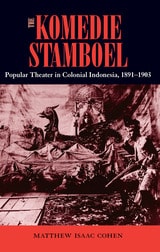
The Komedie Stamboel
Popular Theater in Colonial Indonesia, 1891–1903Matthew Isaac Cohen
Ohio University Press, 2006
Originating in 1891 in the port city of Surabaya, the Komedie Stamboel, or Istanbul-style theater, toured colonial Indonesia, Singapore, and Malaysia by rail and steamship. The company performed musical versions of the Arabian Nights, European fairy tales and operas such as Sleeping Beauty and Aida, as well as Indian and Persian romances, Southeast Asian chronicles, true crime stories, and political allegories. The actors were primarily Eurasians, the original backers were Chinese, and audiences were made up of all races and classes. The Komedie Stamboel explores how this new hybrid theater pointed toward possibilities for the transformation of self in a colonial society and sparked debates on moral behavior and mixed-race politics.
While audiences marveled at spectacles involving white-skinned actors, there were also racial frictions between actors and financiers, sexual scandals, fights among actors and patrons, bankruptcies, imprisonments, and a murder.
Matthew Isaac Cohen's evocative social history situates the Komedie Stamboel in the culture of empire and in late nineteenth-century itinerant entertainment. He shows how the theater was used as a symbol of cross-ethnic integration in postcolonial Indonesia and as an emblem of Eurasian cultural accomplishment by Indische Nederlanders. A pioneering study of nineteenth-century Southeast Asian popular culture, The Komedie Stamboel gives a new picture of the region's arts and culture and explores the interplay of currents in global culture, theatrical innovation, and movement in colonial Indonesia.ABOUT THE AUTHOR---Matthew Isaac Cohen is senior lecturer in Drama and Theatre Studies at Royal Holloway University of London. His articles on Southeast Asian performance have appeared in New Theatre Quarterly, Asian Theatre Journal, Journal of the Royal Asiatic Society, and Archipel. As a practicing shadow puppeteer, he has performed in the United States, Europe, and Asia.
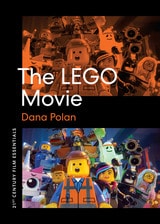
The LEGO Movie
By Dana Polan
University of Texas Press, 2020
What happens when we set out to understand LEGO not just as a physical object but as an idea, an icon of modernity, an image—maybe even a moving image? To what extent can the LEGO brick fit into the multimedia landscape of popular culture, especially film culture, today? Launching from these questions, Dana Polan traces LEGO from thing to film and asserts that The LEGO Movie is an exemplar of key directions in mainstream cinema, combining the visceral impact of effects and spectacle with ironic self-awareness and savvy critique of mass culture as it reaches for new heights of creativity.
Incorporating insights from conversations with producer Dan Lin and writer-directors Phil Lord and Chris Miller, Polan examines the production and reception of The LEGO Movie and closely analyzes the film within popular culture at large and in relation to LEGO as a toy and commodity. He identifies the film’s particular stylistic and narrative qualities, its grasp of and response to the culture industry, and what makes it a distinctive work of animation within the seeming omnipresence of animation in Hollywood, and reveals why the blockbuster film, in all its silliness and seriousness, stands apart as a divergent cultural work.
The Lab Book
Situated Practices in Media StudiesDarren Wershler
University of Minnesota Press, 2021
An important new approach to the study of laboratories, presenting a practical method for understanding labs in all walks of life
From the “Big Science” of Bell Laboratories to the esoteric world of séance chambers to university media labs to neighborhood makerspaces, places we call “labs” are everywhere—but how exactly do we account for the wide variety of ways that they produce knowledge? More than imitations of science and engineering labs, many contemporary labs are hybrid forms that require a new methodological and theoretical toolkit to describe. The Lab Book investigates these vital, creative spaces, presenting readers with the concept of the “hybrid lab” and offering an extended—and rare—critical investigation of how labs have proliferated throughout culture.
Organized by interpretive categories such as space, infrastructure, and imaginaries, The Lab Book uses both historical and contemporary examples to show how laboratories have become fundamentally connected to changes in the contemporary university. Its wide reach includes institutions like the MIT Media Lab, the Tuskegee Institute’s Jesup Wagon, ACTLab, and the Media Archaeological Fundus. The authors cover topics such as the evolution and delineation of lab-based communities, how labs’ tools and technologies contribute to defining their space, and a glossary of key hybrid lab techniques.
Providing rich historical breadth and depth, The Lab Book brings into focus a critical, but often misunderstood, aspect of the contemporary arts and humanities.
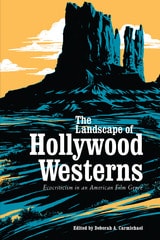
The Landscape of Hollywood Westerns
Ecocriticism in an American Film GenreCarmichael, Deborah A
University of Utah Press, 2006
The essays in this volume scrutinize the special place of nature and landscape in films—including silent, documentary, and feature length film—that are specifically American and Western. The films discussed here go beyond the stereotypical sagebrush setting. Although many of the films closely fit the standard conventions of the Western, others demonstrate the fluidity of the genre. The wildness of the western environment as a central fact of the American mythos encompasses far more than a brief period of national history or a specific geographical location.
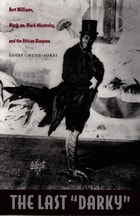
The Last "Darky"
Bert Williams, Black-on-Black Minstrelsy, and the African DiasporaLouis Chude-Sokei
Duke University Press, 2006
Chude-Sokei makes the crucial argument that Williams’s minstrelsy negotiated the place of black immigrants in the cultural hotbed of New York City and was replicated throughout the African diaspora, from the Caribbean to Africa itself. Williams was born in the Bahamas. When performing the “darky,” he was actually masquerading as an African American. This black-on-black minstrelsy thus challenged emergent racial constructions equating “black” with African American and marginalizing the many diasporic blacks in New York. It also dramatized the practice of passing for African American common among non-American blacks in an African American–dominated Harlem. Exploring the thought of figures such as Booker T. Washington, W. E. B. Du Bois, Marcus Garvey, and Claude McKay, Chude-Sokei situates black-on-black minstrelsy at the center of burgeoning modernist discourses of assimilation, separatism, race militancy, carnival, and internationalism. While these discourses were engaged with the question of representing the “Negro” in the context of white racism, through black-on-black minstrelsy they were also deployed against the growing international influence of African American culture and politics in the twentieth century.
The Last Judgment of Kings / Le Jugement dernier des rois
A Bilingual EditionYann Robert
Bucknell University Press, 2025
Joué pour la première fois le lendemain de l’exécution de Marie-Antoinette, Le Jugement dernier des rois met en scène le procès burlesque des autres rois et reines d’Europe : exhibés et enchaînés tels des animaux, contraints de se battre pour un tonneau de biscuits, et finalement anéantis par l’éruption spectaculaire d’un volcan. Tel est le contexte scandaleux—tragédie et farce à la fois—de la pièce la plus célèbre de la Révolution française, bien connue de tous les spécialistes de cette période. Jusqu’à maintenant, pourtant, il n’existait ni édition critique ni traduction anglaise de cet ouvrage historique. Notre édition bilingue fait revivre la pièce de Maréchal et la replace au centre des plus grands débats chez les historiens de la Révolution, traitant de justice, religion, commémoration, comédie, et propagande. Provocateur, facile à lire, et concis—parfaitement adapté aux étudiants d’un cours de français ou d’histoire—Le Jugement dernier des rois propose ainsi une introduction idéale à la période révolutionnaire et à ses principales controverses.
Published by Bucknell University Press. Distributed worldwide by Rutgers University Press.

The Last Metro
Frantois Truffaut, DirectorEdited by Mirella Jona Affron
Rutgers University Press, 1985
The Law of the Looking Glass
Cinema in Poland, 1896–1939Sheila Skaff
Ohio University Press, 2008
The Law of the Looking Glass: Cinema in Poland, 1896–1939 reveals the complex relationship between nationhood, national language, and national cinema in Europe before World War II. Author Sheila Skaff describes how the major issues facing the region before World War I, from the relatively slow pace of modernization to the desire for national sovereignty, shaped local practices in film production, exhibition, and criticism. She goes on to analyze local film production, practices of spectatorship in large cities and small towns, clashes over language choice in intertitles, and controversy surrounding the first synchronized sound experiments before World War I. Skaff depicts the creation of a national film industry in the newly independent country, the golden years of the silent cinema, the transition from silent to sound film—and debates in the press over this transition—as well as the first Polish and Yiddish “talkies.” She places particular importance on conflicts in majority-minority relations in the region and the types of collaboration that led to important films such as The Dybbuk and The Ghosts.
The Law of the Looking Glass: Cinema in Poland, 1896–1939 is the first comprehensive history of the country’s film industry before World War II. This history is characterized by alternating periods of multilingual, multiethnic production, on the one hand, and rejection of such inclusiveness, on the other. Through it all, however, runs a single unifying thread: an appreciation for visual imagery.
The Leading Man
Hollywood and the Presidential ImagePeretti, Burton W
Rutgers University Press, 2012
American presidents and Hollywood have interacted since the 1920s. This relationship has made our entertainment more political and our political leadership more aligned with the world of movies and movie stars.
In The Leading Man, Burton W. Peretti explores the development of the cinematic presidential image. He sets the scene in chapter 1 to show us how the chief executive, beginning with George Washington, was positioned to assume the mantle of cultural leading man. As an early star figure in the young republic, the president served as a symbol of national survival and wish fulfillment. The president, as head of government and head of state, had the potential to portray a powerful and charismatic role.
At the center of the story are the fourteen presidents of the cinematic era, from Herbert Hoover to Barack Obama. Since the 1920s, the president, like the lead actor in a movie, has been given the central place on the political stage under the intense glare of the spotlight. Like other American men, future presidents were taught by lead movie actors how to look and behave, what to say, and how to say it. Some, like John F. Kennedy and Richard M. Nixon, took particular care to learn from the grooming, gestures, movements, and vocal inflections of film actors and applied these lessons to their political careers. Ronald Reagan was a professional actor. Bill Clinton, a child of the post–World War II Baby Boom, may have been the biggest movie fan of all presidents. Others, including Lyndon Johnson, showed little interest in movies and their lessons for politicians.
Presidents and other politicians have been criticized for cheapening their offices by hiring image and advertising consultants and staging their public events. Peretti analyzes the evolution and the significance of this interaction to trace the convoluted history of the presidential cinematic image. He demonstrates how movies have been the main force in promoting appearance and drama over the substance of governing, and how Americans’ lives today may be dominated by entertainment at the expense of their engagement as citizens.
The Life and Afterlife of Swedish Biograph
From Commercial Circulation to Archival PracticesJan Olsson
University of Wisconsin Press, 2022
Sweden’s early film industry was dominated by Swedish Biograph (Svenska Biografteatern), home to star directors like Victor Sjöström and Mauritz Stiller. It is nostalgically remembered as the generative site of a nascent national artform, encapsulating a quintessentially Nordic aesthetic—the epicenter of Sweden’s cinematic Golden Age. In The Life and Afterlife of Swedish Biograph, veteran film scholar Jan Olsson takes a hard look at this established, romanticized narrative and offers a far more complete, complex, and nuanced story.
Nearly all of the studio’s original negatives were destroyed in an explosion in 1941, but Olsson’s comprehensive archival research shows how the company operated in a commercial, international arena, and how it was influenced not just by Nordic aesthetics or individual genius but also by foreign audiences’ expectations, technological demands, Hollywood innovations, and the gritty back-and-forth between economic pressures, government interference, and artistic desires. Olsson’s focus is wide, encompassing the studio’s production practices, business affairs, and cinematographic conventions, as well as the latter-day archival efforts that both preserved and obscured parts of Swedish Biograph’s story, helping construct the company’s rosy legacy. The result is a necessary rewrite to Swedish film historiography and a far fuller picture of a canonical film studio.
The Life of Music in North India
The Organization of an Artistic TraditionDaniel M. Neuman
University of Chicago Press, 1990
Drawing primarily from fieldwork performed in Delhi in 1969-71—from interviewing musicians, learning and performing on the Indian fiddle, and speaking with music connoisseurs—Neuman examines the cultural and social matrix in which Hindustani music is nurtured, listened and attended to, cultivated, and consumed in contemporary India. Through his interpretation of the impact that modern media, educational institutions, and public performances exert on the music and musicians, Neuman highlights the drama of a great musical tradition engaging a changing world, and presents the adaptive strategies its practitioners employ to practice their art. His work has gained the distinction of introducing a new approach to research on Indian music, and appears in this edition with a new preface by the author.
The Limits of Auteurism
Case Studies in the Critically Constructed New HollywoodGodfrey, Nicholas
Rutgers University Press, 2018
The book explores the role that contemporary critics played in determining how the movies of this period were understood and how, in turn, strategies of distribution influenced critical responses and dictated the conditions of entry into the rapidly codifying New Hollywood canon. Focusing on a small number of industrially significant films, this new history advances our understanding of this important moment of transition from Classical to contemporary modes of production.
The Live-Action Animated Film
Kyle Meikle
Rutgers University Press, 2026
The London Stage, 1660-1800 Part 5, 1776-1800
A Calendar of Plays, Entertainment & Afterpieces Together with Casts, Box-Reciepts and ContemporaryEdited by Charles Beecher Hogan, William Van Lennep, Emmett L. Avery, Arthur H.Scouten, George Winchester Stone
Southern Illinois University Press, 1970
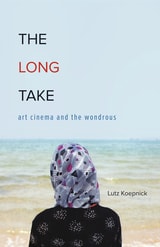
The Long Take
Art Cinema and the WondrousLutz Koepnick
University of Minnesota Press, 2017
In The Long Take, Lutz Koepnick posits extended shot durations as a powerful medium for exploring different modes of perception and attention in our fast-paced world of mediated stimulations. Grounding his inquiry in the long takes of international filmmakers such as Béla Tarr, Tsai Ming-liang, Abbas Kiarostami, Apichatpong Weerasethakul, and Michael Haneke, Koepnick reveals how their films evoke wondrous experiences of surprise, disruption, enchantment, and reorientation. He proceeds to show how the long take has come to thrive in diverse artistic practices across different media platforms: from the work of photographer Hiroshi Sugimoto to the screen-based installations of Sophie Calle and Tacita Dean, from experimental work by Francis Alÿs and Janet Cardiff to durational images in contemporary video games.
Deeply informed by film and media theory, yet written in a fluid and often poetic style, The Long Take goes far beyond recent writing about slow cinema. In Koepnick’s account, the long take serves as a critical hallmark of international art cinema in the twenty-first century. It invites viewers to probe the aesthetics of moving images and to recalibrate their sense of time. Long takes unlock windows toward the new and unexpected amid the ever-mounting pressures of 24/7 self-management.

The Lucca Choirbook
Lucca, Archivio di Stato, MS 238; Lucca, Archivio Arcivescovile, MS 97; Pisa, Archivo Arcivescovile, Biblioteca Maffi, Cartella 11/IIIEdited and with an Introduction and Inventory by Reinhard Strohm
University of Chicago Press, 2009
More than forty years ago in the state archives of Lucca, Italy, musicologist Reinhard Strohm noticed that bindings on some of the books were unusual: they consisted of the pages of a centuries-old music manuscript. In the following years, Strohm worked with the archivists to remove these leaves and reassemble as much as possible of the original manuscript, a major cultural recovery now known as The Lucca Choirbook.
The recovered volume comprises what remains of a gigantic cathedral codex commissioned in Bruges around 1463 and containing English, Franco-Flemish, and Italian sacred music of the fifteenth century—including works by the celebrated composers Guillaume Du Fay and Henricus Isaac.
This facsimile of the choirbook includes all the known leaves, ordered according to their proper placement in the original codex. In the introduction, Strohm tells the fascinating story of this choirbook, identifying its early users and reconstructing its travel from Bruges to Lucca.
The Madrigals of Michelangelo Rossi
Michelangelo Rossi
University of Chicago Press, 2002
In his extensive introduction, Mann considers in detail the biographical, cultural, and stylistic milieu in which the madrigals were written. The scholarly edition of the music, based on a thorough examination of all the known sources, includes a complete critical commentary.
Mann's work on Rossi's madrigals has already helped revive interest in them. In 1998 a CD recording of Book I appeared on the Virgin label, performed by Il Complesso Barocco under the direction of Alan Curtis, and based on this critical edition.
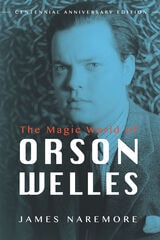
The Magic World of Orson Welles
James Naremore
University of Illinois Press, 2015
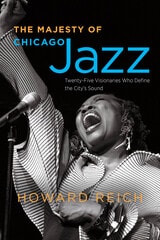
The Majesty of Chicago Jazz
Twenty-Five Visionaries Who Define the City's SoundHoward Reich
University of Chicago Press, 2026
The first book to trace the vast influence of Chicago jazz from its origins to today—from Louis Armstrong and Jelly Roll Morton to Anita O’Day, Herbie Hancock, and the AACM.
Author and Chicago native Howard Reich gives readers a front-row seat to the history of Chicago jazz as it roared forth in jazz clubs, concert halls, and festivals. Reich covered Chicago jazz for more than thirty years as the Chicago Tribune’s staff critic, and in this collection, he argues that jazz as an art form is inconceivable without Chicago. Carefully choosing from among his thousands of articles on jazz, Reich highlights twenty-five of the most important Chicago jazz artists who pushed the art form forward.
The Majesty of Chicago Jazz begins with two New Orleans visionaries who achieved their artistic pinnacles in Chicago in the Roaring Twenties: Jelly Roll Morton and Louis Armstrong. In the decades that followed, Chicago produced an uninterrupted line of innovators: revolutionaries Ahmad Jamal and Sun Ra, iconoclasts Von Freeman and Fred Anderson, populists Herbie Hancock and Ramsey Lewis, chameleons Patricia Barber and Kurt Elling, and the breakthrough band of the Association for the Advancement of Creative Musicians (AACM), among others. Reich offers two pieces on each of the book’s twenty-five visionaries, including profiles, reviews, appreciations, and obituaries. The book concludes with a beginner-friendly discography, perfect for those looking to listen along.
The Majesty of Chicago Jazz is captivating for jazz newcomers and aficionados alike—all are guaranteed to learn something surprising here. With a musician’s ear and a journalist’s expertise, Reich offers listeners a valuable guide to the groundbreaking jazz that has come out of Chicago, a city that remains a fertile breeding ground for musical experimentation.
The Makers of the Sacred Harp
David Warren Steel with Richard H. Hulan
University of Illinois Press, 2010
The Making of Handel’s Messiah
Andrew Gant
Bodleian Library Publishing, 2020
Placing Handel’s best-known work in the context of its times, this vivid account charts the composer’s working relationship with his librettist, the gifted but demanding Charles Jennens, and looks at Handel’s varied and evolving company of singers together with his royal patronage. Through examination of the original composition manuscript and Handel’s own conducting score, held in the Bodleian Library’s collection, The Making of Handel’s Messiah sheds new light on the piece’s construction, performance, and reception. Exploring the complex history of one of the most successful pieces of choral music of all time, this volume examines issues around the performance of sacred texts in a non-sacred context, particularly Handel’s collaboration with the men and boys of the Chapel Royal. This book also explores the later reception and performance history of the piece, including the festival performance attended by Haydn, the massed-choir tradition of the Victorian period, and today’s “come-and-sing” events.
The Maltese Falcon
John Huston, directorLuhr, William
Rutgers University Press, 1995
The Many Cinemas of Michael Curtiz
Edited by R. Barton Palmer and Murray Pomerance
University of Texas Press, 2018
Director Michael Curtiz was the mastermind behind some of the most iconic films of classical Hollywood—Casablanca, Yankee Doodle Dandy, The Sea Hawk, White Christmas, and Mildred Pierce, to name only a few. The most prolific and consistently successful Hollywood generalist with an all-embracing interest in different forms of narrative and spectacle, Curtiz made around a hundred films in an astonishing range of genres: action, biopics, melodramas/film noir, musicals, and westerns. But his important contributions to the history of American film have been overlooked because his broadly varied oeuvre does not present the unified vision of filmmaking that canonical criticism demands for the category of “auteur.”
Exploring his films and artistic practice from a variety of angles, including politics, gender, and genre, The Many Cinemas of Michael Curtiz sheds new light on this underappreciated cinematic genius. Leading film studies scholars offer fresh appraisals of many of Curtiz’s most popular films, while also paying attention to neglected releases of substantial historical interest, such as Noah’s Ark , Night and Day, Virginia City, Black Fury, Mystery of the Wax Museum, and Female. Because Curtiz worked for so long and in so many genres, this analysis of his work becomes more than an author study of a notable director. Instead, The Many Cinemas of Michael Curtiz effectively adds a major chapter to the history of Hollywood’s studio era, including its internationalism and the significant contributions of European émigrés.
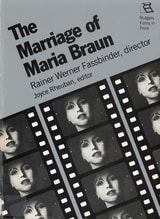
The Marriage of Maria Braun
Rainer Werner Fassbinder, DirectorRheuban, Joyce
Rutgers University Press, 1986
The Meaning of Commercial Television
The Texas-Stanford Seminar, 1966Edited by Stanley T. Donner
University of Texas Press, 1967
Commercial television deserves praise for its many achievements, but since its earliest days, almost everyone has agreed that it is also open to many criticisms. The Texas-Stanford Seminars, made possible by a grant from TV Guide magazine, were intended "to help bring about the general improvement of television," and to provide "a place and a climate for significant discussion." The vigorous and enthusiastic participation in the seminars by executives from the three major networks, from a number of group stations and independent producers, and from advertising agencies and some of the larger advertisers demonstrated the desire of the industry itself to recognize its own faults and to understand the complaints of its critics.
The Meaning of Commercial Television collects the speeches presented at the second of these seminars, in April 1966. Contributors include Harry S. Ashmore, George Schaefer, August Priemer, Leonard S. Matthews, Thomas Moore, David M. Potter, Paul Goodman, Marshall McLuhan, and John R. Silber. Also in the book are summaries of the discussions which followed each of the speeches, and an examination of the overall impact of the meeting and the conclusions which might be drawn from it. Some of the topics discussed are "numbers" rating method of evaluating television programs; the position in the television industry of the independent producer, of the advertiser, and of the television network, and television itself with respect to its history, social perspective, and other aspects of American life to which it is related.
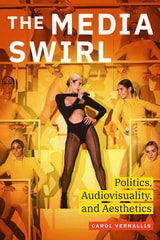
The Media Swirl
Politics, Audiovisuality, and AestheticsCarol Vernallis
Duke University Press, 2023
The Medici Codex of 1518, Volume 1
Historical Introduction and CommentaryEdited by Edward E. Lowinsky
University of Chicago Press, 1968
It is invaluable for transmitting the excellent readings of the repertory of the French Royal Chapel and a number of political motets of great musical and historical interest that reflect events at the French court and are unique to this collection.
Edward E. Lowinsky presents this anthology as part of a series containing critical editions of major sources of fifteenth- and sixteenth-century music in their entirety.
The Medici Codex of 1518, Volume 2
TranscriptionEdited by Edward E. Lowinsky
University of Chicago Press, 1968
It is invaluable for transmitting the excellent readings of the repertory of the French Royal Chapel and a number of political motets of great musical and historical interest that reflect events at the French court and are unique to this collection.
Edward E. Lowinsky presents this anthology as part of a series containing critical editions of major sources of fifteenth- and sixteenth-century music in their entirety.
The Medici Codex of 1518, Volume 3
Facsimile EditionEdited by Edward E. Lowinsky
University of Chicago Press, 1968
It is invaluable for transmitting the excellent readings of the repertory of the French Royal Chapel and a number of political motets of great musical and historical interest that reflect events at the French court and are unique to this collection.
Edward E. Lowinsky presents this anthology as part of a series containing critical editions of major sources of fifteenth- and sixteenth-century music in their entirety.
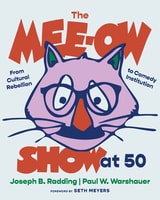
The Mee-Ow Show at 50
From Cultural Rebellion to Comedy InstitutionJoseph B. Radding and Paul W. Warshauer
Northwestern University Press, 2025
The fifty-year history of the Mee-Ow Show at Northwestern University and its influence on contemporary comedy
In the fall of 1973, two students at Northwestern University resolved to create something on stage that was wholly their own. Soon, they would be joined by a cohort of performers, musicians, and staff, and the resulting production would go on to launch the careers of scores of entertainment professionals, including some of the most well-known and awarded names in comedy today. This book is not only an account of the rebellious fifty-year history of the Mee-Ow Show, now the longest-running student sketch comedy and improv show in the country, but also its far-reaching influence. The storied group’s alumni include such household names as Craig Bierko, Ana Gasteyer, Julia Louis-Dreyfus, John Cameron Mitchell, Dermot Mulroney, Seth Meyers, and Kristen Schaal.
Based on more than a hundred new interviews with group members, presenting their words alongside never-before-published photographs and ephemera, The Mee-Ow Show at 50 provides a chronicle of the last half-century of the American undergraduate experience—and reveals how, from New York to Los Angeles, contemporary comedy can trace its roots to an upstart student production in Evanston, Illinois.
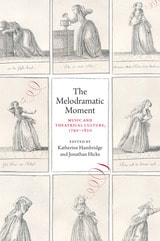
The Melodramatic Moment
Music and Theatrical Culture, 1790–1820Edited by Katherine G Hambridge and Jonathan Hicks
University of Chicago Press, 2018
This anthology proposes to address the sometimes bewilderingly broad understandings of melodrama by insisting on the historical specificity of its genesis on the stage in late-eighteenth-century Europe. Melodrama emerged during this time in the metropolitan centers of London, Paris, Vienna, and Berlin through stage adaptations of classical subjects and gothic novels, and they became famous for their use of passionate expression and spectacular scenery. Yet, as contributors to this volume emphasize, early melodramas also placed sound at center stage, through their distinctive—and often disconcerting—alternations between speech and music. This book draws out the melo of melodrama, showing the crucial dimensions of sound and music for a genre that permeates our dramatic, literary, and cinematic sensibilities today.
A richly interdisciplinary anthology, The Melodramatic Moment will open up new dialogues between musicology and literary and theater studies.
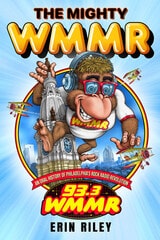
The Mighty WMMR
An Oral History of Philadelphia's Rock Radio RevolutionErin Riley
Temple University Press, 2026
In the early 1980s, the scrappy radio station 93.3 WMMR was on the verge of a major takeover of the Philadelphia airwaves. Erin Riley, who had her finger on the pulse of new artists like Bon Jovi, whose music would define a generation, was hired as the station’s Music Director in 1983.
The Mighty WMMR is Riley’s affectionate and nostalgic oral history of the station’s early years, especially its 1980s heyday, covering everything from the pioneering influence of The Marconi Experiment and the success of The Morning Zoo to how WMMR broke artists like Bruce Springsteen, Billy Joel, and local favorites The Hooters onto the national scene. Featuring anecdotes and memories by beloved on-air personalities including John DeBella, Pierre Robert, and Michael Tearson, Riley chronicles the memorable songs and musicians; concerts, contests, and clubs; and the live broadcasts that marked the height of an unforgettable era in Philadelphia radio.
Riley breezily captures the station’s impact on listeners, which made WMMR a perfect storm of the times, the culture, and the counterculture. The Mighty WMMR is a captivating look back at Philadelphia’s rock history and the station that shaped a city and a generation.
The Migration of Musical Film
From Ethnic Margins to American MainstreamGarcia, Desirée J
Rutgers University Press, 2014
The Migration of Musical Film shows how the folk musical was rooted in the challenges faced by immigrants and migrants who had to adapt to new environments, balancing American individualism with family values and cultural traditions. Uncovering fresh material from film industry archives, Garcia considers how folk musicals were initially marginal productions, designed to appeal to specific minority audiences, and yet introduced themes that were gradually assimilated into the Hollywood mainstream.
No other book offers a comparative historical study of the folk musical, from the first sound films in the 1920s to the genre’s resurgence in the 1970s and 1980s. Using an illustrative rather than comprehensive approach, Garcia focuses on significant moments in the sub-genre and rarely studied films such as Allá en el Rancho Grande along with familiar favorites that drew inspiration from earlier folk musicals—everything from The Wizard of Oz to Zoot Suit. If you think of movie musicals simply as escapist mainstream entertainment, The Migration of Musical Film is sure to leave you singing a different tune.
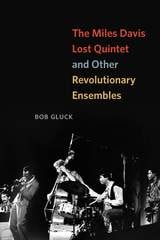
The Miles Davis Lost Quintet and Other Revolutionary Ensembles
Bob Gluck
University of Chicago Press, 2015
Gluck listens deeply to the uneasy tension between this group’s driving rhythmic groove and the sonic and structural openness, surprise, and experimentation they were always pushing toward. There he hears—and outlines—a fascinating web of musical interconnection that brings Davis’s funk-inflected sensibilities into conversation with the avant-garde worlds that players like Ornette Coleman and John Coltrane were developing. Going on to analyze the little-known experimental groups Circle and the Revolutionary Ensemble, Gluck traces deep resonances across a commercial gap between the celebrity Miles Davis and his less famous but profoundly innovative peers. The result is a deeply attuned look at a pivotal moment when once-disparate worlds of American music came together in explosively creative combinations.
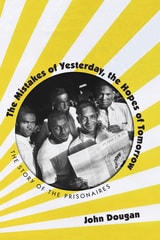
The Mistakes of Yesterday, the Hopes of Tomorrow
The Story of the PrisonairesJohn Dougan
University of Massachusetts Press, 2012
Early in the morning on June 1, 1953, five African American men boarded a van to make the 200-mile trip from Nashville to Memphis for a daylong recording session at the legendary Sun Studios, to be overseen by Sun founder Sam Phillips. One of the two tracks cut that day, “Just Walkin' in the Rain,” would go on to become a regional R&B hit, Sun Records' biggest record of the pre-Elvis era. It would, however, be the group's only hit. They were the Prisonaires, a vocal quintet who had honed their skills while inmates at the Tennessee State Penitentiary in Nashville.
In this book, John Dougan tells the story of the Prisonaires, their hit single, and the afterlife of this one remarkable song. The group and the song itself represent a compelling concept: imprisoned men using music as a means of cultural and personal survival. The song was re-recorded by white singer Johnnie Ray, who made it a huge hit in 1956. Over the years, other singers and groups would move the song further away from its origins, recasting the deep emotions that came from creating music in a hostile, controlled environment.
The story of the Prisonaires, for all of its triumphs, reflects the disappointment of men caught in a paradoxical search for personal independence while fully cognizant of a future consigned to prison. Their brief career and the unusual circumstances under which it flourished sheds light on the harsh realities of race relations in the pre–Civil Rights South. The book also provides a portrait of Nashville just as it was gaining traction as a nationally recognized music center.