Results by title
1445 books match the query 'Life Sciences' and 386 start with t
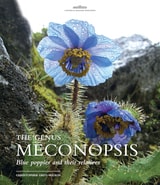
The Genus Meconopsis
Blue poppies and their relativesChristopher Grey-Wilson
Royal Botanic Gardens, Kew, 2015
The Genus Meconopsis is the first major revision of the genus since 1934 and the only monograph on the genus in existence. This fully revised text incorporates the discovery of nearly thirty new species with decades of new scholarship. The book is extensively illustrated with striking color photographs and botanical paintings. Species descriptions that include habitat and variation within the genus, as well as detailed distribution maps, make this ideal for botanists, horticulturalists, and gardeners alike.
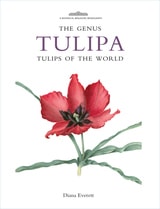
The Genus Tulipa
Tulips of the WorldDiana Everett
Royal Botanic Gardens, Kew, 2013
The Geographic Mosaic of Coevolution
John N. Thompson
University of Chicago Press, 2005
Picking up where his influential The Coevolutionary Process left off, John N. Thompsonsynthesizes the state of a rapidly developing science that integrates approaches from evolutionary ecology, population genetics, phylogeography, systematics, evolutionary biochemistry and physiology, and molecular biology. Using models, data, and hypotheses to develop a complete conceptual framework, Thompson also draws on examples from a wide range of taxa and environments, illustrating the expanding breadth and depth of research in coevolutionary biology.
The Gerbil in Behavioral Investigations
Mechanisms of Territoriality and Olfactory CommunicationBy Del Thiessen and Pauline Yahr
University of Texas Press, 1977
In this comprehensive account of olfactory communication and territorial behavior in the Mongolian gerbil, Del Thiessen and PaulineYahr provide the first detailed study of the neurological and physiological mechanisms that control these basic functions. In addition to explaining the links between hormones, genes, olfactory cues, and territorial acts, they also offer a more general picture of gerbil behavior, as well as a brief look at other mammalian species that communicate social status by way of olfactory messages.
Territorial behavior, as defined by the authors, includes all acts that are restricted to a particular area and are crucial for successful reproduction. In the Mongolian gerbil, and probably in other mammals as well, territoriality is controlled by sex hormones acting on specific areas of the central nervous system. Hormones from the gonads apparently act in the brain by altering the genetic apparatus controlling biochemicals used in neural communication. Without these hormones, the animal is socially inert and unable to transmit genes to the next generation. The authors conclude from the results of over ten years of investigation that the most complex social interactions depend on the integrity of the hormone system and its constant tuning by olfactory stimuli.
The book incorporates a review of all previously known studies of gerbil behavior and representative data for many other scent-marking species. A stereotaxic brain atlas for the gerbil is a feature that will be especially helpful to other researchers. The book's eclectic nature should make it valuable to anyone concerned with territorial behavior, hormones and behavior, or brain processes, as well as to those who are specifically interested in the Mongolian gerbil.
The Gestation of German Biology
Philosophy and Physiology from Stahl to SchellingJohn H. Zammito
University of Chicago Press, 2017
In The Gestation of German Biology, historian of ideas John Zammito presents a different version of the emergence of the field, one that takes on both Foucault and Mayr and emphasizes the scientific progress throughout the eighteenth century that led to the recognition of the need for a special science. The embrace of the term biology around 1800, Zammito shows, was the culmination of a convergence between natural history and human physiology that led to the development of comparative physiology and morphology—the foundations of biology. Magisterial in scope, Zammito’s book offers nothing less than a revisionist history of the field, with which anyone interested in the origins of biology will have to contend.
The Golden Age of Botanical Art
Martyn Rix
University of Chicago Press, 2012
The Great Lake Sturgeon
Nancy Auer and Dave Dempsey
Michigan State University Press, 2013
The Great Plains
A Fire SurveyStephen J. Pyne
University of Arizona Press, 2017
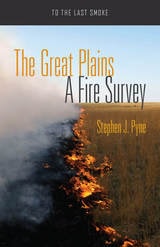
Early descriptions of the Great Plains often focus on a vast, grassy expanse that was either burnt or burning. The scene continued to burn until the land was plowed under or grazed away and broken by innumerable roads and towns. Yet, where the original landscape has persisted, so has fire, and where people have sought to restore something of that original setting, they have had to reinstate fire. This has required the persistence or creation of a fire culture, which in turn inspired schools of science and art that make the Great Plains today a regional hearth for American fire.
Volume 5 of To the Last Smoke introduces a region that once lay at the geographic heart of American fire, and today promises to reclaim something of that heritage. After all these years, the Great Plains continue to bear witness to how fires can shape contemporary life, and vice versa. In this collection of essays, Stephen J. Pyne explores how this once most regularly and widely burned province of North America, composed of various subregions and peoples, has been shaped by the flames contained within it and what fire, both tame and feral, might mean for the future of its landscapes.
Included in this volume:
- How wildland and rural fire have changed from the 19th century to the 21st century
- How fire is managed in the nation’s historic tallgrass prairies, from Texas to South Dakota, from Illinois to Nebraska
- How fire connects with other themes of Great Plains life and culture
- How and why Texas has returned to the national narrative of landscape fire
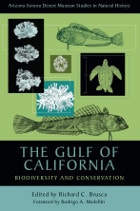
The Gulf of California
Biodiversity and ConservationRichard C. Brusca
University of Arizona Press, 2010
Few places in the world can claim such a diversity of species as the Gulf of California (Sea of Cortez), with its 6,000 recorded animal species estimated to be half the number actually living in its waters. So rich are the Gulf's water that over a half-million tons of seafood are taken from them annually—and this figure does not count the wasted by-catch, which would triple or quadruple that tonnage. This timely book provides a benchmark for understanding the Gulf's extraordinary diversity, how it is threatened, and in what ways it is—or should be—protected.
In spite of its dazzling richness, most of the Gulf's coastline now harbors but a pale shadow of the diversity that existed just a half-century ago. Recommendations based on sound, careful science must guide Mexico in moving forward to protect the Gulf of California.
This edited volume contains contributions by twenty-four Gulf of California experts, from both sides of the U.S.-Mexico border. From the origins of the Gulf to its physical and chemical characteristics, from urgently needed conservation alternatives for fisheries and the entire Gulf ecosystem to information about its invertebrates, fishes, cetaceans, and sea turtles, this thought-provoking book provides new insights and clear paths to achieve sustainable use solidly based on robust science. The interdisciplinary, international cooperation involved in creating this much-needed collection provides a model for achieving success in answering critically important questions about a precious but rapidly disappearing ecological treasure.
The Hand that Feeds
The Complex Relations of Human-Animal FeedingEdited by Alexander Mullan, Riley Smallman, Herre de Bondt, and Juliette Waterman
University College London, 2025
Feeding animals is never a neutral act—whether in zoos, farms, backyards, or city streets, it shapes relationships, environments, and even entire ecosystems. The Hand that Feeds takes a deeper look into the complex and often-overlooked dynamics of human-animal feeding, moving beyond its utilitarian functions to explore the emotional, ethical, and ecological entanglements it creates. Through case studies spanning history to the present, this work discloses how feeding alters animal behaviors and reflects broader cultural and moral values. Why do we nurture some animals while exterminating others? How do feeding practices blur the lines between wild and domesticated life? What happens when acts of care lead to unintended harm?
Addressing everything from garden bird feeders to contested urban wildlife policies, the authors illuminate the deep significance of food in human-animal interactions. An invigorating read for scholars in environmental studies, anthropology, and history, The Hand that Feeds challenges us to reconsider the act of feeding as a powerful force in shaping multispecies worlds.
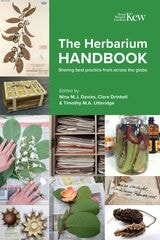
The Herbarium Handbook
Edited by Nina M. J. Davies, Clare Drinkell, and Timothy M. A. Utteridge
Royal Botanic Gardens, Kew, 2023
The Herbarium Handbook has been an important reference for herbarium collections care and management since it was first published in 1989. Based on standard herbarium practices and personal experience from experts at the Royal Botanic Gardens, Kew, the book also draws on examples from partners and collaborators around the world, making it accessible and adaptable for all herbarium practitioners. The book covers everything from creating herbarium collections to preparing and caring for specimens, managing a herbarium building, and public engagement and outreach. It is the essential reference for anyone working in this field.
The Hidden Universe
Adventures in BiodiversityAlexandre Antonelli
University of Chicago Press, 2022
We are now living in an environmental emergency. As climate change, habitat loss, and other threats have placed almost one-fifth of all species on Earth at risk of extinction in the coming decades, a deeper understanding of biodiversity has never been more important. Biodiversity encompasses the rich variety of all life on Earth—the building blocks of life that provide invaluable sources of food, medicine, clothing, building materials, and more.
Marking the arrival of a bold new voice in popular science, The Hidden Universe shows readers what’s at stake in the fight to protect and restore biodiversity, but also what can and should be done now to protect our planet and ourselves for the future. As director of science at one of the world’s largest research organizations in plant and fungal sciences, Brazilian-born scientist Alexandre Antonelli is ideally suited to reveal the wonders of biodiversity at a genetic, species, and ecosystem level—what biodiversity is, how it works, and why it is the most important tool in our battle against climate change. Antonelli offers recommendations for large-scale political changes, as well as smaller, practical steps that readers can implement in their own lives and homes. With Antonelli as our guide, The Hidden Universe helps us imagine a future where biodiversity is not just preserved but cherished.
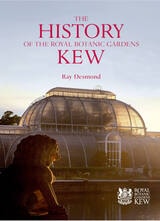
The History of the Royal Botanic Gardens Kew
Ray Desmond
Royal Botanic Gardens, Kew, 2007
Kew's heritage - the herbarium, art and architecture, from Kew Palace and Burton's great Palm House to the Princess of Wales Conservatory, state of the art laboratories and new Davies Alpine House - is illustrated and described, together with the events leading to its UNESCO World Heritage Site status in 2003. Lastly, it is a social history of the Gardens, and of the scientists, architects, designers and gardeners who have made Kew.
Detailed appendices and bibliography have been updated, and two new chapters added, bringing the book up to date as the authoritative reference work on Kew, its history and function.

The House on Ipswich Marsh
Exploring the Natural History of New EnglandWilliam Sargent
University Press of New England, 2015
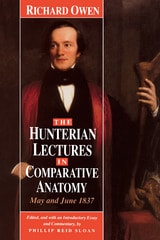
The Hunterian Lectures in Comparative Anatomy, May and June 1837
Richard Owen
University of Chicago Press, 1992
Now, for the first time, modern readers may consult the single sustained exposition of his views that Owen ever provided: his Hunterian Lectures. Phillip Reid Sloan has transcribed and edited the seven surviving lectures and has written an introduction and commentary that situate this work in the context of Owen's life and the scientific life of the time. The lectures survey some of the history of comparative anatomy since Aristotle and draw on work by some of Owen's contemporaries. Their chief value, however, lies in Owen's elucidation of his own view on the relationships among various groups of living things.
"Owen is one of the linchpin figures of Victorian science. The publication of these lectures is important, and Sloan is to be commended for a fine transcription."—Adrian Desmond, University College, London
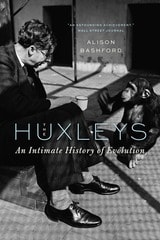
The Huxleys
An Intimate History of EvolutionAlison Bashford
University of Chicago Press, 2022
Two hundred years of modern science and culture told through one family history.
This momentous biography tells the story of the Huxleys: the Victorian natural historian T. H. Huxley (“Darwin’s Bulldog”) and his grandson, the scientist, conservationist, and zoologist Julian Huxley. Between them, they communicated to the world the great modern story of the theory of evolution by natural selection. In The Huxleys, celebrated historian Alison Bashford writes seamlessly about these omnivorous intellects together, almost as if they were a single man whose long, vital life bookended the colossal shifts in world history from the age of sail to the Space Age, and from colonial wars to world wars to the cold war.
The Huxleys’ specialty was evolution in all its forms—at the grandest level of species, deep time, the Earth, and at the most personal and intimate. They illuminated the problems and wonders of the modern world and they fundamentally shaped how we see ourselves, as individuals and as a species.
But perhaps their greatest subject was themselves. Bashford’s engaging, brilliantly ambitious book interweaves the Huxleys’ momentous public achievements with their private triumphs and tragedies. The result is the history of a family, but also a history of humanity grappling with its place in nature. This book shows how much we owe—for better or worse—to the unceasing curiosity, self-absorption, and enthusiasm of a small, strange group of men and women.
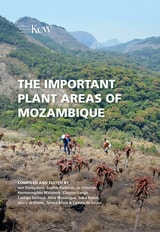
The Important Plant Areas of Mozambique
Edited by Iain Darbyshire, Sophie Richards, and Jo Osborne
Royal Botanic Gardens, Kew, 2023
The Important Plant Areas of Mozambique is based on the Mozambique TIPAs project run in collaboration between Royal Botanic Gardens, Kew, Mozambique’s Agricultural Research Institute (Instituto de Investigação Agrária de Moçambique – IIAM), and the University Eduardo Mondlane. Drawing on information from the TIPAs database, The Important Plant Areas of Mozambique includes color maps and photographs, site descriptions, and tables to present information on the botanical significance, habitat, and geology of the region. The book will also address conservation issues and ecosystem services to promote Mozambique’s critical plant sites and inform conservation leaders in government, NGOs, universities, and local communities about Mozambique’s threatened habitats.
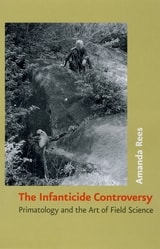
The Infanticide Controversy
Primatology and the Art of Field ScienceAmanda Rees
University of Chicago Press, 2009
Infanticide in the natural world might be a relatively rare event, but as Amanda Rees shows, it has enormously significant consequences. Identified in the 1960s as a phenomenon worthy of investigation, infanticide had, by the 1970s, become the focus of serious controversy. The suggestion, by Sarah Hrdy, that it might be the outcome of an evolved strategy intended to maximize an individual’s reproductive success sparked furious disputes between scientists, disagreements that have continued down to the present day.
Meticulously tracing the history of the infanticide debates, and drawing on extensive interviews with field scientists, Rees investigates key theoretical and methodological themes that have characterized field studies of apes and monkeys in the twentieth century. As a detailed study of the scientific method and its application to field research, The Infanticide Controversy sheds new light on our understanding of scientific practice, focusing in particular on the challenges of working in “natural” environments, the relationship between objectivity and interpretation in an observational science, and the impact of the public profile of primatology on the development of primatological research. Most importantly, it also considers the wider significance that the study of field science has in a period when the ecological results of uncontrolled human interventions in natural systems are becoming ever more evident.
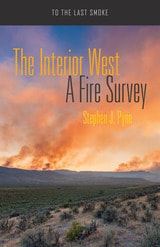
The Interior West
A Fire SurveyStephen J. Pyne
University of Arizona Press, 2018
In this collection of essays, fire historian Stephen J. Pyne explains the relevance of the Interior West to the national fire scene. This region offered the first scientific inquiry into landscape fire in the United States, including a map of Utah burns published in 1878 as part of John Wesley Powell’s Arid Lands report. Then its significance faded, and for most of the 20th century, the Interior West was the hole in the national donut of fire management. Recently the region has returned to prominence due to fires along its front ranges; invasive species, both exotics like cheatgrass and unleashed natives like mountain pine beetle; and fatality fires, notably at South Canyon in 1994.
The Interior West has long been passed over in national fire narratives. Here it reclaims its rightful place.
Included in this volume:
- A summary of 19th- and 20th-century fire history in the Interior West
- How this important region inspired U.S. studies of landscape fire
- Why the region disappeared from national fire management discussions
- How the expansion of invasive species and loss of native species has affected the region’s fire ecology
- The national significance of fire in the Interior West
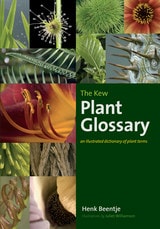
The Kew Plant Glossary
An Illustrated Dictionary of Plant TermsHenk Beentje
Royal Botanic Gardens, Kew, 2010
This accessible, comprehensive glossary covers all the descriptive terms for plants that one is likely to encounter in botanical writing, including everything from magazine articles to plant field guides, scientific papers, and monographs. An essential companion, it presents 3,600 botanical terms, accompanied by full definitions and detailed illustrations to aid in identification, all laid out in a clear, easy-to-use fashion. It will be indispensable for plant scientists, conservationists, horticulturists, gardeners, writers, and anyone working with plant descriptions, plant identification keys, floras, or field guides.
The Kew Plant Glossary
An Illustrated Dictionary of Plant Terms - Second EditionHenk Beentje
Royal Botanic Gardens, Kew, 2015
The Kew Plant Glossary is a comprehensive guide to the myriad of terms used in the identification and conservation of plants. This new edition adds more than four hundred new entries, including a vegetation-type section, bringing the total to 4,905 botanical terms and seven hundred illustrations. The terms are clearly explained, many with basic line drawings to further clarify a description. Henk Beentje consulted a host of botanical works as well as colleagues working in the field to create a glossary that is clear, easy to use, and free of confusion. He notes terms that are easily mixed up with others and points out phrases that are considered outside common usage.
This is an essential companion for anyone who finds themselves searching for the right word when writing about plants, who needs to clearly identify the pieces of their work, or who just wants to talk more authoritatively about the plants they love.

The Kew Temperate Plant Families Identification Handbook
Edited by Gemma Bramley, Anna Trias Blasi, and Richard Wilford
Royal Botanic Gardens, Kew, 2023
The Royal Botanic Gardens, Kew is a center of expertise for cultivating a range of plants from around the world. The Kew Temperate Plant Families Identification Handbook draws on the combined knowledge of those experts to create a guide to the commonly found plants of temperate regions—areas between the subtropics and the polar circles. In this book, Kew’s experts present unrivaled scientific and horticultural knowledge of the plants they encounter. The book describes one hundred plant families in detail, illustrating them with photographs showing the important identification characteristics, along with distribution maps, line drawings, and herbarium sheets. This book will be the primary resource for plant identification for those working in temperate regions around the world.
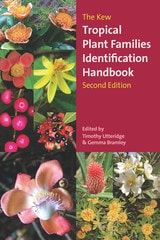
The Kew Tropical Plant Families Identification Handbook
Second EditionEdited by Timothy Utteridge and Gemma Bramley
Royal Botanic Gardens, Kew, 2015
This fully updated second edition adds seventeen new family and subfamily descriptions and includes updated research throughout. Each of the one hundred families is described in detail and richly illustrated with photographs that show important identification characteristics. The book’s emphasis on images and the foundations of identification means that both specialists and nonspecialists alike will be able to use this guide.
The Kew Tropical Plant Families Identification Handbook is a portable, easy-to-use resource, perfect for tropical botanists as well as students and conservation professionals.
The Language of Genetics
An IntroductionDenis R. Alexander
Templeton Press, 2011
The Language of Genetics: An Introduction is the seventh title published in the Templeton Science and Religion Series, in which scientists from a wide range of fields distill their experience and knowledge into brief tours of their respective specialties. In this volume, Dr. Denis R. Alexander offers readers a basic toolkit of information, explanations, and ideas that can help us grasp something of the fascination and the challenge of the language of genetics.
Alexander surveys the big picture, covering such topics as the birth of the field; DNA: what it is, how it works, and how it was discovered; our genetic history; the role of genes in diseases, epigenetics, and genetic engineering. The book assumes the reader has little scientific background, least of all in genetics, and approaches these issues in a very accessible way, free of specialized or overly technical jargon. In the last chapter, Dr. Alexander explores some of the big questions raised by genetics: what are its implications for notions of human value and uniqueness? Is evolution consistent with religious belief? If we believe in a God of love, then how come the evolutionary process, utterly dependent upon the language of genetics, is so wasteful and involves so much pain and suffering? How far should we go in manipulating the human genome? Does genetics subvert the idea that life has some ultimate meaning and purpose?
Genetics is a rapidly advancing field; it seems new discoveries make headlines every other week. The Language of Genetics is intended to give the general reader the knowledge he or she needs to assess and understand the next big story
in genetics.
The Last 10,000 Years
A Fossil Pollen Record of the American SouthwestPaul S. Martin
University of Arizona Press, 1964
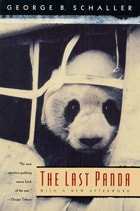
The Last Panda
George B. Schaller
University of Chicago Press, 1993
"No scientist is better at letting the rest of us in on just how the natural world works; no poet sees the world with greater clarity or writes about it with more grace. . . . Anyone who genuinely cares for wildlife cannot help being grateful to Schaller—both for his efforts to understand the panda and for the candor with which he reports what has gone so badly wrong in the struggle to save it from extinction."—Geoffrey C. Ward, New York Times Book Review
"Schaller's book is a unique mix of natural history and the politics of conservation, and it makes for compelling reading. . . . Having been in giant panda country myself, I found some of the descriptions of the animals and habitats breathtaking. Schaller describes the daily routines and personalities of the giant pandas he studied (as well as their fates thereafter) as though they were his blood relatives. . . . Schaller's brilliant presentation of the complexities of conservation makes his book a milestone for the conservation movement."—Devra G. Kleiman, Washington Post Book World
"George Schaller's most soulful work, written in journal style with many asides about a creature who evolved only two to three million years ago (about the same time as humans). . . . Here, conservation biology confronts an evil that grinds against hope and shatters the planet's diversity. Written with hope."—Whole Earth Catalog
"A nicely crafted blend of wildlife observation and political-cultural analysis. . . . The Last Panda is a sad chronicle of our failure, so far, to stem the decline of the animal that may be the most beloved on the planet."—Donald Dale Jackson, Smithsonian

The Last Refuge of the Mt. Graham Red Squirrel
Ecology of EndangermentH. Reed Sanderson and John L. Koprowski
University of Arizona Press, 2009
This book is derived from a symposium on the Mt. Graham red squirrel and offers a comprehensive picture of the ecology of this red squirrel and the impacts on its mountain home. Forty contributors detail studies conducted to understand the natural history of the creature and the challenges and changing ecological conditions on Mt. Graham.
Each chapter tells a unique story that contributes to the mosaic of natural history knowledge about the endangered Mt. Graham red squirrel. They reflect diverse viewpoints on the problems of conserving the habitats and populations of the squirrel, showing how it was complicated by perspectives ranging from Native Americans’ concern over traditional lands to astronomers’ hope for a better view of space, and by issues ranging from forestry practices to climate change. Studies of such factors as squirrel middens, seed hoarding, and nest sites provide definitive research on the animal.
Ongoing censuses continue to track the squirrel’s population trends, and both Forest Service and Arizona Department of Transportation activities continue to be scrutinized by interested parties to determine their impact. This book represents an authoritative overview of this still-endangered species and its habitat.

The Last Walk
Reflections on Our Pets at the End of Their LivesJessica Pierce
University of Chicago Press, 2012
The product of a lifetime of loving pets, studying philosophy, and collaborating with scientists at the forefront of the study of animal behavior and cognition, The Last Walk asks—and answers—the toughest questions pet owners face. The result is informative, moving, and consoling in equal parts; no pet lover should miss it.

The Legumes of Texas
By B. L. Turner
University of Texas Press, 1959
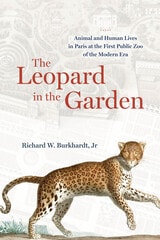
The Leopard in the Garden
Animal and Human Lives in Paris at the First Public Zoo of the Modern EraRichard W. Burkhardt, Jr.
University of Chicago Press, 2026
The Paris menagerie at the Paris Museum of Natural History has a special significance in the history of zoos. Founded in 1793–1794 at the height of the French Revolution, it was the model for the other great zoos of the nineteenth century that followed, beginning with London in 1828, Amsterdam in 1838, and Berlin in 1844.
Richard W. Burkhardt Jr. has written the definitive history of the Paris zoo and its early inhabitants, human and nonhuman. The book features narrative or thematic chapters interwoven with chapters focused on particular animals. Combining current scholarship with fresh discoveries gleaned from his immersion in the Paris Zoo’s extensive archive, Burkhardt shares historical treasures that illuminate not only the workings of the menagerie but also various dimensions of the golden age of French zoology (the years of Jean-Baptiste Lamarck, Geoffroy Saint-Hilaire, and Georges Cuvier). His history reconstructs the diverse sources of specimens, the growth of the collection over time, the efforts to make the menagerie scientifically significant, contemporary attitudes toward animals, and the lives of the animals themselves in colonial and diplomatic contexts.
The Life Beyond Molecules and Genes
In Search of Harmony between Life and ScienceStephen Rothman
Templeton Press, 2009
What makes us alive? Is it our DNA? Our genetics? Is it our atomic composition that gives us life? Somehow, all of this feels radically dissonant from our everyday experience. In Life Beyond Molecules and Genes, experimental biologist Stephen Rothman makes the bold case that it is, in fact, our adaptive abilities, hewn by evolution, that make us alive. In making this point, he reveals a hidden harmony between science and life as we live it.
The Life of Plants
E. J. H. Corner
University of Chicago Press, 2003
The Life of a Leaf
Steven Vogel
University of Chicago Press, 2012
In Vogel’s account, the leaf serves as a biological everyman, an ordinary and ubiquitous living thing that nonetheless speaks volumes about our environment as well as its own. Thus in exploring the leaf’s world, Vogel simultaneously explores our own.

The Life of a Virus
Tobacco Mosaic Virus as an Experimental Model, 1930-1965Angela N. H. Creager
University of Chicago Press, 2001
Focusing on the tobacco mosaic virus (TMV) research conducted in Nobel laureate Wendell Stanley's lab, Creager argues that TMV served as a model system for virology and molecular biology, much as the fruit fly and laboratory mouse have for genetics and cancer research. She examines how the experimental techniques and instruments Stanley and his colleagues developed for studying TMV were generalized not just to other labs working on TMV, but also to research on other diseases such as poliomyelitis and influenza and to studies of genes and cell organelles. The great success of research on TMV also helped justify increased spending on biomedical research in the postwar years (partly through the National Foundation for Infantile Paralysis's March of Dimes)—a funding priority that has continued to this day.
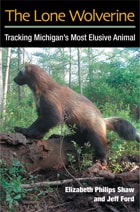
The Lone Wolverine
Tracking Michigan's Most Elusive AnimalElizabeth Philips Shaw and Jeff Ford
University of Michigan Press, 2012
It began in late winter of 2004. Almost 100 years had passed since the last spotting of a wild wolverine in Michigan when coyote hunters caught a glimpse of one of the animals in a frozen farm field in the northern thumb region. For the next six years, Jeff Ford, a local science teacher and amateur naturalist, devoted himself to locating and filming the wolverine that had unexpectedly and inexplicably appeared in the Wolverine State. By the time hikers found the animal dead in early 2010, Ford had taken hundreds of rare live action photos and shot numerous hours of video, with the story of the "Wolverine Guy" attracting national attention through countless newspaper and magazine articles and appearances on Animal Planet and PBS Nature.
This is the tale of Ford's quest as he uncovered answers to mysteries surrounding the animal's territory and movement patterns, while sparking a flurry of controversy surrounding the elusive predator's origin, much of which remains unresolved today. It's an intimate look at research in the raw, from DNA samples stuck on barbed wire to a sophisticated, motion-sensing infrared camera unit strategically placed to observe nocturnal behavior.
The Lone Wolverine brings to vivid life this unforgettable piece of American wildlife lore, using candid interviews, public records, and Ford's own vast storehouse of notes, personal writings, correspondence, and images, offering an extraordinary chronicle of a wild wolverine in its natural habitat, at play and in fierce competition for food and survival. This is a wildlife detective story, recounting years of study and fierce debate as researchers pondered the riddles of Michigan's last wolverine---her origins, habits, and ultimately the cause of her untimely death.
The Long and the Short of It
The Science of Life Span and AgingJonathan Silvertown
University of Chicago Press, 2013
With The Long and the Short of It, biologist and writer Jonathan Silvertown offers readers a witty and fascinating tour through the scientific study of longevity and aging. Dividing his daunting subject by theme—death, life span, aging, heredity, evolution, and more—Silvertown draws on the latest scientific developments to paint a picture of what we know about how life span, senescence, and death vary within and across species. At every turn, he addresses fascinating questions that have far-reaching implications: What causes aging, and what determines the length of an individual life? What changes have caused the average human life span to increase so dramatically—fifteen minutes per hour—in the past two centuries? If evolution favors those who leave the most descendants, why haven’t we evolved to be immortal? The answers to these puzzles and more emerge from close examination of the whole natural history of life span and aging, from fruit flies, nematodes, redwoods, and much more.
The Longevity Seekers
Science, Business, and the Fountain of YouthTed Anton
University of Chicago Press, 2013
With The Longevity Seekers, science writer Ted Anton takes readers inside this tale that began with worms and branched out to snare innovative minds from California to Crete, investments from big biotech, and endorsements from TV personalities like Oprah and Dr. Oz. Some of the research was remarkable, such as the discovery of an enzyme in humans that stops cells from aging. And some, like an oft-cited study touting the compound resveratrol, found in red wine—proved highly controversial, igniting a science war over truth, credit, and potential profit. As the pace of discovery accelerated, so too did powerful personal rivalries and public fascination, driven by the hope that a longer, healthier life was right around the corner. Anton has spent years interviewing and working with the scientists at the frontier of longevity science, and this book offers a behind-the-scenes look at the state-of-the-art research and the impact it might have on global public health, society, and even our friends and family.
With spectacular science and an unforgettable cast of characters, The Longevity Seekers has all the elements of a great story and sheds light on discoveriesthat could fundamentally reshape human life.
The Lost Species
Great Expeditions in the Collections of Natural History MuseumsChristopher Kemp
University of Chicago Press, 2017
With Kemp as our guide, we go spelunking into museum basements, dig through specimen trays, and inspect the drawers and jars of collections, scientific detectives on the hunt for new species. We discover king crabs from 1906, unidentified tarantulas, mislabeled Himalayan landsnails, an unknown rove beetle originally collected by Darwin, and an overlooked squeaker frog, among other curiosities. In each case, these specimens sat quietly for decades—sometimes longer than a century—within the collections of museums, before sharp-eyed scientists understood they were new. Each year, scientists continue to encounter new species in museum collections—a stark reminder that we have named only a fraction of the world’s biodiversity. Sadly, some specimens have waited so long to be named that they are gone from the wild before they were identified, victims of climate change and habitat loss. As Kemp shows, these stories showcase the enduring importance of these very collections.
The Lost Species vividly tells these stories of discovery—from the latest information on each creature to the people who collected them and the scientists who finally realized what they had unearthed—and will inspire many a museumgoer to want to peek behind the closed doors and rummage through the archives.
The Lying Brain
Lie Detection in Science and Science FictionMelissa M. Littlefield
University of Michigan Press, 2011
"The Lying Brain is a study to take seriously. Its argument is timely, clear, and of particular importance to the enlargement of our understanding of the relationships among science studies, literary studies, and technology studies."
---Ronald Schleifer, University of Oklahoma
Real and imagined machines, including mental microscopes, thought translators, and polygraphs, have long promised to detect deception in human beings. Now, via fMRI and EEG, neuroscientists seem to have found what scientists, lawyers, and law enforcement officials have sought for over a century: foolproof lie detection. But are these new lie detection technologies any different from their predecessors? The Lying Brain is the first book to explore the cultural history of an array of lie detection technologies: their ideological assumptions, the scientific and fictional literatures that create and market them, and the literacies required for their interpretation.
By examining a rich archive of materials about lie detection---from science to science fiction---The Lying Brain demonstrates the interconnections of science, literature, and popular culture in the development and dissemination of deception detection in the American cultural imagination. As Melissa Littlefield demonstrates, neuroscience is not building a more accurate lie detector; it is simply recycling centuries-old ideologies about deception and its detection.
Cover art: "Human Brain" © Denis Barbulet, courtesy of Shutterstock.com

The Marshes of Southwestern Lake Erie
Louis W. Campbell
Ohio University Press, 1994
This book explores both the human and natural history of the marshes between Toledo and Port Clinton, Ohio. The author, Louis Campbell is the acknowledged authority on the birds of the Toledo area. Mr. Campbell began weekly birding trips to the marshes in the 1920’s, carefully recording his observations. His discerning eye and inquiring mind have accumulated a wealth of information, presented here in a style that is comfortably conversational, whether the subject is glacial moraines, nesting eagles, or a drunken meadow mouse.
The book begins with an almanac, a celebration of marsh life throughout the year, enriched by personal experiences. Mr. Campbell’s encounters include a pair of bloodthirsty shrews, a roguish gallery of courting waterfowl, and a rhythm-challenged bittern. He invites the reader to share the risky pleasures of punting and the eerie night sounds of the marsh in May.
Part II describes the history of the low-lying marshes from the Ice Age to the present, as they were transformed into drained, flood-plagued farmland then to drought-and flood-plagued private hunting clubs, and finally to government-protected marshes sealed off by huge dikes from the gift and the threat of Lake Erie. Readers of this book will never again take these wetlands for granted.
The Maternal Imprint
The Contested Science of Maternal-Fetal EffectsSarah S. Richardson
University of Chicago Press, 2021
The idea that a woman may leave a biological trace on her gestating offspring has long been a commonplace folk intuition and a matter of scientific intrigue, but the form of that idea has changed dramatically over time. Beginning with the advent of modern genetics at the turn of the twentieth century, biomedical scientists dismissed any notion that a mother—except in cases of extreme deprivation or injury—could alter her offspring’s traits. Consensus asserted that a child’s fate was set by a combination of its genes and post-birth upbringing.
Over the last fifty years, however, this consensus was dismantled, and today, research on the intrauterine environment and its effects on the fetus is emerging as a robust program of study in medicine, public health, psychology, evolutionary biology, and genomics. Collectively, these sciences argue that a woman’s experiences, behaviors, and physiology can have life-altering effects on offspring development.
Tracing a genealogy of ideas about heredity and maternal-fetal effects, this book offers a critical analysis of conceptual and ethical issues—in particular, the staggering implications for maternal well-being and reproductive autonomy—provoked by the striking rise of epigenetics and fetal origins science in postgenomic biology today.
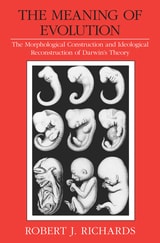
The Meaning of Evolution
The Morphological Construction and Ideological Reconstruction of Darwin's TheoryRobert J. Richards
University of Chicago Press, 1992
This provocative new reading of Darwin goes directly to the origins of evolutionary theory. Unlike most contemporary biologists or historians and philosophers of science, Richards holds that Darwin did concern himself with the idea of progress, or telos, as he constructed his theory. Richards maintains that Darwin drew on the traditional embryological meanings of the terms "evolution" and "descent with modification." In the 1600s and 1700s, "evolution" referred to the embryological theory of preformation, the idea that the embryo exists as a miniature adult of its own species that simply grows, or evolves, during gestation. By the early 1800s, however, the idea of preformation had become the concept of evolutionary recapitulation, the idea that during its development an embryo passes through a series of stages, each the adult form of an ancestor species.
Richards demonstrates that, for Darwin, embryological recapitulation provided a graphic model of how species evolve. If an embryo could be seen as successively taking the structures and forms of its ancestral species, then one could see the evolution of life itself as a succession of species, each transformed from its ancestor. Richards works with the Origin and other published and archival material to show that these embryological models were much on Darwin's mind as he considered the evidence for descent with modification.
Why do so many modern researchers find these embryological roots of Darwin's theory so problematic? Richards argues that the current tendency to see evolution as a process that is not progressive and not teleological imposes perspectives on Darwin that incorrectly deny the clearly progressive heart of his embryological models and his evolutionary theory.
The Meaning of the Body
Aesthetics of Human UnderstandingMark Johnson
University of Chicago Press, 2007
In The Meaning of the Body, Mark Johnson continues his pioneering work on the exciting connections between cognitive science, language, and meaning first begun in the classic Metaphors We Live By. Johnson uses recent research into infant psychology to show how the body generates meaning even before self-consciousness has fully developed. From there he turns to cognitive neuroscience to further explore the bodily origins of meaning, thought, and language and examines the many dimensions of meaning—including images, qualities, emotions, and metaphors—that are all rooted in the body’s physical encounters with the world. Drawing on the psychology of art and pragmatist philosophy, Johnson argues that all of these aspects of meaning-making are fundamentally aesthetic. He concludes that the arts are the culmination of human attempts to find meaning and that studying the aesthetic dimensions of our experience is crucial to unlocking meaning's bodily sources.
The Microbial State
Global Thriving and the Body PoliticStefanie R. Fishel
University of Minnesota Press, 2017
For three centuries, concepts of the state have been animated by one of the most powerful metaphors in politics: the body politic, a claustrophobic and bounded image of sovereignty. Climate change, neoliberalism, mass migration, and other aspects of the late Anthropocene have increasingly revealed the limitations of this metaphor. Just as the human body is not whole and separate from other bodies—comprising microbes, bacteria, water, and radioactive isotopes—Stefanie R. Fishel argues that the body politic of the state exists in dense entanglement with other communities and forms of life.
Drawing on insights from continental philosophy, science and technology studies, and international relations theory, this path-breaking book critiques the concept of the body politic on the grounds of its very materiality. Fishel both redefines and extends the metaphor of the body politic and its role in understanding an increasingly posthuman, globalized world politics. By conceiving of bodies and states as lively vessels, living harmoniously with multiplicity and the biosphere, she argues that a radical shift in metaphors can challenge a politics based on fear to open new forms of global political practice and community.
Reframing the concept of the body politic to accommodate greater levels of complexity, Fishel suggests, will result in new configurations for the political and social organization necessary to build a world in which the planet’s inhabitants do not merely live but actively thrive.
The Microflora of Lakes and Its Geochemical Activity
By S. I. Kuznetsov
University of Texas Press, 1975
The geochemical processes that take place in water bodies do not stem entirely from the activity of bacteria, but are also determined by the biological activity of higher plants and animals. The Microflora of Lakes and Its Geochemical Activity, the first English translation of the work of S. I. Kuznetsov, renowned Soviet microbiologist, is a detailed description of these processes.
The Microflora of Lakes opens with a complete outline of the ecology and physical and chemical properties of water bodies and a discussion of the entire complex of hydrobionts, since these factors exert tremendous influence on the microbial population. The work then focuses on the principles of the morphology and physiology of the living cell, background knowledge essential to the understanding of the role of microorganisms in the chemical cycle. Having laid the groundwork for the discussion, Kuznetsov follows with chapters on the distribution of bacteria and transformations of organic matter in lakes. He then examines the role of bacteria in the oxygen regime, and the cycles of organic matter, nitrogen, sulfur, iron, manganese and phosphorus. The last chapter describes the role of microorganisms in sediments of calcium carbonate waters.
The Microflora of Lakes and Its Geochemical Activity provides a wealth of information on the microbial limnology of fresh-water lakes throughout the world, particularly in the Soviet Union. As a summary of the geochemical activities as related to the geographic, geological, and physical relationships of fresh-water lakes, it is a monumental study.
The Microflora of Lakes was translated for the National Science Foundation, Washington, D.C., by the Israel Program for Scientific Translations in Jerusalem.
The Middle Path
Avoiding Environmental CatastropheEric Lambin
University of Chicago Press, 2007
In The Middle Path, noted geographer Eric Lambin provides a concise, readable summary of the present state of the environment and considers what must be done if environmental catastrophe is to be avoided. Finding merit in the arguments of both optimists and pessimists, Lambin argues that it is not too late to exploit the inherent tendency toward equilibrium of large-scale systems such as the earth’s environment. By relying upon a combination of remedies as global as international cap-and-trade emission treaties and as local as municipal programs promoting the use of bicycles rather than cars, it may yet be possible to rescue humanity from a potentially fatal crisis of its own making.
Based on rigorous scientific analysis, and strikingly free of ideological prejudice, The Middle Path presents a fresh view of our troubled future, brilliantly balancing tough-minded realism with humanitarian ideals of cooperation and ingenuity.
The Mimetic Brain
Jean-Michel Oughourlian
Michigan State University Press, 2016
Offering up clinical studies and a complete reevaluation of classical psychiatry, Oughourlian explores the interaction among reason, emotions, and imitation and reveals that rivalry—the blind spot in contemporary neuroscientific understandings of imitation—is a misunderstood driving force behind mental illness. Oughourlian’s analyses shake the very foundations of psychiatry as we know it and open up new avenues for both theoretical research and clinical practice.
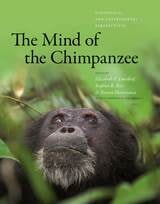
The Mind of the Chimpanzee
Ecological and Experimental PerspectivesEdited by Elizabeth V. Lonsdorf, Stephen R. Ross, and Tetsuro Matsuzawa
University of Chicago Press, 2010
Understanding the chimpanzee mind is akin to opening a window onto human consciousness. Many of our complex cognitive processes have origins that can be seen in the way that chimpanzees think, learn, and behave. The Mind of the Chimpanzee brings together scores of prominent scientists from around the world to share the most recent research into what goes on inside the mind of our closest living relative.
Intertwining a range of topics—including imitation, tool use, face recognition, culture, cooperation, and reconciliation—with critical commentaries on conservation and welfare, the collection aims to understand how chimpanzees learn, think, and feel, so that researchers can not only gain insight into the origins of human cognition, but also crystallize collective efforts to protect wild chimpanzee populations and ensure appropriate care in captive settings. With a breadth of material on cognition and culture from the lab and the field, The Mind of the Chimpanzee is a first-rate synthesis of contemporary studies of these fascinating mammals that will appeal to all those interested in animal minds and what we can learn from them.
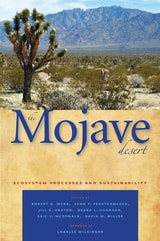
The Mojave Desert
Ecosystem Processes and SustainabilityRobert Webb
University of Nevada Press, 2009
In The Mojave Desert, thirty-eight scientists who are all specialists in desert ecology address the threats to the Mojave, as well as the potential for natural recovery and active restoration. The contributing authors discuss the desert from several perspectives: regional threats such as expanding human populations, climate change, atmospheric nitrogen deposition, and invasive plants; the impact of roads in a desert ecosystem; soils and plant communities; shrinking aquifers; and the monitoring and sustainability of this fragile ecosystem. Finally, they discuss the importance of long-term data and the ways scientists and resource managers can interact to enhance understanding of the processes of change in the Mojave Desert and to advance the preservation and restoration of its precious resources.The Mojave Desert offers the fruits of extensive research in a number of disciplines and a sound assessment of the current state and possible future of one of the world's major deserts. As human intrusion and climate change increasingly threaten the Mojave's ecosystem, studies like this are essential in helping scientists, land managers, and the general public understand what is at risk and what can be done to preserve this austere and hauntingly beautiful region.
The Mollusks of the Arid Southwest
With an Arizona Check ListJoseph C. Bequaert and Walter B. Miller
University of Arizona Press, 1973
Part I: Zoogeography of Southwestern Nearctic Mollusks
Integrates and evaluates information of interest to students of variation, evolution, zoogeography, and ecology of the fauna of the arid Southwest.
Part II: Annotated Check List of Recent Arizona Mollusks
Treatment of 173 valid species and 46 recognized subspecies gives nomenclature, type localities, distribution in Arizona, occurrence elsewhere in the Southwestern Molluscan Province, general Recent distribution, presence or absence in Late Cenozoic deposits, and synonymy.