Results by title
1210 books match the query 'Mexico' and 223 start with t

There Was a Woman
La Llorona from Folklore to Popular CultureBy Domino Renee Perez
University of Texas Press, 2008
"How is it that there are so many lloronas?" A haunting figure of Mexican oral and literary traditions, La Llorona permeates the consciousness of her folk community. From a ghost who haunts the riverbank to a murderous mother condemned to wander the earth after killing her own children in an act of revenge or grief, the Weeping Woman has evolved within Chican@ imaginations across centuries, yet no truly comprehensive examination of her impact existed until now. Tracing La Llorona from ancient oral tradition to her appearance in contemporary material culture, There Was a Woman delves into the intriguing transformations of this provocative icon.
From La Llorona's roots in legend to the revisions of her story and her exaltation as a symbol of resistance, Domino Renee Perez illuminates her many permutations as seductress, hag, demon, or pitiful woman. Perez draws on more than two hundred artifacts to provide vivid representations of the ways in which these perceived identities are woven from abstract notions—such as morality or nationalism—and from concrete, often misunderstood concepts from advertising to television and literature. The result is a rich and intricate survey of a powerful figure who continues to be reconfigured.
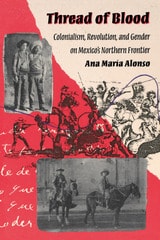
Thread of Blood
Colonialism, Revolution, and Gender on Mexico's Northern FrontierAna María Alonso
University of Arizona Press, 1995
The author demonstrates that a distinct kind of frontier serrano society was generated in Namiquipa between the mid-18th and mid-19th centuries. In exchange for keeping the Apaches at bay, colonists were provided with arms and land grants. At the same time, they developed a gendered sense of ethnic identity that equated honor with land, autonomy, and a kind of masculinity that distinguished the "civilized" colonist from the "barbarous" Indian. While this identity was itself ordered hierarchically between men and women, and between "Hispanic" and "Indian," it also provided serranos with a sense of pride and dignity that was not directly associated with wealth.
After the defeat of the Apaches, and with increased state control during the last decades of the Porfiriato, the serranos on the frontier were transformed from bulwarks of order to victims of progress. The expansion of capitalism and the manipulation of local political office by men no longer accountable to communal norms eroded the legitimacy of both powerholders and the central state. In response, serranos constructed an ideology of history based on past notions of masculine honor and autonomy. This ideology motivated their confrontations with the Mexican state during the 1890s and also served as the force behind their mobilization in the 1910 revolution.
Threads
Gender, Labor, and Power in the Global Apparel IndustryJane L. Collins
University of Chicago Press, 2003
To dispel these misunderstandings, Jane L. Collins visited two very different apparel firms and their factories in the United States and Mexico. Moving from corporate headquarters to factory floors, her study traces the diverse ties that link First and Third World workers and managers, producers and consumers. Collins examines how the transnational economics of the apparel industry allow firms to relocate or subcontract their work anywhere in the world, making it much harder for garment workers in the United States or any other country to demand fair pay and humane working conditions.
Putting a human face on globalization, Threads shows not only how international trade affects local communities but also how workers can organize in this new environment to more effectively demand better treatment from their distant corporate employers.

Through Fences
Written by Frederick Luis Aldama and Illustrated by Oscar Garza
The Ohio State University Press, 2024
Honor-winner, 2025 Texas Institute of Letters Jean Flynn Award for Best Young Adult Book
Longlisted, REFORMA National Book Award 2024
Through Fences follows the ups and downs of Latino kids and young adults in the US–Mexico borderlands: San Ysidro, Calexico, McAllen, and back and forth across the border. A young girl's journey north goes wrong, and now she is in a forbidding new place, away from her parents and brother, where she doesn't understand what the adults in green are saying even as she tries to obey their rules. Rocky, one of the few white kids in town, stands by and watches as Miguel is jumped by two of his friends. Maggie and her parents are separated at the border in a tragic accident. Alberto's son doesn't understand his Mexican father's hatred for illegals or his work as a border patrol agent. Alicia is a TikTok influencer who doesn't want to grow up to be a hospital cleaning lady like her mother, but COVID complicates things. Whatever their challenges, the kids, teens, tweens, and adults in these pages are just trying to survive their everyday lives. Vibrantly illustrated by Oscar Garza, each of these short stories brings a different perspective on the perils of living on the border while brown.
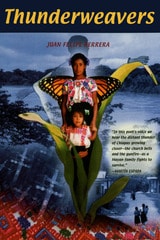
Thunderweavers/ Tejedoras de rayos
Juan Felipe Herrera
University of Arizona Press, 2000
In the winter of 1997, paramilitary agents ambushed and killed many Mayan villagers in Acteal, Chiapas. Gifted writer Juan Felipe Herrera has composed a stirring poem sequence—published in a bilingual format—written in response and homage to those who died, as well as to all those who call for peace and justice in the Mexican highlands and throughout the Americas.
The sections are written in the voices of four women from a family in Chiapas: Xunka, a lost twelve-year-old girl; Pascuala, the mother; grandmother Maruch; and Makal, an older daughter who is pregnant. Each voice weaves into the others and speaks for still other members of the larger Mayan and Native American family.
Thunderweavers is a story of violent displacements in the lives of the most impoverished residents of southern Mexico.Through these words, readers will learn the meaning of transcendence and continuity in the midst of chaos, suffering, and war.
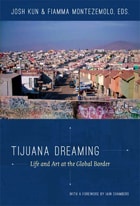
Tijuana Dreaming
Life and Art at the Global BorderJosh Kun and Fiamma Montezemolo, eds.
Duke University Press, 2012
Contributors. Tito Alegría, Humberto Félix Berumen, Roberto Castillo Udiarte, Iain Chambers, Luis Humberto Crosthwaite, Teddy Cruz, Ejival, Tarek Elhaik, Guillermo Fadanelli, Néstor García Canclini, Ingrid Hernández, Jennifer Insley-Pruitt, Kathryn Kopinak, Josh Kun, Jesse Lerner, Fiamma Montezemolo, Rene Peralta, Rafa Saavedra, Lucía Sanromán, Santiago Vaquera-Vásquez, Heriberto Yépez
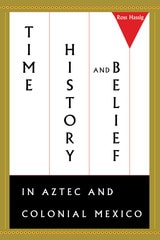
Time, History, and Belief in Aztec and Colonial Mexico
By Ross Hassig
University of Texas Press, 2001
Based on their enormously complex calendars that recorded cycles of many kinds, the Aztecs and other ancient Mesoamerican civilizations are generally believed to have had a cyclical, rather than linear, conception of time and history. This boldly revisionist book challenges that understanding. Ross Hassig offers convincing evidence that for the Aztecs time was predominantly linear, that it was manipulated by the state as a means of controlling a dispersed tribute empire, and that the Conquest cut off state control and severed the unity of the calendar, leaving only the lesser cycles. From these, he asserts, we have inadequately reconstructed the pre-Columbian calendar and so misunderstood the Aztec conception of time and history.
Hassig first presents the traditional explanation of the Aztec calendrical system and its ideological functions and then marshals contrary evidence to argue that the Aztec elite deliberately used calendars and timekeeping to achieve practical political ends. He further traces how the Conquest played out in the temporal realm as Spanish conceptions of time partially displaced the Aztec ones. His findings promise to revolutionize our understanding of how the Aztecs and other Mesoamerican societies conceived of time and history.
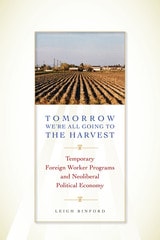
Tomorrow We're All Going to the Harvest
Temporary Foreign Worker Programs and Neoliberal Political EconomyBy Leigh Binford
University of Texas Press, 2013
From its inception in 1966, the Canadian Seasonal Agricultural Worker Program (SAWP) has grown to employ approximately 20,000 workers annually, the majority from Mexico. The program has been hailed as a model that alleviates human rights concerns because, under contract, SAWP workers travel legally, receive health benefits, contribute to pensions, are represented by Canadian consular officials, and rate the program favorably. Tomorrow We’re All Going to the Harvest takes us behind the ideology and examines the daily lives of SAWP workers from Tlaxcala, Mexico (one of the leading sending states), observing the great personal and family price paid in order to experience a temporary rise in a standard of living. The book also observes the disparities of a gutted Mexican countryside versus the flourishing agriculture in Canada, where farm labor demand remains high.
Drawn from extensive surveys and nearly two hundred interviews, ethnographic work in Ontario (destination of over 77 percent of migrants in the author’s sample), and quantitative data, this is much more than a case study; it situates the Tlaxcala-Canada exchange within the broader issues of migration, economics, and cultural currents. Bringing to light the historical genesis of “complementary” labor markets and the contradictory positioning of Mexican government representatives, Leigh Binford also explores the language barriers and nonexistent worker networks in Canada, as well as the physical realities of the work itself, making this book a complete portrait of a provocative segment of migrant labor.

Tortilleras Negotiating Intimacy
Love, Friendship, and Sex in Queer Mexico CityAnahi Russo Garrido
Rutgers University Press, 2020
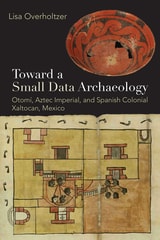
Toward a Small Data Archaeology
Otomí, Aztec Imperial, and Spanish Colonial Xaltocan, MexicoLisa Overholtzer
University Press of Colorado, 2025
Xaltocan served as the Otomí city-state capital before being conquered by the Tepanecs, subsequently incorporated into the Aztec Empire, and finally integrated into the vast Spanish colonial sphere. In reconstructing long-term household histories that bridge the pre-Hispanic and early Colonial periods, this book resists narratives that define Indigenous peoples solely through the lens of conquest and subordination. Instead, it presents richly detailed reconstructions of familial relationships and social networks, achieved through the rigorous analysis of artifacts, ecofacts, human remains, and ancient DNA. This meticulous and community-collaborative approach not only maximizes insights available from a limited archaeological record but also honors the ethical imperative to work with descendant communities.
Toward a Small Data Archaeology offers an innovative reexamination of the past by privileging the intricate, household-level narratives of Indigenous communities over the homogenizing tendencies of broad-scale "big data" approaches. By peopling the past, Overholtzer redefines methodological boundaries within archaeology, produces reconstructions and narratives that are more in line with Indigenous philosophies, and offers a compelling vision for a future in which historical narratives are reconstructed through a lens that is both deeply scientific and inherently humane.
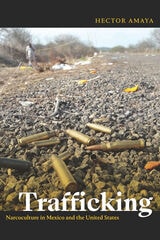
Trafficking
Narcoculture in Mexico and the United StatesHector Amaya
Duke University Press, 2020
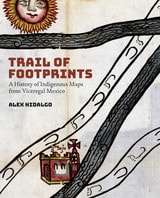
Trail of Footprints
A History of Indigenous Maps from Viceregal MexicoBy Alex Hidalgo
University of Texas Press, 2019
Trail of Footprints offers an intimate glimpse into the commission, circulation, and use of indigenous maps from colonial Mexico. A collection of sixty largely unpublished maps from the late sixteenth to the eighteenth centuries and made in the southern region of Oaxaca anchors an analysis of the way ethnically diverse societies produced knowledge in colonial settings. Mapmaking, proposes Hidalgo, formed part of an epistemological shift tied to the negotiation of land and natural resources between the region’s Spanish, Indian, and mixed-race communities. The craft of making maps drew from social memory, indigenous and European conceptions of space and ritual, and Spanish legal practices designed to adjust spatial boundaries in the New World. Indigenous mapmaking brought together a distinct coalition of social actors—Indian leaders, native towns, notaries, surveyors, judges, artisans, merchants, muleteers, collectors, and painters—who participated in the critical observation of the region’s geographic features. Demand for maps reconfigured technologies associated with the making of colorants, adhesives, and paper that drew from Indian botany and experimentation, trans-Atlantic commerce, and Iberian notarial culture. The maps in this study reflect a regional perspective associated with Oaxaca’s decentralized organization, its strategic position amidst a network of important trade routes that linked central Mexico to Central America, and the ruggedness and diversity of its physical landscape.
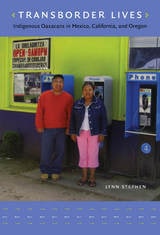
Transborder Lives
Indigenous Oaxacans in Mexico, California, and OregonLynn Stephen
Duke University Press, 2007
Stephen weaves the personal histories and narratives of indigenous transborder migrants together with explorations of the larger structures that affect their lives. Taking into account U.S. immigration policies and the demands of both commercial agriculture and the service sectors, she chronicles how migrants experience and remember low-wage work in agriculture, landscaping, and childcare and how gender relations in Oaxaca and the United States are reconfigured by migration. She looks at the ways that racial and ethnic hierarchies inherited from the colonial era—hierarchies that debase Mexico’s indigenous groups—are reproduced within heterogeneous Mexican populations in the United States. Stephen provides case studies of four grass-roots organizations in which Mixtec migrants are involved, and she considers specific uses of digital technology by transborder communities. Ultimately Stephen demonstrates that transborder migrants are reshaping notions of territory and politics by developing creative models of governance, education, and economic development as well as ways of maintaining their cultures and languages across geographic distances.
Transcontinental Dialogues
Activist Alliances with Indigenous Peoples of Canada, Mexico, and AustraliaEdited by R. Aída Hernández Castillo, Suzi Hutchings, and Brian Noble
University of Arizona Press, 2019
This volume presents a set of pieces that do not take the usual political or geographic paradigms as their starting point; instead, the particular dialogues from the margins presented in this book arise from a rejection of the geographic hierarchization of knowledge in which the Global South continues to be the space for fieldwork while the Global North is the place for its systematization and theorization. Instead, contributors in Transcontinental Dialogues delve into the interactions between anthropologists and the people they work with in Canada, Australia, and Mexico. This framework allows the contributors to explore the often unintended but sometimes devastating impacts of government policies (such as land rights legislation or justice initiatives for women) on Indigenous people’s lives.
Each chapter’s author reflects critically on their own work as activist-scholars. They offer examples of the efforts and challenges that anthropologists—Indigenous and non-Indigenous—confront when producing knowledge in alliances with Indigenous peoples. Mi’kmaq land rights, pan-Maya social movements, and Aboriginal title claims in rural and urban areas are just some of the cases that provide useful ground for reflection on and critique of challenges and opportunities for scholars, policy-makers, activists, allies, and community members.
This volume is timely and innovative for using the disparate anthropological traditions of three regions to explore how the interactions between anthropologists and Indigenous peoples in supporting Indigenous activism have the potential to transform the production of knowledge within the historical colonial traditions of anthropology.
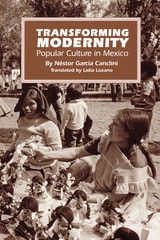
Transforming Modernity
Popular Culture in MexicoBy Néstor García Canclini
University of Texas Press, 1992
Is popular culture merely a process of creating, marketing, and consuming a final product, or is it an expression of the artist's surroundings and an attempt to alter them? Noted Argentine/Mexican anthropologist Néstor García Canclini addresses these questions and more in Transforming Modernity, a translation of Las culturas populares en el capitalismo. Based on fieldwork among the Purépecha of Michoacán, Mexico, some of the most talented artisans of the New World, the book is not so much a work of ethnography as of philosophy—a cultural critique of modernism. García Canclini delineates three interpretations of popular culture: spontaneous creation, which posits that artistic expression is the realization of beauty and knowledge; "memory for sale," which holds that original products are created for sale in the imposed capitalist system; and the tourist outlook, whereby collectibles are created to justify development and to provide insight into what capitalism has achieved.
Transforming Modernity argues strongly for popular culture as an instrument of understanding, reproducing, and transforming the social system in order to elaborate and construct class hegemony and to reflect the unequal appropriation and distribution of cultural capital. With its wide scope, this book should appeal to readers within and well beyond anthropology—those interested in cultural theory, social thought, and Mesoamerican culture.
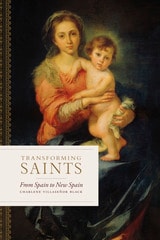
Transforming Saints
From Spain to New SpainCharlene Villaseñor Black
Vanderbilt University Press, 2022
The chapters here examine the rise of the cults of the lactating Madonna, St. Anne, St. Librada, St. Mary Magdalene, and the Suffering Virgin. Concerned with holy figures presented as feminine archetypes—images that came under Inquisition scrutiny—as well as with cults suspected of concealing Indigenous influences, Charlene Villaseñor Black argues that these images would come to reflect the empowerment and agency of women in viceregal Mexico. Her close analysis of the imagery additionally demonstrates artists' innovative responses to Inquisition censorship and the new artistic demands occasioned by conversion.
The concerns that motivated the twenty-first century protests against Chicana artists Yolanda López in 2001 and Alma López in 2003 have a long history in the Hispanic world, in the form of anxieties about the humanization of sacred female bodies and fears of Indigenous influences infiltrating Catholicism. In this context Black also examines a number of important artists in depth, including El Greco, Murillo, Jusepe de Ribera, Pedro de Mena, Baltasar de Echave Ibía, Juan Correa, Cristóbal de Villalpando, and Miguel Cabrera.
Transforming Therapy
Mental Health Practice and Cultural Change in MexicoWhitney L. Duncan
Vanderbilt University Press, 2018
How does one explain the recent growth of Euroamerican-style therapies in the region? Author Whitney L. Duncan analyzes this phenomenon of "psy-globalization" and develops a rich ethnography of its effects on Oaxacans' understandings of themselves and their emotions, ultimately showing how globalizing forms of care are transformative for and transformed by the local context. She also delves into the mental health impacts of migration from Mexico to the United States, both for migrants who return and for the family members they leave behind.
This book is a recipient of the Norman L. and Roselea J. Goldberg Prize from Vanderbilt University Press for the best book in the area of medicine.
Transpacific Nonencounters
Racial Disconnects Across Twentieth-Century Japan and MexicoAndrea Mendoza
Duke University Press, 2026
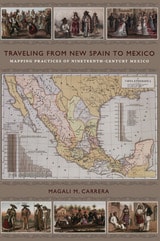
Traveling from New Spain to Mexico
Mapping Practices of Nineteenth-Century MexicoMagali M. Carrera
Duke University Press, 2011
From the sixteenth century until the early nineteenth, Europeans had envisioned New Spain (colonial Mexico) in texts, maps, and other images. In the first decades of the 1800s, ideas about Mexican, rather than Spanish, national character and identity began to cohere in written and illustrated narratives produced by foreign travelers. During the nineteenth century, technologies and processes of visual reproduction expanded to include lithography, daguerreotype, and photography. New methods of display—such as albums, museums, exhibitions, and world fairs—signaled new ideas about spectatorship. García Cubas participated in this emerging visual culture as he reconfigured geographic and cultural imagery culled from previous mapping practices and travel writing. In works such as the Atlas geográfico (1858) and the Atlas pintoresco é historico (1885), he presented independent Mexico to Mexican citizens and the world.
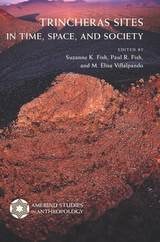
Trincheras Sites in Time, Space, and Society
Edited by Suzanne K. Fish, Paul R. Fish, and M. Elisa Villalpando
University of Arizona Press, 2008
This multi-author volume integrates a remarkable body of new data representing a textbook-like array of current research issues and methodologies in the archaeology of the region. Scholars from the United States and Mexico offer original research on trincheras sites in Chihuahua, Sonora, Arizona, and New Mexico. Scales of focus range from intensive intrasite sampling to the largest contiguous survey in the region. Authors incorporate spatial analyses, artifact studies, environmental and subsistence data, ethnographic analogs, ethnohistorical records, cross-cultural comparisons, archaeology, and archival resources.
The volume’s discussions contribute innovative approaches to worldwide interpretations of landscapes marked by hilltop sites. Contributors present meticulous research arguing that many trincheras sites were primarily used for habitation and ceremonial rites, in addition to previously predominant views of them as defensive refuges. Because trincheras occupations date from the late preceramic era to shortly before Spanish contact, authors relate them to early forms of agriculture, the emergence of village life, the appearance of differentiated settlement systems, and tendencies toward political and ritual centralization.
Detailed maps and figures illustrate the text, and close-up aerial photographs capture the visual essence of the sites, highlighted by a section that includes color photographs and an essay by renowned photographer Adriel Heisey.
Contributors:
Christian E. Downum
Paul R. Fish
Suzanne K. Fish
Robert J. Hard
Adriel Heisey
Stephen A. Kowalewski
Randall H. McGuire
Ben A. Nelson
John R. Roney
Judith Taylor
M. Elisa Villalpando
Joseph Vogel
Henry Wallace
David R. Wilcox
J. Scott Wood

Tula Of The Toltecs
Excavations And SurveyDan M. Healan
University of Iowa Press, 1988
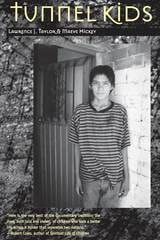
Tunnel Kids
Lawrence J. Taylor and Maeve Hickey
University of Arizona Press, 2001
Beneath the streets of the U.S.-Mexico border, children are coming of age. They have come from all over Mexico to find shelter and adventure in the drainage tunnels that connect the twin cities of Nogales, Sonora, and Nogales, Arizona. This book opens up the world of the tunnel kids and tells how in this murky underworld of struggling immigrants, drug dealers, and thieves, these kids have carved out a place of their own. Two parallel tunnels— each fourteen feet wide and several miles long— drain the summer rains from Mexico to the United States. Here and in the crumbling colonias you'll meet the tunnel kids: streetwise El Boston, a six-year veteran of the tunnels; his little pal Jesús; Jesús' girlfriend, La Flor, and her six-month-old baby; wild Negra; poetic Guanatos; moody Romel and his beautiful girlfriend, La Fanta. They form an extended family of some two dozen young people who live hard-edged lives and answer to no one in El Barrio Libre— the free barrio.
Lawrence Taylor and Maeve Hickey met these kids at Mi Nueva Casa, the safe house built to draw the youths out of the tunnels and into a more normal life. The authors spent two summers with tunnel kids as they roamed all over Nogales and beyond in their struggle to survive. In the course of their adventures the kids described their lives, talking about what might tempt them to leave the tunnels— and what kept them there. Hickey's stunning portraits provide a heart-stopping counterpoint to Taylor's incisive prose. Story and photos together open a window into the life of the tunnel kids—a world like that of many homeless children, precarious and adaptive, albeit unique to the border. Where most people might see just another gang of doped-up, violent children, Taylor and Hickey discover displaced and sometimes heroic young people whose stories add a human dimension to the world of the U.S.-Mexico border.
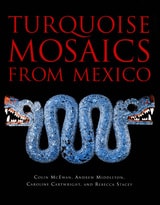
Turquoise Mosaics from Mexico
Colin McEwan, Andrew Middleton, Caroline Cartwright, and Rebecca Stacey
Duke University Press, 2006
Illustrated with more than 160 color images, this book describes the recent scientific findings about the mosaics in detail, revealing them to be rich repositories of information about ancient Mexico. The materials used to construct the mosaics demonstrate their makers’ deep knowledge of the natural world and its resources. The effort that would have been involved in procuring the materials testifies to the mosaics’ value and significance in a society imbued with myths and religious beliefs. The British Museum’s analyses have provided evidence of the way that the materials were prepared and assembled, the tools used, and the choices that were made by artisans. In addition, by drawing on historical accounts including early codices, as well as recent archaeological discoveries, specialists have learned more about the place of the mosaics in ancient Mexican culture.
Filled with information about the religion, art, and natural and cultural history as well as the extraordinary ability of modern science to enable detailed insight into past eras, Turquoise Mosaics from Mexico offers an overview of the production, utilization, and eventual fate of these beautiful and mysterious objects.