Results by title
1927 books match the query 'Technology & Engineering' and 270 start with t
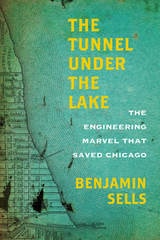
The Tunnel under the Lake
The Engineering Marvel That Saved ChicagoBenjamin Sells
Northwestern University Press, 2017
Despite Chicago's location beside the world’s largest source of fresh water, its low elevation at the end of Lake Michigan provided no natural method of carrying away waste. As a result, within a few years of its founding, Chicago began to choke on its own sewage collecting near the shore. The befouled environment, giving rise to outbreaks of sickness and cholera, became so acute that even the ravages and costs of the U.S. Civil War did not distract city leaders from taking action.
Chesbrough's solution was an unprecedented tunnel five feet in diameter lined with brick and dug sixty feet beneath Lake Michigan. Construction began from the shore as well as the tunnel’s terminus in the lake. With workers laboring in shifts and with clay carted away by donkeys, the lake and shore teams met under the lake three years later, just inches out of alignment. When it opened in March 1867, observers, city planners, and grateful citizens hailed the tunnel as the "wonder of America and of the world."
Benjamin Sells narrates in vivid detail the exceptional skill and imagination it took to save this storied city from itself. A wealth of fascinating appendixes round out Sells’s account, which will delight those interested in Chicago history, water resources, and the history of technology and engineering.
The U.S. Army/Marine Corps Counterinsurgency Field Manual
The United States Army and Marine Corps
University of Chicago Press, 2007
When the U.S. military invaded Iraq, it lacked a common understanding of the problems inherent in counterinsurgency campaigns. It had neither studied them, nor developed doctrine and tactics to deal with them. It is fair to say that in 2003, most Army officers knew more about the U.S. Civil War than they did about counterinsurgency.
The U.S. Army / Marine Corps Counterinsurgency Field Manual was written to fill that void. The result of unprecedented collaboration among top U.S. military experts, scholars, and practitioners in the field, the manual espouses an approach to combat that emphasizes constant adaptation and learning, the importance of decentralized decision-making, the need to understand local politics and customs, and the key role of intelligence in winning the support of the population. The manual also emphasizes the paradoxical and often counterintuitive nature of counterinsurgency operations: sometimes the more you protect your forces, the less secure you are; sometimes the more force you use, the less effective it is; sometimes doing nothing is the best reaction.
An new introduction by Sarah Sewall, director of the Carr Center for Human Rights Policy at Harvard’s Kennedy School of Government, places the manual in critical and historical perspective, explaining the significance and potential impact of this revolutionary challenge to conventional U.S. military doctrine.
An attempt by our military to redefine itself in the aftermath of 9/11 and the new world of international terrorism, The U.S. Army / Marine Corps Counterinsurgency Field Manual will play a vital role in American military campaigns for years to come.
The University of Chicago Press will donate a portion of the proceeds from this book to the Fisher House Foundation, a private-public partnership that supports the families of America’s injured servicemen. To learn more about the Fisher House Foundation, visit www.fisherhouse.org.
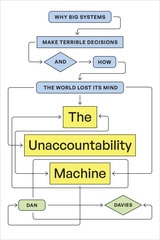
The Unaccountability Machine
Why Big Systems Make Terrible Decisions—and How the World Lost Its MindDan Davies
University of Chicago Press, 2025
Passengers get bumped from flights. Phone menus disconnect. Automated financial trades produce market collapse. Of all the challenges in modern life, some of the most vexing come from our relationships with automation: a large system does us wrong, and there’s nothing we can do about it.
The problem, economist Dan Davies shows, is accountability sinks: systems in which decisions are delegated to a complex rule book or set of standard procedures, making it impossible to identify the source of mistakes when they happen. In our increasingly unhuman world—lives dominated by algorithms, artificial intelligence, and large organizations—these accountability sinks produce more than just aggravation. They make life and economy unknowable—a black box for no reason.
In The Unaccountability Machine, Davies lays bare how markets, institutions, and even governments systematically generate outcomes that no one—not even those involved in making them—seems to want. Since the earliest days of the computer age, theorists have foreseen the dangers of complex systems without personal accountability. In response, British business scholar Stafford Beer developed an accountability-first approach to management called “cybernetics,” which might have taken off had his biggest client (the Chilean government) not fallen to a bloody coup in 1973.
With his signature blend of economic and journalistic rigor, Davies examines what’s gone wrong since Beer, including what might have been had the world embraced cybernetics when it had the chance. The Unaccountability Machine is a revelatory and resonant account of how modern life became predisposed to dysfunction.
The Unaccountability Machine
Why Big Systems Make Terrible Decisions—and How the World Lost Its MindDan Davies
University of Chicago Press, 2025
Longlisted for the 2024 Financial Times Book of the Year. How life and the economy became a black box—a collection of systems no one understands, producing outcomes no one likes.
Passengers get bumped from flights. Phone menus disconnect. Automated financial trades produce market collapse. Of all the challenges in modern life, some of the most vexing come from our relationships with automation: a large system does us wrong, and there’s nothing we can do about it.
The problem, economist Dan Davies shows, is accountability sinks: systems in which decisions are delegated to a complex rule book or set of standard procedures, making it impossible to identify the source of mistakes when they happen. In our increasingly unhuman world—lives dominated by algorithms, artificial intelligence, and large organizations—these accountability sinks produce more than just aggravation. They make life and economy unknowable—a black box for no reason.
In The Unaccountability Machine, Davies lays bare how markets, institutions, and even governments systematically generate outcomes that no one—not even those involved in making them—seems to want. Since the earliest days of the computer age, theorists have foreseen the dangers of complex systems without personal accountability. In response, British business scholar Stafford Beer developed an accountability-first approach to management called “cybernetics,” which might have taken off had his biggest client (the Chilean government) not fallen to a bloody coup in 1973.
With his signature blend of economic and journalistic rigor, Davies examines what’s gone wrong since Beer, including what might have been had the world embraced cybernetics when it had the chance. The Unaccountability Machine is a revelatory and resonant account of how modern life became predisposed to dysfunction.
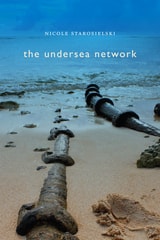
The Undersea Network
Nicole Starosielski
Duke University Press, 2015
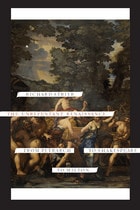
The Unrepentant Renaissance
From Petrarch to Shakespeare to MiltonRichard Strier
University of Chicago Press, 2011
Who during the Renaissance could have dissented from the values of reason and restraint, patience and humility, rejection of the worldly and the physical? These widely articulated values were part of the inherited Christian tradition and were reinforced by key elements in the Renaissance, especially the revival of Stoicism and Platonism. This book is devoted to those who did dissent from them. Richard Strier reveals that many long-recognized major texts did question the most traditional values and belong to a Renaissance far more unconstrained and affirmative than much recent scholarship has allowed.
The Unrepentant Renaissance counters the prevalent view of the period as dominated by the regulation of bodies and passions; the book aims to reclaim the Renaissance as an era happily churning with surprising, worldly, and self-assertive energies. Reviving the perspective of Burckhardt and Nietzsche, Strier provides fresh and uninhibited readings of texts by Petrarch, Shakespeare (sonnets and plays), Loyola, Montaigne, Descartes, and Milton. Strier’s lively argument, expressed in lucid prose, is meant to stir debate throughout the field of Renaissance studies.
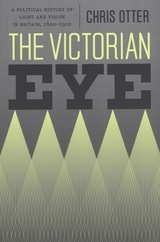
The Victorian Eye
A Political History of Light and Vision in Britain, 1800-1910Chris Otter
University of Chicago Press, 2008
The Victorian Eye’s innovative interdisciplinary approach—and generous illustrations—will captivate a range of readers interested in the history of modern Britain, visual culture, technology, and urbanization.
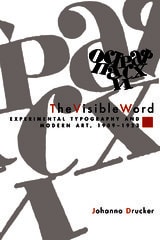
The Visible Word
Experimental Typography and Modern Art, 1909-1923Johanna Drucker
University of Chicago Press, 1994
Drucker suggests a methodology closer to the actual practices of the early avant-garde artists, based on a rereading of their critical and theoretical writings. After reviewing theories of signification, the production of meaning, and materiality, she analyzes the work of four poets active in the typographic experimentation of the 1910s and 1920s: Ilia Zdanevich, Filippo Marinetti, Guillaume Apollinaire, and Tristan Tzara.
Few studies of avant-garde art and literature in the early twentieth century have acknowledged the degree to which typographic activity furthered debates about the very nature and function of the avant-garde. The Visible Word enriches our understanding of the processes of change in artistic production and reception in the twentieth century.
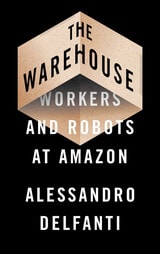
The Warehouse
Workers and Robots at AmazonAlessandro Delfanti
Pluto Press, 2021
'Work hard, have fun, make history' proclaims the slogan on the walls of Amazon's warehouses. This cheerful message hides a reality of digital surveillance, aggressive anti-union tactics and disciplinary layoffs. Reminiscent of the tumult of early industrial capitalism, the hundreds of thousands of workers who help Amazon fulfil consumers' desire are part of an experiment in changing the way we all work.
In this book, Alessandro Delfanti takes readers inside Amazon's warehouses to show how technological advancements and managerial techniques subdue the workers rather than empower them, as seen in the sensors that track workers' every movement around the floor and algorithmic systems that re-route orders to circumvent worker sabotage. He looks at new technologies including robotic arms trained by humans and augmented reality goggles, showing that their aim is to standardize, measure and discipline human work rather than replace it.
Despite its innovation, Amazon will always need living labor's flexibility and low cost. And as the warehouse is increasingly automated, worker discontent increases. Striking under the banner 'we are not robots', employees have shown that they are acutely aware of such contradictions. The only question remains: how long will it be until Amazon's empire collapses?

The Weight of Gold
Mining and the Environment in Ontario, Canada, 1909-1929Mica Jorgenson
University of Nevada Press, 2023
Mining in North America has long been criticized for its impact on the natural environment. Mica Jorgenson’s The Weight of Gold explores the history of Ontario, Canada’s rise to prominence in the gold mining industry, while detailing a series of environmental crises related to extraction activities. In Ontario in 1909, the discovery of exceptionally rich hard rock gold deposits in the Abitibi region in the north precipitated industrial development modeled on precedents in Australia, South Africa, and the United States. By the late 1920s, Ontario’s mines had reached their maturity, and in 1928, Minister of Mines Charles McRae called Canada “the mineral treasure house to [the] world.”
Mining companies increasingly depended upon their ability to redistribute the burdens of mining onto surrounding communities—a strategy they continue to use today—both at home and abroad. Jorgenson connects Canadian gold mining to its international context, revealing that Ontario’s gold mines informed extractive knowledge which would go on to shape Canada’s mining industry over the next century.
The Whale and the Reactor
A Search for Limits in an Age of High TechnologyLangdon Winner
University of Chicago Press, 1988
"The Whale and the Reactor is the philosopher's equivalent of superb public history. In its pages an analytically trained mind confronts some of the most pressing political issues of our day."—Ruth Schwartz Cowan, Isis
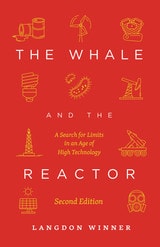
The Whale and the Reactor
A Search for Limits in an Age of High Technology, Second EditionLangdon Winner
University of Chicago Press, 2020
First published to great acclaim in 1988, Langdon Winner’s groundbreaking exploration of the political, social, and philosophical implications of technology is timelier than ever. He demonstrates that choices about the kinds of technical systems we build and use are actually choices about who we want to be and what kind of world we want to create—technical decisions are political decisions, and they involve profound choices about power, liberty, order, and justice. A seminal text in the history and philosophy of science, this new edition includes a new chapter, preface, and postscript by the author.
The Wiener-Hopf Method in Electromagnetics
Vito G. Daniele
The Institution of Engineering and Technology, 2014

The World of Soy
Edited by Christine M. Du Bois, Sidney Mintz, and Chee-Beng Tan
University of Illinois Press, 2007
As the most ecologically efficient and economical source of complete protein in human food, soy is gradually attracting more use in the American diet for its nutritional and financial value. Derived from soybean plants--the leading export crop of the United States and the world's most traded crop--soy produced for human consumption is part of a global enterprise affecting the likes of farmers, economists, dieticians, and grocery shoppers. An international group of expert food specialists--including an agricultural economist, an agricultural sociologist, a former Peace Corps development expert, and numerous food anthropologists and agricultural historians--discusses important issues central to soy production and consumption: genetically engineered soybeans, increasing soybean cultivation, soyfood marketing techniques, the use of soybeans as an important soil restorative, and the rendering of soybeans for human consumption.
Contributors are Katarzyna Cwiertka, Christine M. Du Bois, H. T. Huang, Lawrence Kaplan, Jian-Hua Mao, Sidney W. Mintz, Akiko Moriya, Can Van Nguyen, Donald Z. Osborn, Erino Ozeki, Myra Sidharta, Ivan Sergio Freire de Sousa, Chee-Beng Tan, and Rita de Cássia Milagres Teixeira Vieira.
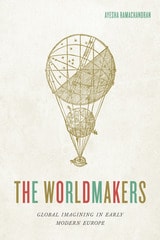
The Worldmakers
Global Imagining in Early Modern EuropeAyesha Ramachandran
University of Chicago Press, 2015
The Worldmakers moves beyond histories of globalization to explore how “the world” itself—variously understood as an object of inquiry, a comprehensive category, and a system of order—was self-consciously shaped by human agents. Gathering an international cast of characters, from Dutch cartographers and French philosophers to Portuguese and English poets, Ramachandran describes a history of firsts: the first world atlas, the first global epic, the first modern attempt to develop a systematic natural philosophy—all part of an effort by early modern thinkers to capture “the world” on the page.
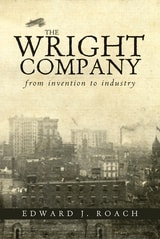
The Wright Company
From Invention to IndustryEdward J. Roach
Ohio University Press, 2014
Fresh from successful flights before royalty in Europe, and soon after thrilling hundreds of thousands of people by flying around the Statue of Liberty, in the fall of 1909 Wilbur and Orville Wright decided the time was right to begin manufacturing their airplanes for sale. Backed by Wall Street tycoons, including August Belmont, Cornelius Vanderbilt III, and Andrew Freedman, the brothers formed the Wright Company. The Wright Company trained hundreds of early aviators at its flight schools, including Roy Brown, the Canadian pilot credited with shooting down Manfred von Richtofen—the “Red Baron”—during the First World War; and Hap Arnold, the commander of the U.S. Army Air Forces during the Second World War. Pilots with the company’s exhibition department thrilled crowds at events from Winnipeg to Boston, Corpus Christi to Colorado Springs. Cal Rodgers flew a Wright Company airplane in pursuit of the $50,000 Hearst Aviation Prize in 1911.
But all was not well in Dayton, a city that hummed with industry, producing cash registers, railroad cars, and many other products. The brothers found it hard to transition from running their own bicycle business to being corporate executives responsible for other people’s money. Their dogged pursuit of enforcement of their 1906 patent—especially against Glenn Curtiss and his company—helped hold back the development of the U.S. aviation industry. When Orville Wright sold the company in 1915, more than three years after his brother’s death, he was a comfortable man—but his company had built only 120 airplanes at its Dayton factory and Wright Company products were not in the U.S. arsenal as war continued in Europe.
Edward Roach provides a fascinating window into the legendary Wright Company, its place in Dayton, its management struggles, and its effects on early U.S. aviation.

The Wright Company
From Invention to IndustryEdward J. Roach
Ohio University Press, 0
But all was not well in Dayton, a city that hummed with industry, producing cash registers, railroad cars, and many other products. The brothers found it hard to transition from running their own bicycle business to being corporate executives responsible for other people’s money. Their dogged pursuit of enforcement of their 1906 patent — especially against Glenn Curtiss and his company — helped hold back the development of the U.S. aviation industry. When Orville Wright sold the company in 1915, more than three years after his brother’s death, he was a comfortable man — but his company had built only 120 airplanes at its Dayton factory and Wright Company products were not in the U.S. arsenal as war continued in Europe.
Edward Roach provides a fascinating window into the legendary Wright Company, its place in Dayton, its management struggles, and its effects on early U.S. aviation.
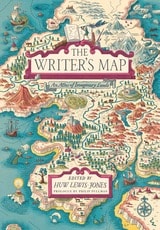
The Writer's Map
An Atlas of Imaginary LandsEdited by Huw Lewis-Jones
University of Chicago Press, 2018
Philip Pullman recounts the experience of drawing a map as he set out on one of his early novels, The Tin Princess. Miraphora Mina recalls the creative challenge of drawing up ”The Marauder’s Map” for the Harry Potter films. David Mitchell leads us to the Mappa Mundi by way of Cloud Atlas and his own sketch maps. Robert Macfarlane reflects on the cartophilia that has informed his evocative nature writing, which was set off by Robert Louis Stevenson and his map of Treasure Island. Joanne Harris tells of her fascination with Norse maps of the universe. Reif Larsen writes about our dependence on GPS and the impulse to map our experience. Daniel Reeve describes drawing maps and charts for The Hobbit film trilogy. This exquisitely crafted and illustrated atlas explores these and so many more of the maps writers create and are inspired by—some real, some imagined—in both words and images.
Amid a cornucopia of 167 full-color images, we find here maps of the world as envisaged in medieval times, as well as maps of adventure, sci-fi and fantasy, nursery rhymes, literary classics, and collectible comics. An enchanting visual and verbal journey, The Writer’s Map will be irresistible for lovers of maps, literature, and memories—and anyone prone to flights of the imagination.
Theater of the Mind
Imagination, Aesthetics, and American Radio DramaNeil Verma
University of Chicago Press, 2012
For generations, fans and critics have characterized classic American radio drama as a “theater of the mind.” This book unpacks that characterization by recasting the radio play as an aesthetic object within its unique historical context. In Theater of the Mind, Neil Verma applies an array of critical methods to more than six thousand recordings to produce a vivid new account of radio drama from the Depression to the Cold War.
In this sweeping exploration of dramatic conventions, Verma investigates legendary dramas by the likes of Norman Corwin, Lucille Fletcher, and Wyllis Cooper on key programs ranging from The Columbia Workshop, The Mercury Theater on the Air, and Cavalcade of America to Lights Out!, Suspense, and Dragnet to reveal how these programs promoted and evolved a series of models of the imagination.
With close readings of individual sound effects and charts of broad trends among formats, Verma not only gives us a new account of the most flourishing form of genre fiction in the mid-twentieth century but also presents a powerful case for the central place of the aesthetics of sound in the history of modern experience.
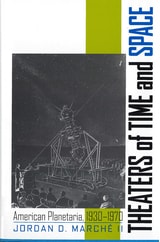
Theaters of Time and Space
American Planetaria, 1930-1970Marche, Jordan
Rutgers University Press, 2005
Every year, millions of Americans visit planetariums and are captivated by their strikingly realistic portrayal of the night sky. Today, it is indeed difficult to imagine astronomy education without these magnificent celestial theaters. But projection planetariums, first developed in Germany, have been a part of American museum pedagogy only since the early twentieth century and were not widespread until the 1960s.
In this unique social history,former planetarium director and historian of science Jordan D. Marché II offers the first complete account of the community of individuals and institutions that, during the period between 1930 and 1970, made planetariums the popular teaching aids they are today. Marché addresses issues such as the role of gender and social developments within the planetarium community, institutional patronage, and the popularization of science. He reveals how, at different times, various groups, including financial donors, amateur scientists, and government officials, viewed the planetarium as an instrument through which they could shape public understanding and perceptions of astronomy and space science.
Offering an insightful, wide-ranging look into the origins of an institution that has fascinated millions, Theaters of Timeand Space brings new perspectives to how one educational community changed the cultural complexion of science, helped shape public attitudes toward the U.S. space program, and even contributed to policy decisions regarding allocations for future space research.

Theory and Design of Microwave Filters
Ian Hunter
The Institution of Engineering and Technology, 2001
Theory and Methods for Distributed Data Fusion Applications
Felix Govaers
The Institution of Engineering and Technology, 2023
Theory and Practice of Modern Antenna Range Measurements
Clive Parini
The Institution of Engineering and Technology, 2015

Theory and Practice of Modern Antenna Range Measurements, Volume 1
Clive Parini
The Institution of Engineering and Technology, 2021
Theory and Practice of Modern Antenna Range Measurements, Volume 2
Clive Parini
The Institution of Engineering and Technology, 2021

Theory of Edge Diffraction in Electromagnetics
Origination and validation of the physical theory of diffractionP.Ya. Ufimtsev
The Institution of Engineering and Technology, 2009

Theory of Nonuniform Waveguides
The cross-section methodB.Z. Katsenelenbaum
The Institution of Engineering and Technology, 1998
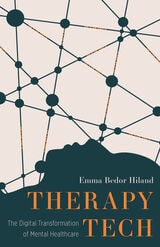
Therapy Tech
The Digital Transformation of Mental HealthcareEmma Bedor Hiland
University of Minnesota Press, 2021
A pointed look at the state of tech-based mental healthcare and what we must do to change it
Proponents of technology trumpet it as the solution to the massive increase in the mental distress that confronts our nation. They herald the arrival of algorithms, intelligent chatbots, smartphone applications, telemental healthcare services, and more—but are these technological fixes really as good as they seem? In Therapy Tech, Emma Bedor Hiland presents the first comprehensive study of how technology has transformed mental healthcare, showing that this revolution can’t deliver what it promises.
Far from providing a solution, technological mental healthcare perpetuates preexisting disparities while relying on the same failed focus on personal responsibility that has let us down before. Through vivid, in-depth case studies, Therapy Tech reveals these problems, covering issues including psychosurveillance on websites like Facebook and 7 Cups of Tea, shortcomings of popular AI “doctors on demand” like Woebot, Wysa, and Joy, and even how therapists are being conscripted into the gig economy.
Featuring a vital coda that brings Therapy Tech up to date for the COVID era, this book is the first to give readers a large-scale analysis of mental health technologies and the cultural changes they have enabled. Both a sobering dissection of the current state of mental health and a necessary warning of where things are headed, Therapy Tech makes an important assertion about how to help those in need of mental health services today.
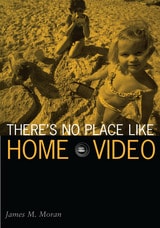
There’s No Place Like Home Video
James M. Moran
University of Minnesota Press, 2002
Defines, examines, and elevates home video to its rightful place
From its recording of family events to its influence on filmmaking, home video defies easy categorization and demands serious consideration. In There’s No Place Like Home Video, James Moran takes on this neglected aspect of popular culture. He offers a cultural history of amateur home video, exploring its technological and ideological predecessors, the development of event videography, and its symbiotic relationship with television and film. He also investigates the broader field of video, taking on the question of medium specificity: the attempt to define its unique identity, to capture what constitutes its pure practice.
In Moran’s discussion of video, he argues that previous scholars have not sufficiently dealt with its nature as hybrid, varied, and mutable. He argues that such a medium shouldn’t be conceived as pure in and of itself; it is neither autonomous from other media nor entirely dependent on any other, but instead has a chameleonlike interface with films, television, computers, telephones, and even architecture. Rather than look for a grand narrative to define its specificity, Moran places video and home video at the intersections of multiple forms of communication.
Thermal Energy Networks and Storage
Nick Jenkins
The Institution of Engineering and Technology, 2026
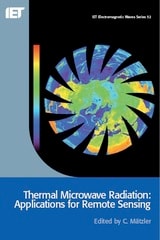
Thermal Microwave Radiation
Applications for remote sensingC. Mätzler
The Institution of Engineering and Technology, 2006

Thermal Power Plant Control and Instrumentation
The control of boilers and HRSGsDavid Lindsley
The Institution of Engineering and Technology, 2018

Thermal Power Plant Simulation and Control
Damian Flynn
The Institution of Engineering and Technology, 2003
Thermomechanical Simulation Methodologies for Advanced Semiconductor Packaging
Shuye Zhang
The Institution of Engineering and Technology, 2025
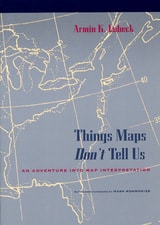
Things Maps Don't Tell Us
An Adventure into Map InterpretationArmin K. Lobeck
University of Chicago Press, 1993
A master cartographer and teacher, Armin Lobeck provides a clear, accessible guide to discerning the geological history of an area through an understanding of the lines of rivers, mountains, and coasts found on maps. He presents commonplace physical features that map users normally take for granted as a collection of cartographic detective stories. After pointing out patterns that call for solutions, Lobeck assembles clues and leads his readers through thoughtful, carefully crafted explanations, to show how to grasp the history of the earth through the art of map reading.
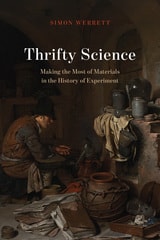
Thrifty Science
Making the Most of Materials in the History of ExperimentSimon Werrett
University of Chicago Press, 2018
Thrifty Science explores this distinctive culture of experiment and demonstrates how the values of the household helped to shape an array of experimental inquiries, ranging from esoteric investigations of glowworms and sour beer to famous experiments such as Benjamin Franklin’s use of a kite to show lightning was electrical and Isaac Newton’s investigations of color using prisms. Tracing the diverse ways that men and women put their material possessions into the service of experiment, Werrett offers a history of practices of recycling and repurposing that are often assumed to be more recent in origin. This thriving domestic culture of inquiry was eclipsed by new forms of experimental culture in the nineteenth century, however, culminating in the resource-hungry science of the twentieth. Could thrifty science be making a comeback today, as scientists grapple with the need to make their research more environmentally sustainable?
Tidal Power
A.C. Baker
The Institution of Engineering and Technology, 1991
Till the Light Leaps
Essays on Playing AttentionD. Graham Burnett
University of Chicago Press, 2027
A ranging, erudite, and intimate examination of the nature of knowledge, by a thinker and creator who defies categorization.
Attention is in short supply and high demand. But when we bring our minds and time and senses to something—an idea, an object, another person—we tap into a human capacity for observation, patience, candor, and presence. Look long enough, and we can reliably catch a bright flash, a shift in the light, even a dawning.
In Till the Light Leaps, historian of science D. Graham Burnett explores the questions that have been major drivers of his intellectual life: How do we know what we know? And how are we changed by that effort? Written during a period of radical, collective, and creative experimentation with attention, the twenty-six essays collected here span topics like technology, science, art, and religion. Together, they comprise a sustained reflection on the relationship between empirical matters and the shiver-work of the human spirit. A brief history of spectroscopy offers an occasion to consider the solemn power of fire, as well as the righteous lessons of a childhood science experiment gone wrong. Skywriting invokes military might, but also the expressionistic bravura of a solo aeronaut, Art Smith. The Greek ritual of throwing plant matter in celebration is a thread connecting animal sacrifice, confetti production, and capitalist excess. In the final, previously unpublished essay, Galway Kinnell’s 1980 poem “Saint Francis and the Sow” becomes a heroic call to love and an allegory of attention in its richest sense.
Till the Light Leaps, a reference to the writings of Simone Weil, advises us to look at something “until the light leaps,” whether it yields a wink or an illumination. Burnett models the work—and the pleasure—of staying present with the world, and his essays test what science can offer, even as they feel for what it cannot.
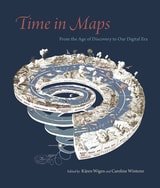
Time in Maps
From the Age of Discovery to Our Digital EraEdited by Kären Wigen and Caroline Winterer
University of Chicago Press, 2020
Focusing on maps created in Spanish America, Europe, the United States, and Asia, these essays take us from the Aztecs documenting the founding of Tenochtitlan, to early modern Japanese reconstructing nostalgic landscapes before Western encroachments, to nineteenth-century Americans grappling with the new concept of deep time. The book also features a defense of traditional paper maps by digital mapmaker William Rankin. With more than one hundred color maps and illustrations, Time in Maps will draw the attention of anyone interested in cartographic history.
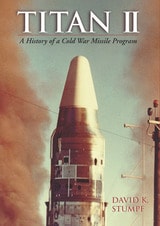
Titan II
A History of a Cold War Missile ProgramDavid K. Stumpf
University of Arkansas Press, 2002
This is the richly detailed story of the Titan II missile and the men and women who developed and operated the system. David K. Stumpf uses a wide range of sources, drawing upon interviews with and memoirs by engineers and airmen as well as recently declassified government documents and other public materials. Over 170 drawings and photographs, most of which have never been published, enhance the narrative. The three major accidents of the program are described in detail for the first time using authoritative sources.
Titan II will be welcomed by librarians for its prodigious reference detail, by technology history professionals and laymen, and by the many civilian and Air Force personnel who were involved in the program—a deterrent weapons system that proved to be successful in defending America from nuclear attack.
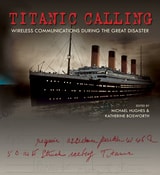
Titanic Calling
Wireless Communications during the Great DisasterEdited by Michael Hughes and Katherine Bosworth
Bodleian Library Publishing, 2012
Published in commemoration of the one-hundredth anniversary of the Titanic’s sinking, this book tells the story of that fateful night from an unusual angle: through the many wireless communications sent to and from the land stations and the ships involved as the tragic events unfolded.

Towards a Sustainable Information Society
Deconstructing WSISEdited by Nico Carpentier and Jan Servaes
Intellect Books, 1995
With the two-phased World Summit on the Information Society (WSIS), the United Nations attempted to stimulate the development of such tools.
Simultaneously, the WSIS is a large-scale experiment in multistakeholderism. The objective was to create a more balanced decision-making process that would allow the voices of civil society and business actors to be heard in international politics.
This book aims to evaluate the potentialities of both the Information Society, and the WSIS in supporting and constructing more democratic, just and developed societies. It is the second book arising from the intellectual work of European Consortium for Communications Research members.

Toxic and Intoxicating Oil
Discovery, Resistance, and Justice in Aotearoa New ZealandPatricia Widener
Rutgers University Press, 2021
Tracking Filter Engineering
The Gauss-Newton and polynomial filtersNorman Morrison
The Institution of Engineering and Technology, 2013
Traffic Flow Prediction
Methods and applicationsQing-Jie Kong
The Institution of Engineering and Technology, 2017
Traffic Information and Control
Ruimin Li
The Institution of Engineering and Technology, 2021
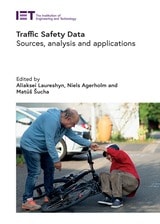
Traffic Safety Data
Sources, analysis and applicationsAliaksei Laureshyn
The Institution of Engineering and Technology, 2025
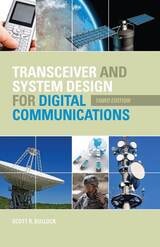
Transceiver and System Design for Digital Communications
Scott R. Bullock
The Institution of Engineering and Technology, 2009
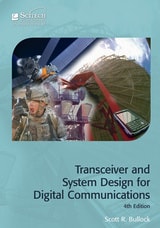
Transceiver and System Design for Digital Communications
Scott R. Bullock
The Institution of Engineering and Technology, 2014
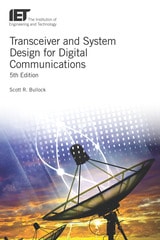
Transceiver and System Design for Digital Communications
Scott R. Bullock
The Institution of Engineering and Technology, 2018