Results by title
18284 books match the query 'United States' and 3764 start with t
Tenured Bosses and Disposable Teachers
Writing Instruction in the Managed UniversityEdited by Marc Bousquet, Tony Scott, and Leo Parascondola. Foreword by Randy Martin
Southern Illinois University Press, 2003
Tenured Bosses and Disposable Teachers: Writing Instruction in the Managed University exposes the poor working conditions of contingent composition faculty and explores practical alternatives to the unfair labor practices that are all too common on campuses today.
Editors Marc Bousquet, Tony Scott, and Leo Parascondola bring together diverse perspectives from pragmatism to historical materialism to provide a perceptive and engaging examination of the nature, extent, and economics of the managed labor problem in composition instruction—a field in which as much as ninety-three percent of all classes are taught by graduate students, adjuncts, and other “disposable” teachers. These instructors enjoy few benefits, meager wages, little or no participation in departmental governance, and none of the rewards and protections that encourage innovation and research. And it is from this disenfranchised position that literacy workers are expected to provide some of the core instruction in nearly everyone's higher education experience.
Twenty-six contributors explore a range of real-world solutions to managerial domination of the composition workplace, from traditional academic unionism to ensemble movement activism and the pragmatic rhetoric, accommodations, and resistances practiced by teachers in their daily lives.
Contributors are Leann Bertoncini, Marc Bousquet, Christopher Carter, Christopher Ferry, David Downing, Amanda Godley, Robin Truth Goodman, Bill Hendricks, Walter Jacobsohn, Ruth Kiefson, Paul Lauter, Donald Lazere, Eric Marshall, Randy Martin, Richard Ohmann, Leo Parascondola, Steve Parks, Gary Rhoades, Eileen Schell, Tony Scott, William Thelin, Jennifer Seibel Trainor, Donna Strickland, William Vaughn, Ray Watkins, and Katherine Wills.
Term Limits in State Legislatures
John M. Carey, Richard G. Niemi, and Lynda W. Powell
University of Michigan Press, 2000

Terminal Identity
The Virtual Subject in Postmodern Science FictionScott Bukatman
Duke University Press, 1993
Drawing on a wide range of contemporary theories of the postmodern—including Fredric Jameson, Donna Haraway, and Jean Baudrillard—Bukatman begins with the proposition that Western culture is suffering a crisis brought on by advanced electronic technologies. Then in a series of chapters richly supported by analyses of literary texts, visual arts, film, video, television, comics, computer games, and graphics, Bukatman takes the reader on an odyssey that traces the postmodern subject from its current crisis, through its close encounters with technology, and finally to new self-recognition. This new "virtual subject," as Bukatman defines it, situates the human and the technological as coexistent, codependent, and mutally defining.
Synthesizing the most provocative theories of postmodern culture with a truly encyclopedic treatment of the relevant media, this volume sets a new standard in the study of science fiction—a category that itself may be redefined in light of this work. Bukatman not only offers the most detailed map to date of the intellectual terrain of postmodern technology studies—he arrives at new frontiers, providing a propitious launching point for further inquiries into the relationship of electronic technology and culture.
Terrible Swift Sword
The Legacy of John BrownPeggy A. Russo
Ohio University Press, 2005
More than two centuries after his birth and almost a century and a half after his death, the legendary life and legacy of John Brown go marching on. Variously deemed martyr, madman, monster, terrorist, and saint, he remains one of the most controversial figures in America’s history. Brown’s actions in Kansas and in Harpers Ferry, West Virginia, were major catalysts for the American Civil War, and continue today to evoke praise or condemnation.
Through the prisms of history, literature, psychology, criminal justice, oral history, African American studies, political science, film studies, and anthropology, Terrible Swift Sword offers insights not only into John Brown’s controversial character and motives but also into the nature of a troubled society before, during, and after the Civil War. The contributors discuss reasons why Brown’s contemporaries supported him, analyze Brown’s behavior and his depiction in literature, and examine the iconography and mythology surrounding him.
The interdisciplinary focus brought by editors Peggy A. Russo and Paul Finkelman makes this collection unique. Terrible Swift Sword: The Legacy of John Brown will appeal to a broad audience of readers interested in this turbulent moment in American history.
Territorial Ambition
Land and Society in Arkansas, 1800-1840S. Charles Bolton
University of Arkansas Press, 2020

Terror and Wonder
Architecture in a Tumultuous AgeBlair Kamin
University of Chicago Press, 2010
For more than twenty years now, Blair Kamin of the Chicago Tribune has explored how architecture captures our imagination and engages our deepest emotions. A winner of the Pulitzer Prize for criticism, Kamin treats his subjects not only as works of art but also as symbols of the cultural and political forces that inspire them. Terror and Wonder gathers the best of Kamin’s writings from the past decade along with new reflections on an era framed by the destruction of the World Trade Center and the opening of the world’s tallest skyscraper.
Assessing ordinary commercial structures as well as head-turning designs by some of the world’s leading architects, Kamin paints a sweeping but finely textured portrait of a tumultuous age torn between the conflicting mandates of architectural spectacle and sustainability. For Kamin, the story of our built environment over the past ten years is, in tangible ways, the story of the decade itself. Terror and Wonder considers how architecture has been central to the main events and crosscurrents in American life since 2001: the devastating and debilitating consequences of 9/11 and Hurricane Katrina; the real estate boom and bust; the use of over-the-top cultural designs as engines of civic renewal; new challenges in saving old buildings; the unlikely rise of energy-saving, green architecture; and growing concern over our nation’s crumbling infrastructure.
A prominent cast of players—including Santiago Calatrava, Frank Gehry, Helmut Jahn, Daniel Libeskind, Barack Obama, Renzo Piano, and Donald Trump—fills the pages of this eye-opening look at the astounding and extraordinary ways that architecture mirrors our values—and shapes our everyday lives.
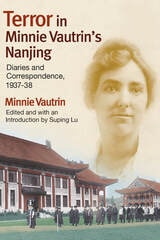
Terror in Minnie Vautrin's Nanjing
Diaries and Correspondence, 1937-38Minnie Vautrin. Edited and with an Introduction by Suping Lu
University of Illinois Press, 2007
In December of 1937, the Japanese Imperial Army marched into China's capital city of Nanjing and launched six weeks of carnage that would become known as the Rape of Nanjing. In addition to the deaths of Chinese POWs and civilians, tens of thousands of women were raped, tortured, and killed by Japanese soldiers. In this traumatic environment, both native and foreign-born inhabitants of Nanjing struggled to carry on with their lives.
This volume collects the diaries and correspondence of Minnie Vautrin, a farmgirl from Illinois who had dedicated herself to the education of Chinese women at Ginling College in Nanjing. Faced with the impending Japanese attack, she turned the school into a sanctuary for ten thousand women and girls. Vautrin's firsthand accounts of daily life in Nanjing and the intensifying threat of Japanese invasion reveal the courage of the occupants under siege--Chinese nationals as well as Western missionaries, teachers, surgeons and business people--and the personal costs of violence in wartime.
Thanks to Vautrin's painstaking effort in keeping a day-to-day account, present-day readers are able to examine this episode of history at close range through her eyes. With detailed maps, photographs, and carefully researched in-depth annotations, Terror in Minnie Vautrin's Nanjing: Diaries and Correspondence, 1937-38 presents a comprehensive and detailed daily account of the events and of life during the horror-stricken days within the city walls and in particular on the Ginling campus. Through chronologically arranged diaries, letters, reports, documents, and telegrams, Vautrin bears witness to those terrible events and to the magnitude of trauma that the Nanjing Massacre exacted on the populace.
Terrorism on Trial
Political Violence and Abolitionist FuturesNicole Nguyen
University of Minnesota Press, 2023
A landmark sociological examination of terrorism prosecution in United States courts
Rather than functioning as a final arbiter of justice, U.S. domestic courts are increasingly seen as counterterrorism tools that can incapacitate terrorists, maintain national security operations domestically, and produce certain narratives of conflict. Terrorism on Trial examines the contemporary role that these courts play in the global war on terror and their use as a weapon of war: hunting, criminalizing, and punishing entire communities in the name of national security.
Nicole Nguyen advocates for a rethinking of popular understandings of political violence and its root causes, encouraging readers to consider anti-imperial abolitionist alternatives to the criminalization, prosecution, and incarceration of individuals marked as real or perceived terrorists. She exposes how dominant academic discourses, geographical imaginations, and social processes have shaped terrorism prosecutions, as well as how our fundamental misunderstanding of terrorism has led to punitive responses that do little to address the true sources of violence, such as military interventions, colonial occupations, and tyrannical regimes. Nguyen also explores how these criminal proceedings bear on the lives of defendants and families, seeking to understand how legal processes unevenly criminalize and disempower communities of color.
A retheorization of terrorism as political violence, Terrorism on Trial invites readers to carefully consider the role of power and politics in the making of armed resistance, addressing the root causes of political violence, with a goal of building toward a less violent and more liberatory world.
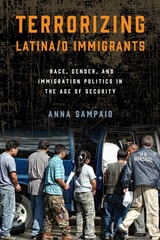
Terrorizing Latina/o Immigrants
Race, Gender, and Immigration Policy Post-9/11Anna Sampaio
Temple University Press, 2015
Immigration politics has been significantly altered by the advent of America’s war on terror and the proliferation of security measures. In her cogent study, Terrorizing Latina/o Immigrants, Anna Sampaio examines how these processes are racialized and gendered and how they impose inequitable burdens on Latina/o immigrants. She interrogates the rise of securitization, restrictive legislation, and the return of large-scale immigration raids and describes how these re-articulate and re-inscribe forms of racial and gender hierarchy.
Terrorizing Latina/o Immigrants demonstrates how the ascendance of America as a security state serves as a template to scrutinize, harass, and encumber immigrants while also reconfiguring citizenship. Sampaio uses intersectional analysis coupled with theoretical and empirical approaches to develop a critical framework for analyzing current immigration politics.
Sampaio provides a sustained and systematic examination of policy and enforcement shifts impacting Latinas/os. Her book concludes with an examination of immigration reform under the Obama administration, contrasting the promise of hope and change with the reality of increased detentions, deportations, and continued marginalization.

Terry Sanford
Politics, Progress, and Outrageous AmbitionsHoward E. Covington Jr. and Marion A. Ellis
Duke University Press, 1999
After defeating a segregationist campaign in 1960 to win the governorship, Sanford used his years in office to boost public education and advance race relations. A decade later, at the height of tumult on American campuses, Sanford assumed the presidency of Duke University and led it to its position as one of the top universities in the nation. During his more than fifty years as a public servant he was associated with presidents John F. Kennedy, Lyndon B. Johnson, Richard Nixon, and Jimmy Carter. Sanford was a presidential candidate himself in 1972 and 1976, and he won election to the United States Senate in 1986 where his international commission produced an economic recovery plan for Central America. As one of the last New Deal Democrats in the Senate, he remained passionate about the opportunity for leaders to use government to improve people’s lives.
Terry Sanford draws on Sanford’s considerable private and public archive as well as on the recollections of Sanford himself and his family, colleagues, and friends. This biography offers a unique perspective on North Carolina life, politics, political personalities, and the shifting public allegiances of the second half of the twentieth century that transformed life both in North Carolina and throughout the American South.
Test-Taking Strategies
Judi Kesselman-Turkel
University of Wisconsin Press, 2004
Test taking is a skill apart from learning course material, a skill every student must acquire in order to survive. Test-Taking Strategies is the book for anyone who has ever dreaded an exam.
Strategies for taking every kind of test are dealt with—objective tests (multiple choice, true/false, matching), essay tests, and oral exams. The authors also offer help for handling anxiety, explaining relaxation and desensitization techniques that help students control nervousness and keep it from detracting from performance. There are tips for managing time during the test, knowing when to guess, and for pulling answers out of your memory even when the question drew a blank at first glance.
Essay tests and oral exams are particularly gruesome for most students, and until now there has been very little advice for handling such tests. Test-Taking Strategies includes plenty of advice for developing ideas while under pressure.
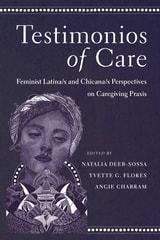
Testimonios of Care
Feminist Latina/x and Chicana/x Perspectives on Caregiving PraxisEdited by Natalia Deeb-Sossa, Yvette G. Flores, Angie Chabram
University of Arizona Press, 2024
The book opens with an introductory chapter by the three co-editors, and then is divided into three sections exploring the caregiver voice, community caregiving, and reflections that outline a Caregiver Bill of Rights and present a call to action. Throughout, contributors discuss kinship care, including formal and informal adoptions, community care, caregiving in professional health contexts, and the implicit caregiving inherent in teaching BIPOC students, which largely falls upon faculty of color.
Testimonios of Care gives voice to those who often are voiceless in histories of caregiving and is guided by Chicana and Latina feminist principles, which include solidarity between women of color, empathy, willingness to challenge the patriarchal medical health-care systems, questioning traditional gender roles and idealization of familia, and caring for self while caring for loved ones and community.
Contributors
yvonne hurtado allen
Angie Chabram
Natalia Deeb-Sossa
Yvette G. Flores
Inés Hernández-Ávila
ire’ne lara silva
Josie Méndez-Negrete
Maria R. Palacios
Hector Rivera-Lopez
Maria Angelina Soldatenko
Anita Tijerina Revilla
Mónica Torreiro-Casal
Enriqueta Valdez-Curiel
Testing Deaf Students in an Age of Accountability
Robert C. Johnson
Gallaudet University Press, 2008
Despite the idealism represented by the No Child Left Behind law’s mandate for accountability in education, deaf students historically and on average have performed far below grade level on standardized tests. To resolve this contradiction in deaf education, this collection presents a spectrum of perspectives from a diverse corps of education experts to suggest a constructive synthesis of worthy ideals, hard realities, and pragmatic solutions. Contributors to this study include volume editors Robert C. Johnson and Ross E. Mitchell, Ed Bosso, Michael Bello, Betsy J. Case, Patrick Costello, Stephanie W. Cawthon, Joseph E. Fischgrund, Courtney Foster, Christopher Johnstone, Michael Jones, Jana Lollis, Pat Moore, Barbara Raimondo, Suzanne Recane, Richard C. Steffan, Jr., Sandra J. Thompson, Martha L. Thurlow, and Elizabeth Towles-Reeves.
These noted educators and researchers employ experiences from Massachusetts, Delaware, Maryland, North Carolina, Illinois and California to support their findings about the dilemma facing deaf students and their teachers. They assess the intent and flexibility of federal law; achievement data regarding deaf students; potential accommodations and universal design to make tests more accessible; possible alternatives for deaf student not ready for conventional assessments; accounts of varying degrees of cooperation and conflict between schools and state education departments; and the day-to-day efforts of teachers and school administrators to help deaf students measure up to the new standards. By presenting these wide-ranging insights together, Testing Deaf Students in an Age of Accountability provides a unique opportunity to create genuine means to educate deaf students for the only test that matters, that of life.
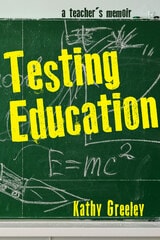
Testing Education
A Teacher's MemoirKathy Greeley
University of Massachusetts Press, 2024
Since the 2002 implementation of No Child Left Behind, the American public education system has been fundamentally changed. Excessive testing, standardized curriculums, destructive demands on children, corporate-style evaluations, and top-down mandates have become the norm. In response, record numbers of demoralized educators have quit, and millions of students have been left educationally impoverished. This troubling transformation has been exhaustively critiqued by scholars and commentators. Yet one crucial voice has been missing, until now.
In Testing Education, Kathy Greeley recounts the impact of education reform from a teacher’s point of view. Based on a teaching career spanning nearly forty years, Greeley details how schools went from learning communities infused with excitement, intellectual stimulation, and joy to sterile spaces of stress, intimidation, and fear. In this ultimately hopeful memoir, Greeley asks us to learn from the past to reimagine the future of public education.
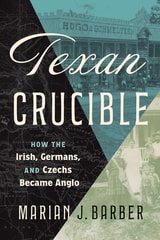
Texan Crucible
How the Irish, Germans, and Czechs Became AngloMarian J. Barber
University of Texas Press, 2026
A history of European immigrants in Texas and how they redefined racial identity.
While the creation of a Black-White racial binary was foundational to most of the United States, nineteenth-century Texas developed a unique tripartite system that acknowledged the role of individuals of Mexican ancestry in a region that was Spanish, Mexican, and an independent nation before becoming a US (and briefly Confederate) state. Yet this framework was fraught, struggling to accommodate new arrivals from beyond North America, in particular the Irish, Germans, and Czechs. Texan Crucible tells the story of these immigrants and how they became Anglo.
Marian Barber reveals the ways language, religion, alcohol use, and attitudes toward slavery distinguished these newcomers to Texas from those arriving from the eastern United States and how they nevertheless created thriving, influential communities. Their status was shaped by events inside and far beyond Texas, including an 1887 prohibition fight, the Civil War, and two world wars that encouraged them to erase their distinctiveness. As segregation was formally outlawed and civil rights activism grew, understandings of race shifted, cementing these groups’ status as Anglo. Texan Crucible recovers the histories of German, Irish, and Czech immigrants and unveils the social construction of racial difference underpinning Texan identity.
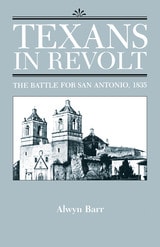
Texans in Revolt
The Battle for San Antonio, 1835By Alwyn Barr
University of Texas Press, 1990
While the battles of 1836—the Alamo, Goliad, and San Jacinto—are wellknown moments in the Texas Revolution, the battle for Bexar in the fall of 1835 is often overlooked. Yet this lengthy siege, which culminated in a Texan victory in December 1835, set the stage for those famous events and for the later revolutionary careers of Sam Houston, James Bowie, and James W. Fannin.
Drawing on extensive research and on-site study around San Antonio, Alwyn Barr completely maps the ebbs and flows of the Bexar campaign for the first time. He studies the composition of the two armies and finds that they were well matched in numbers and fighting experience—revising a common belief that the Texans defeated a force four times larger. He analyzes the tactics of various officers, revealing how ambition and revolutionary politics sometimes influenced the Texas army as much as military strategy. And he sheds new light on the roles of the Texan and Mexican commanders, Stephen F. Austin and Martín Perfecto de Cos.
As this excellent military history makes clear, to the famous rallying cry "Remember the Alamo!" "Remember Goliad!" should be added: "And don't forget San Antonio!"
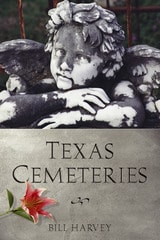
Texas Cemeteries
The Resting Places of Famous, Infamous, and Just Plain Interesting TexansBy Bill Harvey
University of Texas Press, 2003
Winner, Journalistic Achievement Award, Texas Historical Foundation, 2004
From the simplest slab of weathered stone to the most imposing mausoleum, every marker in a Texas cemetery bears witness to a life that—in ways small or large—helped shape the history and culture of the state. Telling the stories of some of these significant lives is the purpose of this book. Within its pages, you'll meet not only the heroes of the Texas Revolution, for example, but also one of the great African American cowboys of the traildriving era (Bose Ikard) and the first woman in Texas elected to statewide office (Annie Webb Blanton). Visiting cemeteries from every era and all regions of the state, Bill Harvey recounts the histories of famous, infamous, and just plain interesting Texans who lie at rest in Texas cemeteries.
The book is organized alphabetically by city for easy reference. For each city, Harvey lists one or more cemeteries, giving their location and history, if significant. At the heart of the book are his profiles of the noteworthy people buried in each cemetery. They include not only famous but also lesser-known and even unknown Texans who made important contributions to the state in the arts, sports, business, military service, politics—truly every area of communal life. For those who want to visit these resting places, Harvey also includes tips on finding cemeteries, locating gravesites, and taking good photographs. Spend time with him in the graveyards of Texas, and you'll soon appreciate what fascinating stories the silent stones can tell.
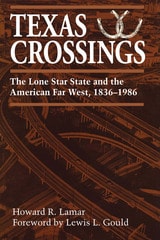
Texas Crossings
The Lone Star State and the American Far West, 1836–1986By Howard R. Lamar; foreword by Lewis L. Gould
University of Texas Press, 1991
“Texas is not a place, it is a commotion!” exclaimed one early visitor to the state, underscoring the mobility and “get-ahead” spirit that have always characterized Texas and its people. In these thought-provoking essays, Howard R. Lamar looks specifically at the “crossings” that have characterized Texas history to see what effect these migrations to and through Texas have had on Texas, the Southwest, and links between Texas and California.
Originally presented in 1986 at the University of Texas at Austin as the first George W. Littlefield Lectures in American History, these essays explore a previously neglected aspect of the western story: the influence of Texans—and other Southerners—on the character and history of the southwestern states. Lamar discusses the many efforts to establish overland trails, and later railroads, to California and how those efforts were fueled by the gold rush era of 1849–1850. He traces the influence of immigrant Texans and the flourishing southern community in California, particularly during the Civil War years. He follows the twentieth-century migration of “Okies,” whose desire to settle and resume their agricultural lifeways clashed with Californians’ preference for migrant workers. And he reveals how the discovery of oil, not only in Texas but also in California, western Canada, and Alaska, continues to link these regions.
Texas has always been a place that people pass through, going either east-west or north-south. Texas Crossings explains what brought the people to Texas and what they carried away with them to California and the West.

Texas Furniture, Volume One
The Cabinetmakers and Their Work, 1840-1880, Revised editionBy Lonn Taylor and David B. Warren
University of Texas Press, 2012
The art of furniture making flourished in Texas during the mid-nineteenth century. To document this rich heritage of locally made furniture, Miss Ima Hogg, the well-known philanthropist and collector of American decorative arts, enlisted Lonn Taylor and David B. Warren to research early Texas Furniture and its makers. They spent more than a decade working with museums and private collectors throughout the state to examine and photograph representative examples. They also combed census records, newspapers, and archives for information about cabinetmakers. These efforts resulted in the 1975 publication of Texas Furniture, which quickly became the authoritative reference on this subject.
Now updated with an expanded Index of Texas Cabinetmakers that includes information that has come to light since the original publication and corrects errors, Texas Furniture presents a catalog of more than two hundred pieces of furniture, each superbly photographed and accompanied by detailed descriptions of the piece’s maker, date, materials, measurements, history, and owner, as well as an analysis by the authors. The book also includes chapters on the material culture of nineteenth-century Texas and on the tools and techniques of nineteenth-century Texas cabinetmakers, with a special emphasis on the German immigrant cabinetmakers of the Hill Country and Central Texas. The index of Texas cabinetmakers contains biographical information on approximately nine hundred men who made furniture in Texas, and appendices list information on the state’s largest cabinet shops taken from the United States census records.
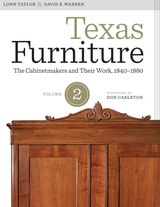
Texas Furniture, Volume Two
The Cabinetmakers and Their Work, 1840–1880By Lonn Taylor and David B. Warren
University of Texas Press, 2012
The art of furniture making flourished in Texas during the mid-nineteenth century. To document this rich heritage of locally made furniture, Miss Ima Hogg, the well-known philanthropist and collector of American decorative arts, enlisted Lonn Taylor and David B. Warren to research early Texas furniture and its makers. After more than a decade of investigation, they published Texas Furniture in 1975, and it quickly became the authoritative reference on this subject. An updated edition, Texas Furniture, Volume One, was issued in the spring of 2012.
Texas Furniture, Volume Two presents over 150 additional pieces of furniture that were not included in Volume One, each superbly photographed in color and accompanied by detailed descriptions of the piece’s maker, date, materials, measurements, history, and owner, as well as an analysis by the authors. Taylor and Warren have also written a new introduction for this volume, in which they amplify the story of early Texas furniture. In particular, they compare and contrast the two important traditions of cabinetmaking in Texas, Anglo-American and German, and identify previously unknown artisans. The authors also discuss nineteenth-century Texans’ desire for refinement and gentility in furniture, non-commercial furniture making, and marquetry work. And they pay tribute to the twentieth-century collectors who first recognized the value of locally made Texas furniture and worked to preserve it. A checklist of Texas cabinetmakers, which contains biographical information on approximately nine hundred men who made furniture in Texas, completes the volume.
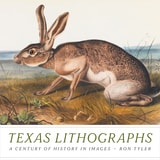
Texas Lithographs
A Century of History in ImagesRon Tyler
University of Texas Press, 2023
2024 Ewell L. Newman Book Award, American Historical Print Collectors Society
2024 Kate Broocks Bates Award for Historical Research, Texas State Historical Association
2024 TCU Texas Book Prize, Friends of the TCU Library and the TCU Press
2024 Kempner Family Book Prize—Nonfiction,The Philosophical Society of Texas
A stunning and comprehensive collection of lithographs from 1818 to 1900 Texas.
Westward expansion in the United States was deeply intertwined with the technological revolutions of the nineteenth century, from telegraphy to railroads. Among the most important of these, if often forgotten, was the lithograph. Before photography became a dominant medium, lithography—and later, chromolithography—enabled inexpensive reproduction of color illustrations, transforming journalism and marketing and nurturing, for the first time, a global visual culture. One of the great subjects of the lithography boom was an emerging Euro-American colony in the Americas: Texas.
The most complete collection of its kind—and quite possibly the most complete visual record of nineteenth-century Texas, period—Texas Lithographs is a gateway to the history of the Lone Star State in its most formative period. Ron Tyler assembles works from 1818 to 1900, many created by outsiders and newcomers promoting investment and settlement in Texas. Whether they depict the early French colony of Champ d’Asile, the Republic of Texas, and the war with Mexico, or urban growth, frontier exploration, and the key figures of a nascent Euro-American empire, the images collected here reflect an Eden of opportunity—a fairy-tale dream that remains foundational to Texans’ sense of self and to the world’s sense of Texas.
Texas Mexican Americans and Postwar Civil Rights
By Maggie Rivas-Rodriguez
University of Texas Press, 2015
Texas Monthly On . . .
FoodFrom the editors of <em>Texas Monthly</em>
University of Texas Press, 2008
From reviews of the newest, hippest restaurants in cities across Texas to stories about the comfort foods we all love, Texans have long relied on Texas Monthly to dish up some of the best writing about food in the Lone Star state. This anthology brings together twenty-eight classic articles about food in Texas and the culture that surrounds it—markets that purvey exotic and traditional foods, well-known chefs, tributes to the cooks and cookbooks of days gone by, and even a feature on how to open a restaurant. Many of the articles are by Patricia Sharpe, Texas Monthly's longtime restaurant critic and winner of the James Beard Journalism Award for Magazine Feature Writing without Recipes. Joining her are Texas Monthly editor Evan Smith and contributors Gary Cartwright, Jordan MacKay, Skip Hollandsworth, Pamela Colloff, Anne Dingus, Suzy Banks, Joe Nick Patoski, and Prudence Mackintosh.
Texas Monthly On . . .
Texas WomenFrom the editors of Texas Monthly
University of Texas Press, 2006
Since 1973, Texas Monthly has spotlighted hundreds of Texans who, for better or worse, make this state like no place else. TEXAS MONTHLY On . . . Texas Women profiles thirteen women who are not only fascinating in their own right, but also representative of the legions of women who have contributed to the character and uniqueness of Texas. They range from First Ladies Laura Bush and Lady Bird Johnson to pop culture icons such as Candy Barr and Janis Joplin—and all of them exemplify the qualities that make Texas women distinctive. The women's profiles originally appeared as articles in the magazine, authored by some of Texas Monthly's notable writers—Cecilia Ballí, Gary Cartwright, Paul Burka, Mimi Swartz, Jan Jarboe Russell, Skip Hollandsworth, Robert Draper, William Broyles Jr., Jan Reid, Joe Nick Patoski, Pamela Colloff, and Helen Thorpe. The writers also introduce their pieces with headnotes that update the stories or, in some cases, tell the story behind the story.
TEXAS MONTHLY On . . . Texas Women is the first in a series of books in which the editors of Texas Monthly will offer the magazine's inimitable perspective on various aspects of Texas culture, including food, politics, travel, and music, among other topics.

Texas Place Names
By Edward Callary, with Jean K. Callary
University of Texas Press, 2020
Was Gasoline, Texas, named in honor of a gas station? Nope, but the name does honor the town’s original claim to fame: a gasoline-powered cotton gin. Is Paris, Texas, a reference to Paris, France? Yes: Thomas Poteet, who donated land for the town site, thought it would be an improvement over “Pin Hook,” the original name of the Lamar County seat. Ding Dong’s story has a nice ring to it; the name was derived from two store owners named Bell, who lived in Bell County, of course. Tracing the turning points, fascinating characters, and cultural crossroads that shaped Texas history, Texas Place Names provides the colorful stories behind these and more than three thousand other county, city, and community names.
Drawing on in-depth research to present the facts behind the folklore, linguist Edward Callary also clarifies pronunciations (it’s NAY-chis for Neches, referring to a Caddoan people whose name was attached to the Neches River during a Spanish expedition). A great resource for road trippers and historians alike, Texas Place Names alphabetically charts centuries of humanity through the enduring words (and, occasionally, the fateful spelling gaffes) left behind by men and women from all walks of life.
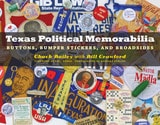
Texas Political Memorabilia
Buttons, Bumper Stickers, and BroadsidesBy Chuck Bailey, with Bill Crawford
University of Texas Press, 2007
Texas politicians are a lively, sometimes controversial, always entertaining breed, and the ways they have chosen to put themselves and their messages before the public are equally as interesting. Anything and everything that can be printed with a candidate's name, image, and slogan—from buttons and bumper stickers to chewing gum, pocket knives, and plastic pickles—is likely to turn up in a Texas political campaign. Though many consider these items ephemeral, collectors value political memorabilia as a fascinating "sound bite" record of the candidates and issues that engaged the voting public over decades. Texas Political Memorabilia presents just such a pictorial history of Texas politics, the first ever compiled.
Drawn from the vast personal collection of Chuck Bailey and augmented with items from other private and public collections, this book presents the most exceptional, most memorable, and most informative examples of Texas political memorabilia. The featured items cover everything from the presidential campaigns of Lyndon Johnson and both George Bushes, to U.S. House and Senate elections, to statewide races for governor and the Texas House and Senate, to county and city elections. All the major figures of twentieth-century Texas politics—as well as Sam Houston and Davy Crockett—are represented in the book. To set the images in context, Chuck Bailey and Bill Crawford provide background on the candidates, races, and issues that inspired many of the pieces pictured in the book.
From LBJ's Stetson-shaped ashtrays to Jake Pickle's plastic squeaker pickles to George W. Bush's "W" buttons, Texas Political Memorabilia is a treasure trove of the nuts and bolts and buttons of Texas politics.

Texas Sports
Unforgettable Stories for Every Day of the YearBy Chad S. Conine
University of Texas Press, 2017
When it comes to sports, Texas more than earns its bragging rights. The Lone Star State has produced championship teams and legendary athletes not only in football, baseball, and basketball, but in dozens of other sports as well. Texas Sports celebrates more than a century of achievements in a day-by-day record of the people and events—both unforgettable and little-known—that have made Texas a powerhouse in the world of sports.
Chad S. Conine packs a wealth of sports facts and stories into 366 days. He ranges from firsts such as UT’s first football game (an 1893 win against Dallas University Football Club) to peak moments such as Earl Campbell running through defenders, Nolan Ryan throwing heat past baffled batters, and Babe Didrickson Zaharias winning the Western Open golf championship for the fourth time. Conine covers more than twenty-five sports and all levels from high school to professional, reminding us that if Texas had never seen a pigskin or a backboard, its sports legacy would still be secure. With a winning combination of victories and heartbreaks, men’s and women’s sports, and all regions of the state, Texas Sports is a must-read for all sports fans and trivia buffs.
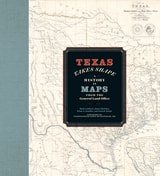
Texas Takes Shape
A History in Maps from the General Land OfficeBy Mark Lambert, James Harkins, Brian A. Stauffer, and Patrick Walsh
University of Texas Press, 2025
2025 Second Place, Presidio La Bahía Award, Sons of the Republic of Texas
2026 Ron Tyler Award for Best Illustrated Book on Texas History and Culture, Texas State Historical Association (TSHA)
A comprehensive volume on historical mapping in Texas.
The Texas General Land Office’s map collection contains over 45,000 maps, some dating from the sixteenth century, making it one of the most important cartographic archives in Texas. As products and agents of history drawn by cartographers with motives and means as diverse as the places they document, maps provide a unique perspective on geopolitical, cultural, and economic processes. The maps of the GLO offer key insights into Texas’s sprawling history. They speak to issues of changing borders, social and political upheaval, and questions of sovereignty and power.
Texas Takes Shape offers an illuminating selection from the GLO archive: over one hundred maps that tell—and sometimes obscure—the stories of European colonization, Spanish and Mexican rule, the Republic of Texas, and the modern US state. There are maps here of every scale, from the hemispheric visions of European explorers to individual survey plats. Accompanying essays offer fascinating lessons on topics ranging from Indigenous cartography to military and railroad mapmaking and frontier surveys. Artful and informative, Texas Takes Shape examines a unique place through the eyes and imaginations of those who sought to govern it, profit from it, understand it, and call it home.

Texas Takes Wing
A Century of Flight in the Lone Star StateBy Barbara Ganson
University of Texas Press, 2014
This book celebrates the aviators, astronauts, airline executives, and other innovators who have made Texas an influential world leader in the aerospace industry over the past century.
Tracing the hundred-year history of aviation in Texas, aviator and historian Barbara Ganson brings to life the colorful personalities that shaped the phenomenally successful development of this industry in the state. Weaving stories and profiles of aviators, designers, manufacturers, and those in related services, Texas Takes Wing covers the major trends that propelled Texas to the forefront of the field. Covering institutions from San Antonio’s Randolph Air Force Base (the West Point of this branch of service) to Brownsville’s airport with its Pan American Airlines instrument flight school (which served as an international gateway to Latin America as early as the 1920s) to Houston’s Johnson Space Center, home of Mission Control for the U.S. space program, the book provides an exhilarating timeline and engaging history of dozens of unsung pioneers as well as their more widely celebrated peers.
Drawn from personal interviews as well as major archives and the collections of several commercial airlines, including American, Southwest, Braniff, Pan American Airways, and Continental, this sweeping history captures the story of powered flight in Texas since 1910. With its generally favorable flying weather, flat terrain, and wide open spaces, Texas has more airports than any other state and is often considered one of America’s most aviation-friendly places. Texas Takes Wing also explores the men and women who made the region pivotal in military training, aircraft manufacturing during wartime, general aviation, and air servicing of the agricultural industry. The result is a soaring history that will delight aviators and passengers alike.
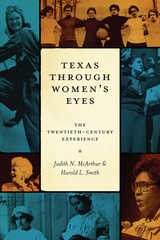
Texas Through Women's Eyes
The Twentieth-Century ExperienceBy Judith N. McArthur and Harold L. Smith
University of Texas Press, 2010
Winner, Liz Carpenter Award For Research in the History of Women, Texas State Historical Association, 2010
Texas women broke barriers throughout the twentieth century, winning the right to vote, expanding their access to higher education, entering new professions, participating fully in civic and political life, and planning their families. Yet these major achievements have hardly been recognized in histories of twentieth-century Texas. By contrast, Texas Through Women's Eyes offers a fascinating overview of women's experiences and achievements in the twentieth century, with an inclusive focus on rural women, working-class women, and women of color.
McArthur and Smith trace the history of Texas women through four eras. They discuss how women entered the public sphere to work for social reforms and the right to vote during the Progressive era (1900–1920); how they continued working for reform and social justice and for greater opportunities in education and the workforce during the Great Depression and World War II (1920–1945); how African American and Mexican American women fought for labor and civil rights while Anglo women laid the foundation for two-party politics during the postwar years (1945–1965); and how second-wave feminists (1965–2000) promoted diverse and sometimes competing goals, including passage of the Equal Rights Amendment, reproductive freedom, gender equity in sports, and the rise of the New Right and the Republican party.
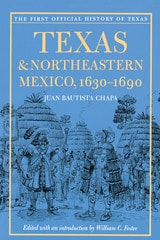
Texas and Northeastern Mexico, 1630-1690
By Juan Bautista Chapa
University of Texas Press, 1997
An English translation of Chapa's Historia de Nuevo León, the first history of the region that eventually became Texas and northeastern Mexico.
Winner, Presidio La Bahía Award, Sons of the Republic of Texas
In the seventeenth century, South Texas and Northeastern Mexico formed El Nuevo Reino de León, a frontier province of New Spain. In 1690, Juan Bautista Chapa penned a richly detailed history of Nuevo León for the years 1630 to 1690. Although his Historia de Nuevo León was not published until 1909, it has since been acclaimed as the key contemporary document for any historical study of Spanish colonial Texas.
This book offers the only accurate and annotated English translation of Chapa's Historia. In addition to the translation, William C. Foster also summarizes the Discourses of Alonso de León (the elder), which cover the years 1580 to 1649. In the appendix, Foster includes a translation of Alonso (the younger) de León's previously unpublished revised diary of the 1690 expedition to East Texas and an alphabetical listing of over 80 Indian tribes identified in this book.
Chapa was also an authority on the local Indians, and his Historia lists the names and locations of over 300 Indian tribes. This information, together with descriptions of the vegetation, wildlife, and climate in seventeenth-century Texas, make this book essential reading for ethnographers, anthropologists, and biogeographers, as well as students and scholars of Spanish borderlands history.
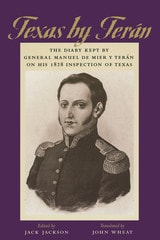
Texas by Terán
The Diary Kept by General Manuel de Mier y Terán on His 1828 Inspection of TexasEdited by Jack Jackson
University of Texas Press, 2000
Texas in 1837
An Anonymous, Contemporary NarrativeEdited by Andrew Forest Muir
University of Texas Press, 1958
Written anonymously in 1838–39 by a "Citizen of Ohio," Texas in 1837 is the earliest known account of the first year of the Texas republic. Providing information nowhere else available, the still-unknown author describes a land rich in potential but at the time "a more suitable arena for those who have everything to make and nothing to lose than [for] the man of capital or family."
The author arrived at Galveston Island on March 22, 1837, before the city of Galveston was founded, and spent the next six months in the republic. His travels took him to Houston, then little more than a camp made up of brush shelters and jerry-built houses, and as far west as San Antonio. He observed and was generally unimpressed by governmental and social structures just beginning to take shape. He attended the first anniversary celebration of the Battle of San Jacinto and has left a memorable account of Texas' first Independence Day. His inquiring mind and objective, actue observations of early Texas provide us a way of returning to the past, revisiting landmarks that have vanished forever.

Texas in the Confederacy
An Experiment in Nation BuildingClayton E. Jewett
University of Missouri Press, 2002
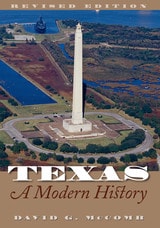
Texas, A Modern History
Revised EditionBy David G. McComb
University of Texas Press, 2010
Since its publication in 1989, Texas, A Modern History has established itself as one of the most readable and reliable general histories of Texas. David McComb paints the panorama of Lone Star history from the earliest Indians to the present day with a vigorous brush that uses fact, anecdote, and humor to present a concise narrative. The book is designed to offer an adult reader the savor of Texan culture, an exploration of the ethos of its people, and a sense of the rhythm of its development. Spanish settlement, the Battle of the Alamo, the Civil War, cattle trails, oil discovery, the growth of cities, changes in politics, the Great Depression, World War II, recreation, economic expansion, and recession are each a part of the picture. Photographs and fascinating sidebars punctuate the text.
In this revised edition, McComb not only incorporates recent scholarship but also tracks the post–World War II rise of the Republican Party in Texas and the evolution of the state from rural to urban, with 88 percent of the people now living in cities. At the same time, he demonstrates that, despite many changes that have made Texas similar to the rest of the United States, much of its unique past remains.
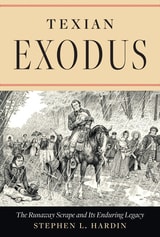
Texian Exodus
The Runaway Scrape and Its Enduring LegacyStephen L. Hardin
University of Texas Press, 2024
2026 Alamo Historical Society Book Award
A narrative account of the evacuation of the Texians in 1836, which was redeemed by the defeat of the Mexican army and the creation of the Republic of Texas.
Two events in Texas history shine so brightly that they can be almost blinding: the stand at the Alamo and the redemption at San Jacinto, where General Sam Houston’s volunteers won the decisive battle of the Texas Revolution. But these milestones came amid a less obviously heroic episode now studiously forgotten—the refugee crisis known as the Runaway Scrape.
Propulsive, lyrical, and richly illustrated, Texian Exodus transports us to the frigid, sodden spring of 1836, when thousands of Texians—Anglo-American settlers—fled eastward for the United States in fear of Antonio López de Santa Anna’s advancing Mexican army. Leading Texas historian Stephen L. Hardin draws on the accounts of the Runaways themselves to relate a tale of high stakes and great sorrow. While Houston tried to build a force that could defeat Santa Anna, the evacuees suffered incalculable pain and suffering. Yet dignity and community were not among the losses. If many of the stories are indeed tragic, the experience as a whole was no tragedy; survivors regarded the Runaway Scrape as their finest hour, an ordeal met with cooperation and courage. For Hardin, such qualities still define the Texas character. That it was forged in retreat as well as in battle makes the Runaway Scrape essential Texas history.

Texian Iliad
A Military History of the Texas Revolution, 1835-1836By Stephen L. Hardin
University of Texas Press, 1996
Winner, T. R. Fehrenbach Book Award, Texas Historical Commission
Summerfield G. Roberts Award, Sons of the Republic of Texas
Honorable Mention, Certificate of Commendation, American Association for State and Local History
Hardly were the last shots fired at the Alamo before the Texas Revolution entered the realm of myth and controversy. French visitor Frederic Gaillardet called it a "Texian Iliad" in 1839, while American Theodore Sedgwick pronounced the war and its resulting legends "almost burlesque."
In this highly readable history, Stephen L. Hardin discovers more than a little truth in both of those views. Drawing on many original Texan and Mexican sources and on-site inspections of almost every battlefield, he offers the first complete military history of the Revolution. From the war's opening in the "Come and Take It" incident at Gonzales to the capture of General Santa Anna at San Jacinto, Hardin clearly describes the strategy and tactics of each side. His research yields new knowledge of the actions of famous Texan and Mexican leaders, as well as fascinating descriptions of battle and camp life from the ordinary soldier's point of view.
This award-winning book belongs on the bookshelf of everyone interested in Texas or military history.
Textbooks in Academic Libraries
Selection, Circulation, and AssessmentChris Diaz
American Library Association, 2017
Textual Carnivals
The Politics of CompositionSusan Miller
Southern Illinois University Press, 1993
This is the first book-length study of the status of composition in English studies and the uneasy relationship between composition and literature. Composition studies and institutional histories of English studies have long needed this kind of clarification of the historical and political contexts of composition teaching, research, and administration.
Susan Miller argues that composition constitutes a major national industry, citing the four million freshman-level students enrolled in such courses each year, the $40 million annual expenditure for textbooks, and the more than $50 million in teacher salaries. But this concrete magnitude is not expressed in political power within departments. Miller calls on her associates in composition to engage in a persistent critique of the social practices and political agenda of the discipline that have been responsible for its institutional marginalization. Drawing on her own long experience as a composition administrator, teacher, and scholar, as well as on a national survey of composition professionals, Miller argues that composition teachers inadvertently continue to foster the negative myth about composition’s place in the English studies hierarchy by assuming an assigned, self-sacrificial cultural identity. Composition has been regarded as subcollegiate, practical, a "how-to," and has been denied intellectual rigor in order to preserve literature’s presentations of quasi-religious textual ideals.
Winner of three major book awards:
The Modern Language Association’s Mina P. Shaughnessy Prize
The Conference on College Composition and Communication’s Outstanding Book Award
The Teachers of Advanced Composition’s W. Ross Winterowd Award

Textual Contraception
Birth Control and Modern American FictionBeth Widmaier Capo
The Ohio State University Press, 2007
Merging cultural analysis and literary scholarship, this compelling work moves from a consideration of how cultural forces shaped literary production and political activism to a close examination of how fictional representations of contraception influenced the terms of public discourse on marriage, motherhood, economics, and eugenics.
By analyzing popular fiction such as Mother by Kathleen Norris, radical periodicals such as The Masses and Birth Control Review, and literature by authors from Theodore Dreiser to William Faulkner, and Nella Larsen to Mary McCarthy, Beth Widmaier Capo reveals the rich cross-influence of contraceptive and literary history.
Thad Snow
A Life of Social Reform in the Missouri BootheelBonnie Stepenoff
University of Missouri Press, 2003
Thanksgiving
The Biography of an American HolidayJames W. Baker
University of New Hampshire Press, 2009
In this, the first in-depth study of the most American of holidays, James Baker sweeps away lingering myths and misconceptions to show how this celebration day was born and grew to be an essential part of our national spirit. Thanksgiving: The Biography of an American Holiday opens with an overview of the popular mythos of the holiday before discussing its possible religious and cultural precedents. This classic Yankee holiday is examined in historical and contemporary detail that embraces everything from proclamations, sermons, and local and regional traditions to family reunions, turkey dinners, and recipes. Thanksgiving's evolving face is illustrated with charming and often revealing period prints that chart our changing attitudes: the influence of Victorian sentiment in Thanksgiving's development, Progressive utilitarianism, intellectual “debunking,” patriotic wartime reclamation, and 1960s-era protest. Thanksgiving remains controversial up to the present day, as Mayflower descendants, Native Americans, and commercial exploiters compete for the American public's opinion of the holiday's contemporary significance and its future status. This is an intelligent and illuminating introduction to a beloved holiday and a fascinating cultural history of America and Americana.
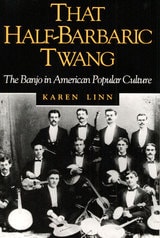
That Half-Barbaric Twang
The Banjo in American Popular CultureKaren Linn
University of Illinois Press, 1991
Long a symbol of American culture, the banjo actually originated in Africa before European-Americans adopted it. Karen Linn shows how the banjo--despite design innovations and several modernizing agendas--has failed to escape its image as a "half-barbaric" instrument symbolic of antimodernism and sentimentalism.
Caught in the morass of American racial attitudes and often used to express ambivalence toward modern industrial society, the banjo stood in opposition to the "official" values of rationalism, modernism, and belief in the beneficence of material progress. Linn uses popular literature, visual arts, advertisements, film, performance practices, instrument construction and decoration, and song lyrics to illustrate how notions about the banjo have changed.
Linn also traces the instrument from its African origins through the 1980s, alternating between themes of urban modernization and rural nostalgia. She examines the banjo fad of bourgeois Northerners during the late nineteenth century; the African-American banjo tradition and the commercially popular cultural image of the southern black banjo player; the banjo's use in ragtime and early jazz; and the image of the white Southerner and mountaineer as banjo player.
That May Not Mean What You Think
StoriesElizabeth Crane
Northwestern University Press, 2026
A visionary and profound new collection from innovative author Elizabeth Crane
Throughout her body of work, Elizabeth Crane’s literary vision has always been singular and innovative, twisting form and bending reality into new universes. Her latest collection, That May Not Mean What You Think, explores themes of aging and youth, gender and discrimination, and sex and love. In “Training Module,” Crane takes the structure and protocol of workplace harassment prevention training and turns it on its head; “The Box” tells the story of a woman trying to recover from divorce with the help of a literal unicorn; and “The Youngs” follows a group of teenagers experiencing loss for the first time, clinging to the belief that they’ll live forever. Across these delightfully weird and disarmingly truthful stories, American culture is refracted through humor and heart, asking readers to consider their complicity and to imagine new possibilities of participating in a better future.
That Old-Time Rock & Roll
A Chronicle of an Era, 1954-63Richard Aquila
University of Illinois Press, 1989
Elvis Presley and Bill Haley. Sam Cooke and the Shirelles. The Crows and the Chords. American Bandstand and Motown. From its first rumblings in the outland alphabet soup of R&B and C&W, rock & roll music promised to change the world--and did it.
Combining social history with a treasure trove of trivia, Richard Aquila unleashes the excitement of rock's first decade and shows how the music reflected American life from the mid-1950s through the dawn of Beatlemania. His year-by-year timelines and a photo essay place the music in historical perspective by linking artists and their hits to the news stories, movies, TV shows, fads, and lifestyles. In addition, he provides a concise biographical dictionary of the performers who made the charts between 1954 and 1963, along with the label and chart position of each of their hit songs.
That's the Way It Is
A History of Television News in AmericaCharles L. Ponce de Leon
University of Chicago Press, 2015
The critics may be right. But, as Charles L. Ponce de Leon explains in That’s the Way It Is, TV news has always walked a fine line between hard news and fluff. The familiar story of decline fails to acknowledge real changes in the media and Americans’ news-consuming habits, while also harking back to a golden age that, on closer examination, is revealed to be not so golden after all. Ponce de Leon traces the entire history of televised news, from the household names of the late 1940s and early ’50s, like Eric Sevareid, Edward R. Murrow, and Walter Cronkite, through the rise of cable, the political power of Fox News, and the satirical punch of Colbert and Stewart. He shows us an industry forever in transition, where newsmagazines and celebrity profiles vie with political news and serious investigations. The need for ratings success—and the lighter, human interest stories that can help bring it—Ponce de Leon makes clear, has always sat uneasily alongside a real desire to report hard news.
Highlighting the contradictions and paradoxes at the heart of TV news, and telling a story rich in familiar figures and fascinating anecdotes, That’s the Way It Is will be the definitive account of how television has showed us our history as it happens.

That’s Gotta Hurt
The Injuries That Changed Sports ForeverDr. David Geier
University Press of New England, 2017

The "Counterfeit" Man
The True Story of the Boorn-Colvin Murder CaseGerald W. McFarland
University of Massachusetts Press, 1993
The "Puerto Rican Problem" in Postwar New York City
Edgardo Meléndez
Rutgers University Press, 2023
The 'Tragic Mulatta' Revisited
Race and Nationalism in Nineteenth-Century Antislavery FictionEve Allegra Raimon
Rutgers University Press, 2004
Since its inception, the United States has been intensely preoccupied with interracialism. The concept is embedded everywhere in our social and political fabric, including our sense of national identity. And yet, in both its quantitative and symbolic forms, interracialism remains an extremely elusive phenomenon, causing policy makers and census boards to wrangle over how to delineate it and, on an emblematic level, stirring intense emotions from fear to fascination.
In The “Tragic Mulatta” Revisited, Eve Allegra Raimon focuses on the mixed-race female slave in literature, arguing that this figure became a symbolic vehicle for explorations of race and nation—both of which were in crisis in the mid-nineteenth century. At this time, judicial, statutory, social, and scientific debates about the meaning of racial difference (and intermixture) coincided with disputes over frontier expansion, which were never merely about land acquisition but also literally about the “complexion” of that frontier. Embodying both northern and southern ideologies, the “amalgamated” mulatta, the author argues, can be viewed as quintessentially American, a precursor to contemporary motifs of “hybrid” and “mestizo” identities.
Where others have focused on the gendered and racially abject position of the “tragic mulatta,” Raimonreconsiders texts by such central antislavery writers as Lydia Maria Child, William Wells Brown, Harriet Beecher Stowe, and Harriet Wilson to suggest that the figure is more usefully examined as a way of understanding the volatile and shifting interface of race and national identity in the antebellum period.