Results by title
28167 books match the query 'History' and 6372 start with t

The Journal of African American History, volume 109 number 1 (Winter 2024)
The University of Chicago Press
University of Chicago Press Journals, 2024
The Journal of African American History, volume 109 number 2 (Spring 2024)
The University of Chicago Press
University of Chicago Press Journals, 2024

The Journal of African American History, volume 109 number 3 (Summer 2024)
The University of Chicago Press
University of Chicago Press Journals, 2024
The Journal of African American History, volume 109 number 4 (Fall 2024)
The University of Chicago Press
University of Chicago Press Journals, 2024
The Journal of African American History, volume 110 number 1 (Winter 2025)
The University of Chicago Press
University of Chicago Press Journals, 2025
The Journal of African American History, volume 110 number 2 (Spring 2025)
The University of Chicago Press
University of Chicago Press Journals, 2025
The Journal of African American History, volume 110 number 3 (Summer 2025)
The University of Chicago Press
University of Chicago Press Journals, 2025
The Journal of African American History, volume 110 number 4 (Fall 2025)
The University of Chicago Press
University of Chicago Press Journals, 2025
The Journal of African American History, volume 111 number 1 (Winter 2026)
The University of Chicago Press
University of Chicago Press Journals, 2026

The Journal of African American History, volume 111 number 2 (Spring 2026)
The University of Chicago Press
University of Chicago Press Journals, 2026
The Journal of African American History, volume 111 number 3 (Summer 2026)
The University of Chicago Press
University of Chicago Press Journals, 2026
The Journal of Modern History, volume 92 number 1 (March 2020)
The University of Chicago Press
University of Chicago Press Journals, 2020
The Journal of Modern History, volume 92 number 2 (June 2020)
The University of Chicago Press
University of Chicago Press Journals, 2020
The Journal of Modern History, volume 92 number 3 (September 2020)
The University of Chicago Press
University of Chicago Press Journals, 2020
The Journal of Modern History, volume 92 number 4 (December 2020)
The University of Chicago Press
University of Chicago Press Journals, 2020
The Journal of Modern History, volume 93 number 1 (March 2021)
The University of Chicago Press
University of Chicago Press Journals, 2021
The Journal of Modern History, volume 93 number 2 (June 2021)
The University of Chicago Press
University of Chicago Press Journals, 2021
The Journal of Modern History, volume 93 number 3 (September 2021)
The University of Chicago Press
University of Chicago Press Journals, 2021
The Journal of Modern History, volume 93 number 4 (December 2021)
The University of Chicago Press
University of Chicago Press Journals, 2021
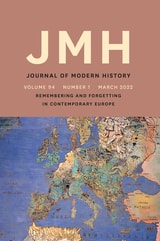
The Journal of Modern History, volume 94 number 1 (March 2022)
The University of Chicago Press
University of Chicago Press Journals, 2022
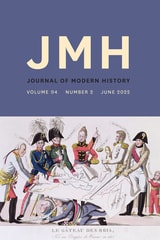
The Journal of Modern History, volume 94 number 2 (June 2022)
The University of Chicago Press
University of Chicago Press Journals, 2022
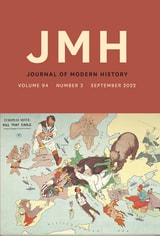
The Journal of Modern History, volume 94 number 3 (September 2022)
The University of Chicago Press
University of Chicago Press Journals, 2022
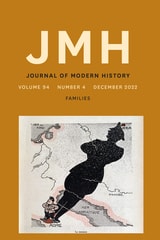
The Journal of Modern History, volume 94 number 4 (December 2022)
The University of Chicago Press
University of Chicago Press Journals, 2022
The Journal of Modern History, volume 95 number 1 (March 2023)
The University of Chicago Press
University of Chicago Press Journals, 2023
The Journal of Modern History, volume 95 number 2 (June 2023)
The University of Chicago Press
University of Chicago Press Journals, 2023
The Journal of Modern History, volume 95 number 3 (September 2023)
The University of Chicago Press
University of Chicago Press Journals, 2023
The Journal of Modern History, volume 95 number 4 (December 2023)
The University of Chicago Press
University of Chicago Press Journals, 2023
The Journal of Modern History, volume 96 number 1 (March 2024)
The University of Chicago Press
University of Chicago Press Journals, 2024
The Journal of Modern History, volume 96 number 2 (June 2024)
The University of Chicago Press
University of Chicago Press Journals, 2024
The Journal of Modern History, volume 96 number 3 (September 2024)
The University of Chicago Press
University of Chicago Press Journals, 2024
The Journal of Modern History, volume 96 number 4 (December 2024)
The University of Chicago Press
University of Chicago Press Journals, 2024
The Journal of Modern History, volume 97 number 1 (March 2025)
The University of Chicago Press
University of Chicago Press Journals, 2025
The Journal of Modern History, volume 97 number 2 (June 2025)
The University of Chicago Press
University of Chicago Press Journals, 2025
The Journal of Modern History, volume 97 number 3 (September 2025)
The University of Chicago Press
University of Chicago Press Journals, 2025
The Journal of Modern History, volume 97 number 4 (December 2025)
The University of Chicago Press
University of Chicago Press Journals, 2025
The Journal of Modern History, volume 98 number 1 (March 2026)
The University of Chicago Press
University of Chicago Press Journals, 2026
The Journal of Modern History, volume 98 number 2 (June 2026)
The University of Chicago Press
University of Chicago Press Journals, 2026
The Journal of Modern History, volume 98 number 3 (September 2026)
The University of Chicago Press
University of Chicago Press Journals, 2026
The Journal of Otto Peltonen
A Finnish Immigrant StoryWilliam Durbin
University of Minnesota Press, 2020
A portrait of the Finnish immigrant experience in Minnesota during the early twentieth century—now in paperback
After journeying across the Atlantic with his mother and two sisters, young Otto Peltonen joins his father in the iron ore mines of northern Minnesota, experiencing the harsh labor conditions that were common at the time, as mining companies cared more about making a profit than for their workers’ safety. Writing in his journal about his family’s struggles and the hard life Finnish immigrants endured in the early twentieth century, Otto ultimately strengthens his resolve to find the freedom his family had first sought in America.
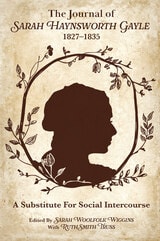
The Journal of Sarah Haynsworth Gayle, 1827–1835
A Substitute for Social IntercourseEdited by Sarah Woolfolk Wiggins with Ruth Smith Truss
University of Alabama Press, 2013
The remarkable journal of the young wife of early Alabama governor John Gayle and a primary source of our knowledge about early Alabama and the antebellum American South
Astonishing, tragic, and remarkable, the journal of Sarah Haynsworth Gayle, wife of early Alabama governor John Gayle, is among the most widely studied and seminal accounts of antebellum life in the American South. This is the first complete edition of the journal in print.
Bereft of the companionship of her often-absent husband, Sarah considered her journal “a substitute for social intercourse” during the period from 1827 to 1835. It became the social and intellectual companion to which she confided stories that reflected her personal life and the world of early Alabama. Sarah speaks directly to us of her loneliness, the challenges of child rearing, her fear of and frustration with the management of slaves, and the difficulty of balancing the responsibilities of a socially prominent woman with her family’s slender finances.
The poor condition of the journal and its transcripts, sometimes disintegrated or reassembled in the wrong order, has led historians to misinterpret Gayle’s words. Gayle’s descendants, Alabama’s famed Gorgases, deliberately obscured or defaced many passages. Using archival techniques to recover the text and restore the correct order, Sarah Wiggins and Ruth Truss reveal the unknown story of Sarah’s economic hardships, the question of her husband’s “temperance,” and her opium use.
The only reliable and unexpurgated edition of Sarah Gayle’s journal, now enhanced with a fascinating introduction and inset notes, The Journal of Sarah Haynsworth Gayle, 1827–1835, is a robust and gripping account and will be of inestimable value to our understanding of antebellum society, religion, intellectual culture, and slavery.
Published in cooperation with the University Libraries, The University of Alabama, with further financial support from the Library Leadership Board, the University Libraries, The University of Alabama.
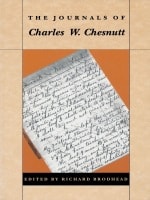
The Journals of Charles W. Chesnutt
Charles W. Chesnutt
Duke University Press, 1993
Though he achieved literary success in his time, Chesnutt has only recently been rediscovered and his contribution to American literature given its due. The only known private diary from a nineteenth-century African American author, these pages offer a fascinating glimpse into Chesnutt's everyday experience as he struggled to win the goods of education in the world of the post-Civil War South. An extraordinary portrait of the self-made man beset by the urgencies and difficulties of self-improvement in a racially discriminatory society, Chesnutt's journals unfold a richly detailed local history of postwar North Carolina. They also show with great force how the world of the postwar South obstructed--and, unexpectedly, assisted--a black man of driving intellectual ambitions.
The Journals of Jeffery Amherst, 1757-1763, Volume 1
The Daily and Personal JournalsRobert J. Andrews
Michigan State University Press, 2014
The Journals of Jeffery Amherst, 1757-1763, Volume 2
A Dictionary of People, Places, and ShipsRobert J. Andrews
Michigan State University Press, 2014
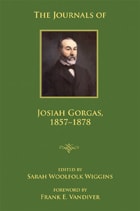
The Journals of Josiah Gorgas, 1857–1878
Josiah Gorgas, edited by Sarah Woolfolk Wiggins, foreword by Frank E. Vandiver
University of Alabama Press, 2009
Josiah Gorgas was best known as the highly regarded Chief of Confederate Ordnance. Born in 1818, he attended West Point, served in the U.S. Army, and later, after marrying Amelia Gayle, daughter of a former Alabama governor, joined the Confederacy. After the Civil War he served as president of The University of Alabama until ill health forced him to resign. His journals, maintained between 1857 and 1878, reflect the family's economic successes and failures, detail the course of the South through the Civil War, and describe the ordeal of Reconstruction. Few journals cover such a sweep of history. An added dimension is the view of Victorian family life as Gorgas explored his feelings about aspects of parental responsibility and transmission of values to children--a rarely documented account from the male perspective. His son, called Willie in the journals, was William Crawford Gorgas (1854-1920), who was noted for his fight to control yellow fever and who became surgeon general of the United States.
In his foreword to the volume, Frank E. Vandiver states: "Wiggins has done much more than present a well-edited version of Gorgas's diaries and journals; she has interpreted them in full Gorgas family context and in perspective of the times they cover. . . . Wiggins informs with the sort of editorial notes expected of a careful scholar, but she enlightens with wide knowledge of American and southern history. . . . Josiah Gorgas [was] an unusually observant, passionate man, a 'galvanized Rebel' who deserves rank among the true geniuses of American logistics."
The Journey of a Caribbean Writer
Maryse Condé
Seagull Books, 2014
Even while paying homage to her intellectual and literary influences—including Frantz Fanon, Leopold Sedar Senghor, and Aimé Césaire—Condé establishes in these pages the singularity of her vision and the reason for the enormous admiration that her writing has garnered from readers and critics alike.
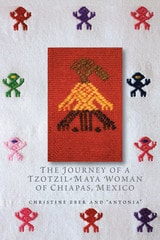
The Journey of a Tzotzil-Maya Woman of Chiapas, Mexico
Pass Well over the EarthBy Christine Eber and “Antonia”
University of Texas Press, 2011
Most recent books about Chiapas, Mexico, focus on political conflicts and the indigenous movement for human rights at the macro level. None has explored those conflicts and struggles in-depth through an individual woman's life story. The Journey of a Tzotzil-Maya Woman of Chiapas, Mexico now offers that perspective in one woman's own words. Anthropologist Christine Eber met "Antonia" in 1986 and has followed her life's journey ever since. In this book, they recount Antonia's life story and also reflect on challenges and rewards they have experienced in working together, offering insight into the role of friendship in anthropological research, as well as into the transnational movement of solidarity with the indigenous people of Chiapas that began with the Zapatista uprising.
Antonia was born in 1962 in San Pedro Chenalhó, a Tzotzil-Maya township in highland Chiapas. Her story begins with memories of childhood and progresses to young adulthood, when Antonia began working with women in her community to form weaving cooperatives while also becoming involved in the Word of God, the progressive Catholic movement known elsewhere as Liberation Theology. In 1994, as a wife and mother of six children, she joined a support base for the Zapatista Army of National Liberation. Recounting her experiences in these three interwoven movements, Antonia offers a vivid and nuanced picture of working for social justice while trying to remain true to her people's traditions.
The Juan Pardo Expeditions
Exploration of the Carolinas and Tennessee, 1566-1568Charles Hudson. Afterword by David G. Moore, Robin A. Beck Jr., and Christopher B. Rodning
University of Alabama Press, 2005
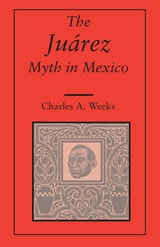
The Juarez Myth In Mexico
Charles A. Weeks
University of Alabama Press, 1987
Like many capitals the city of Mexico is a place of monuments-large monuments, small, ancient monuments, and new, representational monuments, and allegorical monuments—each bearing a message from the past. Among them is the Hemiciclo. It stands in a spacious, old, beautiful park, the Alameda Central, where the young and old of the city still promenade on Sundays and holidays as people do in the plazas throughout the country and, indeed, as people do in many parts of the world. Amid green trees and a great variety of flowers and shrubs and flanked by a semicircle of twelve doric columns of white Carrara marble stands the central pedestal of the Hemiciclo supporting the statues of three figures. One statue represents a former president of the republic, Benito Juarez, who appears solemn and grim as a Roman proconsul administering justice. Juarez the Lawgiver is seated, and surrounding him are two allegorical figures, also of marble, one representing Glory, who is placing a crown on Juarez’s head, and the other, the Republic, who stands behind, resting her sword on the ground to signify the end of a gigantic struggle. The letters of the pedestal read: “Al Benemerito Benito Juarez. La Patria.” Many years have passed since 1910, when the Mexican government built and dedicated the Hemiciclo after a design by the architect Guillermo Heredia.
Like many other such monuments it is the embodiment of a myth. In life Juarez offered little to the mythologizers-he was never able to boast a military career, he often impressed people as reserved or even impassive. he stood a little over five feet; with small hands and feet and dark staring eyes, a coppery complexion that helped disguise a large scar across his face, of Zapotec Indian parentage, he was no striking figure. He did, however, lead Mexican liberals in the I 850s and 1860s in their titanic struggle against formidable opposition, both foreign and domestic, and in the years since his death his worshipers have gathered at the Hemiciclo, at his tomb, or in many other places in Mexico sacred to his memory, usually on anniversaries of his birth or death. For them Juarez is, in agreement with the golden inscription on the central pedestal of the Hemiciclo, “Benemerito de la Patria” or even “Benemerito de las Americas.”
Development of a Juarez myth has had all the classic characteristics of myths and mythmaking, especially the subjective view or image of a reality, whether it be of an historical figure, as in the case of Juarez, an event, an institution, or even a geographical region. Image or meaning ascribed to what is assumed to be a reality constitutes one of the main elements of myth and when manipulated to promote a cause assumes a reality of its own. The apotheosis of Juarez projected a subjective view or image of the historical reality. In all myths, to be sure, the assumed reality is a feature useful to an individual or a group.
The Judgment of the Nations
Christopher Dawson
Catholic University of America Press, 2011
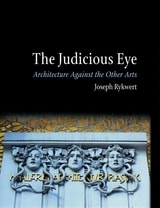
The Judicious Eye
Architecture Against the Other ArtsJoseph Rykwert
University of Chicago Press, 2008
Joseph Rykwert locates the first major shift during the Enlightenment, when key philosophers drew implied and explicit distinctions between the visual arts and architecture. As time progressed, architects came to see themselves as part of an established profession, while visual artists increasingly moved toward society’s margins, deepening the chasm between them. Detailing the eventual attempts to heal this breach, Rykwert concludes in the mid-twentieth century, when the artistic avant-garde turned to architects in its battle against a stagnant society. The Judicious Eye, then, provides a necessary foundation for understanding architecture and visual art in the twenty-first century, as they continue to break new ground by growing closer to their intertwined roots.