Results by title
28250 books match the query 'History' and 6388 start with t

The Last Dinosaur Book
The Life and Times of a Cultural IconW. J. T. Mitchell
University of Chicago Press, 1998
Mitchell aims to trace the cultural family tree of the dinosaur, and what he discovers is a creature of striking flexibility, linked to dragons and mammoths, skyscrapers and steam engines, cowboys and Indians. In the vast territory between the cunning predators of Jurassic Park and the mawkishly sweet Barney, from political leviathans to corporate icons, from paleontology to Barnum and Bailey, Mitchell finds a cultural symbol whose plurality of meaning and often contradictory nature is emblematic of modern society itself. As a scientific entity, the dinosaur endured a near-eclipse for over a century, but as an image it is enjoying its widest circulation. And it endures, according to Mitchell, because it is uniquely malleable, a figure of both innovation and obsolescence, massive power and pathetic failure—the totem animal of modernity.
Drawing unforeseen and unusual connections at every turn between dinosaurs real and imagined, The Last Dinosaur Book is the first to delve so deeply, so insightfully, and so enjoyably into our modern dino-obsession.

The Last Earth
A Palestinian StoryRamzy Baroud
Pluto Press, 2018
Ordinary Palestinians have rarely narrated their own history. In this groundbreaking book, acclaimed author Ramzy Baroud draws on dozens of interviews to produce vivid, intimate and beautifully written accounts of Palestinian lives - in villages, refugee camps, prisons and cities, in the lands of their ancestors and in exile. Baroud's empathetic and lyrical approach reveals new human dimensions of the Palestinian saga, telling it as it has never before been told.
Against dominant narratives, the last earth reclaims Palestine's past - and present - for all its people.

The Last Empire
Thirty Years of Portuguese DecolonizationAntónio Costa Pinto
Intellect Books, 2003
This book is the result of a conference organised by the Contemporary Portuguese Political History Research Centre (CPHRC) and the University of Dundee that took place during September 2000. The purpose of this conference, and the resulting book, was to bring together various experts in the field to analyse and debate the process of Portuguese decolonisation, which was then 25 years old, and the effects of this on the Portuguese themselves. For over one century, the Portuguese state had defined its foreign policy on the basis of its vast empire &endash; this was the root of its 'Atlanticist' vision. The outbreak of war of liberation in its African territories, which were prompted by the new international support for self determination in colonised territories, was a serious threat that undermined the very foundations of the Portuguese state. This book examines the nature of this threat, how the Portuguese state initially attempted to overcome it by force, and how new pressures within Portuguese society were given space to emerge as a consequence of the colonial wars.
This is the first book that takes a multidisciplinary look at both the causes and the consequences of Portuguese decolonisation &endash; and is the only one that places the loss of Portugal's Eastern Empire in the context of the loss of its African Empire. Furthermore, it is the only English language book that relates the process of Portuguese decolonisation with the search for a new Portuguese vision of its place in the world.
This book is intended for anyone who is interested in regime change, decolonisation, political revolutions and the growth and development of the European Union. It will also be useful for those who are interested in contemporary developments in civil society and state ideologies. Given that a large part of the book is dedicated to the process of change in the various countries of the former Portuguese Empire, it will also be of interest to students of Africa. It will be useful to those who study decolonisation processes within the other former European Empires, as it provides comparative detail. The book will be most useful to academic researchers and students of comparative politics and area studies.
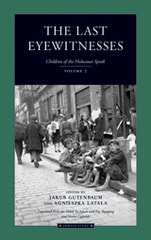
The Last Eyewitnesses, Volume 2
The Children of the Holocaust SpeakJakub Gutenbaum and Agnieszka Latala
Northwestern University Press, 2005
This book serves as a memorial to loved ones who do not even have a grave, as well as a tribute to those who risked their lives and families to save a Jewish child. A wide variety of experiences during the Nazi occupation of Poland are related with wrenching simplicity and candor, experiences that illustrate horrors and deprivation, but also present examples of courage and compassion.
These recollections-whether of hiding in forests or camouflaged bunkers, fighting with groups of partisans, enduring the horrors of concentration camps, or living in fear under disguised identities-serve as eloquent testimony to the depth, diversity, and richness of humanity under siege and offer a powerful lesson for future generations. Written by people who remained in Poland after the war, these accounts convey a great immediacy; the authors are not removed from the environment in which these experiences took place. The psychological impact on these child survivors and the difficulties they encountered even after the war are very poignant. The passing years have brought urgency to the publication of these stories, as those who wrote them are the last surviving eyewitnesses of these tumultuous events.
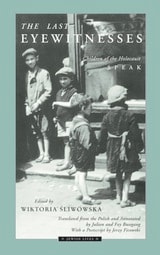
The Last Eyewitnesses
Children of the Holocaust SpeakWiktoria Sliwowska
Northwestern University Press, 1998
The Last Fine Time
Verlyn Klinkenborg
University of Chicago Press, 2004
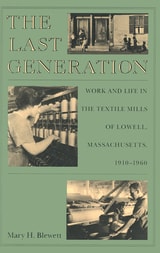
The Last Generation
Work and Life in the Textile Mills of Lowell, Massachusetts, 1910-1960Mary H. Blewett
University of Massachusetts Press, 1990
Oral histories of many of the last generation of Lowell, MA, textile mill workers preceded by two introductory sections. The first presents the historic setting of economic development and subsequent decline of the textile industry in Lowell. The second is a brief explanation of the production process wherein the last generation of mill workers expended so many of their skills and so much of their energy.
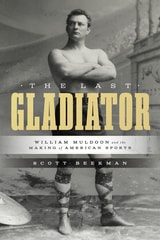
The Last Gladiator
William Muldoon and the Making of American SportsScott Beekman
University of Texas Press, 2025
2026 Honorable Mention in Monographs, North American Society for Sport History (NASSH)
The incredible career of the forgotten but foundational pro wrestler who shaped American sports culture.
William Muldoon was an infamous athlete whose prowess, savvy, and chicanery across his six-decade career led him to wealth, cultural importance, and political power. Muldoon, the child of poor Irish immigrants, began wrestling in the 1870s and quickly became one of the most famous athletes of the post–Civil War era. He started acting and modeling as his popularity grew, making him one of the first sports stars to achieve crossover success. After a triumphant stint rehabilitating fallen boxing heavyweight champion John L. Sullivan in 1889, he retired from the ring and began a new career as a fitness impresario, founding an elite gymnasium and remaking himself as a health authority in the press. He became trainer to the rich, famous, and politically powerful, which led to his appointment as chair of the New York State Athletic Commission in the 1920s. From this position, Muldoon exerted his influence over the rules of boxing and wrestling and weaponized his power to maintain segregation in sport.
The Last Gladiator is a deep, insightful dive into Muldoon’s life and impact, demonstrating the significance of this often-controversial figure in the development of American sports, professional wrestling, and physical and popular culture.
The Last Good Neighbor
Mexico in the Global SixtiesEric Zolov
Duke University Press, 2020
The Last Great Colonial Lawyer
The Life and Legacy of Jeremiah GridleyCharles R. McKirdy
University of Massachusetts Press, 2018
Jeremiah Gridley (1702–1767) is considered “the greatest New England lawyer of his generation,” yet we know little about him. Most of his renown is a product of the fame of his students, most notably John Adams. Gridley deserves more. He was an active participant in the Writs of Assistance trial and the Stamp Act controversy, and as a leader of the Boston bar, an editor, speculator, legislator, and politician, his life touched and was touched by much that was integral to eighteenth-century Massachusetts.
The Last Great Colonial Lawyer presents a portrait of Gridley against the background of his times. Religious controversies enter into this narrative, as do colonial wars and the increasing strains with Great Britain, but Charles R. McKirdy also rescues from the footnotes of time subjects such as the smallpox epidemic of 1721 and the currency crisis of the 1740s. Because Gridley was above all a lawyer, the primary focus is on his cases, which illuminate in a unique and very human way attitudes regarding race, status, commerce, property, and power.
The Last Half-Century
Societal Change and Politics in AmericaMorris Janowitz
University of Chicago Press, 1978
For Janowitz, social control denotes a society's capacity to regulate itself within a moral framework that transcends simple self-interest. He poses urgent questions: Why has social control been so drastically weakened in our advanced industrial society? And what strategies can we use to strengthen it again?
The expanation rests in part on the changes in social structure which make it more and more complicated for citizens to calculate their political self-interest. At the same time, complex economic and defense problems also strain an already overburdened legislative system, making effective, responsive political rule increasingly difficult.
Janowitz concludes by assessing the response of the social sciences to the pressing problem of social control and asserts that new forms of citizen participation in the government must be found.
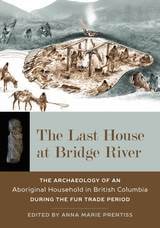
The Last House at Bridge River
The Archaeology of an Aboriginal Household in British Columbia during the Fur Trade PeriodAnna M. Prentiss
University of Utah Press, 2017
The Last House at Bridge River offers a comprehensive archaeological study of a single-house floor and roof deposit dated to approximately 1835–1858 C.E. Although the Fur Trade period of the nineteenth century was a time of significant change for aboriginal peoples in the Pacific Northwest, it is a period that is poorly understood. These studies of Housepit 54 at the Bridge River site offer new insights, revealing that ancestors of today’s St’át’imc people were actively engaged in maintaining traditional lifestyles and making the best of new opportunities for trade and intergroup interaction.
Among its major contributions, the book includes a first-ever historical ecology of the Middle Fraser Canyon that places aboriginal and Euro-Canadian history in ecological context. It demonstrates that an integrated multidisciplinary approach to archaeological research can achieve insights well beyond what is known from the ethnographic and historical records. Because the project derives from a long-term partnership between the University of Montana and the Bridge River Indian Band, it illustrates the value of collaborations between archaeologists and First Nations. Together, contributors present a Fur Trade period aboriginal society at a level of intimacy unparalleled elsewhere.
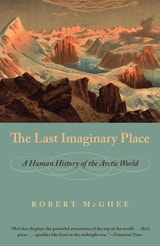
The Last Imaginary Place
A Human History of the Arctic WorldRobert McGhee
University of Chicago Press, 2007
The Arctic of towering icebergs and midnight sun, of flaming auroras and endless winter nights, has long provoked flights of the imagination. Now, in The Last Imaginary Place, renowned archeologist Robert McGhee lifts the veil to reveal the true Arctic world. Based on thirty years of work with native peoples of the Arctic and travel in the region, McGhee’s account dispels notions of the frozen land as an exotic, remote world that exists apart from civilization.
Between the frigid reality and lurid fantasy lies McGhee’s true interest, the people who throughout human history have called the Arctic home. He paints a vivid portrait of Viking farmers, entrepreneurial Inuit, and Western explorers who have been seduced by the natural wealth and haunting beauty of this land. From lively accounts of fur trading, ivory hunting, and whaling to white-knuckle tales of the first, doomed expeditions, McGhee takes the reader on a whirlwind journey across this disorienting, dreamlike terrain that has fascinated mankind for centuries.
“In prose infused by his position as curator of Arctic archaeology at the Canadian Museum of Civilization—which has taken him to sites in several countries—McGhee demolishes some persistent illusions about the white North . . . evocative.”—Times Literary Supplement
“[A] compelling account . . . [McGhee] believes that the Arctic is not so much a region as a dream—what he sees as a dream of a unique, attractive world . . . An archaeologist who has spent thirty years there, the author lets his love for the region shine through on every page.—Booklist
“McGhee displays the powerful attractions of the top of the world . . . [his] prose . . . sparkles like frost in the midnight sun.”—Financial Times
“McGhee has written a sensitive, fascinating and extremely important book.”—Canadian Geographic
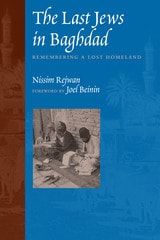
The Last Jews in Baghdad
Remembering a Lost HomelandBy Nissim Rejwan
University of Texas Press, 2004
Once upon a time, Baghdad was home to a flourishing Jewish community. More than a third of the city's people were Jews, and Jewish customs and holidays helped set the pattern of Baghdad's cultural and commercial life. On the city's streets and in the bazaars, Jews, Muslims, and Christians—all native-born Iraqis—intermingled, speaking virtually the same colloquial Arabic and sharing a common sense of national identity. And then, almost overnight it seemed, the state of Israel was born, and lines were drawn between Jews and Arabs. Over the next couple of years, nearly the entire Jewish population of Baghdad fled their Iraqi homeland, never to return.
In this beautifully written memoir, Nissim Rejwan recalls the lost Jewish community of Baghdad, in which he was a child and young man from the 1920s through 1951. He paints a minutely detailed picture of growing up in a barely middle-class family, dealing with a motley assortment of neighbors and landlords, struggling through the local schools, and finally discovering the pleasures of self-education and sexual awakening. Rejwan intertwines his personal story with the story of the cultural renaissance that was flowering in Baghdad during the years of his young manhood, describing how his work as a bookshop manager and a staff writer for the Iraq Times brought him friendships with many of the country's leading intellectual and literary figures. He rounds off his story by remembering how the political and cultural upheavals that accompanied the founding of Israel, as well as broad hints sent back by the first arrivals in the new state, left him with a deep ambivalence as he bid a last farewell to a homeland that had become hostile to its native Jews.
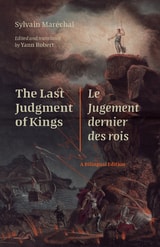
The Last Judgment of Kings / Le Jugement dernier des rois
A Bilingual EditionYann Robert
Bucknell University Press, 2025
Joué pour la première fois le lendemain de l’exécution de Marie-Antoinette, Le Jugement dernier des rois met en scène le procès burlesque des autres rois et reines d’Europe : exhibés et enchaînés tels des animaux, contraints de se battre pour un tonneau de biscuits, et finalement anéantis par l’éruption spectaculaire d’un volcan. Tel est le contexte scandaleux—tragédie et farce à la fois—de la pièce la plus célèbre de la Révolution française, bien connue de tous les spécialistes de cette période. Jusqu’à maintenant, pourtant, il n’existait ni édition critique ni traduction anglaise de cet ouvrage historique. Notre édition bilingue fait revivre la pièce de Maréchal et la replace au centre des plus grands débats chez les historiens de la Révolution, traitant de justice, religion, commémoration, comédie, et propagande. Provocateur, facile à lire, et concis—parfaitement adapté aux étudiants d’un cours de français ou d’histoire—Le Jugement dernier des rois propose ainsi une introduction idéale à la période révolutionnaire et à ses principales controverses.
Published by Bucknell University Press. Distributed worldwide by Rutgers University Press.
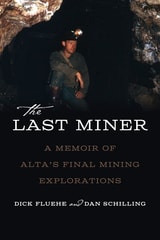
The Last Miner
A Memoir of Alta's Final Mining ExpeditionsDick Fluehe with Dan Schilling
University of Utah Press, 2025
The Last Miner is a captivating memoir chronicling the final days of mining exploration in Utah’s legendary Little Cottonwood Canyon during the 1950s. Through the eyes of Dick Fluehe, the last living miner to traverse these haunted, silver-laden tunnels, readers are immersed in a forgotten world beneath the internationally renowned Alta and Snowbird ski areas. With a knowledge as deep as the mines themselves, Dick recounts tales of collapsed shafts, gloriously jeweled stopes, and colorful personalities, such as “Swingin’ Door,” “Slick,” and “The Bull,” who lived and died pursuing ore.
Edited by New York Times bestselling author Dan Schilling, The Last Miner offers a unique, firsthand account of the treacherous, adventurous, and humorous lives of mid-century miners. Both thrilling and insightful, this memoir is the mining equivalent of a float down the Mississippi with Mark Twain and an unprecedented insight into the history of American West mining.
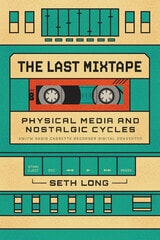
The Last Mixtape
Physical Media and Nostalgic CyclesSeth Long
University of Chicago Press, 2025
Obsolescence makes the heart grow fonder, at least in the case of the mixtape. Not all technologies are so lucky. Some (say, wax cylinders) fade almost completely from cultural memory. A lucky few pass into metaphor: we still “hang up” our smartphones, “cut” film, and “patch” computer code. As digital streaming completes the obsolescence of physical media, what will become of the humble cassette?
In The Last Mixtape, Seth Long offers a microhistory of music curation, anchored by the cassette, from which he explores the meanings of obsolescence, ownership, nostalgia, and the speed of cultural change. A moving meditation on our relationship with music, memory, and curation in the digital century, Long ultimately calls for a return to the media ecology represented by the mixtape: a world in which media is cheap and abundant but tactile and meaningfully engaged.

The Last Neighborhood Cops
The Rise and Fall of Community Policing in New York Public HousingUmbach, Fritz
Rutgers University Press, 2011
The Last Neighborhood Cops reveals the forgotten history of the residents and cops who forged community policing in the public housing complexes of New York City during the second half of the twentieth century. Through a combination of poignant storytelling and historical analysis, Fritz Umbach draws on buried and confidential police records and voices of retired officers and older residents to help explore the rise and fall of the HAPD's community-based strategy, while questioning its tactical effectiveness. The result is a unique perspective on contemporary debates of community policing and historical developments chronicling the influence of poor and working-class populations on public policy making.
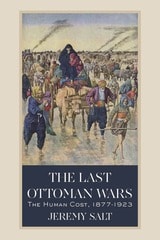
The Last Ottoman Wars
The Human Cost, 1877–1923Jeremy Salt
University of Utah Press, 2019
Jeremy Salt brings to the surface previously ignored facts that disrupt the conventional narrative of an ethno-religious division between Muslim perpetrators and Christian victims of violence. Salt shows instead that all major ethno-religious groups—including Armenians, Turks, Kurds, and Greeks—were guilty of violent acts. The result is a more balanced picture of European involvement in the Ottoman Empire and the Balkans, one that highlights the destructive role of British Prime Minister David Lloyd George and other European leaders grabbing for Ottoman resources up to the end of World War I. The effects of these events are felt to the present day.
This extraordinary story centers not on military campaigns but on ordinary civilians whose lives were disrupted and in many cases destroyed by events over which they had no control. Disease, malnutrition, massacre and inter-communal fighting killed millions of people during the First World War alone. Until now this epic saga of human suffering has remained a story largely untold.
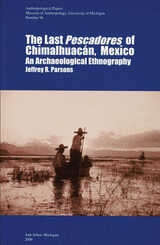
The Last Pescadores of Chimalhuacán, Mexico
An Archaeological EthnographyJeffrey R. Parsons
University of Michigan Press, 2006

The Last Physician
Walker Percy and the Moral Life of MedicineCarl Elliott and John Lantos, eds.
Duke University Press, 1999
The contributors—physicians, philosophers, and literary critics—examine the relevance of Percy’s work to current dilemmas in medical education and health policy. They reflect upon the role doctors and patients play in his novels, his family legacy of depression, how his medical background influenced his writing style, and his philosophy of psychiatry. They contemplate the private ways in which Percy’s work affected their own lives and analyze the author’s tendency to contrast the medical-scientific worldview with a more spiritual one. Assessing Percy’s stature as an author and elucidating the many ways that reading and writing can combine with diagnosing and treating to offer an antidote to despair, they ask what it means to be a doctor, a writer, and a seeker of cures and truths—not just for the body but for the malaise and diseased spirituality of modern times.
This collection will appeal to lovers of literature as well as medical professionals—indeed, anyone concerned with medical ethics and the human side of doctoring.
Contributors. Robert Coles, Brock Eide, Carl Elliott, John D. Lantos, Ross McElwee, Richard Martinez, Martha Montello, David Schiedermayer, Jay Tolson, Bertram Wyatt-Brown, Laurie Zoloth-Dorfman
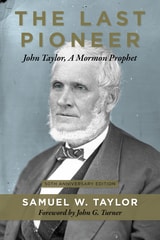
The Last Pioneer
John Taylor, A Mormon ProphetTaylor, Samuel W.
Signature Books, 2026
Mormon prophet John Taylor’s life is usually recounted as a series of anecdotes: singing hymns in Carthage Jail before a mob assassinated Joseph and Hyrum Smith, Taylor’s life spared when, according to myth, his pocketwatch stopped a bullet; his practice of polygamy, including taking a wife fifty years his junior while on the run as a fugitive from federal marshals; and his 1886 revelation that said God would not revoke the law of plural marriage, “for it is everlasting,” a revelation whose authenticity was questioned by the Church of Jesus Christ of Latter-day Saints for over a century but became the foundational text for breakaway sects continuing the practice of polygamy. Yet there was more to Taylor than his role in the martyrdom, his plural wives, his clashes with the federal government, and the legacy of fundamentalist Mormonism.
Taylor spent his first two decades in his home country of England before immigrating to Canada. His first wife, Leonora, was initially more interested when missionaries knocked on their door. But once he committed to the church, John Taylor was unflappable in his faith and zealous in his dedication. The Taylors moved from Toronto to Ohio, then to Missouri, and finally to Illinois as they followed their faith and their prophet Joseph Smith. John became an apostle in 1838 and a publisher thereafter, printing church newspapers. He followed Brigham Young to the Salt Lake Valley, where he became a prominent church and political leader for decades before finally ascending to the head of the faith in 1880.
In this timeless biography, Samuel W. Taylor weaves the threads of his grandfather’s life into a rich tapestry. Drawing on letters, speeches, diaries, and reminiscences, a well-rounded and riveting portrait of the third Mormon prophet comes into focus. A professional writer by trade, Samuel Taylor was uniquely suited to tell this story—and what a story it is.

The Last Pioneer
John Taylor, a Mormon ProphetSamuel W. Taylor
Signature Books, 1999
As half the church fell away in Ohio, the Taylors escaped to Missouri with the faithful, just in time for the 1838 Mormon War. John’s role became that of an advocate with Congress—to convince them that it was the non-Mormons who had sacked the county seat and burned their own homes, for instance. As a literary experience, this was good preparation for later editorships of church newspapers in Illinois, New York, and Liverpool.
From his personal letters and speeches, and from the diaries and reminiscences of associates, vivid images of Taylor’s life appear: his children crossing the Missouri River on the backs of oxen “bulls”; one of his ten plural wives packing a piano instead of a cookstove for the trip and then later regretting it; and Native Americans teaching him how to burn a cricket-infested field, gather the roasted insects, and grind the carcasses into flour.
Taylor’s eventual tenure as church president was spent “on the dodge” from federal marshals, and prior to that he often lived out of a suitcase, rotating from one of his sixteen families to the next. Among his greatest achievements was the settlement of as much territory as was colonized by his more famous predecessor, Brigham Young. Taylor was also a visionary man. His personal spirituality led the church through one of its most turbulent times; his revelations later inspired the Mormon fundamentalist schism, as well. This controversy, mingled with the drama of internecine power struggles and interpersonal conflict, makes The Last Pioneer suspenseful and largely unforgettable.
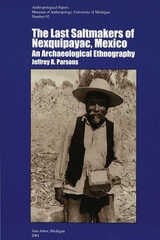
The Last Saltmakers of Nexquipayac, Mexico
An Archaeological EthnographyJeffrey R. Parsons
University of Michigan Press, 2001
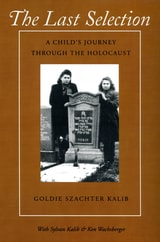
The Last Selection
A Child's Journey through the HolocaustGoldie Szachter Kalib
University of Massachusetts Press, 1991
Just before the end of the Holocaust, Dr. Josef Mengele made “the last selection.” Goldie Szachter Kalib, then a 13-year old Jewish girl from Bodzentyn, Poland, and her mother were part of that selection. In The Last Selection: A Child's Journey through the Holocaust, Goldie describes her life during World War II. She includes accounts about her charming childhood in Bodzentyn, Poland, her experiences hiding with a Polish Christian family, her time in the slave camp and then Auschwitz, life in the gas chamber, her experiences in Bergen-Belsen, and finally liberation. Portions of The Last Selection: A Child's Journey through the Holocaust were used in the ABC Daytime Emmy-Award winning movie on children in the Holocaust.
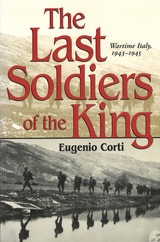
The Last Soldiers of the King
Life in Wartime Italy, 1943-1945Eugenio Corti & Translated by Manuela Arundel
University of Missouri Press, 2003
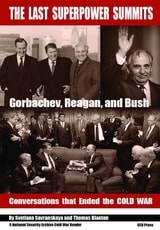
The Last Superpower Summits
Reagan, Gorbachev and Bush. Conversations that Ended the Cold War.The National Security Archive Savranskaya
Central European University Press, 2017
The Last Thirty Seconds
A Brief History of the Evolution of Hit-to-Kill TechnologyDavid K. Stumpf
University of Arkansas Press, 2024
In The Last Thirty Seconds: A Brief History of the Evolution of Hit-to-Kill Technology, David K. Stumpf details the development of one of many possible solutions for ballistic missile defense commonly known as hit-to-kill. Hit-to-kill is a nonnuclear technique using kinetic energy, rather than explosives, to destroy reentry vehicles carrying chemical, biological, or nuclear warheads. It is the centerpiece of the United States’ current ballistic missile defense systems and has proven invaluable in the conflict between Ukraine and Russia as well as in the ongoing conflict with the Houthi rebels in the Red Sea. While much of the subject remains classified, this detailed study will be welcomed for its substantial references and the inclusion of newly declassified material.
The Last War Trail
The Utes and the Settlement of ColoradoRobert Emmitt
University Press of Colorado, 2000
Written with the care and precision of a finely crafted novel, The Last War Trail was nominated for the Pulitzer Prize when it was first published in 1954. Long out of print and now brought back with new rare photographs and illustrations, The Last War Trail will be eagerly read by anyone trying to understand conflicts of the nineteenth century between Native American and encroaching settlers.
The Last Writings of Thomas S. Kuhn
Incommensurability in ScienceThomas S. Kuhn
University of Chicago Press, 2022
This book contains the text of Thomas S. Kuhn’s unfinished book, The Plurality of Worlds: An Evolutionary Theory of Scientific Development, which Kuhn himself described as a return to the central claims of The Structure of Scientific Revolutions and the problems that it raised but did not resolve. The Plurality of Worlds is preceded by two related texts that Kuhn publicly delivered but never published in English: his paper “Scientific Knowledge as Historical Product” and his Shearman Memorial Lectures, “The Presence of Past Science.” An introduction by the editor describes the origins and structure of The Plurality of Worlds and sheds light on its central philosophical problems.
Kuhn’s aims in his last writings are bold. He sets out to develop an empirically grounded theory of meaning that would allow him to make sense of both the possibility of historical understanding and the inevitability of incommensurability between past and present science. In his view, incommensurability is fully compatible with a robust notion of the real world that science investigates, the rationality of scientific change, and the idea that scientific development is progressive.
The Last of the Great Observatories
Spitzer and the Era of Faster, Better, Cheaper at NASAGeorge H. Rieke
University of Arizona Press, 2006
George Rieke played a key role in Spitzer and now relates the story of how that observatory was built and launched into space. Telling the story of this single mission within the context of NASA space science over two turbulent decades, he describes how, after a tortuous political trail to approval, Spitzer was started at the peak of NASA’s experiment with streamlining and downsizing its mission development process, termed “faster better cheaper.” Up to its official start and even afterward, Spitzer was significant not merely in terms of its scientific value but because it stood at the center of major changes in space science policy and politics. Through interviews with many of the project participants, Rieke reconstructs the political and managerial process by which space missions are conceived, approved, and developed. He reveals that by the time Spitzer had been completed, a number of mission failures had undermined faith in “faster-better-cheaper” and a more conservative approach was imposed. Rieke examines in detail the premises behind “faster better cheaper,” their strengths and weaknesses, and their ultimate impact within the context of NASA’s continuing search for the best way to build future missions.
Rieke’s participant’s perspective takes readers inside Congress and NASA to trace the progress of missions prior to the excitement of the launch, revealing the enormously complex and often disheartening political process that needs to be negotiated. He also shares some of the new observations and discoveries made by Spitzer in just its first year of operation. As the only book devoted to the Spitzer mission, The Last of the Great Observatories is a story at the nexus of politics and science, shedding new light on both spheres as it contemplates the future of mankind’s exploration of the universe.
The Late Medieval Balkans
A Critical Survey from the Late Twelfth Century to the Ottoman ConquestJohn V. A. Fine
University of Michigan Press, 1994
The Latest Catastrophe
History, the Present, the ContemporaryHenry Rousso
University of Chicago Press, 2016
Henry Rousso addresses the rise of contemporary history and the relations of present-day societies to their past, especially their legacies of political violence. Focusing on France, Germany, the United Kingdom, and the United States, he shows that for contemporary historians, the recent past has become a problem to be solved. No longer unfolding as a series of traditions to be respected or a set of knowledge to be transmitted and built upon, history today is treated as a constant act of mourning or memory, an attempt to atone. Historians must also negotiate with strife within this field, as older scholars who may have lived through events clash with younger historians who also claim to understand the experiences. Ultimately, The Latest Catastrophe shows how historians, at times against their will, have themselves become actors in a history still being made.
The Latin American Cultural Studies Reader
Ana Del Sarto, Alicia Ríos and Abril Trigo, eds.
Duke University Press, 2004
Divided into sections preceded by brief introductory essays, this volume traces the complex development of Latin American cultural studies from its roots in literary criticism and the economic, social, political, and cultural transformations wrought by neoliberal policies in the 1970s. It tracks the impassioned debates within the field during the early 1990s; explores different theoretical trends, including studies of postcolonialism, the subaltern, and globalization; and reflects on the significance of Latin American cultural studies for cultural studies projects outside Latin America. Considering literature, nationalism, soccer, cinema, postcolonialism, the Zapatistas, community radio, and much more, The Latin American Cultural Studies Reader is an invaluable resource for all those who want to understand the past, present, and future of Latin American cultural studies.
Contributors. Hugo Achugar, Eduardo Archetti, John Beverley, José Joaquín Brunner, Antonio Candido, Debra A. Castillo, Antonio Cornejo Polar, Román de la Campa, Ana Del Sarto, Roberto Fernández Retamar, Juan Flores, Jean Franco, Néstor García Canclini, María Gudelia Rangel Gómez, Adrián Gorelik, John Kraniauskas, Neil Larsen, Ana López, Jesús Martín-Barbero, Francine Masiello, Daniel Mato, Walter D. Mignolo, Carlos Monsiváis, Mabel Moraña, Alberto Moreiras, Renato Ortiz, José Rabasa, Angel Rama, Gustavo A. Remedi, Darcy Ribeiro, Nelly Richard, Alicia Ríos, Beatriz Sarlo, Roberto Schwarz, Irene Silverblatt, Graciela Silvestri, Armando Rosas Solís, Beatriz González Stephan, Abril Trigo, George Yúdice
The Latin American Ecocultural Reader
Edited by Jennifer French and Gisela Heffes
Northwestern University Press, 2021
The Latin American Ecocultural Reader is a comprehensive anthology of literary and cultural texts about the natural world. The selections, drawn from throughout the Spanish-speaking countries and Brazil, span from the early colonial period to the present. Editors Jennifer French and Gisela Heffes present work by canonical figures, including José Martí, Bartolomé de las Casas, Rubén Darío, and Alfonsina Storni, in the context of our current state of environmental crisis, prompting new interpretations of their celebrated writings. They also present contemporary work that illuminates the marginalized environmental cultures of women, indigenous, and Afro-Latin American populations. Each selection is introduced with a short essay on the author and the salience of their work; the selections are arranged into eight parts, each of which begins with an introductory essay that speaks to the political, economic, and environmental history of the time and provides interpretative cues for the selections that follow.
The editors also include a general introduction with a concise overview of the field of ecocriticism as it has developed since the 1990s. They argue that various strands of environmental thought—recognizable today as extractivism, eco-feminism, Amerindian ontologies, and so forth—can be traced back through the centuries to the earliest colonial period, when Europeans first described the Americas as an edenic “New World” and appropriated the bodies of enslaved Indians and Africans to exploit its natural bounty.
The Latin American Literary Boom and U.S. Nationalism during the Cold War
Deborah Cohn
Vanderbilt University Press, 2012
The high level of interest in Latin America paradoxically led the U.S. government to restrict these authors' physical presence in the United States through the McCarranWalter Act's immigration blacklist, even as cultural organizations cultivated the exchange of ideas with writers and sought to market translations of their work for the U.S. market.
The Latin American Subaltern Studies Reader
Ileana Rodríguez, ed.
Duke University Press, 2001
In addition to an overview by Ranajit Guha, essay topics include nineteenth-century hygiene in Latin American countries, Rigoberta Menchú after the Nobel, commentaries on Haitian and Argentinian issues, the relationship between gender and race in Bolivia, and ungovernability and tragedy in Peru. Providing a radical critique of elite culture and of liberal, bourgeois, and modern epistemologies and projects, the essays included here prove that Latin American Subaltern Studies is much more than the mere translation of subaltern studies from South Asia to Latin America.
Contributors. Marcelo Bergman, John Beverley, Robert Carr, Sara Castro-Klarén, Michael Clark, Beatriz González Stephan, Ranajit Guha, María Milagros López , Walter Mignolo, Alberto Moreiras, Abdul-Karim Mustapha, José Rabasa, Ileana Rodríguez, Josefina Saldaña-Portillo, Javier Sanjinés, C. Patricia Seed, Doris Sommer, Marcia Stephenson, Mónica Szurmuk, Gareth Williams, Marc Zimmerman
The Launching of Duke University, 1924–1949
Robert F. Durden
Duke University Press, 1993
Made possible by a gift from James B. Duke, the wealthiest member of the family that had underwritten Trinity College since 1890, Duke University was organized with Few as president. Few's goal was to turn Duke into a world-class institution of higher education and these early years saw the development of much of what we know as Duke University today. Drawing on extensive archival material culled over a ten-year period, Durden discusses the building of the Medical Center, the rebuilding of the School of Law, the acquisition of the Duke Forest and development of the School of Forestry, the nurturing of the Divinity School, and the enrichment of the Graduate School of Arts and Sciences.
It was also during this period, as Durden details, that such treasures as the Sarah P. Duke Gardens were created, as well as some near treasures, as seen by the failed attempt to start an art museum. Although the story of the birth of this University belongs largely to William Preston Few, other people figure prominently and are discussed at length. Alice Baldwin, who led in the establishment of the Woman's College, emerges as a fascinating figure, as do William H. Wannamaker, James B. Duke, William Hanes Ackland, Robert L. Flowers, Justin Miller, and Wilburt Cornell Davision, among others.
Although impressive growth occurred in Duke's formative years, tensions also arose. The need to strike an institutional balance between the twin demands of teaching and research, of regional versus national status, combined with continual shortages of funds, created occasional obstacles. The problem of two sets of trustees, one for the university and another for the Duke Endowment, loomed largest of all. As Few himself said, during these early years Duke successfully embarked on a long journey, for it was not until after World War II that Duke University consolidated the growth begun in the inter-war years.
An important contribution to the history of Southern higher education as well as to Duke University, this book will be of great interest to historians, alumni, and friends of Duke University alike.

The Lausanne Moment
Reckoning with the 1923 Treaty of Peace and Its LegaciesEdited by Ozan Ozavci, Julia Secklehner, and Georgios Giannakopoulos
Gingko, 2027
The 1923 Treaty of Lausanne remains one of the few interwar peace settlements that has endured into the twenty-first century. Yet, the memory of Lausanne has proved deeply contested. Celebrated by some as a triumph of state sovereignty and peacemaking, it has also come to symbolize forced displacement, the erasure of minority rights, and the codification of population transfers as instruments of international order.
Just over one hundred years after the signing of the Treaty of Lausanne, The Lausanne Moment revisits this diplomatic, legal, economic, and financial juncture that helped reshape the world and defined new norms of sovereignty, displacement, and identity. Building on a growing body of interdisciplinary scholarship and serving as a sequel to They All Made Peace—What is Peace?, also published by Gingko, this edited volume foregrounds the lived realities and long-term legacies of the treaty, critically re-examining the political, cultural, and social consequences of its provisions and aftershocks.
Rather than focusing solely on high diplomacy or legal text, The Lausanne Moment brings into view the human dimension of the Lausanne moment. Through case studies ranging from the refugee experience in Nikaia and Asia Minor orphans in Greece, to the enduring memory of loss in Pontic singing, the symbolic ethnicity of Cretan descendants, and the Kurdish experience in Turkey, the book documents the deeply personal and community-level consequences of forced migration and political rupture. These experiences are not confined to the immediate postwar period; they linger across time, informing the present-day politics of memory, migration, and identity.
This volume also interrogates the geopolitics of Lausanne through new thematic lenses. Essays explore how the treaty facilitated the continuation of imperial practices under new nationalist forms, shaped debates over public debt and cultural heritage, and affected actors and regions often overlooked in Lausanne historiography, such as Albania, Cyprus, and the Kurdish nationalist movements. Lausanne’s cultural afterlives, from its role in shaping archaeology, music, and education policy, are also covered in the book. Through its interdisciplinary and transregional approach, The Lausanne Moment breaks new ground in Lausanne studies, bringing together historians, anthropologists, archaeologists, political scientists, and cultural theorists, and introduces voices and perspectives—Kurdish, Cypriot, Pontic, Albanian, and Cretan—that have been marginal to mainstream narratives. By weaving together policy analysis, oral history, cultural production, and historical research, the volume offers an expansive and textured account of one of the twentieth century’s most consequential, yet paradoxical, peace settlements.
The Lausanne Moment situates the treaty within broader histories of state-led population engineering, colonial eugenic practices, and the moral politics of international humanitarianism. The “peace” of Lausanne, the volume suggests, was neither absolute nor apolitical—it was crafted, contested, and constantly renegotiated. The book’s contributors collectively ask not only what peace meant in 1923, but also what it means today for those still living with its consequences.
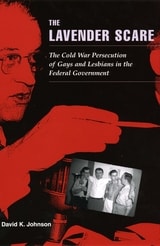
The Lavender Scare
The Cold War Persecution of Gays and Lesbians in the Federal GovernmentDavid K. Johnson
University of Chicago Press, 2003
Historian David K. Johnson here relates the frightening, untold story of how, during the Cold War, homosexuals were considered as dangerous a threat to national security as Communists. Charges that the Roosevelt and Truman administrations were havens for homosexuals proved a potent political weapon, sparking a "Lavender Scare" more vehement and long-lasting than McCarthy's Red Scare. Relying on newly declassified documents, years of research in the records of the National Archives and the FBI, and interviews with former civil servants, Johnson recreates the vibrant gay subculture that flourished in New Deal-era Washington and takes us inside the security interrogation rooms where thousands of Americans were questioned about their sex lives. The homosexual purges ended promising careers, ruined lives, and pushed many to suicide. But, as Johnson also shows, the purges brought victims together to protest their treatment, helping launch a new civil rights struggle.
The Lavender Scare shatters the myth that homosexuality has only recently become a national political issue, changing the way we think about both the McCarthy era and the origins of the gay rights movement. And perhaps just as importantly, this book is a cautionary tale, reminding us of how acts taken by the government in the name of "national security" during the Cold War resulted in the infringement of the civil liberties of thousands of Americans.
The Lavender Scare
The Cold War Persecution of Gays and Lesbians in the Federal GovernmentDavid K. Johnson
University of Chicago Press, 2023
In The Lavender Scare, David K. Johnson tells the frightening story of how, during the Cold War, homosexuals were considered as dangerous a threat to national security as Communists. Charges that the Roosevelt and Truman administrations were havens for homosexuals proved a potent political weapon, sparking a “Lavender Scare” more vehement and long-lasting than Joseph McCarthy’s Red Scare. Drawing on declassified documents, years of research in the records of the National Archives and the FBI, and interviews with former civil servants, Johnson recreates the vibrant gay subculture that flourished in midcentury Washington and takes us inside the security interrogation rooms where anti-homosexual purges ruined the lives and careers of thousands of Americans. This enlarged edition of Johnson’s classic work of history—the winner of numerous awards and the basis for an acclaimed documentary broadcast on PBS—features a new epilogue, bringing the still-relevant story into the twenty-first century.
The Law and the Prophets
Black Consciousness in South Africa, 1968–1977Daniel Magaziner
Ohio University Press, 2010
“No nation can win a battle without faith,” Steve Biko wrote, and as Daniel R. Magaziner demonstrates in The Law and the Prophets, the combination of ideological and theological exploration proved a potent force.
The 1970s are a decade virtually lost to South African historiography. This span of years bridged the banning and exile of the country’s best-known antiapartheid leaders in the early 1960s and the furious protests that erupted after the Soweto uprisings of June 16, 1976. Scholars thus know that something happened—yet they have only recently begun to explore how and why.
The Law and the Prophets is an intellectual history of the resistance movement between 1968 and 1977; it follows the formation, early trials, and ultimate dissolution of the Black Consciousness movement. It differs from previous antiapartheid historiography, however, in that it focuses more on ideas than on people and organizations. Its singular contribution is an exploration of the theological turn that South African politics took during this time. Magaziner argues that only by understanding how ideas about race, faith, and selfhood developed and were transformed in this period might we begin to understand the dramatic changes that took place.
The Law of Ancient Athens
David D. Phillips
University of Michigan Press, 2013
The Law of Ancient Athens contains the principal literary and epigraphical sources, in English, for Athenian law in the Archaic and Classical periods, from the first known historical trial (late seventh century) to the fall of the democracy in 322 BCE.
This accessible and important volume is designed for teachers, students, and general readers interested in the ancient Greek world, the history of law, and the history of democracy, an Athenian invention during this period. Offering a comprehensive treatment of Athenian law, it assumes no prior knowledge of the subject and is organized in user-friendly fashion, progressing from the person to the family to property and obligations to the gods and to the state. David D. Phillips has translated all sources into English, and he has added significant introductory and explanatory material.
Topics covered in the book include homicide and wounding; theft; marriage, children, and inheritance; citizenship; contracts and commerce; impiety; treason and other offenses against the state; and sexual offenses including rape and prostitution. The volume’s unique feature is its presentation of the actual primary sources for Athenian laws, with many key or disputed terms rendered in transliterated Greek. The translated sources, together with the topical introductions, notes, and references, will facilitate both research in the field and the teaching of increasingly popular courses on Athenian law and law in the ancient world.
The Law of God
The Philosophical History of an IdeaRémi Brague
University of Chicago Press, 2007
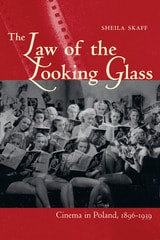
The Law of the Looking Glass
Cinema in Poland, 1896–1939Sheila Skaff
Ohio University Press, 2008
The Law of the Looking Glass: Cinema in Poland, 1896–1939 reveals the complex relationship between nationhood, national language, and national cinema in Europe before World War II. Author Sheila Skaff describes how the major issues facing the region before World War I, from the relatively slow pace of modernization to the desire for national sovereignty, shaped local practices in film production, exhibition, and criticism. She goes on to analyze local film production, practices of spectatorship in large cities and small towns, clashes over language choice in intertitles, and controversy surrounding the first synchronized sound experiments before World War I. Skaff depicts the creation of a national film industry in the newly independent country, the golden years of the silent cinema, the transition from silent to sound film—and debates in the press over this transition—as well as the first Polish and Yiddish “talkies.” She places particular importance on conflicts in majority-minority relations in the region and the types of collaboration that led to important films such as The Dybbuk and The Ghosts.
The Law of the Looking Glass: Cinema in Poland, 1896–1939 is the first comprehensive history of the country’s film industry before World War II. This history is characterized by alternating periods of multilingual, multiethnic production, on the one hand, and rejection of such inclusiveness, on the other. Through it all, however, runs a single unifying thread: an appreciation for visual imagery.
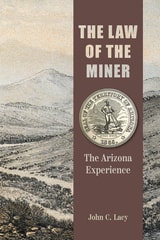
The Law of the Miner
The Arizona ExperienceJohn C. Lacy
University of Nevada Press, 2026
The first adventurers into the New World faced a fundamental legal challenge: how to secure rights to any mineral claims they discovered. Early conquistadors worked under charters that required them to return a portion of their findings to the Spanish crown, but those without such charters had no formal protection—and the crown was slow to clarify individual rights. This uncertainty only grew as miners pushed into the lands that would become the Western United States.
When gold was discovered in California, miners suddenly found themselves operating without any governing laws during the period between the end of the war with Mexico and the establishment of formal U.S. jurisdiction. In response, and without official sanction, they formed self-governing “mining districts,” best understood as mutual protection societies. These districts marked the first organized attempt to define boundaries and create rules for establishing and maintaining mining claims. As the early rushes in California and Nevada subsided, miners carried these practices with them into Arizona and other western territories.
In Arizona, no comprehensive collection of these early regulations has ever existed. The Law of the Mineraddresses this gap by tracing the development of mineral law in early Arizona and presenting the full text of every mining district regulation that could be found. This work serves both the mining industry and historians seeking to identify the individuals involved in creating the districts and to understand these districts’ historical boundaries.
The Law of the Other
The Mixed Jury and Changing Conceptions of Citizenship, Law, and KnowledgeMarianne Constable
University of Chicago Press, 1994
The "mixed jury" doctrine allowed resident foreigners to have law suits against English natives tried before juries composed half of natives and half of aliens like themselves. As she traces the transformations in this doctrine from the Middle Ages to its abolition in 1870, Constable also reveals the emergence of a world where law rooted in actual practices and customs of communities is replaced by law determined by officials, where juries no longer strive to speak the truth but to ascertain the facts.
The Law under the Swastika
Studies on Legal History in Nazi GermanyMichael Stolleis
University of Chicago Press, 1997
Stolleis studies a wide range of legal fields—constitutional, judicial, agrarian, administrative, civil, and business—arguing that all types of law were affected by the political realities of National Socialism. Moreover, he shows that legal traditions were not relinquished immediately with the onset of a new regime. For the first time we can see clearly the continuities between the Nazi period and the postwar period. The law under National Socialism did not make a complete break with the law during the Weimar Republic, nor did the law of the Federal Republic nullify all of the laws under National Socialism. Through a rich and subtle investigation, Stolleis shows how the legal profession and the political regime both reacted to the conditions of the period and molded the judicial system accordingly.
Breaking the conspiracy of silence held by the justices in the postwar period, Stolleis stresses the importance of researching Nazi law in order to confront ethical problems in today's legal profession.
The Laws of Cool
Knowledge Work and the Culture of InformationAlan Liu
University of Chicago Press, 2004
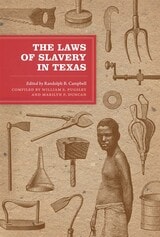
The Laws of Slavery in Texas
Historical Documents and EssaysEdited by Randolph B. Campbell
University of Texas Press, 2010
The laws that governed the institution of slavery in early Texas were enacted over a fifty-year period in which Texas moved through incarnations as a Spanish colony, a Mexican state, an independent republic, a part of the United States, and a Confederate state. This unusual legal heritage sets Texas apart from the other slave-holding states and provides a unique opportunity to examine how slave laws were enacted and upheld as political and legal structures changed. The Laws of Slavery in Texas makes that examination possible by combining seminal historical essays with excerpts from key legal documents from the slave period and tying them together with interpretive commentary by the foremost scholar on the subject, Randolph B. Campbell.
Campbell's commentary focuses on an aspect of slave law that was particularly evident in the evolving legal system of early Texas: the dilemma that arose when human beings were treated as property. As Campbell points out, defining slaves as moveable property, or chattel, presented a serious difficulty to those who wrote and interpreted the law because, unlike any other form of property, slaves were sentient beings. They were held responsible for their crimes, and in numerous other ways statute and case law dealing with slavery recognized the humanness of the enslaved. Attempts to protect the property rights of slave owners led to increasingly restrictive laws—including laws concerning free blacks—that were difficult to uphold. The documents in this collection reveal both the roots of the dilemma and its inevitable outcome.