Results by title
3576 books match the query 'American' and 770 start with t
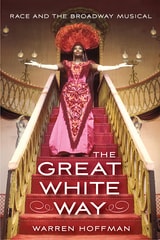
The Great White Way
Race and the Broadway MusicalHoffman, Warren
Rutgers University Press, 2014
Broadway musicals are one of America’s most beloved art forms and play to millions of people each year. But what do these shows, which are often thought to be just frothy entertainment, really have to say about our country and who we are as a nation?
The Great White Way is the first book to reveal the racial politics, content, and subtexts that have haunted musicals for almost one hundred years from Show Boat (1927) to The Scottsboro Boys (2011). Musicals mirror their time periods and reflect the political and social issues of their day. Warren Hoffman investigates the thematic content of the Broadway musical and considers how musicals work on a structural level, allowing them to simultaneously present and hide their racial agendas in plain view of their audiences. While the musical is informed by the cultural contributions of African Americans and Jewish immigrants, Hoffman argues that ultimately the history of the American musical is the history of white identity in the United States.
Presented chronologically, The Great White Way shows how perceptions of race altered over time and how musicals dealt with those changes. Hoffman focuses first on shows leading up to and comprising the Golden Age of Broadway (1927–1960s), then turns his attention to the revivals and nostalgic vehicles that defined the final quarter of the twentieth century. He offers entirely new and surprising takes on shows from the American musical canon—Show Boat (1927), Oklahoma! (1943), Annie Get YourGun (1946), The Music Man (1957), West Side Story (1957), A Chorus Line (1975), and 42nd Street (1980), among others.
New archival research on the creators who produced and wrote these shows, including Leonard Bernstein, Jerome Robbins, Stephen Sondheim, and Edward Kleban, will have theater fans and scholars rethinking forever how they view this popular American entertainment.
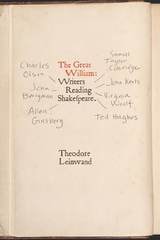
The Great William
Writers Reading ShakespeareTheodore Leinwand
University of Chicago Press, 2016
Theodore Leinwand builds impressively detailed accounts of these writers’ experiences through their marginalia, lectures, letters, journals, and reading notes. We learn why Woolf associated reading Shakespeare with her brother Thoby, and what Ginsberg meant when referring to the mouth feel of Shakespeare’s verse. From Hughes’s attempts to find a “skeleton key” to all of Shakespeare’s plays to Berryman’s tormented efforts to edit King Lear, Leinwand reveals the palpable energy and conviction with which these seven writers engaged with Shakespeare, their moments of utter self-confidence and profound vexation. In uncovering these intense public and private reactions, The Great William connects major writers’ hitherto unremarked scenes of reading Shakespeare with our own.
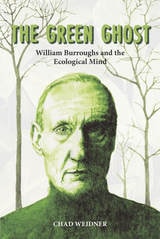
The Green Ghost
William Burroughs and the Ecological MindChad Weidner
Southern Illinois University Press, 2016
Using an ecocritical lens, Weidner explores the toxicity in Naked Lunch while at the same time teasing out latent ecological questions embedded in Burroughs’ later works. The author’s analysis of unknown and miniature “cut-ups,” texts that have been disassembled and rearranged to create new passages, provides a novel understanding of these cryptic forms. Weidner also examines in detail books by Burroughs that have been virtually ignored by critics, exposing the deep ecology of the Beat writer’s vision.
In calling attention to Burroughs’s narrative strategies that link him to an environmental political position, The Green Ghost demonstrates that the work of the Beat writer is a ripe source for ecocritical dialogue.
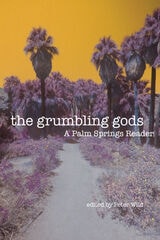
The Grumbling Gods
A Palm Springs ReaderPeter Wild
University of Utah Press, 2007
The Grumbling Gods surveys the history and allure of Palm Springs, beginning with the Cahuilla Indians, the first historical residents of the region. It includes accounts from the early explorers, a report of mysterious shipwrecks amidst the sand dunes, and selections from the grimly rollicking writings of Raymond Chandler. It penetrates the tinsel of casinos and the placidity of gated golf communities to reveal the painful beauty of deserts and mountains under assault.
Francisco Patencio, the last of the traditional Cahuilla Indians, warned his white neighbors to be careful, that the grim gods inhabiting the canyons around Palm Springs were angry. It is their grumbling, at once chilling and prophetic, and yet sometimes humorous, that we hear from the pages of this book.
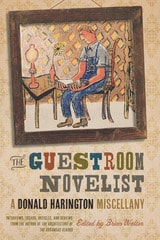
The Guestroom Novelist
A Donald Harington MiscellanyDonald Harington
University of Arkansas Press, 2019
Donald Harington, best known for his fifteen novels, was also a prolific writer of essays, articles, and book reviews.
The Guestroom Novelist: A Donald Harington Miscellany gathers a career-spanning and eclectic selection of nonfiction by the Arkansawyer novelist Donald Harington that reveals how a life of devastating losses and disappointments inspired what the Boston Globe called the “quirkiest, most original body of work in contemporary US letters.”
This extensive collection of interviews and other works of prose—many of which are previously unpublished—offers glimpses into Harington’s life, loves, and favorite obsessions, replays his minor (and not so minor) dramas with literary critics, and reveals the complicated and sometimes contentious relationship between his work of the writers he most admired. The Guestroom Novelist, which takes its title from an essay that serves as a love letter to his fellow underappreciated writers, paints a rich portrait of the artist as a young, middle-aged, and fiercely funny old man, as well as comic, sentimentalist, philosopher, and critic, paying testimony to the writer’s magnificent ability to transform the seemingly crude stuff of our material existence into enduring art.
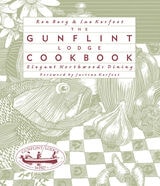
The Gunflint Lodge Cookbook
Elegant Northwoods DiningRon Berg
University of Minnesota Press, 1997
Tantalizing cuisine from the renowned restaurant.
The Gunflint Lodge is Minnesota’s premier resort because of its pristine wilderness location, warm hospitality, and access to some of the finest fishing in the world. Visitors come from across the country not just for the outdoor activities, but for the food served in its rustic lodge.
Whether it’s Opening Day Walleye Fillets with Morel Mushroom Cream Sauce, or Roast Breast of Chicken Pistache with Blackberry Sauce, the Gunflint’s elegant menu, featured recently in Bon Appétit, Men's Journal , and Midwest Living, has won acclaim for inventiveness and sense of northwoods style.
The Gunflint Lodge Cookbook is a “reader’s cookbook,” organized by season with introductory essays by chef Ron Berg. Berg delights in adding fresh Minnesota ingredients to his Gunflint Blueberry Pie and his Wild Rice and Smoked Chicken Soup. There is an extensive section on fish cookery, including tips on frying, sautéing, and grilling, and recipes for a selection of breads, batters, and sauces for fish.
The Gunflint Lodge Cookbook is more than just recipes, however. Resort owner Sue Kerfoot writes about life at the lodge, feeding hungry visitors, and running a gourmet kitchen far from civilization. Justine Kerfoot’s (Woman of the Boundary Waters) introduction looks at lodge history stretching back to 1927, including filling the icehouse, securing ingredients, and pinch-hitting when the chef quits mid-season.
The Gunflint Lodge Cookbook will delight readers with tasty offerings and favorite anecdotes of life on the Gunflint Trail.
The HOUSE OF SONG
POEMSDavid Wagoner
University of Illinois Press, 2002
In The House of Song, he offers a hundred new poems in six parts. At turns elegiac, comic, and nostalgic, these poems venture to the seemingly infinitesimal points where people, legends, and culture collide with nature, memory, and action.
With characteristic wit and brevity, Wagoner chronicles the material invasions of the natural world, reconsidering Thoreau amid ruminations on voyeurs and destroyers, slug watchers and moth collectors.
The House of Song asserts Wagoner's place among the finest of American poets, past and present.
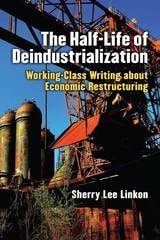
The Half-Life of Deindustrialization
Working-Class Writing about Economic RestructuringSherry Lee Linkon
University of Michigan Press, 2018
Through analysis of poetry, fiction, creative nonfiction, film, and drama, The Half-Life of Deindustrialization shows why people and communities cannot simply “get over” the losses of economic restructuring. The past provides inspiration and strength for working-class people, even as the contrast between past and present highlights what has been lost in the service economy. The memory of productive labor and stable, proud working-class communities shapes how people respond to contemporary economic, social, and political issues. These stories can help us understand the resentment, frustration, pride, and persistence of the American working class.
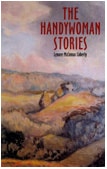
The Handywoman Stories
Lenore McComas Coberly
Ohio University Press, 2002
Sometimes it's possible to pick up a book and hear the words being spoken by the characters as if you were sitting across the table from them. This is the sensation you'll have as you read through The Handywoman Stories by Lenore McComas Coberly.
Whether the story describes the civil defense preparations of a small West Virginia town in World War II, the same town years later dealing with an influx of hippies, or the return of a woman to her roots after decades up north, the voices are convincing and true. “I nearly got kicked in the head by a cow before I learned that if you use your full strength pulling milk, you won’t get much milk,” says one. “To see Zevelda the way she was that Sunday is, well, not something you're very likely to see,” says another.
The Handywoman Stories themselves are driven by characters shaped by the place they have lived most all of their lives. They deal with economic depression, mine and war deaths, the arrogance of community leaders, and what might have been, but was not, a stultifying environment. Their tools are astonishing resourcefulness, steadfast friendship, and always humor.
Lenore McComas Coberly has woven together a bittersweet community of strong Appalachian women and men in this remarkable collection. Moving and joyful, these stories are made from the stuff of life.
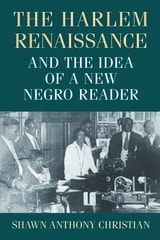
The Harlem Renaissance and the Idea of a New Negro Reader
Shawn Anthony Christian
University of Massachusetts Press, 2016
Many scholars have written about the white readers and patrons of the Harlem Renaissance, but during the period many black writers, publishers, and editors worked to foster a cadre of African American readers, or in the poet Sterling Brown's words, a “reading folk.” Black newspapers featured columns that reviewed the latest African American fiction. Magazines held writing contests to urge black readers to participate in the literary culture. Through newspapers, journals, and anthologies, writers such as James Weldon Johnson, Jessie Fauset, and Gwendolyn Bennett spoke directly to their fellow African Americans to cultivate interest in literature and the intellectual tools for reading it.
In The Harlem Renaissance and the Idea of a New Negro Reader, Shawn Anthony Christian argues that print-based addresses to African Americans are a defining but understudied component of the Harlem Renaissance. Especially between 1919 and 1930, these writers promoted diverse racial representation as a characteristic of “good literature” both to exhibit black literacy and to foster black readership. Drawing on research from print culture studies, histories of racial uplift, and studies of modernism, Christian demonstrates the importance of this focus on the African American reader in influential periodicals such as The Crisis and celebrated anthologies such as The New Negro. Christian illustrates that the drive to develop and support black readers was central in the poetry, fiction, and drama of the era.
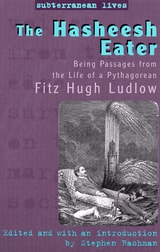
The Hasheesh Eater
Being Passages from the Life of a PythagoreanRachman, Stephen
Rutgers University Press, 2006
In this first scholarly edition, editor Stephen Rachman positions Ludlow's enduring work as not just a chronicle of drug use but also as a window into the budding American bohemian literary scene. A lucid introduction explores the breadth of Ludlow's classical learning as well as his involvement with the nineteenth-century subculture that included fellow revelers such as Walt Whitman and the pianist Louis Gottshalk. With helpful annotations guiding readers through the text's richly allusive qualities and abundance of references, this edition is ideal for classroom use as well as for general readers.
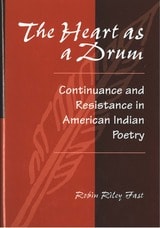
The Heart as a Drum
Continuance and Resistance in American Indian PoetryRobin Riley Fast
University of Michigan Press, 2000
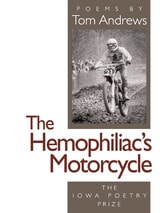
The Hemophiliac's Motorcycle
Tom Andrews
University of Iowa Press, 1994
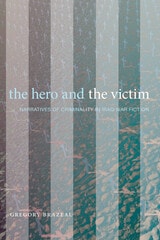
The Hero and the Victim
Narratives of Criminality in Iraq War FictionGregory Brazeal
Lever Press, 2024
The emphasis on soldier criminality in Iraq War fiction can be partly explained by the rise of moral cosmopolitanism and its blurring of the traditional conceptual lines between war and crime. The anti-war literature of the twentieth century often presented fallen soldiers on both sides equally as victims and viewed the distinction between heroes and villains as part of the illusion that battlefield experience strips away. Written in the long shadow of Nuremberg, Iraq War fiction grapples with the possibility that the soldiers on one’s own side may not be the heroes in the story, or even the victims, but participants in a wrong, and perhaps even complicit in crimes. The Hero and the Victim contributes to the ongoing, public reexamination of American traditions by confronting a topic that has, up to now, been largely untouched: the moral celebration of military service.
The Hero and the Victim explores the theme of soldier criminality through close readings of several works by American authors, including Kevin Powers’s The Yellow Birds, Phil Klay’s Redeployment, Helen Benedict’s Sand Queen, Chris Kyle’s American Sniper, and Roy Scranton’s War Porn. This volume will be an essential text for students of American literature, historians of war culture, and any scholar interested in representations of the Iraq War.
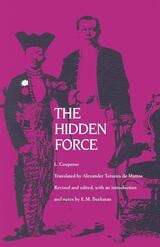
The Hidden Force
L. Couperus
University of Massachusetts Press, 1985
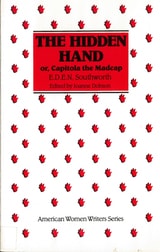
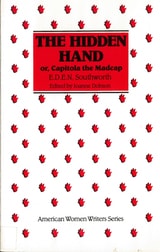
The Hidden Hand
Or, Capitola the Madcap by E. D. E. N. SouthworthDobson, Joanne
Rutgers University Press, 1988
E.D.E.N. Southworth was one of the most popular and prolific writers of the nineteenth century and her Capitola Black, or Black Cap - a cross-dressing, adventure-seeking girl-woman - was so well-loved that the book was serialized three times between 1859 and 1888 and was dramatized in forty different versions.
When we first meet sharp and witty Capitola she is living among beggars and street urchins, and dressed as a boy because a boy can get work and be safe, whereas a girl is left to starve for want of "proper" employment. Unknown to her, Capitola has a very rich elderly guardian who finds her at a providential moment and takes her back to his palatial mansion where she finds herself "decomposing above ground for want of having my blood stirred." But not to fear. There are bandits, true-loves, evil men, long-lost mothers, and sweet women friends in Capitola's future - not to mention thunder storms, kidnap attempts, and duels.
The pace is fast, the action wonderfully unbelievable. This is escape literature at its nineteenth-century best, with a woman at its center who makes you feel strong, daring, and reckless.
The Hidden Hand
Or, Capitola the Madcap by E. D. E. N. SouthworthDobson, Joanne
Rutgers University Press, 1988
The Hidden Model
David Yezzi
Northwestern University Press, 2003
The History of Intimacy
PoemsGabeba Baderoon
Northwestern University Press, 2021
Born on the coastal shores of Port Elizabeth, Baderoon is one of South Africa’s most acclaimed literary voices. In The History of Intimacy—originally published by Kwela Books—she crafts resonant poems about a writer’s beginnings, love across boundaries, and “how not to be alone.”
The Hoarders
Material Deviance in Modern American CultureScott Herring
University of Chicago Press, 2014
In The Hoarders, Scott Herring provides an in-depth examination of how modern hoarders came into being, from their onset in the late 1930s to the present day. He finds that both the idea of organization and the role of the clutterologist are deeply ingrained in our culture, and that there is a fine line between clutter and deviance in America. Herring introduces us to Jill, whose countertops are piled high with decaying food and whose cabinets are overrun with purchases, while the fly strips hanging from her ceiling are arguably more fly than strip. When Jill spots a decomposing pumpkin about to be jettisoned, she stops, seeing in the rotting, squalid vegetable a special treasure. “I’ve never seen one quite like this before,” she says, and looks to see if any seeds remain. It is from moments like these that Herring builds his questions: What counts as an acceptable material life—and who decides? Is hoarding some sort of inherent deviation of the mind, or a recent historical phenomenon grounded in changing material cultures? Herring opts for the latter, explaining that hoarders attract attention not because they are mentally ill but because they challenge normal modes of material relations. Piled high with detailed and, at times, disturbing descriptions of uncleanliness, The Hoarders delivers a sweeping and fascinating history of hoarding that will cause us all to reconsider how we view these accumulators of clutter.
The Hollow Log Lounge
POEMSR. T. Smith
University of Illinois Press, 2003
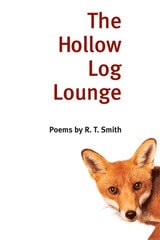
The men and women who live and work near Opelika, Alabama, gather at the Hollow Log Lounge. There, under the watchful eye of the stuffed fox behind the bar, they unload their gripes and worries, tell their stories, argue, joke, commune, complain, and confess.
In this collection of poems, R. T. Smith paints a vividly imagined portrait of the community in this small-town bar, capturing the chorus of the patrons' voices echoing off the knotted wood-paneled walls. Smith's stand-in, Sam Buckhannon, scribbles stories heard and overheard as tongues loosened by liquor spin out monologues in which southern idiom and vernacular seem perfectly at home within the constraints of measured verse.
The Holocaust and the Book
Destruction and PreservationJonathan Rose
University of Massachusetts Press, 2001
Between 1933 and 1945, Nazi Germany systematically destroyed an estimated 100 million books throughout occupied Europe, an act that was inextricably bound up with the murder of 6 million Jews. By burning and looting libraries and censoring “un-German” publications, the Nazis aimed to eradicate all traces of Jewish culture along with the Jewish people themselves.
The Holocaust and the Book examines this bleak chapter in the history of printing, reading, censorship, and libraries. Topics include the development of Nazi censorship policies, the celebrated library of the Vilna ghetto, the confiscation of books from the Sephardic communities in Rome and Salonika, the experience of reading in the ghettos and concentration camps, the rescue of Polish incunabula, the uses of fine printing by the Dutch underground, and the suppression of Jewish books and authors in the Soviet Union. Several authors discuss the continuing relevance of Nazi book burnings to the present day, with essays on German responses to Friedrich Nietzsche and the destruction of Bosnian libraries in the 1990s.
The collection also includes eyewitness accounts by Holocaust survivors and a translation of Herman Kruk's report on the Vilna ghetto library. An annotated bibliography offers readers a concise guide to research in this growing field.
The Holocaust of Texts
Genocide, Literature, and PersonificationAmy Hungerford
University of Chicago Press, 2002
Hungerford examines the implications of conflating texts with people in a broad range of texts: Art Spiegelman's Maus; Ray Bradbury's Fahrenheit 451; the poetry of Sylvia Plath; Binjamin Wilkomirski's fake Holocaust memoir Fragments; and the fiction of Saul Bellow, Philip Roth, and Don DeLillo. She considers the ethical consequences of this trend in the work of recent and contemporary theorists and literary critics as well, including Cathy Caruth, Jacqueline Rose, Jacques Derrida, and Paul de Man. What she uncovers are fundamentally flawed ideas about representation that underwrite and thus undermine powerful and commonly accepted claims about literature and identity. According to Hungerford, the personification of texts is ethically corrosive and theoretically unsound. When we exalt the literary as personal and construe genocide as less a destruction of human life than of culture, we esteem memory over learning, short-circuit debates about cultural change, lend credence to the illusion or metaphysics of presence, and limit our conception of literature and its purpose.
Ultimately, The Holocaust of Texts asks us to think more deeply about the relationship between reading, experience, and memorialization. Why, for instance, is it more important to remember acts of genocide than simply to learn about them? If literary works are truly the bearers of ontology, then what must be our conduct toward them? Considering difficult questions such as these with fresh logic, Hungerford offers us an invigorating work, one that will not only interest scholars of American and postwar literature, but students of the Holocaust and critical theory as well.
The Holy Surprise of Right Now
Selected and New PoemsSamuel Hazo
University of Arkansas Press, 1996
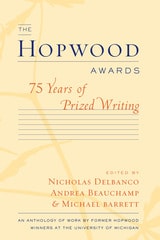
The Hopwood Awards
75 Years of Prized WritingEdited by Nicholas Delbanco, Andrea Beauchamp, and Michael Barrett
University of Michigan Press, 2006
-Arthur Miller
The Hopwood Awards claim a gallery of prizewinners who rose to become the Who's Who of writers of the last three generations: Max Apple, John Ciardi, Mary Gaitskill, Robert Hayden, Laura Kasischke, Jane Kenyon, Arthur Miller, Howard Moss, Frank O'Hara, Marge Piercy, Ronald Wallace, and Nancy Willard, among many others.
Since they first began in 1931, funded by a bequest from the will of playwright Avery Hopwood, University of Michigan Class of 1905, the Hopwood Awards have grown in profile and stature to become one of the most sought after and celebrated writing prizes for students.
The Hopwood Awards: 75 Years of Prized Writing collects-for the first time in one volume-poetry and prose by writers who won Hopwood Awards when they were students at the University of Michigan and who went on to achieve fame as writers.
Nicholas Delbanco is Professor of English and Director of the Hopwood Program at the University of Michigan. He is author or editor of numerous books, including Anywhere Out of the World: Essays on Travel, Writing, Death;The Sincerest Form; and The Writing Life: The Hopwood Lectures.
Andrea Beauchamp is Program Associate at the Hopwood Program, and Michael Barrett is Associate Editor at the Hopwood Program, University of Michigan.
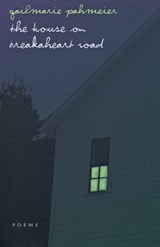
The House On Breakaheart Road
PoemsGailmarie Pahmeier
University of Nevada Press, 1998
The House of Breath
William Goyen
Northwestern University Press, 1999
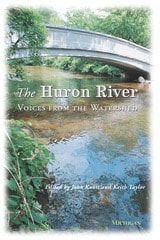
The Huron River
Voices from the WatershedJohn Knott and Keith Taylor, Editors
University of Michigan Press, 2000
"The Huron River . . . was called 'Cos-scut-e-nong Sebee'. . . . [It] is a beautiful, transparent stream, passing alternatively through rich bottoms, openings, plains, and sloping woodlands, covered with heavy timber."
---History of Washtenaw County, Michigan, 1881
The Huron River---stretching 130 miles through three counties---has inspired numerous writers throughout the nineteenth and twentieth centuries. Contained here is a collection of new poems, essays, and stories, accompanied by maps, photographs, and illustrations that celebrate the Huron River. Over twenty locally and nationally known literary figures, including Alice Fulton and Charles Baxter, have contributed to this volume. In addition, the work of biologists, naturalists, and even an arche-ologist have been included to give a richer sense of the physical and cultural environment.
Each of these writers reminds us that our lives are more intertwined with the river and its watershed than we might think. The Huron River opens with these words: "Watersheds are the oldest and most durable markers of place. . . . These boundaries affect our lives by defining our natural environment, not only its topography but its soils, its plant and animal life, and to some extent its weather. The water that sustains most of us is the water that flows through our local watershed."
And the river's strength is wondrous unto itself. "The water will always be there, and it will always find its way down," writer Gary Snyder tells us. The river is sometimes visible, sometimes not; yet it "is alive and well under the city streets, running in giant culverts."
John Knott is Professor of English, University of Michigan. After working as a bookseller for twenty years, Keith Taylor now teaches writing part-time for the University of Michigan and works as a freelance writer.
The Imaginary and Its Worlds
American Studies after the Transnational TurnEdited by Laura Bieger, Ramón Saldívar, and Johannes Voelz
Dartmouth College Press, 2013
The Imaginative Prose of Oliver Wendell Holmes
Michael A. Weinstein
University of Missouri Press, 2006
The Imprint of Another Life
Adoption Narratives and Human PossibilityMargaret Homans
University of Michigan Press, 2015
The Imprint of Another Life: Adoption Narratives and Human Possibilityaddresses a series of questions about common beliefs about adoption. Underlying these beliefs is the assumption that human qualities are innate and intrinsic, an assumption often held by adoptees and their families, sometimes at great emotional cost. This book explores representations of adoption—transracial, transnational, and domestic same-race adoption—that reimagine human possibility by questioning this assumption and conceiving of alternatives.
Literary scholar Margaret Homans examines fiction making’s special relationship to themes of adoption, an “as if” form of family making, fabricated or fictional instead of biological or “real.” Adoption has tended to generate stories rather than uncover bedrock truths. Adoptive families are made, not born; in the words of novelist Jeanette Winterson, “adopted children are self-invented because we have to be.” In attempting to recover their lost histories and identities, adoptees create new stories about themselves. While some believe that adoptees cannot be whole unless they reconnect with their origins, others believe that privileging biology reaffirms hierarchies (such as those of race) that harm societies and individuals. Adoption is lived and represented through an irresolvable tension between belief in the innate nature of human traits and belief in their constructedness, contingency, and changeability. The book shows some of the ways in which literary creation, and a concept of adoption as a form of creativity, manages this tension.
The texts examined include fiction (e.g., classic novels such as Silas Marner, What Maisie Knew, and Beloved); memoirs by adoptees, adoptive parents, and birthmothers; drama, documentary films, advice manuals, social science writing; and published interviews with adoptees, parents, and birth parents. Along the way the book tracks the quests of adoptees who, whether or not they meet their original families, must construct their own stories rather than finding them; follows transnational adoptees as they return, hopes held high, to Korea and China; looks over the shoulders of a generation of girls adopted from China as they watch Disney’s iconic Mulan, with its alluring story of destiny written on the skin; and listens to birthmothers as they struggle to tell painful secrets held for decades.
This book engages in debates within adoption studies, women’s and gender studies, transnational studies, and ethnic studies; it will appeal to literary scholars and critics, including specialists in memoir or narrative theory, and to general readers interested in adoption and in race.
The Incorporative Consciousness of Robert Bly
Victoria Frenkel Harris
Southern Illinois University Press, 1991
Victoria Frenkel Harris traces the aesthetic journey of poet Robert Bly from his early structured works of mystical imagery and lyrical landscapes to his recent explorations of intimate relationships and male socialization.
Examining the various ways Bly’s prose poems articulate his opposition to the Vietnam War and his recent writings manipulate more formal patterns in detailing the intricacies of human relationships, Harris labels this evolution in form, subject, and imagery the incorporative consciousness, incorporative because it assimilates Jungian psychological categories, international poetic traditions, and a compelling breadth of topics.
Harris relies in part on contemporary feminist theory to throw revealing new light on Bly’s recent works. Though sympathetic to Bly, Harris finds that—in spite of his affirmation of the interaction of psychic, creative, and intellectual energies in both sexes—the poet’s later, erotic poems tend to objectify women in counterproductive ways. Bly’s idealization of woman as a Jungian universal, Harris contends, can blind him toward actual women.
Harris is at her best as she delimits with balance and precision the full complexity of the poet’s work.
The Infinity Room
Gary Fincke
Michigan State University Press, 2019
The Innocent Midwest
Culture, Region, and Identity, 1793–1930Marcia Noe
Ohio University Press, 0
The Innocent Midwest delves into one of the most enduring stereotypes in American cultural history: the image of the Midwest as a bastion of innocence. Despite its share of social, political, and economic complexities, the region has long been portrayed as wholesome, virtuous, and peace loving—a perception that has persisted from its pastoral beginnings through industrialization and into the digital age.
This book traces the roots and evolution of that myth, arguing that the Midwest’s innocent image has been carefully cultivated through American popular and high culture. From literature and film to music and visual art, the trope of the innocent Midwesterner has shaped national perceptions of the region for over a century. Focusing on literature from 1793 to the 1920s, the book explores how this character type emerged, evolved, and eventually confronted the disillusionment of the machine age.
Organized thematically, the book examines early frontier narratives, stories of Midwesterners abroad, Progressive Era ideals of neighborliness, immigrant and migrant experiences, and the eventual unraveling of the pastoral dream. It reveals how the myth of innocence was underpinned by a constellation of values—agrarianism, Christian morality, and a belief in education—that supported the Jeffersonian vision of a democratic, virtuous citizenry.
Rather than offering a sweeping theory of regional identity, The Innocent Midwest focuses on the recurring literary figure of the innocent Midwesterner—an individual shaped by the land and striving for self-actualization. The book draws both on canonical authors like Mark Twain, William Dean Howells, Booth Tarkington, Sinclair Lewis, Theodore Dreiser, and Willa Cather and on lesser-known voices such as Maria Susanna Cummins, David Graham Phillips, Elia W. Peattie, William Webb, Chief Luther Standing Bear, and Oscar Micheaux, whose works contributed to the cultural construction of the Midwest.
Through its nuanced exploration of literature and culture, this book offers a compelling account of how the Midwest came to symbolize innocence—and why that image continues to resonate in the American imagination.
The Inordinate Eye
New World Baroque and Latin American FictionLois Parkinson Zamora
University of Chicago Press, 2006
The New World Baroque combines indigenous, African, and European forms of expression, and, in the early decades of the twentieth century, Latin American writers began to recuperate its visual structures to construct an alternative account of modernity, using its hybrid forms for the purpose of creating a discourse of “counterconquest”—a postcolonial self-definition aimed at disrupting entrenched power structures, perceptual categories, and literary forms.
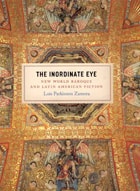
Zamora engages this process, discussing a wide range of visual forms—Baroque façades and altarpieces, portraits of saints and martyrs (including the self-portraits of Frida Kahlo), murals from indigenous artisans to Diego Rivera—to elucidate works of fiction by Borges, Carpentier, Lezama Lima, Sarduy, Garro, García Márquez, and Galeano, and also to establish a critical perspective external to their work. Because visual media are “other” to the verbal economy of modern fiction, they serve these writers (and their readers) as oblique means by which to position their fiction culturally, politically, and aesthetically.
The first study of its kind in scope and ambition, The Inordinate Eye departs radically from most studies of literature by demonstrating how transcultural conceptions of the visual image have conditioned present ways of seeing and reading in Latin America.

The Integrated Life
Essays, Sketches and PoemsThomas P. Beyer
University of Minnesota Press, 1948
The Integrated Life was first published in 1948. Minnesota Archive Editions uses digital technology to make long-unavailable books once again accessible, and are published unaltered from the original University of Minnesota Press editions.
This volume of essays and poems is representative of the work and life of their author, a professor of English at Hamline University and for any years chairman of the department.
Of the essays, some are personal, others works of literary appreciation, and still others discuss the profession of teaching, in particular the teaching of English; all reveal the man who wrote them.
At Hamlin Dr. Beyer and reading have been almost synonymous. He proposed the general reading course in 1921 and directed it for twelve years. Students alert to this form of inspiration found existing delight not only in the outside reading but in the discussions with faculty members which followed. Colleagues and off-campus friends also came under provocative influence of Dr. Beyer, and his guidance has been frequently and freely acknowledged.
When Dr. Beyer was honored in 1947 for his long fruitful association with Hamline University, a publication fund was established. It was unanimously agreed that a collection of Dr. Beyer's own essays, poems, and sketches should be the first venture. The Integrated Life is that volume. No attempt has been made to bring the material up to date. The collection appears as it was written—full of the flavor and wisdom of a truly honorable teacher and friend.
The Intimacy of Paper in Early and Nineteenth-Century American Literature
Jonathan Senchyne
University of Massachusetts Press, 2020
The Intimacy of Paper in Early and Nineteenth-Century American Literature reveals that book history and literary studies are mutually constitutive and proposes a new literary periodization based on materiality and paper production. In unpacking this history and connecting it to cultural and literary representations, Senchyne also explores how the textuality of paper has been used to make social and political claims about gender, labor, and race.
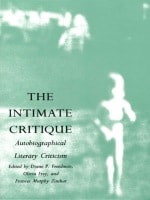
The Intimate Critique
Autobiographical Literary CriticismDiane P. Freedman, Olivia Frey, and Frances Murphy Zauhar, eds.
Duke University Press, 1993
Grounded in feminism and connected to the race, class, and gender paradigms in cultural studies, the twenty-six contributors to this volume—including Jane Tompkins, Henry Louis Gates, Jr., Shirley Nelson Garner, and Shirley Goek-Lin Lim—respond in new, refreshing ways to literary subjects ranging from Homer to Freud, Middlemarch to The Woman Warrior, Shiva Naipaul to Frederick Douglass. Revealing the beliefs and formative life experiences that inform their essays, these writers characteristically recount the process by which their opinions took shape--a process as conducive to self-discovery as it is to critical insight. The result—which has been referred to as "personal writing," "experimental critical writing," or "intellectual autobiography"—maps a dramatic change in the direction of literary criticism.
Contributors. Julia Balen, Dana Beckelman, Ellen Brown, Sandra M. Brown, Rosanne Kanhai-Brunton, Suzanne Bunkers, Peter Carlton, Brenda Daly, Victoria Ekanger, Diane P. Freedman, Olivia Frey, Shirley Nelson Garner, Henry Louis Gates, Jr., Melody Graulich, Gail Griffin, Dolan Hubbard, Kendall, Susan Koppelman, Shirley Geok-Lin Lim, Linda Robertson, Carol Taylor, Jane Tompkins, Cheryl Torsney, Trace Yamamoto, Frances Murphy Zauhar
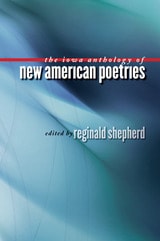
The Iowa Anthology of New American Poetries
Reginald Shepherd
University of Iowa Press, 2004
This landmark collection features emerging poets who combine a commitment to innovation and experimentation with a love for the lyric tradition, whose poetry transcends “mainstream” and avant-garde practice to create new and exciting poetic territories.
These new American poetries for the twenty-first century and beyond reach back toward the Modernists and even earlier lyric poetries (such as those of Wyatt, Donne, Keats, and Dickinson) and, simultaneously, reach forward to poetic possibilities not yet realized or even imagined. Most of the poets included here have won publication prizes, awards, and fellowships, and some have had their work anthologized. Others are at earlier stages of recognition but have published in major journals. All are writing highly accomplished work that will soon find a wider audience.
One distinguishing feature of this collection is the inclusion of substantial artistic statements from each contributor, in which the poets discuss their works, their influences, their aims, and their poetics. These statements are invaluable in giving readers a point of entry to the poems and can contribute to the development of a conversation among American poets that transcends questions of “craft” to address fundamental issues of poetry as an artistic practice.
Shepherd, a leading poet, essayist, and literary critic, is uniquely situated to bring us this important collection: young enough to feel the spirit of newer poets and yet established enough to bring a more experienced eye and a wider view to this groundbreaking project.The Iowa Anthology of New American Poetries highlights some of the most exciting, vital, and productive tendencies in contemporary American poetry and will be a significant milestone for students and teachers of poetry as well as for the general reader.
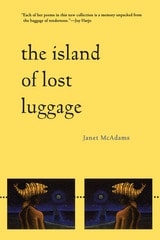
The Island of Lost Luggage
Janet McAdams
University of Arizona Press, 2000
the disappeared, the lost children, the Earharts
of modern life. It's your bad luck to die in the cold
wars of certain nations. But in the line at Unclaimed
Baggage, no one mourns for the sorry world
that sent them here . . ."
The abused. The oppressed. The terrified victims of institutionalized insanity. Making daring connections between the personal and the political, Janet McAdams draws new lines in the conflict between the new and old worlds as she redefines the struggle to remain human.
This award-winning collection of poetry forges surprising links among seemingly unrelated forms of violence and resistance in today's world: war in Central America, abuses against Nature, the battleground of the bedroom. McAdams evokes the absurdity of everyday existence as she sends out a new call for social responsibility.
The Island of Lost Luggage is the poetry winner of the 1999 First Book Awards competition of the Native Writers' Circle of the Americas.
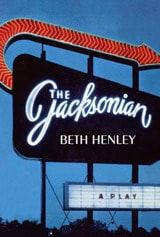
The Jacksonian
A PlayBeth Henley
Northwestern University Press, 2014
In The Jacksonian, Beth Henley returns to the Southern Gothic storytelling that made her reputation with both critics and audiences. Set in a seedy motel in Jackson, Mississippi, in 1964, the play centers around Rosy, a troubled teenager, and Bill, her dentist father who has been living at the motel for several months as his wife, Susan, considers the disgrace of divorce. Fred, the motel bartender, and Eva, a waitress, are locked in a gruesome pact: he’ll marry her if she agrees to help him evade punishment for a hideous crime. But Bill, turning to nitrous oxide to ease the pain of his life collapsing around him, is a convenient target for Eva’s desperate desire for companionship. At the height of the violence associated with the civil rights movement, these characters gradually reveal the shameful secrets and psychological turmoil just beneath the surface of their insistent Southern gentility.
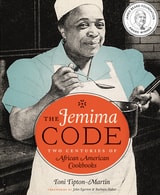
The Jemima Code
Two Centuries of African American CookbooksBy Toni Tipton-Martin; forewords by John Egerton and Barbara Haber
University of Texas Press, 2015
Winner, James Beard Foundation Book Award, 2016
Art of Eating Prize, 2015
BCALA Outstanding Contribution to Publishing Citation, Black Caucus of the American Library Association, 2016
Women of African descent have contributed to America’s food culture for centuries, but their rich and varied involvement is still overshadowed by the demeaning stereotype of an illiterate “Aunt Jemima” who cooked mostly by natural instinct. To discover the true role of black women in the creation of American, and especially southern, cuisine, Toni Tipton-Martin has spent years amassing one of the world’s largest private collections of cookbooks published by African American authors, looking for evidence of their impact on American food, families, and communities and for ways we might use that knowledge to inspire community wellness of every kind.
The Jemima Code presents more than 150 black cookbooks that range from a rare 1827 house servant’s manual, the first book published by an African American in the trade, to modern classics by authors such as Edna Lewis and Vertamae Grosvenor. The books are arranged chronologically and illustrated with photos of their covers; many also display selected interior pages, including recipes. Tipton-Martin provides notes on the authors and their contributions and the significance of each book, while her chapter introductions summarize the cultural history reflected in the books that follow. These cookbooks offer firsthand evidence that African Americans cooked creative masterpieces from meager provisions, educated young chefs, operated food businesses, and nourished the African American community through the long struggle for human rights. The Jemima Code transforms America’s most maligned kitchen servant into an inspirational and powerful model of culinary wisdom and cultural authority.
The Keep
Emily Wilson
University of Iowa Press, 2001
The poems in The Keep are influenced by art, by paintings, by “thinking about abstraction and figuration and the space between, beauty apprehended and lost, the divine apprehended and lost.” Emily Wilson's poems are also saturated with nature; from “the great oaks emptying, russet, gusseted” to “the caribou mov[ing] through us beyond numerous,” each image connects the natural world of tides and marshes and forests to the human world of documentation and preservation. The image of the keep as a place of safety and as a kind of prison also informs this very strong collection.
The Key to the City
Anne Winters
University of Chicago Press, 1985
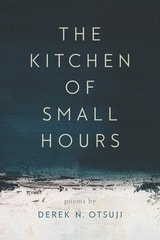
The Kitchen of Small Hours
Derek N. Otsuji
Southern Illinois University Press, 2021
In The Kitchen of Small Hours, Derek N. Otsuji embraces the fragility and endurance of a family of immigrants from two prefectures in Japan: Kagoshima in the south and Okinawa, an island more than four hundred miles from the mainland. In these poems, five generations sing, save, scold, bury, and cook against the culture and history that emerged from the pineapple and sugar cane plantations of mid-nineteenth-century Hawaii, from the bomb-scapes and hatreds of World War II, and from the canning and tourism industry of the twentieth century. Otsuji writes of how his family used stories and rugged cheer to fill the spaces apart from the cane fields and the canning factory. Their recipes, rituals, celebrations, songs, dances, myths, and family stories passed from grandmother to father to son, who folds them into lyrics.
Here too are whispers, failures, and traceable absences: a face removed from photos, a love silenced to be acceptable, a dead firstborn housed in an urn. There are things that no one intended to give. Otsuji’s language hungers for them anyway. The haunting reunions between author and ancestor sink just as deep as roots and hold just as fast. The cooking pot, the family photo, the moon recur as images that feed and comfort. Lyrical and warm, Otsuji’s voice sounds out a sinew of words that make the remnants of heritage and home durable. In these poems each new generation seeks to reimagine for itself the elusive American Dream
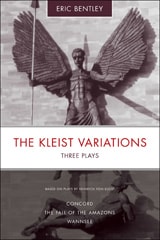
The Kleist Variations
Three PlaysEric Bentley
Northwestern University Press, 2005
Winner of 2006 Village Voice OBIE Awards Lifetime Achievement Award
In this collection, Eric Bentley presents Concord, a comedy adapted from Kleist's The Broken Jug;The Fall of the Amazons, a tragedy written in response to Kleist's Penthesilea; and Wannsee, a tragic-comedy which is Bentley's rendering of Kleist's Cathy of Heilbronn.
Bentley sets Concord in a courthouse during the early days of the Republic. Convened to discover who broke an irreplaceable jug symbolic of the chivalric age of Sir Walter Raleigh, Judge Adam's madcap court flounders in hilarious chaos induced by huge lies to cover comic lust.
Fall of the Amazons is the story of Achilles and the Amazon queen, Penthesilea. Through this pagan play, Bentley explores improbably love, which he exemplifies in the biblical story of Abraham and Isaac: "In seeming to be cruel to both father and son, God has enabled them to find, in total vulnerability, total love," a theme that also pervades Wannsee.
Bentley's Wannsee is a play of pageantry: emperors, counts, dueling knights, a young beauty of seemingly low birth, cherubs, and witches masked in loveliness. A fabulous love story ostensibly designed to dissuade Kleist from self-destruction, Wannsee demonstrates with a flourish that, though devils roam the earth, there are also angels.
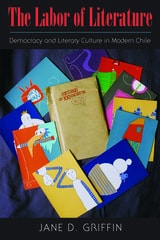
The Labor of Literature
Democracy and Literary Culture in Modern ChileJane D. Griffin
University of Massachusetts Press, 2016
By examining alternative literary publications, Griffin recasts the seventeen-year Pinochet dictatorship as a time of editorial experimentation despite widespread cultural oppression and shows how grassroots cultural activism has challenged government-approved corporate publishing models throughout the postdictatorship period. Griffin's work also points to the growing importance of autogestión, or do-it-yourself cultural production, where individuals combine artisanal forms with new technologies to make and share creative work on a global scale.
The Land Still Lives
Jerry Apps
Wisconsin Historical Society Press, 2019
Originally published in 1970, The Land Still Lives is the first book by Wisconsin’s greatest rural philosopher, Jerry Apps. Written when he was still a young agriculture professor at the University of Wisconsin, The Land Still Lives was readers’ first introduction to Jerry’s farm in central Wisconsin, called Roshara, and the surrounding community of Skunk’s Hollow. This special 50th-anniversary edition features a new epilogue, in which Jerry revisits his philosophy of caring for the land so it in turn will care for us. This is vintage Apps, essential reading for Jerry’s legions of fans—and for all who, like Jerry, wish “to develop a relationship with nature and all its mystery and wonder.”
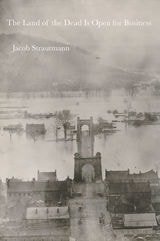
The Land of the Dead Is Open for Business
Jacob Strautmann
Four Way Books, 2020
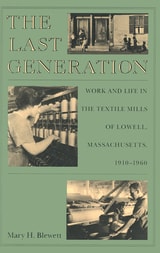
The Last Generation
Work and Life in the Textile Mills of Lowell, Massachusetts, 1910-1960Mary H. Blewett
University of Massachusetts Press, 1990
Oral histories of many of the last generation of Lowell, MA, textile mill workers preceded by two introductory sections. The first presents the historic setting of economic development and subsequent decline of the textile industry in Lowell. The second is a brief explanation of the production process wherein the last generation of mill workers expended so many of their skills and so much of their energy.