Results by title
4413 books match the query 'Anthropology' and 750 start with t
The Global Pigeon
Colin Jerolmack
University of Chicago Press, 2013
The Global Spanish Empire
Five Hundred Years of Place Making and PluralismEdited by Christine D. Beaule and John G. Douglass
University of Arizona Press, 2020
The Spanish Empire was a complex web of places and peoples. Through an expansive range of essays that look at Africa, the Americas, Asia, the Caribbean, and the Pacific, this volume brings a broad range of regions into conversation. The contributors focus on nuanced, comparative exploration of the processes and practices of creating, maintaining, and transforming cultural place making within pluralistic Spanish colonial communities.
The Global Spanish Empire argues that patterned variability is necessary in reconstructing Indigenous cultural persistence in colonial settings. The volume’s eleven case studies include regions often neglected in the archaeology of Spanish colonialism. The time span under investigation is extensive as well, transcending the entirety of the Spanish Empire, from early impacts in West Africa to Texas during the 1800s. The contributors examine the making of a social place within a social or physical landscape. They discuss the appearance of hybrid material culture, the incorporation of foreign goods into local material traditions, the continuation of local traditions, and archaeological evidence of opportunistic social climbing. In some cases, these changes in material culture are ways to maintain aspects of traditional culture rather than signifiers of new cultural practices.
The Global Spanish Empire tackles broad questions about Indigenous cultural persistence, pluralism, and place making using a global comparative perspective grounded in the shared experience of Spanish colonialism.
Contributors
Stephen Acabado
Grace Barretto-Tesoro
James M. Bayman
Christine D. Beaule
Christopher R. DeCorse
Boyd M. Dixon
John G. Douglass
William R. Fowler
Martin Gibbs
Corinne L. Hofman
Hannah G. Hoover
Stacie M. King
Kevin Lane
Laura Matthew
Sandra Montón-Subías
Natalia Moragas Segura
Michelle M. Pigott
Christopher B. Rodning
David Roe
Roberto Valcárcel Rojas
Steve A. Tomka
Jorge Ulloa Hung
Juliet Wiersema
The Globally Familiar
Digital Hip Hop, Masculinity, and Urban Space in DelhiEthiraj Gabriel Dattatreyan
Duke University Press, 2020

The Gloria Wekker Reader
Gloria Wekker. Chandra Frank, Nancy Jouwe, and Mikki Stelder, editors. Foreword by Angela Y. Davis.
Duke University Press, 2026
The Goddess in the Mirror
An Anthropology of BeautyTulasi Srinivas
Duke University Press, 2025
The Government of Beans
Regulating Life in the Age of MonocropsKregg Hetherington
Duke University Press, 2020
The Great Satan vs. the Mad Mullahs
How the United States and Iran Demonize Each OtherWilliam O. Beeman
University of Chicago Press, 2008
“William Beeman’s analysis of dissonant perceptions of Iran and the USA is compelling and important. . . . I am particularly grateful for this work.”—James Peacock, University of North Carolina at Chapel Hill
“[Beeman] is more interested in informing the reader than in impressing his peers. The other strength of the book lies in the author’s knowledge of Iranian history and culture. . . . It challenges the reader and forces him to question stereotypes about Iran and Washington’s perspective on the country.”—Abbas William Samii, Middle East Journal
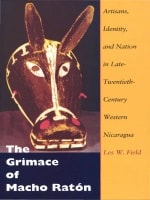
The Grimace of Macho Ratón
Artisans, Identity, and Nation in Late-Twentieth-Century Western NicaraguaLes W. Field
Duke University Press, 1999
Elite appropriations of El Güegüence construe it as an allegory of mestizo national identity in which mestizaje is defined as the production of a national majority of ethnically bounded non-Indians in active collaboration with the state. By contrast, Field interprets the play as a parable of cultural history and not a declaration of cultural identity, a scatological reflection on power and the state, and an evocation of collective loss and humor broadly associated with the national experience of disempowered social groups. By engaging with those most intimately involved in the performance of the play—and by including essays by some of these artisans—Field shows how El Güegüence tells a story about the passing of time, the absurdity of authority, and the contradictions of coping with inheritances of the past. Refusing essentialist notions of what it means to be Indian or artisan, Field explains the reemergence of politicized indigenous identity in western Nicaragua and relates this to the longer history of artisan political organization. Parting ways with many scholars who associate the notion of mestizaje with identity loss and hegemony, Field emphasizes its creative,
productive, and insightful meanings. With an emphasis on the particular struggles of women artisans, he explores the reasons why forms of collective identity have posed various kinds of predicaments for this marginalized class of western Nicaraguans.
This book will appeal to readers beyond the field of Latin American anthropology, including students and scholars of literature, intellectual history, women’s studies, and the politics of ethnicity.

The Grit of the Real
Toward a Semiotics Against GeontopowerElizabeth A. Povinelli
Duke University Press, 2027

The Ground Between
Anthropologists Engage PhilosophyVeena Das, Michael Jackson, Arthur Kleinman, and Bhrigupati Singh, eds.
Duke University Press, 2014
Contributors. João Biehl, Steven C. Caton, Vincent Crapanzano, Veena Das, Didier Fassin, Michael M. J. Fischer, Ghassan Hage, Clara Han, Michael Jackson, Arthur Kleinman, Michael Puett, Bhrigupati Singh

The Hand that Feeds
The Complex Relations of Human-Animal FeedingEdited by Alexander Mullan, Riley Smallman, Herre de Bondt, and Juliette Waterman
University College London, 2025
Feeding animals is never a neutral act—whether in zoos, farms, backyards, or city streets, it shapes relationships, environments, and even entire ecosystems. The Hand that Feeds takes a deeper look into the complex and often-overlooked dynamics of human-animal feeding, moving beyond its utilitarian functions to explore the emotional, ethical, and ecological entanglements it creates. Through case studies spanning history to the present, this work discloses how feeding alters animal behaviors and reflects broader cultural and moral values. Why do we nurture some animals while exterminating others? How do feeding practices blur the lines between wild and domesticated life? What happens when acts of care lead to unintended harm?
Addressing everything from garden bird feeders to contested urban wildlife policies, the authors illuminate the deep significance of food in human-animal interactions. An invigorating read for scholars in environmental studies, anthropology, and history, The Hand that Feeds challenges us to reconsider the act of feeding as a powerful force in shaping multispecies worlds.

The Harkis
The Wound That Never HealsVincent Crapanzano
University of Chicago Press, 2011
In this haunting chronicle of betrayal and abandonment, ostracism and exile, racism and humiliation, Vincent Crapanzano examines the story of the Harkis, the quarter of a million Algerian auxiliary troops who fought for the French in Algeria’s war of independence. After tens of thousands of Harkis were massacred by other Algerians at the end of the war, the survivors fled to France where they were placed in camps, some for as long as sixteen years. Condemned as traitors by other Algerians and scorned by the French, the Harkis became a population apart, and their children still suffer from their parents’ wounds. Many have become activists, lobbying for recognition of their parents’ sacrifices, compensation, and an apology.
More than just a retelling of the Harkis’ grim past and troubling present, The Harkis is a resonant reflection on how children bear responsibility for the choices their parents make, how personal identity is shaped by the impersonal forces of history, and how violence insinuates itself into every facet of human life.

The Hatchet's Blood
Separation, Power, and Gender in Ehing Social LifeMarc R. Schloss
University of Arizona Press, 1988
The ritual complexes of the Ehing, a farming people of southern Senegal, embody an elaborate set of prohibitions on social behavior and prescribe the general rules of Ehing social organization. Power is distributed and maintained in Ehing culture by the concept of Odieng (“hatchet”), which as a spirit acts upon human beings much as an ax does upon a tree, falling from above to punish its victims for transgression. Marc R. Schloss’s ethnography of the Ehing is a study of the meaning of Odieng’s power, explaining why its rules are so essential to the Ehing way of life.

The Heritage Machine
Fetishism and Domination in Maragateria, SpainPablo Alonso Gonzalez
Pluto Press, 2018
Focusing on a case study in the region of Maragatería, Spain, Gonzalez explores the ethnic and racial discrimination faced by the local population in the context of Spanish nationalism and shows how this hostile dynamic shaped what we recognize as the region’s heritage today. Challenging widespread notions about how and why we preserve traditional cultures, The Heritage Machine rethinks the relations between heritage studies and converging disciplines, from anthropology to cultural and memory studies.
The Historic Turn in the Human Sciences
Terrence J. McDonald, Editor
University of Michigan Press, 1996
The Hohokam
Desert Farmers and Craftsmen, Excavations at Snaketown, 1964–1965Emil W. Haury
University of Arizona Press, 1976
The Holocaust
Theoretical ReadingsLevi, Neil
Rutgers University Press, 2003
This agenda-setting reader brings together both classic and new writings to demonstrate how concerns arising from the Nazi genocide shaped contemporary literary and cultural theory. Wide in its thematic scope, it covers such vital questions as:
- Authenticity and experience
- Memory and trauma
- Historiography and the philosophy of history
- Fascism and Nazi anti-Semitism
- Representation and identity formation
- Race, gender, and genocide
- Implications of the Holocaust for theories of the unconscious, ethics, politics, and aesthetics
The readings, which are fully contextualized by a general introduction, section introductions, and bibliographical notes, represent the work of many influential writers and theorists, including Theodor Adorno, Giorgio Agamben, Hannah Arendt, Jean Baudrillard, Zygmunt Bauman, Walter Benjamin, Cathy Caruth, Jacques Derrida, Shoshana Felman, Saul Friedlander, Paul Gilroy, Lawrence Langer, Emmanuel Levinas, Primo Levi, Jean-François Lyotard, Hayden White, and James E. Young. This multidisciplinary anthology will be welcomed by students and scholars of the Holocaust.
The Hopi Indians of Old Oraibi
Change and ContinuityMischa Titiev
University of Michigan Press, 1972
The House Cross of the Mayo Indians of Sonora, Mexico
N. Ross Crumrine
University of Arizona Press, 1965
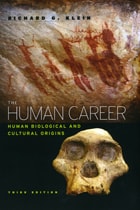
The Human Career
Human Biological and Cultural Origins, Third EditionRichard G. Klein
University of Chicago Press, 2009
Since its publication in 1989, The Human Career has proved to be an indispensable tool in teaching human origins. This substantially revised third edition retains Richard G. Klein’s innovative approach while showing how cumulative discoveries and analyses over the past ten years have significantly refined our knowledge of human evolution.
Klein chronicles the evolution of people from the earliest primates through the emergence of fully modern humans within the past 200,000 years. His comprehensive treatment stresses recent advances in knowledge, including, for example, ever more abundant evidence that fully modern humans originated in Africa and spread from there, replacing the Neanderthals in Europe and equally archaic people in Asia. With its coverage of both the fossil record and the archaeological record over the 2.5 million years for which both are available, The Human Career demonstrates that human morphology and behavior evolved together. Throughout the book, Klein presents evidence for alternative points of view, but does not hesitate to make his own position clear.
In addition to outlining the broad pattern of human evolution, The Human Career details the kinds of data that support it. For the third edition, Klein has added numerous tables and a fresh citation system designed to enhance readability, especially for students. He has also included more than fifty new illustrations to help lay readers grasp the fossils, artifacts, and other discoveries on which specialists rely. With abundant references and hundreds of images, charts, and diagrams, this new edition is unparalleled in its usefulness for teaching human evolution.

The Hundreds
Lauren Berlant and Kathleen Stewart
Duke University Press, 2019
The Illusion of Cultural Identity
Jean-François Bayart
University of Chicago Press, 2005
In this highly sophisticated book, Bayart shows that the very idea of cultural identity prevents us from grasping the cultural dimensions of political action and economic development. Identities, he argues, are fluid, never homogeneous, and sometimes invented. Political repertoires are instead created through imagined, highly ambiguous aspects of culture—what he calls "imaginaires." For instance, the long beards worn by men in some fundamentalist groups are thought to be key to their core identities and thus assumed to be in conflict with modern values. These beards, however, do not stand in the way of the men's use of technology or their embrace of capitalism—an example Bayart uses to demonstrate the equivocality of cultural identity. The theoretical implications of Bayart's analysis emerge from a fascinating collection of historical examples that often surprise and always instruct.
The Immensity of Being Singular
Approaching Migrant Lives in São Paulo through ResonanceSimone Toji
HAU, 2023

The Impact of Touch in Dance Movement Psychotherapy
A Body–Mind Centering ApproachKaty Dymoke
Intellect Books, 2021
In this book, dance movement psychotherapist Katy Dymoke presents an in-depth case study of work with a client with a profound learning disability. The research stems from a postdoctoral thesis sponsored by the United Kingdom’s National Health Service, where Dymoke was employed at the time of the clinical outcomes relayed in this work. The volume includes transcripts of the session content; descriptions of how incidents of touch were initiated and undertaken within the process; subsequent categorizations of the incidents of touch as self-directed, passive, or reciprocal; and commentary and discussion of the therapeutic process. As we see, the incidents of touch contribute to the client’s process of mental distress, trauma, lack of capacity, and more. Finally, Dymoke includes sections on the ethical issues of this work in the NHS, on doing research with such a client group, and on the theoretical models that emerged.

The Imperialist Imaginary
Visions of Asia and the Pacific in American CultureJohn Eperjesi
Dartmouth College Press, 2014
The Importance of Elsewhere
The Globalist Humanist TouristRandy Malamud
Intellect Books, 2018

The Impotence Epidemic
Men's Medicine and Sexual Desire in Contemporary ChinaEverett Yuehong Zhang
Duke University Press, 2015
The Inconstancy of the Indian Soul
The Encounter of Catholics and Cannibals in 16-century BrazilEduardo Viveiros de Castro
Prickly Paradigm Press, 2011
In the mid-sixteenth century, Jesuit missionaries working in what is now Brazil were struck by what they called the inconstancy of the people they met, the indigenous Tupi-speaking tribes of the Atlantic coast. Though the Indians appeared eager to receive the Gospel, they also had a tendency to forget the missionaries’ lessons and “revert” to their natural state of war, cannibalism, and polygamy. This peculiar mixture of acceptance and rejection, compulsion and forgetfulness was incorrectly understood by the priests as a sign of the natives’ incapacity to believe in anything durably.
In this pamphlet, world-renowned Brazilian anthropologist Eduardo Viveiros de Castro situates the Jesuit missionaries’ accounts of the Tupi people in historical perspective, and in the process draws out some startling and insightful implications of their perceived inconstancy in relation to anthropological debates on culture and religion.
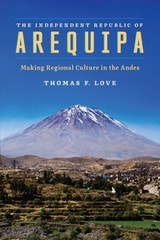
The Independent Republic of Arequipa
Making Regional Culture in the AndesBy Thomas F. Love
University of Texas Press, 2017
Arequipa, Peru’s second largest city, has the most intense regional culture in the central Andes. Arequipeños fiercely conceive of themselves as exceptional and distinctive, yet also broadly representative of the nation’s overall hybrid nature—a blending of coast (modern, “white”) and sierra (traditional, “indigenous”). The Independent Republic of Arequipa investigates why and how this regional identity developed in a boom of cultural production after the War of the Pacific (1879–1884) through the mid-twentieth century.
Drawing on decades of ethnographic fieldwork, Thomas F. Love offers the first anthropological history of southwestern Peru’s distinctive regional culture. He examines both its pre-Hispanic and colonial altiplano foundations (anchored in continuing pilgrimage to key Marian shrines) and the nature of its mid-nineteenth century “revolutionary” identity in cross-class resistance to Lima’s autocratic control of nation-building in the post-Independence state. Love then examines Arequipa’s early twentieth-century “mestizo” identity (an early and unusual case of “browning” of regional identity) in the context of raging debates about the “national question” and the “Indian problem,” as well as the post-WWII development of extravagant displays of distinctive bull-on-bull fighting that now constitute the very performance of regional identity. Love’s research reveals that Arequipa’s “traditional” local culture, symbolically marked by populist, secular, and rural elements, was in fact a project of urban-based, largely middle-class cultural entrepreneurs, invented to counter continuing Limeño autocratic power, marked by nostalgia, and anxious about the inclusion of the nation’s indigenous majority as full modern citizens.

The India Museum Revisited
Arthur MacGregor
University College London, 2023
The museum of the East India Company formed, for a large part of the nineteenth century, one of the sights of London. In recent years, little has been remembered of it beyond its mere existence, while an assumed negative role has been widely attributed to it on the basis of its position at the heart of one of Britain’s arch-colonialist enterprises.
Extensively illustrated, The India Museum Revisited surveys the contents of its multi-faceted collections—with respect to materials, their manufacture, and original functions on the Indian sub-continent—as well as the collectors who gathered them and the manner in which they were mobilized to various ends within the museum.
From this integrated treatment of documentary and material sources, a more accurate, rounded, and nuanced picture emerges of an institution that contributed in major ways, over a period of eighty years, to the representation of India for a European audience, not only in Britain but through the museum’s involvement in the international exposition movement to audiences on the continent and beyond.
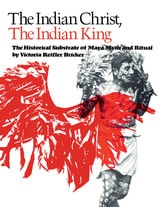
The Indian Christ, the Indian King
The Historical Substrate of Maya Myth and RitualBy Victoria Reifler Bricker
University of Texas Press, 1981
Victoria Bricker shows that "history" sometimes rests on mythological foundations and that "myth" can contain valid historical information. Her book, which is a highly original critique of postconquest historiography about the Maya, challenges major assumptions about the relationship between myth and history implicit in structuralist interpretations. The focus of the book is ethnic conflict, a theme that pervades Maya folklore and is also well documented historically.
The book begins with the Spanish conquest of the Maya. In chapters on the postconquest history of the Maya, five ethnic conflicts are treated in depth: the Cancuc revolt of 1712, the Quisteil uprising of 1761, the Totonicapan rebellion of 1820, the Caste War of Yucatan (1847-1901), and the Chamulan uprising in 1869. Analytical chapters consider the relationship between historical events and modern folklore about ethnic conflict. Bricker demonstrates that myths and rituals emphasize structure at the expense of temporal and geographical provenience, treating events separated by centuries or thousands of miles as equivalent and interchangeable.
An unexpected result of Bricker's research is the finding that many seemingly aboriginal elements in Maya folklore are actually of postconquest origin, and she shows that it is possible to determine precisely when and, more important, why they become part of myth and ritual. Furthermore, she finds that the patterning of the accretion of events in folklore over time provides clues to the function, or meaning, of myth and ritual for the Maya.
Bricker has made use of many unpublished documents in Spanish, English, and Maya, as well as standard synthetic historical works. The appendices contain extensive samples of the oral traditions that are explained by her analysis.
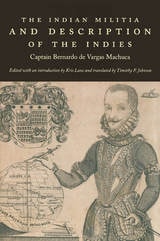
The Indian Militia and Description of the Indies
Captain Bernardo de Vargas Machuca, Edited with an introduction by Kris Lane
Duke University Press, 2008
Containing advice on curing rattlesnake bites with amethysts and making saltpeter for gunpowder from concentrated human urine, The Indian Militia is a manual in four parts, the first of which outlines the ideal qualities of the militia commander. Addressing the organization and outfitting of conquest expeditions, Book Two includes extended discussions of arms and medicine. Book Three covers the proper behavior of soldiers, providing advice on marching through peaceful and bellicose territories, crossing rivers, bivouacking in foul weather, and carrying out night raids and ambushes. Book Four deals with peacemaking, town-founding, and the proper treatment of conquered peoples. Appended to these four sections is a brief geographical description of all of Spanish America, with special emphasis on the indigenous peoples of New Granada (roughly modern-day Colombia), followed by a short guide to the southern coasts and heavens. This first English-language edition of The Indian Militia includes an extensive introduction, a posthumous report on Vargas Machuca’s military service, and a selection from his unpublished attack on the writings of Fray Bartolomé de Las Casas.

The Indians of the Western Great Lakes, 1615-1760
W. Vernon Kinietz
University of Michigan Press, 1965
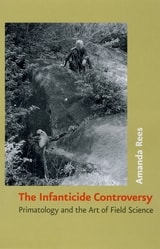
The Infanticide Controversy
Primatology and the Art of Field ScienceAmanda Rees
University of Chicago Press, 2009
Infanticide in the natural world might be a relatively rare event, but as Amanda Rees shows, it has enormously significant consequences. Identified in the 1960s as a phenomenon worthy of investigation, infanticide had, by the 1970s, become the focus of serious controversy. The suggestion, by Sarah Hrdy, that it might be the outcome of an evolved strategy intended to maximize an individual’s reproductive success sparked furious disputes between scientists, disagreements that have continued down to the present day.
Meticulously tracing the history of the infanticide debates, and drawing on extensive interviews with field scientists, Rees investigates key theoretical and methodological themes that have characterized field studies of apes and monkeys in the twentieth century. As a detailed study of the scientific method and its application to field research, The Infanticide Controversy sheds new light on our understanding of scientific practice, focusing in particular on the challenges of working in “natural” environments, the relationship between objectivity and interpretation in an observational science, and the impact of the public profile of primatology on the development of primatological research. Most importantly, it also considers the wider significance that the study of field science has in a period when the ecological results of uncontrolled human interventions in natural systems are becoming ever more evident.

The Informal and Underground Economy of the South Texas Border
By Chad Richardson and Michael J. Pisani
University of Texas Press, 2012
Much has been debated about the presence of undocumented workers along the South Texas border, but these debates often overlook the more complete dimension: the region’s longstanding, undocumented economies as a whole. Borderlands commerce that evades government scrutiny can be categorized into informal economies (the unreported exchange of legal goods and services) or underground economies (criminal economic activities that, obviously, occur without government oversight). Examining long-term study, observation, and participation in the border region, with the assistance of hundreds of locally embedded informants, The Informal and Underground Economy of the South Texas Border presents unique insights into the causes and ramifications of these economic channels.
The third volume in UT–Pan American’s Borderlife Project, this eye-opening investigation draws on vivid ethnographic interviews, bolstered by decades of supplemental data, to reveal a culture where divided loyalties, paired with a lack of access to protection under the law and other forms of state-sponsored recourse, have given rise to social spectra that often defy stereotypes. A cornerstone of the authors’ findings is that these economic activities increase when citizens perceive the state’s intervention as illegitimate, whether in the form of fees, taxes, or regulation. From living conditions in the impoverished colonias to President Felipe Calderón’s futile attempts to eradicate police corruption in Mexico, this book is a riveting portrait of benefit versus risk in the wake of a “no-man’s-land” legacy.
The Inheritance
Elizabeth A. Povinelli
Duke University Press, 2021

The Insane Chicago Way
The Daring Plan by Chicago Gangs to Create a Spanish MafiaJohn M. Hagedorn
University of Chicago Press, 2015
The book centers on the secret history of Spanish Growth & Development (SGD)—an organization of Latino gangs founded in 1989 and modeled on the Mafia’s nationwide Commission. It also tells a story within a story of the criminal exploits of the C-Note$, the “minor league” team of the Chicago’s Mafia (called the “Outfit”), which influenced the direction of SGD. Hagedorn’s tale is based on three years of interviews with an Outfit soldier as well as access to SGD’s constitution and other secret documents, which he supplements with interviews of key SGD leaders, court records, and newspaper accounts. The result is a stunning, heretofore unknown history of the grand ambitions of Chicago gang leaders that ultimately led to SGD’s shocking collapse in a pool of blood on the steps of a gang-organized peace conference.
The Insane Chicago Way is a compelling history of the lives and deaths of Chicago gang leaders. At the same time it is a sociological tour de force that warns of the dangers of organized crime while arguing that today’s relative disorganization of gangs presents opportunities for intervention and reductions in violence.
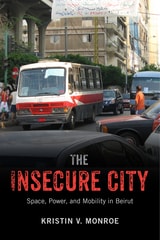
The Insecure City
Space, Power, and Mobility in BeirutMonroe, Kristin V
Rutgers University Press, 2016
Download open access ebook here.

The Inspiration Machine
Computational Creativity in Poetry and JazzEitan Y. Wilf
University of Chicago Press, 2023
In The Inspiration Machine, Eitan Y. Wilf explores the transformative potentials that digital technology opens up for creative practice through three ethnographic cases, two with jazz musicians and one with a group of poets. At times dissatisfied with the limitations of human creativity, these artists do not turn to computerized algorithms merely to execute their preconceived ideas. Rather, they approach them as creative partners, delegating to them different degrees of agentive control and artistic decision-making in the hopes of finding inspiration in their output and thereby expanding their own creative horizons.
The algorithms these artists develop and use, however, remain rooted in and haunted by the specific social predicaments and human shortfalls that they were intended to overcome. Experiments in the digital thus hold an important lesson: although Wilf’s interlocutors returned from their adventures with computational creativity with modified, novel, and enriched capacities and predilections, they also gained a renewed appreciation for, and at times a desire to re-inhabit, non-digital creativity. In examining the potentials and pitfalls of seemingly autonomous digital technologies in the realm of art, Wilf shows that computational solutions to the real or imagined insufficiencies of human practice are best developed in relation to, rather than away from, the social and cultural contexts that gave rise to those insufficiencies, in the first place.

The Institutions of France under the Absolute Monarchy, 1598-1789, Volume 1
Society and the StateRoland Mousnier
University of Chicago Press, 1979
In a society divided by hierarchical social groups, conflicts among lineages, communities, and districts became inevitable. Aristocratic disdain, ancestral attachment to privileges, and autonomous powers looked upon as rights, made civil unrest, dislocation, and anarchy endemic. Mousnier examines this contention between classes as they faced each other across the institutional barriers of education, religion, economic resources, technology, means of defense and communication, and territorial and family ties. He shows why a monarchical state was necessary to preserve order within this fragmented society.
Though it was intent on ensuring the survival of French society and the public good, the Absolute Monarchy was unable to maintain security, equilibrium, and cooperation among rival social groups. Discussing the feeble technology at its disposal and its weak means of governing, Mousnier points to the causes that brought the state to the limits of its resources. His comprehensive analysis will greatly interest students of the ancien régime and comparativists in political science and sociology as well.

The Institutions of France under the Absolute Monarchy, 1598-1789, Volume 2
The Origins of State and SocietyRoland Mousnier
University of Chicago Press, 1984
The Interface Experience
A User's GuideKimon Keramidas
Bard Graduate Center, 2015
The Interface Experience surveys some of the landmark devices in the history of personal computing—including the Commodore 64, Apple Macintosh Plus, Palm Pilot Professional, and Microsoft Kinect—and helps us to better understand the historical shifts that have occurred with the design and material experience of each machine. With its spiral-bound design reminiscent of early computer user manuals and thorough consideration of the cultural moment represented by each device, The Interface Experience is a one-of-a-kind tour of modern computing technology.

The Internet Is Real Life
Performing Folklore Online and OffAnthony Bak Buccitelli
University of Wisconsin Press, 2026
We often speak of a divide between online and offline cultures, despite growing recognition that the two are intertwined. Here, folklorist Anthony Bak Buccitelli challenges the idea of any divide at all in contemporary American culture. He argues that digital communications and behaviors are already deeply embedded in everyday expressive life and therefore are also already implicated in a variety of ways in the embodied performance and transmission of folklore. In other words, in contemporary American society, the internet truly is “real life.”
By treating the digital interface as a site at which embodied performance can take shape rather than just a point of contact with the online, Buccitelli argues for a critical renewal of core folkloristic concepts to meet the challenges of understanding modern networked life. The result is a folklore book for the current age.

The Intestines of the State
Youth, Violence, and Belated Histories in the Cameroon GrassfieldsNicolas Argenti
University of Chicago Press, 2007
Beginning his study with a political analysis of youth in the Grassfields from the eighteenth century to the present, Argenti pays special attention to the repeated violent revolts staged by young victims of political oppression. He then combines this history with extensive ethnographic fieldwork in the Oku chiefdom, discovering that the specter of past violence lives on in the masked dance performances that have earned intense devotion from today’s youth. Argenti contends that by evoking the imagery of past cataclysmic events, these masquerades allow young Oku men and women to address the inequities they face in their relations with elders and state authorities today.
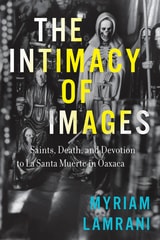
The Intimacy of Images
Saints, Death, and Devotion to La Santa Muerte in OaxacaMyriam Lamrani
University of Texas Press, 2024
2026 Edie Turner First Book Prize in Ethnographic Writing, Society for Humanistic Anthropology
La Santa Muerte becomes a lens for understanding how Oaxacans relate to saints, loved ones, and other “special dead.”
In Oaxaca, images of saints and loved ones, as well as of victims of political or criminal violence, are seemingly everywhere. While Oaxacans relate to all sorts of “special dead,” they are particularly devoted to La Santa Muerte (Saint Death), a female reaper-like figure whose popularity has risen in tandem with violence throughout Mexico.
The Intimacy of Images recontextualizes Oaxacans’ relationships with their “special dead” through the lens of La Santa Muerte, examining how devotees closely interact with what Lamrani terms “intimate images”: not only devotional effigies but also photographs, films, tattoos, and murals, and even dreams and visions. Though Mexicans have a well-known cultural familiarity with death, Lamrani argues that devotion to La Santa Muerte builds upon this intimacy even as it also participates in the production of terror and reflects political and criminal violence. Ultimately, Lamrani finds that these human-image interactions represent more than Catholic devotion; they reveal the secrets of Oaxacan political, religious, and social life, embody changing relationships to mortality and violence, and even offer insight into the practice of anthropology itself.

The Intimate Life of Dissent
Anthropological PerspectivesEdited by Harini Amarasuriya, Tobias Kelly, Sidharthan Maunaguru, Galina Oustinova-Stjepanovic and Jonathan Spencer
University College London, 2020

The Intimate University
Korean American Students and the Problems of SegregationNancy Abelmann
Duke University Press, 2009
Drawing on ten years of ethnographic research with Korean American students at the University of Illinois and closely following multiple generations of a single extended Korean American family in the Chicago metropolitan area, Abelmann investigates the complexity of racial politics at the American university today. Racially hyper-visible and invisible, Korean American students face particular challenges as they try to realize their college dreams against the subtle, day-to-day workings of race. They frequently encounter the accusation of racial self-segregation—a charge accentuated by the fact that many attend the same Evangelical Protestant church—even as they express the desire to distinguish themselves from their families and other Korean Americans. Abelmann concludes by examining the current state of the university, reflecting on how better to achieve the university’s liberal ideals despite its paradoxical celebration of diversity and relative silence on race.
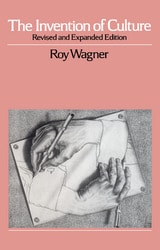
The Invention of Culture
Roy Wagner
University of Chicago Press, 1981
The Invention of Culture
Roy Wagner
University of Chicago Press, 2016
Wagner breaks new ground by arguing that culture arises from the dialectic between the individual and the social world. Rooting his analysis in the relationships between invention and convention, innovation and control, and meaning and context, he builds a theory that insists on the importance of creativity, placing people-as-inventors at the heart of the process that creates culture. In an elegant twist, he shows that this very process ultimately produces the discipline of anthropology itself.
Tim Ingold’s foreword to the new edition captures the exhilaration of Wagner’s book while showing how the reader can journey through it and arrive safely—though transformed—on the other side.

The Islands
A. Alberts
University of Massachusetts Press, 1983