Results by title
1882 books match the query 'Criticism and interpretation' and 348 start with t
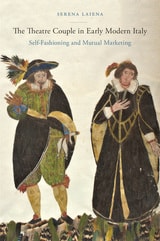
The Theatre Couple in Early Modern Italy
Self-Fashioning and Mutual MarketingSerena Laiena
University of Delaware Press, 2024
Who were the first celebrity couples? How was their success forged? Which forces influenced their self-fashioning and marketing strategies?
These questions are at the core of this study, which looks at the birth of a phenomenon, that of the couple in show business, with a focus on the promotional strategies devised by two professional performers: Giovan Battista Andreini (1576–1654) and Virginia Ramponi (1583–ca.1631). This book examines their artistic path – a deliberately crafted and mutually beneficial joint career – and links it to the historical, social, and cultural context of post-Tridentine Italy. Rooted in a broad research field, encompassing theatre history, Italian studies, celebrity studies, gender studies, and performance studies, The Theatre Couple in Early Modern Italy revises the conventional view of the Italian diva, investigates the deployment of Catholic devotion as a marketing tool, and argues for the importance of the couple system in the history of Commedia dell’Arte, a system that continues to shape celebrity today.
The Theological Basis of Liberal Modernity in Montesquieu's "Spirit of the Laws"
Thomas L. Pangle
University of Chicago Press, 2010
The Spirit of the Laws—Montesquieu’s huge, complex, and enormously influential work—is considered one of the central texts of the Enlightenment, laying the foundation for the liberally democratic political regimes that were to embody its values. In his penetrating analysis, Thomas L. Pangle brilliantly argues that the inherently theological project of Enlightenment liberalism is made more clearly—and more consequentially— in Spirit than in any other work.
In a probing and careful reading, Pangle shows how Montesquieu believed that rationalism, through the influence of liberal institutions and the spread of commercial culture, would secularize human affairs. At the same time, Pangle uncovers Montesquieu’s views about the origins of humanity’s religious impulse and his confidence that political and economic security would make people less likely to sacrifice worldly well-being for otherworldly hopes. With the interest in the theological aspects of political theory and practice showing no signs of diminishing, this book is a timely and insightful contribution to one of the key achievements of Enlightenment thought.
The Theoretical Dimensions of Henry James
John Carlos Rowe
University of Wisconsin Press, 1985
Rowe examines James from the perspectives of the psychology of literary influence, feminism, Marxism, psychoanalysis, literary phenomenology and impressionism, and reader-response criticism, transforming a literary monument into the telling point of intersection for modern critical theories.
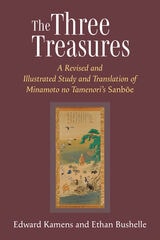
The Three Treasures
A Revised and Illustrated Study and Translation of Minamoto no Tamenori's SanboeEdward Kamens and Ethan Bushelle
University of Michigan Press, 2023
When the young Princess Sonshi became a Buddhist nun in the year 984, a scholar-official of the royal court was commissioned to create a guide to the Buddhist religion that would be accessible for her. He did so in the form of the illustrated works of fiction (monogatari) that appealed to women readers of her time and class. The text has survived in later manuscripts; the illustrations, if they ever existed, have not. This revised translation recreates Sonshi’s experience of receiving this multimedia presentation, with illustrations selected to help contemporary readers visualize its content and essays that provide context on the religious and cultural experience of the author. The Three Jewels is a unique document that opens a window onto the world of Buddhist religious experience—especially for women—in high classical Japan, the time of Sei Shōnagon’s Pillow Book and Murasaki Shikibu’s Tale of Genji.
The Timelessness of Proust
Charles R. Embry
St. Augustine's Press, 2016
Marcel Proust’s À la recherche du temps perdu—In Search of Lost Time—is one of the most important and influential novels of the modern era. In recent decades, Proust has enjoyed a new surge of critical attention, as well as a sustained growth in readership—well beyond that of other prose masters of twentieth century modernism such as Joyce, Woolf, Kafka, and Beckett. The MLA Bibliography presently lists over 3,000 citations to scholarly works devoted to Proust’s novel, and if one Googles “Proust,” the number of hits exceeds 2,000,000.
The temporal nature of human existence and consciousness is one of the many themes explored in In Search of Lost Time, and it is this dimension of Proust’s work that unifies this collection of essays that grew from a roundtable discussion entitled “The Timelessness of Proust” conducted at the 31st annual meeting of the Eric Voegelin Society. The collection includes the following essays:
“In Search of Lost Time: Biographies of Consciousness,” Charles R. Embry
“Proust, Transcendence, and Metaxic Existence,” Glenn Hughes
“The Normative Flow of Consciousness and the Self: A Philosophical Meditation on
Proust’s In Search of Lost Time,” Thomas J. McPartland;
“Imprisonment and Freedom: Resisting and Embracing the Tension of Existence in
Marcel Proust’s In Search of Lost Time,” Paulette Kidder;
“Proust’s Luminous Memory and L’Homme Éternel: The Quest for Limitless Meaning,”
Michael Henry
“Unsought Revelations of Eternal Reality in Eliot’s Four Quartets and Proust’s In Search
of Lost Time,” Glenn Hughes
Persons who are interested not only in the philosophical importance of literary masterworks and in how the philosophical thought of Eric Voegelin may illuminate them, but also in letting Proust serve as a guide in the exploration and understanding of their own lives, will find these essays to be of lasting interest and value.
The Trace of Judaism
Dostoevsky, Babel, Mandelstam, LevinasVal Vinokur
Northwestern University Press, 2009
The defining quality of Russian literature, for most critics, is its ethical seriousness expressed through formal originality. The Trace of Judaism addresses this characteristic through the thought of the Lithuanian-born Franco-Jewish philosopher Emmanuel Levinas. Steeped in the Russian classics from an early age, Levinas drew significantly from Dostoevsky in his ethical thought. One can profitably read Russian literature through Levinas, and vice versa.
The Translations of Nebrija
Language, Culture, and Circulation in the Early Modern WorldByron Ellsworth Hamann
University of Massachusetts Press, 2015
Tracing the global influence of Nebrija's dictionary, Byron Ellsworth Hamann, in this interdisciplinary, deeply researched book, connects pagan Rome, Muslim Spain, Aztec Tenochtitlan, Elizabethan England, the Spanish Philippines, and beyond, revealing new connections in world history. The Translations of Nebrija re-creates the travels of people, books, and ideas throughout the early modern world and reveals the adaptability of Nebrija's text, tracing the ways heirs and pirate printers altered the dictionary in the decades after its first publication. It reveals how entries in various editions were expanded to accommodate new concepts, such as for indigenous languages in the Americas—a process with profound implications for understanding pre-Hispanic art, architecture, and writing. It shows how words written in the margins of surviving dictionaries from the Americas shed light on the writing and researching of dictionaries across the early modern world.
Exploring words and the dictionaries that made sense of them, this book charts new global connections and challenges many assumptions about the early modern world.
The Tribe of John
Ashbery and Contemporary PoetrySusan M. Schultz
University of Alabama Press, 1995
This concentration on Ashbery's influence on contemporary American poetry provides new methods for interpreting and understanding his poetic achievement.
The Triumph of Human Empire
Verne, Morris, and Stevenson at the End of the WorldRosalind Williams
University of Chicago Press, 2013
The Trouble with Wagner
Michael P. Steinberg
University of Chicago Press, 2018
Drawing on decades of engagement with Wagner and of experience teaching opera across disciplines, The Trouble with Wagner is packed with novel insights for experts and interested readers alike.
The Troubled Union
Expansionist Imperatives in Post-Reconstruction American NovelsJohn Morán González
The Ohio State University Press, 2010
The Unbeliever
THE POETRY OF ELIZABETH BISHOPRobert Dale Parker
University of Illinois Press, 1988
literary history and theory to give the poems of Elizabeth Bishop (1911-79)
the serious critical attention they deserve. The Unbeliever shows that
Bishop's poems, already famous for their clear and quiet tone, also struggle
with confusion and wonder about things she can never make quiet or clear.
The Uncommon Tongue
The Poetry and Criticism of Geoffrey HillVincent Sherry
University of Michigan Press, 1987
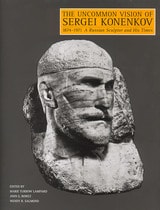
The Uncommon Vision of Sergei Konenkov, 1874-1971
A Russian Sculptor and His TimesLampard, Marie Turbow
Rutgers University Press, 2001
Sergei Konenkov was one of this century's most distinguished Russian artists. A celebrated sculptor, he was a leading figure of the young Soviet art establishment in the early 1920s. After spending over twenty years in the United States, he returned to the Soviet Union in 1945 to become a respected member of the Soviet art world. The mentor to an entire generation of Soviet sculptors, he was renowned for his personal charisma and artistic versatility. This collection of essays, interviews, and personal reminiscences is the first appraisal of his work and life published outside of Russia.
The contributors view Konenkov’s work within a variety of cultural, artistic, and philosophical contexts. With particular attention to his awareness of both indigenous Russian traditions and European innovations, they trace the many stages of his artistic development as he explored and experimented with techniques borrowed from Realism, Symbolism, salon portraiture, African wood carving, Socialist Realism, and Surrealism. The many different historical sources that inspired Konenkov’s artistic expression, from Orthodox Christianity and the folklore of the Russian peasantry to the Egyptian pyramids and pre-classical antiquity are also discussed. The contributors also explore the relationship of Konenkov's life and ideology to art, and the effects of expatriation on creativity.
Illustrated with dozens of photographs of Konenkov’s art, this study of one of the most enigmatic and fascinating artists of the modern period will accompany an exhibition at The Jane Voorhees Zimmerli Art Museum.
The Unexamined Orwell
By John Rodden
University of Texas Press, 2011
The year 1984 is just a memory, but the catchwords of George Orwell's novel Nineteen Eighty-Four still routinely pepper public discussions of topics ranging from government surveillance and privacy invasion to language corruption and bureaucratese. Orwell's work pervades the cultural imagination, while others of his literary generation are long forgotten. Exploring this astonishing afterlife has become the scholarly vocation of John Rodden, who is now the leading authority on the reception, impact, and reinvention of George Orwell—the man and writer—as well as of "Orwell" the cultural icon and historical talisman.
In The Unexamined Orwell, Rodden delves into dimensions of Orwell's life and legacy that have escaped the critical glare. Rodden discusses how several leading American intellectuals have earned the title of Orwell's "successor," including Lionel Trilling, Dwight Macdonald, Irving Howe, Christopher Hitchens, and John Lukacs. He then turns to Germany and focuses on the role and relevance of Nineteen Eighty-Four in the now-defunct communist nation of East Germany. Rodden also addresses myths that have grown up around Orwell's life, including his "more than half-legendary" encounter with Ernest Hemingway in liberated Paris in March 1945, and analyzes literary issues such as his utopian sensibility and his prose style. Finally, Rodden poses the endlessly debated question, "What Would George Orwell Do?," and speculates about how the prophet of Nineteen Eighty-Four would have reacted to world events. In so doing, Rodden shows how our responses to this question reveal much about our culture's ongoing need to reappropriate "Orwell."
The Unforeseen Self in the Works of Wendell Berry
Janet Goodrich
University of Missouri Press, 2001
In this fresh approach to Wendell Berry's entire literary canon, Janet Goodrich argues that Berry writes primarily as an autobiographer and as such belongs to the tradition of autobiography. Goodrich maintains that whether Berry is writing poetry, fiction, or prose, he is imagining and re- imagining his own life from multiple perspectives—temporal as well as imaginative.
Through the different vocations that compose his being, Berry imaginatively shapes his experience into literary artifice. Goodrich identifies five of these vocations—the autobiographer, the poet, the farmer, the prophet, and the neighbor—and traces them in the body of Berry's work where they are consistently identifiable in the authorial voice and obvious to the imagination in fictive characterizations. Berry's writings express these "personae" as they develop, and it is this complexity of perspective that helps to make Berry vital to such a range of readers as he writes and rewrites his experience.
Goodrich's book is organized thematically into five chapters, each examining one of Berry's imaginative voices. Within each chapter, she has proceeded chronologically through Berry's work in order to trace the development in each point of view. By acknowledging the relationships between these different themes and patterns of language in the texts, Goodrich avoids reducing Berry as she helps the reader appreciate the richness with which he writes his life into art.
Whereas others have categorized Berry according to just one of his many facets, The Unforeseen Self in the Works of Wendell Berry takes account of his work in all its complexity, providing a coherent critical context and method of study. Reconciling the sometimes contradictory labels pinned on Berry, this vital study of his poems, stories, and essays from 1957 to 2000 offers an enriching and much needed new perspective for Berry's growing, diverse readership.

The Unremarkable Wordsworth
Geoffrey H. HartmanForeword by Donald G. Marshall
University of Minnesota Press, 1987
The Unremarkable Wordsworth was first published in 1987. Minnesota Archive Editions uses digital technology to make long-unavailable books once again accessible, and are published unaltered from the original University of Minnesota Press editions.
William Wordsworth was attacked by the critics of his time for imposing unremarkable sights and sentiments on his audience. In this book's title essay, an exemplary reading of the Westminster Bridge sonnet, Geoffrey Hartman shows how Wordsworth's "unremarkable phrases" attain their curious vigor. Drawing upon the propositions of semiological analysis—that signs are not signs unless they become perceptible, through the contrast between "marked" and "unmarked"—Hartman, in a deft and sensitive analysis, is able to play these notions of marking and the unremarkable off against each other. Wordsworth, in the end, overcomes both his critics and the science of signs: his quiet sonnet—with its muted or near-absent signs—is itself, as epitaph for an era, a faithful sign of the times.
Hartman's capacity to open up a dialogue between contemporary theory and Wordsworth's poetry informs all of these essays, written since the 1964 publication of Wordsworth's Poetry, a book that marked an epoch in the study of that poet and of Romantic poetry in general. In the years since then, the nature of literary study has changed dramatically, and Hartman has been a leader in the turn to theoretical modes of interpretation. The fifteen essays in The Unremarkable Wordsworth draw upon a wide range of contemporary theoretical approaches, from psychoanalysis to structuralism, from deconstruction to phenomenology. Yet, as Donald Marshall points out in his foreword, "Wordsworth remains so much the focus of this book that 'critical method' is strangely transmuted." For Hartman, reading and thinking are inseparable; he has an uncanny power to convey in an intensified form the poet's own consciousness, not under the rubric of "intertextuality" but because he "has ears to hear."
Geoffrey H. Hartman is Karl Young Professor of English and Comparative Literature at Yale University. His most recent book is Easy Pieces. Donald G. Marshall is a professor of English at the University of Iowa.
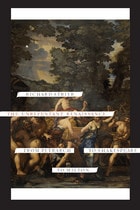
The Unrepentant Renaissance
From Petrarch to Shakespeare to MiltonRichard Strier
University of Chicago Press, 2011
Who during the Renaissance could have dissented from the values of reason and restraint, patience and humility, rejection of the worldly and the physical? These widely articulated values were part of the inherited Christian tradition and were reinforced by key elements in the Renaissance, especially the revival of Stoicism and Platonism. This book is devoted to those who did dissent from them. Richard Strier reveals that many long-recognized major texts did question the most traditional values and belong to a Renaissance far more unconstrained and affirmative than much recent scholarship has allowed.
The Unrepentant Renaissance counters the prevalent view of the period as dominated by the regulation of bodies and passions; the book aims to reclaim the Renaissance as an era happily churning with surprising, worldly, and self-assertive energies. Reviving the perspective of Burckhardt and Nietzsche, Strier provides fresh and uninhibited readings of texts by Petrarch, Shakespeare (sonnets and plays), Loyola, Montaigne, Descartes, and Milton. Strier’s lively argument, expressed in lucid prose, is meant to stir debate throughout the field of Renaissance studies.
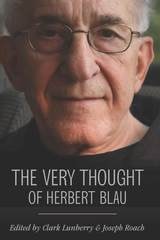
The Very Thought of Herbert Blau
Clark Lunberry and Joseph Roach, Editors
University of Michigan Press, 2018
Herbert Blau (1926–2013) was the most influential theater theorist, practitioner, and educator of his generation. He was the leading American interpreter of the works of Samuel Beckett and as a director was instrumental in introducing works of the European avant-garde to American audiences. He was also one of the most far-reaching and thoughtful American theorists of theater and performance, and author of influential books such as The Dubious Spectacle, The Audience, and Take Up the Bodies: Theater at the Vanishing Point.
In The Very Thought of Herbert Blau, distinguished artists and scholars offer reflections on what made Blau's contributions so visionary, transformative, and unforgettable, and why his ideas endure in both seminar rooms and studios. The contributors, including Lee Breuer, Sue-Ellen Case, Gautam Dasgupta, Elin Diamond, S. E. Gontarski, Linda Gregerson, Martin Harries, Bill Irwin, Julia Jarcho, Anthony Kubiak, Daniel Listoe, Clark Lunberry, Bonnie Marranca, Peggy Phelan, Joseph Roach, Richard Schechner, Morton Subotnick, Julie Taymor, and Gregory Whitehead, respond to Blau's fierce and polymorphous intellect, his relentless drive and determination, and his audacity, his authority, to think, as he frequently insisted, "at the very nerve ends of thought."
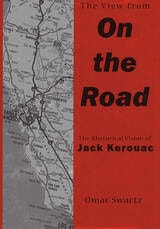
The View From On the Road
The Rhetorical Vision of Jack KerouacOmar Swartz
Southern Illinois University Press, 2000
Through careful analysis of Jack Kerouac’s On the Road, Omar Swartz argues that Kerouac’s influence on American society is largely rhetorical. Kerouac’s significance as a cultural icon can be best understood, Swartz asserts, in terms of traditional rhetorical practices and principles.
To Swartz, Kerouac is a rhetor who symbolically reconstructs his world and offers arguments and encouragements for others to follow. Swartz proposes that On the Road constitutes a “rhetorical vision,” a reality-defining discourse suggesting alternative possibilities for growth and change. Swartz asserts that the reader of Kerouac’s On theRoadbecomes capable of responding to the larger, confusing culture in a strategic manner. Kerouac's rhetorical vision of an alternative social and cultural reality contributes to the identity of localized cultures within the United States.

The Visceral Screen
Between the Cinemas of John Cassavetes and David CronenbergRobert Furze
Intellect Books, 2015
The Visceral Screen sets out to articulate alternative ways of appreciating film aesthetics outside the narrative/spectacle continuum. Cassavetes and Cronenberg are established auteurs, but the elements of their films that appear to be barriers to their artistic status—for example, slipshod method and lingering violence or pre-digital special effects—are reassessed here as other indicators of creativity. In this way, Furze encourages debates of what makes a film good or bad—beyond how much it is seen to adhere to particular, established models of filmmaking.
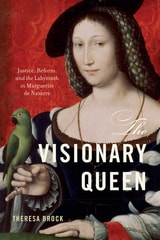
The Visionary Queen
Justice, Reform, and the Labyrinth in Marguerite de NavarreTheresa Brock
University of Delaware Press, 2024
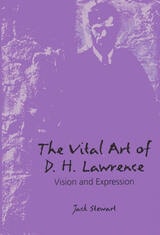
The Vital Art of D.H. Lawrence
Vision and ExpressionJack Stewart
Southern Illinois University Press, 1999
D. H. Lawrence, asserts Jack Stewart, expresses a painter’s vision in words, supplementing visual images with verbal rhythms. With the help of twenty-three illustrations, Stewart examines Lawrence’s painterly vision in The White Peacock, Sons and Lovers, The Rainbow, Women in Love, Kangaroo, and The Plumed Serpent. He concludes by synthesizing the themes that pervade this interarts study: vision and expression, art and ontology.

The Voice in the Garden
Andrei Bolotov and the Anxieties of Russian Pastoral 1738-1833Thomas Newlin
Northwestern University Press, 2001
The Void of Ethics
Robert Musil and the Experience of ModernityPatrizia McBride
Northwestern University Press, 2006
In a fresh examination of his essays, notebooks, and fiction, Patrizia McBride reconstructs Musil's understanding of ethics as a realm of experience that eludes language and thought. After situating Musil's work within its contemporary cultural-philosophical horizon, as well as the historical background of rising National Socialism, McBride shows how the writer's notion of ethics as a void can be understood as a coherent and innovative response to the crises haunting Europe after World War I. She explores how Musil rejected the outdated, rationalistic morality of humanism, while simultaneously critiquing the irrationalism of contemporary art movements, including symbolism, impressionism, and expressionism. Her work reveals Musil's remarkable relevance today-particularly those aspects of his thought that made him unfashionable in his own time: a commitment to fighting ethical fundamentalism and a literary imagination that validates the pluralistic character of modern life.
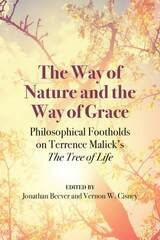
The Way of Nature and the Way of Grace
Philosophical Footholds on Terrence Malick's "The Tree of Life"Jonathan Beever and Vernon W. Cisney
Northwestern University Press, 2016
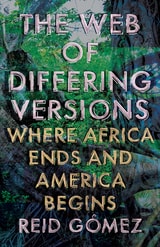
The Web of Differing Versions
Where Africa Ends and America BeginsReid Gómez
University of Minnesota Press, 2026
A visionary reckoning with prophecy, possession, and the grammar of liberation
A bold, experimental intervention in literary and theoretical discourse of colonialism and diaspora, The Web of Differing Versions engages with Leslie Marmon Silko’s 1991 Almanac of the Dead as literature, prophecy, and philosophy. Reid Gómez makes “The Indian Connection” that Silko prophesizes—Land Back!—and offers a prescient response to Silko’s enduring question: who has spiritual possession of the Américas?
Realizing the great capacity of Black and Native studies, Gómez crafts a visionary mode of scholarship that resists acknowledging conceptual, political, spiritual, formal, or linguistic borders. Rather than comparing or separating, she demonstrates how to stop telling things apart: Black|Indian, slavery|colonization, and writing|translation. Gómez shifts focus from racialized identities to the prophesied world itself, working with music, literature, and language to elaborate the connections that exist between racialized bodies, land, and sea as she emphasizes the ubiquity of escape, revolt, and beauty/hózhǫ́.
A theoretical composition, this book enacts a practice of re-visioning that uses Silko’s Almanac to challenge the limits of thought, language, and the very idea of scholarship. Attending the multiplicity of time into times, past into pasts, future into futures, The Web of Differing Versions offers a new grammar for a shared and violent world.
Retail e-book files for this title are screen-reader friendly.
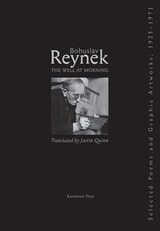
The Well at Morning
Selected Poems, 1925–1971Bohuslav Reynek
Karolinum Press, 2017
A chaffinch in a tree
of cherry sings merrily
spring’s introit.
Its blazing bobble dwells
in leaves, alive, and swells
in scarlet.
The flowers are flares of white.
The chaffinch has gone quiet
and turned sky-gazer.
My eyes close on the day:
an orb revolves in grey
and red and azure.
Poet and artist Bohuslav Reynek spent most of his life in the relative obscurity of the Czech-Moravian Highlands; although he suffered at the hands of the Communist regime, he cannot be numbered among the dissident poets of Eastern Europe who won acclaim for their political poetry in the second half of the twentieth century. Rather, Reynek belongs to an older pastoral-devotional tradition—a kindred spirit to the likes of English-language poets Gerard Manley Hopkins, William Wordsworth, Robert Frost, and Edward Thomas. The Well at Morning presents a selection of poems from across his life and is illustrated with twenty-five of his own color etchings. Also featuring three essays by leading scholars that place Reynek’s life and work alongside those of his better-known peers, this book presents a noted Czech artist to the wider world, reshaping and amplifying our understanding of modern European poetry.
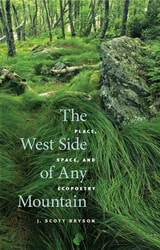
The West Side of Any Mountain
Place, Space, and EcopoetryJ. Scott Bryson
University of Iowa Press, 2005
Informed in general by current thinking in environmental theory and specifically by the work of cultural geographer Yi-Fu Tuan, The West Side of Any Mountain participates in and furthers this scholarly attention by offering an overarching theoretical framework with which to approach the field.
One area that contemporary theorists have found problematic is the dualistic civilization/wilderness binary that focuses on the divisions between culture and nature, thereby increasing the modern sense of alienation. Tuan’s place-space framework offers a succinct vocabulary for describing the attitudes of ecological poets and other nature writers in a way that avoids setting up an adversarial relationship between place and space. Scott Bryson describes the Tuanian framework and employs it to offer fresh readings of the work of four major ecopoets: Wendell Berry, Joy Harjo, Mary Oliver, and W. S. Merwin.
The West Side of Any Mountain will be of great interest to scholars and teachers working in the field of contemporary nature poetry. It is recommended for nature-writing courses as well as classes dealing with 20th-century poetry, contemporary literary criticism, and environmental theory.
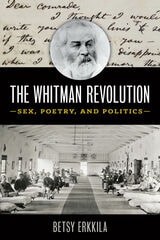
The Whitman Revolution
Sex, Poetry, and PoliticsBetsy Erkkila
University of Iowa Press, 2020
The Whitman Revolution brings together a rich collection of Betsy Erkkila’s phenomenally influential essays that have been published over the years, along with two powerful new essays. Erkkila offers a moving account of the inseparable mix of the spiritual-sexual-political in Whitman and the absolute centrality of male-male connection to his work and thinking. Her work has been at the forefront of scholarship positing that Whitman’s songs are songs not only of workers and occupations but of sex and the body, homoeroticism, and liberation. What is more, Erkkila’s writing demonstrates that this sexuality and communal impulse is central to Whitman’s revolutionary poetry and his conception of democracy itself—an insight that was all but suppressed during the mid-twentieth century emergence of American literature as a field of study.
Highlights of this collection include Erkkila’s essays on pairings such as Marx and Whitman, Dickinson and Whitman, and Melville and Whitman. Across the volume, she demonstrates an international vision that highlights the place of Leaves of Grass within a global struggle for democracy. The Whitman Revolution is evidence of Erkkila’s remarkable ability to lead critical discussions, and marks an exciting event in Whitman studies.
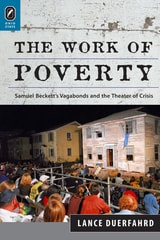
The Work of Poverty
Samuel Beckett's Vagabonds and the Theater of CrisisLance Duerfahrd
The Ohio State University Press, 2013
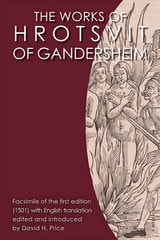
The Works of Hrotsvit of Gandersheim
Facsimile of the First Edition (1581)Hrotsvit of Gandersheim. Edited by David H. Price.
University of Illinois Press, 2017
These works by a tenth-century woman, who wrote plays when no one else in Europe was writing plays and who imitated the style of Terence when most people thought the classics had been forgotten, caused a literary sensation when they were first published in 1501.
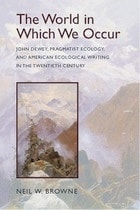
The World in Which We Occur
John Dewey, Pragmatist Ecology, and American Ecological Writing in the Twentieth CenturyNeil W. Browne
University of Alabama Press, 2007
Where nature meets democracy—John Dewey’s vision for a more connected world.
American philosopher John Dewey considered all human endeavors to be one with the natural world. In his writings, particularly Art as Experience (1934), Dewey insists on the primacy of the environment in aesthetic experience. Dewey’s conception of environment includes both the natural and the man-made. The World in Which We Occur highlights this notion in order to define “pragmatist ecology,” a practice rooted in the interface of the cultural and the natural. Neil Browne finds this to be a significant feature of some of the most important ecological writing of the last century.
To fully understand human involvement in the natural world, Browne argues that disciplinary boundaries must be opened, with profound implications for the practice of democracy. The degradation of the physical environment and democratic decay, for Browne, are rooted in the same problem: our persistent belief that humans are somehow separate from their physical environment.
Browne probes the work of a number of major American writers through the lens of Dewey’s philosophy. Among other texts examined are John Muir’s My First Summer in the Sierra (1911); Sea of Cortez (1941) by John Steinbeck and Edward Ricketts; Rachel Carson’s three books about the sea, Under the Sea-Wind (1941), The Sea Around Us (1951), and The Edge of the Sea (1955); John Haines’s The Stars, the Snow, the Fire (1989); Barry Lopez’s Arctic Dreams (1986); and Terry Tempest Williams’s Refuge (1991). Together, these texts—with their combinations of scientific observation and personal meditation—challenge the dichotomies that we have become accustomed and affirm the principles of a pragmatist ecology, one in which ecological and democratic values go hand in hand.
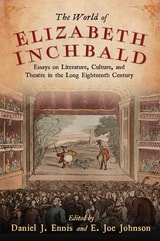
The World of Elizabeth Inchbald
Essays on Literature, Culture, and Theatre in the Long Eighteenth CenturyDaniel J. Ennis
University of Delaware Press, 2022
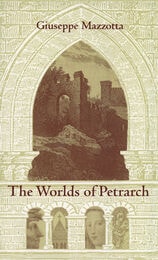
The Worlds of Petrarch
Giuseppe Mazzotta
Duke University Press, 1993
Written in a clear and passionate style, The Worlds of Petrarch takes us into the politics of culture, the poetic imagination, into history and ethics, art and music, rhetoric and theology. With this encyclopedic strategy, Mazzotta is able to demonstrate that the self for Petrarch is not a unified whole but a unity of parts, and, at the same time, that culture emerges not from a consensus but from a conflict of ideas produced by opposition and dark passion. These conflicts, intrinsic to Petrarch's style of thought, lead Mazzotta to a powerful rethinking of the concepts of "fragments" and "unity" and, finally, to a new understanding of the relationship between them.
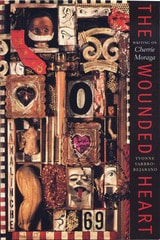
The Wounded Heart
Writing on Cherríe MoragaBy Yvonne Yarbro-Bejarano
University of Texas Press, 2001
In her work as poet, essayist, editor, dramatist, and public intellectual, Chicana lesbian writer Cherríe Moraga has been extremely influential in current debates on culture and identity as an ongoing, open-ended process. Analyzing the "in-between" spaces in Moraga's writing where race, gender, class, and sexuality intermingle, this first book-length study of Moraga's work focuses on her writing of the body and related material practices of sex, desire, and pleasure.
Yvonne Yarbro-Bejarano divides the book into three sections, which analyze Moraga's writing of the body, her dramaturgy in the context of both dominant and alternative Western theatrical traditions, and her writing of identities and racialized desire. Through close textual readings of Loving in the War Years, Giving Up the Ghost, Shadow of a Man, Heroes and Saints, The Last Generation, and Waiting in the Wings, Yarbro-Bejarano contributes to the development of a language to talk about sexuality as potentially empowering, the place of desire within politics, and the intricate workings of racialized desire.
The Writing of Elena Poniatowska
Engaging DialoguesBy Beth E. Jörgensen
University of Texas Press, 1994
Elena Poniatowska is one of Latin America's most distinguished and innovative living writers. Advocacy of women and the poor in their struggle for social and economic justice, denunciation of the repression of that struggle, and a tendency to blur the boundaries between conventional literary forms characterize her writing practice.
Asserting that Poniatowska's writing has been uniquely shaped by her experience as a journalist and interviewer, Beth Jörgensen addresses four important texts: Palabras cruzadas (interviews), Hasta no verte Jesús mío (testimonial novel), La noche de Tlatelolco (oral history), and La "Flor de Lis" (novel of development). She also treats related pieces, including Lilus Kikus (short fiction), De noche vienes (short stories), Fuerte es el silencio (chronicles), and several of Poniatowska's essays. Her readings incorporate a variety of critical approaches within a feminist framework.
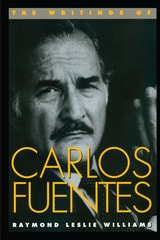
The Writings of Carlos Fuentes
By Raymond Leslie Williams
University of Texas Press, 1996
Smitten by the modernity of Cervantes and Borges at an early age, Carlos Fuentes has written extensively on the cultures of the Americas and elsewhere. His work includes over a dozen novels, among them The Death of Artemio Cruz, Christopher Unborn, The Old Gringo, and Terra Nostra, several volumes of short stories, numerous essays on literary, cultural, and political topics, and some theater.
In this book, Raymond Leslie Williams traces the themes of history, culture, and identity in Fuentes' work, particularly in his complex, major novel Terra Nostra. He opens with a biography of Fuentes that links his works to his intellectual life. The heart of the study is Williams' extensive reading of the novel Terra Nostra, in which Fuentes explores the presence of Spanish culture and history in Latin America. Williams concludes with a look at how Fuentes' other fiction relates to Terra Nostra, including Fuentes' own division of his work into fourteen cycles that he calls "La Edad del Tiempo," and with an interview in which Fuentes discusses his concept of this cyclical division.
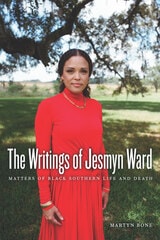
The Writings of Jesmyn Ward
Matters of Black Southern Life and DeathMartyn Bone
University of Iowa Press, 2025
Martyn Bone thoughtfully examines key themes running throughout Ward’s writing: Black life in the U.S. South; the legacies of slavery and segregation; neoliberalism as the contemporary form of capitalism; environmental crisis in the Anthropocene; and human-animal relations. Bone also connects Ward’s work to major figures in the U.S. literary canon, with particular focus on William Faulkner, Zora Neale Hurston, and Toni Morrison.
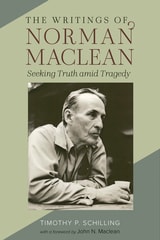
The Writings of Norman Maclean
Seeking Truth amid TragedyTimothy P. Schilling
University of Nevada Press, 2024
The Writings of Norman Maclean: Seeking Truth amid Tragedy provides the first critical reassessment of this celebrated author’s work in more than a decade. In his study, Timothy P. Schilling focuses on Maclean’s attempt, in A River Runs through It and Other Stories and Young Men and Fire, to come to grips with the tragic side of human existence. From the 1938 death of his brother Paul to the 1949 deaths of thirteen firefighters in Montana’s Mann Gulch wildfire, Maclean is driven by a desire to discover ultimate meaning—the truth—in the face of haunting tragedy. Through careful analysis of all of Maclean’s published works, Schilling highlights the audaciousness of Maclean’s quest to wrest free an answer from “the universe.”
Ever open to scientific, literary, philosophical, and theological ways of viewing reality, Maclean found ambiguity, paradoxically, to be an essential tool for probing the truth. Beyond exploring Maclean’s use of this tool, Schilling breaks new ground by considering Maclean’s invocation of the Transcendentals in “A River Runs through It,” noting the sly homage Maclean pays to Izaak Walton, examining Maclean’s often-neglected “Other Stories,” assessing Robert Redford’s film adaptation of “A River Runs through It,” and providing the most thorough exploration of Young Men and Fire yet available.
With this book, Schilling offers a current and complete analysis of Maclean—one of the most iconic figures in Western American literature.
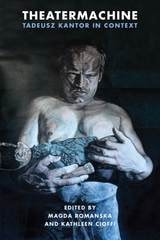
Theatermachine
Tadeusz Kantor in ContextEdited by Magda Romanska and Kathleen Cioffi
Northwestern University Press, 2019
Theatre of the Real
Yeats, Beckett, and SondheimGina Masucci MacKenzie
The Ohio State University Press, 2008
Theodore Dreiser - American Writers 102
University of Minnesota Pamphlets on American WritersW.M. Frohock
University of Minnesota Press, 1972
Theodore Dreiser - American Writers 102 was first published in 1972. Minnesota Archive Editions uses digital technology to make long-unavailable books once again accessible, and are published unaltered from the original University of Minnesota Press editions.
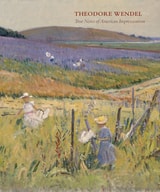
Theodore Wendel
True Notes of American ImpressionismTheodore Wendel
The Artist Book Foundation, 2019
One of the original "Duveneck boys" who studied in Munich at the Royal Academy, Theodore Wendel followed his mentor to Florence and Venice; he later went on to Paris and ultimately joined a colony of young artists at Giverny. The scenes and subject matter in the works he completed there are among the earliest by an American artist to adopt and evolve Impressionist strategies. Upon his return to America, he spent the next decades rendering scenes of the farmland and coast north of Boston that contemporary critics acclaimed as some of the best they had seen. Yet despite his talent and the significant accolades earned during his career, in the near-century following his death the recognition of his achievements has faded. The Artist Book Foundation is delighted to have the opportunity to remedy this siutation with its forthcoming monograph on the artist, Theodore Wendel: True Notes of American Impressionism.
Laurene Buckley's years of exhaustive research inform an engaging and detailed narrative of Wendel's time in Europe and his many years capturing the essence of the farms and fishing villages along the rural coast of Massachusetts. Thanks to her efforts, the book will feature many of his best works, a number of which are in private collections. An informative introduction by William H. Gerdts provides significant artistic context for Wendel and explains the artist's deft ability to draw the viewer into a scene. Concluding the monograph, an extensive chronology, exhibition history, and bibliography complete the scholarship on this long overdue tribute to a master of American Impressionism.
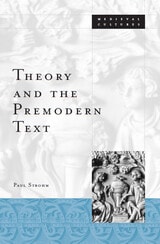
Theory And The Premodern Text
Paul Strohm
University of Minnesota Press, 2000
A major reconsideration of relations between new theories and old texts.
Medieval Studies/Literary Theory
A major reconsideration of relations between new theories and old texts. The work of Paul Strohm allies the most distinguished traditions of medieval study with the most challenging and innovative of theoretical approaches. These features, working together to revise and expand our understanding of both medieval texts and contemporary critical practice, are apparent in full and compelling force in this collection of essays, most now in print for the first time. In a range of theoretical engagements with late medieval texts, dealing with social practice, time, and narrative, this volume proposes a "practical" relation between the text and the theory that illuminates it.Insisting on the imaginative multiplicity of the text, Strohm finds in theory an augmentation of interpretive possibilities-an augmentation that sometimes requires respectful disagreement with what a work says-or seems to want known-about itself. He thus defines theory as "any standpoint from which we might challenge a text’s self-understanding." Coupled with this strategic disrespect is a new and amplified form of respect-for the text as a meaning-making system, for its unruly power and its unpredictable effects in the world.In this spirit, Strohm offers new and illustrative readings of Hoccleve’s "Male Regle" and Regiment of Princes, Ricardian coronation documents, Chaucer’s "Cook’s Tale," Capgrave’s chronicle, the Gesta Henrici Quinti, records of the king’s bench, Malory’s "Knight of the Cart," and other later medieval texts. Throughout, Strohm traverses categories of "literary" and "non-literary" in the service of a more comprehensive understanding of texts and the resourcefulness with which they accomplish their social work.Medieval Cultures Series, volume 26Translation Inquiries: University of Minnesota Press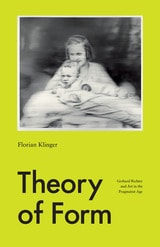
Theory of Form
Gerhard Richter and Art in the Pragmatist AgeFlorian Klinger
University of Chicago Press, 2022
In this study of the practice of contemporary painter Gerhard Richter, Florian Klinger proposes a fundamental change in the way we think about art today. In reaction to the exhaustion of the modernist-postmodernist paradigm’s negotiation of the “essence of art,” he takes Richter to pursue a pragmatist model that understands artistic form as action. Here form is no longer conceived according to what it says—as a vehicle of expression, representation, or realization of something other than itself—but strictly according to what it does.
Through its doing, Klinger argues, artistic form is not only more real but also more shared than non-artistic reality, and thus enables interaction under conditions where it would otherwise not be possible. It is a human practice aimed at testing and transforming the limits of shared reality, urgently needed in situations where such reality breaks down or turns precarious. Drawing on pragmatist thought, philosophical aesthetics, and art history, Klinger’s account of Richter’s practice offers a highly distinctive conceptual alternative for contemporary art in general.
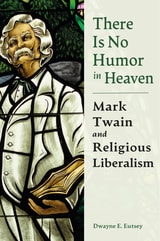
There is No Humor in Heaven
Mark Twain and Religious LiberalismDwayne E. Eutsey
University of Missouri Press, 2025
In There is No Humor in Heaven, Dwayne Eutsey challenges the persistent view of Twain as a hostile critic of religion by placing him within the prevailing liberal religious ethos of his time. From Hannibal to the western frontier and from Hartford to the wider world, Eutsey contends Twain’s vocation as a humorist was rooted in his frustrated youthful ambition to become a preacher of the Gospel. Throughout his life, his friendships with several influential liberal ministers, each of them espousing various forms of the era’s diverse progressive theology, informed not only Twain’s evolving religious worldview but his lecture performances and literary output.
There is No Humor in Heaven traces unconventional theological influences on Twain ranging from African-American spirituality, Freemasonry, and frontier Unitarianism to devout Liberal Christianity, radical Free Religion, and esoteric Hinduism. Drawing from Twain’s writings, documents, personal notes, and more, There is No Humor in Heaven offers readers a radical re-examination of the spiritually creative vitality of a controversial literary giant.
They Have All Been Healed
Reading Robert WalserJan Plug
Northwestern University Press, 2016
Thinking in Henry James
Sharon Cameron
University of Chicago Press, 1989
Thinking with Shakespeare
Essays on Politics and LifeJulia Reinhard Lupton
University of Chicago Press, 2011