Results by title
4127 books match the query 'Science' and 980 start with t
The Colorado Plateau II
Biophysical, Socioeconomic, and Cultural ResearchEdited by Charles van Riper III and David J. Mattson
University of Arizona Press, 2005
The Colorado Plateau III
Integrating Research and Resources Management for Effective ConservationEdited by Charles van Riper III and Mark K. Sogge
University of Arizona Press, 2008
The Colorado Plateau IV
Shaping Conservation Through Science and ManagementCharles van Riper
University of Arizona Press, 2010
This book focuses on the integration of science and resource management issues in this unique and highly varied environment. Broken into three subsections, this volume addresses conservation biology, biophysical resources, and inventory and monitoring concerns. The chapters range in content, addressing conservation issues—past, present, and future—on the Colorado Plateau, measurement of human impacts on resources, grazing and wildland-urban interfaces, and tools and methods for monitoring habitats and species.
An informative read for people interested in the conservation and natural history of the region, the book will also serve as a valuable reference for those people engaged in the management of cultural and biological resources of the Colorado Plateau, as well as scientists interested in methods and tools for land and resource management throughout the West.
The Colorado Plateau V
Research, Environmental Planning, and Management for Collaborative ConservationEdited by Charles van Riper III, Miguel L. Villarreal, Carena J. van Riper, and Matthew J. Johnson
University of Arizona Press, 2012
This volume, the fifth from the University of Arizona Press and the tenth overall, focuses on adaptation of resource management and conservation to climate change and water scarcity, protecting biodiversity through restructured energy policies, ensuring wildlife habitat connectivity across barriers, building effective conservation networks, and exploring new opportunities for education and leadership in conservation science.
An informative read for people interested in the conservation and natural history of the region, the book will also serve as a valuable reference for those people engaged in the management of cultural and biological resources of the Colorado Plateau, as well as scientists interested in methods and tools for land and resource management throughout the West.
The Colorado Plateau VI
Science and Management at the Landscape ScaleEdited by Laura Foster Huenneke, Charles van Riper, and Kelley Ann Hays-Gilpin
University of Arizona Press, 2015
The Colorado Plateau VI’s contributors show how new technologies for monitoring, spatial analysis, restoration, and collaboration improve our understanding, management, and conservation of outcomes at the appropriate landscape scale for the Colorado Plateau. The volume’s chapters fall into five major themes: monitoring as a key tool for addressing management challenges, restoration approaches to improving ecosystem condition and function, collaboration and organizational innovations to achieve conservation and management objectives, landscape-scale approaches to understanding, and managing key species and ecological communities.
Focusing on the integration of science into resource management issues over the Colorado Plateau, this volume includes contributions from dozens of leading scholars of the region. The Colorado Plateau VI proves a valuable resource to all interested in the conservation management, natural history, and cultural biological resources of the Colorado Plateau.
The Colorado Plateau
Cultural, Biological, and Physical ResearchCharles van Riper
University of Arizona Press, 2004
The Colors of Mammals
Linking Evolution, Development, Perception, and CultureTim Caro
University of Chicago Press, 2026
A principal coloration scientist offers a comprehensive and beautifully illustrated synthesis of coloration in mammals, weaving together contemporary research on evolution, underlying genetics, visual systems, and relevance to humans.
Why are giant pandas black and white, mandrills red and blue, but mice brown? How do mammalian colors and patterns develop? And why do we see in three colors, but deer do not? A cadre of evolutionary scientists, including geneticists, behavioral ecologists, visual ecologists, and anthropologists has worked for over a century to answer these and other questions about the origin and functions of mammal coloration in nature. One of them is celebrated biologist Tim Caro, who has studied animal coloration for over three decades. In this landmark book, he presents a synthesis of experimental and observational studies to explain how and why animal coloration has evolved for three primary reasons: protection against predators, communication, and to respond to environmental factors. Furthermore, Caro provides accessible descriptions of the various genetic and visual mechanisms that have shaped mammals’ extraordinarily diverse colors and patterns.
Victorian naturalists were the first to recognize that coloration influences individuals’ survival and reproduction, and this led to an explosion of research on its adaptive significance a century later. Then, at the beginning of the twentieth century, biologists began to work on the genomic and developmental basis of coloration. Since then, genetic studies on model organisms, particularly mice, have led to a deep understanding of the genes regulating the production of melanin pigments and lately, pattern formation. Simultaneously, scientists have studied organisms’ color perception. However, these functional, molecular, and mechanistic approaches rarely overlap, as they historically emanate from different areas of science. In this book, Caro ties these areas of research together for the first time. Caro outlines perception and production of color; teases apart different aspects of protective coloration; discusses social and sexual signaling; explores environmental drivers of coloration in nonhuman mammals, including domesticated species; and discusses human biology and our use of color in clothing. The resulting volume offers readers both a holistic view of today’s science and an honest assessment of the remaining questions for future research.

The Comparative Anatomy and Histology of the Cerebellum
From Monotremes through ApesOlof LarsellJan Jansen, Editor
University of Minnesota Press, 1970
The Comparative Anatomy and Histology of the Cerebellum was first published in 1970. Minnesota Archive Editions uses digital technology to make long-unavailable books once again accessible, and are published unaltered from the original University of Minnesota Press editions.
This is the second volume of the late Dr. Larsell's comprehensive monograph on the cerebellum, the first volume of which is described below. A third volume, on the human cerebellum, will be published by the University of Minnesota Press next spring to complete the work.
This second volume deals with the morphogenetic development and morphology of the cerebellum of all orders of mammals from monotremes through apes. The descriptions cover the cerebellum in about forty species with special emphasis on the cerebellum of the albino rate, rabbit, cat, and rhesus monkey. Dr. Larsell's comparative anatomical studies over a period of many years led to the conclusion that fundamentally the mammalian cerebellum is composed of ten subdivisions. With few exceptions (the smallest and most primitive cerebella) the subdivisions are identified in all mammals. The descriptions of the cerebella are based on the author's personal investigations but the relevant literature is thoroughly reviewed also.
The Comparative Anatomy and Histology of the Cerebellum
The Human Cerebellum, Cerebellar Connections, and Cerebellar CortexOlof Larsell and Jan JansenForeword by Robert S. Dow
University of Minnesota Press, 1972
The Comparative Anatomy and Histology of the Cerebellum was first published in 1972. Minnesota Archive Editions uses digital technology to make long-unavailable books once again accessible, and are published unaltered from the original University of Minnesota Press editions.
This is the third and final volume of the late Dr. Larsell's definitive work on the cerebellum, brought to completion for publication by Dr. Jansen. Two additional contributing authors for this volume are Enrico Mugnaini, M.D., and Helge K. Korneliussen, M.D.
The first section of this volume deals with the morphology of the human cerebellum. The morphogenetic development, the fissure formation, and the differentiation of the cerebellar lobules are described in detail, and followed by a comprehensive account of the adult cerebellum, its lobes and lobules. It is shown that the ten major lobules which Dr. Larsell distinguished in other mammals are recognizable also in man.
Chapters on the cerebellum connections include detailed accounts of all afferent and efferent cerebellar tracts. A subsequent chapter, by Drs. Jansen and Korneliussen, is devoted to the fundamental plan of cerebellar organization. The final chapters, by Dr. Mugnaini, deal with the histology and cytology of the cerebellar cortex. A comprehensive account is given of electron micrographs, a virtual atlas of the ultrastructure of the cerebellar cortex, illustrate the description.
The Comparative Approach in Evolutionary Anthropology and Biology
Charles L. Nunn
University of Chicago Press, 2011

The Comparative Approach in Evolutionary Anthropology and Biology
Charles L. Nunn
University of Chicago Press, 2011
The Comparative Reception of Darwinism
Edited by Thomas F. Glick
University of Chicago Press, 1988
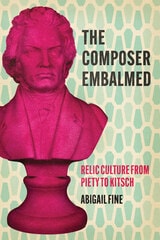
The Composer Embalmed
Relic Culture from Piety to KitschAbigail Fine
University of Chicago Press, 2025
During the nineteenth century, music institutions promoted artworks they deemed timeless and made composers into figureheads of a lasting Western canon. Alongside this institutional face of the canon was a more intimate impulse to preserve, touch, and embrace the residues of the dead. In Germany and Austria between 1870 and 1930, music lovers venerated the bodies, houses, and belongings of composers as relics, shrines, and talismans. In The Composer Embalmed, Abigail Fine documents the vernacular and eccentric ways that composers have been remembered.
Fine navigates a wealth of unknown archival material to recover the stories of devotees: from pilgrims who felt time stop in historic houses to music-loving doctors who made skulls into sacred specimens, dilettantes who displayed Beethoven’s mask as a relic of the “beautiful death,” and interwar critics of those dilettantes who disparaged piety as a false religion, a kitsch replica. In isolation, these practices may look like simple acts of affection. But in the aggregate, Fine asserts, acts of devotion constituted what we might broadly understand as relic culture—a culture that sought to possess the body of the departed genius, and that superimposed habits of anthropological collecting onto artifacts of Austro-German heritage. By excavating objects, ephemera, amateur lyric, visitors’ books, letters, and travelogues, The Composer Embalmed reveals the underbelly of the canon, where guilty pleasures blur the boundary between sanctity and desecration.
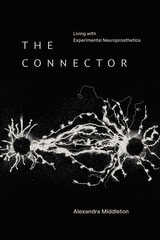
The Connector
Living with Experimental NeuroprostheticsAlexandra Middleton
Duke University Press, 2026
The Contours of America’s Cold War
Matthew Farish
University of Minnesota Press, 2010
Geographic knowledge generated for the Cold War was a form of power, Farish argues, and it was given an urgency in the panels, advisory boards, and study groups established to address the challenges of an atomic world. He investigates how the scales of the city, the continent, the region, the globe, and, by extension, outer space, were brought together as strategic spaces, categories that provided a cartographic orientation for the Cold War and influenced military deployments, diplomacy, espionage, and finance.
Farish analyzes the surprising range of knowledge production involved in the project of claiming and classifying American space. Backed by military and intelligence funding, physicists and policy makers, soldiers and social scientists came together to study and shape the United States and its place in a divided world.
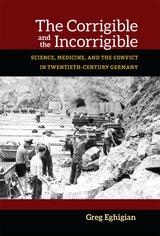
The Corrigible and the Incorrigible
Science, Medicine, and the Convict in Twentieth-Century GermanyGreg Eghigian
University of Michigan Press, 2015
The Cosmic Zoom
Scale, Knowledge, and MediationZachary Horton
University of Chicago Press, 2021
Horton uses the cosmic zoom as a starting point to develop a cross-disciplinary theory of scale as mediated difference. He considers the origins of our notions of scale, how scalar mediation functions differently in analog and digital modes, and how cosmic zoom media has influenced scientific and popular views of the world. Analyzing literature, film, digital media, and database history, Horton establishes a much-needed framework for thinking about scale across multiple domains and disciplines.
The Court Midwife
Justine Siegemund
University of Chicago Press, 2005
The Courtiers' Anatomists
Animals and Humans in Louis XIV's ParisAnita Guerrini
University of Chicago Press, 2015
Through the stories of Duverney and Perrault, as well as those of Marin Cureau de la Chambre, Jean Pecquet, and Louis Gayant, The Courtiers' Anatomists explores the relationships between empiricism and theory, human and animal, as well as the origins of the natural history museum and the relationship between science and other cultural activities, including art, music, and literature.
The Cow with Ear Tag #1389
Kathryn Gillespie
University of Chicago Press, 2018
The Craft of Research
Wayne C. Booth, Gregory G. Colomb, and Joseph M. Williams
University of Chicago Press, 1995
This book is organized into four parts. Part One is a spirited introduction to the distinctive nature, values, and protocols of research. Part Two demystifies the art of discovering a topic. It outlines a wide range of sources, among them personal interests and passions. Parts Three and Four cover the essentials of argument—how to make a claim and support it—and ways to outline, draft, revise, rewrite, and polish the final report. Part Three is a short course in the logic, structure, uses, and common pitfalls of argumentation. The writing chapters in Part Four show how to present verbal and visual information effectively and how to shape sentences and paragraphs that communicate with power and precision.
"A well-constructed, articulate reminder of how important fundamental questions of style and approach, such as clarity and precision, are to all research."—Times Literary Supplement
The Craft of Research, 2nd edition
Wayne C. Booth, Gregory G. Colomb, and Joseph M. Williams
University of Chicago Press, 2003
Like its predecessor, this new edition reflects the way researchers actually work: in a complex circuit of thinking, writing, revising, and rethinking. It shows how each part of this process influences the others and how a successful research report is an orchestrated conversation between a researcher and a reader. Along with many other topics, The Craft of Research explains how to build an argument that motivates readers to accept a claim; how to anticipate the reservations of thoughtful yet critical readers and to respond to them appropriately; and how to create introductions and conclusions that answer that most demanding question, "So what?"
Celebrated by reviewers for its logic and clarity, this popular book retains its five-part structure. Part 1 provides an orientation to the research process and begins the discussion of what motivates researchers and their readers. Part 2 focuses on finding a topic, planning the project, and locating appropriate sources. This section is brought up to date with new information on the role of the Internet in research, including how to find and evaluate sources, avoid their misuse, and test their reliability.
Part 3 explains the art of making an argument and supporting it. The authors have extensively revised this section to present the structure of an argument in clearer and more accessible terms than in the first edition. New distinctions are made among reasons, evidence, and reports of evidence. The concepts of qualifications and rebuttals are recast as acknowledgment and response. Part 4 covers drafting and revising, and offers new information on the visual representation of data. Part 5 concludes the book with an updated discussion of the ethics of research, as well as an expanded bibliography that includes many electronic sources.
The new edition retains the accessibility, insights, and directness that have made The Craft of Research an indispensable guide for anyone doing research, from students in high school through advanced graduate study to businesspeople and government employees. The authors demonstrate convincingly that researching and reporting skills can be learned and used by all who undertake research projects.
New to this edition:
Extensive coverage of how to do research on the internet, including how to evaluate and test the reliability of sources
New information on the visual representation of data
Expanded bibliography with many electronic sources
The Craft of Science Writing
Selections from “The Open Notebook,” Expanded EditionEdited by Siri Carpenter
University of Chicago Press, 2024
Science writing has never been so critical to our world, and the demands on writers have never been greater. On any given day, a writer might need to explain the details of AI, analyze developments in climate change research, or serve as a watchdog helping to ensure the integrity of the scientific enterprise. At the same time, writers must spin tales that hook and keep readers, despite the endless other demands on their attention. How does one do it? The Craft of Science Writing is the authoritative guide.
With pieces curated from the archives of science writers’ go-to online resource, The Open Notebook, this book explores strategies for finding and shaping story ideas, pitching editors, and building a specialty in science writing. It delves into fundamental skills that every science writer must learn, including planning their reporting; identifying, interviewing, and quoting sources; organizing interview notes; and crafting stories that engage and inform audiences. This expanded edition includes new introductory material and nine new essays focusing on such topics as how to establish a science beat, how to find and use quotes, how to critically evaluate scientific claims, how to use social media for reporting, and how to do data-driven reporting. In addition, there are essays on inclusivity in science writing, offering strategies for eradicating ableist language from stories, working with sensitivity readers, and breaking into English-language media for speakers of other languages.
Through interviews with leading journalists offering behind-the-scenes inspiration as well as in-depth essays on the craft offering practical advice, readers will learn how the best science stories get made, from conception to completion.
Contributors:
Humberto Basilio, Siri Carpenter, Jeanne Erdmann, Dan Ferber, Tina Casagrand Foss, Geoffrey Giller, Laura Helmuth, Jane C. Hu, Alla Katsnelson, Roxanne Khamsi, Betsy Ladyzhets, Jyoti Madhusoodanan, Amanda Mascarelli, Robin Meadows, Kate Morgan, Tiên Nguyễn, Michelle Nijhuis, Aneri Pattani, Rodrigo Pérez Ortega, Mallory Pickett, Kendall Powell, Tasneem Raja, Sandeep Ravindran, Marion Renault, Julia Rosen, Megha Satyanarayana, Christina Selby, Knvul Sheikh, Abdullahi Tsanni, Alexandra Witze, Katherine J. Wu, Wudan Yan, Ed Yong, Rachel Zamzow, Sarah Zhang, and Carl Zimmer
The Craft of Scientific Communication
Joseph E. Harmon and Alan G. Gross
University of Chicago Press, 2010
The ability to communicate in print and person is essential to the life of a successful scientist. But since writing is often secondary in scientific education and teaching, there remains a significant need for guides that teach scientists how best to convey their research to general and professional audiences. The Craft of Scientific Communication will teach science students and scientists alike how to improve the clarity, cogency, and communicative power of their words and images.
In this remarkable guide, Joseph E. Harmon and Alan G. Gross have combined their many years of experience in the art of science writing to analyze published examples of how the best scientists communicate. Organized topically with information on the structural elements and the style of scientific communications, each chapter draws on models of past successes and failures to show students and practitioners how best to negotiate the world of print, online publication, and oral presentation.
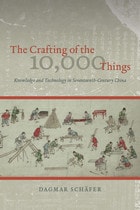
The Crafting of the 10,000 Things
Knowledge and Technology in Seventeenth-Century ChinaDagmar Schäfer
University of Chicago Press, 2011
The last decades of the Ming dynasty, though plagued by chaos and destruction, saw a significant increase of publications that examined advances in knowledge and technology. Among the numerous guides and reference books that appeared during this period was a series of texts by Song Yingxing (1587–1666?), a minor local official living in southern China. His Tiangong kaiwu, the longest and most prominent of these works, documents the extraction and processing of raw materials and the manufacture of goods essential to everyday life, from yeast and wine to paper and ink to boats, carts, and firearms.
In The Crafting of the 10,000 Things, Dagmar Schäfer probes this fascinating text and the legacy of its author to shed new light on the development of scientific thinking in China, the purpose of technical writing, and its role in and effects on Chinese history. Meticulously unfolding the layers of Song’s personal and cultural life, Schäfer chronicles the factors that motivated Song to transform practical knowledge into written culture. She then examines how Song gained, assessed, and ultimately presented knowledge, and in doing so articulates this era’s approaches to rationality, truth, and belief in the study of nature and culture alike. Finally, Schäfer places Song’s efforts in conjunction with the work of other Chinese philosophers and writers, before, during, and after his time, and argues that these writings demonstrate collectively a uniquely Chinese way of authorizing technology as a legitimate field of scholarly concern and philosophical knowledge.
Offering an overview of a thousand years of scholarship, The Crafting of the 10,000 Things explains the role of technology and crafts in a culture that had an outstandingly successful tradition in this field and was a crucial influence on the technical development of Europe on the eve of the Industrial Revolution.
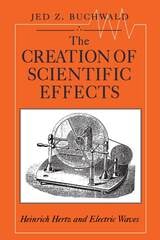
The Creation of Scientific Effects
Heinrich Hertz and Electric WavesJed Z. Buchwald
University of Chicago Press, 1994
Drawing on the lab notes, published papers, and unpublished manuscripts of Heinrich Hertz, Buchwald recreates Hertz's 1887 invention of a device that produced electromagnetic waves in wires. The invention itself was serendipitous and the device was quickly transformed, but Hertz's early experiments led to major innovations in electrodynamics. Buchwald explores the difficulty Hertz had in reconciling the theories of other physicists, including Hermann von Helmholtz and James Clerk Maxwell, and he considers the complex and often problematic connections between theory and experiment.
In this first detailed scientific biography of Hertz and his scientific community, Buchwald demonstrates that tacit knowledge can be recovered so that we can begin to identify the unspoken rules that govern scientific practice.
The Crisis of Meaning and the Life-World
Husserl, Heidegger, Arendt, PatockaLubica Ucník
Ohio University Press, 2016
In The Crisis of Meaning and the Life-World, Ľubica Učník examines the existential conflict that formed the focus of Edmund Husserl’s final work, which she argues is very much with us today: how to reconcile scientific rationality with the meaning of human existence. To investigate this conundrum, she places Husserl in dialogue with three of his most important successors: Martin Heidegger, Hannah Arendt, and Jan Patočka.
For Husserl, 1930s Europe was characterized by a growing irrationalism that threatened to undermine its legacy of rational inquiry. Technological advancement in the sciences, Husserl argued, had led science to forget its own foundations in the primary “life-world”: the world of lived experience. Renewing Husserl’s concerns in today’s context, Učník first provides an original and compelling reading of his oeuvre through the lens of the formalization of the sciences, then traces the unfolding of this problem through the work of Heidegger, Arendt, and Patočka.
Although many scholars have written on Arendt, none until now has connected her philosophical thought with that of Czech phenomenologist Jan Patočka. Učník provides invaluable access to the work of the latter, who remains understudied in the English language. She shows that together, these four thinkers offer new challenges to the way we approach key issues confronting us today, providing us with ways to reconsider truth, freedom, and human responsibility in the face of the postmodern critique of metanarratives and a growing philosophical interest in new forms of materialism.
The Critique of Scientific Reason
Kurt Hübner
University of Chicago Press, 1983
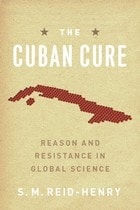
The Cuban Cure
Reason and Resistance in Global ScienceS. M. Reid-Henry
University of Chicago Press, 2010
After Fidel Castro came to power in 1959, his second declaration, after socialism, was that Cuba would become a leader in international science. In biotechnology he would be proven right and, today, Cuba counts a meningitis B vaccine and cutting-edge cancer therapies to its name. But how did this politically and geographically isolated country make such impressive advances? Drawing on a unique ethnography, and blending the insights of anthropology, sociology, and geography, The Cuban Cure shows how Cuba came to compete with U. S. pharmaceutical giants—despite a trade embargo and crippling national debt.
In uncovering what is distinct about Cuban biomedical science, S. M. Reid-Henry examines the forms of resistance that biotechnology research in Cuba presents to the globalization of western models of scientific culture and practice. He illustrates the epistemic, social, and ideological clashes that take place when two cultures of research meet, and how such interactions develop as political and economic circumstances change. Through a novel argument about the intersection of socioeconomic systems and the nature of innovation, The Cuban Cure presents an illuminating study of politics and science in the context of globalization.
The Cultivation of Whiteness
Science, Health, and Racial Destiny in AustraliaWarwick Anderson
Duke University Press, 2006
“[Anderson] writes with passion, wit, and panache, and the principal virtues of The Cultivation of Whiteness are the old-fashioned ones of thoroughness, accuracy, and impeccable documentation. . . . [His] sensitive study is a model of how contentious historical issues can be confronted.”—W. F. Bynum, Times Literary Supplement
“One of the virtues of The Cultivation of Whiteness is that it brings together aspects of Australian life and history that are now more often separated—race and environment, blood and soil, medicine and geography, tropical science and urban health, biological thought and national policy, Aboriginality and immigration, the body and the mind. The result is a rich and subtle history of ideas that is both intellectual and organic, and that vividly evokes past states of mind and their lingering, haunting power.”—Tom Griffiths, Sydney Morning Herald
The Cultural Lives of Whales and Dolphins
Hal Whitehead and Luke Rendell
University of Chicago Press, 2014
Unequivocally: yes. In The Cultural Lives of Whales and Dolphins, cetacean biologists Hal Whitehead, who has spent much of his life on the ocean trying to understand whales, and Luke Rendell, whose research focuses on the evolution of social learning, open an astounding porthole onto the fascinating culture beneath the waves. As Whitehead and Rendell show, cetacean culture and its transmission are shaped by a blend of adaptations, innate sociality, and the unique environment in which whales and dolphins live: a watery world in which a hundred-and-fifty-ton blue whale can move with utter grace, and where the vertical expanse is as vital, and almost as vast, as the horizontal.
Drawing on their own research as well as a scientific literature as immense as the sea—including evolutionary biology, animal behavior, ecology, anthropology, psychology, and neuroscience—Whitehead and Rendell dive into realms both humbling and enlightening as they seek to define what cetacean culture is, why it exists, and what it means for the future of whales and dolphins. And, ultimately, what it means for our future, as well.
The Culture of Feedback
Ecological Thinking in Seventies AmericaDaniel Belgrad
University of Chicago Press, 2019
The Culture of Feedback digs deep into a dazzling variety of left-of-center experiences and attitudes from this misunderstood period, bringing us a new look at the wild side of the 1970s. Belgrad shows us how ideas from systems theory were taken up by the counterculture and the environmental movement, eventually influencing a wide range of beliefs and behaviors, particularly related to the question of what is and is not intelligence. He tells the story of a generation of Americans who were struck by a newfound interest in—and respect for—plants, animals, indigenous populations, and the very sounds around them, threading his tapestry with cogent insights on environmentalism, feminism, systems theory, and psychedelics. The Culture of Feedback repaints the familiar image of the ’70s as a time of Me Generation malaise to reveal an era of revolutionary and hopeful social currents, driven by desires to radically improve—and feed back into—the systems that had come before.
The Cybernetic Brain
Sketches of Another FutureAndrew Pickering
University of Chicago Press, 2010
The Cybernetic Brain explores a largely forgotten group of British thinkers, including Grey Walter, Ross Ashby, Gregory Bateson, R. D. Laing, Stafford Beer, and Gordon Pask, and their singular work in a dazzling array of fields. Psychiatry, engineering, management, politics, music, architecture, education, tantric yoga, the Beats, and the sixties counterculture all come into play as Pickering follows the history of cybernetics’ impact on the world, from contemporary robotics and complexity theory to the Chilean economy under Salvador Allende. What underpins this fascinating history, Pickering contends, is a shared but unconventional vision of the world as ultimately unknowable, a place where genuine novelty is always emerging. And thus, Pickering avers, the history of cybernetics provides us with an imaginative model of open-ended experimentation in stark opposition to the modern urge to achieve domination over nature and each other.
The DNA Mystique
The Gene as a Cultural IconDorothy Nelkin and M. Susan Lindee
University of Michigan Press, 2004
With a new introduction and conclusion, this edition will continue to be an engaging, accessible, and provocative text for the sociology, anthropology, and bioethics classroom, as well as stimulating reading for those generally interested in science and culture.
The Dancing Bees
Karl von Frisch and the Discovery of the Honeybee LanguageTania Munz
University of Chicago Press, 2016
The Dancing Bees draws on previously unexplored archival sources in order to reveal von Frisch’s full story, including how the Nazi government in 1940 determined that he was one-quarter Jewish, revoked his teaching privileges, and sought to prevent him from working altogether until circumstances intervened. In the 1940s, bee populations throughout Europe were facing the devastating effects of a plague (just as they are today), and because the bees were essential to the pollination of crops, von Frisch’s research was deemed critical to maintaining the food supply of a nation at war. The bees, as von Frisch put it years later, saved his life. Munz not only explores von Frisch’s complicated career in the Third Reich, she looks closely at the legacy of his work and the later debates about the significance of the bee language and the science of animal communication.
This first in-depth biography of von Frisch paints a complex and nuanced portrait of a scientist at work under Nazi rule. The Dancing Bees will be welcomed by anyone seeking to better understand not only this chapter of the history of science but also the peculiar waggles of our garden visitors.
The Dancing Universe
From Creation Myths to the Big BangMarcelo Gleiser
Dartmouth College Press, 2005
The Dark Abyss of Time
The History of the Earth and the History of Nations from Hooke to VicoPaolo Rossi
University of Chicago Press, 1984
"This book, by a distinguished Italian historian of philosophy, is a worthy successor to the author's important works on Francis Bacon and on technology and the arts. First published in Italian (in 1979), it now makes available to English readers some subtly wrought arguments about the ways in which geology and anthropology challenged biblical chronology and forced changes in the philosophy of history in the early modern era. . . . [Rossi] shows that the search for new answers about human origins spanned many disciplines and involved many fascinating intellects—Bacon, Bayle, Buffon, Burnet, Descartes, Hobbes, Holbach, Hooke, Hume, Hutton, Leibniz, de Maillet, Newton, Pufendorf, Spinoza, Toland, and, most especially, Vico, whose works are impressively and freshly reevaluated here."—Nina Gelbart, American Scientist
The Darwinian Revolution
Science Red in Tooth and ClawMichael Ruse
University of Chicago Press, 1999
For this edition Michael Ruse has written a new afterword that takes into account the research published since his book's first appearance.
"It is difficult to believe that yet another book on Darwin and the Darwinian Revolution could add anything new or contain any surprises. Ruse's book is an exception on all counts. Darwin scholars and the general reader alike can learn from it."—David L. Hull, Nature
"No other account of the Darwinian Revolution provides so detailed and sympathetic an account of the framework within which the scientific debates took place."—Peter J. Bowler, Canadian Journal of History
"A useful and highly readable synthesis. . .skillfully organized and written with verve, imagination, and welcome touches of humor."—John C. Greene, Science
The Dawn of Green
Manchester, Thirlmere, and Modern EnvironmentalismHarriet Ritvo
University of Chicago Press, 2009
The Dawn of the Deed
The Prehistoric Origins of SexJohn A. Long
University of Chicago Press, 2012
The Death of Ramón González
The Modern Agricultural DilemmaBy Angus Wright
University of Texas Press, 2005
The Death of Ramón González has become a benchmark book since its publication in 1990. It has been taught in undergraduate and graduate courses in every social science discipline, sustainable and alternative agriculture, environmental studies, ecology, ethnic studies, public health, and Mexican, Latin American, and environmental history. The book has also been used at the University of California-Santa Cruz as a model of interdisciplinary work and at the University of Iowa as a model of fine journalism, and has inspired numerous other books, theses, films, and investigative journalism pieces.
This revised edition of The Death of Ramón González updates the science and politics of pesticides and agricultural development. In a new afterword, Angus Wright reconsiders the book's central ideas within the context of globalization, trade liberalization, and NAFTA, showing that in many ways what he called "the modern agricultural dilemma" should now be thought of as a "twenty-first century dilemma" that involves far more than agriculture.
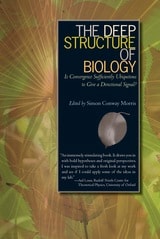
The Deep Structure of Biology
Is Convergence Sufficiently Ubiquitous to Give a Directional SignalSimon Conway Morris
Templeton Press, 2008
Twelve renowned scientists and theologians offer penetrating insights into the evolution dialogue in The Deep Structure of Biology. Each considers whether the orthodox evolution model is sufficient and offers their perspective on evolution and biology. Essays include:
- Chance and Necessity in Evolution
- Green Plants as Intelligent Organisms
- Canny Corvoids and Political Primates: A Case for Convergent Evolution in Intelligence
- Social and Cultural Evolution in the Ocean: Convergences and Contrasts with Terrestrial Systems
- Purpose in Nature: On the Possibility of a Theology of Evolution
Editor Simon Conway Morris provides the introduction, an overview of the issues, and an essay on evolution and convergence. Other contributors are Richard Lenski, George McGhee, Karl Niklas, Anthony Trewavas, Nigel Franks, Nicola Clayton, Nathan Emery, HalWhitehead, Robert Foley, Michael Ruse, Celia Deane-Drummond, and John Haught.
The discussion of biology and evolution in these essays broadens the scope of the traditional evolution discussion as it aims to stimulate the development of other research programs. Scholars in the science and religion field will find this book a valuable resource.
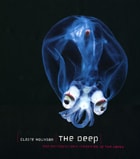
The Deep
The Extraordinary Creatures of the AbyssClaire Nouvian
University of Chicago Press, 2007
On dry land, most organisms are confined to the surface, or at most to altitudes of a hundred meters—the height of the tallest trees. In the oceans, though, living space has both vertical and horizontal dimensions: with an average depth of 3800 meters, the oceans offer 99% of the space on Earth where life can develop. And the deep sea, which has been immersed in total darkness since the dawn of time, occupies 85% of ocean space, forming the planet’s largest habitat. Yet these depths abound with mystery. The deep sea is mostly uncharted—only about 5 percent of the seafloor has been mapped with any reasonable degree of detail—and we know very little about the creatures that call it home. Current estimates about the number of species yet to be found vary between ten and thirty million. The deep sea no longer has anything to prove; it is without doubt Earth’s largest reservoir of life.
Combining the latest scientific discoveries with astonishing color imagery, The Deep takes readers on a voyage into the darkest realms of the ocean. Revealing nature’s oddest and most mesmerizing creatures in crystalline detail, The Deep features more than two hundred color photographs of terrifying sea monsters, living fossils, and ethereal bioluminescent creatures, some photographed here for the very first time. Accompanying these breathtaking photographs are contributions from some of the world’s most respected researchers that examine the biology of deep-sea organisms, the ecology of deep-sea habitats, and the history of deep-sea exploration.
An unforgettable visual and scientific tour of the teeming abyss, The Deep celebrates the incredible diversity of life on Earth and will captivate anyone intrigued by the unseen—and unimaginable—creatures of the deep sea.
The Deer and the Tiger
George B. Schaller
University of Chicago Press, 1984

The Defoliation of America
Agent Orange Chemicals, Citizens, and ProtestsAmy M. Hay
University of Alabama Press, 2022
Examines the domestic and international use of phenoxy herbicides by the United States in the mid-twentieth century.
In The Defoliation of America: Agent Orange Chemicals, Citizens, and Protests, Amy M. Hay profiles the attitudes, understandings, and motivations of grassroots activists who rose to fight the use of phenoxy herbicides, or Agent Orange chemicals as they are commonly known, in various aspects of American life during the post-WWII era. Hay focuses her analysis on citizen responses to illuminate how regulatory policies were understood, challenged, and negotiated, contributing to a growing body of research on chemical regulatory policies, risk society, and hazardous chemicals. This volume uncovers new understandings about the authority of the state and its obligation to society, the role of scientific authority and expertise, and the protests made by various groups of citizens.
First introduced in 1946, phenoxy herbicides mimic hormones in broadleaf plants, causing them to “grow to death” while grass, grains, and other monocots remain unaffected. By the 1950s, millions of pounds of these chemicals were produced annually for use in brush control, weed eradication, forest management, and other agricultural applications. Pockets of skepticism and resistance began to appear by the late 1950s, and the trend intensified after 1962 when Rachel Carson’s Silent Spring directed mainstream attention to the harm modern chemicals were causing in the natural world. It wasn’t until the Vietnam War, however, when nearly 19 million gallons of Agent Orange and related herbicides were sprayed to clear the canopy and destroy crops in Southeast Asia, that the long-term damage associated with this group of chemicals began to attract widespread attention and alarm.
Using a wide array of sources and an interdisciplinary approach, Hay contributes to the robust fields of chemical toxicity, regulation, environmental management, and public health. This study of the scientists, health and environmental activists, and veterans who fought US chemical regulatory policies and practices reveals the mechanisms, obligations, and constraints of state and scientific authority in mid-twentieth-century America. Hay also shows how these disparate and mostly forgotten citizen groups challenged the political consensus and contested government and industry narratives of chemical safety.
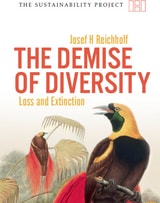
The Demise of Diversity
Loss and ExtinctionJosef Reichholf
Haus Publishing, 2009
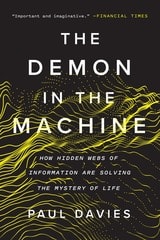
The Demon in the Machine
How Hidden Webs of Information Are Solving the Mystery of LifePaul Davies
University of Chicago Press, 1991
A Financial Times, Sunday Times, and Telegraph Best Science Book of the Year
What is life? For generations, scientists have struggled to make sense of this fundamental question, for life really does look like magic: even a humble bacterium accomplishes things so dazzling that no human engineer can match it. Huge advances in molecular biology over the past few decades have served only to deepen the mystery.
In this penetrating and wide-ranging book, world-renowned physicist and science communicator Paul Davies searches for answers in a field so new and fast-moving that it lacks a name; it is a domain where biology, computing, logic, chemistry, quantum physics, and nanotechnology intersect. At the heart of these diverse fields, Davies explains, is the concept of information: a quantity which has the power to unify biology with physics, transform technology and medicine, and force us to fundamentally reconsider what it means to be alive—even illuminating the age-old question of whether we are alone in the universe.
From life’s murky origins to the microscopic engines that run the cells of our bodies, The Demon in the Machine journeys across an astounding landscape of cutting-edge science. Weaving together cancer and consciousness, two-headed worms and bird navigation, Davies reveals how biological organisms garner and process information to conjure order out of chaos, opening a window onto the secret of life itself.
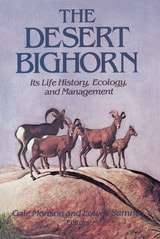
The Desert Bighorn
Its Life History, Ecology, and ManagementGale Monson
University of Arizona Press, 1980
"An intelligently researched and fully documented analysis of this noble rock-climber's life history, and ecology, and the human management of this nearly impossible-to-manage wilderness species." —American Field
"An outstanding and comprehensive work." —Books of the Southwest
"There is quite simply nothing else around that can tell you anywhere near as much about desert sheep, by anywhere near so distinguished a crew of authors." —Safari
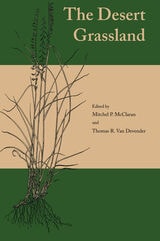
The Desert Grassland
Edited by Mitchel P. McClaran and Thomas R. Van Devender
University of Arizona Press, 1995
Leading experts in geography, biology, botany, zoology, and geoscience present new research on the desert grassland and review a vast amount of earlier work. They reveal that present-day grasses once grew in the ice-age forests that existed in these areas before the climate dried and the trees vanished and how the intensity and frequency of fire can influence the plant and animal species of the grassland. They also document how the influence of humans—from Amerindians to contemporary ranchers, public land managers, and real estate developers—has changed the relative abundance of woody and herbaceous species and how the introduction of new plants and domesticated animals to the area has also affected biodiversity. The book concludes with a review of the attempts, both failed and successful, to reestablish plants in desert grasslands affected by overgrazing, drought, and farm abandonment.
Meticulously researched and copiously illustrated, The Desert Grassland is a major contribution to ecological literature. For advanced lay readers as well as students and scholars of history, geography, and ecology, it will be a standard reference work for years to come.
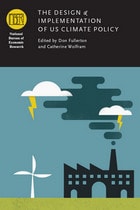
The Design and Implementation of US Climate Policy
Edited by Don Fullerton and Catherine D. Wolfram
University of Chicago Press, 2012