Results by title
22279 books match the query 'Social Science' and 4007 start with t
The Unequal Ocean
Living with Environmental Change along the Peruvian CoastMaximilian Viatori
University of Arizona Press, 2023
Tackling important subjects of global concern, the author presents a complex image of Peru’s global seascapes as historical spaces comprising precarious worlds that expose people, nonhuman species, and places to unequal levels of harm. He traces how powerful actors in Peru represent the ocean in ways that erase the systemic inequalities, histories of uneven development, and extractive violence that have shaped ocean life. These erasures underscore the need for alternative representations of the ocean that highlight the engagements and commitments that make oceanic ecologies possible, as well as the material relationships and unequal positions of different people and species within them.
The author analyzes a multitude of timely topics, including waves and coastal development, the circulation of ocean waste, El Niño warming events, and the extraction of jumbo squid. This book also addresses expanding scholarly interest in the world’s oceans as sites for thinking about social inequities, environmental politics, and multispecies relationships.
The Unheard Voices
Community Organizations and Service LearningRandy Stoecker
Temple University Press, 2009
Service learning has become an institutionalized practice in higher education. Students are sent out to disadvantaged communities to paint, tutor, feed, and help organize communities. But while the students gain from their experiences, the contributors to The Unheard Voices ask, "Does the community?"
This volume explores the impact of service learning on a community, and considers the unequal relationship between the community and the academy. Using eye-opening interviews with community-organization staff members, The Unheard Voices challenges assumptions about the effectiveness of service learning. Chapters offer strong critiques of service learning practices from the lack of adequate training and supervision, to problems of communication and issues of diversity. The book's conclusion offers ways to improve service learning so that future endeavors can be better at meeting the needs of the communities and the students who work in them.
The United States Governed by Six Hundred Thousand Despots
A True Story of SlaveryJohn Swanson Jacobs
University of Chicago Press, 2024
For one hundred and sixty-nine years, a first-person slave narrative written by John Swanson Jacobs—brother of Harriet Jacobs—was buried in a pile of newspapers in Australia. Jacobs’s long-lost narrative, The United States Governed by Six Hundred Thousand Despots, is a startling and revolutionary discovery. A document like this—written by an ex-slave and ex-American, in language charged with all that can be said about America outside America, untampered with and unedited by white abolitionists—has never been seen before. A radical abolitionist, sailor, and miner, John Jacobs has a life story that is as global as it is American. Born into slavery, by 1855 he had fled both the South and the United States altogether, becoming a stateless citizen of the world and its waters. That year, he published his life story in an Australian newspaper, far from American power and its threats. Unsentimental and unapologetic, Jacobs radically denounced slavery and the state, calling out politicians and slaveowners by their names, critiquing America’s founding documents, and indicting all citizens who maintained the racist and intolerable status quo.
Reproduced in full, this narrative—which entwines with that of his sister and with the life of their friend Frederick Douglass—here opens new horizons for how we understand slavery, race, and migration, and all that they entailed in nineteenth-century America and the world at large. To truly reckon with the lives of John Jacobs is to see with new clarity that in 1776, America embarked on two experiments at once: one in democracy, the other in tyranny.
The United States Governed by Six Hundred Thousand Despots
A True Story of Slavery; A Rediscovered Narrative, with a Full BiographyJohn Swanson Jacobs
University of Chicago Press, 2024
For one hundred and sixty-nine years, a first-person slave narrative written by John Swanson Jacobs—brother of Harriet Jacobs—was buried in a pile of newspapers in Australia. Jacobs’s long-lost narrative, The United States Governed by Six Hundred Thousand Despots, is a startling and revolutionary discovery. A document like this—written by an ex-slave and ex-American, in language charged with all that can be said about America outside America, untampered with and unedited by white abolitionists—has never been seen before. A radical abolitionist, sailor, and miner, John Jacobs has a life story that is as global as it is American. Born into slavery, by 1855, he had fled both the South and the United States altogether, becoming a stateless citizen of the world and its waters. That year, he published his life story in an Australian newspaper, far from American power and its threats. Unsentimental and unapologetic, Jacobs radically denounced slavery and the state, calling out politicians and slaveowners by their names, critiquing America’s founding documents, and indicting all citizens who maintained the racist and intolerable status quo.
Reproduced in full, this narrative—which entwines with that of his sister and with the life of their friend Frederick Douglass—here opens new horizons for how we understand slavery, race, and migration, and all that they entailed in nineteenth-century America and the world at large. The second half of the book contains a full-length, nine-generation biography of Jacobs and his family by literary historian Jonathan Schroeder. This new guide to the world of John Jacobs will transform our sense of it—and of the forces and prejudices built into the American project. To truly reckon with the lives of John Jacobs is to see with new clarity that in 1776, America embarked on two experiments at once: one in democracy, the other in tyranny.
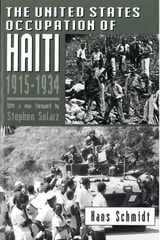
The United States Occupation of Haiti, 1915-1934
Schmidt, Hans
Rutgers University Press, 1995
"A valuable addition to Latin American and U.S. historiography." —Library Journal
"Schmidt sees American racism, bondholders cultures, the technocratic side of Progressivism, and the National City Bank looting of Haiti as the factors motivating Wilson's 1915 invasion....As a detailed case study in an exceptional manifestation of U. S. imperial control the book will attract a readership beyond students of Caribbean history." —Kirkus
"An important and well-documented account....an interesting case study in twentieth-century imperialism. Schmidt sees the occupation of Haiti as part of a general tendency in American foreign policy...Schmidt analyses in detail the mechanics of the invasion, and discusses the actions, attitudes, and policies of the U.S. administration....A model of academic elegance." —Caribbean Studies
"All the more convincing because the author has used previously inaccessible archive materials." —Journal of American History
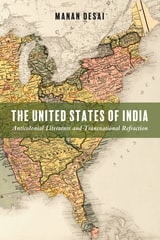
The United States of India
Anticolonial Literature and Transnational RefractionManan Desai
Temple University Press, 2020
The United States of India shows how Indian and American writers in the United States played a key role in the development of anticolonial thought in the years during and immediately following the First World War. For Indians Lajpat Rai and Dhan Gopal Mukerji, and Americans Agnes Smedley, W.E.B. Du Bois, and Katherine Mayo, the social and historical landscape of America and India acted as a reflective surface. Manan Desai considers how their interactions provided a “transnational refraction”—a political optic and discursive strategy that offered ways to imagine how American history could shed light on an anticolonial Indian future.
Desai traces how various expatriate and immigrant Indians formed political movements that rallied for American support for the cause of Indian independence. These intellectuals also developed new forms of writing about subjugation in the U.S. and India. Providing an examination of race, caste, nationhood, and empire, Desai astutely examines this network of Indian and American writers and the genres and social questions that fomented solidarity across borders.
The Universal Journalist
David Randall
Pluto Press, 2021
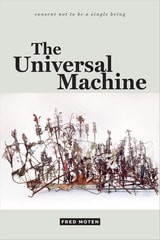
The Universal Machine
Fred Moten
Duke University Press, 2018
In The Universal Machine—the concluding volume to his landmark trilogy consent not to be a single being—Fred Moten presents a suite of three essays on Emmanuel Levinas, Hannah Arendt, and Frantz Fanon, in which he explores questions of freedom, capture, and selfhood. In trademark style, Moten considers these thinkers alongside artists and musicians such as William Kentridge and Curtis Mayfield while interrogating the relation between blackness and phenomenology. Whether using Levinas's idea of escape in unintended ways, examining Arendt's antiblackness through Mayfield's virtuosic falsetto and Anthony Braxton's musical language, or showing how Fanon's form of phenomenology enables black social life, Moten formulates blackness as a way of being in the world that evades regulation. Throughout The Universal Machine—and the trilogy as a whole—Moten's theorizations of blackness will have a lasting and profound impact.
The University Against Itself
The NYU Strike and the Future of the Academic Workplaceedited by Monika Krause, Mary Nolan, Michael Palm and Andrew Ross
Temple University Press, 2008
All of the contributors were either participants in the NYU strike -- graduate students, faculty, and organizers -- or are nationally recognized as writers on academic labor. They are deeply troubled by the ramifications of corporatizing universities. Here they spell out their concerns, offering lessons from one historic strike as well as cautions about the future of all universities.
Contributors include: Stanley Aronowitz, Barbara Bowen, Andrew Cornell, Ashley Dawson, Stephen Duncombe, Steve Fletcher, Greg Grandin, Adam Green, Kitty Krupat, Gordon Lafer, Micki McGee, Sarah Nash, Cary Nelson, Matthew Osypowski, Ed Ott, Ellen Schrecker, Susan Valentine, and the editors.
The Unpast
Elite Violence and Social Control in Brazil, 1954–2000R. S. Rose
Ohio University Press, 2005
Portuguese and Brazilian slave-traders shipped at least four million slaves to Brazil—in contrast to the five hundred thousand slaves that English vessels brought to the Americas. Controlling the vast number of slaves in Brazil became of primary importance. The Unpast: Elite Violence and Social Control in Brazil, 1954–2000 documents the ways in which the brutal methods used on plantations led directly to the phenomenon of Brazilian death squads.
The Unpast examines how and why, after the abolition of slavery, elites in Brazil imported new methods of killing, torturing, or disfiguring dissidents and the poor to maintain dominance. Bringing a critical-historical analysis to events following the 1954 suicide of President Getúlio Vargas, R. S. Rose takes the reader along a fifty-year path that helped to shape a nation’s morals. He covers the misunderstood presidency of João Goulart; the overthrow of his government by a U.S.-assisted military; the appalling dictatorship that followed; the efforts to rid the countryside of troublemakers; and the ongoing attempt to cleanse the urban environment of the needy, an endeavor that produced 32,675 victims in just two Brazilian states between 1954 and 2000.
The largest and most comprehensive documentation of suspected death-squad victims ever undertaken, The Unpast is an exposé of practices and attitudes toward the poor in Latin America’s largest country.
The Unreal Estate Guide to Detroit
Andrew Herscher
University of Michigan Press, 2012
Intense attention has been paid to Detroit as a site of urban crisis. This crisis, however, has not only yielded the massive devaluation of real estate that has so often been noted; it has also yielded an explosive production of seemingly valueless urban property that has facilitated the imagination and practice of alternative urbanisms. The first sustained study of Detroit’s alternative urban cultures, The Unreal Estate Guide to Detroit initiates a new focus on Detroit as a site not only of urban crisis but also of urban possibility.
The Guide documents art and curatorial practices, community and guerilla gardens, urban farming and forestry, cultural platforms, living archives, evangelical missions, temporary public spaces, intentional communities, furtive monuments, outsider architecture, and other work made possible by the ready availability of urban space in Detroit. The Guide poses these spaces as “unreal estate”: urban territory that has slipped through the free- market economy and entered other regimes of value, other contexts of meaning, and other systems of use. The appropriation of this territory in Detroit, the Guide suggests, offers new perspectives on what a city is and can be, especially in a time of urban crisis.
The Unruly Dead
Spirits, Memory, and State Formation in Timor-LesteLia Kent
University of Wisconsin Press, 2024
With generous, careful ethnography and incisive analysis, Kent challenges comfortable, linear narratives of transitional justice and argues that this memory work is reshaping the East Timorese social and political order—a process in which the dead are active, and sometimes disruptive, participants. Community ties and even the landscape itself are imbued with their presence and demands, and the horrific scale of mass death in recent times—at least a third of the population perished during the Indonesian occupation—means Timor-Leste’s dead have real, significant power in the country’s efforts to remember, recover, and reestablish itself.
The Unruly Facts of Race
The Politics of Knowledge Production in the Early Twentieth-Century Immigration DebateSunmin Kim
University of Chicago Press, 2026
Unfortunately, we’re all too familiar with the US’s legacy of maligning immigrants. Some Americans see immigrants as inherently threatening, a blank screen onto which the nation’s worst fears are projected. But this phenomenon is neither timeless nor static. Instead, it arose and transformed alongside the unprecedented arrival of immigrants in the early twentieth century—and the federal government’s response. In The Unruly Facts of Race, sociologist Sunmin Kim explains how American ideas about race and ethnicity were transformed in the early twentieth century as an unintended consequence of anti-immigrant mobilization.
Kim presents a wealth of archival evidence, including the proceedings of the 1907 Dillingham Commission, to reconstruct how competing racialized visions of nationhood evolved in the early twentieth-century immigration debate. Immigration restrictionist politicians believed that the United States should be a White, Anglo-Saxon, and Protestant nation. However, when they mobilized researchers—some of whom were women and/or immigrants—to gather data at a massive scale to rationalize their aims, they were met with unruly facts that did not support their racial project. Newer European immigrants, as the data showed, were not much different from descendants of earlier immigrants from northern Europe. When facts failed to support the vilification of immigrants, exclusionist politicians instead turned to race as a marker of ineluctable difference to justify their aims. This led to a new principle of national belonging: the United States transitioned to a country that encompassed various European groups, including Catholics and Jews, but excluded non-White immigrants, as they were deemed too different to become a part of the nation.
Kim’s analysis shows that throughout US history, the opportunity for belonging for some immigrants was predicated on the exclusion of others. His focus on the role of facts in the early twentieth century provides a refreshing take on why the so-called “nation of immigrants” has always demonized some immigrants while cherishing others, highlighting the selection and control of immigrants as the core principles of the American nation-building project. Amid a vitriolic explosion of American immigration discourse, Kim offers a needed corrective to and context for debates around who belongs in the United States.
The Unspeakable Vice
The Catholic Church and Homosexuality in the Twentieth CenturyFrancesco Torchiani, Translated by Johanna Bishop
University of Wisconsin Press, 2026
As gay men and lesbian women increasingly gained recognition and acceptance in twentieth-century literature and film, and subsequently in social and political movements, the Catholic Church reacted by subtly moving away from its overt condemnation of homosexuality as an urgent moral problem and toward tacitly shunning homosexuality as an “unspeakable vice.” In this revealing history, Francesco Torchiani reconstructs the Catholic Church’s shifting attitudes toward homosexuality during this period by drawing on a vast array of internal documents and external accounts. This monograph expands the scholarship on the relationship between Catholicism and homosexuality in terms of both method and content, ultimately concluding that the Catholic Church continues to wholeheartedly condemn homosexuality despite making genuine efforts to reflect on and understand its social and cultural impact. The Unspeakable Vice therefore sheds new light on and places into historical perspective the questions the Catholic Church continues to reckon with regarding its role in contemporary society.
The Unspoken as Heritage
The Armenian Genocide and Its Unaccounted LivesHarry Harootunian
Duke University Press, 2019
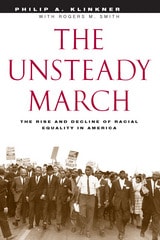
The Unsteady March
The Rise and Decline of Racial Equality in AmericaPhilip A. Klinkner and Rogers M. Smith
University of Chicago Press, 1999
"[An] unflinching portrait of the leviathan of American race relations. . . . This important book should be read by all who aspire to create a more perfect union."—Publishers Weekly, starred review
"Could it be that our unswerving belief in the power of our core values to produce racial equality is nothing but a comforting myth? That is the main argument put forth by Philip Klinkner and Rogers Smith . . . The Unsteady March is disturbing because it calls into question our cherished national belief and does so convincingly. . . . [It] is beautifully written, and the social history it provides is illuminating and penetrating."—Aldon Morris, American Journal of Sociology
Winner of the Horace Mann Bond Award of the W.E.B. Du Bois Institute for Afro-American Research at Harvard University.
The Unteachables
Disability Rights and the Invention of Black Special EducationKeith A. Mayes
University of Minnesota Press, 2023
How special education used disability labels to marginalize Black students in public schools
The Unteachables examines the overrepresentation of Black students in special education over the course of the twentieth century. As African American children integrated predominantly white schools, many were disproportionately labeled educable mentally retarded (EMR), learning disabled (LD), and emotionally behavioral disordered (EBD). Keith A. Mayes charts the evolution of disability categories and how these labels kept Black learners segregated in American classrooms.
The civil rights and the educational disability rights movements, Mayes shows, have both collaborated and worked at cross-purposes since the beginning of school desegregation. Disability rights advocates built upon the opportunity provided by the civil rights movement to make claims about student invisibility at the level of intellectual and cognitive disabilities. Although special education ostensibly included children from all racial groups, educational disability rights advocates focused on the needs of white disabled students, while school systems used disability discourses to malign and marginalize Black students.
From the 1940s to the present, social science researchers, policymakers, school administrators, and teachers have each contributed to the overrepresentation of Black students in special education. Excavating the deep-seated racism embedded in both the public school system and public policy, The Unteachables explores the discriminatory labeling of Black students, and how it indelibly contributed to special education disproportionality, to student discipline and push-out practices, and to the school-to-prison pipeline effect.
The Untold Story
Women and Theory in Golden Age TextsMary S. Gossy
University of Michigan Press, 1990
The Untried Life
The Twenty-Ninth Ohio Volunteer Infantry in the Civil WarJames T. Fritsch
Ohio University Press, 2012
Told in unflinching detail, this is the story of the Twenty-Ninth Ohio Volunteer Infantry, also known as the Giddings Regiment or the Abolition Regiment, after its founder, radical abolitionist Congressman J. R. Giddings. The men who enlisted in the Twenty-Ninth OVI were, according to its lore, handpicked to ensure each was as pure in his antislavery beliefs as its founder. Whether these soldiers would fight harder than other soldiers, and whether the people of their hometowns would remain devoted to the ideals of the regiment, were questions that could only be tested by the experiment of war.
The Untried Life is the story of these men from their very first regimental formation in a county fairground to the devastation of Gettysburg and the march to Atlanta and back again, enduring disease and Confederate prisons. It brings to vivid life the comradeship and loneliness that pervaded their days on the march. Dozens of unforgettable characters emerge, animated by their own letters and diaries: Corporal Nathan Parmenter, whose modest upbringing belies the eloquence of his writings; Colonel Lewis Buckley, one of the Twenty-Ninth’s most charismatic officers; and Chaplain Lyman Ames, whose care of the sick and wounded challenged his spiritual beliefs.
The Untried Life shows how the common soldier lived—his entertainments, methods of cooking, medical treatment, and struggle to maintain family connections—and separates the facts from the mythology created in the decades after the war.
The Unwanted Child
The Fate of Foundlings, Orphans, and Juvenile Criminals in Early Modern GermanyJoel F. Harrington
University of Chicago Press, 2009
The baby abandoned on the doorstep is a phenomenon that has virtually disappeared from our experience, but in the early modern world, unwanted children were a very real problem for parents, government officials, and society. The Unwanted Child skillfully recreates sixteenth-century Nuremberg to explore what befell abandoned, neglected, abused, or delinquent children in this critical period.
Joel F. Harrington tackles this question by focusing on the stories of five individuals. In vivid and poignant detail, he recounts the experiences of an unmarried mother-to-be, a roaming mercenary who drifts in and out of his children’s lives, a civic leader handling the government’s response to problems arising from unwanted children, a homeless teenager turned prolific thief, and orphaned twins who enter state care at the age of nine. Braiding together these compelling portraits, Harrington uncovers and analyzes the key elements that link them, including the impact of war and the vital importance of informal networks among women. From the harrowing to the inspiring, The Unwanted Child paints a gripping picture of life on the streets five centuries ago.
The Unwanted
European Refugees From 1St World WarMichael Marrus
Temple University Press, 2001
The Upright Farmer
Racial Capitalism and Agricultural Modernization in Burkina FasoJessie K. Luna
Duke University Press, 2026
The Uprooted
The Refugee in World HistoryAndreas Kossert
Rutgers University Press, 2027
In his new book, Andreas Kossert—the renowned expert on emigration and expulsion in the twentieth century and author of the bestselling Cold Home—places the early twenty-first-century refugee movement in a wider historical context. Movingly told and interwoven with personal accounts, The Uprooted: The Refugee in World History reveals the existential experiences of uprootedness and hostility that go hand in hand with losing one's homeland and explains why refugees and displaced persons have always found it so difficult to settle into a new country. Whether they have come from East Prussia, Syria, or India, refugees are agents of world history—and with this book Kossert gives them a voice.
The Urban Apparatus
Mediapolitics and the CityReinhold Martin
University of Minnesota Press, 2017
Urbanization is a system of power and knowledge, and today’s city functions through the expansive material infrastructures of the urban order. In The Urban Apparatus, Reinhold Martin analyzes urbanization and the contemporary city in aesthetic, socioeconomic, and mediapolitical terms. He argues that understanding the city as infrastructure reveals urbanization to be a way of imparting functional, aesthetic, and cognitive order to a contradictory, doubly bound neoliberal regime.
Blending critical philosophy, political theory, and media theory, The Urban Apparatus explores how the aesthetics of cities and their political economies overlap. In a series of ten essays, with a detailed theoretical introduction, Martin explores questions related to urban life, drawn from a wide range of global topics—from the fiscal crisis in Detroit to speculative development in Mumbai to the landscape of Mars, from discussions of race and the environment to housing and economic inequality. Each essay proposes a particular “mediator” (or a material complex) that is shaped by imaginative practices, each answering the question “What is a city, today?”
The Urban Apparatus serves as an “urban” bookend to the architectural questions explored by Martin in his earlier book Utopia’s Ghost, and ultimately offers readers a way to think politically about urbanization.
The Urban Crisis
Linking Research to ActionBurton Weisbrod and James C. Worthy
Northwestern University Press, 1997
The Urban Grotesque
Life and Debt in JakartaDoreen Lee
Duke University Press, 2025
The Urban Questions
Interdisciplinary and Multiscalar Approaches to Investigating the Ancient Mesoamerican CityLisa Johnson and Arianna Campiani
University of Utah Press, 2025
This groundbreaking volume presents a fresh and comprehensive look at the urban development of Mesoamerican cities. Moving beyond traditional methods, The Urban Questions adopts a dynamic, multidisciplinary approach to understanding the complexity and diversity of ancient settlements. By examining urbanism at multiple scales—from individual events to households, neighborhoods, and entire regions—it offers a nuanced view of how these cities evolved over time.
Contributors explore key themes such as community identity, infrastructure management, and the intersection of social, political, and economic processes. Rich in both spatial and material analysis, the chapters provide insights into the lived experience of ancient Mesoamerican inhabitants and the gradual expansion of their cities. With innovative archaeological methodologies and theoretical frameworks, this volume is an essential resource for scholars of Mesoamerican studies, archaeology, and urban history, shedding new light on the dynamic nature of ancient cities.
The Urban Revolution
Henri Lefebvre
University of Minnesota Press, 2003

The Use and Abuse of Biology
An Anthropological Critique of SociobiologyMarshall D. Sahlins
University of Michigan Press, 1976
The Use and Abuse of Biology: An Anthropological Critique of Sociobiology is Marshall Sahlins's fierce intellectual takedown of genetic determinism and the then-emerging field of sociobiology popularized by E.O. Wilson. Writing from his then-position at the University of Chicago, Sahlins argues that human behavior cannot be reduced to evolutionary biology, selfish genes, or a simple drive to maximize reproductive success. Instead, he demonstrates how human social structures—particularly kinship systems, which form the bedrock of many traditional societies—are defined by arbitrary cultural rules and symbolic meanings rather than biological or genetic proximity. By showing that culture dictates human action far more than animal instincts do, Sahlins's critique remains a foundational text in anthropological theory, warning against the dangers of importing Western capitalist concepts of competition and individualism into the study of human evolution. Sahlins argues that human behavior cannot be reduced to mere biological imperatives because culture interposes itself as a unique, symbolic meaning system between human genetics and social practice. He takes aim at "vulgar sociobiology," demonstrating through vast cross-cultural examples that fundamental social structures—especially human kinship systems—are constructed on variable cultural rules rather than calculated genetic or evolutionary self-interest. Furthermore, Sahlins provides an ideological critique, revealing that sociobiological models often reflect Western capitalist frameworks mistakenly projected onto nature. Ultimately, this foundational text remains an indispensable defense of the autonomy of cultural anthropology, asserting that while biology sets physical limits, it is the symbolic faculty of culture that dictates human society.
The Use of Land and Water Resources in the Past and Present Valley of Oaxaca, Mexico
Anne V. T. Kirkby
University of Michigan Press, 1973

The Use of Social Science Data in Supreme Court Decisions
Rosemary J. Erickson and Rita J. Simon
University of Illinois Press, 1998
By offering insights into how data are used by the Supreme Court, the authors hope to show social scientists how to make their research more suitable for courtroom use and to show the legal community how such data can be used more effectively. The volume includes an overview of the kinds of research used, a list of cases in which such research was used, and a discussion of justices and how they voted on cases in which such data were used from 1972 to 1992.
The User Unconscious
On Affect, Media, and MeasurePatricia Ticineto Clough
University of Minnesota Press, 2018
Wide-ranging essays and experimental prose forcefully demonstrate how digital media and computational technologies have redefined what it is to be human
Over the past decade, digital media has expanded exponentially, becoming an essential part of daily life. The stimulating essays and experimental compositions in The User Unconscious delve into the ways digital media and computational technologies fundamentally affect our sense of self and the world we live in, from both human and other-than-human perspectives.
Critical theorist Patricia Ticineto Clough’s provocative essays center around the motif of the “user unconscious” to advance the challenging thesis that that we are both human and other-than-human: we now live, think, and dream within multiple layers of computational networks that are constantly present, radically transforming subjectivity, sociality, and unconscious processes.
Drawing together rising strains of philosophy, critical theory, and media studies, as well as the political, social, and economic transformations that are shaping the twenty-first-century world, The User Unconscious points toward emergent crises and potentialities in both human subjectivity and sociality. Moving from affect to data, Clough forces us to see that digital media and computational technologies are not merely controlling us—they have already altered what it means to be human.

The Utility of Splendor
Ceremony, Social Life, and Architecture at the Court of Bavaria, 1600-1800Samuel John Klingensmith
University of Chicago Press, 1993
Drawing on a broad range of sources, including building documents, correspondence, diaries, and court regulations, Klingensmith investigates the intricacies of Bavarian court practice and shows that Versailles was only one among several influences on German palace planning. Klingensmith offers a cogent, detailed understanding of the relations between architectural spaces and the ceremonial, social, and private life that both required and used them. Handsomely illustrated with photographs and plans, The Utility of Splendor will appeal to anyone interested in how life was lived among the nobility during the last centuries of the old regime.
Samuel John Klingensmith (1949-1986) was assistant professor of art history at Tulane University.
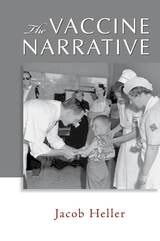
The Vaccine Narrative
Jacob Heller
Vanderbilt University Press, 2008
The author examines four cases that span the twentieth century--diphtheria, rubella, pertussis, and HIV/AIDS. Each case challenges the reader to examine how the values we attribute to vaccines influence their use. Diphtheria vaccination brought laboratory science into an existing narrative based on earlier vaccines. With rubella vaccine, researchers efficiently responded to an epidemic of birth defects while subtly changing the relationship between vaccination recipients and beneficiaries. Opposition to pertussis vaccine from average Americans created a narrative crisis, in which faith in vaccination as a whole seemed to be at risk. With more recent vaccines, including a hoped-for HIV/AIDS vaccine, the persistent cultural narrative continues to encourage vaccine development and use.

The Value Gap
Female-Driven Films from Pitch to PremiereCourtney Brannon Donoghue
University of Texas Press, 2023
How female directors, producers, and writers navigate the challenges and barriers facing female-driven projects at each stage of filmmaking in contemporary Hollywood.
Conversations about gender equity in the workplace accelerated in the 2010s, with debates inside Hollywood specifically pointing to broader systemic problems of employment disparities and exploitative labor practices. Compounded by the devastating #MeToo revelations, these problems led to a wide-scale call for change. The Value Gap traces female-driven filmmaking across development, financing, production, film festivals, marketing, and distribution, examining the realities facing women working in the industry during this transformative moment. Drawing from five years of extensive interviews with female producers, writers, and directors at different stages of their careers, Courtney Brannon Donoghue examines how Hollywood business cultures “value” female-driven projects as risky or not bankable. Industry claims that “movies targeting female audiences don’t make money” or “women can’t direct big-budget blockbusters” have long circulated to rationalize systemic gender inequities and have served to normalize studios prioritizing the white male–driven status quo. Through a critical media industry studies lens, The Value Gap challenges this pervasive logic with firsthand accounts of women actively navigating the male-dominated and conglomerate-owned industrial landscape.
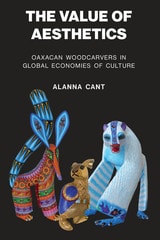
The Value of Aesthetics
Oaxacan Woodcarvers in Global Economies of CultureBy Alanna Cant
University of Texas Press, 2019
Unlike many other handicrafts in the Mexican state of Oaxaca, which have long cultural and historical trajectories, Oaxacan woodcarving began in the second half of the twentieth century and has always been done for the commercial market. In The Value of Aesthetics, Alanna Cant explores how one family’s workshop in the village of San Martín Tilcajete has become the most critically and economically successful, surpassing those of neighbors who use similar materials and techniques. The dominance of this family is tied to their ability to produce a new aesthetic that appeals to three key “economies of culture”: the tourist market for souvenirs, the national market for traditional Mexican artesanías, and the international market for indigenous art.
Offering a new analytical model by which anthropologists can approach visual aesthetics and conceptualize the power of artworks as socially active objects, The Value of Aesthetics shows how aesthetic practices produce and redefine social and political relationships. By investigating the links between aesthetics and issues of production, authorship, ownership, and identity, Cant shows aesthetic change to be a process that ultimately repackages everyday life into commodified objects in Oaxaca.
The Value of Comparison
Peter van der Veer
Duke University Press, 2016
The Value of Homelessness
Managing Surplus Life in the United StatesCraig Willse
University of Minnesota Press, 2015
It is all too easy to assume that social service programs respond to homelessness, seeking to prevent and understand it. The Value of Homelessness, however, argues that homelessness today is an effect of social services and sciences, which shape not only what counts as such but what will?or ultimately won’t?be done about it.
Through a history of U.S. housing insecurity from the 1930s to the present, Craig Willse traces the emergence and consolidation of a homeless services industry. How to most efficiently allocate resources to control ongoing insecurity has become the goal, he shows, rather than how to eradicate the social, economic, and political bases of housing needs. Drawing on his own years of work in homeless advocacy and activist settings, as well as interviews conducted with program managers, counselors, and staff at homeless services organizations in New York, Los Angeles, San Francisco, and Seattle, Willse provides the first analysis of how housing insecurity becomes organized as a governable social problem.
An unprecedented and powerful historical account of the development of contemporary ideas about homelessness and how to manage homelessness, The Value of Homelessness offers new ways for students and scholars of social work, urban inequality, racial capitalism, and political theory to comprehend the central role of homelessness in governance and economy today.
The Value of Labor
The Science of Commodification in Hungary, 1920-1956Martha Lampland
University of Chicago Press, 2016
Lampland trains her eye on the scientific claims of modern economic modeling, using Hungary’s unique vantage point to show how theories, policies, and techniques for commodifying agrarian labor that were born in the capitalist era were adopted by the socialist regime as a scientifically designed wage system on cooperative farms. Paying attention to the specific historical circumstances of Hungary, she explores the ways economists and the abstract notions they traffic in can both shape and be shaped by local conditions, and she compellingly shows how labor can be commodified in the absence of a labor market. The result is a unique account of economic thought that unveils hidden but necessary continuities running through the turbulent twentieth century.
The Value of Things
Prehistoric to Contemporary Commodities in the Maya RegionEdited by Jennifer P. Mathews and Thomas H. Guderjan
University of Arizona Press, 2017
Jade, stone tools, honey and wax, ceramics, rum, land. What gave these commodities value in the Maya world, and how were those values determined? What factors influenced the rise and fall of a commodity’s value? The Value of Things examines the social and ritual value of commodities in Mesoamerica, providing a new and dynamic temporal view of the roles of trade of commodities and elite goods from the prehistoric Maya to the present.
Editors Jennifer P. Mathews and Thomas H. Guderjan begin the volume with a review of the theoretical literature related to the “value of things.” Throughout the volume, well-known scholars offer chapters that examine the value of specific commodities in a broad time frame—from prehistoric, colonial, and historic times to the present. Using cases from the Maya world on both the local level and the macro-regional, contributors look at jade, agricultural products (ancient and contemporary), stone tools, salt, cacao (chocolate), honey and wax, henequen, sugarcane and rum, land, ceramic (ancient and contemporary), and contemporary tourist handicrafts.
Each chapter author looks into what made their specific commodity valuable to ancient, historic, and contemporary peoples in the Maya region. Often a commodity’s worth goes far beyond its financial value; indeed, in some cases, it may not even be viewed as something that can be sold. Other themes include the rise and fall in commodity values based on perceived need, rarity or overproduction, and change in available raw materials; the domestic labor side of commodities, including daily life of the laborers; and relationships between elites and nonelites in production.
Examining, explaining, and theorizing how people ascribe value to what they trade, this scholarly volume provides a rich look at local and regional Maya case studies through centuries of time.
Contributors:
Rani T. Alexander
Dean E. Arnold
Timothy Beach
Briana Bianco
Steven Bozarth
Tiffany C. Cain
Scott L. Fedick
Thomas H. Guderjan
John Gust
Eleanor Harrison-Buck
Brigitte Kovacevich
Samantha Krause
Joshua J. Kwoka
Richard M. Leventhal
Sheryl Luzzadder-Beach
Jennifer P. Mathews
Heather McKillop
Allan D. Meyers
Gary Rayson
Mary Katherine Scott
E. Cory Sills

The Vampire in Nineteenth Century English Literature
Carol A. Senf
University of Wisconsin Press, 1988

The Vegetational History of the Oaxaca Valley and Zapotec Plant Knowledge
C. Earle Smith and Ellen Messer
University of Michigan Press, 1978
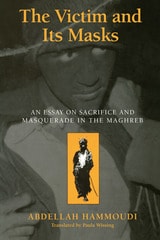
The Victim and its Masks
An Essay on Sacrifice and Masquerade in the MaghrebAbdellah Hammoudi
University of Chicago Press, 1993

The Victoria History of Essex
Harwich, Dovercourt and Parkeston in the 19th CenturyAndrew Senter Andrew Morrell
University of London Press, 2019
The Victoria History of Hampshire
Cliddesden, Hatch and Farleigh WallopAlison Deveson and Sue Lane
University of London Press, 2018
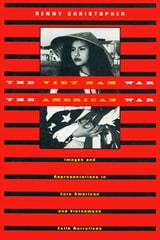
The Viet Nam War/The American War
Images and Representations in Euro-American and Vietnamese Exile NarrativesRenny Christopher
University of Massachusetts Press, 1995
This book seeks to reformulate the canon of writings on what is called “the Viet Nam War” in America and “the American War” in Viet Nam. Until recently, the accepted canon has consisted almost exclusively of American white male combat narratives, which often reflect and perpetuate Asian stereotypes. Renny Christopher introduces material that displays a bicultural perspective, including works by Vietnamese exile writers and by lesser-known Euro-Americans who attempt to bridge the cultural gap.
Christopher traces the history of American stereotyping of Asians and shows how Euro-American ethnocentricity has limited most American authors' ability to represent fairly the Vietnamese in their stories. By giving us access to Vietnamese representations of the war, she creates a context for understanding the way the war was experienced from the “other” side, and she offers perceptive, well-documented analyses of how and why Americans have so emphatically excised the Vietnamese from narratives about a war fought in their own country.
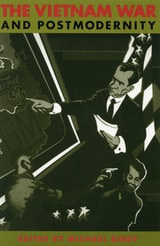
The Vietnam War and Postmodernity
Michael Bibby
University of Massachusetts Press, 1999
The longest war in the nation's history, the American military intervention in Vietnam dominated United States culture and politics from 1965 to 1975. In addition to causing immense devastation in Southeast Asia, the war transformed American society, with effects that continue to be felt today. Yet aside from a few cultural studies of the war's representations, scholars have tended to ignore the relationship between the American war in Vietnam and broader cultural developments in the West. Frederic Jameson once characterized the Vietnam War as “the first terrible postmodernist war,” suggesting that it embodied or reflected the sensibility of an emerging historical epoch. But does it make sense to place a military conflict within a category of cultural and aesthetic periodization? Is it possible to see the Vietnam War as an expression and reflection of postmodernity—what Jameson calls “the cultural logic of late capitalism?” These are some of the questions addressed in this volume. Ranging across a variety of disciplines, including philosophy, cultural studies, literary criticism, and film studies, the essays explore the war's discourses and technologies in relation to the post-modern condition. At the same time, they reinterpret key cultural representations of the war from a postmodern perspective. The result is a book that poses important challenges to both Vietnam War studies and postmodern studies, at once reshaping the ways postmodernity is conceived and reminding us of the war's enduring significance in contemporary cultural history. In addition to Michael Bibby, contributors are Philip D. Beidler, Michael Clark, Cynthia J. Fuchs, Brady Harrison, Tony Williams, Eric Gadzinski, Chris Hables Gray, and Douglas Kellner.

The Vietnam War in American Memory
Veterans, Memorials, and the Politics of HealingPatrick Hagopian
University of Massachusetts Press, 2009
A study of American attempts to come to terms with the legacy of the Vietnam War, this book highlights the central role played by Vietnam veterans in shaping public memory of the war.
Tracing the evolution of the image of the Vietnam veteran from alienated dissenter to traumatized victim to noble warrior, Patrick Hagopian describes how efforts to commemorate the war increasingly downplayed the political divisions it spawned in favor of a more unifying emphasis on honoring veterans and promoting national “healing.”
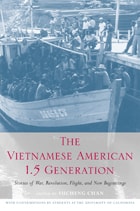
The Vietnamese American 1.5 Generation
Stories of War, Revolution, Flight and New Beginningsedited by Sucheng Chan
Temple University Press, 2006
The View from Afar
Claude Lévi-Strauss
University of Chicago Press, 1992
"Hardly a field remains untouched—sociobiology, linguistics, botany, genetics, psychiatry, esthetics, ecology, politics, neuroscience, education, morality, psychology. . . . It's all breathtaking and alarming, some of it wonderful, some of it ridiculous. . . . At times the experience is exhilarating."—Richard A. Shweder, New York Times Book Review