Results by title
2646 books match the query 'History & Criticism' and 549 start with t
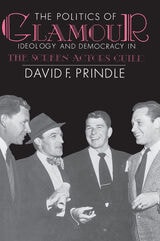
The Politics of Glamour
Ideology and Democracy in the Screen Actors GuildDavid F. Prindle
University of Wisconsin Press, 1988
Rarely are the off-screen lives of actors examined for evidence of deep thinking or good citizenship. Still more rarely do the internal workings of labor unions attract public scrutiny. Nevertheless, as David Prindle shows in his examination of democracy in the Screen Actors Guild, this actors’ union has for over 50 years been an arena for idealistic, yet intense and hardboiled political maneuvering.
In The Politics of Glamour, readers become aware of the seriousness and political commitment displayed by people whom the general public has generally admired more for their artistic skills. After reading this account of politics among America’s screen royalty, no one could wonder about where Ronald Reagan, a former SAG president, received his political training.
Besides analyzing the politics of SAG, however, the author follows a good story wherever it leads. The reader can expect to learn something about the political economy of Hollywood and the American labor movement, the value of celebrity within the acting community, the impact of technological change, and even a bit of gossip.
The Politics of Rape
Sexual Atrocity, Propaganda Wars, and the Restoration StageJennifer L. Airey
University of Delaware Press, 2013
Published by University of Delaware Press. Distributed worldwide by Rutgers University Press.
The Politics of Reproduction
Adoption, Abortion, and Surrogacy in the Age of NeoliberalismEdited by Modhumita Roy and Mary Thompson
The Ohio State University Press, 2019
The Politics of Vibration
Music as a Cosmopolitical PracticeMarcus Boon
Duke University Press, 2022
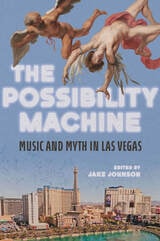
The Possibility Machine
Music and Myth in Las VegasEdited by Jake Johnson
University of Illinois Press, 2023
At once a Technicolor wonderland and the embodiment of American mythology, Las Vegas exists at the Ground Zero of a reverence for risk-taking and the transformative power of a winning hand. Jake Johnson edits a collection of short essays and flash ideas that probes how music-making and soundscapes shape the City of Second Chances. Treating topics ranging from Cher to Cirque de Soleil, the contributors delve into how music and musicians factored in the early development of Vegas’s image; the role of local communities of musicians and Strip mainstays in sustaining tensions between belief and disbelief; the ways aging showroom stars provide a sense of timelessness that inoculates visitors against the outside world; the link connecting fantasies of sexual prowess and democracy with the musical values of Liberace and others; considerations of how musicians and establishments gambled with identity and opened the door for audience members to explore Sin City–only versions of themselves; and the echoes and energy generated by the idea of Las Vegas as it travels across the country.
Contributors: Celine Ayala, Kirstin Bews, Laura Dallman, Joanna Dee Das, James Deaville, Robert Fink, Pheaross Graham, Jessica A. Holmes, Maddie House-Tuck, Jake Johnson, Kelly Kessler, Michael Kinney, Carlo Lanfossi, Jason Leddington, Janis McKay, Sam Murray, Louis Niebur, Lynda Paul, Arianne Johnson Quinn, Michael M. Reinhard, Laura Risk, Cassaundra Rodriguez, Arreanna Rostosky, and Brian F. Wright
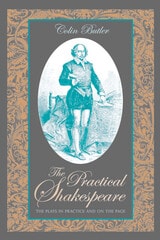
The Practical Shakespeare
The Plays in Practice and on the PageColin Butler
Ohio University Press, 2005
A comprehensive treatment of Shakespeare’s plays, The Practical Shakespeare: The Plays in Practice and on the Page illuminates for a general audience how and why the plays work so well.
Noting in detail the practical and physical limitations the Bard faced as he worked out the logistics of his plays, Colin Butler demonstrates how Shakespeare incorporated those limitations and turned them to his advantage: his management of entrances and exits; his characterization techniques; his handling of scenes off-stage; his control of audience responses; his organization of major scenes; and his use of prologues and choruses. A different aspect of the plays is covered in each chapter.
Butler draws most of his examples from mainstream plays, such as Macbeth, Othello, and Much Ado about Nothing. He brings special focus to A Midsummer Night’s Dream, which is treated as one of Shakespeare’s most important plays. Butler supports his major points with quotations, so readers can understand an issue even if they are unfamiliar with the particular play being discussed. The author also cross-references the use of dramatic devices in the plays, increasing the reader’s enjoyment and understanding of Shakespeare’s achievements.
Clear, jargon-free, easy-to-use, and comprehensive, The Practical Shakespeare looks at stagecraft and playwriting as conduits for students, teachers, and general audiences to engage with, understand, and appreciate the genius of Shakespeare.
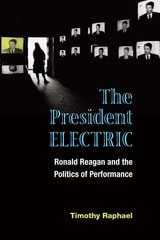
The President Electric
Ronald Reagan and the Politics of PerformanceTimothy Raphael
University of Michigan Press, 2011
"In this illuminating, multi-pronged cultural and performance history of such phenomena as Chautauqua and radio, movies, and electrical technology, Timothy Raphael puts together a compelling and sometimes revelatory narrative of how commandingly Reagan mastered the matrix of performance, technology, media, celebrity, and the 'republic of consumption' he came of age in."
---Dana Nelson, Vanderbilt University
"Garry Wills and others have written well on the phenomenon of Ronald Reagan, the actor-president, but this is the first book by a real authority---trained in performance and fully reflective about it from the inside . . . unquestionably an important contribution to the disciplinary fields of American studies and performance studies, and an important contribution to public affairs."
---Joseph Roach, Yale University
When Ronald Reagan first entered politics in 1965, his public profile as a performer in radio, film, television, and advertising and his experience in public relations proved invaluable political assets. By the time he left office in 1989, the media in which he trained had become the primary source for generating and wielding political power. The President Electric: Ronald Reagan and the Politics of Performance reveals how the systematic employment of the techniques and technologies of mass-media performance contributed to Reagan’s rise to power and defined his style of governance.
The President Electric stands out among books on Reagan as the first to bring the rich insights of the field of performance studies to an understanding of the Reagan phenomenon, connecting Reagan's training in electronic media to the nineteenth-century notion of the "fiat of electricity"---the emerging sociopolitical power of three entities (mechanical science, corporate capitalism, and mass culture) that electric technology made possible. The book describes how this new regime of cultural and political representation shaped the development of the electronic mass media that transformed American culture and politics and educated Ronald Reagan for his future role as president.
Timothy Raphael is Assistant Professor of Visual and Performing Arts and Director of the Center for Immigration at Rutgers University, Newark.
Photo: © David H. Wells/Corbis
The Presidents We Imagine
Two Centuries of White House Fictions on the Page, on the Stage, Onscreen, and OnlineJeff Smith
University of Wisconsin Press, 2009
In The Presidents We Imagine, Jeff Smith examines the presidency’s ever-changing place in the American imagination. Ranging across different media and analyzing works of many kinds, some familiar and some never before studied, he explores the evolution of presidential fictions, their central themes, the impact on them of new and emerging media, and their largely unexamined role in the nation’s real politics.
Smith traces fictions of the presidency from the plays and polemics of the eighteenth century—when the new office was born in what Alexander Hamilton called “the regions of fiction”—to the digital products of the twenty-first century, with their seemingly limitless user-defined ways of imagining the world’s most important political figure. Students of American culture and politics, as well as readers interested in political fiction and film, will find here a colorful, indispensable guide to the many surprising ways Americans have been “representing” presidents even as those presidents have represented them.
“Especially timely in an era when media image-mongering increasingly shapes presidential politics.”—Paul S. Boyer, series editor
“Smith's understanding of the sociopolitical realities of US history is impressive; likewise his interpretations of works of literature and popular culture. . . .In addition to presenting thoughtful analysis, the book is also fun. Readers will enjoy encounters with, for example, The Beggar's Opera, Duck Soup, Edward Bellamy's Looking Backward, Philip Roth's Plot against America, the comedic campaigns of W. C. Fields for President and Pogo for President, and presidential fictions that continue up to the last President Bush. . . . His writing is fluid and conversational, but every page reveals deep understanding and focus. Summing Up: Highly recommended. All readers.”—CHOICE
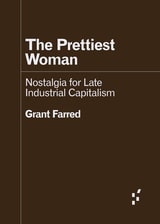
The Prettiest Woman
Nostalgia for Late Industrial CapitalismGrant Farred
University of Minnesota Press, 2025
Uncovering Hollywood’s perpetual longing for a lost industrial America
“We don’t make things in America anymore”: like clockwork, this refrain resurfaces in political discourse, a reflection of yearning for a bygone era of industrial productivity. In his latest work, Grant Farred uses the 1990 film Pretty Woman to expose and critique this lingering nostalgia for late-industrial capitalism.
Situating Pretty Woman alongside Reagan-era films including Wall Street, Farred examines the congealment of such a pervasive romanticized view of the United States as a fading industrial powerhouse. Drawing on an eclectic range of thinkers—from Raymond Williams and Slavoj Žižek to Mick Jagger—The Prettiest Woman offers a unique analysis of the ways Hollywood perpetuates the myth of a lost “productive America,” highlighting the seductive power of this fantasy despite its disconnect from economic and political realities.
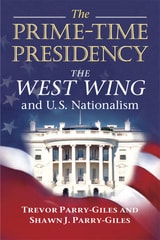
The Prime-Time Presidency
The West Wing and U.S. NationalismTrevor Parry-Giles and Shawn J. Parry-Giles
University of Illinois Press, 2010
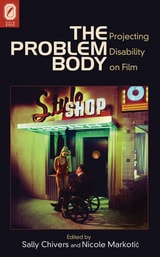
The Problem Body
Projecting Disability on FilmEdited by Sally Chivers and Nicole Markotic
The Ohio State University Press, 2010
To call into question why certain bodies invite the label “problem” more frequently than other bodies, the contributors draw on scholarship from feminist, race, queer, cultural studies, disability, and film studies arenas. In Chivers and Markotic’s introduction, they draw on disability theory and a range of cinematic examples to explain the term “problem body” in relation to its projection. In explorations of film noir, illness narratives, classical Hollywood film, and French film, the essays reveal the “problem body” as a multiplication of lived circumstances constructed both physically and socially.
The Problem of the Color[blind]
Racial Transgression and the Politics of Black PerformanceBrandi Wilkins Catanese
University of Michigan Press, 2011
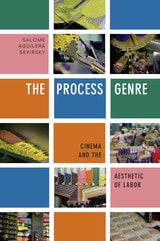
The Process Genre
Cinema and the Aesthetic of LaborSalomé Aguilera Skvirsky
Duke University Press, 2020
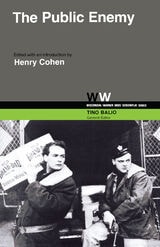
The Public Enemy
Edited by Henry Cohen; Tino T. Balio, Series Editor
University of Wisconsin Press, 1981
The Public Enemy, a 1931 Warner Brothers gangster classic, is easily remembered as the movie in which James Cagney used Mae Clarke's nose as a grapefruit grinder. As Cagney recalls, it was just about the first time that "a woman had been treated like a broad on the screen, instead of like a delicate flower."
The ambivalence toward women is just one of the many stylistic contradictions that make The Public Enemy worth studying, not only for its intrinsic merits but also as a creative expression bending under the constraints of censorship.
The Purpose of Playing
Shakespeare and the Cultural Politics of the Elizabethan TheatreLouis Montrose
University of Chicago Press, 1996
Montrose first locates the public and professional theater within the ideological and material framework of Elizabethan culture. He considers the role of the professional theater and theatricality in the cultural transformation that was concurrent with religious and socio-political change, and then concentrates upon the formal means by which Shakespeare's Elizabethan plays called into question the absolutist assertions of the Elizabethan state. Drawing dramatic examples from the genres of tragedy and history, Montrose finally focuses his cultural-historical perspective on A Midsummer Night's Dream.
The Purpose of Playing elegantly demonstrates how language and literary imagination shape cultural value, belief, and understanding; social distinction and interaction; and political control and contestation.
The Queer Art of Failure
Jack Halberstam
Duke University Press, 2011
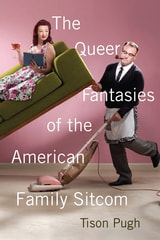
The Queer Fantasies of the American Family Sitcom
Pugh, Tison
Rutgers University Press, 2018
The Queer Fantasies of the American Family Sitcom examines the evasive depictions of sexuality in domestic and family-friendly sitcoms. Tison Pugh charts the history of increasing sexual depiction in this genre while also unpacking how sitcoms use sexuality as a source of power, as a kind of camouflage, and as a foundation for family building. The book examines how queerness, at first latent, became a vibrant yet continually conflicted part of the family-sitcom tradition.
Taking into account elements such as the casting of child actors, the use of and experimentation with plot traditions, the contradictory interpretive valences of comedy, and the subtle subversions of moral standards by writers and directors, Pugh points out how innocence and sexuality conflict on television. As older sitcoms often sit on a pedestal of nostalgia as representative of the Golden Age of the American Family, television history reveals a deeper, queerer vision of family bonds.
Download open access ebook here.
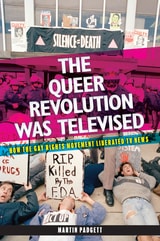
The Queer Revolution Was Televised
How the Gay Rights Movement Liberated TV NewsMartin Padgett
Rutgers University Press, 2027
This book demonstrates, in part through a history of emotions, how assumptions and prejudices about queer lives were challenged throughout the decade through the deceptively prosaic medium of television. Passion and disgust neatly outline the contours of the gay community’s press for equal rights at the dawn of the 1980s, just as fear and anxiety encapsulate the inchoate reactions to the emerging epidemic and the simultaneous explorations of privacy that were initiated by the onslaught of television as technology. While queer people anguished over their very survival and over the indifference of many to their situation, hope surfaced as a cause and potential treatments for HIV emerged and as the Supreme Court decided to make its first direct ruling on gay rights in a generation. When that latter hope was dashed by the Hardwick decision, the anger of gay rights advocates was trebled as they massed for the national March on Washington in homage to the 1963 March on Washington for Jobs and Freedom that lent its key political organizing and messaging tactics to it. With the realization that progress would then be slow and all-consuming, a desperation to change queer lives was enjoined by a determination to do so in the most visible ways possible, through television.
The Quieted Voice
Robert L. Hilliard and Michael C. Keith. Foreword by Robert W. McChesney
Southern Illinois University Press, 2005
How has American radio—once a grassroots, community-based medium—become a generic service that primarily benefits owners and shareholders and prohibits its listeners from receiving diversity of opinions, ideas, and entertainment through local programming? In The Quieted Voice: The Rise and Demise of Localism in American Radio, Robert L. Hilliard and Michael C. Keith blame the government’s continual deregulation of radio and the corporate obsession with the bottom line in the wake of the far-reaching and controversial Telecommunications Act of 1996. Fighting for greater democratization of the airwaves, Hilliard and Keith call for a return to localism to save radio from rampant media conglomeration and ever-narrowing music playlists—and to save Americans from corporate and government control of public information.
The Quieted Voice details radio’s obligation to broadcast in the public’s interest. Hilliard and Keith trace the origins of the public trusteeship behind the medium and argue that local programming is essential to the fulfillment of this responsibility. From historical and critical perspectives, they examine the decline of community-centered programming and outline the efforts of media watchdog and special interest groups that have vigorously opposed the decline of democracy and diversity in American radio. They also evaluate the implications of continuing delocalization of the radio medium and survey the perspectives of leading media scholars and experts.
The Reality of Illusion
An Ecological Approach to Cognitive Film TheoryJoseph D. Anderson
Southern Illinois University Press, 1998
Anderson investigates how viewers, with their mental capacities designed for survival, respond to particular aspects of filmic structure—continuity, diegesis, character development, and narrative—and examines the ways in which rules of visual and aural processing are recognized and exploited by filmmakers. He uses Orson Welles’s Citizen Kane to disassemble and redefine the contemporary concept of character identification; he addresses continuity in a shot-by-shot analysis of images from Casablanca; and he uses a wide range of research studies, such as Harry F. Harlow’s work with infant rhesus monkeys, to describe how motion pictures become a substitute or surrogate reality for an audience. By examining the human capacity for play and the inherent potential for illusion, Anderson considers the reasons viewers find movies so enthralling, so emotionally powerful, and so remarkably real.
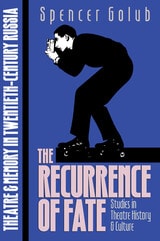
The Recurrence of Fate
Theatre and Memory in Twentieth-Century RussiaSpencer Jay Golub
University of Iowa Press, 1994
How, why, and according to whose definitions and requirements does a culture self-consciously create memory and project its fate? In this remarkable book—the first in English to treat Russian history as theatre and cultural performance—Spencer Golub reveals the performative nature of Russian history in the twentieth century and the romantic imprisonment/self-imprisonment of the creative intelligentsia within this scenario.
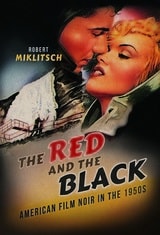
The Red and the Black
American Film Noir in the 1950sRobert Miklitsch
University of Illinois Press, 2017
Mixing scholarship with a fan's devotion to the crooked roads of critique, Miklitsch autopsies marquee films like D.O.A., Niagara, and Kiss Me Deadly plus a number of lesser-known classics. Throughout, he addresses the social and technological factors that dealt deuce after deuce to the genre--its celebrated style threatened by new media and technologies such as TV and 3-D, color and widescreen, its born losers replaced like zombies by All-American heroes, the nation rocked by the red menace and nightmares of nuclear annihilation. But against all odds, the author argues, inventive filmmakers continued to make formally daring and socially compelling pictures that remain surprisingly, startlingly alive.
Cutting-edge and entertaining, The Red and the Black reconsiders a lost period in the history of American movies.
The Reflective Age
Nostalgia at the End of HistoryZachary Griffith
Rutgers University Press, 2026
The Remasculinization of Korean Cinema
Kyung Hyun Kim
Duke University Press, 2004
Kim offers in-depth examinations of more than a dozen of the most representative films produced in Korea since 1980. In the process, he draws on the theories of Jacques Lacan, Slavoj Zizek, Gilles Deleuze, Rey Chow, and Kaja Silverman to follow the historical trajectory of screen representations of Korean men from self-loathing beings who desire to be controlled to subjects who are not only self-sufficient but also capable of destroying others. He discusses a range of movies from art-house films including To the Starry Island (1993) and The Day a Pig Fell into the Well (1996) to higher-grossing, popular films like Whale Hunting (1984) and Shiri (1999). He considers the work of several Korean auteurs—Park Kwang-su, Jang Sun-woo, and Hong Sang-su. Kim argues that Korean cinema must begin to imagine gender relations that defy the contradictions of sexual repression in order to move beyond such binary struggles as those between the traditional and the modern, or the traumatic and the post-traumatic.
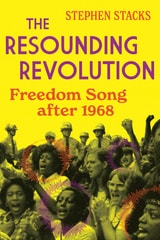
The Resounding Revolution
Freedom Song after 1968Stephen Stacks
University of Illinois Press, 2025
Stacks’s analysis shifts the focus of attention from genre--freedom song--to process and practice--freedom singing. As he shows, freedom singing after 1968 generates multilayered meanings. It can reinforce, or resist, consensus memories or dominant narratives. Stacks illuminates freedom singing’s diversity by examining it in three contexts: performance, protest, and within documentary sound recording/film.
Insightful and vividly detailed, The Resounding Revolution examines sixty years of Black music to challenge and reshape the entrenched story of the Civil Rights Movement.
The Resurrection of the Body
Pier Paolo Pasolini from Saint Paul to SadeArmando Maggi
University of Chicago Press, 2009
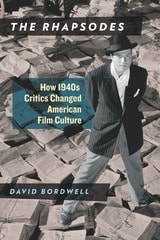
The Rhapsodes
How 1940s Critics Changed American Film CultureDavid Bordwell
University of Chicago Press, 2016
With The Rhapsodes, renowned film scholar and critic David Bordwell—an heir to both those legacies—restores to a wider audience the work of Ferguson, Agee, Farber, and Tyler, critics he calls the “Rhapsodes” for the passionate and deliberately offbeat nature of their vernacular prose. Each broke with prevailing currents in criticism in order to find new ways to talk about the popular films that contemporaries often saw at best as trivial, at worst as a betrayal of art. Ferguson saw in Hollywood an engaging, adroit mode of popular storytelling. Agee sought in cinema the lyrical epiphanies found in romantic poetry. Farber, trained as a painter, brought a pictorial intelligence to bear on film. A surrealist, Tyler treated classic Hollywood as a collective hallucination that invited both audience and critic to find moments of subversive pleasure. With his customary clarity and brio, Bordwell takes readers through the relevant cultural and critical landscape and considers the critics’ writing styles, their conceptions of films, and their quarrels. He concludes by examining the profound impact of Ferguson, Agee, Farber, and Tyler on later generations of film writers.
The Rhapsodes allows readers to rediscover these remarkable critics who broke with convention to capture what they found moving, artful, or disappointing in classic Hollywood cinema and explores their robust—and continuing—influence.
The Rhythm of Images
Cinema beyond MeasureDomietta Torlasco
University of Minnesota Press, 2021
A rigorous and imaginative inquiry into rhythm’s vital importance for film and the moving image
Focusing attention on a concept much neglected in the study of film, The Rhythm of Images opens new possibilities for thinking about expanded perception and idiosyncratic modes of being. Author Domietta Torlasco engages with both philosophy and cinema to elaborate a notion of rhythm in its pre-Socratic sense as a “manner of flowing”—a fugitive mode that privileges contingency and calls up the forgotten fluidity of forms. In asking what it would mean to take this rhythm as an ontological force in its own right, she creatively draws on thinkers such as Giorgio Agamben, Roland Barthes, Gilles Deleuze, and Luce Irigaray. Rhythm emerges here as a form that eludes measure, a key to redefining the relation between the aesthetic and the political, and thus a pivotal means of resistance to power.
Working with constellations of films and videos by international artists—from Michelangelo Antonioni, Jean-Luc Godard, and David Lynch to Harun Farocki and Victor Burgin, among others—Torlasco brings to bear on them her distinctive concept of rhythm with respect to four interrelated domains: life, labor, memory, and medium. With innovative readings of artworks and critical texts alike, The Rhythm of Images fashions a vibrant, provocative theory of rhythm as the excess or potential of perception.
Ultimately, the book reconceives the relation between rhythm and the world-making power of images. The result is a vision of cinema as a hybrid medium endowed with the capacity not only to reinvent corporeal boundaries but also to find new ways of living together.
The Rhythm of Thought
Art, Literature, and Music after Merleau-PontyJessica Wiskus
University of Chicago Press, 2013
The Rise of Cable Programming in the United States
Revolution or Evolution?By Megan Mullen
University of Texas Press, 2003
Winner, McGannon Communications Research Award, 2004
In 1971, the Sloan Commission on Cable Communications likened the ongoing developments in cable television to the first uses of movable type and the invention of the telephone. Cable's proponents in the late 1960s and early 1970s hoped it would eventually remedy all the perceived ills of broadcast television, including lowest-common-denominator programming, inability to serve the needs of local audiences, and failure to recognize the needs of cultural minorities. Yet a quarter century after the "blue sky" era, cable television programming closely resembled, and indeed depended upon, broadcast television programming. Whatever happened to the Sloan Commission's "revolution now in sight"?
In this book, Megan Mullen examines the first half-century of cable television to understand why cable never achieved its promise as a radically different means of communication. Using textual analysis and oral, archival, and regulatory history, she chronicles and analyzes cable programming developments in the United States during three critical stages of the medium's history: the early community antenna (CATV) years (1948-1967), the optimistic "blue sky" years (1968-1975), and the early satellite years (1976-1995). This history clearly reveals how cable's roots as a retransmitter of broadcast signals, the regulatory constraints that stymied innovation, and the economic success of cable as an outlet for broadcast or broadcast-type programs all combined to defeat most utopian visions for cable programming.
The Rise of Cantonese Opera
Wing Chung Ng
University of Illinois Press, 2015
In the early 1900s, however, Cantonese opera began to capture mass audiences in the commercial theaters of Hong Kong and Guangzhou--a transformation that changed it forever. Wing Chung Ng charts Cantonese opera's confrontations with state power, nationalist discourses, and its challenge to the ascendancy of Peking opera as the country's preeminent "national theatre." Mining vivid oral histories and heretofore untapped archival sources, Ng relates how Cantonese opera evolved from a fundamentally rural tradition into urbanized entertainment distinguished by a reliance on capitalization and celebrity performers. He also expands his analysis to the transnational level, showing how waves of Chinese emigration to Southeast Asia and North America further re-shaped Cantonese opera into a vibrant part of the ethnic Chinese social life and cultural landscape in the many corners of a sprawling diaspora.
The Rise of Spanish-Language Filmmaking
Out from Hollywood's Shadow, 1929-1939Jarvinen, Lisa
Rutgers University Press, 2012
Silent film was universally understood and could be exported anywhere. But when “talkies” arrived, the industry began experimenting with dubbing, subtitling, and dual track productions in more than one language. Where language fractured the European film market, for Spanish-speaking countries and communities, it created new opportunities. In The Rise of Spanish-Language Filmmaking, Lisa Jarvinen focuses specifically on how Hollywood lost ground in the lucrative international Spanish-speaking audience between 1929 and 1939.
Hollywood studios initially trained cadres of Spanish-speaking film professionals, created networks among them, and demonstrated the viability of a broadly conceived, transnational, Spanish-speaking film market in an attempt to forestall the competition from other national film industries. By the late 1930s, these efforts led to unintended consequences and helped to foster the growth of remarkably robust film industries in Mexico, Spain, and Argentina. Using studio records, Jarvinen examines the lasting effects of the transition to sound on both Hollywood practices and cultural politics in the Spanish-speaking world. She shows through case studies based on archival research in the United States, Spain, and Mexico how language, as a key marker of cultural identity, led to new expectations from audiences and new possibilities for film producers.
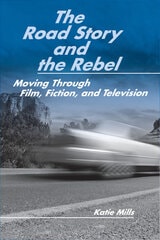
The Road Story and the Rebel
Moving Through Film, Fiction, and TelevisionKatie Mills
Southern Illinois University Press, 2006
In The Road Story and the Rebel: Moving Through Film, Fiction, and Television, Beat studies scholar Katie Mills examines how road stories, which have offered declarations of independence to generations of rebellious Americans, have been transformed by media, technology, and social movements. The genre, which includes literature, films, television shows, and several types of digital media, has evolved, says Mills, as each new generation questions its own identity and embraces the thrill of “automobility” (autonomy and mobility) thus providing audiences a means to consider radically altered notions of independence, even as the genre cycles between innovation and commodification.
This cultural history reveals the unique qualities of road stories and follows the evolution from the Beats’ postwar literary adventures to today’s postmodern reality television shows. Tracing the road story as it moves to both LeRoi Jones’s critique of the Beats’ romanticization of blacks as well as to the mainstream in the 1960s with CBS’s Route 66, Mills also documents the rebel subcultures of novelist Ken Kesey and the Merry Pranksters, who used film and LSD as inspiration on a cross-country bus trip, and she examines the sexualization of male mobility and biker mythology in the films Scorpio Rising,The Wild Angels, and Easy Rider. Mills addresses how the filmmakers of the 1970s—Coppola, Scorsese, and Bogdanovich—flourished in New Hollywood with road films that reflected mainstream audiences and how feminists Joan Didion and Betty Friedan subsequently critiqued them. A new generation of women and minority storytellers gain clout and bring genre remapping to the national consciousness, Mills explains, as the road story evolves from such novels as Song of Solomon to films like Thelma and Louise and television’s Road Rules 2.
The Road Story and the Rebel, which includes twenty illustrations, effectively explores the cultural significance of sixty years of rebellion in film, literature, television, and digital media. Spanning media platforms and marginalized communities, the text offers new interpretations of canonical works and reintroduces forgotten works, revealing the genre to be more political and philosophical than previously understood.
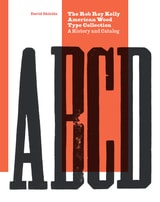
The Rob Roy Kelly American Wood Type Collection
A History and CatalogDavid Shields
University of Texas Press, 2022
2023 50 Books | 50 Covers Award, The American Institute of Graphic Arts (AIGA)
2024 Honorable Mention, Design Awards, Graphis
2024 Finalist, Typography Competition, Communication Arts Magazine
A beautifully illustrated exploration of the Rob Roy Kelly American Wood Type Collection.
The Rob Roy Kelly Wood Type Collection is a comprehensive collection of wood type manufactured and used for printing in nineteenth-century America. Comprising nearly 150 typefaces of various sizes and styles, it was amassed by noted design educator and historian Rob Roy Kelly starting in 1957 and is now held by the University of Texas. Although Kelly himself published a 1969 book on wood type and nineteenth-century typographic history, there has been little written about the creation of the wood type forms, the collection, or Kelly.
In this book, David Shields rigorously updates and expands upon Kelly’s historical information about the types, clarifying the collection’s exact composition and providing a better understanding of the stylistic development of wood type forms during the nineteenth century. Using rich materials from the period, Shields provides a stunning visual context that complements the textual history of each typeface. He also highlights the non-typographic material in the collection—such as borders, rules, ornaments, and image cuts—that have not been previously examined. Featuring over 300 color illustrations, this written history and catalog is bound to spark renewed interest in the collection and its broader typographic period.
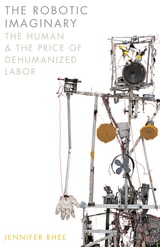
The Robotic Imaginary
The Human and the Price of Dehumanized LaborJennifer Rhee
University of Minnesota Press, 2018
Tracing the connections between human-like robots and AI at the site of dehumanization and exploited labor
The word robot—introduced in Karel Čapek’s 1920 play R.U.R.—derives from rabota, the Czech word for servitude or forced labor. A century later, the play’s dystopian themes of dehumanization and exploited labor are being played out in factories, workplaces, and battlefields. In The Robotic Imaginary, Jennifer Rhee traces the provocative and productive connections of contemporary robots in technology, film, art, and literature. Centered around the twinned processes of anthropomorphization and dehumanization, she analyzes the coevolution of cultural and technological robots and artificial intelligence, arguing that it is through the conceptualization of the human and, more important, the dehumanized that these multiple spheres affect and transform each other.
Drawing on the writings of Alan Turing, Sara Ahmed, and Arlie Russell Hochschild; such films and novels as Her and The Stepford Wives; technologies like Kismet (the pioneering “emotional robot”); and contemporary drone art, this book explores anthropomorphic paradigms in robot design and imagery in ways that often challenge the very grounds on which those paradigms operate in robotics labs and industry. From disembodied, conversational AI and its entanglement with care labor; embodied mobile robots as they intersect with domestic labor; emotional robots impacting affective labor; and armed military drones and artistic responses to drone warfare, The Robotic Imaginary ultimately reveals how the human is made knowable through the design of and discourse on humanoid robots that are, paradoxically, dehumanized.
The Roots of Theatre
Rethinking Ritual and Other Theories of OriginEli Rozik
University of Iowa Press, 2002
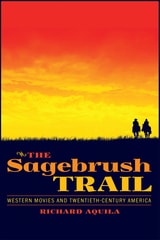
The Sagebrush Trail
Western Movies and Twentieth-Century AmericaRichard Aquila
University of Arizona Press, 2015
The book is divided into three parts. Part 1 traces the birth and growth of Westerns from 1900 through the end of World War II. Part 2 focuses on a transitional period in Western movie history during the two decades following World War II. Finally, part 3 shows how Western movies reflected the rapid political, social, and cultural changes that transformed America in the 1960s and the last decades of the twentieth century.
The Sagebrush Trail explains how Westerns evolved throughout the twentieth century in response to changing times, and it provides new evidence and fresh interpretations about both Westerns and American history. These films offer perspectives on the past that historians might otherwise miss. They reveal how Americans reacted to political and social movements, war, and cultural change. The result is the definitive story of Western movies, which contributes to our understanding of not just movie history but also the mythic West and American history. Because of its subject matter and unique approach that blends movies and history, The Sagebrush Trail should appeal to anyone interested in Western movies, pop culture, the American West, and recent American history and culture.
The mythic West beckons but eludes. Yet glimpses of its utopian potential can always be found, even if just for a few hours in the realm of Western movies. There on the silver screen, the mythic West continues to ride tall in the saddle along a “sagebrush trail” that reveals valuable clues about American life and thought.
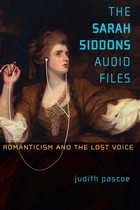
The Sarah Siddons Audio Files
Romanticism and the Lost VoiceJudith Pascoe
University of Michigan Press, 2013
“The theatre scholar’s daunting but irresistible quest to recover some echoes of performance of the past has never been more engagingly presented than in Pascoe’s account of tracing the long-silenced voice of Sarah Siddons. Her report is a warm, witty, and highly informative exploration of the methodology and the pleasures of historical research.”
—Marvin Carlson, author of The Haunted Stage: The Theatre as Memory Machine
During her lifetime (1755–1831), English actress Sarah Siddons was an international celebrity acclaimed for her performances of tragic heroines. We know what she looked like—an endless number of artists asked her to sit for portraits and sculptures—but what of her famous voice, reported to cause audiences to hyperventilate or faint? In The Sarah Siddons Audio Files, Judith Pascoe takes readers on a journey to discover how the actor’s voice actually sounded. In lively and engaging prose, Pascoe retraces her quixotic search, which leads her to enroll in a “Voice for Actors” class, to collect Lady Macbeth voice prints, and to listen more carefully to the soundscape of her life.
Bringing together archival discoveries, sound recording history, and media theory, Pascoe shows how romantic poets’ preoccupation with voices is linked to a larger cultural anxiety about the voice’s ephemerality. The Sarah Siddons Audio Files contributes to a growing body of work on the fascinating history of sound and will engage a broad audience interested in how recording technology has altered human experience.
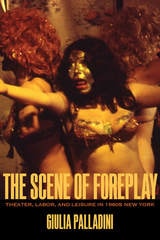
The Scene of Foreplay
Theater, Labor, and Leisure in 1960s New YorkGiulia Palladini
Northwestern University Press, 2017
Matching an original approach to historical materials and theoretical reflection, Palladini addresses the peculiar forms of production, reproduction, and consumption developed in the 1960s as labors of love, creating for artists a condition of “preliminarity” toward professional work and also functioning as a counterforce within productive economy, as a prelude where value is not yet assigned to labor.
The Scene of Foreplay proposes that such labors of love can be considered both as paradigmatic for contemporary forms of precarious labor and also resonating with echoes from marginal histories of the performing arts, in a nonlinear genealogy of queer resistance to ideas of capitalist productivity and professionalism. The book offers much for those interested in performance theory as well asin the history of theater and performance arts in the 1960s.
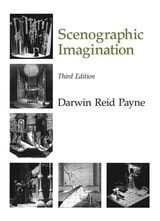
The Scenographic Imagination, Third Edition
Darwin Reid Payne
Southern Illinois University Press, 1993
In this enlarged and thoroughly revised third edition of his widely used text, Darwin Reid Payne explores the principles and philosophies that shape the visual elements of theatre.
Payne sets out to discover who scenographers are and to define their responsibilities. He sees scenographers as not merely craftspersons but artists with "a special vision that spans all the arts." Such artists are in a position to "extend and amplify underlying meanings of the production." The proper goal of beginning scenographers, according to Payne, is one day to be able to approach the job as artists in full command of their craft.
Payne seeks to instill in beginning scenographers a basic core of knowledge: an understanding of theatre history and the development of drama; a knowledge of art history and an understanding of periods and styles of architecture, painting, sculpture, furnishings, and costume; and a familiarity with the principles, techniques, and materials of pictorial and three-dimensional design. This new edition contains 248 illustrations, 38 more than the second edition. Payne’s goal, certainly, is to teach students what to do and how to do it; equally important, however, is Payne’s view that scenographers must know why.
To Payne, "Scenography is an art whose scope is nothing less than the whole world outside the theatre." Scenographers must read not only in their own field but in others as well. Payne has incorporated into his text many suggestions for outside readings, quoting passages and even entire chapters from important works. Stressing research, Payne argues that without knowledge of the literature of their own and related arts, scenographers cannot grow. And that is the emphasis of this book: to present aspiring scenographers with an approach and a set of concepts that will enable them to grow. Toward that end, Payne establishes five priorities, the first of which is to develop in students what he calls "time vision," or the ability to "see" the historical past as a living place with living inhabitants. The second priority is to bring about an awareness that allows students to "see" beneath the surface of objects and events. Third, students must be helped to recognize and appreciate the difference between the "concept of space as it exists outside the theatre and the concept of space as it is used within the theatre." The fourth priority is to ingrain in students an understanding of the importance of imagery to the scenographer, and the final priority is to teach those technical skills necessary to carry out the concepts of the scenographer.
The Sea Hawk
Edited by Rudy Behlmer; Tino T. Balio, Series Editor
University of Wisconsin Press, 1982
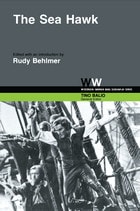
This 1940 swashbuckler is one of the best examples of the old Hollywood studio system at work. Scholars and film buffs will learn much about collaborative filmmaking on an exceptionally large scale as Rudy Behlmer traces step-by-step the evolution of The Sea Hawk. The very anti-thesis of an auteur film, The Sea Hawk illustrates the ways in which creative input from just about everyone on the Warner Brothers lot—producers, writers, art directors, director, cameraman, special effects team, editor and composer-conductor—resulted in a film in the familiar Warners house style.
This book includes the complete screenplay.

The Search for Medieval Music in Africa and Germany, 1891-1961
Scholars, Singers, MissionariesAnna Maria Busse Berger
University of Chicago Press, 2020
The book unfolds in three parts. Busse Berger starts with the origins of comparative musicology circa 1900, when early proponents used ideas from comparative linguistics to test whether parallels could be drawn between nonwestern and medieval European music. She then turns to youth movements of the era—the Wandervogel, Jugendmusikbewegung, and Singbewegung—whose focus on joint music making influenced many musicologists. Finally, she considers case studies of Protestant and Catholic mission societies in what is now Tanzania, where missionaries—many of them musicologists and former youth-group members—extended the discipline via ethnographic research and a focus on local music and communities. In highlighting these long-overlooked transnational connections and the role of global music in early musicology, Busse Berger shapes a fresh conception of music scholarship during a pivotal part of the twentieth century.
The Second City Almanac of Improvisation
Anne Libera and Second City, Inc.
Northwestern University Press, 2004
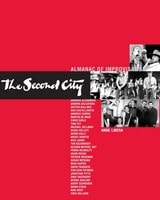
The Second City Almanac of Improvisation - like the theatre itself - is a collection of diverse ideas, viewpoints, and memories, written by a vast array of teachers, actors, and directors who all got their start at the legendary comedy theatre. Fred Willard recalls his introduction to The Second City style in the mid-Sixties; Tim Kazurinsky gives a hilarious visual demonstration on the art of object work; "Saturday Night Live" star Tina Fey talks about re-improvising material as a mode of writing revue comedy; noted director Mick Napier takes on the thorny debate between long-form improvisation and short-form improvisation. Anne Libera guides the reader through each essay by providing a road map for understanding how The Second City method of improv-based comedy has become the industry standard.
Mike Nichols, Elaine May, Alan Arkin, Joan Rivers, Robert Klein, Peter Boyle, Harold Ramis, John Belushi, Dan Aykroyd, Bill Murray, John Candy, Martin Short, Gilda Radner, George Wendt, Jim Belushi, Bonnie Hunt, Mike Myers, Ryan Stiles, Rachel Dratch, Nia Vardalos - no other theatre can boast an alumni list of this magnitude. The Second City Almanac of Improvisation provides practical instruction, personal details, and inspiration to both improvisers and their fans.
The Seduction of Space
Cruising French CinemaJules O'Dwyer
University of Minnesota Press, 2025
A bold and far-reaching new study of French queer cinema reimagines the relationship between sexuality and space
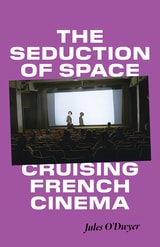
Spatiality has long been a crucial and potent lens for understanding French culture and aesthetics. While canonical greats of French cinema such as Jean-Luc Godard, Agnès Varda, and Louis Malle invoked the notion of flânerie to explore ideas of modernism, spatial exploration, and urban sociality, Jules O’Dwyer demonstrates how a more recent generation of French queer filmmakers continues to engage with—and contest—this legacy by focusing attention on the cognate practice of cruising.
Through the work of Jacques Nolot, Sébastien Lifshitz, Christophe Honoré, Vincent Dieutre, Alain Guiraudie, and others, The Seduction of Space draws film theory, queer studies, and spatial inquiry into close proximity to examine the politics of cruising and the gendering of space. Making the case that cinema not only documents the queer spaces of the past but continues to produce them, O’Dwyer maps the relationships between sex and spatiality as he takes up such varied topics as public sex in the porn theater, racial eroticization in the banlieue, and the ecocritical valences of rural cruising.
Foregrounding the crucial role that spatiality plays in shaping the parameters of France’s visual cultures and political imaginary, The Seduction of Space is both an urgent queer reconceptualization of this tradition and a clarion call for film scholars to tarry with the politics of sexuality in all its messiness.
Retail e-book files for this title are screen-reader friendly with images accompanied by short alt text and/or extended descriptions.
The Silent Film Companion
A Recovered and Expanded HistoryLiz Clarke
Rutgers University Press, 2027
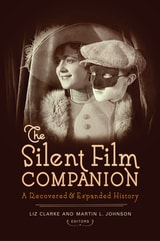
Silent film is more than just a cinema of firsts, greats, or classics. It is a cinema of experimentation, ambition, and connection. To watch a silent film is to be transported into another world. The Silent Film Companion seeks to broaden the silent film canon by focusing on compelling non-canonical films from around the globe, providing a fresh perspective and new view of silent cinema. With over fifty films discussed, this volume captures just a sliver of the many delights silent cinema has to offer. It encourages discovery, and rediscovery, of the world of silent cinema: one where the movies were still young, full of possibility, and eager to entice others to take part in a wonderful adventure.
Films covered are from fourteen countries, including Brazil, Mexico, China, Cuba, India, Italy, and Russia, and represent a diversity of subjects. Each chapter provides historical and cultural context to the film, the filmmakers, and a concise analysis of each film. The Silent Film Companion is a must-read for students and fans of silent cinema interested in seeing a side of silent cinema that is rarely explored.
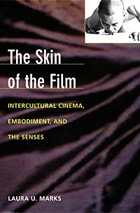
The Skin of the Film
Intercultural Cinema, Embodiment, and the SensesLaura U. Marks
Duke University Press, 2000
Much of intercultural cinema, Marks argues, has its origin in silence, in the gaps left by recorded history. Filmmakers seeking to represent their native cultures have had to develop new forms of cinematic expression. Marks offers a theory of “haptic visuality”—a visuality that functions like the sense of touch by triggering physical memories of smell, touch, and taste—to explain the newfound ways in which intercultural cinema engages the viewer bodily to convey cultural experience and memory. Using close to two hundred examples of intercultural film and video, she shows how the image allows viewers to experience cinema as a physical and multisensory embodiment of culture, not just as a visual representation of experience. Finally, this book offers a guide to many hard-to-find works of independent film and video made by Third World diasporic filmmakers now living in the United States, Great Britain, and Canada.
The Skin of the Film draws on phenomenology, postcolonial and feminist theory, anthropology, and cognitive science. It will be essential reading for those interested in film theory, experimental cinema, the experience of diaspora, and the role of the sensuous in culture.

The Social Object
Apprehending Materiality for Industrial Design PracticeSoumitri Varadarajan
Intellect Books, 2025
Drawing on the methods of design history, material culture studies, and the social construction of technology, this book analyzes the domestic spaces and objects in the homes of the middle class in India, describing how people make meaning of the objects they buy, own, and gift.
Soumitri Varadarajan argues against a simplistic universal account of the way we think about how objects are designed. Instead, he presents a biography of projects and objects, offering a detailed and affectionate account of the lives of objects within the homes of the not-so-rich.
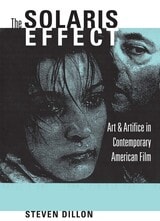
The Solaris Effect
Art and Artifice in Contemporary American FilmBy Steven Dillon
University of Texas Press, 2006
What do contemporary American movies and directors have to say about the relationship between nature and art? How do science fiction films like Steven Spielberg's A.I. and Darren Aronofsky's π represent the apparent oppositions between nature and culture, wild and tame?
Steven Dillon's intriguing new volume surveys American cinema from 1990 to 2002 with substantial descriptions of sixty films, emphasizing small-budget independent American film. Directors studied include Steven Soderbergh, Darren Aronofsky, Todd Haynes, Harmony Korine, and Gus Van Sant, as well as more canonical figures like Martin Scorcese, Robert Altman, David Lynch, and Steven Spielberg. The book takes its title and inspiration from Andrei Tarkovsky's 1972 film Solaris, a science fiction ghost story that relentlessly explores the relationship between the powers of nature and art. The author argues that American film has the best chance of aesthetic success when it acknowledges that a film is actually a film. The best American movies tell an endless ghost story, as they perform the agonizing nearness and distance of the cinematic image.
This groundbreaking commentary examines the rarely seen bridge between select American film directors and their typically more adventurous European counterparts. Filmmakers such as Lynch and Soderbergh are cross-cut together with Tarkovsky and the great French director, Jean-Luc Godard, in order to test the limits and possibilities of American film. Both enthusiastically cinephilic and fiercely critical, this book puts a decade of U.S. film in its global place, as part of an ongoing conversation on nature and art.
The Song Is You
Musical Theatre and the Politics of Bursting into Song and DanceBradley Rogers
University of Iowa Press, 2020
Musicals, it is often said, burst into song and dance when mere words can no longer convey the emotion. This book argues that musicals burst into song and dance when one body can no longer convey the emotion. Rogers shows how the musical’s episodes of burlesque and minstrelsy model the kinds of radical relationships that the genre works to create across the different bodies of its performers, spectators, and creators every time the musical bursts into song. These radical relationships—borne of the musical’s obsessions with “bad” performances of gender and race—are the root of the genre’s progressive play with identity, and thus the source of its subcultural power. However, this leads to an ethical dilemma: Are the musical’s progressive politics thus rooted in its embrace of regressive entertainments like burlesque and minstrelsy?
The Song Is You shows how musicals return again and again to this question, and grapple with a guilt that its joyous pleasures are based on exploiting the laboring bodies of its performers. Rogers argues that the discourse of “integration”—which claims that songs should advance the plot—has functioned to deny the radical work that the musical undertakes every time it transitions into song and dance. Looking at musicals from The Black Crook to Hamilton, Rogers confronts the gendered and racial dynamics that have always under-girded the genre, and asks how we move forward.
The Songs of Van Dyke Parks
Durable GoodsDale Carter
University of Illinois Press, 2027
Embracing the opportunity provided by his collaboration with Beach Boys leader Brian Wilson, the Mississippi-born Parks enjoyed a career whose many bases and low profile gave him space to explore his art. His songs blended musical passion, personal experience, and social concern on albums devoted to significant and timely themes while his broad creative palette enabled him to find inspiration in styles ranging from classical to Appalachian, and musical theater to calypso.
An illuminating portrait of a singular creative voice, The Songs of Van Dyke Parks takes readers inside the songwriting of a resolutely original American artist and his enduring voyage of musical discovery.