Results by title
1761 books match the query 'Public Policy' and 335 start with t

To Feast on Us as Their Prey
Cannibalism and the Early Modern AtlanticRachel B. Herrmann
University of Arkansas Press, 2019
Winner, 2020 Association for the Study of Food and Society Book Award, Edited Volume
Long before the founding of the Jamestown, Virginia, colony and its Starving Time of 1609–1610—one of the most famous cannibalism narratives in North American colonial history—cannibalism played an important role in shaping the human relationship to food, hunger, and moral outrage. Why did colonial invaders go out of their way to accuse women of cannibalism? What challenges did Spaniards face in trying to explain Eucharist rites to Native peoples? What roles did preconceived notions about non-Europeans play in inflating accounts of cannibalism in Christopher Columbus’s reports as they moved through Italian merchant circles?
Asking questions such as these and exploring what it meant to accuse someone of eating people as well as how cannibalism rumors facilitated slavery and the rise of empires, To Feast on Us as Their Prey posits that it is impossible to separate histories of cannibalism from the role food and hunger have played in the colonization efforts that shaped our modern world.
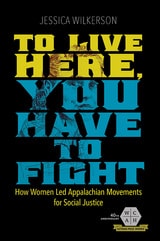
To Live Here, You Have to Fight
How Women Led Appalachian Movements for Social JusticeJessica Wilkerson
University of Illinois Press, 2019
Jessica Wilkerson tells their stories within the larger drama of efforts to enact change in the 1960s and 1970s. She shows white Appalachian women acting as leaders and soldiers in a grassroots war on poverty--shaping and sustaining programs, engaging in ideological debates, offering fresh visions of democratic participation, and facing personal political struggles. Their insistence that caregiving was valuable labor clashed with entrenched attitudes and rising criticisms of welfare. Their persistence, meanwhile, brought them into unlikely coalitions with black women, disabled miners, and others to fight for causes that ranged from poor people's rights to community health to unionization.
Inspiring yet sobering, To Live Here, You Have to Fight reveals Appalachian women as the indomitable caregivers of a region--and overlooked actors in the movements that defined their time.

Tommy
My Journey of a LifetimeTommy G. Thompson and Doug Moe
University of Wisconsin Press, 2018
Personal and revealing stories punctuate the biographical details and policy discussions. Here is Tommy as a young man, just happening to be on the National Mall in 1964 when Dr. Martin Luther King told the nation "I have a dream." Here is Tommy as Wisconsin governor, struggling to start a Harley-Davidson motorcycle before leading "a pack of Hell's Republicans" on a ride through the state. Here is Tommy in Washington after the 9/11 attacks, slipping out of a secure bunker (in defiance of orders) to aid the emergency medical response.
Thompson speaks candidly of his achievements and regrets, including his involvement with welfare reform, school choice, land conservancy, prisons, the financing of Miller Park, stem cell research, and health insurance.

Too Many Children Left Behind
The U.S. Achievement Gap in Comparative PerspectiveBRUCE BRADBURY is associate professor at the Social Policy Research Centre at the University of New South Wales, Australia. MILES CORAK is professor of economics at the Graduate School of Public and International Affairs at the University of Ottawa. JANE WALDFOGFEL is professor of social work and public affairs at the Columbia University School of Social Work and visiting professor at the Centre for Analysis of Social Exclusion at the London School of Economics and Political Science. ELIZABETH WASHBROOK is lecturer in Quantitative Methods for Education at the Graduate School of Education and a member of the Centre for Multilevel Modelling at the University of Bristol, United Kingdom.
Russell Sage Foundation, 2015
The belief that with hard work and determination, all children have the opportunity to succeed in life is a cherished part of the American Dream. Yet, increased inequality in America has made that dream more difficult for many to obtain. In Too Many Children Left Behind, an international team of social scientists assesses how social mobility varies in the United States compared with Australia, Canada, and the United Kingdom. Bruce Bradbury, Miles Corak, Jane Waldfogel, and Elizabeth Washbrook show that the academic achievement gap between disadvantaged American children and their more advantaged peers is far greater than in other wealthy countries, with serious consequences for their future life outcomes. With education the key to expanding opportunities for those born into low socioeconomic status families, Too Many Children Left Behind helps us better understand educational disparities and how to reduce them.
Analyzing data on 8,000 school children in the United States, the authors demonstrate that disadvantages that begin early in life have long lasting effects on academic performance. The social inequalities that children experience before they start school contribute to a large gap in test scores between low- and high-SES students later in life. Many children from low-SES backgrounds lack critical resources, including books, high-quality child care, and other goods and services that foster the stimulating environment necessary for cognitive development. The authors find that not only is a child’s academic success deeply tied to his or her family background, but that this class-based achievement gap does not narrow as the child proceeds through school.
The authors compare test score gaps from the United States with those from three other countries and find smaller achievement gaps and greater social mobility in all three, particularly in Canada. The wider availability of public resources for disadvantaged children in those countries facilitates the early child development that is fundamental for academic success. All three countries provide stronger social services than the United States, including universal health insurance, universal preschool, paid parental leave, and other supports. The authors conclude that the United States could narrow its achievement gap by adopting public policies that expand support for children in the form of tax credits, parenting programs, and pre-K.
With economic inequalities limiting the futures of millions of children, Too Many Children Left Behind is a timely study that uses global evidence to show how the United States can do more to level the playing field.

Total Justice
Lawrence M. Friedman
Russell Sage Foundation, 1985
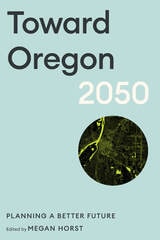
Toward Oregon 2050
Planning a Better FutureMegan Horst
Oregon State University Press, 2024
In this compelling volume, leading experts in land use and urban planning, in cooperation with other scholars and community partners, envision various possible futures and begin the work of developing statewide plans to guide Oregon through the decades ahead. Building on the state’s policy innovation and planning legacy, contributors to Toward Oregon 2050 address current challenges such as housing scarcity, income inequality, the rural-urban divide, and climate change. They offer recommendations on a range of issues, from culture to incarceration, transportation to voting rights, all with the goal of imagining what a fair and equitable Oregon might look like.
Some of the imagined futures—with worsening effects of climate change, environmental harms, and social inequities—are not bright for many Oregonians. Other futures include enhanced resiliency to forest fires and flooding, more Oregonians in high-paying jobs and in secure housing, and more children walking and biking to school. But those positive futures are not guaranteed, and getting there won’t be easy. They’ll require all stakeholders—state and local government, members of all political parties, private businesses, non-profit organizations, and individual residents—to play a role in ensuring a better future for the next generation of Oregonians.
Intended for all Oregonians who care about their state’s future, Toward Oregon 2050 will also appeal to scholars and planners who have long looked to Oregon for inspiration and lessons learned. The book invites readers to envision the future of Oregon and to contribute their part toward a better future for the state.
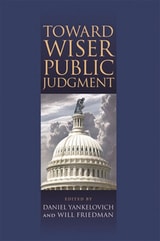
Toward Wiser Public Judgment
Daniel Yankelovich
Vanderbilt University Press, 2011
In his lead chapter, Dan Yankelovich urges us to move away from a "misleading model of public opinion" that "dominates the expert culture of our society, including journalists, scientists, business leaders, scholars, professional experts, and political leaders." He and the other contributors (Will Friedman, Keith Melville, Robert Kingston, Alison Kadlec, Steven A. Rosell, and Heidi Gantwerk) describe methods used by organizations like Public Agenda, National Issues Forums, and Viewpoint Learning, Inc., to advance the public's learning curve through various forms of civic engagement, education, dialogue and deliberation.
They provide case studies of education reform in Bridgeport, Connecticut, and math and science initiatives in the Kansas City area, and examples of programs that have focused on issues ranging from energy and health care to US-Muslim relations. One chapter is a dialogue between Yankelovich and Friedman.
While our political culture resonates to the public's desire for a stronger voice, it fails to ensure that this voice reflects anything more than the spin, spectacle, and excessive partisanship that dominate today's public discourse. Toward Wiser Public Judgment offers insights and strategies to counteract these troubling trends.

Toward a Healthier Garden State
Beyond Cancer Clusters and COVIDMichael R. Greenberg
Rutgers University Press, 2023
This book uses the past fifty years of New Jersey history as a case study to illustrate just how much public policy decisions and other upstream factors can affect the health of a state’s citizens. It reveals how economic and racial disparities in health care were exacerbated by bad policies regarding everything from zoning to education to environmental regulation. The study further chronicles how New Jersey struggled to deal with public health crises like the AIDS epidemic and the crack epidemic. Yet it also explores how the state has developed some of the nation’s most innovative responses to public health challenges, and then provides policy suggestions for how we might build an even healthier New Jersey.
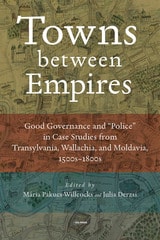
Towns between Empires
Good Governance and “Police” in Case Studies from Transylvania, Wallachia, and Moldavia, 1500s–1800sMária Pakucs
Central European University Press, 2025
The chapters in the volume capture the widest possible variety of political and administrative systems in the region. Transylvanian towns were structured and governed similarly to other small Central European urban centers, however significant diversity can be discerned following the Reformation. Moldavian and Wallachian towns in the 18th and 19th century are little known to international scholarship, and the chapters in this volume will fill this gap.

Toxic and Intoxicating Oil
Discovery, Resistance, and Justice in Aotearoa New ZealandPatricia Widener
Rutgers University Press, 2021

Trade Threats, Trade Wars
Bargaining, Retaliation, and American Coercive DiplomacyKa Zeng
University of Michigan Press, 2004
Trade-Offs
An Introduction to Economic ReasoningHarold Winter
University of Chicago Press, 2023
The highly engaging introduction to thinking like an economist, updated for a new generation of readers.
When economists wrestle with any social issue—be it unemployment, inflation, healthcare, or crime and punishment—they do so impersonally. The big question for them is: what are the costs and benefits, or trade-offs, of the solutions to such matters? These trade-offs constitute the core of how economists see the world—and make the policies that govern it.
Trade-Offs is an introduction to the economic approach of analyzing controversial policy issues. A useful introduction to the various factors that inform public opinion and policymaking, Trade-Offs is composed of case studies on topics drawn from across contemporary law and society.
Intellectually stimulating yet accessible and entertaining, Trade-Offs will be appreciated by students of economics, public policy, health administration, political science, and law, as well as by anyone following current social policy debates.

Trade-Offs
An Introduction to Economic ReasoningHarold Winter
University of Chicago Press, 2023
This is an auto-narrated audiobook edition of this book.
The highly engaging introduction to thinking like an economist, updated for a new generation of readers.
When economists wrestle with any social issue—be it unemployment, inflation, healthcare, or crime and punishment—they do so impersonally. The big question for them is: what are the costs and benefits, or trade-offs, of the solutions to such matters? These trade-offs constitute the core of how economists see the world—and make the policies that govern it.
Trade-Offs is an introduction to the economic approach of analyzing controversial policy issues. A useful introduction to the various factors that inform public opinion and policymaking, Trade-Offs is composed of case studies on topics drawn from across contemporary law and society.
Intellectually stimulating yet accessible and entertaining, Trade-Offs will be appreciated by students of economics, public policy, health administration, political science, and law, as well as by anyone following current social policy debates.
Trade-Offs
An Introduction to Economic Reasoning and Social IssuesHarold Winter
University of Chicago Press, 2005
Harold Winter provides readers with the analytical tools needed to identify and understand the trade-offs associated with these topics. By considering both the costs and benefits of potential policy solutions, Winter stresses that real-world policy decision making is best served by an explicit recognition of as many trade-offs as possible.
Intellectually stimulating yet accessible and entertaining, Trade-Offs will be appreciated by students of economics, public policy, health administration, political science, and law, as well as by anyone who follows current social policy debates.

Trade-Offs
An Introduction to Economic Reasoning and Social Issues, Second EditionHarold Winter
University of Chicago Press, 2013
Trading Blocs
States, Firms, and Regions in the World EconomyKerry A. Chase
University of Michigan Press, 2005
Trading Blocs is the first book to systematically demonstrate the theoretical significance of economies of scale in domestic pressure for trading blocs, and thereby build on a growing research agenda in areas of political economy and domestic politics.
"Chase has written a superb book that provides us with an innovative and compelling explanation for the development of trading blocs."
--Vinod Aggarwal, Director, Berkeley APEC Study Center, University of California, Berkeley
Kerry A. Chase is Assistant Professor of Political Science at Tufts University.
Trading Down
Africa, Value Chains, And The Global EconomyPeter Gibbon and Stefano Ponte
Temple University Press, 2005
Transboundary Environmental Governance across the World's Longest Border
Stephen Brooks
Michigan State University Press, 2018
Transforming Cities and Minds through the Scholarship of Engagement
Economy, Equity, and EnvironmentLorlene Hoyt
Vanderbilt University Press, 2013
Across the country from Camden to Oakland, the contributors engaged with community partners--hospitals, churches, community development corporations, community foundations, and other rooted institutions--to help restore old cities to life. Their collaborative thesis project engaged them with one another and university staff; it may offer a new paradigm for graduate education.

Transforming Masculine Rule
Agriculture and Rural Development in the European UnionElisabeth Prügl
University of Michigan Press, 2011
"The premise of mainstreaming gender is to bring equality concerns into every aspect of policy-making, and this brave book offers a close look at how feminists have taken up the challenge to transform the hidden dynamics of male domination in agricultural policy in Europe. In contrast to the automatic assumption that (neo)liberal policy always works against women’s interests, Prügl demonstrates the potential for feminist ju-jitsu to take advantage of multiple levels of governance to empower women in some circumstances. Although feminists were not always successful, the story of their efforts to remake agricultural policy should encourage activists to look for points of leverage in this and other contested and changing multilevel power systems."
---Myra Marx Ferree, University of Wisconsin
"Information on policy development, conflicts about improving the status of farm women, and using rural development policies to foster gender equality is hard to access in English and extremely useful for researchers concerned with the specifics of gender equality policy in the EU."
---Alison Woodward, Institute for European Studies, Vrije Universiteit Brussel
"This book is a must-read for scholars interested in the gendered process of global restructuring. Elisabeth Prügl succeeds superbly in teasing out the power politics involved in European agricultural policy. Through the lens of a feminist-constructivist approach, she makes visible the multiple mechanisms of gendered power within the state. This very lucid narrative is a milestone in a new generation of feminist theoretical scholarship."
---Brigitte Young, University of Muenster, Germany
Taking West and East Germany as case studies, Elisabeth Prügl shows how European agricultural policy has cemented long-standing gender-based inequalities and how feminists have used liberalization as an opportunity to challenge such inequalities. Through a comparison of the EU’s rural development program known as LEADER as it played out in the Altmark region in the German East and in the Danube/Bavarian Forest region in the West, Prügl provides a close-up view of the power politics involved in government policies and programs.
In identifying mechanisms of power (refusal, co-optation, compromise, normalization, and silencing of difference), Prügl illustrates how these mechanisms operate in arguments over gender relations within the state. Her feminist-constructivist approach to global restructuring as a gendered process brings into view multiple levels of governance and the variety of gender constructions operating in different societies. Ultimately, Prügl offers a new understanding of patriarchy as diverse, contested, and in flux.
Jacket photograph: © iStockphoto.com/Wojtek Kryczka
Transforming Rural Water Governance
The Road from Resource Management to Political Activism in NicaraguaSarah T. Romano
University of Arizona Press, 2019
In Transforming Rural Water Governance Sarah T. Romano explains the bottom-up development and political impact of community-based water and sanitation committees (CAPS) in Nicaragua. Romano traces the evolution of CAPS from rural resource management associations into a national political force through grassroots organizing and strategic alliances.
Resource management and service provision is inherently political: charging residents fees for service, determining rules for household water shutoffs and reconnections, and negotiating access to water sources with local property owners constitute just a few of the highly political endeavors resource management associations like CAPS undertake as part of their day-to-day work in their communities. Yet, for decades in Nicaragua, this local work did not reflect political activism. In the mid-2000s CAPS’ collective push for social change propelled them onto a national stage and into new roles as they demanded recognition from the government.
Romano argues that the transformation of Nicaragua’s CAPS into political actors is a promising example of the pursuit of sustainable and equitable water governance, particularly in Latin America. Transforming Rural Water Governance demonstrates that when activism informs public policy processes, the outcome is more inclusive governance and the potential for greater social and environmental justice.
Transgender Rights and Politics
Groups, Issue Framing, and Policy AdoptionJami K. Taylor and Donald P. Haider-Markel, Editors
University of Michigan Press, 2015

Transnational Celebrity Activism in Global Politics
Changing the World?Edited by Liza Tsaliki, Christos A. Frangonikolopoulos, and Asteris Huliaras
Intellect Books, 2011
In recent years, celebrities from George Clooney to Bono to Angelina Jolie have attempted to play an increasingly important role in global politics. Celebrity activism is an ever-growing, internationally visible phenomenon—yet the impact of these high-profile humanitarians on public awareness, government support, and mobilization of resources remains under-researched. Bringing together a diverse group of contributors from media studies and public diplomacy, Transnational Celebrity Activism in Global Politics aims to fill that void with a new interdisciplinary framework for the analysis of celebrity activism in international relations.
Transnational Marriage and Partner Migration
Constellations of Security, Citizenship, and RightsAnne-Marie D'Aoust
Rutgers University Press, 2022

Transnational Trajectories and Diaspora Policies
The Case of Czechia in Comparison to Poland, Hungary and SlovakiaEdited by Eva Janská
Karolinum Press, 2025
The book examines diaspora policy in Central European countries in the context of changes following their accession to the EU, utilizing the Czech Republic, Slovakia, Poland, and Hungary as case studies. With a focus on the previously underexplored new Czech diaspora (i.e., the emigration of Czechs/Czechoslovaks after 1990), individual case studies provide a comprehensive description of the contemporary Czech diaspora while also elucidating key inquiries directed towards its current character and specific needs.

Trapped in America's Safety Net
One Family's StruggleAndrea Louise Campbell
University of Chicago Press, 2014
As a social policy scholar, Campbell thought she knew a lot about means-tested assistance programs. What she quickly learned was that missing from most government manuals and scholarly analyses was an understanding of how these programs actually affect the lives of the people who depend on them. Using Marcella and Dave’s situation as a case in point, she reveals their many shortcomings in Trapped in America’s Safety Net. Because American safety net programs are designed for the poor, Marcella and Dave first had to spend down their assets and drop their income to near-poverty level before qualifying for help. What’s more, to remain eligible, they will have to stay under these strictures for the rest of their lives, meaning they are barred from doing many of the things middle-class families are encouraged to do: Save for retirement. Develop an emergency fund. Take advantage of tax-free college savings. And, while Marcella and Dave’s story is tragic, the financial precariousness they endured even before the accident is all too common in America, where the prevalence of low-income work and unequal access to education have generated vast—and growing—economic inequality. The implementation of Obamacare has cut the number of uninsured and underinsured and reduced some of the disparities in coverage, but it continues to leave too many people open to tremendous risk.
Behind the statistics and beyond the ideological battles are human beings whose lives are stunted by policies that purport to help them. In showing how and why this happens, Trapped in America’s Safety Net offers a way to change it.

Trapped in America's Safety Net
One Family's StruggleAndrea Louise Campbell
University of Chicago Press, 2014
When Andrea Louise Campbell’s sister-in-law, Marcella Wagner, was run off the freeway by a hit-and-run driver, she was seven-and-a-half months pregnant. She survived—and, miraculously, the baby was born healthy. But that’s where the good news ends. Marcella was left paralyzed from the chest down. This accident was much more than just a physical and emotional tragedy. Like so many Americans—50 million, or one-sixth of the country’s population—neither Marcella nor her husband, Dave, who works for a small business, had health insurance. On the day of the accident, she was on her way to class for the nursing program through which she hoped to secure one of the few remaining jobs in the area with the promise of employer-provided insurance. Instead, the accident plunged the young family into the tangled web of means-tested social assistance.
As a social policy scholar, Campbell thought she knew a lot about means-tested assistance programs. What she quickly learned was that missing from most government manuals and scholarly analyses was an understanding of how these programs actually affect the lives of the people who depend on them. Using Marcella and Dave’s situation as a case in point, she reveals their many shortcomings in Trapped in America’s Safety Net. Because American safety net programs are designed for the poor, Marcella and Dave first had to spend down their assets and drop their income to near-poverty level before qualifying for help. What’s more, to remain eligible, they will have to stay under these strictures for the rest of their lives, meaning they are barred from doing many of the things middle-class families are encouraged to do: Save for retirement. Develop an emergency fund. Take advantage of tax-free college savings. And, while Marcella and Dave’s story is tragic, the financial precariousness they endured even before the accident is all too common in America, where the prevalence of low-income work and unequal access to education have generated vast—and growing—economic inequality. The implementation of Obamacare has cut the number of uninsured and underinsured and reduced some of the disparities in coverage, but it continues to leave too many people open to tremendous risk.
Behind the statistics and beyond the ideological battles are human beings whose lives are stunted by policies that purport to help them. In showing how and why this happens, Trapped in America’s Safety Net offers a way to change it.
Travel Behaviour Reconsidered in an Era of Decarbonisation
David Metz
University College London, 2024
Transport systems are central to daily life, but simultaneously have a salient impact on our environment. However, this perspective has little influence on conventional economic analysis and transport investments, creating dissonance between traditional investment goals and the need to reduce carbon emissions to net zero by 2050. For fifty years, public road and railway expenditures were justified by claims to improve travel time. On the contrary, the average time of travel never changed. Travel Behaviour Reconsidered in an Era of Decarbonisation argues that this outdated economic analysis is misconceived and that fresh perspectives on transport networks are imperative.
Tribal Water Rights
Essays in Contemporary Law, Policy, and EconomicsEdited by John E. Thorson, Sarah Britton, and Bonnie G. Colby
University of Arizona Press, 2006

Trimming the Sails
The Comparative Political Economy of Expansionary Fiscal ConsolidationsIstvan Benczes
Central European University Press, 2008
Tropical Pioneers
Human Agency and Ecological Change in the Highlands of Sri Lanka, 1800–1900James L. A. Webb Jr.
Ohio University Press, 2002
In 1800, the highlands of Sri Lanka had some of the most biologically diverse primary tropical rainforest ecosystems in the world. By 1900, only a few craggy corners and mountain caps had been spared the fire stick. Highland villagers, through the extension of slash-and-burn agriculture, and British managers, through the creation of plantations—first of coffee, then cinchona, and finally tea—had removed virtually the entire primary forest cover.
Tropical Pioneers documents the conversion of a tropical rainforest biome and the collision between what previously had been more discrete ecological zones within South Asia. The ecological impacts were transformational. Author James L. A. Webb, Jr., demonstrates that profound ecological disruption occurred in the central highlands of Sri Lanka during the nineteenth century and suggests that the theme of ecological crisis brought about by the integration of tropical ecological zones during precolonial and colonial periods alike is an important one for historians to investigate elsewhere.
Tropical Pioneers is based on extensive research in the National Archives of Sri Lanka, the National Agricultural Library at Gannaruwa, the Library of the Royal Asiatic Society-Ceylon Branch, the Royal Botanic Gardens at Kew, the Public Record Office of the United Kingdom, and the British Library.
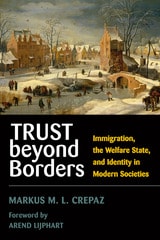
Trust beyond Borders
Immigration, the Welfare State, and Identity in Modern SocietiesMarkus M.L. Crepaz
University of Michigan Press, 2010
Will immigration undermine the welfare state? Trust beyond Borders draws on public opinion data and case studies of Germany, Sweden, and the United States to document the influence of immigration and diversity on trust, reciprocity, and public support for welfare programs. Markus M. L. Crepaz demonstrates that we are, at least in some cases, capable of trusting beyond borders: of expressing faith in our fellow humans and extending help without regard for political classifications.
In Europe, the welfare state developed under conditions of relative homogeneity that fostered high levels of trust among citizens, while in America anxiety about immigration and diversity predated the emergence of a social safety net. Looking at our new era of global migration, Crepaz traces the renewed debate about "us" versus "them" on both sides of the Atlantic and asks how it will affect the public commitment to social welfare. Drawing on the literatures on immigration, identity, social trust, and the welfare state, Trust beyond Borders presents a novel analysis of immigration's challenge to the welfare state and a persuasive exploration of the policies that may yet preserve it.
"Crepaz contributes much to our knowledge about the link between immigration and social welfare, certainly one of the central issues in current national and international politics."
---Stuart Soroka, Associate Professor of Political Science and William Dawson Scholar, McGill University
"Finally! A book that challenges the growing view that ethnic diversity is the enemy of social solidarity. It addresses an issue of intense debate in Western nations; it takes dead aim at the theoretical issues at the center of the controversy; it deploys an impressive array of empirical evidence; and its conclusions represent a powerful corrective to the current drift of opinion. Trust beyond Borders will rank among the very best books in the field."
---Keith Banting, Queen's Research Chair in Public Policy, Queen's University
"Do mass immigration and ethnic diversity threaten popular support for the welfare state? Trust beyond Borders answers no. Marshaling an impressive array of comparative opinion data, Crepaz shows that countries with high levels of social trust and universal welfare state arrangements can avoid the development of the welfare chauvinism that typically accompanies diversity."
---Gary Freeman, Professor and Department Chair, Department of Government, University of Texas at Austin
Markus M. L. Crepaz is Professor in the Department of International Affairs at the University of Georgia and Associate Director of the Center for the Study of Global Issues (GLOBIS).

Turkey Reframed
Constituting Neoliberal HegemonyBaris Ozden
Pluto Press, 2013
Turkey Reframed documents the first decade of the 2000s, a period of radical change in Turkish society and politics, which has been marked by the major economic crisis of 2001 and the coming to power of ex-Islamist cadres organised under the Justice and Development Party (AKP).
The contributors analyse this period of radical change, with its continuities and breaks, and its main actor, the AKP, in relation to the creation of a neoliberal hegemony in post-1980 Turkey. They look at the conflictual, turbulent and painful history of neoliberal hegemony and the contested stabilisation strategy of the AKP government.
Turkey Reframed is a cutting-edge guide for students, scholars and other interested readers who want to understand this period in Turkey’s recent history and its social tensions.
Twenty-First Century Military Innovation
Technological, Organizational, and Strategic Change beyond Conventional WarMarcus Schulzke
University of Michigan Press, 2022
Contemporary war is as much a quest for decisive technological, organizational, and doctrinal superiority before the fighting starts as it is an effort to destroy enemy militaries during battle. Armed forces that are not actively fighting are instead actively reengineering themselves for success in the next fight and imagining what that next fight may look like. Twenty-First Century Military Innovation outlines the most theoretically important themes in contemporary warfare, especially as these appear in distinctive innovations that signal changes in states’ warfighting capacities and their political goals.
Marcus Schulzke examines eight case studies that illustrate the overall direction of military innovation and important underlying themes. He devotes three chapters to new weapons technologies (drones, cyberweapons, and nonlethal weapons), two chapters to changes in the composition of state military forces (private military contractors and special operations forces), and three chapters to strategic and tactical changes (targeted killing, population-centric counterinsurgency, and degradation). Each case study includes an accessible introduction to the topic area, an overview of the ongoing scholarly debates surrounding that topic, and the most important theoretical implications. This book can be read as an overview of the themes that run throughout innovations of varying types or it can be used by readers who are interested in particular topic areas.
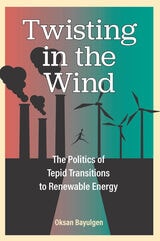
Twisting in the Wind
The Politics of Tepid Transitions to Renewable EnergyOksan Bayulgen
University of Michigan Press, 2022
Why do governments insist on fossil fuels? Why do renewables face uncertain and inconsistent legal and regulatory circumstances that slow their market-share growth against fossil fuels? Oksan Bayulgen studies the political determinants of partial energy reforms that result in tepid energy transitions and shifts the geographical focus from front-runner countries of energy innovation to developing countries, which have become the largest carbon emitters in the world. Her in-depth case study of energy policies in Turkey over the past two decades demonstrates that energy transitions are neither inevitable nor linear and that they are often initiated if and only when promoting renewables is in the interests of governing elites and stall when political dividends associated with energy rents change. This book contributes to the debates on the nature and pace of energy transitions by analyzing the power dynamics and political institutions under which energy reforms are initiated and implemented over time. This timely topic will be of interest to scholars, policymakers, energy investors, and anyone interested in environmental studies.