Results by title
1861 books match the query 'Social life and customs' and 358 start with t
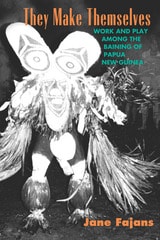
They Make Themselves
Work and Play among the Baining of Papua New GuineaJane Fajans
University of Chicago Press, 1997
In a new work sure to evoke considerable repercussions and debate in anthropological theory, Jane Fajans courageously takes on the "Baining Problem," arguing that the Baining define themselves not through intricate cosmologies or social networks, but through the meanings generated by their own productive and reproductive work.
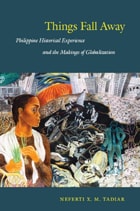
Things Fall Away
Philippine Historical Experience and the Makings of GlobalizationNeferti X. M. Tadiar
Duke University Press, 2009
Tadiar treats the historical experiences articulated in feminist, urban protest, and revolutionary literatures of the 1960s–90s as “cultural software” for the transformation of dominant social relations. She considers feminist literature in relation to the feminization of labor in the 1970s, when between 300,000 and 500,000 prostitutes were working in the areas around U.S. military bases, and in the 1980s and 1990s, when more than five million Filipinas left the country to toil as maids, nannies, nurses, and sex workers. She reads urban protest literature in relation to authoritarian modernization and crony capitalism, and she reevaluates revolutionary literature’s constructions of the heroic revolutionary subject and the messianic masses, probing these social movements’ unexhausted cultural resources for radical change.
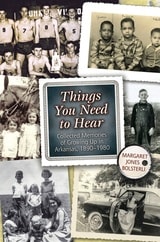
Things You Need to Hear
Collected Memories of Growing Up in Arkansas, 1890–1980Margaret Jones Bolsterli
University of Arkansas Press, 2016
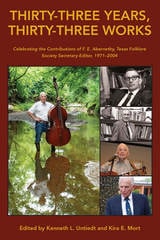
Thirty-three Years, Thirty-three Works
Celebrating the Contributions of F.E. Abernethy, Texas Folklore Society Secretary-Editor, 1971-2004Kenneth L. Untiedt
University of North Texas Press, 2016

This Day in History
Anthony Varallo
University of Iowa Press, 2005
This Is Not the Tropics
StoriesLadette Randolph
University of Wisconsin Press, 2005
The stories collected in This Is Not the Tropics come from the geographic center of a divided nation, and its protagonists evoke a split personality—one half submerged in America’s own diehard mythology, the other half searching to escape tradition. Together they form a portrait of the Plains that is both quirky and poignant. While the themes in this collection are familiar—love and betrayal, loneliness and regret, the needs of the individual versus the needs of the community—the tales themselves are startling and new. Whether it is the story of an eccentric out-of-work accordion player; a woman ending a long marriage against the backdrop of a visit from her failing mother; a young girl who wishes to solve a mystery until real mystery enters her life; or all of the men in a small Nebraska town who annually compete in a hilariously earnest beauty pageant, these are tales that speak of the lives lived in the small towns, the prairie cities, and on the dirt roads off blue highways in the middle of nowhere and everywhere.
This State of Wonders
The Letters of an Iowa Frontier Family, 1858-1861John Kent Folmar
University of Iowa Press, 1991
When the John Hugh Williams family immigrated to Homer, Iowa, in the 1850s, they had six children, ranging in age from five to twenty. Suddenly land poor, in debt, and caught in the Panic of '57, they sent their eldest son, James, to Georgia to work and add to the family income.
The seventy-five letters collected here represent the family's correspondence to their absent son and brother. From 1858 to 1861, James' sisters, brothers, mother, and father wrote to him frequently, each with distinct views on their daily life and struggles. While Mr. Williams wrote most often about money, farming, and moral advice (he was minister in the Church of New Jerusalem, as well as a merchant and farmer), Mrs. Williams commented on her daily chores, the family's health, the ever-important weather, and her leisure activities, including the contemporary journals and books she read, such as David Copperfield and Jane Eyre. James' sisters and brothers wrote about many concerns, from schoolwork and housework to games and family celebrations in nearby Webster City.
As the letters continue, the affection for the absent James becomes more pronounced. And, as the years go by, the letters touch on more current national trends, including the Pikes Peak Gold Rush and the growing North/South crisis, on which James and his family strongly disagree. James was never to return to Iowa but married and remained in the South, becoming a lieutenant colonel in the Confederate army.
Complete with voices both young and old, male and female, This State of Wonders offers a wealth of information about the daily life of an ordinary family on the Iowa prairie. It is a book to be treasured by all Iowans interested in the early life of their state and by all historians looking for a complete portrait of family life on the midwestern frontier.
This Storied River
Legend & Lore of the Upper MississippiDennis McCann
Wisconsin Historical Society Press, 2017

This World, Other Worlds
Sickness, Suicide, Death, and the Afterlife among the Vaqueiros de Alzada of SpainMaría Cátedra
University of Chicago Press, 1992
Applying sensitive ethnographic insight to a rich body of oral testimony, Cátedra discloses an unsuspected symbolic universe native to the Vaqueiros. Death is seen here in close, coherent relation to pain, age, and suffering; sickness and suicide, one must understand the cultural valuation of different ways of dying and the conditions under which suicides take place. To understand what it means to be a Vaqueiro is to understand how suicide can be perceived by a people as acceptable.
A groundbreaking work in European ethnography, This World, Other Worlds takes symbolic analysis to a new level. In its illumination of local conceptions of death, grace, and sainthood, the book also makes a substantial contribution to the anthropology of religion.
Thread of Blood
Colonialism, Revolution, and Gender on Mexico's Northern FrontierAna María Alonso
University of Arizona Press, 1995
The author demonstrates that a distinct kind of frontier serrano society was generated in Namiquipa between the mid-18th and mid-19th centuries. In exchange for keeping the Apaches at bay, colonists were provided with arms and land grants. At the same time, they developed a gendered sense of ethnic identity that equated honor with land, autonomy, and a kind of masculinity that distinguished the "civilized" colonist from the "barbarous" Indian. While this identity was itself ordered hierarchically between men and women, and between "Hispanic" and "Indian," it also provided serranos with a sense of pride and dignity that was not directly associated with wealth.
After the defeat of the Apaches, and with increased state control during the last decades of the Porfiriato, the serranos on the frontier were transformed from bulwarks of order to victims of progress. The expansion of capitalism and the manipulation of local political office by men no longer accountable to communal norms eroded the legitimacy of both powerholders and the central state. In response, serranos constructed an ideology of history based on past notions of masculine honor and autonomy. This ideology motivated their confrontations with the Mexican state during the 1890s and also served as the force behind their mobilization in the 1910 revolution.

Threadbare
Class and Crime in Urban AlaskaMary Kudenov
University of Alaska Press, 2017
Journalist Mary Kudenov set out to find the true stories behind this “end-of-the-road” culture. Through her essays, we meet Alaskans who live outside the common adventurer narrative: a recent graduate of a court-sponsored sobriety program, a long-timer in the Hiland Mountain Correctional Center for women, a slum-landlord’s emancipated teenage daughter, and even a post-rampage spree killer. Her subjects struggle with poverty and middle-class aspirations, education and minimum wage work, God and psychology. The result is a raw and startling collection of direct, ground-level reporting that will leave you deeply moved.

Through Fences
Written by Frederick Luis Aldama and Illustrated by Oscar Garza
The Ohio State University Press, 2024
Honor-winner, 2025 Texas Institute of Letters Jean Flynn Award for Best Young Adult Book
Longlisted, REFORMA National Book Award 2024
Through Fences follows the ups and downs of Latino kids and young adults in the US–Mexico borderlands: San Ysidro, Calexico, McAllen, and back and forth across the border. A young girl's journey north goes wrong, and now she is in a forbidding new place, away from her parents and brother, where she doesn't understand what the adults in green are saying even as she tries to obey their rules. Rocky, one of the few white kids in town, stands by and watches as Miguel is jumped by two of his friends. Maggie and her parents are separated at the border in a tragic accident. Alberto's son doesn't understand his Mexican father's hatred for illegals or his work as a border patrol agent. Alicia is a TikTok influencer who doesn't want to grow up to be a hospital cleaning lady like her mother, but COVID complicates things. Whatever their challenges, the kids, teens, tweens, and adults in these pages are just trying to survive their everyday lives. Vibrantly illustrated by Oscar Garza, each of these short stories brings a different perspective on the perils of living on the border while brown.
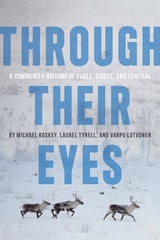
Through Their Eyes
A Community History of Eagle, Circle, and CentralEdited by Michael Koskey, Laurel Tyrrell, and Varpu Lotvonen
University of Alaska Press, 2018
Through their Eyes is a glimpse into the past and present of these communities, showing how their survival has depended on centuries of cooperation. The towns have roots in the gold rushes but they are also located within the traditional territories of the Hän Hwëch’in, the Gwichyaa Gwich’in, and Denduu Gwich’in Dena (Athabascan) peoples. Over time, residents have woven together new heritages, adopting and practicing each other’s traditions. This book combines oral accounts with archival research to create a rich portrayal of life in rural Alaska villages. Many of the stories come directly from the residents of these communities, giving an inside perspective on the often colorful events that characterize life in Eagle, Circle, and Central.
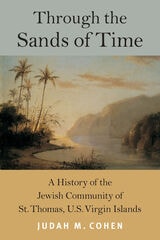
Through the Sands of Time
A History of the Jewish Community of St. Thomas, U.S. Virgin IslandsJudah M. Cohen
Brandeis University Press, 2012
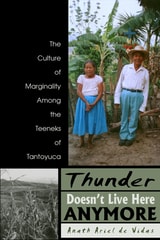
Thunder Doesn't Live Here
Anath Ariel De Vidas
University Press of Colorado, 2004
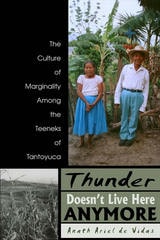
Thunder Doesn't Live Here Anymore
The Culture of Marginality Among the Teeneks of TantoyucaAnath Ariel de Vidas
University Press of Colorado, 2004
However, as Anath Ariel de Vidas argues in this masterful ethnography, this self-denigration - added to the absence among the Teeneks of emblematic Indian features such as traditional costumes, agricultural rituals, specific ceremonies, or systems of religious cargos or offices - are not synonymous with collective anomie. Rather, as Ariel de Vidas demonstrates, their seeming ontological acceptance of a marginal social and economic condition is - in its own peculiar way - a language of indigenous resistance.
Tibes
People, Power, and Ritual at the Center of the CosmosEdited by L. Antonio Curet and Lisa M. Stringer
University of Alabama Press, 2009
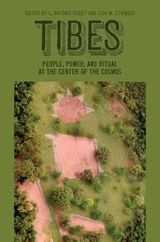
The prehistoric civic-ceremonial center of Tibes is located on the southern coast of Puerto Rico, just north of the modern coastal city of Ponce. Protected on two sides by a river, and on the other two sides by hills, this approximately 10.5-acre site remains as fertile and productive today as when first occupied over 2,000 years ago. Such a rich region would have been a choice location for native peoples because of the diversity in all resources, from land, air, and sea--and also symbolically crucial as a liminal space within the landscape. It may have been regarded as a space charged with numen or cosmic energy where different parts of the cosmos (natural vs. supernatural, or world of the living vs. world of the dead) overlap. Archaeological evidence reveals a long occupation, about 1,000 years, possibly followed by an extensive period of sporadic ceremonial use after the site itself was practically abandoned.
In this volume, nineteen Caribbeanists, across a wide academic spectrum, examine the geophysical, paleoethnobotanical, faunal, lithics, base rock, osteology, bone chemistry and nutrition, social landscape, and ceremonial constructs employed at Tibes. These scholars provide a concise, well-presented, comprehensive analysis of the evidence for local level changes in household economy, internal organization, accessibility to economic, religious, and symbolic resources related to the development and internal operation of socially stratified societies in the Caribbean.
Ticket to Minto
Stories of India and AmericaHomi Sohrab Fracis
University of Iowa Press, 2001
Ticket to Minto, Sohrab Homi Fracis's premier fiction collection, offers readers a passage to an unfamiliar destination-a world suspended between East and West, India and America, home and away.
With piercing insight, Fracis expertly reveals the underlying differences between immersion in India's culture-Hindu, Muslim, or Parsi-and life as an Indian in America. Alternating between East and West, the stories in Ticket to Minto serve as companion pieces, interrelated across continents in both theme and content. A middle-aged man's search for love in Bombay is contrasted with an Indian American family's hopes for the marriage of their westernized daughter. A university student rushes to save the life of a servant in his homeland only to find his own life threatened while attending graduate school in America.
Poignant and daring, Ticket to Minto underlines the harsh realization that the immigrant never truly arrives but is in constant limbo between two worlds. As one character relates, "There's a part of me that's American and a part that's Indian. I'm clear about that and comfortable with it, except that sometimes people want me to be just the one or the other."
Time and the Town
A Provincetown ChronicleAdele Heller
Rutgers University Press, 1991
Time and the Town was the last of Mary Heaton Vorse's books. It is about many things —a town and its people, the author, a certain kind of idyllic life. As much as anything else, it is the biography of the house Vorse bought in 1907 and lived in, off and on, for the next thirty-six years. The moods of the house mirrored her own. "Our houses," she wrote, "are our biographies, the stories of our defeats and victories."
Tinged with nostalgia and disenchantment, the book describes a Provincetown that has changed, a place on the verge of modernity. It is no longer a major fishing port. It has become a place whose business is tourism. Contrasting the old and the new, Vorse celebrates the enduring character of the town itself. She tells stories that are engaging and charming, droll and fabulous. The wrinkled Mrs. Mary Mooncusser who, though drunk and stark naked, conducts herself with great decorum when Vorse pays her a call, might have stepped out of the pages of Sherwood Anderson or Eudora Welty. In another anecdote, the townspeople scour the beaches for cases of booze dumped into the sea by rumrunners and are briefly inflated with the spirit of ancestral smugglers and buccaneers.
Vorse herself remained something of an outsider in Provincetown, despite her evident affection for the place and its inhabitants. They surely regarded her as simply another of those artist-intellectuals--many of whom appear in the pages of this book. The "off-Cape" outsiders put the town in the national limelight but took no interest in local matters. Vorse here ponders local matters exclusively, almost, one suspects, as a way of forgetting the more complex matters that occupied her--her agonies of parental guilt, her resentment of domestic obligations, her third marriage, her depressions and breakdowns. The town is in that sense beyond time.
Tirana Modern
Biblio-Ethnography on the Margins of EuropeMatthew Rosen
Vanderbilt University Press, 2022
Drawing on material collected through fieldwork with a community of readers, writers, and translators attached to the independent Albanian publisher Pika pa sipërfaqe (Point without Surface), Tirana Modern provides a tightly focused ethnography of literary culture in Albania that brings into relief the more general dialectic between social imagination and social reality as mediated by reading and literature.
Tired of Weeping
Mother Love, Child Death, and Poverty in Guinea-BissauJonina Einarsdottir
University of Wisconsin Press, 2004
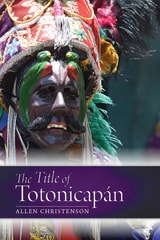
Title of Totonicapán
transcription, translation, and commentary by Allen J. Christenson
University Press of Colorado, 2022
The Title of Totonicapán is a land title written by surviving members of the K’iche’ Maya nobility, a branch of the Maya that dominated the highlands of western Guatemala prior to the Spanish invasion in 1524, and it was duly signed by the ruling lords of all three major K’iche’ lineages—the Kaweqib’, the Nijayib’, and the Ajaw K’iche’s. Titles of this kind were relatively common for Maya communities in the Guatemalan highlands in the first century after the Spanish Conquest as a means of asserting land rights and privileges for its leaders. Like the Popol Vuh, the Title of Totonicapán is written in the elevated court language of the early Colonial period and eloquently describes the mythic origins and history of the K’iche’ people. For the most part, the Title of Totonicapán agrees with the Popol Vuh’s version of K’iche’ history and cosmology, providing a complementary account that attests traditions that must have been widely known and understood. But in many instances the Totonicapán document is richer in detail and departs from the Popol Vuh’s more cursory description of history, genealogy, and political organization. In other instances, it contradicts assertions made by the authors of the Popol Vuh, perhaps a reflection of internal dissent and jealousy between rival lineages within the K’iche’ hierarchy. It also contains significant passages of cosmology and history that do not appear in any other highland Maya text.
This volume makes a comprehensive and updated edition of the Title of Totonicapán accessible to scholars and students in history, anthropology, archaeology, and religious studies in Latin America, as well as those interested in Indigenous literature and Native American/Indigenous studies more broadly. It is also a stand-alone work of Indigenous literature that provides additional K’iche’ perspectives, enhancing the reading of other colonial Maya sources.
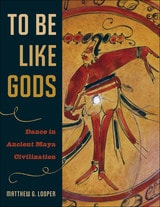
To Be Like Gods
Dance in Ancient Maya CivilizationBy Matthew G. Looper
University of Texas Press, 2009
Winner, Association for Latin American Art Book Award, 2010
The Maya of Mexico and Central America have performed ritual dances for more than two millennia. Dance is still an essential component of religious experience today, serving as a medium for communication with the supernatural. During the Late Classic period (AD 600-900), dance assumed additional importance in Maya royal courts through an association with feasting and gift exchange. These performances allowed rulers to forge political alliances and demonstrate their control of trade in luxury goods. The aesthetic values embodied in these performances were closely tied to Maya social structure, expressing notions of gender, rank, and status. Dance was thus not simply entertainment, but was fundamental to ancient Maya notions of social, religious, and political identity.
Using an innovative interdisciplinary approach, Matthew Looper examines several types of data relevant to ancient Maya dance, including hieroglyphic texts, pictorial images in diverse media, and architecture. A series of case studies illustrates the application of various analytical methodologies and offers interpretations of the form, meaning, and social significance of dance performance. Although the nuances of movement in Maya dances are impossible to recover, Looper demonstrates that a wealth of other data survives which allows a detailed consideration of many aspects of performance. To Be Like Gods thus provides the first comprehensive interpretation of the role of dance in ancient Maya society and also serves as a model for comparative research in the archaeology of performance.
To Be a Man Is Not a One-Day Job
Masculinity, Money, and Intimacy in NigeriaDaniel Jordan Smith
University of Chicago Press, 2017
Drawing on twenty-five years of experience in southeastern Nigeria, Daniel Jordan Smith takes readers through the principal phases and arenas of men’s lives: the transition to adulthood; searching for work and making a living; courtship, marriage, and fatherhood; fraternal and political relationships; and finally, the attainment of elder status and death. He relates men’s struggles both to fulfill their own aspirations and to meet society’s expectations. He also considers men who behave badly, mistreat their wives and children, or resort to crime and violence. All of these men face similar challenges as they navigate the complex geometry of money and intimacy. Unraveling these connections, Smith argues, provides us with a deeper understanding of both masculinity and society in Nigeria.
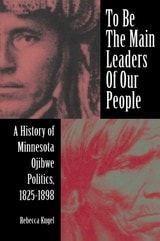
To Be the Main Leaders of Our People
A History of Minnesota Ojibwe Politics, 1825-1898Rebecca Kugel
Michigan State University Press, 1998
In the spring of 1868, people from several Ojibwe villages located along the upper Mississippi River were relocated to a new reservation at White Earth, more than 100 miles to the west. In many public declarations that accompanied their forced migration, these people appeared to embrace the move, as well as their conversion to Christianity and the new agrarian lifestyle imposed on them. Beneath this surface piety and apparent acceptance of change, however, lay deep and bitter political divisions that were to define fundamental struggles that shaped Ojibwe society for several generations.
In order to reveal the nature and extent of this struggle for legitimacy and authority, To Be The Main Leaders of Our People reconstructs the political and social history of these Minnesota Ojibwe communities between the years 1825 and 1898. Ojibwe political concerns, the thoughts and actions of Ojibwe political leaders, and the operation of the Ojibwe political system define the work's focus. Kugel examines this particular period of time because of its significance to contemporary Ojibwe history. The year 1825, for instance, marked the beginning of a formal alliance with the United States; 1898 represented not an end, but a striking point of continuity, defying the easy categorizations of Native peoples made by non-Indians, especially in the closing years of the nineteenth century.
In this volume, the Ojibwe "speak for themselves," as their words were recorded by government officials, Christian missionaries, fur traders, soldiers, lumbermen, homesteaders, and journalists. While they were nearly always recorded in English translation, Ojibwe thoughts, perceptions, concerns, and even humor, clearly emerge. To Be The Main Leaders of Our People expands the parameters of how oral traditions can be used in historical writing and sheds new light on a complex, but critical, series of events in ongoing relations between Native and non-Native people.

To Care for the Sick and Bury the Dead
African American Lodges and Cemeteries in TennesseeLeigh Ann Gardner
Vanderbilt University Press, 2022
These Black cemeteries dot the Tennessee landscape, but few know their history or the societies of care they represent. To Care for the Sick and Bury the Dead is the first book-length look at these cemeteries and the lodges that fostered them.
This book is a must-have for genealogists, historians, and family members of the people buried in these cemeteries.
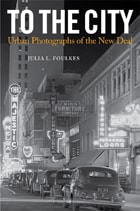
To The City
Urban Photographs of the New DealAuthored by Julia L. Foulkes
Temple University Press, 2011
In the 1930s and 1940s, as the United States moved from a rural to an urban nation, the pull of the city was irrepressible. It was so strong that even a photographic mission designed to record the essence of rural America could not help but capture the energy of urbanization too. To the City showcases over 100 photographs from the Farm Security Administration (FSA) project along with extracts from the Works Progress Administration (WPA) guidebooks and oral histories, to convey the detail and dimensions of that transformation.
This artfully grouped collection of photographs includes magnificent images by notable photographers Dorothea Lange, Walker Evans and Gordon Parks, among many others. Foulkes organizes this history of Americana into five themes: Intersection; Traffic; High Life and Low Life; The City in the Country; and Citizens to illuminate the changes in habits, landscapes, and aspirations that the march to cities encompassed.
As the rural past holds symbolic sway and the suburb presents demographic force, the urban portion of our history—why and how cities have been a destination for hope—recedes from view. To the City is a thoughtful, engaging reminder.
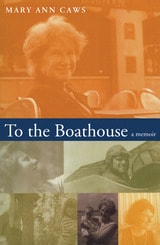
To the Boathouse
A MemoirMary Ann Caws
University of Alabama Press, 2008
From Southern roots to scholarly heights—one woman’s journey to find peace, purpose, and her place in the world.
A neat and lavish, if constricting, childhood in the lush landscapes of North Carolina. Summers at a calm, remote beach house. A proper and religiously influenced prep school in Washington. Years at Bryn Mawr, an impulsive study trip to Paris, further education at Yale, married life, and divorced life. These are the settings for Mary Ann Caws’s passionate memoir, in which she recounts the highs and lows of her journey through life. Marked by complicated relationships and a passion for learning, Caws’s story is one that resonates not only with writers like herself, but with all who have struggled with determining their path within the surrounding world.
Caws writes of her formal, stylish parents, her rebellious and deeply admired sister, and her artistic grandmother, whom she respected and idolized more than anyone else. She describes her marriage and subsequent divorce, her bouts with therapy, her children, and her growth as a student and writer. Throughout the memoir is evidence of her love for writing, teaching, art, and poetry as well as her deep respect for the people in her life that ultimately guided her into her career.
The author describes Southern society and her own life with fondness, nostalgia, and a tinge of honest criticism. The carefully selected details and delicate balance of sentiment and fact bring readers into the fascinating, complicated, and all-too-real world of Caws’s—and our own—past.
Tongues of Flame
Mary Ward Brown
University of Alabama Press, 1993
Winner of the PEN/Hemingway Foundation Award
These beautifully crafted stories depict the changing relationships between black and white southerners, the impact of the civil rights movement, and the emergence of the New South.
Mary Ward Brown is a storyteller in the tradition of such powerful 20th-century writers as William Faulkner, Harper Lee, Flannery O'Connor, and Eudora Welty-writers who have explored and dramatized the tension between the inherited social structure of the South and its contemporary dissolution. With Tongues of Flame, her first collection of short stories, Brown bares the awkward, sometimes hopeful, and often tragic suffering of people caught in changing times within a timeless setting.
Here we meet such memorable characters as a dying black woman who seeks the advice of a now-alcoholic white doctor whom she knew in better years; a young woman, jilted at the altar, driven crazy by an illuminated cross erected by the church opposite her house; and a 95-year-old woman buying a tombstone for her long-deceased husband only to discover that he had been adulterous throughout their marriage. Brown constructs her characters in a disarmingly plain style while breathing life into them with compassion and honesty as they confront the large moments of their lives.
First published by E. P. Dutton in 1986 to immediate critical acclaim, Tongues of Flame won the 1987 PEN/Ernest Hemingway Foundation Award. The judges commended Brown for "seeing life whole, without prejudice, without sentimentality, without histrionics. Her voice may be quiet-sometimes she speaks in a whisper-but her words are, nevertheless, always forceful, clear, and ultimately lasting." With this new publication of Tongues of Flame and its inclusion in the University of Alabama Press's Deep South Books series, a whole new generation of readers may once more discover Mary Ward Brown's profound stories of pain, loss, and hope.
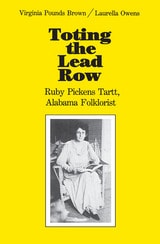
Toting the Lead Row
Ruby Pickens Tartt, Alabama FolkloristVirginia Pounds Brown
University of Alabama Press, 1981
Preserving voices from the back roads—Ruby Pickens Tartt and the folklore of Alabama’s Black Belt.
“You recall the expression ‘toting the lead row’, don’t you? In chopping cotton or corn there is always a leader, one who can chop the fastest of them all. When he finishes his row, he goes back and helps the other choppers finish theirs. The one who totes the lead row takes the lead place in the next row.”—Ruby Pickens Tartt
Toting the Lead Row is a powerful biographical and cultural tribute to Ruby Pickens Tartt, a white woman from Alabama’s Black Belt who devoted her life to preserving the oral traditions of rural Black communities. Born in 1880 in Livingston, Alabama, Tartt witnessed nearly a century of social transformation and made it her mission to document the songs, stories, and life histories of her African American neighbors. She believed that the soul of Sumter County resided not in its institutions, but in its cabins, fields, and voices.
During the Great Depression, Tartt worked with the Federal Writers’ Project, collaborating with renowned folklorists such as Carl Carmer and John Lomax. Her home became a hub for cultural preservation, attracting scholars and artists who recognized the depth of her fieldwork. The book’s title refers to a Southern agricultural phrase—“toting the lead row”—symbolizing leadership and support, a role Tartt embodied in her efforts to elevate the voices of those often overlooked.
This volume is divided into two parts: the first offers a detailed biography of Tartt and her work with the WPA, while the second presents a curated selection of her collected writings, including 18 life histories and 12 slave narratives. Through these stories, Tartt preserved a vital piece of Southern history and gave voice to generations whose experiences might otherwise have been lost.
Toting the Lead Row is both a celebration of a remarkable woman and a vital contribution to the study of folklore, race, and Southern identity.
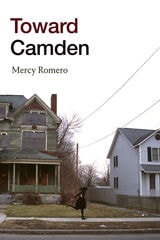
Toward Camden
Mercy Romero
Duke University Press, 2021
Duke University Press Scholars of Color First Book Award recipient
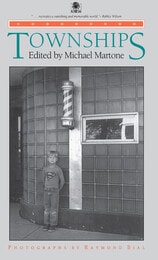
Townships
Michael Martone
University of Iowa Press, 1992
Townships establishes the Midwest as an important center of creativity, a region to be noted for more than corn and prairie and neat, square patches of land. The reverberations in sensibility that make their way through these essays speak to all midwesterners and to all those for whom a sense of place is a source of inspiration.
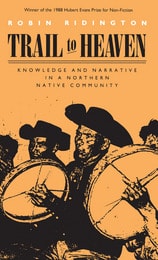
Trail to Heaven
Knowledge and Narrative in a Northern Native CommunityRobin Ridington
University of Iowa Press, 1992
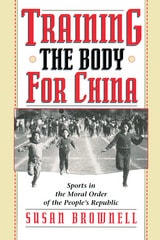
Training the Body for China
Sports in the Moral Order of the People's RepublicSusan Brownell
University of Chicago Press, 1995
Training the Body for China is the first book on Chinese sports based on extended fieldwork by a Westerner. Brownell introduces the notion of "body culture" to analyze Olympic sports as one element in a whole set of Chinese body practices: the "old people's disco dancing" craze, the new popularity of bodybuilding (following reluctant official acceptance of the bikini), mass calisthenics, martial arts, military discipline, and more.
Translating official and dissident materials into English for the first time and drawing on performance theory and histories of the body, Brownell uses the culture of the body as a focal point to explore the tensions between local and global organizations, the traditional and the modern, men and women. Her intimate knowledge of Chinese social and cultural life and her wide range of historic examples make Training the Body for China a unique illustration of how gender, the body, and the nation are interlinked in Chinese culture.
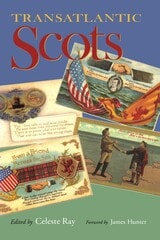
Transatlantic Scots
Edited by Celeste Ray, foreword by James Hunter
University of Alabama Press, 2005
Transatlantic Scots is a multidisciplinary collection that studies the regional organization and varied expressions of the Scottish Heritage movement in the Canadian Maritimes, the Great Lakes, New England, and the American South. From diverse perspectives, authorities in their fields consider the modeling of a Scottish identity that distances heritage celebrants from prevalent visions of whiteness. Considering both hyphenated Scots who celebrate centuries-old transmission of Scottish traditions and those for whom claiming or re-claiming a Scottish identity is recent and voluntary, this book also examines how diaspora themes and Highland imagery repeatedly surface in regional public celebrations and how traditions are continually reinvented through the accumulation of myths. The underlying theoretical message is that ethnicity and heritage survive because of the flexibility of history and tradition.
This work is a lasting contribution to the study of ethnicity and identity, the renegotiation of history and cultural memory into heritage, and the public performance and creation of tradition.
Transformation of the Mormon Culture Region
Ethan R. Yorgason
University of Illinois Press, 2010
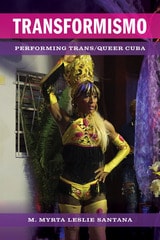
Transformismo
Performing Trans/Queer CubaM. Myrta Leslie Santana
University of Michigan Press, 2025
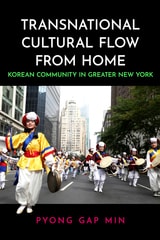
Transnational Cultural Flow from Home
Korean Community in Greater New YorkPyong Gap Min
Rutgers University Press, 2023
Transnational Cultural Flow from Home examines New York Korean immigrants’ collective efforts to preserve their cultural traditions and cultural practices and their efforts to transmit and promote them to New Yorkers by focusing on the Korean cultural elements such as language, foods, cultural festivals, and traditional and contemporary performing arts.
This publication was supported by the 2022 Korean Studies Grant Program of the Academy of Korean Studies (AKS-2022-P-009).

Transnationalizing Viet Nam
Community, Culture, and Politics in the DiasporaKieu-Linh Caroline Valverde
Temple University Press, 2013
Vietnamese diasporic relations affect—and are directly affected by—events in Viet Nam. In Transnationalizing Viet Nam, Kieu-Linh Caroline Valverde explores these connections, providing a nuanced understanding of this globalized community. Valverde draws on 250 interviews and almost two decades of research to show the complex relationship between Vietnamese in the diaspora and those back at the homeland.
Arguing that Vietnamese immigrant lives are inherently transnational, she shows how their acts form virtual communities via the Internet, organize social movements, exchange music and create art, find political representation, and even dissent. Valverde also exposes how generational, gender, class, and political tensions threaten to divide the ethnic community.
Transnationalizing Viet Nam paints a vivid picture of the complex political and personal allegiances that exist within Vietnamese America and shape the relations between this heterogeneous community and its country of origin.
In the series Asian American History and Culture, edited by Sucheng Chan, David Palumbo-Liu, Michael Omi, K. Scott Wong, and Linda Trinh Võ
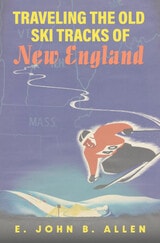
Traveling the Old Ski Tracks of New England
E. John B. Allen
University of Massachusetts Press, 2022
For over a century New Englanders have taken to the slopes in search of ways to enjoy the coldest months, and skiing has deep roots in the region. In the late nineteenth century Scandinavian immigrants worked to educate snowbound locals on how to ski, make equipment, and prepare trails. Soon thereafter, colleges across the Northeast built world-class ski programs, massive jumps were constructed in Brattleboro and Berlin, and dozens of ski areas—big and small—cropped up from the 1930s through the 1960s.
Traveling the Old Ski Tracks of New England offers a fascinating history of downhill, cross-country, and backcountry skiing across the region and its leading personalities. Moving from popular destinations like Stowe, Cannon, Bromley, and Mount Washington to the less intimidating hills surrounding Boston, Rhode Island, and Connecticut, E. John B. Allen also recovers the forgotten stories of ski areas that have been abandoned in the face of changing tastes and a warming climate.
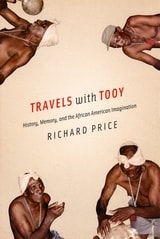
Travels with Tooy
History, Memory, and the African American ImaginationRichard Price
University of Chicago Press, 2007
Included on the itinerary for this hallucinatory expedition: forays into the eighteenth century to talk with slaves newly arrived from Africa; leaps into the midst of battles against colonial armies; close encounters with double agents and femme fatale forest spirits; and trips underwater to speak to the comely sea gods who control the world’s money supply. This enchanting book draws on Price’s long-term ethnographic and archival research, but above all on Tooy’s teachings, songs, stories, and secret languages to explore how Africans in the Americas have created marvelous new worlds of the imagination.
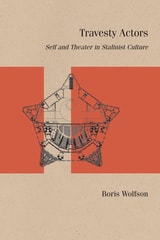
Travesty Actors
Self and Theater in Stalinist CultureBoris Wolfson, edited by Simon Morrison
Northwestern University Press, 2026
Talk of Joseph Stalin’s “show trials,” the public prosecutions in Moscow’s Hall of Columns in the late 1930s, is so familiar as to obscure the relationship between actual shows—in the Soviet Union’s major theaters—and politics. Travesty Actors: Self and Theater in Stalinist Culture examines theatrical performance within the context of the Soviet cultural establishment’s fashioning of a “genuine Soviet person.” Boris Wolfson focuses on prominent and controversial plays by artists including Aleksandr Afinogenov, Mikhail Bulgakov, Yuri Olesha, and Natalia Sats and the efforts of theater companies, like the Moscow Arts Theater, the Meyerhold Theater, and the Central Children’s Theater, to adhere to this cultural mandate while grappling with repression, censorship, and conflicting interpretations of its aims. Drawing on archival materials, diaries and memoirs and eyewitness accounts, Wolfson greatly illuminates the achievements of Soviet theater during this harsh period and the cultural significance of artistic theories and practices for articulating and enacting ideological programs.
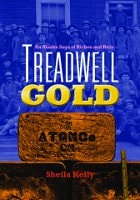
Treadwell Gold
An Alaska Saga of Riches and RuinSheila Kelly
University of Alaska Press, 2010
A century ago, Treadwell, Alaska, was a featured stop on steamship cruises, a rich, up-to-date town that was the most prominent and proud in all Alaska. Its wealth, however, was founded on the remarkably productive gold mines on Douglas Island, and when those caved in and flooded in the early decades of the twentieth century, Treadwell sank into relative obscurity.
Treadwell Gold presents first-person accounts from the sons and daughters of the miners, machinists, hoist operators, and superintendents who together dug and blasted the gold that made Treadwell rich. Alongside these stories are vintage photos that capture both the industrial vigor of the mines and the daily lives that made up Treadwell society. The book will fascinate anyone interested in Alaskan history or the romance of gold mining’s past.
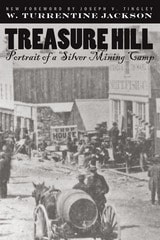
Treasure Hill
Portrait Of A Silver Mining CampW. Turrentine Jackson
University of Nevada Press, 2000
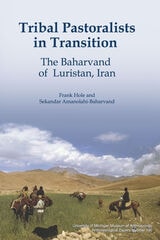
Tribal Pastoralists in Transition
The Baharvand of Luristan, IranFrank Hole and Sekandar Amanolahi-Baharvand
University of Michigan Press, 2021
Supplementary videos (on the migration, weaving, harvesting, and the bazaars) can be found on Fulcrum (fulcrum.org/UMMAA).

Trillin on Texas
By Calvin Trillin
University of Texas Press, 2011
A remarkably perceptive portrait of the Lone Star State, this collection of pieces from the New Yorker, the Nation, and other publications presents highlights of bestselling author Calvin Trillin’s classic writing on Texas subjects.
"Yes, I do have a Texas connection, but, as we say in the Midwest, where I grew up, not so's you'd know it." So Calvin Trillin introduces this collection of articles and poems about a place that turns up surprisingly often when he's ostensibly writing about something else. Whether reporting on the American scene for the New Yorker, penning comic verse and political commentary for the Nation, or writing his memoirs, Trillin has bumped into Texas again and again. He insists that "this has not been by design . . . there has simply been a lot going on in Texas." Astute readers will note, however, that Trillin's family immigrated to the United States through the port of Galveston, and, after reading this book, many will believe that the Lone Star State has somehow imprinted itself in the family's imagination.
Trillin on Texas gathers some of Trillin's best writing on subjects near to his heart—politics, true crime, food, and rare books, among them—which also have a Texas connection. Indulging his penchant for making "snide and underhanded jokes about respectable public officials," he offers his signature sardonic take on the Bush dynasty and their tendency toward fractured syntax; a faux, but quite believable, LBJ speech; and wry portraits of assorted Texas county judges, small town sheriffs, and Houston immigration lawyers. Trillin takes us on a mouthwatering pilgrimage to the barbecue joint that Texas Monthly proclaimed the best in Texas and describes scouting for books with Larry McMurtry—who rejects all of his "sleepers." He tells the stories of two teenagers who dug up half a million dollars in an ice chest on a South Texas ranch and of rare book dealer Johnny Jenkins, who was found floating in the Colorado River with a bullet wound in the back of his head. And he recounts how redneck movie reviewer "Joe Bob Briggs" fueled a war between Dallas's daily newspapers and pays tribute to two courageous Texas women who spoke truth to power—Molly Ivins and Sissy Farenthold.
Sure to entertain Texans and other folks alike, Trillin on Texas proves once again that Calvin Trillin is one of America's shrewdest observers and wittiest writers.
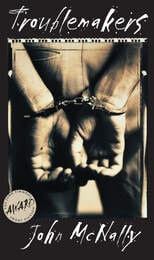
Troublemakers
John McNally
University of Iowa Press, 2000
Troublemakers is an often hilarious, sometimes frightening, occasionally off-the-wall collection of stories about men living on the edge. From the streets of Chicago's southwest side to the rural roads of Nebraska to the small towns of southern Illinois, these men tread a very fine line between right and wrong, love and hate, humor and horror.
Each story is a Pandora's box waiting to be opened: a high school boy with a new driver's license picks his brother up from jail; a UPS driver suspects his wife of having an affair but cannot find any tangible evidence of her indiscretion; an unemployed man's life begins to unravel after he discovers a dead man in a tree in his own backyard; two boys spend Halloween with an older thug; a young college teacher's patience is tested by both his annoying colleagues and the criminals who haunt his neighborhood. In story after story, McNally's troublemakers lead readers to a place no less thrilling or dangerous than the human heart itself.
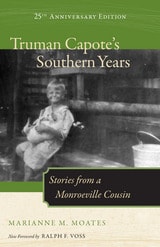
Truman Capote's Southern Years, 25th Anniversary Edition
Stories from a Monroeville CousinMarianne M. Moates, Foreword by Ralph F. Voss
University of Alabama Press, 2014
Readers are well acquainted with Truman Capote’s meteoric rise to fame and his metamorphosis from literary enfant terrible to literary genius, celebrity author, and dispenser of venomously comic witticisms. It is also well-known that he spent his formative years in the south Alabama hamlet of Monroeville, and that he was abandoned there by his mother to be cared for and then to care for elderly relatives. Yet details of those years have remained sketchy and vague.
In Monroeville young Capote formed significant bonds and played childhood games with his cousin, Jennings Faulk Carter, and next door neighbor, Nelle Harper Lee, author of "To Kill a Mockingbird" and "Go Set a Watchman." Through the tales told by Carter and spun into a fascinating and revealing narrative by Marianne M. Moates readers discover in Truman Capote's Southern Years the lively imagination and the early tragedies of a brilliant child.
A new foreword by Ralph F. Voss underscores the enduring relevance of Truman Capote’s work and the influence his Alabama childhood had on his work.
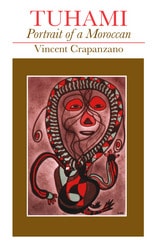
Tuhami
Portrait of a MoroccanVincent Crapanzano
University of Chicago Press, 1980
In a sensitive and bold experiment in interpretive ethnography, Crapanzano presents Tuhami's bizarre account of himself and his world. In so doing, Crapanzano draws on phenomenology, psychoanalysis, and symbolism to reflect upon the nature of reality and truth and to probe the limits of anthropology itself. Tuhami has become one of the most important and widely cited representatives of a new understanding of the whole discipline of anthropology.
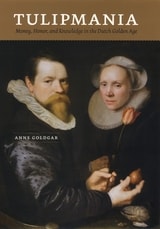
Tulipmania
Money, Honor, and Knowledge in the Dutch Golden AgeAnne Goldgar
University of Chicago Press, 2007
“Goldgar tells us at the start of her excellent debunking book: ‘Most of what we have heard of [tulipmania] is not true.’. . . She tells a new story.”—Simon Kuper, Financial Times