Results by title
4155 books match the query 'State & Local' and 925 start with t
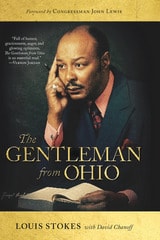
The Gentleman from Ohio
Louis Stokes with David Chanoff with a foreword by Congressman John Lewis
The Ohio State University Press, 2016
Prior to Louis Stokes’s tenure in Congress he served for many years as a criminal defense lawyer and chairman of the Cleveland NAACP Legal Redress Committee. Among the Supreme Court Cases he argued, the Terry “Stop and Frisk” case is regarded as one of the twenty-five most significant cases in the court’s history. The Gentleman from Ohio chronicles this and other momentous events in the life and legacy of Ohio’s first black representative—a man who, whether in law or politics, continually fought for the principles he believed in and helped lead the way for African Americans in the world of mainstream American politics.

The Geography of Hate
The Great Migration through Small-Town AmericaJennifer Sdunzik
University of Illinois Press, 2023
During the Great Migration, Black Americans sought new lives in midwestern small towns only to confront the pervasive efforts of white residents determined to maintain their area’s preferred cultural and racial identity. Jennifer Sdunzik explores this widespread phenomenon by examining how it played out in one midwestern community. Sdunzik merges state and communal histories, interviews and analyses of population data, and spatial and ethnographic materials to create a rich public history that reclaims Black contributions and history. She also explores the conscious and unconscious white actions that all but erased Black Americans--and the terror and exclusion used against them--from the history of many midwestern communities.
An innovative challenge to myth and perceived wisdom, The Geography of Hate reveals the socioeconomic, political, and cultural forces that prevailed in midwestern towns and helps explain the systemic racism and endemic nativism that remain entrenched in American life.
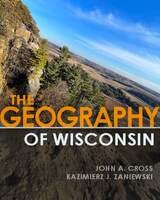
The Geography of Wisconsin
John A. Cross and Kazimierz J. Zaniewski
University of Wisconsin Press, 2022
- physical features: bedrock geology, glaciation, landforms, soils, climate, and vegetation
- cultural landscapes: population density, ethnic populations, demographics, and political affiliations
- economic activity: agriculture, forestry, mining, manufacturing, transportation, recreation, and tourism
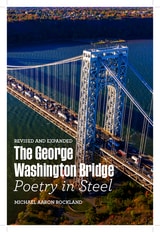
The George Washington Bridge
Poetry in SteelMichael Aaron Rockland
Rutgers University Press, 2020
Since opening in 1931, the George Washington Bridge, linking New York and New Jersey, has become the busiest bridge in the world, with 103 million vehicles crossing it in 2016. Many people also consider it the most beautiful bridge in the world, yet remarkably little has been written about this majestic structure.
Intimate and engaging, this revised and expanded edition of Michael Rockland's rich narrative presents perspectives on the GWB, as it is often called, that span history, architecture, engineering, transportation, design, the arts, politics, and even post-9/11 mentalities. This new edition brings new insight since its initial publication in 2008, including a new chapter on the infamous “Bridgegate” Chris Christie-era scandal of 2013, when members of the governor's administration shut down access to the bridge, causing a major traffic jam and scandal and subsequently helping undermine Christie’s candidacy for the US presidency.
Stunning photos, from when the bridge was built in the late 1920s through the present, are a powerful complement to the bridge's history. Rockland covers the competition between the GWB and the Brooklyn Bridge that parallels the rivalry between New Jersey and New York City. Readers will learn about the Swiss immigrant Othmar Ammann, an unsung hero who designed and built the GWB, and how a lack of funding during the Depression dictated the iconic, uncovered steel beams of its towers, which we admire today. There are chapters discussing accidents on the bridge, such as an airplane crash landing in the westbound lanes and the sad story of suicides off its span; the appearance of the bridge in media and the arts; and Rockland's personal adventures on the bridge, including scaling its massive towers on a cable.
Movies, television shows, songs, novels, countless images, and even PlayStation 2 games have aided the GWB in becoming a part of the global popular culture. This tribute will captivate residents living in the shadow of the GWB, the millions who walk, jog, bike, skate, or drive across it, as well as tourists and those who will visit it someday.
.
The Georgia Florida Contest
Martha C. Searcy
University of Alabama Press, 1985
Almost from the time of Georgia’s settlement by Oglethorpe in 1733, both Georgians and Carolinians had made periodic unsuccessful attempts to conquer the Spanish Castillo San Marcos in St. Augustine; and during the American Revolution (in 1776, 1777, and 1778) the rebels tried without success to take the fortification, which was then a British stronghold. Each of the three expeditions was less successful than the preceding one, and between the formal campaigns vicious partisan warfare between loyalists and rebels devastated much of the area between the Altamaha and St. Johns rivers.
This book presents a detailed history of the three Georgia-Florida campaigns. Indecisive and lacking the glamour of either the contemporary campaigns in the North, or the later campaigns in the South, they appeared isolated from the mainstream of the revolutionary struggle. The rebels were handicapped by divided command, personal quarrels, difficult terrain, and miserable weather. While Searcy emphasizes the military aspects of the period, she also treats the conflict between civil and military authorities, the effects of war on the civilian populace, and the interaction of economic matters with military affairs. Her work clarifies the importance of these military activities in the subsequent British strategy in the occupation of Georgia and the Carolinas.
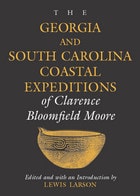
The Georgia and South Carolina Coastal Expeditions of Clarence Bloomfield Moore
Clarence Bloomfield Moore, edited by Lewis Larson
University of Alabama Press, 1998
A Dan Josselyn Memorial Publication
This facsimile edition of Moore's Georgia and South Carolina expeditions includes an extensive new introduction from Georgia's senior archaeologist.
This compilation of Clarence Bloomfield Moore's investigations along the rich coastal and river drainages of Georgia and South Carolina makes
available in a single volume valuable works published a century ago. By modern standards Moore's excavation techniques were crude, but his results were nothing less than spectacular. He recorded data with care, and much information can be learned from his works. In some cases his publications are the only documentation extant for sites that have since been destroyed. In one case, relic collectors had destroyed six mounds at Mason's Plantation—the largest Mississippian center in the Savannah River valley—by the time Moore visited the site in 1897.
Moore also documented prehistoric urn burials, a ritual widely practiced in eastern North America but more frequently on the Gulf Coastal Plain
of Alabama and coastal sites in Georgia and South Carolina. In the introduction, Lewis Larson discusses Moore's investigations within the framework of the current understanding of Georgia and South Carolina coastal archaeological chronology.
The Georgia of the North
Black Women and the Civil Rights Movement in New JerseyHettie V. Williams
Rutgers University Press, 2024
The Ghosts of Hopewell
Setting the Record Straight in the Lindberg CaseJim Fisher
Southern Illinois University Press, 2006
In this illustrated examination of the Lindbergh kidnapping case, Jim Fisher seeks to set the record straight regarding Bruno Hauptmann's guilt in "the crime of the century."
In February 1935, following a sensational, six-week trial, a jury in Flemington, New Jersey, found German carpenter Hauptmann guilty of kidnapping and murdering the twenty-month-old son of Charles and Anne Lindbergh. Although circumstantial, the evidence against Hauptmann—the handwriting on the ransom notes, the homemade kidnapping ladder, Colonel Lindbergh's money found in his garage, his matching the description of the man who accepted the ransom payoff in the Bronx cemetery, his inability to prove an alibi, and his incredible explanation of his possession of the ransom money—was overwhelming, leaving few to doubt his guilt. After a series of appeals and stays, Hauptmann died fourteen months later in the electric chair. A confession would have spared him the death sentence, but Hauptmann chose to die maintaining his innocence.
It was not until the mid-1970s that revisionists began to challenge the conventional wisdom in the case: that Hauptmann was the lone killer. Revisionist books and articles appeared, as did plays, TV shows, and a movie, all portraying Hauptmann as the victim of a massive police and prosecution frame-up.
At this point, the focus shifted from the evidence to the conduct of the police. By the 1980s, most people familiar with the case were convinced of Hauptmann's complete innocence. Many denied the murder, believing that the Lindbergh baby remained alive. Several men claimed to be the firstborn son of Charles and Anne Lindbergh, one of whom sued to claim his share of the Lindbergh estate after Charles Lindbergh's death in 1974.
Another group held that the kidnapping was an elaborate hoax to cover up the murder of the baby by his parents. Anna Hauptmann¹s series of federal lawsuits against New Jersey and others in the mid-1980s fueled further interest in the case. Although Hauptmann's widow lost all of her lawsuits, she had won the hearts and minds of the American people before her death at the age of ninety-four.
Former FBI agent Fisher discusses the hard evidence, such as the ransom notes and the wood of the kidnapping ladder. He analyzes and debunks the various revisionist theories and presents new evidence that, coupled with the undisputed facts, prove beyond a reasonable doubt that Hauptmann was guilty as charged: he kidnapped and murdered the infant son of Charles and Anne Lindbergh.
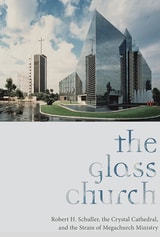
The Glass Church
Robert H. Schuller, the Crystal Cathedral, and the Strain of Megachurch MinistryMark T. Mulder
Rutgers University Press, 2020
Robert H. Schuller’s ministry—including the architectural wonder of the Crystal Cathedral and the polished television broadcast of Hour of Power—cast a broad shadow over American Christianity. Pastors flocked to Southern California to learn Schuller’s techniques. The President of United States invited him sit prominently next to the First Lady at the State of the Union Address. Muhammad Ali asked for the pastor’s autograph. It seemed as if Schuller may have started a second Reformation. And then it all went away. As Schuller’s ministry wrestled with internal turmoil and bankruptcy, his emulators—including Rick Warren, Bill Hybels, and Joel Osteen— nurtured megachurches that seemed to sweep away the Crystal Cathedral as a relic of the twentieth century. How did it come to this?
Certainly, all churches depend on a mix of constituents, charisma, and capital, yet the size and ambition of large churches like Schuller’s Crystal Cathedral exert enormous organizational pressures to continue the flow of people committed to the congregation, to reinforce the spark of charismatic excitement generated by high-profile pastors, and to develop fresh flows of capital funding for maintenance of old projects and launching new initiatives. The constant attention to expand constituencies, boost charisma, and stimulate capital among megachurches produces an especially burdensome strain on their leaders. By orienting an approach to the collapse of the Crystal Cathedral on these three core elements—constituency, charisma, and capital—The Glass Church demonstrates how congregational fragility is greatly accentuated in larger churches, a notion we label megachurch strain, such that the threat of implosion is significantly accentuated by any failures to properly calibrate the inter-relationship among these elements.
The Glass City
Toledo and The Industry That Built ItBarbara L. Floyd
University of Michigan Press, 2014

The Glory Road
A Gospel Gypsy LifeAnita Faye Garner
University of Alabama Press, 2021
“This is a story central to the origins of country music: the marriage of Saturday night and Sunday morning, and the literal marriage of two musicians, sometimes at odds with each other creatively and personally.” —Rosanne Cash
An essential memoir of music, memory, and the American South.
Anita Faye Garner grew up in the South—just about every corner of it. She and her musical family lived in Texarkana, Bossier City, Hot Springs, Jackson, Vicksburg, Hattiesburg, Pascagoula, Bogalusa, Biloxi, Gulfport, New Orleans, and points between, picking up sticks every time her father, a Pentecostal preacher known as “Brother Ray,” took over a new congregation.
In between jump-starting churches, Brother Ray took his wife and kids out on the gospel revival circuit as the Jones Family Singers. Ray could sing and play, and “Sister Fern” (Mama) was a celebrated singer and songwriter, possessed of both talent and beauty. Rounding out the band were the young Garner (known as Nita Faye then) and her big brother Leslie Ray. At all-day singings and tent revivals across the South, the Joneses made a joyful noise for the faithful and loaded into the car for the next stage of their tour.
But growing up gospel wasn’t always joyous. The kids practically raised and fended for themselves, bonding over a shared dislike of their rootless life and strict religious upbringing. Sister Fern dreamed of crossing over from gospel to popular music and recording a hit record. An unlikely combination of preacher’s wife and glamorous performer, she had the talent and presence to make a splash, and her remarkable voice brought Saturday night rock and roll to Sunday morning music. Always singing, performing, and recording at the margins of commercial success, Sister Fern shared a backing band with Elvis Presley and wrote songs recorded by Johnny Cash and many other artists.
In her touching memoir The Glory Road, Anita Faye Garner re-creates her remarkable upbringing. The story begins with Ray’s attempts to settle down and the family’s inevitable return to the gospel circuit and concludes with Sister Fern’s brushes with stardom and the family’s journey west to California where they finally landed—with some unexpected detours along the way. The Glory Road carries readers back to the 1950s South and the intersections of faith and family at the very roots of American popular music.
For more information about the book and Anita Garner, visit www.thegloryroad.com or www.anitagarner.com
The Gold Coast and the Slum
A Sociological Study of Chicago's Near North SideHarvey Warren Zorbaugh
University of Chicago Press, 1983
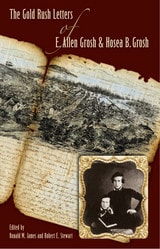
The Gold Rush Letters of E. Allen Grosh and Hosea B. Grosh
Ronald M. James
University of Nevada Press, 2016
The Groshes’ letters are rich in color and important historical details. Generously annotated and with an introduction that provides a context for the brothers’ career and the setting in which they tried to make their fortune, these documents powerfully depict the often harsh realities of Gold Rush life and society.

The Golden Age of Chicago Children's Television
Ted Okuda and Jack Mulqueen
Southern Illinois University Press, 2004
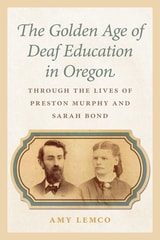
The Golden Age of Deaf Education in Oregon
Through the Lives of Preston Murphy and Sarah BondAmy Lemco
Oregon State University Press, 2027
Preston Murphy and Sarah Bond traveled west to Oregon on separate wagon trains in the 1850s. Both were children of Protestant minister fathers who followed the Oregon Trail to claim land and establish towns and institutions. Preston and Sarah married in 1874 and went on to build their lives in Oregon’s Willamette Valley, running a boot shop and raising six children. They were also both deaf.
The Golden Age of Deaf Education in Oregon is one of the first books to explore Deaf history in the Pacific Northwest. Drawing from primary sources, Amy Lemco explores the history of Deaf culture in early Oregon through the lives of Preston Murphy and Sarah Bond. Their stories offer a glimpse into the growth of Deaf education in the developing American West and provide a unique lens to explore the intertwining of global, national, and regional histories and their effect on Deaf culture at the turn of the century.
While Preston became deaf after a childhood illness in Illinois, Sarah, along with two of her brothers, was born deaf in Iowa. In Oregon their varied deaf experiences would pave the way for the Oregon School for the Deaf but also illuminate how deaf Oregonians navigated daily life and remained closely connected to their hearing communities. It is the hidden experiences of Preston and Sarah’s ordinary lives that make their stories extraordinary.
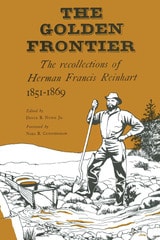
The Golden Frontier
The Recollections of Herman Francis Reinhart, 1851-1869By Herman Francis Reinhart
University of Texas Press, 1962
The gold rush was Herman Francis Reinhart's life for almost twenty years. From the summer of 1851 when, as a boy in his late teens, he traveled the Oregon trail to California, until a January day in 1869 when he climbed aboard an eastbound train at Evanston, Wyoming, he was a part of every gold discovery that stirred the West.
Reinhart dipped his pan in the streams of northern California and western Oregon—in Humbug Creek, Indian Creek, Rogue River, and Sucker Creek. He made the arduous and dangerous overland journey through Indian-occupied western Washington and British Columbia to find the Fraser River gold even more elusive than that farther south. With his teams and wagons he traversed all of the inland mine areas from Walla Walla to Fort Benton, from Boise Basin to South Pass City.
Reinhart's German common sense soon turned him from actual mining to other sources of income, but whatever his labor was, the mines were always the focal point of his activities. When he operated a bakery and saloon it was a business whose customers were miners, whose transactions were more likely to involve gold dust than legal tender, and whose gambling tables saw the exchange of mining fortunes. When he operated a whipsaw mill the timbers cut there were used by miners for sluices and cradles. For a while Reinhart farmed, but planting and harvesting suffered from interruption by frequent expeditions to the mines. And when he prospered as a teamster it was to and from the mining towns that he hauled passengers, supplies, and equipment.
The men who, like Herman Francis Reinhart, hopefully followed the golden frontier were not an articulate group, and the written records of their lives are few and fragmentary. But Reinhart, in his later years, recorded his experiences in five long, narrow, hardback ledgers. Many years after he died his daughter gave the ledgers to a friend in Chanute, Kansas—Nora Cunningham—who read the narrative, became fascinated by it, and typed it for publication.
Reinhart's account, written in a grammar and language all his own, is not a record of the historian's West, but of the West of the individual miner. The pages are filled with the details of day-to-day life of the miners—the subjects that interested them, the problems that plagued them, their fun and feuding, their frustrations and hopes. Edited by an authority of the history of the West, it is a book that will offer exciting reading to casual readers and scholars alike.
The Gospel According to This Moment
The Spiritual Message of Henry David ThoreauBarry M. Andrews
University of Massachusetts Press, 2024
Henry David Thoreau is best known as a writer, naturalist, and social critic, but he was also a schoolteacher, surveyor, and pencil-maker. In The Gospel According to This Moment, Unitarian minister Barry M. Andrews reveals how an idiosyncratic and unconventional religious faith was central to Thoreau’s many-faceted life—a dimension that has been largely unexamined.
Through close readings of his writings and a focus on his Unitarian upbringing, Harvard education, mentoring by Ralph Waldo Emerson, and immersion in ancient Eastern and Western philosophies, Andrews explores the nature of Thoreau’s spiritual message, what he called the “Gospel according to this moment,” which enables a flourishing and deliberate life. Today, Thoreau is widely recognized as an advocate for simple living, environmental preservation, and civil disobedience. As Andrews uncovers, Thoreau is also a spiritual guide who can teach us an alternative way of being religious in the world.
The Gospel of Progressivism
Moral Reform and Labor War in Colorado, 1900-1930R. Todd Laugen
University Press of Colorado, 2010
Sharing enemies like the party boss and corporate lobbyist who undermined honest and responsive government, Progressive leaders were determined to root out selfish political action with public exposure. Labor unions defied bosses and rallied for government protection of workers. Women's clubs appealed to other women as mothers, calling for social welfare, economic justice, and government responsiveness. Protestant church congregations formed a core of support for moral reform. Labor relations experts struggled to prevent the outbreak of violence through mediation between corporate employers and organized labor. Persevering through World War I, Colorado reformers faced their greatest challenge in the 1920s, when leaders of the Ku Klux Klan drew upon the rhetoric of Protestant Progressives and manipulated reform tools to strengthen their own political machine. Once in power, Klan legislators turned on Progressive leaders in the state government.
A story of promising alliances never fully realized, zealous crusaders who resisted compromise, and reforms with unexpected consequences, The Gospel of Progressivism will appeal to those interested in Progressive Era reform, Colorado history, labor relations, and women's activism.

The Governor's Hounds
The Texas State Police, 1870–1873By Barry A. Crouch and Donaly E. Brice
University of Texas Press, 2011
In the tumultuous years following the Civil War, violence and lawlessness plagued the state of Texas, often overwhelming the ability of local law enforcement to maintain order. In response, Reconstruction-era governor Edmund J. Davis created a statewide police force that could be mobilized whenever and wherever local authorities were unable or unwilling to control lawlessness. During its three years (1870–1873) of existence, however, the Texas State Police was reviled as an arm of the Radical Republican party and widely condemned for being oppressive, arrogant, staffed with criminals and African Americans, and expensive to maintain, as well as for enforcing the new and unpopular laws that protected the rights of freed slaves.
Drawing extensively on the wealth of previously untouched records in the Texas State Archives, as well as other contemporary sources, Barry A. Crouch and Donaly E. Brice here offer the first major objective assessment of the Texas State Police and its role in maintaining law and order in Reconstruction Texas. Examining the activities of the force throughout its tenure and across the state, the authors find that the Texas State Police actually did much to solve the problem of violence in a largely lawless state. While acknowledging that much of the criticism the agency received was merited, the authors make a convincing case that the state police performed many of the same duties that the Texas Rangers later assumed and fulfilled the same need for a mobile, statewide law enforcement agency.
The Governors of Arkansas
Essays in Political BiographyJr. Gatewood
University of Arkansas Press, 1995
The Governors of New Jersey
Biographical EssaysBirkner, Michael J
Rutgers University Press, 2014
Rogues, aristocrats, and a future U.S. president. These and other governors are portrayed in this revised and updated edition of the classic reference work on the chief executives of New Jersey. Editors Michael J. Birkner, Donald Linky, and Peter Mickulas present new essays on the governors of the last three decades—Brendan T. Byrne, Thomas Kean, James Florio, Christine Todd Whitman, Donald DiFrancesco, James McGreevey, Richard Codey, and Jon Corzine. The essays included in the original edition are amended, edited, and corrected as necessary in light of new and relevant scholarship.
The authors of each governor’s life story represent a roster of such notable scholars as Larry Gerlach, Stanley Katz, Arthur Link, and Clement Price, as well as many other experts on New Jersey history and politics. As a result, this revised edition is a thorough and current reference work on the New Jersey governorship—one of the strongest in the nation.
Also of Interest:
New Jersey Politics and Government
The Suburbs Come of Age
Fourth Edition
Barbara G. Salmore with Stephen A. Salmore
978-0-8135-6139-4 paper $34.95
A volume in the Rivergate Regionals Collection
Me, Governor?
My Life in the Rough-and-Tumble World of New Jersey Politics
Richard J. Codey
978-0-8135-5045-9 cloth $24.95
The Life and Times of Richard J. Hughes
The Politics of Civility
John B. Wefing
978-0-8135-4641-4 cloth $32.50
Governor Tom Kean
From the New Jersey Statehouse to the 911 Commission
Alvin S. Felzenberg
978-0-8135-3799-3 cloth $29.95
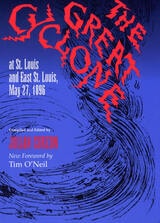
The Great Cyclone at St Louis and East St. Louis, May 27, 1896
Compiled and Edited by Julian Curzon. Foreword by Tim O'Neil
Southern Illinois University Press, 1997
Heavily illustrated by photographs of the damage, The Great Cyclone was compiled from stories in the city’s daily newspapers—the Globe-Democrat, the Post-Dispatch, and, most notably, the old St. Louis Republic. O’Neil points out that "the book’s compilers are not identified, but their glowing praise of the ‘superb descriptive composition’ in the Republic provides a good guess about where most of them worked."
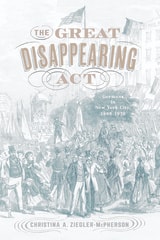
The Great Disappearing Act
Germans in New York City, 1880-1930Christina A. Ziegler-McPherson
Rutgers University Press, 2022
This study examines these questions in relation to the German immigrant community in New York City between 1880-1930, and seeks to understand how German-American New Yorkers assimilated into the larger American society in the early twentieth century.
By the turn of the twentieth century, New York City was one of the largest German-speaking cities in the world and was home to the largest German community in the United States. This community was socio-economically diverse and increasingly geographically dispersed, as upwardly mobile second and third generation German Americans began moving out of the Lower East Side, the location of America’s first Kleindeutschland (Little Germany), uptown to Yorkville and other neighborhoods. New York’s German American community was already in transition, geographically, socio-economically, and culturally, when the anti-German/One Hundred Percent Americanism of World War I erupted in 1917.
This book examines the structure of New York City’s German community in terms of its maturity, geographic dispersal from the Lower East Side to other neighborhoods, and its ultimate assimilation to the point of invisibility in the 1920s. It argues that when confronted with the anti-German feelings of World War I, German immigrants and German Americans hid their culture – especially their language and their institutions – behind closed doors and sought to make themselves invisible while still existing as a German community.
But becoming invisible did not mean being absorbed into an Anglo-American English-speaking culture and society. Instead, German Americans adopted visible behaviors of a new, more pluralistic American culture that they themselves had helped to create, although by no means dominated. Just as the meaning of “German” changed in this period, so did the meaning of “American” change as well, due to nearly 100 years of German immigration.
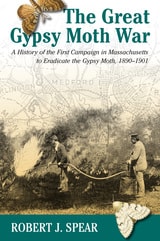
The Great Gypsy Moth War
A History of the First Campaign in Massachusetts to Eradicate the Gypsy Moth, 1890-1901Robert J. Spear
University of Massachusetts Press, 2005
During the Civil War, when the supply of cotton from southern fields was disrupted, the owners of northern textile mills looked elsewhere for raw fiber. One source was silk. Among those experimenting with silkworm production was a Frenchman named Etienne Leopold Trouvelot, who had settled outside of Boston. It was Trouvelot who imported the gypsy moths and inadvertently allowed them to escape. Soon the invasion was on and a counteroffensive was required.
Spear reveals the turbulent undercurrents in the eradication campaign when the enthusiasm of the entomologists in charge turned into desperation upon the discovery that their alien adversary was much tougher than they thought. Fighting a war they could not win and dared not lose, the leaders of the campaign resorted to political maneuvering, cheap tricks, and outright misrepresentation to maintain a façade of success, urging the Commonwealth to continue funding the war long after any chance of victory had faded.
More than just reviewing the important events of this historic episode, Spear tells the story in an engaging way, often through the first-hand accounts of those who were directly involved. Much of what Spear has written is new, the recounting is lively, and the information he presents shows that almost all of the previous beliefs about the campaign to eradicate the gypsy moths are myths. In the process, he also traces the rise of modern economic entomology and the birth of the pesticide industry.
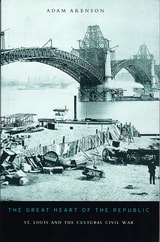
The Great Heart of the Republic
St. Louis and the Cultural Civil WarAdam Arenson
University of Missouri Press, 2011
The Civil War revealed what united as well as what divided Americans in the nineteenth century—not only in its deadly military conflict, but also in the broader battle of ideas, dueling moral systems, and competing national visions. Adam Arenson focuses this cultural civil war in St. Louis, the largest city along the border of slavery and freedom. From this vantage point, the Civil War era looks less like a fight between North and South over slavery or the West as a prize, and more like a messy struggle between northerners, southerners, and westerners, a clash among three incompatible regional visions, whose leaders argued about the definition and importance of Manifest Destiny and slavery politics. Arenson weaves this political history with analyses of paintings, architecture, and other cultural products, paying particular attention to institutions such as universities and railroads. The result is a vibrant history of the Civil War era from the heart of the Republic that enriches our understanding of America at a crossroads.
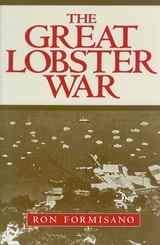
The Great Lobster War
Ron Formisano
University of Massachusetts Press, 1997
This groundbreaking historical account documents the little-known but significant conflict that erupted among Maine lobstermen in the 1950s—a pivotal clash that pitted independent small-scale fishermen against powerful dealers and federal government regulators. Written by distinguished historian Ronald P. Formisano, this work reconstructs a dramatic struggle over prices and economic power within Maine's vital lobster fishery.
Capturing the reality of the Lobster War strike and its subsequent legal proceedings, Formisano's narrative explores how independent owner-operators of the Maine lobster fishery, facing economic pressures from middlemen dealers and federal intervention, banded together in a coordinated effort to secure fair prices and maintain control over their livelihoods.
Through meticulous historical research, Formisano illuminates the economic realities of commercial fishing, the dynamics between laborers and processors, and the role of government regulation in shaping resource management policies.The Great Lobster War serves as both a detailed historical study and an accessible story of working-class agency and collective action in the postwar era.
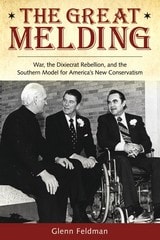
The Great Melding
War, the Dixiecrat Rebellion, and the Southern Model for America's New ConservatismGlenn Feldman
University of Alabama Press, 2015
CHOICE OUTSTANDING ACADEMIC TITLE
Tracing the Southern Origins of Modern American Conservatism.
Audacious in its scope, subtle in its analysis, and persuasive in its arguments, The Great Melding is the second book in Glenn Feldman’s magisterial recounting of the South’s transformation from a Reconstruction-era citadel of Democratic Party inertia to a cauldron of GOP agitation. In this pioneering study, Feldman shows how the transitional years after World War II, the Dixiecrat episode, and the early 1950s formed a pivotal sequence of events that altered America’s political landscape in profound, fundamental, and unexpected ways.
Feldman’s landmark work The Irony of the Solid South dismantled the myth of the New Deal consensus, proving it to be only a fleeting alliance of fissiparous factions; The Great Melding further examines how the South broke away from that consensus. Exploring issues of race and white supremacy, Feldman documents and explains the roles of economics, religion, and emotive appeals to patriotism in southern voting patterns. His probing and original analysis includes a discussion of the limits of southern liberalism and a fresh examination of the Dixiecrat Revolt of 1948.
Feldman convincingly argues that the Dixiecrats—often dismissed as a transitory footnote in American politics—served as a template for the modern conservative movement. Now a predictable Republican stronghold, Alabama at the time was viewed by national political strategists as a battleground and bellwether. Masterfully synthesizing a vast range of sources, Feldman shows that Alabama was then one of the few states where voters made unpredictable choices between the competing ideologies of the Democrats, Republicans, and Dixiecrats.
Writing in his lively and provocative style, Feldman demonstrates that the events he recounts in Alabama between 1942 and Dwight Eisenhower’s 1952 election encapsulate a rare moment of fluidity in American politics, one in which the New Deal consensus shattered and the Democratic and Republican parties fought off a third-party revolt only to find themselves irrevocably altered by their success. The Great Melding will fascinate historians, political scientists, political strategists, and readers of political nonfiction.
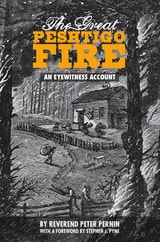
The Great Peshtigo Fire
An Eyewitness AccountPeter Pernin
Wisconsin Historical Society Press, 1999
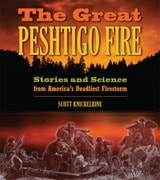
The Great Peshtigo Fire
Stories and Science from America’s Deadliest FireScott Knickelbine
Wisconsin Historical Society Press, 2012
On the night of October 8, 1871, a whirlwind of fire swept through northeastern Wisconsin, destroying the bustling frontier town of Peshtigo. Trees, buildings, and people burst into flames. Metal melted. Sand turned into glass. People thought the end of the world had come. When the “tornado of fire” was over, 2,500 people were dead, and Peshtigo was nothing but a smoking ruin. It was the deadliest wildfire in U.S. history.
The Great Peshtigo Fire: Stories and Science from America’s Deadliest Firestorm explores the history, science, and legacy of the 1871 Peshtigo Fire at a fourth-grade reading level. Readers will learn about the history of settlement, agriculture, and forestry in 19th-century Wisconsin. This illuminating text covers a diverse range of topics that will enrich the reader’s understanding of the Peshtigo Fire, including the building and land-use practices of the time that made the area ripe for such a fire, the weather patterns that fostered widespread fires throughout the upper Midwest in the summer and fall of 1871, and exciting first-person accounts that vividly bring the `victims’ stories to life. Connections made between the Peshtigo Fire and the history of fire prevention in the United States encourage critical thinking about issues that remain controversial to this day, such as planned burns and housing development restrictions near forested areas. The Great Peshtigo Fire: Stories and Science from America’s Deadliest Firestorm will inform and captivate its readers as it journeys through the horrifying history of the Peshtigo Fire.
The Great Salt Lake
Dale L. Morgan
University of Utah Press, 2002
Approached as history, geography, geology, or high adventure, The Great Salt Lake is fascinating reading. From the first Americans, through mountain men, religious empires, railroads, and resorts, the remnant of ancient Lake Bonneville has been a nexus for human history, uniting a haunting beauty with raw desolation, 'strangely removed from common experience.'
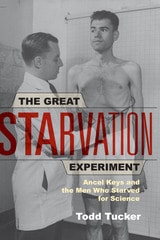
The Great Starvation Experiment
Ancel Keys and the Men Who Starved for ScienceTodd Tucker
University of Minnesota Press, 2007
“The Great Starvation Experiment is wide-ranging, weaving progress in the war into the day-to-day suffering of the hungry volunteers.” —Saint Paul Pioneer Press
“Fascinating . . .” —Minneapolis Star Tribune
Near the end of World War II, thirty-six conscientious objectors volunteered to be systematically starved for renowned scientist Ancel Keys’s study at the University of Minnesota in the basement of Memorial Stadium. Aimed to benefit relief efforts in war-ravaged Europe and Asia, the study sought the best way to rehabilitate starving citizens. Tucker captures a lost moment in American history—a time when stanch idealism and a deep willingness to sacrifice trumped even basic human needs.
“Tucker provides a fascinating and moving history of the experiment, centering on the lives and experiences of the volunteers and the formidable obstacles they overcame. Tucker tells the story with verve and economy. . . . Keys, his experiment and his 36 starving men form a compelling combination.” —Publishers Weekly
Todd Tucker is the author of several books, including Notre Dame vs. the Klan: How the Fighting Irish Defeated the Ku Klux Klan (2004). He served on the legendary Navy submarine USS Alabama before moving to Valparaiso, Indiana.

The Great Texas Stamp Collection
How Some Stubborn Texas Confederate Postmasters, a Handful of Determined Texas Stamp Collectors, and a Few of the World's Greatest Philatelists Created, Discovered, and Preserved Some of the World's Most Valuable Postage StampsBy Charles W. Deaton
University of Texas Press, 2012
Among the many difficulties the newly formed Confederate States of America endured in the summer of 1861 was the failure of its post office department to provide sufficient numbers of that item most crucial to its service: the postage stamp. Faced with the resulting din of customer complaints, a handful of industrious Texas postmasters solved the problem by simply making their own homemade stamps.
In this thoroughly researched history of these rare and highly coveted stamps, The Great Texas Stamp Collection traces their journey from creation through their rediscovery years later by local, and then international, stamp collectors—a journey that culminated in the sale of a few pieces at a recent auction in New York that fetched more than $250,000. Weaving the larger contexts of Texas and U.S. postal history together with individual tales of greed, intrigue, forgery, and discovery, Deaton’s book is rich with characters from European royalty to early stamp dealers to common criminals, while also providing detailed examinations of the stamps themselves, including a complete census of the stamps now known as the Texas Confederate Postmasters’ Provisionals.
Appealing at once to devoted philatelists, Texas and U.S. history buffs, and amateur collectors of all kinds, The Great Texas Stamp Collection offers a unique vantage point from which to view our history as well as the very nature of collecting.
The Great Texas Wind Rush
How George Bush, Ann Richards, and a Bunch of Tinkerers Helped the Oil and Gas State Win the Race to Wind PowerBy Kate Galbraith and Asher Price
University of Texas Press, 2013
In the late 1990s, West Texas was full of rundown towns and pumpjacks, aging reminders of the oil rush of an earlier era. Today, the towns are thriving as 300-foot-tall wind turbines tower above those pumpjacks. Wind energy has become Texas’s latest boom, with the Lone Star State now leading the nation. How did this dramatic transformation happen in a place that fights federal environmental policies at every turn? In The Great Texas Wind Rush, environmental reporters Kate Galbraith and Asher Price tell the compelling story of a group of unlikely dreamers and innovators, politicos and profiteers.
The tale spans a generation and more, and it begins with the early wind pioneers, precocious idealists who saw opportunity after the 1970s oil crisis. Operating in an economy accustomed to exploiting natural resources and always looking for the next big thing, their ideas eventually led to surprising partnerships between entrepreneurs and environmentalists, as everyone from Enron executives to T. Boone Pickens, as well as Ann Richards, George W. Bush and Rick Perry, ended up backing the new technology. In this down-to-earth account, the authors explain the policies and science that propelled the “windcatters” to reap the great harvest of Texas wind. They also explore what the future holds for this relentless resource that is changing the face of Texas energy.

The Great War in the Heart of Dixie
Alabama During World War IMartin T. Olliff
University of Alabama Press, 2008

The Great Water
A Documentary History of MichiganMatthew R Thick
Michigan State University Press, 2018
The Greater Good
Media, Family Removal, and TVA Dam Construction in North AlabamaLaura Beth Daws and Susan L. Brinson
University of Alabama Press, 2019
For poverty-stricken families in the Tennessee River Valley during the Great Depression, news of President Franklin D. Roosevelt’s New Deal plans to create the Tennessee Valley Authority—bringing the promise of jobs, soil conservation, and electricity—offered hope for a better life. The TVA dams would flood a considerable amount of land on the riverbanks, however, forcing many families to relocate. In exchange for this sacrifice for the “greater good,” these families were promised “fair market value” for their land. As the first geographic location to benefit from the electricity provided by TVA, the people of North Alabama had much to gain, but also much to lose.
In The Greater Good: Media, Family Removal, and TVA Dam Construction in North Alabama Laura Beth Daws and Susan L. Brinson describe the region’s preexisting conditions, analyze the effects of relocation, and argue that local newspapers had a significant impact in promoting the TVA’s agenda. The authors contend that it was principally through newspapers that local residents learned about the TVA and the process and reasons for relocation. Newspapers of the day encouraged regional cooperation by creating an overwhelmingly positive image of the TVA, emphasizing its economic benefits and disregarding many of the details of removal.
Using mostly primary research, the volume addresses two key questions: What happened to relocated families after they sacrificed their homes, lifestyles, and communities in the name of progress? And what role did mediated communication play in both the TVA’s family relocation process and the greater movement for the public to accept the TVA’s presence in their lives? The Greater Good offers a unique window into the larger impact of the New Deal in the South. Until now, most research on the TVA was focused on organizational development rather than on families, with little attention paid to the role of the media in garnering acceptance of a government-enforced relocation.
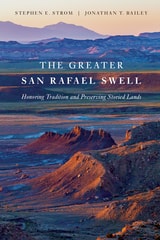
The Greater San Rafael Swell
Honoring Tradition and Preserving Storied LandsStephen E. Strom and Jonathan T. Bailey
University of Arizona Press, 2022
Natural and human history come together in The Greater San Rafael Swell, which spans much of Emery County in Utah. Authors Stephen Strom and Jonathan Bailey paint a multi-faceted picture of a singular place through photographs, along with descriptions of geology, paleontology, archaeology, history, and dozens of interviews with individuals who devoted more than two decades to developing a shared vision of the future of both the Swell and the County. At its core, the book relates the important story of how a coalition of ranchers, miners, off-road enthusiasts, conservationists, recreationists, and Native American tribal nations worked together for nearly 25 years to forge and pass the Emery County Public Lands Management Act in 2019.
This book chronicles hopeful stories for our times: how citizens of Emery and three other counties in the rural West worked to resolve perhaps the most volatile issue in the region – the future of public lands. Both their successes and the processes by which they found common ground serve as beacons in today’s uncertain landscape – beacons that can illuminate paths toward rebuilding our shared democracy from the ground up.
The Greenlining of Staten Island
Environmental Preservation and Racial Segregation, 1945–1995Patrick D. Nugent
University of Chicago Press, 2026
Illuminates how borough residents, urban planners, and politicians used environmental policy to cement a racially restrictive landscape.
Though it was once home to the world’s largest landfill, today Staten Island boasts thousands of acres of parklands, dozens of public-private conservation arrangements, and four ecological zoning districts. In this book, Patrick D. Nugent details the political forces that gave rise to this wealth of greenery in a famously dense city. He demonstrates how postwar economic and political trajectories intersected in the 1960s with the rising consciousness of environmentalism to create a distinctive laboratory in Staten Island, where white communities and politicians heeded the rising call for the preservation of green space—but often as a tool to maintain racial segregation. Ecological zoning, public-private park management, conservation easement, environmental litigation, and other strategies created a lush, discriminatory landscape. Nugent refers to these policies as greenlining.
The Greenlining of Staten Island shows that the political and environmental history of Staten Island is key to understanding how environmentalism has been used to reinforce racial discrimination, not just in New York City, but nationwide. By the mid-1970s, conservationists had embraced urban planning that preserved low-density housing districts and bolstered the sprawling and segregated landscape that took shape in metropolitan America over the coming decades. In exploring the gap between the modern environmental movement’s ambitious goals and its tangible outcomes, Nugent excavates important lessons for contemporary city dwellers debating zoning reform and planning for climate change’s impending effects.
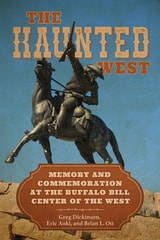
The Haunted West
Memory and Commemoration at the Buffalo Bill Center of the WestGreg Dickinson, Eric Aoki, and Brian L. Ott
University of Alabama Press, 2024
Through incisive analysis of the museum’s five institutions, Greg Dickinson and his coauthors reveal how narratives of Native American heritage, violent colonial settlement, Western art, natural history, and ever‑present gun culture collide to shape a haunted sense of American identity. By tracing the tensions between what is memorialized, what is mythologized, and what is suppressed, the authors expose the ghosts that linger in contemporary understandings of the West and offer a compelling rethinking of how memory and commemoration continue to influence the nation’s cultural imagination.
The Health of the Commonwealth
A Brief History of Medicine, Public Health, and Disease in PennsylvaniaJames E. Higgins
Temple University Press, 2020
“The history of medicine in Pennsylvania is no less vital to understanding the state’s past than is its political or industrial history,” writes James Higgins in The Health of the Commonwealth, his overview of medicine and public health in the state. Covering the outbreak of yellow fever in 1793 through the 1976 Legionnaire’s Disease epidemic, and the challenges of the present day, he shows how Pennsylvania has played a central role in humanity’s understanding of—and progress against—disease.
Higgins provides close readings of specific medical advances—for instance, scientists at the University of Pittsburgh discovered the polio vaccine—and of disease outbreaks, like AIDS. He examines sanitation and water purification efforts, allopathic medicine and alternative therapies, and the building of the state’s tuberculosis sanitaria. Higgins also describes Native American and pre-modern European folk medicine, the rise of public health in the state, and women’s roles in both folk and scientific medicine.
The Health of the Commonwealth places Pennsylvania’s unique contribution to the history of public health and medicine in a larger narrative of health and disease throughout the United States and the world.

The Healthiest City
Milwaukee and the Politics of Health ReformJudith W. Leavitt
University of Wisconsin Press, 1996
Between 1850 and 1900, Milwaukee’s rapid population growth also gave rise to high death rates, infectious diseases, crowded housing, filthy streets, inadequate water supplies, and incredible stench. The Healthiest City shows how a coalition of reform groups brought about community education and municipal action to achieve for Milwaukee the title of “the healthiest city” by the 1930s. This highly praised book reminds us that cutting funds and regulations for preserving public health results in inconvenience, illness, and even death.
“A major work. . . . Leavitt focuses on three illustrative issues—smallpox, garbage, and milk, representing the larger areas of infectious disease, sanitation, and food control.”—Norman Gevitz, Journal of the American Medical Association
“Leavitt’s research provides additional evidence . . . that improvements in sanitation, living conditions, and diet contributed more to the overall decline in mortality rates than advances in medical practice. . . . A solid contribution to the history of urban reform politics and public health.”—Jo Ann Carrigan, Journal of American History
The Heart of the Lakes
Freshwater in the Past, Present and Future of Southeast MichiganDave Dempsey
Michigan State University Press, 2019
The Heartland of U.S. Empire
Race, Region, and the Queer Filipinx MidwestThomas Xavier Sarmiento
Temple University Press, 2026
Examining Filipinx cultural representations in the Midwest since the early twentieth century, Thomas Sarmiento shrewdly considers the impact of American exceptionalism and U.S. imperialism in a region where white, middle class, heterosexual, and Christian is the norm. The Heartland of U.S. Empire offers a cogent analysis of the 1904 St. Louis World’s Fair and its infamous Philippine Exhibit alongside minor museum displays and archives of Midwesterners in the Philippines. Sarmiento also considers the “exile literature” of Filipino/American writer Bienvenido Santos as well as the TV shows Glee and Superstore, which provide mainstream visibility of the queer Filipinx Midwest.
He employs a queer, decolonial Filipinx methodology that traces how narratives of America’s heartland position Filipinxs in the region as nonnormative due to their racial, gender, sexual, and national statuses. The Heartland of U.S. Empire locates queer Filipinxs in the geographic center of the nation and at the center of cultural narratives, thereby mapping alternative images of diasporic Filipinx identity and experience alongside U.S. regional and national identities, histories, and realities.
In the series Asian American History and Culture
The Henderson Site Burials
Glimpses of a Late Prehistoric Population in the Pecos ValleyThomas R. Rocek and John D. Speth
University of Michigan Press, 1986
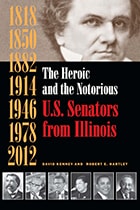
The Heroic and the Notorious
U.S. Senators from IllinoisDavid Kenney and Robert E. Hartley
Southern Illinois University Press, 2012
This sweeping survey constitutes the first comprehensive treatment of the men and women who have been chosen to represent Illinois in the United States Senate from 1818 to the present day. David Kenney and Robert E. Hartley underscore nearly two centuries of Illinois history with these biographical and political portraits, compiling an incomparably rich resource for students, scholars, teachers, journalists, historians, politicians, and any Illinoisan interested in the state’s senatorial heritage.
Originally published as An Uncertain Tradition: U.S. Senators From Illinois 1818–2003, this second edition brings readers up to date with new material on Paul Simon, Richard Durbin, and Peter Fitzgerald, as well as completely new sections on Roland Burris, Barack Obama, and Illinois’s newest senator, Mark Kirk. This fresh and careful study of the shifting set of political issues Illinois’s senators encountered over time is illuminated by the lives of participants in the politics of choice and service in the Senate. Kenney and Hartley offer incisive commentary on the quality of Senate service in each case, as well as timeline graphs relating to the succession of individuals in each of the two sequences of service, the geographical distribution of senators within the state, and the variations in party voting for Senate candidates. Rigorously documented and supremely readable, this convenient reference volume is enhanced by portraits of many of the senators.

The High School
Sports, Spirit, and Citizens, 1903-2024Michael A. Messner
Rutgers University Press, 2025
In The High School, acclaimed sociologist Michael A. Messner reads through 120 years of El Gabilan, the yearbook from his own alma mater, Salinas High School in California, where his father taught and coached. Treating the yearbooks as a historical archive, Messner makes surprising discoveries about the school he thought he knew so well. For example, over fifty years before Title IX, the earliest yearbooks gave equal spotlights to boys’ and girls’ athletics, while the cheerleaders were all boys.
Tracing American life and culture from 1903 to 2024, Messner illuminates shifts in social practices at his high school that reflect broader changes in American culture across the twentieth century. The High School spotlights how the meanings and iconography of certain activities have changed radically over the decades, even as the “sports spirit complex”—involving athletes, cheerleaders, band members, and community boosters—has remained a central part of the high school experience. By exploring evolving sports cultures, socioeconomic conditions, racial demographics, and gender norms, Messner offers a fresh perspective on a defining feature of American teenage life.
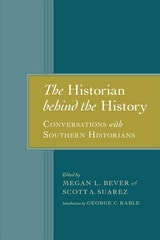
The Historian behind the History
Conversations with Southern HistoriansMegan L. Bever
University of Alabama Press, 2014
The historians and their main topics include:
Richard J. M. Blackett on antebellum and African American history
Dan T. Carter on Reconstruction, Civil Rights, and George Wallace
Pete Daniel on the New Deal and the Cold War South
Laura F. Edwards on the Early Republic, the Civil War, Reconstruction, and women’s history
William W. Freehling on the antebellum South
Gary W. Gallagher on the Civil War
Glenda Elizabeth Gilmore on Jim Crow
James M. McPherson on the Civil War
Theodore Rosengarten on the Depression
J. Mills Thornton III on the antebellum South
In his introduction, award-winning author and historian George C. Rable draws together the multifaceted themes of these interviews, offering a compelling overview of the nature of the field. Edited by Megan L. Bever and Scott A. Suarez, The Historian behind the History offers critical insights about the craft and professional life of the historian.
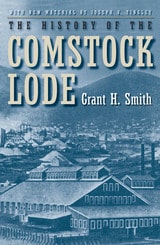
The History Of The Comstock Lode
Grant H. Smith
University of Nevada Press, 1998
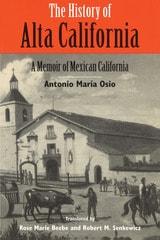
The History of Alta California
A Memoir of Mexican CaliforniaAntonio María Osio, Translated, Edited, and Annotated by Rose Marie Beebe and Robert M. Senkewicz
University of Wisconsin Press, 1996
Osio wrote his History in 1851, conveying with immediacy and detail the years of the U.S.-Mexican War of 1846–1848 and the social upheaval that followed. As he witnesses California’s territorial transition from Mexico to the United States, he recalls with pride the achievements of Mexican California in earlier decades and writes critically of the onset of U.S. influence and imperialism. Unable to endure life as foreigners in their home of twenty-seven years, Osio and his family left Alta California for Mexico in 1852.
Osio’s account predates by a quarter century the better-known reminiscences of Mariano Guadalupe Vallejo and Juan Bautista Alvarado and the memoirs of Californios dictated to Hubert Howe Bancroft’s staff in the 1870s. Editors Rose Marie Beebe and Robert M. Senkewicz have provided an accurate, complete translation of Osio’s original manuscript, and their helpful introduction and notes offer further details of Osio’s life and of society in Alta California.
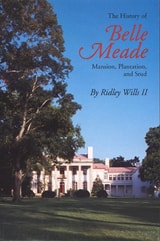
The History of Belle Meade
Mansion, Plantation, and StudRidley Wills
Vanderbilt University Press, 1991
During the latter half of the nineteenth century, Belle Meade became probably the most important nursery for Thoroughbred race horses in America. Since that time, virtually every Kentucky Derby winner can trace its lineage back to Belle Meade. Belle Meade also holds a place in American history as a stage for the comings and goings of great people and events. Weaving together family and regional history, Wills provides his reader with a fascinating account of the land, people, buildings, and horses that for a century made Belle Meade a significant focal point for Tennessee and the South.