Results by title
28250 books match the query 'history' and 6388 start with t
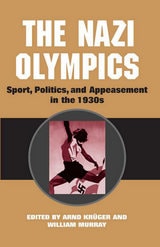
The Nazi Olympics
Sport, Politics, and Appeasement in the 1930sEdited by Arnd Krüger and William Murray
University of Illinois Press, 2003
The 1936 Olympic Games played a key role in the development of both Hitler’s Third Reich and international sporting competition. The Nazi Olympics gathers essays by modern scholars from prominent participating countries and lays out the issues--sporting as well as political--surrounding the involvement of individual nations.
The volume opens with an analysis of Germany’s preparations for the Games and the attempts by the Nazi regime to allay the international concerns about Hitler’s racist ideals and expansionist ambitions. Essays follow on the United States, Great Britain, and France--top-tier Olympian nations with misgivings about participation--as well as Germany's future Axis partners Italy and Japan. Other contributions examine the issues involved for Finland, Sweden, Norway, Denmark, and the Netherlands. Throughout, the authors reveal the high political stakes surrounding the Games and how the Nazi Olympics distilled critical geopolitical issues of the time into a spectacle of sport.
The Nazi Perpetrator
Postwar German Art and the Politics of the RightPaul B. Jaskot
University of Minnesota Press, 2012
Who was responsible for the crimes of the Nazis? Party leaders and members? Rank-and-file soldiers and bureaucrats? Ordinary Germans? This question looms over German disputes about the past like few others. It also looms over the art and architecture of postwar Germany in ways that have been surprisingly neglected. In The Nazi Perpetrator, Paul B. Jaskot fundamentally reevaluates pivotal developments in postwar German art and architecture against the backdrop of contentious contemporary debates over the Nazi past and the difficulty of determining who was or was not a Nazi perpetrator.
Like their fellow Germans, postwar artists and architects grappled with the Nazi past and the problem of defining the Nazi perpetrator—a problem that was thoroughly entangled with contemporary conservative politics and the explosive issue of former Nazis living in postwar Germany. Beginning with the formative connection between Nazi politics and art during the 1930s, The Nazi Perpetrator traces the dilemma of identifying the perpetrator across the entire postwar period. Jaskot examines key works and episodes from West Germany and, after 1989, reunified Germany, showing how the changing perception of the perpetrator deeply impacted art and architecture, even in cases where artworks and buildings seem to have no obvious relation to the Nazi past. The book also reinterprets important periods in the careers of such major figures as Gerhard Richter, Anselm Kiefer, and Daniel Libeskind.
Combining political history with a close analysis of specific works, The Nazi Perpetrator powerfully demonstrates that the ongoing influence of Nazi Germany after 1945 is much more central to understanding a wide range of modern German art and architecture than cultural historians have previously recognized.

The Nazi Symbiosis
Human Genetics and Politics in the Third ReichSheila Faith Weiss
University of Chicago Press, 2010
The Faustian bargain—in which an individual or group collaborates with an evil entity in order to obtain knowledge, power, or material gain—is perhaps best exemplified by the alliance between world-renowned human geneticists and the Nazi state. Under the swastika, German scientists descended into the moral abyss, perpetrating heinous medical crimes at Auschwitz and at euthanasia hospitals. But why did biomedical researchers accept such a bargain?
The Nazi Symbiosis offers a nuanced account of the myriad ways human heredity and Nazi politics reinforced each other before and during the Third Reich. Exploring the ethical and professional consequences for the scientists involved as well as the political ramifications for Nazi racial policies, Sheila Faith Weiss places genetics and eugenics in their larger international context. In questioning whether the motives that propelled German geneticists were different from the compromises that researchers from other countries and eras face, Weiss extends her argument into our modern moment, as we confront the promises and perils of genomic medicine today.
The Neapolitan Recipe Collection
Cuoco NapoletanoTerence Scully
University of Michigan Press, 2015
The Necessary Past
Revising History in Contemporary African American PoetryAnnette Debo
Northwestern University Press, 2024
“Poets are lyric historians,” proclaimed Langston Hughes. Today, historical poetry offers a lyric history necessary to our current moment—poetry with the power to correct the past, realign the present, and create a more hopeful, or even hoped-for, future. The Necessary Past: Revising History in Contemporary African American Poetry focuses on six of today’s most celebrated poets: Elizabeth Alexander, Natasha Trethewey, A. Van Jordan, Kevin Young, Frank X Walker, and Camille T. Dungy. Their works reimagine the interiority of Black historical figures like the so-called Venus Hottentot Sara Baartman and the would-be spelling champion MacNolia Cox, the African American Native Guard who fought in the Civil War and the unknown victims of domestic violence, Jack Johnson and Jean-Michel Basquiat, Medgar Evers and those freed and enslaved in the early nineteenth century. These poets shift the power dynamic in revising our shared history, reconfiguring who speaks and whose stories are told, and writing a past that frees readers to change the present and envision a more just future.
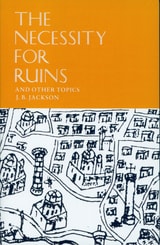
The Necessity for Ruins and Other Topics
J. B. Jackson
University of Massachusetts Press, 1980
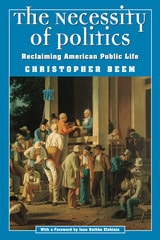
The Necessity of Politics
Reclaiming American Public LifeChristopher Beem
University of Chicago Press, 1999
In response to this bleak assessment, advocates of "civil society" argue that rejuvenating our neighborhoods, churches, and community associations will lead to a more moral, civic-minded polity. Christopher Beem argues that while the movement's goals are laudable, simply restoring local institutions will not solve the problem; a civil society also needs politics and government to provide a sense of shared values and ideas. Tracing the concept back to Tocqueville and Hegel, Beem shows that both thinkers faced similar problems and both rejected civil society as the sole solution. He then shows how, in the case of the Civil Rights movement, both political groups and the federal government were necessary to effect a new consensus on race.
Taking up the arguments of Robert Putnam, Michael Sandel, and others, this timely book calls for a more developed sense of what the state is for and what our politics ought to be about.
"This book is bound to incite controversy and to contribute to our ongoing grappling with where our own democratic political culture is going. . . . Beem helps us to get things right by offering a corrective to any and all visions of civil society sanitized from politics."—Jean Bethke Elshtain, from the Foreword
"[Beem] makes an impressive case. At the end of the day, there really is no substitute for governmental authority in fostering the moral identity of the body politic."—Robert P. George, Times Literary Supplement
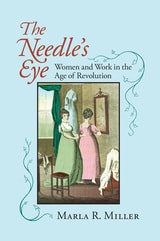
The Needle's Eye
Women and Work in the Age of RevolutionMarla R. Miller
University of Massachusetts Press, 2006
In this book, Marla R. Miller illuminates the significance of women's work in the clothing trades of the early Republic. Drawing on diaries, letters, reminiscences, ledgers, and material culture, she explores the contours of working women's lives in rural New England, offering a nuanced view of their varied ranks and roles—skilled and unskilled, black and white, artisanal and laboring—as producers and consumers, clients and craftswomen, employers and employees. By plumbing hierarchies of power and skill, Miller explains how needlework shaped and reflected the circumstances of real women's lives, at once drawing them together and setting them apart.
The heart of the book brings into focus the entwined experiences of six women who lived in and around Hadley, Massachusetts, a thriving agricultural village nestled in a bend in the Connecticut River about halfway between the Connecticut and Vermont borders. Miller's examination of their distinct yet overlapping worlds reveals the myriad ways that the circumstances of everyday lives positioned women in relationship to one another, enlarging and limiting opportunities and shaping the trajectories of days, years, and lifetimes in ways both large and small. The Needle's Eye reveals not only how these women thought about their work, but how they thought about their world.
The Negro in Illinois
The WPA PapersEdited by Brian Dolinar
University of Illinois Press, 2013
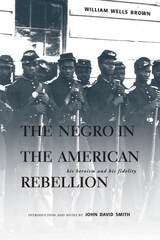
The Negro in the American Rebellion
His Heroism and His FidelityWilliam Wells Brown
Ohio University Press, 1997
In 1863, as the Civil War raged, the escaped slave, abolitionist, and novelist William Wells Brown identified two groups most harmful to his race. “The first and most relentless,” he explained, “are those who have done them the greatest injury, by being instrumental in their enslavement and consequent degradation. They delight to descant upon the ‘natural inferiority’ of the blacks, and claim that we were destined only for a servile condition, entitled neither to liberty nor the legitimate pursuit of happiness.”
“The second class,” Brown concluded, “are those who are ignorant of the characteristics of the race, and are the mere echoes of the first.” Four years later, Brown wrote the first military history of African Americans, The Negro in the American Rebellion. This text assailed those whose hatred and ignorance inclined them to keep blacks oppressed after Appomattox.
This critical edition of The Negro in the American Rebellion, one of Brown’s least-analyzed texts, is the first to appear in more than three decades. In his introduction, historian John David Smith identifies the text’s Anglo-American abolitionist roots, sets it in the context of Brown’s other writings, appraises it as military history, analyzes its interpretation of black masculinity and honor, and focuses closely on Brown’s assessment of contemporary racial tensions.
Largely ignored by scholars, The Negro in the American Rebellion, Smith argues, is a powerful transitional text, one that confronted squarely the neo-slavery of the Reconstruction era.
“Whites,” Brown wrote, “appear determined to reduce the blacks to a state of serfdom if they cannot have them as slaves.” His important text was a call to arms in the ongoing race struggle. Smith’s analysis, framed within recent scholarship on slavery, emancipation, and African American participation in the U.S. army, is long overdue.

The Nehalem Tillamook
An EthnographyElizabeth D. Jacobs
Oregon State University Press, 2003
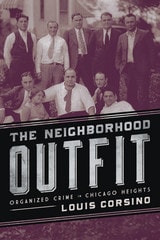
The Neighborhood Outfit
Organized Crime in Chicago HeightsLouis Corsino
University of Illinois Press, 2014
Debunking the popular idea of organized crime as a uniquely Italian enterprise, Corsino delves into the social and cultural forces that contributed to illicit activities. As he shows, discrimination blocked opportunities for Italians' social mobility and the close-knit Italian communities that arose in response to such limits produced a rich supply of social capital Italians used to pursue alternative routes to success that ranged from Italian grocery stores to union organizing to, on occasion, crime.
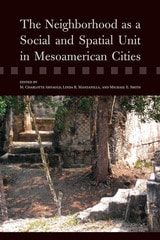
The Neighborhood as a Social and Spatial Unit in Mesoamerican Cities
Edited by M. Charlotte Arnauld, Linda R. Manzanilla, and Michael E. Smith
University of Arizona Press, 2012
The contributions gathered here provide fieldwork data to document the existence of sociopolitically distinct neighborhoods within ancient Mesoamerican settlements, building upon recent advances in multi-scale archaeological studies of these communities. Chapters illustrate the cultural variation across Mesoamerica, including data and interpretations on several different cities with a thematic focus on regional contrasts. This topic is relatively new and complex, and this book is a strong contribution for three interwoven reasons. First, the long history of research on the “Teotihuacan barrios” is scrutinized and withstands the test of new evidence and comparison with other Mesoamerican cities. Second, Maya studies of dense settlement patterns are now mature enough to provide substantial case studies. Third, theoretical investigation of ancient urbanization all over the world is now more complex and open than it was before, giving relevance to Mesoamerican perspectives on ancient and modern societies in time and space.
This volume will be of interest not only to scholars and student specialists of the Mesoamerican past but also to social scientists and urbanists looking to contrast ancient cultures worldwide.
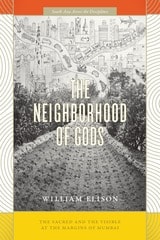
The Neighborhood of Gods
The Sacred and the Visible at the Margins of MumbaiWilliam Elison
University of Chicago Press, 2018
The Neighborhood of Gods explores this question, bringing an ethnographic lens to a range of visual and spatial practices: from the shrine construction that encroaches on downtown streets, to the “tribal art” practices of an indigenous group facing displacement, to the work of image production at two Bollywood film studios. A pioneering ethnography, this book offers a creative intervention in debates on postcolonial citizenship, urban geography, and visuality in the religions of India.
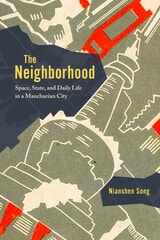
The Neighborhood
Space, State, and Daily Life in a Manchurian CityNianshen Song
University of Chicago Press, 2025
What can one neighborhood reveal about the making of a modern nation? The Neighborhood deciphers the unexpected significance of Xita, a half-square-mile quarter in Shenyang, in Northeast China. As the historian Nianshen Song shows, over nearly four centuries, Xita has been shaped and reshaped by empire, war, migration, and urban transformation. Remarkably, the history of this small area mirrors large-scale changes, including and especially China’s metamorphosis from a multiethnic Eurasian empire to a postindustrial society.
Song begins with Xita’s origins as a Qing-era Tibetan Buddhist center, following the lives of Mongol lamas and their imperial patrons. He tracks the neighborhood through the tumultuous twentieth century, when competing Russian and Japanese railway empires fueled its industrial growth, and Japanese colonizers turned it into a showcase for their imperial ambitions. Later, Xita became a vital enclave for Korea’s diaspora before emerging in the post-Mao era as a neon-lit hub of commerce and entertainment.
A thoroughly researched microhistory, The Neighborhood reveals how global forces play out in everyday spaces. By studying the emperors, warlords, merchants, laborers, and migrants who shaped Xita, Song presents a captivating and original perspective for understanding China’s past—not from the top down, but through the streets and people who lived it.
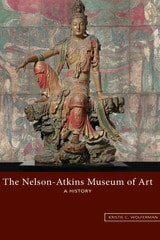
The Nelson-Atkins Museum of Art
A HistoryKristie C. Wolferman
University of Missouri Press, 2020
Wolferman begins by relaying how the trustees of the estates of the reclusive widow Mary Atkins and the family of Kansas City Star newspaper editor William Rockhill Nelson joined forces to establish a museum from scratch, then goes on to consider all of the highly talented people who directed and staffed the Nelson-Atkins along the way, their efforts resulting in many bold innovations, among them new collections, grounds, and educational programs and offerings.
With 100 color and black and white photographs, this book will be treasured by all who love and admire this remarkable institution, one that attracts half a million visitors—from across the city, state, nation, and world—each year.
This is a co-publication of the University of Missouri Press and the Nelson-Atkins Museum of Art.
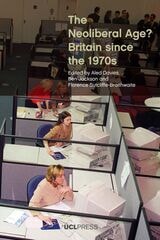
The Neoliberal Age?
Britain Since the 1970sEdited by Aled Davies, Ben Jackson, and Florence Sutcliffe-Braithwaite
University College London, 2021
The rise of British neoliberalism—a renewed emphasis on privatization and market-oriented economics—over the last fifty years is often characterized as the product of right-wing political economists, think tanks, and politicians. The Neoliberal Age? argues that this pat narrative ignores broader forces in British left-wing culture that collaborated to transform twentieth-century social life. Through a variety of case studies, the authors demonstrate that our austere, individualistic age emerged from more complex sociopolitical negotiations than typically described.
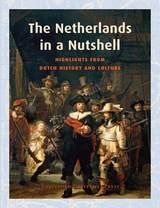
The Netherlands in a Nutshell
Highlights from Dutch History and CultureEdited by Frits van Oostrom
Amsterdam University Press, 2009
The Networked Wilderness
Communicating in Early New EnglandMatt Cohen
University of Minnesota Press, 2009
In The Networked Wilderness, Matt Cohen examines communications systems in early New England and finds that, surprisingly, struggles over information technology were as important as theology, guns, germs, or steel in shaping the early colonization of North America. Colonists in New England have generally been viewed as immersed in a Protestant culture of piety and alphabetic literacy. At the same time, many scholars have insisted that the culture of the indigenous peoples of the region was a predominantly oral culture. But what if, Cohen posits, we thought about media and technology beyond the terms of orality and literacy?
Reconceptualizing aural and inscribed communication as a spectrum, The Networked Wilderness bridges the gap between the history of the book and Native American systems of communication. Cohen reveals that books, paths, recipes, totems, and animals and their sounds all took on new interactive powers as the English negotiated the well-developed informational trails of the Algonquian East Coast and reported their experiences back to Europe. Native and English encounters forced all parties to think of each other as audiences for any event that might become a kind of "publication."
Using sources ranging from Thomas Morton's Maypole festival to the architecture of today's Mashantucket Pequot Museum and Research Center, Cohen shows that the era before the printing press came to New England was one of extraordinary fertility for communications systems in America.
The New Age of Franklin Roosevelt, 1932-1945
Dexter Perkins
University of Chicago Press, 1957
Scarcely had the New Deal become a part of American life, however, when World War II broke out, and America became a global power leading the Allies to victory, began development of the atomic bomb, and laid plans for the United Nations organization.
In the opinion of many historians, F.D.R.'s thirteen years are the most important era in twentieth-century American history. Now Dexter Perkins takes an objective look at Roosevelt and his times—the great depression, the great social experiment, the great war—and presents a balanced evaluation of America from the Blue Eagle days of NRA to the shocking April afternoon of Roosevelt's death.
"A fair-minded, clear, and brief guide to that complex man and even more complex era."—Frank Freidel, Christian Science Monitor

The New American Cinema
For an Intimate WorldJosh Guilford
University of Illinois Press, 2027
Dedicated to shaping a more intimate world, New American Cinema artists created works that emphasized spontaneity, improvisation, and formal experimentation to produce transformative experiences in their viewers. Filmmakers like Jonas Mekas, Lionel Rogosin, Ron Rice, and Shirley Clarke championed cinema’s ability to revive the human soul and foster more liberating social forms. In practice, however, their films often relied on the vitality of marginalized communities and cultural traditions in a manner that lays bare tensions between artistic idealism and cultural extraction. Guilford uses thinkers from inside and outside the world of film to illuminate the political risks and possibilities that come with making intimacy the foundation of social change.
Rigorous and original, The New American Cinema examines an understudied movement and its effort to reshape film culture, challenge conformity, and imagine new ways of living together.
The New American Exceptionalism
Donald E. Pease
University of Minnesota Press, 2009
For a half century following the end of World War II, the seemingly permanent cold war provided the United States with an organizing logic that governed nearly every aspect of American society and culture, giving rise to an unwavering belief in the nation's exceptionalism in global affairs and world history. After the collapse of the Soviet Union, this cold war paradigm was replaced by a series of new ideological narratives that ultimately resulted in the establishment of another potentially endless war: the global war on terror.
In The New American Exceptionalism, pioneering scholar Donald E. Pease traces the evolution of these state fantasies and shows how they have shaped U.S. national identity since the end of the cold war, uncovering the ideological and cultural work required to convince Americans to surrender their civil liberties in exchange for the illusion of security. His argument follows the chronology of the transitions between paradigms from the inauguration of the New World Order under George H. W. Bush to the homeland security state that George W. Bush's administration installed in the wake of 9/11. Providing clear and convincing arguments about how the concept of American exceptionalism was reformulated and redeployed in this era, Pease examines a wide range of cultural works and political spectacles, including the exorcism of the Vietnam syndrome through victory in the Persian Gulf War and the creation of Islamic extremism as an official state enemy.
At the same time, Pease notes that state fantasies cannot altogether conceal the inconsistencies they mask, showing how such events as the revelations of prisoner abuse at Abu Ghraib and the exposure of government incompetence after Hurricane Katrina opened fissures in the myth of exceptionalism, allowing Barack Obama to challenge the homeland security paradigm with an alternative state fantasy that privileges fairness, inclusion, and justice.
The New American History
Eric Foner
Temple University Press, 1997
The New American Sport History
Recent Approaches and PerspectivesEdited by S. W. Pope
University of Illinois Press, 1996
In this collection, sixteen scholars explore topics as diverse as the historical debate over black athletic superiority, the selling of sport in society, the eroticism of athletic activity, sexual fears of women athletes, and the marketing of the marathon.
In line with the changing nature of sport history as a field of study, the essays focus less on traditional topics and more on themes of class, gender, race, ethnicity, and national identity, which also define the larger parameters of social and cultural history. It is the first anthology to situation sport history within the broader fields of social history and cultural studies.
Contributors are Melvin L. Adelman, William J. Baker, Pamela L. Cooper, Mark Dyreson, Gerald R. Gems, Elliott J. Gorn, Allen Guttmann, Stephen H. Hardy, Peter Levine, Donald J. Mrozek, Michael Oriard, S. W. Pope, Benjamin G. Rader, Steven A. Riess, Nancy L. Struna, and David K. Wiggins.
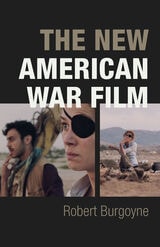
The New American War Film
Robert Burgoyne
University of Minnesota Press, 2023
A look at how post-9/11 cinema captures the new face of war in the twenty-first century
While the war film has carved out a prominent space within the history of cinema, the twenty-first century has seen a significant shift in the characteristics that define it. Serving as a roadmap to the genre’s contemporary modes of expression, The New American War Film explores how, in the wake of 9/11, both the nature of military conflict and the symbolic frameworks that surround it have been dramatically reshaped.
Featuring in-depth analyses of contemporary films like The Hurt Locker, Zero Dark Thirty, Eye in the Sky, American Sniper, and others, The New American War Film details the genre’s turn away from previously foundational themes of heroic sacrifice and national glory, instead emphasizing the procedural violence of advanced military technologies and the haptic damage inflicted on individual bodies. Unfolding amid an atmosphere of profound anxiety and disillusionment, the new American war film demonstrates a breakdown of the prevailing cultural narratives that had come to characterize conflict in the previous century.
With each chapter highlighting a different facet of war’s cinematic representation, The New American War Film charts society’s shifting attitudes toward violent conflict and what is broadly considered to be its acceptable repercussions. Drawing attention to changes in gender dynamics and the focus on war’s lasting psychological effects within these recent films, Robert Burgoyne analyzes how cinema both reflects and reveals the makeup of the national imaginary.
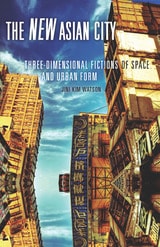
The New Asian City
Three-Dimensional Fictions of Space and Urban FormJini Kim Watson
University of Minnesota Press, 2011
Under Jini Kim Watson’s scrutiny, the Asian Tiger metropolises of Seoul, Taipei, and Singapore reveal a surprising residue of the colonial environment. Drawing on a wide array of literary, filmic, and political works, and juxtaposing close readings of the built environment, Watson demonstrates how processes of migration and construction in the hypergrowth urbanscapes of the Pacific Rim crystallize the psychic and political dramas of their colonized past and globalized present.
Examining how newly constructed spaces—including expressways, high-rises, factory zones, department stores, and government buildings—become figured within fictional and political texts uncovers how massive transformations of citizenries and cities were rationalized, perceived, and fictionalized. Watson shows how literature, film, and poetry have described and challenged contemporary Asian metropolises, especially around the formation of gendered and laboring subjects in these new spaces. She suggests that by embracing the postwar growth-at-any-cost imperative, they have buttressed the nationalist enterprise along neocolonial lines.
The New Asian City provides an innovative approach to how we might better understand the gleaming metropolises of the Pacific Rim. In doing so, it demonstrates how reading cultural production in conjunction with built environments can enrich our knowledge of the lived consequences of rapid economic and urban development.
The New Berlin
Memory, Politics, PlaceKaren E. Till
University of Minnesota Press, 2005
“The New Berlin is a notable contribution to human geography and to the interdisciplinary literature on social memory and place making. Till’s methods and scholarship have provided the conceptual groundwork for the exploration and development of place making, social memory, and spatial haunting through the particular practices and politics of the new Berlin. Her readable style is marked by a narrative economy in which every word and sentence serves the larger purposes of the book. I recommend this book to anyone—student, scholar, or practitioner—who is interested in the social dynamics of memory formation and place making.” —The Professional Geographer
“This book is a well-written ‘first-hand’ account, though it also thoroughly covers academic literature, contemporary news accounts, and archival records.” —German Studies Review
“Karen E. Till's The New Berlin describes the modern metropolis and the ghosts of the past that it has to deal with.” —German World
“Well illustrated and copiously footnoted, this is a cutting-edge study of the power of identity-construction/analysis. Highly recommended.” —CHOICE
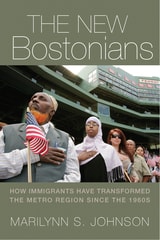
The New Bostonians
How Immigrants Have Transformed the Metro Area since the 1960sMarilynn S. Johnson
University of Massachusetts Press, 2015
How immigrants helped rebuild a city—and redefined what it means to be American
Among the most consequential pieces of Great Society legislation, the Immigration Act of 1965 opened the nation's doors to large-scale immigration from Africa, Asia, and Latin America. A half century later, the impact of the "new immigration" is evident in the transformation of the country's demographics, economy, politics, and culture, particularly in urban America.
In The New Bostonians, Marilynn S. Johnson examines the historical confluence of recent immigration and urban transformation in greater Boston, a region that underwent dramatic decline after World War II. Since the 1980s, the Boston area has experienced an astounding renaissance—a development, she argues, to which immigrants have contributed in numerous ways. From 1970 to 2010, the percentage of foreign-born residents of the city more than doubled, representing far more diversity than earlier waves of immigration. Like the older Irish, Italian, and other European immigrant groups whose labor once powered the region's industrial economy, these newer migrants have been crucial in re-building the population, labor force, and metropolitan landscape of the New Boston, although the fruits of the new prosperity have not been equally shared.

The New Buffalo
The Struggle for Aboriginal Post-Secondary Education in CanadaBlair Stonechild
University of Manitoba Press, 2006
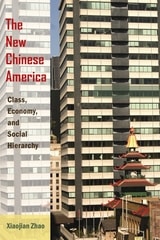
The New Chinese America
Class, Economy, and Social HierarchyZhao, Xiaojian
Rutgers University Press, 2010
In this detailed and comprehensive study of contemporary Chinese America, Xiaojian Zhao uses class analysis to illuminate the difficulties of everyday survival for poor and undocumented immigrants and analyzes the process through which social mobility occurs. Through ethnic ties, Chinese Americans have built an economy of their own in which entrepreneurs can maintain a competitive edge given their access to low-cost labor; workers who are shut out of the mainstream job market can find work and make a living; and consumers can enjoy high quality services at a great bargain. While the growth of the ethnic economy enhances ethnic bonds by increasing mutual dependencies among different groups of Chinese Americans, it also determines the limits of possibility for various individuals depending on their socioeconomic and immigration status.
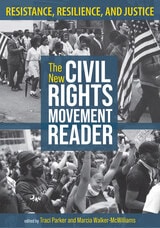
The New Civil Rights Movement Reader
Resistance, Resilience, and JusticeEdited by Traci Parker and Marcia Walker-McWilliams
University of Massachusetts Press, 2023
In the United States, the fight to secure full civil rights for African American people has endured for centuries. The movement has included many voices, among them, working people, charismatic activists, musicians and artists, the LGBTQIA community, veterans, suburbanites, and elected officials. Moving from the labor struggles of the 1930s to the sit-ins and boycotts of midcentury, and the Black Lives Matter protests of today, this expansive volume brings together first-person accounts, political documents and speeches, and historical photographs from each region of the country.
Designed for use in courses and engaging for general readers, this new compilation is the most diverse, most inclusive, and most comprehensive resource available for teaching and learning about the civil rights movement. With chronological and geographical depth, The New Civil Rights Movement Reader addresses a range of key topics, including youth activism, regional and local freedom struggles, voting rights, economic inequality, gender, sexuality, and culture, and the movement’s global reach.
The New Crusades, the New Holy Land
Conflict in the Southern Baptist Convention, 1969-1991David T. Morgan
University of Alabama Press, 1996
Examines the conflict between modern-day Southern Baptists and “liberal” Southern Baptists over control of the Southern Baptist Convention
David Morgan captures the essence of the conflict between some modern-day Southern Baptists, who saw themselves as crusaders for truth, as they sought to redeem a new holy land--the Southern Baptist Convention-- from the control of other Southern Baptists they viewed as "liberals." To the so-called liberals, the crusaders were "fundamentalists" on a mission, not to reclaim the SBC in the name of theological truth but to gain control and redirect its activities according to their narrow political, social, and theological perspectives. The New Crusades provides a comprehensive history of the conflict, taking the reader through the bitter and divisive struggles of the late 1980s, that culminated in the 1991 emergence of a moderate faction within the SBC. The fundamentalists had won.
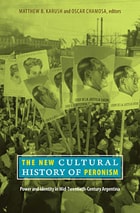
The New Cultural History of Peronism
Power and Identity in Mid-Twentieth-Century ArgentinaMatthew B. Karush and Oscar Chamosa, eds.
Duke University Press, 2010
Situating Peronism within the broad arc of twentieth-century Argentine cultural change, the contributors focus on the interplay of cultural traditions, official policies, commercial imperatives, and popular perceptions. They describe how the Perón regime’s rhetoric and representations helped to produce new ideas of national and collective identity. At the same time, they show how Argentines pursued their interests through their engagement with the Peronist project, and, in so doing, pushed the regime in new directions. While the volume’s emphasis is on the first Perón presidency, one contributor explores the origins of the regime and two others consider Peronism’s transformations in subsequent years. The essays address topics including mass culture and melodrama, folk music, pageants, social respectability, architecture, and the intense emotional investment inspired by Peronism. They examine the experiences of women, indigenous groups, middle-class anti-Peronists, internal migrants, academics, and workers. By illuminating the connections between the state and popular consciousness, The New Cultural History of Peronism exposes the contradictions and ambivalences that have characterized Argentine populism.
Contributors: Anahi Ballent, Oscar Chamosa, María Damilakou, Eduardo Elena, Matthew B. Karush, Diana Lenton, Mirta Zaida Lobato, Natalia Milanesio, Mariano Ben Plotkin, César Seveso, Lizel Tornay
The New Deal and the Triumph of Liberalism
Sidney M. Milkis
University of Massachusetts Press, 2002
For scholars who have studied it, as for many Americans who experienced it firsthand, Franklin Roosevelt's New Deal has long represented a turning point in the modern history of the United States. More than simply a bold program of political change, it marked a critical departure in the governing principles, institutional arrangements, and policies that shape American life.
In this collection of original essays, a distinguished group of political scientists and historians reevaluate the legacy of the New Deal, showing how Roosevelt and his allies forged an enduring public philosophy—modern liberalism—that redefined the relationship of government and governed. Adapting broad principles from the past to the unprecedented circumstances of a worldwide depression, the New Dealers shifted American politics away from its traditional emphasis on self-reliance, private property, and decentralized power. In its place they advocated a new “economic constitutional order”—in effect, a new social contract—in which the government guaranteed protection to individuals against the uncertainties of the marketplace.
Although the contributors differ in their assessment of the successes and failures of New Deal liberalism, all agree that its implications for American political life were profound and far-reaching—in the realm of foreign as well as domestic affairs, for the theory as well as the practice of government. Taken together, the essays offer a fresh look at the many ways the New Deal, in Harry Hopkins's phrase, “made America over.”
In addition to the editors, contributors are William E. Leuchtenburg, Marc Landy, Nelson Lichtenstein, Donald R. Brand, Jyette Klausen, Suzanne Mettler, Ronald Story, Seyom Brown, and Morton Keller.
The New Decentralists
The Back-to-the-Land Movement and the Politics of Localism in Appalachia, 1968-2000Jinny A Turman
West Virginia University Press, 2026
How some “back-to-the-landers” fled alienating urban, bureaucratic places for rural Appalachia in pursuit of self-reliance, liberation, and community, only to later find themselves vulnerable to a rising tide of national conservatism that minted new political elites on the state and local level at odds with their progressive social ideas and environmental values.
The New Eagles Encyclopedia
Ray Didinger
Temple University Press, 2014
Didinger presents a year-by-year history of the franchise from its inception in 1933 through the 2013 season. There are profiles of more than 100 players, past and present, as well as every head coach and owner along with dozens of new photographs and stats, stats, and more stats.
The New Eagles Encyclopedia includes:
* More player profiles including new entries on Nick Foles, LeSean McCoy and Michael Vick.
* The end of the Andy Reid era and the arrival of Chip Kelly.
* Expanded chapters on Eagles in the Hall of Fame and other milestone moments.
* Summaries of every post-season game.
* A new chapter on the Eagles-Cowboys rivalry.
An essential addition to every fan's bookshelf, The New Eagles Encyclopedia is the definitive information source on the Philadelphia Eagles.
This book is not sanctioned by the NFL or its teams.
The New England Fishing Economy
Jobs, Income, and KinshipPeter B. Doeringer
University of Massachusetts Press, 1987
The authors also present new data on the skills, job attachment, and economic options of workers in key New England ports, particularly Gloucester and New Bedford. The fishing industry is concentrated in economically fragile ports, and the authors show the importance of a strong fishing industry and a growth economy for easing adjustment problems. The study develops a set of innovative recommendations for fisheries management and addresses policies for promoting stabilization and growth in port economies.
The New Freedom and the Radicals
Woodrow Wilson, Progressive Views of Radicalism, and the Origins of Repressive ToleranceJacob Kramer
Temple University Press, 2017
In The New Freedom and the Radicals, Jacob Kramer deftly examines how progressivism emerged at a time of critical transformation in American life. Using original archival sources, Kramer presents a study of Wilsonian-era politics to convey an understanding of the progressives’ views on radical America.
The New Freedom and the Radicals shows how the reactions of progressives to radicals accelerated the pace of reform in the United States, but how the movement was at times predisposed to repressing the radical elements to its left. In addition, Kramer asks to what extent progressives were responding to and influenced by those who opposed the state, capitalism, and the class structure altogether, as well as how progressives’ views of them changed in relation to events.
The New Hegemony in Literary Studies
Contradictions in TheoryTony Hilfer
Northwestern University Press, 2003
The problem Hilfer identifies is one of logical consistency, but also of moral and psychological implications, and it can be found operating across the whole spectrum of literary Theory. It is, however, as this book makes blindingly clear, not immune from scrutiny. With quiet erudition and consistent incisiveness, Hilfer shows how the various methods, while ostensibly at odds, actually fit together, all sharing the same peculiar structure and logic, and all wearing an identical set of ideological blinders. He offers examples of theorists-and assumptions-hard at work on particular texts, and again and again (often letting these theorists refute themselves) pinpoints the blindspots that have become endemic in the practice of Theory.
Written with great care and a deep commitment to the value and integrity of literary criticism and theory, this tonic work stands as a corrective to the misuse of theory, and a bracing reminder of how a critical approach works when it is well and judiciously applied.
The New History in an Old Museum
Creating the Past at Colonial WilliamsburgRichard Handler and Eric Gable
Duke University Press, 1997
During much of its existence, the "living museum" at Williamsburg has been considered a patriotic shrine, celebrating the upscale lifestyles of Virginia’s colonial-era elite. But in recent decades a new generation of social historians has injected a more populist and critical slant to the site’s narrative of nationhood. For example, in interactions with museum visitors, employees now relate stories about the experiences of African Americans and women, stories that several years ago did not enter into descriptions of life in Colonial Williamsburg. Handler and Gable focus on the way this public history is managed, as historians and administrators define historiographical policy and middle-level managers train and direct front-line staff to deliver this "product" to the public. They explore how visitors consume or modify what they hear and see, and reveal how interpreters and craftspeople resist or acquiesce in being managed. By deploying the voices of these various actors in a richly textured narrative, The New History in an Old Museum highlights the elements of cultural consensus that emerge from this cacophony of conflict and negotiation.
The New Imperial Presidency
Renewing Presidential Power after WatergateAndrew Rudalevige
University of Michigan Press, 2006
"Well written and, while indispensable for college courses, should appeal beyond academic audiences to anyone interested in how well we govern ourselves. . . . I cannot help regarding it as a grand sequel for my own The Imperial Presidency."
---Arthur Schlesinger, Jr.
Has the imperial presidency returned? This question has been on the minds of many contemporary political observers, as recent American administrations have aimed to consolidate power.
In The New Imperial Presidency, Andrew Rudalevige suggests that the congressional framework meant to advise and constrain presidential conduct since Watergate has slowly eroded. Rudalevige describes the evolution of executive power in our separated system of governance. He discusses the abuse of power that prompted what he calls the "resurgence regime" against the imperial presidency and inquires as to how and why---over the three decades that followed Watergate---presidents have regained their standing.
Chief executives have always sought to interpret constitutional powers broadly. The ambitious president can choose from an array of strategies for pushing against congressional authority; finding scant resistance, he will attempt to expand executive control. Rudalevige's important and timely work reminds us that the freedoms secured by our system of checks and balances do not proceed automatically but depend on the exertions of public servants and the citizens they serve. His story confirms the importance of the "living Constitution," a tradition of historical experiences overlaying the text of the Constitution itself.
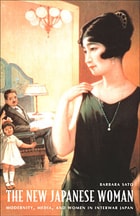
The New Japanese Woman
Modernity, Media, and Women in Interwar JapanBarbara Sato
Duke University Press, 2003
The New Japanese Woman is rich in descriptive detail and full of fascinating vignettes from Japan’s interwar media and consumer industries—department stores, film, radio, popular music and the publishing industry. Sato pays particular attention to the enormously influential role of the women’s magazines, which proliferated during this period. She describes the different kinds of magazines, their stories and readerships, and the new genres the emerged at the time, including confessional pieces, articles about family and popular trends, and advice columns. Examining reactions to the images of the modern girl, the housewife, and the professional woman, Sato shows that while these were not revolutionary figures, they caused anxiety among male intellectuals, government officials, and much of the public at large, and they contributed to the significant changes in gender relations in Japan following the Second World War.
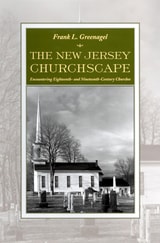
The New Jersey Churchscape
Encountering Eighteenth- and Nineteenth-Century ChurchesFrank L. Greenagel
Rutgers University Press, 2001
Although best known as the Garden State, New Jersey could also be called the Church State. The state boasts thousands of houses of worship, with more than one thousand still standing that were built in the eighteenth and nineteenth centuries. Frank L. Greenagel has photographed more than six hundred. He has selected two hundred of these historic landmarks for an examination of why they are sited where they are and why they look the way they do.
Greenagel has sought out and included images of not only mainstream Christian churches, but also Jewish synagogues as well as the places of worship of religious groups such as the Moravians, the Church of the Brethren, and the Seventh Day Baptists. The photographs are arranged chronologically within sections on three major early settlement regions of the state ¾ the Hudson River, the Delaware River, and the Raritan Valley. For each building, Greenagel details the date of construction, the cultural, historic, and religious influences that shaped it, the architectural details that distinguish it, and what purpose it currently serves.
The New Jersey State Constitution
A Reference GuideWilliams, Robert F
Rutgers University Press, 1997
The year 1997 marks the fiftieth anniversary of New Jerseys wellregarded state constitution. State constitutions, although the highest source of law within a state, are not well understood by citizens, government officials, historians, political scientists, lawyers, or even judges.
This book is the first single volume to combine a detailed review of New Jersey's constitutional history and analysis of each section of the current constitution. It is the standard work on New Jersey constitutional development and law. Divided into two parts, the book first covers the historical development of the constitutions of 1776, 1844, the Constitutional Commission of 1873, and the current constitution written in 1947. It then traces the origins and major judicial interpretations of each section of the present-day constitution. It concludes with an exhaustive bibliographical essay which organizes the most complete listing of primary and secondary sources to date.
The New Jewish Diaspora
Russian-Speaking Immigrants in the United States, Israel, and GermanyGitelman, Zvi
Rutgers University Press, 2016
The New Jewish Leaders
Reshaping the American Jewish LandscapeEdited by Jack Wertheimer
Brandeis University Press, 2011
The New Kingdom of Granada
The Making and Unmaking of Spain's Atlantic EmpireSantiago Muñoz-Arbeláez
Duke University Press, 2025
The New Left and Labor in 1960s
Peter B. Levy
University of Illinois Press, 1994
It is a powerful story: the relationship between the 1960s New Left and organized labor was summed up by hardhats confronting students and others over US involvement in Vietnam. But the real story goes beyond the "Love It or Leave It" signs and melees involving blue-collar types attacking protesters.
Peter B. Levy challenges these images by exploring the complex relationship between the two groups. Early in the 1960s, the New Left and labor had cooperated to fight for civil rights and anti-poverty programs. But diverging opinions on the Vietnam War created a schism that divided these one-time allies. Levy shows how the war, combined with the emergence of the black power movement and the blossoming of the counterculture, drove a permanent wedge between the two sides and produced the polarization that remains to this day.
The New Madrid Earthquakes, Revised Edition
James Lal Penick, Jr.
University of Missouri Press, 1981
Since its publication in a cloth edition in 1976, Penick’s book has met with enormous regional appeal as well as critical acclaim. For the new paper edition, the author has written a new introduction. New material in the final chapter reports on the scientific inquiries into the New Madrid quakes since 1976.
Critical comments on the cloth edition: “James Penick has put together a well-written account of the quakes and their effects upon people, animals, waterways, and land. Based on the scattered accounts of the times it offers a good insight into the reactions of persons suddenly confronted with the perils of the unknown. The vivid description of the devastation wrought upon the face of the land gives a picture of dramatic change brought about by the upheaval of natural forces. In short, reading Penick’s work one is readily caught up in the total violence of the event.”—American Historical Review
“Penick provides information relevant to present studies of earthquakes in this area.”—Earthquake Information Bulletin
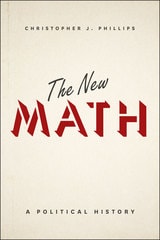
The New Math
A Political HistoryChristopher J. Phillips
University of Chicago Press, 2014
In this history, Christopher J. Phillips examines the rise and fall of the new math as a marker of the period’s political and social ferment. Neither the new math curriculum designers nor its diverse legions of supporters concentrated on whether the new math would improve students’ calculation ability. Rather, they felt the new math would train children to think in the right way, instilling in students a set of mental habits that might better prepare them to be citizens of modern society—a world of complex challenges, rapid technological change, and unforeseeable futures. While Phillips grounds his argument in shifting perceptions of intellectual discipline and the underlying nature of mathematical knowledge, he also touches on long-standing debates over the place and relevance of mathematics in liberal education. And in so doing, he explores the essence of what it means to be an intelligent American—by the numbers.