Results by title
18316 books match the query 'United states' and 3766 start with t
Transformations
Change Work across Writing Programs, Pedagogies, and PracticesHolly Hassel
Utah State University Press, 2021
The collection includes chapters from multiple award-winning writing programs, including the recipients of the Two-Year College Association’s Outstanding Programs in English Award and the Conference on College Composition and Communication’s Writing Program Certificate of Excellence. These authors offer perspectives that demonstrate the deep work of transformation in writing programs and practices writ large, confirm the ways in which writing programs are connected to and situated within larger institutional and disciplinary contexts, and outline successful methods for navigating these contexts in order to transform the work.
In using the prism of transformation as the organizing principle for the collection, Transformations offers a range of strategies for adapting writing programs so that they meet the needs of students and teachers in service of creating equitable, ethical literacy instruction in a range of postsecondary contexts.
Contributors: Leah Anderst, Cynthia Baer, Ruth Benander, Mwangi Alex Chege, Jaclyn Fiscus-Cannaday, Joanne Giordano, Rachel Hall Buck, Sarah Henderson Lee, Allison Hutchinson, Lynee Lewis Gaillet, Jennifer Maloy, Neil Meyer, Susan Miller-Cochran, Ruth Osorio, Lori Ostergaard, Shyam Pandey, Cassie Phillips, Brenda Refaei, Heather Robinson, Shelley Rodrigo, Julia Romberger, Tiffany Rousculp, Megan Schoen, Paulette Stevenson
Transforming Cities and Minds through the Scholarship of Engagement
Economy, Equity, and EnvironmentLorlene Hoyt
Vanderbilt University Press, 2013
Across the country from Camden to Oakland, the contributors engaged with community partners--hospitals, churches, community development corporations, community foundations, and other rooted institutions--to help restore old cities to life. Their collaborative thesis project engaged them with one another and university staff; it may offer a new paradigm for graduate education.
Transforming Citizenship
Democracy, Membership, and Belonging in Latino CommunitiesRaymond A. Rocco
Michigan State University Press, 2014
Transforming History
A Guide to Effective, Inclusive, and Evidence-Based TeachingMary Jo Festle
University of Wisconsin Press, 2020
Instructors will improve their own conceptual understandings of teaching and learning issues, as well as receive guidance on designing courses and implementing pedagogies consistent with what research tells us about how students learn. The book offers practical illustrations of assignments, goals, questions, grading rubrics, unit plans, and formats for peer observation that are adaptable for courses on any subject and of any size. Transforming History is a critical guide for higher and secondary education faculty—neophytes and longtime professionals alike—working to improve student learning.

Transforming Information Literacy Instruction Using Learner-Centered Teaching
Joan R. Kaplowitz
American Library Association, 2011

Transforming Libraries To Serve Graduate Students
Crystal Renfro
Assoc of College & Research Libraries, 2018
Transforming Preschool Storytime
A Modern Vision and a Year of ProgramsBetsy Diamant-Cohen
American Library Association, 2013
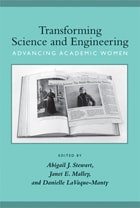
Transforming Science and Engineering
Advancing Academic WomenAbigail J. Stewart, Janet E. Malley, and Danielle LaVaque-Manty, Editors
University of Michigan Press, 2010
"If you have thrown up your hands in despair after trying to retain women science and engineering in the academy, read this book. It offers detailed descriptions of a wide array of tried-and-true programs that have been tested out by the NSF ADVANCE program."
---Joan C. Williams, 1066 Foundation Chair & Distinguished Professor of Law Director, Center for WorkLife Law University of California
"Solid and practical, this volume details the first years of NSF funded institutional change to remake gender dynamics inside U.S. science. What works? What doesn't? And why?"
---Londa Schiebinger, John L. Hinds Professor of History of Science and Barbara D. Finberg Director, Michelle R. Clayman Institute for Gender Research at Stanford University, and author of Has Feminism Changed Science?
"This book's time has come. Transforming Science and Engineering is important, and lots of people can learn from what has happened in the ADVANCE universities."
---Lotte Bailyn, Professor of Management, Behavioral and Policy Sciences Department, Sloan School of Management, MIT; author of Breaking the Mold: Redesigning Work for Productive and Satisfying Lives; and coauthor of Beyond Work-Family Balance: Advancing Gender Equity and Workplace Performance
"This collection profiles 16 NSF ADVANCE grant successes, sandwiched between an interview with Dr. Alice Hogan and Dr. Lee Harle's summary of cost-effective practices from ADVANCE programs, giving so many 'biggest bang for the buck' examples in so few pages that it will easily justify both the cost of the book and the reading time. These accounts do not continue the too-common vague referrals to 'unhealthy environment' or 'chilly climate,' but rather expound the situations before and after the interventions, something necessary in order to transplant the programs, or even to use the programs for idea generation. Transforming Science and Engineering is a model of excellence, and will be extremely useful for those women, men, faculty, or administrators wanting to help their universities move into the 21st century and attract to their campuses qualified women and men who want opportunities to attain their full potentials."
---Donna J. Nelson, Associate Professor of Chemistry, University of Oklahoma
In 2001, the National Science Foundation's ADVANCE Institutional Transformation program began awarding five-year grants to colleges and universities to address a common problem: how to improve the work environment for women faculty in science and engineering. Drawing on the expertise of scientists, engineers, social scientists, specialists in organizational behavior, and university administrators, this collection is the first to describe the variety of innovative efforts academic institutions around the country have undertaken.
Focusing on a wide range of topics, from how to foster women's academic success in small teaching institutions, to how to use interactive theater to promote faculty reflection about departmental culture, to how a particular department created and maintained a healthy climate for women's scientific success, the contributors discuss both the theoretical and empirical aspects of the initiatives, with emphasis on the practical issues involved in creating these approaches. The resulting evidence shows that these initiatives have the desired effects. The cases represented in this collection depict the many issues women faculty in science and engineering face, and the solutions that are presented can be widely accepted at academic institutions around the United States. The essays in Transforming Science and Engineering illustrate that creating work environments that sustain and advance women scientists and engineers benefits women, men, and underrepresented minorities.
Abigail J. Stewart is Sandra Schwartz Tangri Distinguished University Professor of Psychology and Women's Studies at the University of Michigan.
Janet E. Malley is a psychologist and Associate Director of the Institute for Research on Women and Gender at the University of Michigan.
Danielle LaVaque-Manty, former Research Associate at the Institute for Research on Women and Gender at the University of Michigan, teaches composition at U-M's Sweetland Writing Center.
Cover photo: Joanne Leonard

Transforming Tradition
Folk Music Revivals ExaminedEdited by Neil V. Rosenberg: Foreword by Alan Jabbour
University of Illinois Press, 1993
Transforming Tradition examines the phenomenon of the folk song revival, those vibrant meldings of popular and folk culture that captured public awareness in the 1950s and 1960s. We remember the folk revival as forums for performers like Joan Baez and the Kingston Trio, and as incubators for unlikely radio hits like "Tom Dooley" and "Blowin' in the Wind." But it also gave rise to a bustling and influential subculture of hootenanies, coffeehouses, and blues and bluegrass appreciation, sowing a legacy that remains a vital part of American culture.
Many of the contributors to this collection performed during the revival era. Today, their expertise in folklore, ethnomusicology, and cultural history allow them to blend insider knowledge and trained analysis to offer unique perspectives.
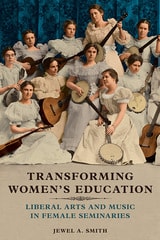
Transforming Women's Education
Liberal Arts and Music in Female SeminariesJewel A. Smith
University of Illinois Press, 2019
Transforming Young Adult Services
Anthony Bernier
American Library Association, 2013
Transforming Young Adult Services
Anthony Bernier
American Library Association, 2019
Foreword by John M. Budd; with contributions from Denise E. Agosto, Jeanie Austin, Michael Cart, Mary K. Chelton, Karen Coats, Kate McDowell, Cherie Givens, Mary Ann Harlan, Kafi D. Kumasi, Wendy Schaetzel Lesko, Mike Males, Paulette Rothbauer, Lucia Cedeira Serantes
How should LIS envision its young adult users? Now showcasing an even more rigorous debate about the theory and practice of YA librarianship than its first edition, this "provocative presentation of diverse viewpoints by leaders in the field" (Catholic Library World) has been updated and expanded to incorporate recent advances in critical youth studies. A comprehensive, evidence-based treatment that offers LIS instructors, students, and practitioners a valuable tool for aligning YA services to more fully reflect our diverse populations of young people, this collection delves deeply into such topics as
- the historical roots for current theories and practice;
- how intellectual freedom, storytelling, library collections, and other service topics can connect with the library's notion and vision of young adults;
- diverse YA identities, including critical race theory;
- competing perspectives on young adults’ rights in libraries;
- envisaging YA librarianship from a teen-centered perspective;
- youth identities and the school library; and
- moving beyond coaching to copilot with young adults.
Transforming the Academy
Faculty Perspectives on Diversity and PedagogyWillie-LeBreton, Sarah
Rutgers University Press, 2016

Transgender Nation
Gordene Olga MacKenzie
University of Wisconsin Press, 1994
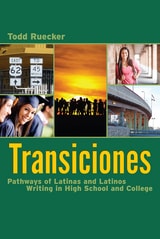
Transiciones
Pathways of Latinas and Latinos Writing in High School and CollegeTodd Ruecker
Utah State University Press, 2015
Transiciones is a thorough ethnography of seven Latino students in transition between high school and community college or university. Data gathered over two years of interviews with the students, their high school English teachers, and their writing teachers and administrators at postsecondary institutions reveal a rich picture of the conflicted experience of these students as they attempted to balance the demands of schooling with a variety of personal responsibilities.
Todd Ruecker explores the disconnect between students’ writing experiences in high school and higher education and examines the integral role that writing plays in college. Considering the almost universal requirement that students take a writing class in their critical first year of college, he contends that it is essential for composition researchers and teachers to gain a fuller understanding of the role they play in supporting and hindering Latina and Latino students’ transition to college.
Arguing for situating writing programs in larger discussions of high school/college alignment, student engagement, and retention, Transiciones raises the profile of what writing programs can do while calling composition teachers, administrators, and scholars to engage in more collaboration across the institution, across institutions, and across disciplines to make the transition from high school to college writing more successful for this important group of students.
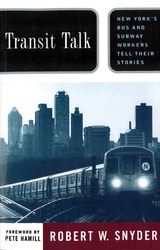
Transit Talk
New York's Bus and Subway Workers Tell Their StoriesRobert W. Snyder
Rutgers University Press, 1998
There are nearly 44,000 transit workers like those you will meet in Transit Talk , and every day they help five million of us travel to work, to school, to weddings, to funerals, to hospitals, to vacations. These workers labor daily on subway tracks inches from high-voltage powerlines, risking their lives for passengers they'U never know. The city can feel large and fragmented, but the transportation system and its workers create common threads in the lives of all New Yorkers, threads we take for granted.
Together, their stories create a human tableau of life and labor in the city within a city that is the MTA New York City Transit. Transit workers find satisfaction in fixing a damaged subway car, gain wisdom from mastering a dangerous workplace, nurse emotional wounds from tending to someone injured in an accident, battle frustration from difficulties with management, and express satisfaction when reflecting on a productive career. They tell of how years spent in the same shop create bonds between workers. They talk of the burden of laboring in a twenty-four-hour system with night shifts and weekend workdays that take them away from families. You'U hear painful tales of informing next-of-kin of a death on the tracks as well as joyous anecdotes of workers delivering a baby in a subway car.
Transition Scenarios
China and the United States in the Twenty-First CenturyDavid P. Rapkin and William R. Thompson
University of Chicago Press, 2013
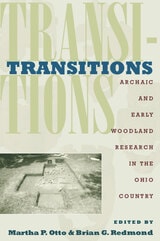
Transitions
Archaic and Early Woodland Research in the Ohio CountryMartha P. Otto
Ohio University Press, 2008
The late archaic and early woodland peoples lived in the Ohio region between 5,000 and 2,000 years ago. This was a time of transition, when hunters and gatherers began to grow native seed crops, establish more permanent settlements, and develop complex forms of ritual and ceremonialism, sometimes involving burial mound construction.
The focused archaeological studies described in Transitions: Archaic and Early Woodland Research in the Ohio Country shed light on this important episode in human cultural development. The authors describe important archaeological sites such as the rich Late Archaic settlements of southwestern Ohio and the early Adena Dominion Land Company enclosure in Franklin County. They present detailed accounts of Native American behavior, such as the use of smoking pipes by Adena societies and a reconstruction of mound use and ritual.
Transitions is the result of a comprehensive, long-term study focusing on particular areas of Ohio with the most up-to-date and detailed treatment of Ohio’s native cultures during this important time of change. This book will be of great value to students and other readers who wish to go beyond the general and often dated treatments of Ohio archaeology currently available.
Translating Modernism
Fitzgerald and HemingwayRonald Berman
University of Alabama Press, 2009
Translating the Ketubah
The Jewish Marriage Contract in America and EnglandBenjamin Steiner
University of Alabama Press, 2025
A groundbreaking exploration of the Jewish marriage contract and its evolution in English translation
Translating the Ketubah offers a fresh perspective on the ketubah, the Jewish marriage contract. Traditionally composed in Aramaic, ketubot have been examined in other books within the frameworks of Jewish law and Jewish art. Here, however, Benjamin Steiner shows how translations of the ketubah into English helped Jews adapt to changing social and economic circumstances across more than two centuries.
Steiner uses ketubot to trace the intricate relationship between religious law and secular law, the changing status of women within and outside Judaism, and the complex desire of Jews to be both authentically Jewish and fully acculturated. Steiner further shows how ketubah translation aided Jews to achieve different cultural goals. It has been used to uphold rabbinic law in communities where religious affiliation was voluntary to ensure women's economic security. It has also facilitated socialization with non-Jews and addressed perceived crises within the Jewish family.
Through a nuanced analysis of ketubah translations from England and various regions of the United States from the late eighteenth century to the present, Steiner offers a detailed look at how Jews have adapted ancient tradition to meet the challenges and opportunities of different historical contexts. His work sheds new light on the rich history of American and British Jewry.
Translating the Unspeakable
Poetry and the Innovative NecessityKathleen Fraser
University of Alabama Press, 1999
A prominent avant-garde poet charts both her personal artistic development and the difficulties faced by women writers pursuing innovative paths.
An accomplished and influential poet, Kathleen Fraser has been instrumental in drawing attention to other women poets working outside the mainstream. Translating the Unspeakable gathers eighteen of her essays written over nearly twenty years, combining autobiography and criticism to examine what it means for any artist to innovate instead of following an already traveled path.
In autobiographical passages Fraser tells how her generation was influenced by revolutions in art and philosophy during the early 1960s and how she spent years pursuing idiosyncratic means of rediscovering the poem's terms. By the 1970s her evolving poetics were challenged by questions of gender, until immersion in feminist/modernist scholarship led her to initiate greater dialogue among experimentalist poets.
Other essays examine modernist women writers, their contemporary successors, and the visual poetics they have practiced. By exploring the work of such poets as H. D., Mina Loy, Lorine Niedecker, and Barbara Guest, Fraser conveys their struggle to establish a presence within accepted poetic conventions and describes the role experimentation plays in helping women overcome self-imposed silence.
All of Fraser's writings explore how the search to find one's own way of speaking into a very private yet historic space—of translating the unspeakable—drives poetic experimentation for women and men alike. This provocative book provides a glimpse into the thought processes of
the poetic mind, enhancing our understanding of innovative writing.
Transmitting the Past
Historical and Cultural Perspectives on BroadcastingEdited by J. Emmett Winn and Susan L. Brinson
University of Alabama Press, 2005
Original essays exploring important developments in radio and television broadcasting
The essays included in this collection represent some of the best cultural and historical research on broadcasting in the U. S. today. Each one concentrates on a particular event in broadcast history—beginning with Marconi’s introduction of wireless technology in 1899.
Michael Brown examines newspaper reporting in America of Marconi's belief in Martians, stories that effectively rendered Marconi inconsequential to the further development of radio. The widespread installation of radios in automobiles in the 1950s, Matthew Killmeier argues, paralleled the development of television and ubiquitous middle-class suburbia in America. Heather Hundley analyzes depictions of male and female promiscuity as presented in the sitcom Cheers at a time concurrent with media coverage of the AIDS crisis. Fritz Messere examines the Federal Radio Act of 1927 and the clash of competing ideas about what role radio should play in American life. Chad Dell recounts the high-brow programming strategy NBC adopted in 1945 to distinguish itself from other networks. And George Plasketes studies the critical reactions to Cop Rock, an ill-fated combination of police drama and musical, as an example of society's resistance to genre-mixing or departures from formulaic programming.
The result is a collection that represents some of the most recent and innovative scholarship, cultural and historical, on the intersections of broadcasting and American cultural, political, and economic life.
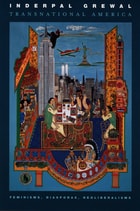
Transnational America
Feminisms, Diasporas, NeoliberalismsInderpal Grewal
Duke University Press, 2005
Grewal combines a postcolonial perspective with social and cultural theory to argue that contemporary notions of gender, race, class, and nationality are linked to earlier histories of colonization. Through an analysis of Mattel’s sales of Barbie dolls in India, she discusses the consumption of American products by middle-class Indian women newly empowered with financial means created by India’s market liberalization. Considering the fate of asylum-seekers, Grewal looks at how a global feminism in which female refugees are figured as human rights victims emerged from a distinctly Western perspective. She reveals in the work of three novelists who emigrated from India to the United States—Bharati Mukherjee, Chitra Banerjee Divakaruni, and Amitav Ghosh—a concept of Americanness linked to cosmopolitanism. In Transnational America Grewal makes a powerful, nuanced case that the United States must be understood—and studied—as a dynamic entity produced and transformed both within and far beyond its territorial boundaries.
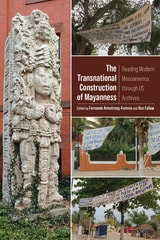
Transnational Construction of Mayanness
Reading Modern Mesoamerica through US ArchivesFernando Armstrong-Fumero
University Press of Colorado, 2023
Contributors tap documentary, ethnographic, and ethnoarchaeological sources from North America to expand established categories of fieldwork and archival research conducted within the national spaces of Mexico and Central America. A particularly rich and diverse set of case studies interrogate the historical processes that remove sources from their place of production in the “field” to the US, challenge the conventional wisdom regarding the geography of data sources that are available for research, and reveal a range of historical relationships that enabled US actors to shape the historical experience of Maya-speaking peoples.
The Transnational Construction of Mayanness offers rich insight into transnational relations and suggests new avenues of research that incorporate an expanded corpus of materials that embody the deep-seated relationship between Maya-speaking peoples and various gringo interlocutors. The work is an important bridge between Mayanist anthropology and historiography and broader literatures in American, Atlantic, and Indigenous studies.
Contributors: David Carey, M. Bianet Castellanos, Matilde Córdoba Azcárate, Lydia Crafts, John Gust, Julio Cesar Hoil Gutierréz, Jennifer Mathews, Matthew Watson
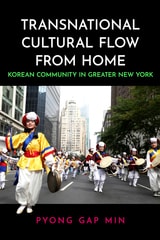
Transnational Cultural Flow from Home
Korean Community in Greater New YorkPyong Gap Min
Rutgers University Press, 2023
Transnational Cultural Flow from Home examines New York Korean immigrants’ collective efforts to preserve their cultural traditions and cultural practices and their efforts to transmit and promote them to New Yorkers by focusing on the Korean cultural elements such as language, foods, cultural festivals, and traditional and contemporary performing arts.
This publication was supported by the 2022 Korean Studies Grant Program of the Academy of Korean Studies (AKS-2022-P-009).
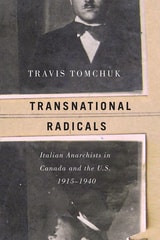
Transnational Radicals
Italian Anarchists in Canada and the U.S., 1915-1940Travis Tomchuk
University of Manitoba Press, 2015
Transnational Sport
Gender, Media, and Global KoreaRachael Miyung Joo
Duke University Press, 2012
Transnationalizing Viet Nam
Community, Culture, and Politics in the DiasporaKieu-Linh Caroline Valverde
Temple University Press, 2013
Vietnamese diasporic relations affect—and are directly affected by—events in Viet Nam. In Transnationalizing Viet Nam, Kieu-Linh Caroline Valverde explores these connections, providing a nuanced understanding of this globalized community. Valverde draws on 250 interviews and almost two decades of research to show the complex relationship between Vietnamese in the diaspora and those back at the homeland.
Arguing that Vietnamese immigrant lives are inherently transnational, she shows how their acts form virtual communities via the Internet, organize social movements, exchange music and create art, find political representation, and even dissent. Valverde also exposes how generational, gender, class, and political tensions threaten to divide the ethnic community.
Transnationalizing Viet Nam paints a vivid picture of the complex political and personal allegiances that exist within Vietnamese America and shape the relations between this heterogeneous community and its country of origin.
In the series Asian American History and Culture, edited by Sucheng Chan, David Palumbo-Liu, Michael Omi, K. Scott Wong, and Linda Trinh Võ
Transpacific Cartographies
Narrating the Contemporary Chinese Diaspora in the United StatesMelody Yunzi Li
Rutgers University Press, 2024
Transpacific Femininities
The Making of the Modern FilipinaDenise Cruz
Duke University Press, 2012
Through a careful study of multiple texts produced by Filipina and Filipino writers in the Philippines and the United States—including novels and short stories, newspaper and magazine articles, conduct manuals, and editorial cartoons—Cruz provides a new archive and fresh perspectives for understanding Philippine literature and culture. She demonstrates that the modern Filipina did not emerge as a simple byproduct of American and Spanish colonial regimes, but rather was the result of political, economic, and cultural interactions among the Philippines, Spain, the United States, and Japan. Cruz shows how the complex interplay of feminism, nationalism, empire, and modernity helped to shape, and were shaped by, conceptions of the transpacific Filipina.
Transplanting Care
Shifting Commitments in Health and Care in the United StatesHeinemann, Laura L.
Rutgers University Press, 2016

Transplanting the Great Society
Lyndon Johnson and Food for PeaceKristin L. Ahlberg
University of Missouri Press, 2008

Trapped in America's Safety Net
One Family's StruggleAndrea Louise Campbell
University of Chicago Press, 2014
As a social policy scholar, Campbell thought she knew a lot about means-tested assistance programs. What she quickly learned was that missing from most government manuals and scholarly analyses was an understanding of how these programs actually affect the lives of the people who depend on them. Using Marcella and Dave’s situation as a case in point, she reveals their many shortcomings in Trapped in America’s Safety Net. Because American safety net programs are designed for the poor, Marcella and Dave first had to spend down their assets and drop their income to near-poverty level before qualifying for help. What’s more, to remain eligible, they will have to stay under these strictures for the rest of their lives, meaning they are barred from doing many of the things middle-class families are encouraged to do: Save for retirement. Develop an emergency fund. Take advantage of tax-free college savings. And, while Marcella and Dave’s story is tragic, the financial precariousness they endured even before the accident is all too common in America, where the prevalence of low-income work and unequal access to education have generated vast—and growing—economic inequality. The implementation of Obamacare has cut the number of uninsured and underinsured and reduced some of the disparities in coverage, but it continues to leave too many people open to tremendous risk.
Behind the statistics and beyond the ideological battles are human beings whose lives are stunted by policies that purport to help them. In showing how and why this happens, Trapped in America’s Safety Net offers a way to change it.
Trapped in a Vice
The Consequences of Confinement for Young PeopleCox, Alexandra
Rutgers University Press, 2018
Trapped in a Vice explores the consequences of a juvenile justice system that is aimed at promoting change in the lives of young people, yet ultimately relies upon tools and strategies that enmesh them in a system that they struggle to move beyond. The system, rather than the crimes themselves, is the vice. Trapped in a Vice explores the lives of the young people and adults in the criminal justice system, revealing the ways that they struggle to manage the expectations of that system; these stories from the ground level of the justice system demonstrate the complex exchange of policy and practice.

Trappings
Stories of Women, Power, and ClothingLudwig, Tiffany
Rutgers University Press, 2007
What do you wear that makes you feel powerful? How about the woman next to you at the bank? In line with you at the store? Think about your mother. What would she put on to reveal her power source to the world? These are the questions that inspired Tiffany Ludwig and Renee Piechocki to embark on an interview journey across the United States. Over a period of six years, they talked with more than 500 women and girls, ages four through ninety-two, who ranged from office workers to drag-kings, stay-at-home moms to attorneys, fashion industry executives to elected officials, students to cowgirls.
It is these women’s sensitive, funny, and always revealing thoughts that are at the heart of Trappings—a book that although it begins with a question about clothing is not about fashion at all. Here, clothing is simply a vehicle to access a larger dialogue about a diverse range of issues women face related to power and identity, including what expectations and limitations are placed upon them by their affiliation with a specific gender, culture, race, class, or profession. A complex spectrum of responses include discussions about the importance of clothing’s comfort and practicality, how clothing can facilitate women’s movement through class and social strata, how sex is used strategically in business and social settings, and how clothing can be used to empower women by connecting them with cultural or personal history.
Complimented by 148 color and black-and-white photographs, the visual and written portraits in this book reveal much more than the contents of women’s closets. Through the intimate lens of clothing, Ludwig and Piechocki expose the very personal ways that power is sought, experienced, and projected by women.
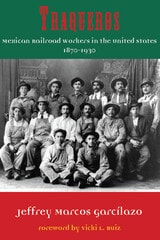
Traqueros
Mexican Railroad Workers in the United States, 1870-1930Jeffrey Marcos Garcilazo
University of North Texas Press, 2012

Trask
Don Berry
Oregon State University Press, 2004
Trask is at once a gripping tale of adventure and a portrayal of one man's return to the naked simplicity of life. Inspired by his belief in the transcendent power of nature, his fascination with Eastern philosophy, and the lives of historical men and women, Don Berry created a story that is strongly imagined and powerfully rendered-a landmark work. This new edition of Berry's celebrated first novel includes an introduction by Jeff Baker, book critic for The Oregonian.
Trauma Sponges
Dispatches from the Scarred Heart of Emergency ResponseJeremy Norton
University of Minnesota Press, 2027
Beyond an adrenaline ride or a chronicle of bravura heroics, this unflinching view of a Minneapolis firefighter reveals the significant toll of emergency response
In this remarkable memoir, Jeremy Norton marshals twenty-two years of professional experience to offer, with compassion and critique, an extraordinary portrayal of emergency responders. Trauma Sponges captures in arresting detail the personal and social toll the job exacts, as well as the unique perspective afforded by sustained direct encounters with the sick, the dying, and the dead.
From his first days as a rookie firefighter and emergency medical technician to his command of a company as a twenty-year veteran, Norton documents the life of an emergency responder in Minneapolis: the harrowing, heartbreaking calls, from helping the sick and hurt, to reassuring the scared and nervous, to attempting desperate measures and providing final words. In the midst of the uncertainty, fear, and loss caused by the Covid pandemic, Norton and his crew responded to the scene of George Floyd’s murder. The social unrest and racial injustice Norton had observed for years exploded on the streets of Minneapolis, and he and his fellow firefighters faced the fires, the injured, and the anguish in the days and months that followed.
Norton brings brutally honest insight and grave social conscience to his account, presenting a rare insider’s perspective on the insidious role of sexism and machismo in his profession, as well as an intimate observer’s view of individuals trapped in dire circumstances and a society ill equipped to confront trauma and death. His thought-provoking, behind-the-scenes depiction of the work of first response and last resort starkly reveals the realities of humanity at its finest and its worst.

Travel Wild Wisconsin
A Seasonal Guide to Wildlife Encounters in Natural PlacesCandice Gaukel Andrews
University of Wisconsin Press, 2013
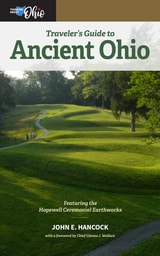
Traveler's Guide to Ancient Ohio
John E. Hancock
Ohio University Press, 2026
Featuring Hopewell Ceremonial Earthworks
Traveler’s Guide to Ancient Ohio is a compact, richly illustrated, and in-depth travel guide to the Indigenous earthwork wonders of southern Ohio—some of the most extraordinary ancient monuments in North America. Featuring the eight newly inscribed UNESCO World Heritage sites, this is the first publication to present these places from a traveler’s perspective, offering deeply informative site descriptions alongside curated routes to historical, scenic, and natural treasures across the region.
Southern Ohio’s landscape is layered with millennia of human history. At its heart are the monumental Adena and Hopewell earthworks—vast ceremonial constructions that reflect the ingenuity and spiritual life of ancient Indigenous cultures. This guide helps readers understand these sites as rewarding architectural experiences, enriched by archaeological, historical, and Indigenous knowledge gathered over three decades of collaborative work.
Organized into eight scenic driving routes—including the World Heritage Route and seven tributary paths—the book connects earthworks with nearby historic towns, nature preserves, waterways, and cultural landmarks. Each route emphasizes two-lane roads and includes road-tested site addresses, with links to local tourism resources for updated travel information.
Introductory sections provide essential context on regional geography, Indigenous cultures, archaeological terminology, and travel logistics. The guide’s focus on on-site appreciation is rare among existing resources, making it invaluable for both pre-visit planning and on-the-ground exploration.
Detailed route and trail descriptions are coordinated with all-new maps, plans, and photographs. The book links to multimedia assets, including animated flyovers that help visualize the earthworks and interview excerpts that deepen interpretive storytelling through Indigenous and interdisciplinary voices.
For first-time visitors and seasoned explorers, Traveler’s Guide to Ancient Ohio offers a fresh, immersive way to experience the region’s ancient wonders and the landscapes that continue to tell their story.
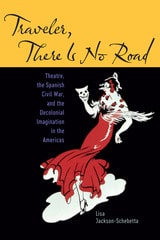
Traveler, There Is No Road
Theatre, the Spanish Civil War, and the Decolonial Imagination in the AmericasLisa Jackson-Schebetta
University of Iowa Press, 2017
This book offers a unique perspective on 1930s theatre and performance, encompassing the theatrical work of the Cuban, Puerto Rican, and Spanish diasporas in the United States, as well as the better-known Anglophone communities. Jackson-Schebetta situates well-known figures, such as Langston Hughes and Clifford Odets, alongside lesser-known ones, such as Erasmo Vando, Franca de Armiño, and Manuel Aparicio. The milicianas, female soldiers of the Spanish Republic, stride on stage alongside the male fighters of the Lincoln Brigade. They and many others used the multiple visions of Spain forged during the civil war to foment decolonial practices across the pasts, presents, and futures of the Americas. Traveler conclusively demonstrates that theatre and performance scholars must position US performances within the Americas writ broadly, and in doing so they must recognize the centrality of the hemisphere’s longest-lived colonial power, Spain.
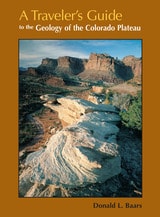
Travelers Guide
To The Geology Of Colorado PlateauDonald L Baars
University of Utah Press, 2002
Driving across I-70 in southern Utah one can’t help but wonder about the magnificent upturned rocks of the San Rafael Reef. With A Travelers Guide to the Geology of the Colorado Plateau in hand, you’ll soon discover that you were driving through Page and Navajo Sandstone formations, sharply folded into a monocline along one of the "Basin and Range" fault lines. Nearing Flagstaff, Arizona, on Highway 89, you will learn that Mt. Humphry of the San Francisco Peaks, a Navajo Sacred Mountain, was once an active volcano. Keep reading and you’ll find many things worth a slight detour.
A Traveler's Guide to the Geology of the Colorado Plateau will enrich and enliven all of your trips through the varied landscapes of the Colorado Plateau as you learn about the geological forces that have shaped its natural features. The mile-by-mile road logs will take you from Vernal, Utah, in the north to the southernmost reaches of the Plateau in Sedona, Arizona; from the red rocks of Cedar Breaks National Monument near Cedar City, Utah, to the edges of the soaring peaks of the San Juan Mountains near Durango, Colorado. The most comprehensive geological guide to the Colorado Plateau
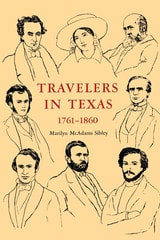
Travelers In Texas, 1761-1860
By Marilyn McAdams Sibley
University of Texas Press, 1967
History passed in review along the highways of Texas in the century 1761–1860. This was the century of exploration and settlement for the big new land, and many thousands of people traveled its trails: traders, revolutionaries, missionaries, warriors, government agents, adventurers, refugees, gold seekers, prospective settlers, land speculators, army wives, and filibusters. Their reasons for coming were many and varied, and the travelers viewed the land and its people with a wide variety of reactions. Political and industrial revolution, famine, and depression drove settlers from many of the countries of Europe and many of the states of the United States. Some were displeased with what they found in Texas, but for many it was a haven, a land of renewed hope. So large was the migration of people to Texas that the land that was virtually unoccupied in 1761 numbered its population at 600,000 a century later.
Several hundred of these travelers left published accounts of their impressions and adventures. Collectively the accounts tell a panoramic story of the land as its boundaries were drawn and its institutions formed. Spain gave way to Mexico, Mexico to the Republic of Texas, the Republic to statehood in the United States, and statehood in the Union was giving way to statehood in the Confederate states by 1860. The travelers’ accounts reflect these changes; but, more important, they tell the story of the receding frontier.
In Travelers in Texas, 1761–1860, the author examines the Texas seen by the traveler-writer. Opening with a chapter about travel conditions in general (roads or trails, accommodations, food), she also presents at some length the travelers’ impressions of the country and its people. She then proceeds to examine particular aspects of Texas life: the Indians, slavery, immigration, law enforcement, and the individualistic character of the people, all as seen through the eyes of the travelers. The discussion concludes with a “Critical Essay on Sources,” containing bibliographic discussions of over two hundred of the more important travel accounts.
Traveling Economies
American Women's Travel WritingJennifer Bernhardt Steadman
The Ohio State University Press, 2007
Traveling Heavy
A Memoir in between JourneysRuth Behar
Duke University Press, 2013
Behar calls herself an anthropologist who specializes in homesickness. Repeatedly returning to her homeland of Cuba, unwilling to utter her last goodbye, she is obsessed by the question of why we leave home to find home. For those of us who travel heavy with our own baggage, Behar is an indispensable guide, full of grace and hope, in the perpetual search for connection that defines our humanity.
Traveling Home
Sacred Harp Singing and American PluralismKiri Miller
University of Illinois Press, 2010
Traveling Through Time
A Guide to Michigan's Historical MarkersLaura Rose Ashlee, Editor
University of Michigan Press, 2005
Since 1955 the state of Michigan has erected historical markers throughout the state. In this revised edition of Traveling Through Time, Laura Rose Ashlee collects the histories that appear on these markers together into one handy guidebook---a great desk reference for researchers and armchair historians alike.
Some of the book's special features include:
o Location and full text of each marker
o Arranged alphabetically within county chapters
o More than 85 historic and color photographs
o Special section on Michigan historical markers placed outside Michigan
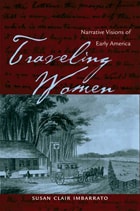
Traveling Women
Narrative Visions of Early AmericaSusan Clair Imbarrato
Ohio University Press, 2006
Susan Clair Imbarrato closely examines women’s accounts of their journeys from 1700 to 1830, including Sarah Kemble Knight’s well-known journal of her trip from Boston to New York in 1704 and many lesser-known accounts, such as Sarah Beavis’s 1779 journal of her travel to Ohio via Kentucky and Susan Edwards Johnson’s account or her 1801–2 journey from Connecticut to North Carolina.
In the women’s keen observations and entertaining wit, readers will find bravado mixed with hesitation, as women set forth on business, to relocate, and for pleasure. These travelers wrote compellingly of crossing rivers and mountains, facing hunger, encountering native Americans, sleeping in taverns, and confronting slavery, expressing themselves in voices that differed in sensibility from male explorers and travelers.
These accounts, as Imbarrato shows, challenge assumptions that such travel was predominately a male enterprise. In addition, Traveling Women provides a more balanced portrait of westward settlement by affirming women’s importance in the settling of early America.
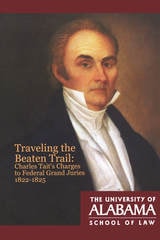
Traveling the Beaten Trail
Charles Tait's Charges to Federal Grand Juries, 1822–1825Paul M. Pruitt Jr., David I. Durham, and Sally E. Hadden
University of Alabama Press, 2013
About Occasional Publications of the Bounds Law Library
This collection offers a series of edited documents that contribute to an understanding of the development of legal history, culture, or doctrine. Series editors Paul M. Pruitt Jr. and David I. Durham have selected a variety of materials—a lecture, diaries, letters, speeches, a ledger, commonplace books, a code of ethics, court reports—to illustrate unique examples of legal life and thought.
Traveling the High Way Home
Ralph Stanley and the World of Traditional Bluegrass MusicJohn Wright
University of Illinois Press, 1993
John Wright's collection of interviews and stories about Ralph Stanley puts readers around a campfire at a bluegrass festival while old-timers weave yarns far into the night. Told by those who create, produce, stage, love, and virtually live for old-time mountain music, these tales come from the longtime coworkers, sidemen, promoters, friends, and others in the orbit of the music legend. The storytellers include a scholar who knew Stanley from the early days, the housewife who ran the Stanley Brothers Fan Club, and a souvenir seller for whom the discovery of Stanley's music was almost a religious experience.
Wright also uses these invaluable oral histories as a foundation to describe and evaluate Stanley's long career with the Clinch Mountain Boys and the development of his music after the death of his brother Carter. An appendix covers Ralph's prolific recording activity through the mid-1990s, including a breathtaking forty-five albums compromising more than 550 songs and tunes.