Results by title
2646 books match the query 'History & Criticism' and 549 start with t
The Sonic Episteme
Acoustic Resonance, Neoliberalism, and BiopoliticsRobin James
Duke University Press, 2019
The Sopranos
Dana Polan
Duke University Press, 2009
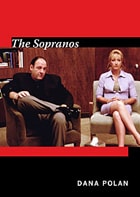
A show about corrupt figures who parasitically try to squeeze illicit profit from the system, The Sopranos itself seems a target of attempts to glom on to its fame as a successful TV series: attempts by media executives, marketers, critics and writers, and even presidential candidates. “Everyone wants a piece of Sopranos action,” says Polan, and he traces the marketing of the series across both official and unauthorized media platforms, including cookbooks, games, DVDs, and the kitschy Sopranos bus tour. Critiquing previous books on The Sopranos, Polan suggests that in their quest to find deep meaning, many of the authors missed the show’s ironic and comedic side.
The Sordid Image
The Naturalist Cinema of Arturo Ripstein and Paz Alicia GarciadiegoAgustín Zarzosa
Northwestern University Press, 2026
Drawing on the cinematic oeuvre of Ripstein and Garciadiego to reconceptualize the idea of the sordid
The sordid is not an ideology, an affect, or even a form of taste or sensibility. It is, Agustín Zarzosa argues, an image and an evocation of the process of degradation. The Sordid Image: The Naturalist Cinema of Arturo Ripstein and Paz Alicia Garciadiego offers the first sustained study of this pivotal filmmaker-screenwriter pair, drawing on their multidecade collaborations to reframe an enduring problem of film theory: how to represent marginalized people.
Together, Ripstein and Garciadiego have constructed a recognizable cinematic world filled with social outcasts, characterized by self-degradation and unreason, and set within squalid environments. Inscribing the Ripsteinian universe within the literary and cinematic traditions of naturalism, this book theorizes the notion of the sordid to examine the partners’ unique and epoch-defining films. We can, Zarzosa contends, understand the sordid as a cinematic image, with its specific components and pleasures, recasting questions of authorship, mise-en-scène, spectatorship, genre, and language.
The Sound of Things to Come
An Audible History of the Science Fiction FilmTrace Reddell
University of Minnesota Press, 2018
A groundbreaking approach to sound in sci-fi films offers new ways of construing both sonic innovation and science fiction cinema
Including original readings of classics like The Day the Earth Stood Still, 2001: A Space Odyssey, Star Wars, and Blade Runner, The Sound of Things to Come delivers a comprehensive history of sound in science fiction cinema. Approaching movies as sound objects that combine cinematic apparatus and consciousness, Trace Reddell presents a new theory of sonic innovation in the science fiction film.
Reddell assembles a staggering array of movies from sixty years of film history—including classics, blockbusters, B-movies, and documentaries from the United States, Britain, France, Germany, Japan, and the Soviet Union—all in service to his powerful conception of sound making as a speculative activity in its own right. Reddell recasts debates about noise and music, while arguing that sound in the science fiction film provides a medium for alien, unknown, and posthuman sound objects that transform what and how we hear.
Avoiding genre criticism’s tendency to obsess over utopias, The Sound of Things to Come draws on film theory, sound studies, and philosophies of technology to advance conversations about the avant-garde, while also opening up opportunities to examine cinematic sounds beyond the screen.
The Sound of Thinking
A Listener's Companion to Conceptual MusicCraig Dworkin
University of Chicago Press, 2026
An artist draws two octaves of pitches randomly from a hat, just enough to set each syllable of the dictionary definition of imprimer (to score, to print). Trawling the internet for cute videos of cats “playing” piano, an artist splices together a complete, note-perfect performance of Arnold Schoenberg’s Opus 11. Half a century after the release of Miles Davis’s album Kind of Blue, a jazz quintet spends months of focused practice to reproduce the original exactly. These performances share a common denominator: absolute fidelity to the outcome of a system. From Marcel Duchamp to Yoko Ono, Steve Reich to Sun Ra, The Sound of Thinking brings together a diverse array of musical or sonic works that are algorithmic, automatic, permutational, procedural, or otherwise structured in contrast to the creative expressivity typically associated with artistic production.
In twenty-six short essays, each keyed to a term that begins with a different letter of the alphabet, Dworkin discusses work composed or performed according to a predetermined rule, transforming artistic creation into a system running its course. The pieces detailed here, drawn from more than a century of musical experimentation, offer a fresh perspective on the history of innovative music by decoupling music from expression and by shunting creativity from the level of organizing sounds to the level of devising a system that can do the organizing. Not only does this book spotlight the critical role of music in twentieth-century conceptual art, but it also identifies previously overlooked links among diverse artists and movements.

The Spectacle of Democracy
Spanish Television, Nationalism, and Political TransitionRichard Maxwell
University of Minnesota Press, 1994
The Spectacle of Democracy was first published in 1994. Minnesota Archive Editions uses digital technology to make long-unavailable books once again accessible, and are published unaltered from the original University of Minnesota Press editions.
In this age of increased global communication the media seem like juggernauts paving the way from dictatorship to democracy. Richard Maxwell's study of television in Spain overturns this myth of technological power. He shows us how transitions themselves have a profound impact on the media, as controllers of national television clash with commercial media promoters and with regionalists who want television to extend their nationalist politics and collective identity.
Maxwell's sophisticated analysis of the many variables shaping communication policy within the nation-state draws on a decade of research into Spanish culture, mass media, and political economy. Although focused on Spain, his work provides general insight into the nature of communication policy debates in today's globalized economy. A study of the transformation of television in Spain following the end of Franco's dictatorship, Maxwell's book examines the politics of the privatization of television, the rise of regional television, and the transnational realignment of national media space.Richard Maxwell is assistant professor in the department of radio, television, and film in the School of Speech at Northwestern University.
The Spheres of Music
A Gathering of EssaysLeonard B. Meyer
University of Chicago Press, 2000
With the same sensitive insight and searching intelligence he has exhibited throughout his career, Meyer transcends the boundaries that so often separate fields of inquiry. The Spheres of Music joins music theory to history, history to culture, culture to aesthetics, aesthetics to psychology, and psychology back to theory. In so doing, the book highlights the complex interrelationships at the heart of the creation, comprehension, and history of music. Diverse and adventurous, The Spheres of Music presents an intriguing and impressive collection of Meyer's work.
"Ever since the publication of his Emotion and Meaning in Music . . . I have considered Leonard B. Meyer one of the keenest thinkers about music among us."—Winthrop Sargeant, The New Yorker
The Spike Lee Reader
Paula Massood
Temple University Press, 2007
Gathered in this anthology are critical writings on Spike Lee's films by leading scholars in the fields of cinema studies and African American studies. In sixteen new and reprinted essays, the contributors to The Spike Lee Reader consider the nexus of race, gender, and sexuality in Lee's work, and in so doing encourage readers to further explore the cultural, social, and political implications of Lee's films as well as his entire body of work.
Contributors include: Christine Acham, Toni Cade Bambara, Mark D. Cunningham, Anna Everett, Daniel Flory, Krin Gabbard, David A. Gerstner, Ed Guerrero, Keith M. Harris, bell hooks, Wahneema Lubiano, James C. McKelly, Tavia Nyong'o, Beretta E. Smith-Shomade, Michele Wallace, S. Craig Watkins, and the editor.
The Spirit of This Place
How Music Illuminates the Human SpiritPatrick Summers
University of Chicago Press, 2018
In this soul-searching collection of vignettes, Patrick Summers gives us an adamant, impassioned affirmative. Art, he argues, nurtures freedom of thought, and is more necessary now than ever before.
As artistic director of the Houston Grand Opera, Summers is well positioned to take stock of the limitations of the professional arts world—a world where the conversation revolves almost entirely around financial questions and whose reputation tends toward elitism—and to remind us of art’s fundamental relationship to joy and meaning. Offering a vehement defense of long-form arts in a world with a short attention span, Summers argues that art is spiritual, and that music in particular has the ability to ask spiritual questions, to inspire cathartic pathos, and to express spiritual truths. Summers guides us through his personal encounters with art and music in disparate places, from Houston’s Rothko Chapel to a music classroom in rural China, and reflects on musical works he has conducted all over the world. Assessing the growing canon of new operas performed in American opera houses today, he calls for musical artists to be innovative and brave as opera continues to reinvent itself.
This book is a moving credo elucidating Summers’s belief that the arts, especially music, help us to understand our own humanity as intellectual, aesthetic, and ultimately spiritual.
The Stars
Edgar Morin
University of Minnesota Press, 2005
The Stranger from Omaha
Travel Narratives in the Cinema of Alexander PayneJason Sperb
University of Texas Press, 2025
The first in-depth analysis of the films of Alexander Payne through the lenses of authorship, tourism, and leisure.
With the films Election, About Schmidt, Sideways, Nebraska, and The Holdovers, Alexander Payne has carved out an unusual role in American cinema as a bankable auteur. There is something about Payne’s neurotics and searchers, his working stiffs and disillusioned idealists—something funny, moving, and filled with insight.
Jason Sperb dissects Payne’s oeuvre, focusing on the director’s penchant for travel narratives. Payne’s films usually center on male protagonists discontent with the emotional and material realities of the day-to-day and seeking satisfaction in some literal or metaphorical elsewhere. But their attempts to escape wind up perpetuating, rather than alleviating, the imbalance between labor and leisure that structures modern life. In this sense, Sperb argues, Payne’s characters are akin to tourists, searching for fleeting glimpses of the fulfillment they dream about. Examining themes of masculinity, nostalgia, whiteness, and class, The Stranger from Omaha is the first auteur study devoted to Payne’s delicately balanced cinematic world. An outsider even in his own heartland, Payne proves to be an artist working at a clarifying remove—a witness to the American condition, observing from just enough distance.
The String Quartets of Beethoven
Edited by William Kinderman
University of Illinois Press, 2020
The Study of Ethnomusicology
Thirty-Three DiscussionsBruno Nettl
University of Illinois Press, 2015
A classroom perennial and a must-have for any scholar's bookshelf, the third edition of The Study of Ethnomusicology introduces Nettl's thought to a new generation.
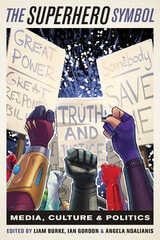
The Superhero Symbol
Media, Culture, and PoliticsLiam Burke
Rutgers University Press, 2020
It is hard to imagine a time when superheroes have been more pervasive in our culture. Today, superheroes are intellectual property jealously guarded by media conglomerates, icons co-opted by grassroots groups as a four-color rebuttal to social inequities, masks people wear to more confidently walk convention floors and city streets, and bulletproof banners that embody regional and national identities. From activism to cosplay, this collection unmasks the symbolic function of superheroes.
Bringing together superhero scholars from a range of disciplines, alongside key industry figures such as Harley Quinn co-creator Paul Dini, The Superhero Symbol provides fresh perspectives on how characters like Captain America, Iron Man, and Wonder Woman have engaged with media, culture, and politics, to become the “everlasting” symbols to which a young Bruce Wayne once aspired.
The Switch
An Off and On History of Digital HumansJason Puskar
University of Minnesota Press, 2024
From the telegraph to the touchscreen, how the development of binary switching transformed everyday life and changed the shape of human agency
The Switch traces the sudden rise of a technology that has transformed everyday life for billions of people: the binary switch. By chronicling the rapid growth of binary switching since the mid-nineteenth century, Jason Puskar contends that there is no human activity as common today as pushing a button or flipping a switch—the deceptively simple act of turning something on or off. More than a technical history, The Switch offers a cultural and political analysis of how reducing so much human action to binary alternatives has profoundly reshaped modern society.
Analyzing this history, Puskar charts the rapid shift from analog to digital across a range of devices—keyboards, cameras, guns, light switches, computers, game controls, even the “nuclear button”—to understand how nineteenth-century techniques continue to influence today’s pervasive digital technologies. In contexts that include musical performance, finger counting, machine writing, voting methods, and immersive play, Puskar shows how the switch to switching led to radically new forms of action and thought.
The innovative analysis in The Switch makes clear that binary inputs have altered human agency by making choice instantaneous, effort minimal, and effects more far-reaching than ever. In the process, it concludes, switching also fosters forms of individualism that, though empowering for many, also preserve a legacy of inequality and even domination.
The Symphony Concert in Nazi Germany
Neil Gregor
University of Chicago Press, 2025
In the years after the Nazis came to power in January 1933 and throughout the Second World War, all aspects of life in Germany changed. Despite the social and political upheaval, gentile citizens continued to attend concerts. In this book, historian Neil Gregor surveys how the classical concert scene was impacted in Nazi Germany. Taking the perspective of the audience, rather than institutions or performers, Gregor delves into the cultural lives of ordinary Germans under conditions of dictatorship. Did the ways in which Germans heard music in the period change? Did a Nazi way of listening emerge?
For audiences, Gregor shows, changes to the concert experience were small and often took place around the edges. This, combined with the preserved idea of the concert hall as a space of imagined civility and cultivation, led many concertgoers and music lovers to claim after the war that their field and their practice had been innocent—a place to retreat from the vicious violence and racism of the Nazi regime. Drawing on untapped archival sources, The Symphony Concert in Nazi Germany reveals that the true history was one of disruption but also of near seamless adaptation. Through countless small acts, the symphony concert was reframed within the languages of strident nationalism, racism, and militarism to ensure its place inside the cultural cosmos of National Socialist Germany.
The Synchronized Society
Time and Control From Broadcasting to the InternetRandall Patnode
Rutgers University Press, 2023
The Synchronized Society traces the history of the synchronous broadcast experience of the twentieth century and the transition to the asynchronous media that dominate today. Broadcasting grew out of the latent desire by nineteenth-century industrialists, political thinkers, and social reformers to tame an unruly society by controlling how people used their time. The idea manifested itself in the form of the broadcast schedule, a managed flow of information and entertainment that required audiences to be in a particular place – usually the home – at a particular time and helped to create “water cooler” moments, as audiences reflected on their shared media texts. Audiences began disconnecting from the broadcast schedule at the end of the twentieth century, but promoters of social media and television services still kept audiences under control, replacing the schedule with surveillance of media use. Author Randall Patnode offers compelling new insights into the intermingled roles of broadcasting and industrial/post-industrial work and how Americans spend their time.
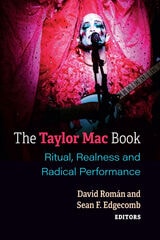
The Taylor Mac Book
Ritual, Realness and Radical PerformanceDavid Román and Sean F. Edgecomb, Editors
University of Michigan Press, 2023
Featuring essays, interviews, and commentaries by noted critics and artists, the volume examines the vastness of Mac’s theatrical imagination, the singularity of their voice, the inclusiveness of their cultural insights and critiques, and the creativity they display through stylistic and formal qualities and the unorthodoxies of their personal and professional trajectories. Contributors consider the range of Mac’s career as a playwright, performer, actor, and singer, expanding and enriching the conversation on this much-celebrated and deeply resonant body of work.
The Technical Delusion
Electronics, Power, InsanityJeffrey Sconce
Duke University Press, 2019
The Television Code
Regulating the Screen to Safeguard the IndustryBy Deborah L. Jaramillo
University of Texas Press, 2018
The broadcasting industry’s trade association, the National Association of Broadcasters (NAB), sought to sanitize television content via its self-regulatory document, the Television Code. The Code covered everything from the stories, images, and sounds of TV programs (no profanity, illicit sex and drinking, negative portrayals of family life and law enforcement officials, or irreverence for God and religion) to the allowable number of commercial minutes per hour of programming. It mandated that broadcasters make time for religious programming and discouraged them from charging for it. And it called for tasteful and accurate coverage of news, public events, and controversial issues.
Using archival documents from the Federal Communications Commission, NBC, the NAB, and a television reformer, Senator William Benton, this book explores the run-up to the adoption of the 1952 Television Code from the perspectives of the government, TV viewers, local broadcasters, national networks, and the industry’s trade association. Deborah L. Jaramillo analyzes the competing motives and agendas of each of these groups as she builds a convincing case that the NAB actually developed the Television Code to protect commercial television from reformers who wanted more educational programming, as well as from advocates of subscription television, an alternative distribution model to the commercial system. By agreeing to self-censor content that viewers, local stations, and politicians found objectionable, Jaramillo concludes, the NAB helped to ensure that commercial broadcast television would remain the dominant model for decades to come.
The Texas Chain Saw Massacre
By Dan Hassler-Forest
Lever Press, 2027
The infamous low-budget horror film The Texas Chain Saw Massacre (1974) profoundly reshaped our understanding of the horror genre. Its influence looms large over the genre as the direct progenitor of the slasher and the enduring fascination for exploitation cinema as an allegory for brutal class warfare in a post-industrial society. By looking closely at the filmmakers’ individual choices in framing, editing, scoring, staging, lighting, and performance, Dan Hassler-Forest gives readers a fresh perspective on the familiar tropes of the Final Girl, Leatherface as prototype for countless psycho killers and the masterpiece that brought splatter cinema into the mainstream.
Volumes in the film|minutes series cut up films into segments of exactly one minute and transform each minute into an innovative tool for thinking with the film. Each volume works rigorously with the concept of “the minute” as a non-cinematic scale/quantity, a means to zoom in on (dis)orderly fragments that do not necessarily respect the confinements of cinematic form or meaning. As a critical practice, the focus on minutes causes disruptions and displacement that create novel connections and perspectives, and uncovers hidden traces, making it possible to watch each film anew.
The The Theoretical-Practical Elements of Music, Parts III and IV
Francesco Galeazzi Translated with an Introductin and Commentary by Deborah Burton and Gregory W. Harwood
University of Illinois Press, 2012
This volume offers an unprecedented English translation of the second volume of Elementi teorico-practici di musica, with annotations and commentary. The translation is introduced with a study of Galeazzi's life and milieu, the genesis and sources for the Elementi, and its reception through the present day.
The Theater Is in the Street
Politics and Public Performance in 1960s AmericaBradford D. Martin
University of Massachusetts Press, 2004
During the 1960s, the SNCC Freedom Singers, The Living Theatre, the Diggers, the Art Workers Coalition, and the Guerrilla Art Action Group fused art and politics by staging unexpected and uninvited performances in public spaces. Through their activism and the response it provoked, art, theater, and politics began to converge and assume a new visibility in everyday life. While their specific political visions varied, these groups shared the impulse to stage performances and actions publicly—"in the streets"—eschewing museums, theaters, and other conventional halls of culture. Bradford D. Martin offers detailed portraits of each of these groups and examines why they embraced public performance as a vehicle to express and advance their politics.
At a time when the New Left and the counterculture were on the rise, these artists reflected the decade's political and cultural radicalism and helped to define a new aesthetic. Civil rights activists mobilized singing in the struggle for desegregation, introducing a vibrant musical form into the public space. The Living Theatre culminated an arduous quest to mesh artistic and political goals, leading audiences from theaters into the streets to begin the “beautiful nonviolent anarchist revolution.” The Diggers playfully engaged San Francisco's counterculture in politics with their carnivalesque public actions. The Art Workers Coalition and the Guerrilla Action Art Group sought to disrupt the conventional art world, mounting protests in and around New York City museums.
By questioning the values and assumptions that separated art from politics, these groups not only established public performance as a legitimate aesthetic but also provided a new creative vocabulary for future generations of artists. Their continued involvement with the women's liberation movement, rural communes, and political street theater into the 1970s and beyond challenges the popular myth that activists disengaged from politics after the 1960s.
The Theater of Devotion
East Anglian Drama and Society in the Late Middle AgesGail McMurray Gibson
University of Chicago Press, 1989
The Theater of Narration
From the Peripheries of History to the Main Stages of ItalyJuliet Guzzetta
Northwestern University Press, 2021
This book examines the theater of narration, an Italian performance genre and aesthetic that revisits historical events of national importance from local perspectives, drawing on the rich relationship between personal experiences and historical accounts. Incorporating original research from the private archives of leading narrators—artists who write and perform their work—Juliet Guzzetta argues that the practice teaches audiences how ordinary people aren’t simply witnesses to history but participants in its creation.
The theater of narration emerged in Italy during the labor and student protests, domestic terrorism, and social progress of the 1970s. Developing Dario Fo and Franca Rame’s style of political theater, influenced by Jerzy Grotowski and Bertolt Brecht, and following in the freewheeling actor‑author traditions of the commedia dell’arte, narrators created a new form of popular theater that grew in prominence in the 1990s and continues to gain recognition. Guzzetta traces the history of the theater of narration, contextualizing its origins—both political and intellectual—and centers the contributions of Teatro Settimo, a performance group overlooked in previous studies. She also examines the genre’s experiments in television and media.
The first full-length book in English on the subject, The Theater of Narration leverages close readings and a wealth of primary sources to examine the techniques used by narrators to remake history—a process that reveals the ways in which history itself is a theater of narration.
The Theatre Couple in Early Modern Italy
Self-Fashioning and Mutual MarketingSerena Laiena
University of Delaware Press, 2024
Who were the first celebrity couples? How was their success forged? Which forces influenced their self-fashioning and marketing strategies?
These questions are at the core of this study, which looks at the birth of a phenomenon, that of the couple in show business, with a focus on the promotional strategies devised by two professional performers: Giovan Battista Andreini (1576–1654) and Virginia Ramponi (1583–ca.1631). This book examines their artistic path – a deliberately crafted and mutually beneficial joint career – and links it to the historical, social, and cultural context of post-Tridentine Italy. Rooted in a broad research field, encompassing theatre history, Italian studies, celebrity studies, gender studies, and performance studies, The Theatre Couple in Early Modern Italy revises the conventional view of the Italian diva, investigates the deployment of Catholic devotion as a marketing tool, and argues for the importance of the couple system in the history of Commedia dell’Arte, a system that continues to shape celebrity today.
The Theatre of Sabina Berman
The Agony of Ecstasy and Other PlaysSabina Berman. Translated by Adam Versenyi. Essay by Jacqueline E. Bixler
Southern Illinois University Press, 2003
The Theatre of Sabina Berman: The Agony of Ecstasy and Other Plays introduces and makes accessible to an English-speaking audience the work of the contemporary Mexican playwright Sabina Berman. The book contains translations of the four plays that established Berman’s career: The Agony of Ecstasy, Yankee, Puzzle, and Heresy. An introduction by Adam Versényi provides a critical assessment of each play, a discussion of the specific problems of translation involved, and placement of Berman’s work in the larger Mexican and Latin American context.
It is evident that Sabina Berman’s theatrical acumen matches the depth of her dramatic design whether it is the sheer variety of techniques from song to staged tableau that appear in The Agony of Ecstasy; the physicalization of what it means to be interrogated and to interrogate in Yankee; the final enigmatic image of a soldier alone on stage, silently aiming his firearm at an undefined threat that potentially emanates from the audience in Puzzle; or the manner in which the family narrates its own “heretical” actions in Heresy. It is the combination of theatrical technique with universal themes of self-definition that cuts across cultures and ultimately makes these plays translatable.
The Theatrical Event
Dynamics of Performance and PerceptionWillmar Sauter
University of Iowa Press, 2000

The Theatricalists
Making Politics AppearTheron Schmidt
Northwestern University Press, 2024
Examines how the politics of the theater can illuminate the theatricality of politics
Theatricality is often dismissed as a distraction from “real” politics, as when cynical political gestures are derided as “pure theater” or “only theater.” But the artists and theater companies discussed in this book, including Back to Back Theatre, Tim Crouch, Rabih Mroué, Nature Theater of Oklahoma, and Christoph Schlingensief, take a different approach. Theron Schmidt argues that they represent a “theatricalist turn” that explores and tests the conditions of the theater itself. Across diverse contexts of political engagement, ranging from disability rights to representations of violence, these theatrical conditions are interconnected with political struggles, such as those over who is seen and heard, how labor is valued, and what counts as “political” in the first place. In a so-called post-political era, The Theatricalists argues that an examination of theater’s internal politics can expand our understanding of the theatricality of politics more broadly.
The Theatricality of Greek Tragedy
Playing Space and ChorusGraham Ley
University of Chicago Press, 2007
Drawing on evidence from the surviving texts of tragedies by Aeschylus, Sophocles, and Euripides, Ley explains how scenes with actors were played in the open ground of the orchestra, often considered as exclusively the dancing place of the chorus. In reviewing what is known of the music and dance of Greek antiquity, Ley goes on to show that in the original productions the experience of the chorus—expressed in song and dance and in interaction with the characters—remained a vital characteristic in the performance of tragedy.
Combining detailed analysis with broader reflections about the nature of ancient Greek tragedy as an art form, this volume—supplemented with a series of illustrative drawings and diagrams—will be a necessary addition to the bookshelf of anyone interested in literature, theater, or classical studies.
The Third Eye
Race, Cinema, and Ethnographic SpectacleFatimah Tobing Rony
Duke University Press, 1996
In films as seemingly dissimilar as Nanook of the North, King Kong, and research footage of West Africans from an 1895 Paris ethnographic exposition, Rony exposes a shared fascination with—and anxiety over—race. She shows how photographic “realism” contributed to popular and scientific notions of evolution, race, and civilization, and how, in turn, anthropology understood and critiqued its own use of photographic technology. Looking beyond negative Western images of the Other, Rony considers performance strategies that disrupt these images—for example, the use of open resistance, recontextualization, and parody in the films of Katherine Dunham and Zora Neale Hurston, or the performances of Josephine Baker. She also draws on the work of contemporary artists such as Lorna Simpson and Victor Masayesva Jr., and writers such as Frantz Fanon and James Baldwin, who unveil the language of racialization in ethnographic cinema.
Elegantly written and richly illustrated, innovative in theory and original in method, The Third Eye is a remarkable interdisciplinary contribution to critical thought in film studies, anthropology, cultural studies, art history, postcolonial studies, and women’s studies.
The Total Black Experience
A History of Television’s Positively BlackRonald Bishop
Rutgers University Press, 2026
The Total Black Experience is the first book to chronicle the history and social significance of Positively Black, one of the longest-running public affairs shows in the history of television. Spurred on by the findings of the Kerner Commission, executives at WNBC-TV greenlit the show and turned production over to a small but dedicated team of storytellers who quickly made it their mission to carve out a space for serious and nuanced discussion of issues important to the Black community and to celebrate all aspects of Black culture. They believed that accurate representation of their experiences was a right, not a privilege. The show’s first cohosts included the well-known Harlem-based activist Rev. Eugene Callender and Gus Heningburg, activist, successful consultant and mediator, and advocate for organized labor. Callender had founded Harlem Prep to equip young Black people for college, while Heningburg played a key role in stabilizing life in Newark following the rebellion there in the late 1960s. Both were adept at using the media to reach their constituencies. Combining in-depth interviews with painstaking archival research, The Total Black Experience introduces readers to key members of the Positively Black production team and analyzes thematic shifts in the show’s content. The book celebrates Positively Black’s longevity and challenges readers to explore the current state of Black representation on television.
The Traffic in Women's Work
East European Migration and the Making of EuropeAnca Parvulescu
University of Chicago Press, 2014
The Transatlantic Zombie
Slavery, Rebellion, and Living DeathSarah Juliet Lauro
Rutgers University Press, 2015

The Traumatic Screen
The Films of Christopher NolanStuart Joy
Intellect Books, 2020
From 1997’s Doodlebug to 2017’s Dunkirk, Nolan’s films highlight cinema’s ability to probe the nature of human consciousness while commenting on the relationship between spectator and screen. Joy examines Nolan’s treatment of trauma—both individual and collective—through the formal construction, mise-en-scène, and repeated themes of his films. The argument presented is based on close textual analysis and a methodological framework that incorporates the works of Sigmund Freud and Jacques Lacan. The first in-depth, overtly psychoanalytic understanding of trauma in the context of the director’s filmography, this book builds on and challenges existing scholarship in a bold new interpretation of the Nolan canon.
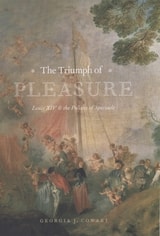
The Triumph of Pleasure
Louis XIV and the Politics of SpectacleGeorgia J. Cowart
University of Chicago Press, 2008
With bold revisionist strokes, Cowart traces this strain of artistic dissent through the comedy-ballets of Jean-Baptiste Lully and Molière, the late operatic works of Lully and the operas of his sons, the opera-ballets of André Campra and his contemporaries, and the related imagery of Antoine Watteau’s well-known painting The Pilgrimage to Cythera. She contends that through a variety of means, including the parody of old-fashioned court entertainments, these works reclaimed traditional allegories for new ideological aims, setting the tone for the Enlightenment. Exploring these arts from the perspective of spectacle as it emerged from the court into the Parisian public sphere, Cowart ultimately situates the ballet and related genres as the missing link between an imagery of propaganda and an imagery of political protest.
The Trojan Women
Euripides
University of Chicago Press, 2013
A stand-alone edition of Euripides’s The Trojan Women, taken from Chicago’s renowned translations of the Greek tragedies.
Drawn from the authoritative third edition of the University of Chicago Press’s Complete Greek Tragedies series, this stand-alone edition presents Richmond Lattimore’s celebrated translation of a play with an antiwar message that continues to inspire and resonate with readers today. The Trojan Women takes place following the conquest of Troy and tells the story of its sole survivors—all women—who have been enslaved by the Greeks. Mourning their families and their fate, they grapple with the trauma they have experienced and contemplate a future far from home.
The aftermath of the Trojan War, while extensively depicted in ancient Greek epic, lyric poetry, and art, is rendered especially powerful through the hands of Euripides. An introduction by Mark Griffith and Glenn W. Most provides essential contextual information about the play’s first production, plot, and reception in antiquity.
The Trouble with Wagner
Michael P. Steinberg
University of Chicago Press, 2018
Drawing on decades of engagement with Wagner and of experience teaching opera across disciplines, The Trouble with Wagner is packed with novel insights for experts and interested readers alike.
The Trustus Plays
The Hammerstone, Drift, and Holy GhostJon Tuttle
Intellect Books, 2009
The Trustus Plays collects three full-length, award-winning performance texts by American playwright Jon Tuttle. Each play was a winner of the national Trustus Playwrights Festival contest and was then produced by the Trustus Theatre in Columbia, South Carolina. The Hammerstone is a comedy about two professors aging gracelessly, Drift is a dark comedy about marriage and divorce, and Holy Ghost is the story of German POWs held in the camps in the American south. Jon Tuttle provides an introduction to the plays, and Trustus founder and artistic director, Jim Thigpen, offers a preface describing Tuttle’s work within the context of the Trustus theatre’s dedication to experimental, edgy social drama.
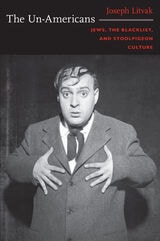
The Un-Americans
Jews, the Blacklist, and Stoolpigeon CultureJoseph Litvak
Duke University Press, 2009
Litvak traces the outlines of comic cosmopolitanism in a series of performances in film and theater and before HUAC, performances by Jewish artists and intellectuals such as Zero Mostel, Judy Holliday, and Abraham Polonsky. At the same time, through an uncompromising analysis of work by informers including Jerome Robbins, Elia Kazan, and Budd Schulberg, he explains the triumph of a stoolpigeon culture that still thrives in the America of the early twenty-first century.
The Uncanny Gaze
The Drama of Early German CinemaHeide Schlupmann. Translated by Inga Pollmann. Foreword by Miriam Hansen.
University of Illinois Press, 2010
Heide Schlüpmann's classic study of early German cinema was published in German as Unheimlichkeit des Blicks: Das Drama des Frühen deutschen Kinos in 1990. For the first time in English, this translation makes available her feminist examination of German cinema and Germany in the sociopolitical context of Wilhelmine society. By examining then-unknown pre-World War I narrative films, this study paints a picture of the conflicted early years of the German cinema. During this period cinema and film production were able to develop independently from the cultural bourgeoisie and relied on those forces excluded from high "culture": technology, business, performers, showmen, and actors. In cinema, the dime novel and kitsch were exhibited for all, and the internationalism of modernity prevailed over the prevailing nationalism of the period.
Featuring a foreword by film scholar Miriam Hansen and a new afterword by Schlüpmann, this volume performs a critical perusal of film commentary and offers an in-depth look at little-known films in early German cinema.

The Unfinished Art of Theater
Avant-Garde Intellectuals in Mexico and BrazilSarah J. Townsend
Northwestern University Press, 2018
A certain idea of the avant-garde posits the possibility of a total rupture with the past. The Unfinished Art of Theater pulls back on this futuristic impulse by showing how theater became a key site for artists on the semiperiphery of capitalism to reconfigure the role of the aesthetic between 1917 and 1934. The book argues that this “unfinished art”—precisely because of its historic weakness as a representative institution in Mexico and Brazil, where the bourgeois stage had not (yet) coalesced—was at the forefront of struggles to redefine the relationship between art and social change.
Drawing on extensive archival research, Sarah J. Townsend reveals the importance of projects and texts that belie the rhetoric of rupture and immediacy associated with the avant-garde: ethnographic operas with ties to the recording industry, populist puppet plays, children’s radio programs about the wonders of technology, a philosophical drama about the birth of a new race, and an antifascist spectacle written for (but never performed at) a theater shut down by the police. Ultimately, the book makes the case that the very category of avant-garde art is bound up in the experience of dependency, delay, and the uneven development of capitalism.
The Unknown Theatre of Jerzy Grotowski
Performances in the Theatre of 13 Rows, 1959–1964Dariusz Kosinski and Wanda Swiatkowska
Seagull Books, 2025
Polish director Jerzy Grotowski (1933–1999) was an international leader in experimental theater who became famous in the late 1960s for his revolutionary approach to audience involvement. This volume is devoted to Grotowski’s early work—the performances he directed in the Theatre of 13 Rows (later Laboratory Theatre of 13 Rows) between 1959 and 1964 when the theater was working in the provincial town Opole in south-western Poland. Having decided to work in his own independent theater, Grotowski moved to Opole in September 1956 and developed his ideas with young, inexperienced actors, creating important performances that foreshadowed his renowned masterpieces of the late 1960s.
In The Unknown Theatre of Jerzy Grotowski, Dariusz Kosiński and Wanda Świątkowska reconstruct, analyze, and interpret each of the nine performances directed by Grotowski over this period: from Orpheus based onJean Cocteau (1959) to Hamlet Study based on Stanisław Wyspiański (1964). Previously mentioned mainly in the context of the development of Grotowski’s method, these performances dealt with important social, political, and philosophical problems of postwar and post-Holocaust Poland. Grotowski also used these performances to experiment with the forces and problems that he later tried to be discreet about, such as sexuality.
Revealing unnoticed and forgotten aspects of Grotowski’s theater, this landmark book presents new materials and perspectives that give fresh life to the study of a genius of twentieth-century theater.
The Unruly Woman
Gender and the Genres of LaughterBy Kathleen Rowe
University of Texas Press, 1995
Unruly women have been making a spectacle of themselves in film and on television from Mae West to Roseanne Arnold. In this groundbreaking work, Kathleen Rowe explores how the unruly woman—often a voluptuous, noisy, joke-making rebel or "woman on top"—uses humor and excess to undermine patriarchal norms and authority.
At the heart of the book are detailed analyses of two highly successful unruly women—the comedian Roseanne Arnold and the Muppet Miss Piggy. Putting these two figures in a deeper cultural perspective, Rowe also examines the evolution of romantic film comedy from the classical Hollywood period to the present, showing how the comedic roles of actresses such as Katharine Hepburn, Barbara Stanwyck, and Marilyn Monroe offered an alternative, empowered image of women that differed sharply from the "suffering heroine" portrayed in classical melodramas.
The Urban Generation
Chinese Cinema and Society at the Turn of the Twenty-First CenturyZhen Zhang, ed.
Duke University Press, 2007
The contributors analyze the historical and social conditions that gave rise to the Urban Generation, its aesthetic innovation, and its ambivalent relationship to China’s mainstream film industry and the international film market. Focusing attention on the Urban Generation’s sense of social urgency, its documentary impulses, and its representations of gender and sexuality, the contributors highlight the characters who populate this new urban cinema—ordinary and marginalized city dwellers including aimless bohemians, petty thieves, prostitutes, postal workers, taxi drivers, migrant workers—and the fact that these “floating urban subjects” are often portrayed by non-professional actors. Some essays concentrate on specific films (such as Shower and Suzhou River) or filmmakers (including Jia Zhangke and Zhang Yuan), while others survey broader concerns. Together the thirteen essays in this collection give a multifaceted account of a significant, ongoing cinematic and cultural phenomenon.
Contributors. Chris Berry, Yomi Braester, Shuqin Cui, Linda Chiu-han Lai, Charles Leary, Sheldon H. Lu, Jason McGrath, Augusta Palmer, Bérénice Reynaud, Yaohua Shi, Yingjin Zhang, Zhang Zhen, Xueping Zhong
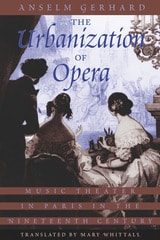
The Urbanization of Opera
Music Theater in Paris in the Nineteenth CenturyAnselm Gerhard
University of Chicago Press, 1998
"An invaluable look at this fascinating genre."—George W. Loomis, Opera News
The Value Gap
Female-Driven Films from Pitch to PremiereCourtney Brannon Donoghue
University of Texas Press, 2023
How female directors, producers, and writers navigate the challenges and barriers facing female-driven projects at each stage of filmmaking in contemporary Hollywood.
Conversations about gender equity in the workplace accelerated in the 2010s, with debates inside Hollywood specifically pointing to broader systemic problems of employment disparities and exploitative labor practices. Compounded by the devastating #MeToo revelations, these problems led to a wide-scale call for change. The Value Gap traces female-driven filmmaking across development, financing, production, film festivals, marketing, and distribution, examining the realities facing women working in the industry during this transformative moment. Drawing from five years of extensive interviews with female producers, writers, and directors at different stages of their careers, Courtney Brannon Donoghue examines how Hollywood business cultures “value” female-driven projects as risky or not bankable. Industry claims that “movies targeting female audiences don’t make money” or “women can’t direct big-budget blockbusters” have long circulated to rationalize systemic gender inequities and have served to normalize studios prioritizing the white male–driven status quo. Through a critical media industry studies lens, The Value Gap challenges this pervasive logic with firsthand accounts of women actively navigating the male-dominated and conglomerate-owned industrial landscape.
The Violate Man
Male/Male Rape in the American ImaginationAaron C. Thomas
Vanderbilt University Press, 2025
From the punchline of bro comedies to the vengeance arc of prison dramas, Thomas argues that male/male rape narratives are used by writers, filmmakers, and comedians to make sense of the changing landscape of American masculinity, and that these narratives have shifted widely since the 1960s, reflecting masculinity’s varying anxieties and concerns.

The Visible Wall
Jews and Other Ethnic Outsiders in Swedish FilmRochelle Wright
Southern Illinois University Press, 1998
Rochelle Wright provides the first historical overview and analysis of the manner in which Jews and other ethnic outsiders have been depicted in Swedish film from 1930 to the present.
Focusing on films produced in Sweden for primarily Swedish audiences, Wright analyzes how the portrayal of the relatively small Jewish minority has evolved over the years. She compares the images of Jews in Swedish film with those of other ethnic subcultures: long-term resident communities such as tattare (‘travelers’, an indigenous pariah group often confused with gypsies), Finns, the Sami, and recent immigrant populations such as Greeks, Italians, Turks, and Yugoslavians.
Wright’s cross-disciplinary approach to interrelated issues of ethnicity and national identity enables her to take advantage of the methodologies of historians and sociologists as well as those of literary and film critics. She bases her study on a detailed analysis of the films, but, by way of comparison, she examines filmscripts and literary sources. She also consults contemporary reviews, interviews with actors and directors, and biographies and memoirs as well as critical discussion among film historians.
Wright confronts important—and exceedingly difficult—social questions. She deals head-on with xenophobia, anti-Semitism, immigration, assimilation, ethnicity, multiculturalism, and the national self-image of Swedes as reflected in their cinema. She also analyzes the manner in which Swedish film represents the persecution of Jews in Nazi-dominated Europe.
The Visual Guillotine
The Cinematic Cut and Politics in Latin AmericaThomas Matusiak
University of Minnesota Press, 2026
The violence of the cinematic cut in twentieth-century Latin American film
Splice, montage, close-up: modern cinema routinely presents bodies in pieces. Not unlike the guillotine, argues Thomas Matusiak, these techniques have served both overt and symbolic political ends as they accomplish and project the efficient production of severed bodies. In The Visual Guillotine, Matusiak traces the use of cinematic tools of dismemberment in twentieth-century Latin American film to theorize the symbolic and material violence of the cut.
A robust genealogy of Latin American cinematic politics, The Visual Guillotine encompasses national filmmaking traditions; radical and reactionary political registers; and the proliferated aesthetics of narrative, documentary, experimental, and expanded cinema through an innovative critical viewing practice. From the national cinemas of the 1930s to the decapitation videos produced in the Mexican narco-conflict and beyond, Matusiak shows how the cinematic cut has been employed to inspire terror as well as invoke and critique a range of political programs.
A refreshing dialogue between film theory and Latin American cultural studies, The Visual Guillotine offers a new way for film to conceptualize politics. In our present political moment, with rapidly generated and circulated visual media central to a resurgent leftist-populist battle against oligarchy and authoritarianism, this book calls for readers to reassess their viewing position when confronted with violent imagery.
Retail e-book files for this title are screen-reader friendly with images accompanied by short alt text and/or extended descriptions.