Results by title
1445 books match the query 'Life Sciences' and 386 start with t
The Wandering Mind
What the Brain Does When You're Not LookingMichael C. Corballis
University of Chicago Press, 2015
That may be bad news for me, but is it bad news for people in general? Does the fact that as much as fifty percent of our waking hours find us failing to focus on the task at hand represent a problem? Michael Corballis doesn’t think so, and with The Wandering Mind, he shows us why, rehabilitating woolgathering and revealing its incredibly useful effects. Drawing on the latest research from cognitive science and evolutionary biology, Corballis shows us how mind-wandering not only frees us from moment-to-moment drudgery, but also from the limitations of our immediate selves. Mind-wandering strengthens our imagination, fueling the flights of invention, storytelling, and empathy that underlie our shared humanity; furthermore, he explains, our tendency to wander back and forth through the timeline of our lives is fundamental to our very sense of ourselves as coherent, continuing personalities.
Full of unusual examples and surprising discoveries, The Wandering Mind mounts a vigorous defense of inattention—even as it never fails to hold the reader’s.
The Wardian Case
How a Simple Box Moved Plants and Changed the WorldLuke Keogh
University of Chicago Press, 2020
Roses, jasmine, fuchsia, chrysanthemums, and rhododendrons bloom in gardens across the world, and yet many of the most common varieties have roots in Asia. How is this global flowering possible? In 1829, surgeon and amateur naturalist Nathaniel Bagshaw Ward placed soil, dried leaves, and the pupa of a sphinx moth into a sealed glass bottle, intending to observe the moth hatch. But when a fern and meadow grass sprouted from the soil, he accidentally discovered that plants enclosed in glass containers could survive for long periods without watering. After four years of experimentation in his London home, Ward created traveling glazed cases that would be able to transport plants around the world. Following a test run from London to Sydney, Ward was proven correct: the Wardian case was born, and the botanical makeup of the world’s flora was forever changed.
In our technologically advanced and globalized contemporary world, it is easy to forget that not long ago it was extremely difficult to transfer plants from place to place, as they often died from mishandling, cold weather, and ocean salt spray. In this first book on the Wardian case, Luke Keogh leads us across centuries and seas to show that Ward’s invention spurred a revolution in the movement of plants—and that many of the repercussions of that revolution are still with us, from new industries to invasive plant species. From the early days of rubber, banana, tea, and cinchona cultivation—the last used in the production of the malaria drug quinine—to the collecting of beautiful and exotic flora like orchids in the first great greenhouses of the United States Botanic Garden in Washington, DC, and England’s Royal Botanic Gardens, Kew, the Wardian case transformed the world’s plant communities, fueled the commercial nursery trade and late nineteenth-century imperialism, and forever altered the global environment.
The Way of Coyote
Shared Journeys in the Urban WildsGavin Van Horn
University of Chicago Press, 2018
A hiking trail through majestic mountains. A raw, unpeopled wilderness stretching as far as the eye can see. These are the settings we associate with our most famous books about nature. But Gavin Van Horn isn’t most nature writers. He lives and works not in some perfectly remote cabin in the woods but in a city—a big city. And that city has offered him something even more valuable than solitude: a window onto the surprising attractiveness of cities to animals. What was once in his mind essentially a nature-free blank slate turns out to actually be a bustling place where millions of wild things roam. He came to realize that our own paths are crisscrossed by the tracks and flyways of endangered black-crowned night herons, Cooper’s hawks, brown bats, coyotes, opossums, white-tailed deer, and many others who thread their lives ably through our own.
With The Way of Coyote, Gavin Van Horn reveals the stupendous diversity of species that can flourish in urban landscapes like Chicago. That isn’t to say city living is without its challenges. Chicago has been altered dramatically over a relatively short timespan—its soils covered by concrete, its wetlands drained and refilled, its river diverted and made to flow in the opposite direction. The stories in The Way of Coyote occasionally lament lost abundance, but they also point toward incredible adaptability and resilience, such as that displayed by beavers plying the waters of human-constructed canals or peregrine falcons raising their young atop towering skyscrapers. Van Horn populates his stories with a remarkable range of urban wildlife and probes the philosophical and religious dimensions of what it means to coexist, drawing frequently from the wisdom of three unconventional guides—wildlife ecologist Aldo Leopold, Taoist philosopher Lao Tzu, and the North American trickster figure Coyote. Ultimately, Van Horn sees vast potential for a more vibrant collective of ecological citizens as we take our cues from landscapes past and present.
Part urban nature travelogue, part philosophical reflection on the role wildlife can play in waking us to a shared sense of place and fate, The Way of Coyote is a deeply personal journey that questions how we might best reconcile our own needs with the needs of other creatures in our shared urban habitats.
The Well-Connected Animal
Social Networks and the Wondrous Complexity of Animal SocietiesLee Alan Dugatkin
University of Chicago Press, 2024
An engaging exploration of the wondrous social webs that permeate life in animal societies around the world.
It’s all about who you know. Whether vampire bats sharing blood meals for survival, field crickets remembering champion fighters, macaque monkeys forming grooming pacts after a deadly hurricane, or great tit birds learning the best way to steal milk—it pays to be well connected.
In this tour of the animal kingdom, evolutionary biologist Lee Alan Dugatkin reveals a new field of study, uncovering social networks that existed long before the dawn of human social media. He accessibly describes the latest findings from animal behavior, evolution, computer science, psychology, anthropology, genetics, and neurobiology, and incorporates interviews and insights from researchers he finds swimming with manta rays, avoiding pigeon poop, and stopping monkeys from stealing iPads. With Dugatkin as our guide, we investigate social networks in giraffes, elephants, kangaroos, Tasmanian devils, whales, bats, and more. From animal networks in Australia and Asia to Africa, Europe, and the Americas, The Well-Connected Animal is an eye-opening exposé of wild friends, enemies, and everything in between.
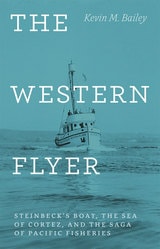
The Western Flyer
Steinbeck's Boat, the Sea of Cortez, and the Saga of Pacific FisheriesKevin M. Bailey
University of Chicago Press, 2015
In this book, Kevin M. Bailey resurrects this forgotten witness to the changing tides of Pacific fisheries. He draws on the Steinbeck archives, interviews with family members of crew, and more than three decades of working in Pacific Northwest fisheries to trace the depletion of marine life through the voyages of a single ship. After Steinbeck and his friend Ed Ricketts—a pioneer in the study of the West Coast’s diverse sea life and the inspiration behind “Doc” in Cannery Row—chartered the boat for their now-famous 1940 expedition, the Western Flyer returned to its life as a sardine seiner in California. But when the sardine fishery in Monterey collapsed, the boat moved on: fishing for Pacific ocean perch off Washington, king crab in the Bering Sea off Alaska, and finally wild Pacific salmon—all industries that would also face collapse.
As the Western Flyer herself faces an uncertain future—a businessman has bought her, intending to bring the boat to Salinas, California, and turn it into a restaurant feature just blocks from Steinbeck’s grave—debates about the status of the California sardine, and of West Coast fisheries generally, have resurfaced. A compelling and timely tale of a boat and the people it carried, of fisheries exploited, and of fortunes won and lost, The Western Flyer is environmental history at its best: a journey through time and across the sea, charting the ebb and flow of the cobalt waters of the Pacific coast.
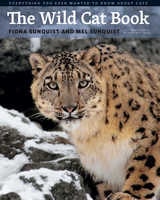
The Wild Cat Book
Everything You Ever Wanted to Know about CatsFiona Sunquist and Mel Sunquist
University of Chicago Press, 2014
Illustrated throughout with Terry Whittaker’s spectacular color photographs as well as unique photos from biologists in the field—some the highest quality images ever captured of exceptionally rare species—The Wild Cat Book not only tantalizes with the beauty of cats, but also serves as a valuable and accessible reference on cat behavior and conservation. Comprehensive entries for each of the thirty-seven cat species include color distribution maps and up-to-date information related to the species’ IUCN conservation and management statuses, while informative sidebars reveal why male lions have manes (and why dark manes are sexiest), how cats see with their whiskers, the truth behind our obsession with white lions and tigers, and why cats can’t be vegetarians. The Wild Cat Book also highlights the grave threats faced by the world’s wild cats—from habitat destruction to human persecution.
From the extraordinary acrobatics of the arboreal margay—able to cling to a tree branch by a single paw thanks to its unusually flexible ankles—to modern declines in African lion populations, The Wild Cat Book is an instructive and revealing ode to felines of every size and color. Combining science, behavioral observations, and stunning photography, this book will captivate cat fanciers the world over.
The Winged
An Upper Missouri River Ethno-ornithologyKaitlyn Chandler, Wendi Field Murray, María Nieves Zedeño, Samrat Clements, and Robert James
University of Arizona Press, 2017
The Missouri River Basin is home to thousands of bird species that migrate across the Great Plains of North America each year, marking the seasonal cycle and filling the air with their song. In time immemorial, Native inhabitants of this vast region established alliances with birds that helped them to connect with the gods, to learn the workings of nature, and to live well.
This book integrates published and archival sources covering archaeology, ethnohistory, historical ethnography, folklore, and interviews with elders from the Blackfoot, Assiniboine, Mandan, Hidatsa, Arikara, and Crow communities to explore how relationships between people and birds are situated in contemporary practice, and what has fostered its cultural persistence. Native principles of ecological and cosmological knowledge are brought into focus to highlight specific beliefs, practices, and concerns associated with individual bird species, bird parts, bird objects, the natural and cultural landscapes that birds and people cohabit, and the future of this ancient alliance.
Detailed descriptions critical to ethnohistorians and ethnobiologists are accompanied by thirty-four color images. A unique contribution, The Winged expands our understanding of sets of interrelated dependencies or entanglements between bird and human agents, and it steps beyond traditional scientific and anthropological distinctions between humans and animals to reveal the intricate and eminently social character of these interactions.
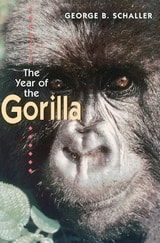
The Year of the Gorilla
George B. Schaller
University of Chicago Press, 1988
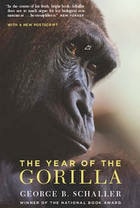
The Year of the Gorilla
George B. Schaller
University of Chicago Press, 2010
This seminal work chronicles George B. Schaller’s two years of travel and observation of gorillas in East and Central Africa in the late 1950s, high in the Virunga volcanoes on the Zaire-Rwanda-Uganda border. There, he learned that these majestic animals, far from being the aggressive apes of film and fiction, form close-knit societies of caring mothers and protective fathers watching over playful young. Alongside his observations of gorilla society, Schaller celebrates the enforced yet splendid solitude of the naturalist, recounts the adventures he experienced along the way, and offers a warning against poaching and other human threats against these endangered creatures. This edition features a postscript detailing Schaller’s more recent visits with gorillas, current to 2009.
“Whether the author is tracking gorillas, slipping past elephant herds on narrow jungle paths, avoiding poachers’ deadfalls, or routing Watusi invaders, this is an exciting book. Although Schaller feels that this is ‘not an adventure book,’ few readers will be able to agree.”—Irven DeVore, Science

The Zoology of Tapeworms
Robert A. Wardle and James A. McLeod
University of Minnesota Press, 1952
The Zoology of Tapeworms was first published in 1952. Minnesota Archive Editions uses digital technology to make long-unavailable books once again accessible, and are published unaltered from the original University of Minnesota Press editions.
Leaders in helminthology have long recognized the need for such a work as this—a comprehensive study of tapeworms. This definitive treatise describes the tapeworms of the world—their gross and microscopic anatomy, their physiology, life cycles, and relationships to hosts, the theories of origin and evolution, and the various systems of classification that have been applied to tapeworms.
Detailed, systematic descriptions and keys for the identification of all known genera of the world and species of North America are provided. Emphasis on the theoretical significance of various aspects of tapeworm zoology is balanced by a wealth of detailed description. A bibliography up to 1950 is appended.
A review of the literature on each topic is incorporated in the discussions. Starting with a few fragments of information a century or more ago, the literature on the subject of tapeworms has appeared in a wide range of journals and books published in at least five languages. Many of the older publications are, for practical purposes, unavailable, and a number of the more recent journals are difficult to obtain. Therefore, the consolidation of this large body of scattered literature in a single volume will be of value to scientists in many fields.
In addition to filling a basic need for helminthologists, this book should serve as a reference work for parasitologists, zoologists, ecologists, clinicians, medical research workers, and students and workers in various fields of biology.
There are 419 text illustrations from drawings of species by the authors.
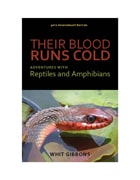
Their Blood Runs Cold
Adventures with Reptiles and AmphibiansWhit Gibbons
University of Alabama Press, 2013
Enter the fascinating world of reptiles and amphibians through the eyes of a pioneering field scientist.
Their Blood Runs Cold is entertaining, informative reading that not only enhances our understanding of a unique group of animals, but also provides genuine insight into the mind and character of a research scientist.
Whit Gibbons possesses the rare talent of conveying the challenge and excitement of scientific inquiry. A research ecologist who specializes in the study of reptiles and amphibians, he gives accounts of work in the field that are as readable as good short stories.
From the dangers of being chased by an angry rattlesnake to the exhilaration of discovering a previously undescribed species, Gibbons brings to life the everyday experiences of the herpetologist as he chases down lizards, turtles, snakes, alligators, salamanders, and frogs in their natural habitats. With essays like “Turtles May Be Slow but They’re 200 Million Years Ahead of Us” and “How to Catch an Alligator in One Uneasy Lesson,” Their Blood Runs Cold both entertains and informs.
The thirtieth anniversary edition of Their Blood Runs Cold features a new prologue and epilogue, additions that address changes in the taxonomy and study of reptiles and amphibians that have occurred since the publication of the original edition and offer suggestions for further reading that highlight the explosion of interest in the topic.
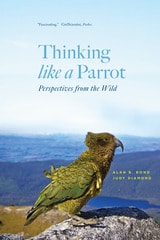
Thinking like a Parrot
Perspectives from the WildAlan B. Bond and Judy Diamond
University of Chicago Press, 2019
People form enduring emotional bonds with other animal species, such as dogs, cats, and horses. For the most part, these are domesticated animals, with one notable exception: many people form close and supportive relationships with parrots, even though these amusing and curious birds remain thoroughly wild creatures. What enables this unique group of animals to form social bonds with people, and what does this mean for their survival?
In Thinking like a Parrot, Alan B. Bond and Judy Diamond look beyond much of the standard work on captive parrots to the mischievous, inquisitive, and astonishingly vocal parrots of the wild. Focusing on the psychology and ecology of wild parrots, Bond and Diamond document their distinctive social behavior, sophisticated cognition, and extraordinary vocal abilities. Also included are short vignettes—field notes on the natural history and behavior of both rare and widely distributed species, from the neotropical crimson-fronted parakeet to New Zealand’s flightless, ground-dwelling kākāpō. This composite approach makes clear that the behavior of captive parrots is grounded in the birds’ wild ecology and evolution, revealing that parrots’ ability to bond with people is an evolutionary accident, a by-product of the intense sociality and flexible behavior that characterize their lives.
Despite their adaptability and intelligence, however, nearly all large parrot species are rare, threatened, or endangered. To successfully manage and restore these wild populations, Bond and Diamond argue, we must develop a fuller understanding of their biology and the complex set of ecological and behavioral traits that has led to their vulnerability. Spanning the global distribution of parrot species, Thinking like a Parrot is rich with surprising insights into parrot intelligence, flexibility, and—even in the face of threats—resilience.
This Is Life
A Journey from Inside Your Body to Beyond EarthChristophe Galfard
University of Chicago Press, 2026
Christophe Galfard, acclaimed author of the international bestseller The Universe in Your Hand, takes readers on an extraordinary journey across time and space—from the origins of Earth’s life to the search for extraterrestrials.
What is life? In this majestic book, Christophe Galfard, celebrated author and former graduate student of Stephen Hawking, takes us on a wonder-filled voyage to answer this question. He guides us from our planet’s birth and the mysterious bacteria that lived billions of years ago, through the extreme evolutionary turns that saw dog-sized sea scorpions and trees covered in scales, to the visionary discoveries of the past two centuries that have allowed us to understand human bodies and imagine alien ones.
With Galfard as our guide, readers go back in time to Earth’s origins, swim inside our bloodstream, and sail in space beyond the safety of our terrestrial haven. We experience the birth of Earth, the demise of the dinosaurs, and the possible creation of life in outer space. This Is Life offers a glimpse of other worlds detected only in recent years, beyond the Solar System, where life could be thriving. The end of the book’s journey signals new beginnings, and we are left with the overwhelming sense that, as members of a long line of living creatures, we belong to a reality far greater and more complex than we ever imagined.
Through brilliant storytelling and delightful humor, Galfard connects the latest scientific discoveries and makes the secrets of the living world accessible to all. This Is Life will transform the way you see the world and your place in it.
This Is Life
A Journey from Inside Your Body to Beyond EarthChristophe Galfard
University of Chicago Press, 2026
Christophe Galfard, acclaimed author of the international bestseller The Universe in Your Hand, takes readers on an extraordinary journey across time and space—from the origins of Earth’s life to the search for extraterrestrials.
What is life? In this majestic book, Christophe Galfard, celebrated author and former graduate student of Stephen Hawking, takes us on a wonder-filled voyage to answer this question. He guides us from our planet’s birth and the mysterious bacteria that lived billions of years ago, through the extreme evolutionary turns that saw dog-sized sea scorpions and trees covered in scales, to the visionary discoveries of the past two centuries that have allowed us to understand human bodies and imagine alien ones.
With Galfard as our guide, readers go back in time to Earth’s origins, swim inside our bloodstream, and sail in space beyond the safety of our terrestrial haven. We experience the birth of Earth, the demise of the dinosaurs, and the possible creation of life in outer space. This Is Life offers a glimpse of other worlds detected only in recent years, beyond the Solar System, where life could be thriving. The end of the book’s journey signals new beginnings, and we are left with the overwhelming sense that, as members of a long line of living creatures, we belong to a reality far greater and more complex than we ever imagined.
Through brilliant storytelling and delightful humor, Galfard connects the latest scientific discoveries and makes the secrets of the living world accessible to all. This Is Life will transform the way you see the world and your place in it.
This Land Is Your Land
The Story of Field Biology in AmericaMichael J. Lannoo
University of Chicago Press, 2018
Lannoo illuminates characters such as John Wesley Powell, William Temple Hornaday, and Olaus and Adolph Murie—homegrown midwestern field biologists who either headed east to populate major research centers or went west to conduct their fieldwork along the frontier. From the pioneering work of Victor Shelford, Henry Chandler Cowles, and Aldo Leopold to contemporary insights from biologists such as Jim Furnish and historians such as William Cronon, Lannoo’s unearthing of American—and particularly midwestern—field biologists reveals how these scientists influenced American ecology, conservation biology, and restoration ecology, and in turn drove global conservation efforts through environmental legislation and land set-asides. This Land Is Your Land reveals the little-known legacy of midwestern field biologists, whose ethos and discoveries have enabled us to preserve and understand not just their land, but all lands.
Thorstein Veblen and the Enrichment of Evolutionary Naturalism
Rick Tilman
University of Missouri Press, 2007
One of America’s most influential social critics, Thorstein Veblen authored works deeply rooted in evolutionary biology and American philosophical naturalism—both of which help explain his institutional economics and radical sociology. Now, one of today’s preeminent Veblen scholars ranges widely over the man’s writings to show how evolutionary naturalism underlies his social theory and criticism, shapes his satire, and binds his work together.
Rick Tilman’s study focuses on the intersections of social theory and social psychology, political economy and political theory, and modern philosophy and intellectual history in Veblen’s thinking. It links evolutionary naturalism for the first time to Veblen’s aesthetics, secular humanism, sociology of control, sociobiology, and sociology of knowledge, and it makes groundbreaking observations regarding the relationship of Veblen’s own life to his thinking; his place as a cultural lag theorist; and his analysis of sports, gambling, and religion.
Drawing on textual exegesis of Veblen’s work, unpublished correspondence, and selected archives, Tilman argues that only evolutionary naturalism could provide the philosophical foundations of Veblen’s thought. He also emphasizes Veblen’s role in the enhancement and embellishment of the social sciences and cultural studies, as well as his insights into the processes of change in the sociopolitical order.
Veblen’s evolutionary naturalism, with its unflattering evaluation of America’s self-selected special place in the international arena, casts doubt on today’s foreign interventions, and it also provides a much-needed antidote to the resurgence of creationist thought in American culture. Tilman shows that Veblen’s ideas are still valuable to contemporary social scientists—indeed, that his method of analysis and values are sorely needed to help us avoid wasteful consumption, predation, and the persistence of religious superstition. This work offers readers a new appreciation of Veblen and the many issues he addressed, and of Tilman’s own masterful facility in bringing them to light.
Three Language List of Botanical Name Components
A. Radcliffe-Smith
Royal Botanic Gardens, Kew, 2000
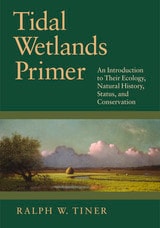
Tidal Wetlands Primer
An Introduction to Their Ecology, Natural History, Status, and ConservationRalph W. Tiner
University of Massachusetts Press, 2013
Illustrated with maps, photographs, and diagrams, this volume provides a clear account of the factors that make these habitats unique and vulnerable. It discusses their formation, the conditions affecting their plant and animal life, and the diversity of types across North America, as well as their history, use by wildlife and humans, current status, conservation, restoration, and likely future. The emphasis is on vegetated wetlands—marshes and swamps—with additional discussion of eelgrass meadows, rocky shores, beaches, and tidal flats.
Ralph Tiner's previous field guides to coastal wetland plants in the Northeast and Southeast have been widely praised. Tidal Wetlands Primer joins Tiner's earlier publications as an authoritative and user-friendly guide that should appeal to anyone with a serious interest in coastal habitats.
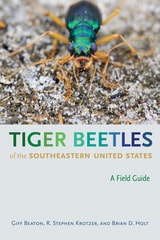
Tiger Beetles of the Southeastern United States
A Field GuideGiff Beaton, R. Stephen Krotzer, and Brian D. Holt
University of Alabama Press, 2021
Combines current data and taxonomic classifications for tiger beetles in the Southeast with stunning close-up photographs, flight season charts, and distribution maps
Tiger beetles are brightly colored and metallic beetles, often with ivory or cream-colored markings. They are most abundant and diverse in habitats near bodies of water with sandy or clay soils and can be found along rivers, on sea and lake shores, on sand dunes, around dry lakebeds, on clay banks, or on woodland paths. Conservatively estimated, the group comprises more than 2,600 species worldwide.
Tiger Beetles of the Southeastern United States identifies and describes 52 taxa (42 species and 10 additional subspecies) of tiger beetles that occur in Alabama, Florida, Georgia, Mississippi, North Carolina, South Carolina, and Tennessee. Stunning close-up photographs accompany current taxonomic and biological information in a volume designed for a growing audience of enthusiastic amateurs and professionals alike.
The authors provide an in-depth description of the anatomy, life cycle, and behavior of tiger beetles; an overview of the various southeastern habitats in which they occur; instructions for finding, identifying, and photographing them in the wild; and the conservation status of various species. The individual species accounts include stunning, detailed images, flight season charts, county-level regional distribution maps, and discussion of identifying features, habitat, similar species, and subspecies when applicable. The appendix includes two species previously found in Florida but no longer known to exist there.
The result is the most complete field guide to date on tiger beetles in the region. With more than 230 images of beetles and their habitats, as well as life history and distribution data, this book is essential for tiger beetle enthusiasts, naturalists of all kinds, photographers, biologists, and teachers throughout the region.
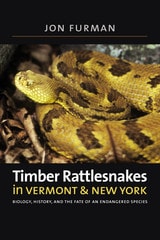
Timber Rattlesnakes in Vermont & New York
Biology, History, and the Fate of an Endangered SpeciesJon Furman
University Press of New England, 2007
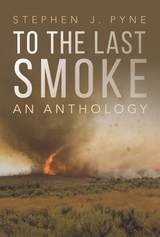
To the Last Smoke
An AnthologyStephen J. Pyne
University of Arizona Press, 2020
From boreal Alaska to subtropical Florida, from the chaparral of California to the pitch pine of New Jersey, America boasts nearly a billion burnable acres. In nine previous volumes, Stephen J. Pyne has explored the fascinating variety of flame region by region. In To the Last Smoke: An Anthology, he selects a sampling of the best from each.
To the Last Smoke offers a unique and sweeping view of the nation’s fire scene by distilling observations on Florida, California, the Northern Rockies, the Great Plains, the Southwest, the Interior West, the Northeast, Alaska, the oak woodlands, and the Pacific Northwest into a single, readable volume. The anthology functions as a color-commentary companion to the play-by-play narrative offered in Pyne’s Between Two Fires: A Fire History of Contemporary America. The series is Pyne’s way of “keeping with it to the end,” encompassing the directive from his rookie season to stay with every fire “to the last smoke.”

Transnational Ecocinema
Film Culture in an Era of Ecological TransformationEdited by Tommy Gustafsson and Pietari Kääpä
Intellect Books, 2013

Treatments
Language, Politics, and the Culture of IllnessLisa Diedrich
University of Minnesota Press, 2007
Creative expression inspired by disease has been criticized as a celebration of victimhood, unmediated personal experience, or just simply bad art. Despite debate, however, memoirs written about illness—particularly AIDS or cancer—have proliferated since the late twentieth century and occupy a highly influential place on the cultural landscape today.
In Treatments, Lisa Diedrich considers illness narratives, demonstrating that these texts not only recount and interpret symptoms but also describe illness as an event that reflects wider cultural contexts, including race, gender, class, and sexuality. Diedrich begins this theoretically rigorous analysis by offering examples of midcentury memoirs of tuberculosis. She then looks at Susan Sontag’s Illness As Metaphor, Audre Lorde’s The Cancer Journals, and Eve Kosofsky Sedgwick’s “White Glasses,” showing how these breast cancer survivors draw on feminist health practices of the 1970s and also anticipate the figure that would appear in the wake of the AIDS crisis in the 1980s—the “politicized patient.” She further reveals how narratives written by doctors Abraham Verghese and Rafael Campo about treating people with AIDS can disrupt the doctor–patient hierarchy, and she explores practices of witnessing that emerge in writing by Paul Monette and John Bayley.
Through these records of intensely personal yet universal experience, Diedrich demonstrates how language both captures and fails to capture these “scenes of loss” and how illness narratives affect the literary, medical, and cultural contexts from which they arise. Finally, by examining the ways in which the sick speak and are spoken for, she argues for an ethics of failure—the revaluation of loss as creating new possibilities for how we live and die.
Lisa Diedrich is assistant professor of women’s studies at Stony Brook University.
Tree Day
A Story of 24 Hours and 24 Arboreal LivesMeg Lowman
University of Chicago Press, 2025
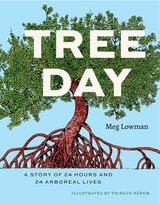
In this short book, treetop explorer Meg Lowman guides us through a global forest. Each chapter of Tree Day introduces a single tree during a single hour, highlighting twenty-four species from around the world.
In the dark of Yemen’s night, it is too early to see the red sap from which the dragon’s blood tree gets its name. But if we watch closely, we will see nocturnal geckos carry the trees’ pollen in their snouts. Later, in the Pacific Northwest, we climb the world’s tallest species, the coastal redwood. The morning fog is a reminder that redwoods absorb water through their roots and canopies, helping them survive such heights. The sun is already low in the sky on an autumn afternoon. Given the darkness of this New England forest, the sugar maple’s leaves have stopped producing chlorophyll that converts light into energy—and green gives way to vivid crimson foliage. After many hours of boiling, the maple sap makes delicious maple syrup. As the sun sets in Mexico, we observe the origin of another treat, chocolate. The cocoa tree’s flowers sprout along its trunk and branches, allowing easy access for tiny insects like midges that pollinate the tree and start the process of making delicious food for humans, monkeys, bats, and squirrels. By the end of our tree day, we will understand that trees are the silent caretakers of our planet, providing us with medicines, foods, machinery for making fresh water and oxygen, and more.
For each hour, celebrated artist Thibaud Hérem has depicted these trees with gorgeous pen and ink illustrations. Working together to narrate and illustrate these unique moments in time, Lowman and Hérem have created an engaging read that is a perfect way to spend an hour or two—and a true gift for anyone who has ever looked up at a tree in wonder.
Trees and Forests of Tropical Asia
Exploring TapovanPeter Ashton and David Lee
University of Chicago Press, 2022
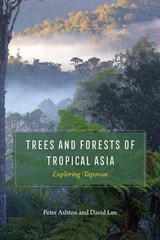
Trees and Forests of Tropical Asia invites readers on an expedition into the leafy, humid, forested landscapes of tropical Asia—the so-called tapovan, a Sanskrit word for the forest where knowledge is attained through tapasya, or inner struggle. Peter Ashton and David Lee, two of the world’s leading scholars on Asian tropical rain forests, reveal the geology and climate that have produced these unique forests, the diversity of species that inhabit them, the means by which rain forest tree species evolve to achieve unique ecological space, and the role of humans in modifying the landscapes over centuries. Following Peter Ashton’s extensive On the Forests of Tropical Asia, the first book to describe the forests of the entire tropical Asian region from India east to New Guinea, this new book provides a more condensed and updated overview of tropical Asian forests written accessibly for students as well as tropical forest biologists, ecologists, and conservation biologists.
Trees of Alabama
Lisa J. Samuelson, with Photographs by Michael E. Hogan
University of Alabama Press, 2020
From acorns to canopy: Alabama’s trees revealed in vivid detail.
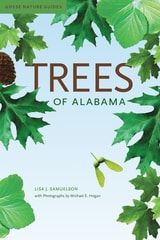
From the understory flowering dogwood presenting its showy array of white bracts in spring, to the stately, towering baldcypress anchoring swampland with their reddish buttresses; from aromatic groves of Atlantic white-cedar that grow in coastal bogs to the upland rarity of the fire-dependent montane longleaf pine, Alabama is blessed with a staggering diversity of tree species. Trees of Alabama offers an accessible guide to the most notable species occurring widely in the state, forming its renewable forest resources and underpinning its rich green blanket of natural beauty.
Lisa J. Samuelson provides a user-friendly identification guide featuring straightforward descriptions and vivid photographs of more than 140 common species of trees. The text explains the habitat and ecology of each species, including its forest associates, human and wildlife uses, common names, and the derivation of its botanical name. With more than 800 full-color photographs illustrating the general form and habitat of each, plus the distinguishing characteristics of its buds, leaves, flowers, fruit, and bark, readers will be able to identify trees quickly. Colored distribution maps detail the range and occurrence of each species grouped by county, and a quick guide highlights key features at a glance.
This book also features a map of forest types, chapters on basic tree biology and terminology (with illustrative line drawings), a spotlight on the plethora of oak species in the state, and a comprehensive index. This is an invaluable resource for biologists, foresters, and educators and a great reference for outdoorspeople and nature enthusiasts in Alabama and throughout the southeastern United States.
Trees of New Guinea
Edited by Timothy M. A. Utteridge and Laura V. S. Jennings
Royal Botanic Gardens, Kew, 2021
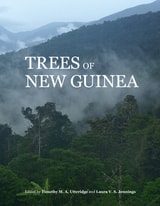
New Guinea is the most floristically diverse island in the world, home to nearly 5,000 tree species alone. Trees of New Guinea details each of the 693 plant genera with arborescent members found in New Guinea, covering the entire region including the West Papua and Papua Provinces of Indonesia, Papua New Guinea, and the surrounding islands such as New Britain, New Ireland, and Bougainville. The book follows contemporary classifications and is richly illustrated with line drawings and color photographs throughout. Each group has a family description and key to the New Guinea tree genera, followed by a description of each genus, with notes on taxonomy, distribution, ecology, and diagnostic characters. Trees of New Guinea—winner of the Council on Botanical and Horticultural Libraries Literature’s 2022 Award for Excellence in Botany—is an essential companion for anyone studying or working in the region, including botanists, conservation workers, ecologists, and zoologists.
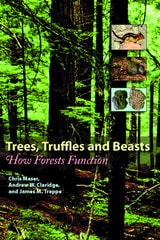
Trees, Truffles, and Beasts
How Forests FunctionMaser, Chris
Rutgers University Press, 2008
Because today's decisions are tomorrow's consequences, every small effort makes a difference, but a broader understanding of our environmental problems is necessary to the development of sustainable ecosystem policies. In Trees, Truffles, and Beasts, Chris Maser, Andrew W. Claridge, and James M. Trappe make a compelling case that we must first understand the complexity and interdependency of species and habitats from the microscopic level to the gigantic. Comparing forests in the Pacific Northwestern United States and Southeastern mainland of Australia, the authors show how easily observable speciesùtrees and mammalsùare part of a complicated infrastructure that includes fungi, lichens, and organisms invisible to the naked eye, such as microbes.
Eminently readable, this important book shows that forests are far more complicated than most of us might think, which means simplistic policies will not save them. Understanding the biophysical intricacies of our life-support systems just might.
Trees
From Root to LeafPaul Smith
University of Chicago Press, 2022
Trees seen like never before—a world expert presents a stunning compendium, illuminating science, conservation, and art.
Trees provoke deep affection, spirituality, and creativity. They cover about a third of the world’s land and play a crucial role in our environmental systems—influencing the water, carbon, and nutrient cycles and the global climate. This puts trees at the forefront of research into mitigating our climate emergency; we cannot understate their importance in shaping our daily lives and our planet’s future.
In these lavish pages, ecologist Paul Smith celebrates all that trees have inspired across nearly every human culture throughout history. Generously illustrated with over 450 images and organized according to tree life cycle—from seeds and leaves to wood, flowers, and fruit—this book celebrates the great diversity and beauty of the 60,000 tree species that inhabit our planet. Surprising photography and infographics will inspire readers, illustrating intricate bark and leaf patterns, intertwined ecosystems, colorful flower displays, archaic wooden wheels, and timber houses. In this lavishly illustrated book, Smith presents the science, art, and culture of trees. As we discover the fundamental and fragile nature of trees and their interdependence, we more deeply understand the forest without losing sight of the magnificent trees.
Trialectic
The Confluence of Law, Neuroscience, and MoralityPeter A. Alces
University of Chicago Press, 2023
A thought-provoking examination of how insights from neuroscience challenge deeply held assumptions about morality and law.
As emerging neuroscientific insights change our understanding of what it means to be human, the law must grapple with monumental questions, both metaphysical and practical. Recent advances pose significant philosophical challenges: how do neuroscientific revelations redefine our conception of morality, and how should the law adjust accordingly?
Trialectic takes account of those advances, arguing that they will challenge normative theory most profoundly. If all sentient beings are the coincidence of mechanical forces, as science suggests, then it follows that the time has come to reevaluate laws grounded in theories dependent on the immaterial that distinguish the mental and emotional from the physical. Legal expert Peter A. Alces contends that such theories are misguided—so misguided that they undermine law and, ultimately, human thriving.
Building on the foundation outlined in his previous work, The Moral Conflict of Law and Neuroscience, Alces further investigates the implications for legal doctrine and practice.
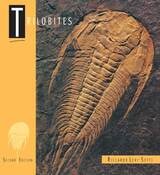
Trilobites
Riccardo Levi-Setti
University of Chicago Press, 1995
This second edition features coverage of a greater variety of trilobites, an improved photographic atlas reorganized to present their evolutionary progression, and over 200 photographs.
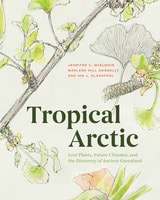
Tropical Arctic
Lost Plants, Future Climates, and the Discovery of Ancient GreenlandJennifer McElwain, Marlene Hill Donnelly, and Ian Glasspool
University of Chicago Press, 2021
While today’s Greenland is largely covered in ice, in the time of the dinosaurs the area was a lushly forested, tropical zone. Tropical Arctic tracks a ten-million-year window of Earth’s history when global temperatures soared and the vegetation of the world responded.
A project over eighteen years in the making, Tropical Arctic is the result of a unique collaboration between two paleobotanists, Jennifer C. McElwain and Ian J. Glasspool, and award-winning scientific illustrator Marlene Hill Donnelly. They began with a simple question: “What was the color of a fossilized leaf?” Tropical Arctic answers that question and more, allowing readers to experience Triassic Greenland through three reconstructed landscapes and an expertly researched catalog of extinct plants. A stunning compilation of paint and pencil art, photos, maps, and engineered fossil models, Tropical Arctic blends art and science to bring a lost world to life. Readers will also enjoy a front-row seat to the scientific adventures of life in the field, with engaging anecdotes about analyzing fossils and learning to ward off polar bear attacks.
Tropical Arctic explains our planet’s story of environmental upheaval, mass extinction, and resilience. By looking at Earth’s past, we see a glimpse of the future of our warming planet—and learn an important lesson for our time of climate change.
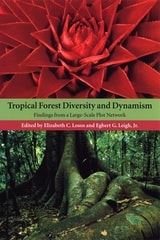
Tropical Forest Diversity and Dynamism
Findings from a Large-Scale Plot NetworkEdited by Elizabeth Losos and Egbert Giles Leigh Jr.
University of Chicago Press, 2004
Written by experts in the field of tropical ecology, Tropical Forest Diversity and Dynamism will appeal to students and professionals with an interest in community ecology and patterns of diversity.

Tropical Forest Remnants
Ecology, Management, and Conservation of Fragmented CommunitiesEdited by William F. Laurance and Richard O. Bierregaard Jr.
University of Chicago Press, 1997
Tropical Forest Remnants provides the best information available to help us
understand, manage, and conserve the remaining fragments. Covering geographic areas from Southeast Asia and Australia to Madagascar and the New World, this volume summarizes what is known about the ecology, management, restoration, socioeconomics, and conservation of fragmented forests. Thirty-three papers present results of recent research as
well as updates from decades-long projects in progress. Two final chapters synthesize the state of research on tropical forest fragmentation and identify key priorities for future work.
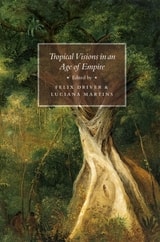
Tropical Visions in an Age of Empire
Edited by Felix Driver and Luciana Martins
University of Chicago Press, 2005
Bringing together a group of distinguished contributors from disciplines across the arts and humanities, this volume contains eleven beautifully illustrated essays—arranged in three sections devoted to voyages, mappings, and sites—that consider the ways that tropical places were encountered, experienced, and represented in visual form. Covering a wide range of tropical sites in the Pacific, South Asia, West Africa, the Caribbean, and Latin America, the book will appeal to a broad readership: scholars of postcolonial studies, art history, literature, imperial history, history of science, geography, and anthropology.
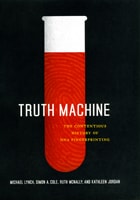
Truth Machine
The Contentious History of DNA FingerprintingMichael Lynch, Simon A. Cole, Ruth McNally, and Kathleen Jordan
University of Chicago Press, 2008
DNA profiling—commonly known as DNA fingerprinting—is often heralded as unassailable criminal evidence, a veritable “truth machine” that can overturn convictions based on eyewitness testimony, confessions, and other forms of forensic evidence. But DNA evidence is far from infallible. Truth Machine traces the controversial history of DNA fingerprinting by looking at court cases in the United States and United Kingdom beginning in the mid-1980s, when the practice was invented, and continuing until the present. Ultimately, Truth Machine presents compelling evidence of the obstacles and opportunities at the intersection of science, technology, sociology, and law.