Results by title
2284 books match the query 'Women' and 370 start with t
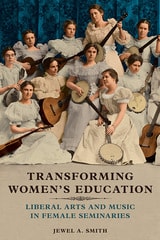
Transforming Women's Education
Liberal Arts and Music in Female SeminariesJewel A. Smith
University of Illinois Press, 2019
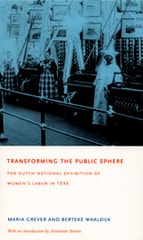
Transforming the Public Sphere
The Dutch National Exhibition of Women’s Labor in 1898Maria Grever and Berteke Waaldijk
Duke University Press, 2004
A comprehensive social history, Transforming the Public Sphere describes the planning and construction of the Exhibition of Women’s Labor and the event itself—the sights, the sounds, and the smells—as well as the role of exhibitions in late-nineteenth-century public culture. The authors discuss how the 1898 exhibition displayed the range and variety of women’s economic, intellectual, and artistic roles in Dutch culture, including their participation in such traditionally male professions as engineering, diamond-cutting, and printing and publishing. They examine how people and goods from the Dutch colonies were represented, most notably in an extensive open-air replica of a “Javanese village.” Grever and Waaldijk reveal the tensions the exhibition highlighted: between women of different economic classes; between the goal of equal rights for women and the display of imperial subjects and spoils; and between socialists and feminists, who competed fiercely with one another for working women’s support. Transforming the Public Sphere explores an event that served as the dress rehearsal for advances in women’s public participation during the twentieth century.
Translocalities/Translocalidades
Feminist Politics of Translation in the Latin/a AméricasSonia E. Alvarez, Claudia de Lima Costa, Verónica Feliu, Rebecca J. Hester, Norma Klahn, and Millie Thayer, eds.
Duke University Press, 2014
Contributors. Sonia E. Alvarez, Kiran Asher, Victoria (Vicky) M. Bañales, Marisa Belausteguigoitia Rius, Maylei Blackwell, Cruz C. Bueno, Pascha Bueno-Hansen, Mirangela Buggs, Teresa Carrillo, Claudia de Lima Costa, Isabel Espinal, Verónica Feliu, Macarena Gómez-Barris, Rebecca J. Hester, Norma Klahn, Agustín Lao-Montes, Suzana Maia, Márgara Millán, Adriana Piscitelli, Ana Rebeca Prada, Ester R. Shapiro, Simone Pereira Schmidt, Millie Thayer

Transnational Desires
Brazilian Erotic Dancers in New YorkSuzana Maia
Vanderbilt University Press, 2012
Their motivation to migrate and to work as erotic dancers can also be understood in the context of a representational system, inaugurated in colonial times, that emphasizes the exoticism of Brazilian womentheir bodies, their skin tone, their sexuality. These stereotypes are the props that Brazilian women use to construct their performances in Manhattan and Queens gentlemen's bars and the language through which they negotiate their relationships to society at large.
Transnational Desires focuses on the lives of nine Brazilian dancers with whom the author, herself a middleclass Brazilian, developed close relationships over the years. Maia examines their social relations both in the bar scene and with family, friends, and lovers outside. She shows that for these women erotic dancing is part of a life trajectory that involves negotiating their social position and life prospects in a fundamentally transnational social universe.
Trapline Twins
Julie and Miki Collins
University of Alaska Press, 2005

Trappings
Stories of Women, Power, and ClothingLudwig, Tiffany
Rutgers University Press, 2007
What do you wear that makes you feel powerful? How about the woman next to you at the bank? In line with you at the store? Think about your mother. What would she put on to reveal her power source to the world? These are the questions that inspired Tiffany Ludwig and Renee Piechocki to embark on an interview journey across the United States. Over a period of six years, they talked with more than 500 women and girls, ages four through ninety-two, who ranged from office workers to drag-kings, stay-at-home moms to attorneys, fashion industry executives to elected officials, students to cowgirls.
It is these women’s sensitive, funny, and always revealing thoughts that are at the heart of Trappings—a book that although it begins with a question about clothing is not about fashion at all. Here, clothing is simply a vehicle to access a larger dialogue about a diverse range of issues women face related to power and identity, including what expectations and limitations are placed upon them by their affiliation with a specific gender, culture, race, class, or profession. A complex spectrum of responses include discussions about the importance of clothing’s comfort and practicality, how clothing can facilitate women’s movement through class and social strata, how sex is used strategically in business and social settings, and how clothing can be used to empower women by connecting them with cultural or personal history.
Complimented by 148 color and black-and-white photographs, the visual and written portraits in this book reveal much more than the contents of women’s closets. Through the intimate lens of clothing, Ludwig and Piechocki expose the very personal ways that power is sought, experienced, and projected by women.

Traumatic States
Gendered Violence, Suffering, and Care in ChileNia Parson
Vanderbilt University Press, 2013
In Traumatic States, anthropologist Nia Parson explores the development of methods of care and recovery from domestic violence. She interviews and contextualizes the lives of numerous individuals who have confronted these acts, as victims, authorities, and activists. Ultimately, Traumatic States argues that facing the challenges of healing both body and mind, and addressing the fundamental inequalities that make those challenges even more formidable, are part of the same battle.
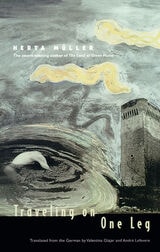
Traveling on One Leg
Herta Muller
Northwestern University Press, 2010
Winner, 2009 Nobel Prize in Literature
Irene is a fragile woman born to a German family in Romania, who has recently emigrated from her native country to West Germany. Politically and socially isolated, Irene moves within the orbit of three troubled men, while simultaneously embarking on an inner exploration of exile, homeland, and identity.
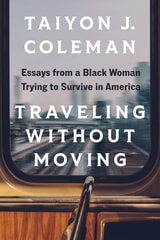
Traveling without Moving
Essays from a Black Woman Trying to Survive in AmericaTaiyon J. Coleman
University of Minnesota Press, 2024
A stunning lyrical commentary on the constructions of race, gender, and class in the fraught nexus of a Black woman’s personal experience and cultural history
The Fair Housing Act passed in 1968, and more than fifty years later, yours seems to be the only Black family on your block in Minneapolis. You and your Black African husband, both college graduates, make less money than some White people with a felony record and no high school diploma. You’re the only Black student in your graduate program. You just aren’t working hard enough. You’re too sensitive. Sandra Bland? George Floyd? Don't take everything so personally. Amid the White smiles of Minnesota Nice and the Minnesota Paradox—the insidious racism of an ostensibly inclusive place to live—what do you do? If you’re Taiyon J. Coleman, you write.
In Traveling without Moving, Coleman shares intimate essays from her life: her childhood in Chicago—growing up in poverty with four siblings and a single mother—and the empowering decision to leave her first marriage. She writes about being the only Black student in a prestigious and predominantly White creative writing program, about institutional racism and implicit bias in writing instruction, about the violent legacies of racism in the U.S. housing market, about the maternal health disparities seen across the country and their implication in her own miscarriage. She explores what it means to write her story and that of her family—an act at once a responsibility and a privilege—bringing forth the inherent contradictions between American ideals and Black reality.
Using a powerful blend of perspectives that move between a first-person lens of lived experience and a wider-ranging critique of U.S. culture, policy, and academia, Coleman’s writing evinces how a Black woman in America is always on the run, always Harriet Tubman, traveling with her babies in tow, seeking safety, desperate to survive, thrive, and finally find freedom.
Retail e-book files for this title are screen-reader friendly.
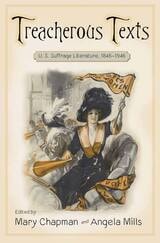
Treacherous Texts
An Anthology of U.S. Suffrage Literature, 1846-1946Chapman, Mary
Rutgers University Press, 2011
Uncovering startling affinities between popular literature and propaganda, Treacherous Texts samples a rich, decades-long tradition of suffrage literature created by writers from diverse racial, class, and regional backgrounds. Beginning with sentimental fiction and polemic, progressing through modernist and middlebrow experiments, and concluding with post-ratification memoirs and tributes, this anthology showcases lost and neglected fiction, poetry, drama, literary journalism, and autobiography; it also samples innovative print cultural forms devised for the campaign, such as valentines, banners, and cartoons. Featured writers include canonical figures as well as writers popular in their day but, until now, lost to ours.
Includes writings by:
• Sojourner Truth
• Elizabeth Cady Stanton
• Frederick Douglass
• Fanny Fern
• Harriet Beecher Stowe
• Djuna Barnes
• Charlotte Perkins Gilman
• Marianne Moore
• Sui Sin Far
• Edna St. Vincent Millay
• Gertrude Stein
And many others.
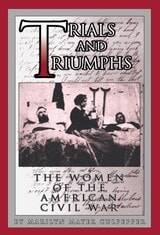
Trials and Triumphs
The Women of the American Civil WarMarilyn Mayer Culpepper
Michigan State University Press, 1991
Just as the Civil War influenced culture and government, it shaped the attitudes of a new breed of pioneering woman. As the war progressed, either by choice or by default, men turned over more and more responsibility to women on the home front. As a result, women began to break free from the "cult of domesticity" to expand career opportunities. By war's end, women on both sides of the conflict proved to themselves and to a nearly shattered nation that the appellation "weaker sex" was a misnomer.
Originally published in 1992, this revised paperback edition includes a new index.

Triumph of the Fatherland
German Unification and the Marginalization of WomenBrigitte Young
University of Michigan Press, 1999
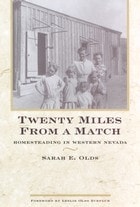
Twenty Miles From A Match
Homesteading In Western NevadaSarah E. Olds
University of Nevada Press, 1978
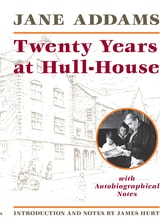
Twenty Years at Hull-House
Jane Addams, with Autobiographical Notes. Introduction and Notes by James Hurt.
University of Illinois Press, 1990

Twilight of Torment
II. HeritageLéonora Miano
Seagull Books, 2023
After beating his girlfriend and leaving her for dead on the street, Amok retraces his steps. Frightened by his act, which reproduces the violence of his father, he hopes to save the woman. But it is too late when he arrives at the scene; two women are already carrying the injured woman. Overwhelmed and not daring to reveal himself, he decides to find his father in order to learn how to rid himself of the dark force that he believes runs through the men of his lineage. He embarks on a journey that will be, more than anything, an inner one, forcing him to understand his story and choose a healthier way of being in the world. This second volume of Twilight of Torment is both intimate and political. Through the story of a man and his family, we discover an African bourgeoisie and its many social wanderings in a contemporary Africa whose future seems nebulous.
Twilight of Torment
MelancholyLéonora Miano
Seagull Books, 2022
Four women speak. They speak to the same man, who is not there. He is the son of the first, the great-yet-impossible love of the second, the platonic companion of the third, the older brother of the last. Speaking to him in his absence, it is to themselves that these women turn, examining their own stories to make sense of their journey, from twilight to twilight, through a mysterious stormy night in the middle of the dry season.
Together, the voices in Twilight of Torment: Melancholy, the first volume of a two-volume novel, perform a powerful and sometimes discordant jazz-inspired chorus about issues such as femininity, sexuality, self-love, and the intrusion of history into the intimate lives of people of African descent. Blackness confronts African-ness, love is sometimes discovered in the arms of another woman, the African renaissance tries to establish itself on the rubble of self-esteem damaged by history. Each of these women, with her own language and rhythm, ultimately represents a specific aspect of the tormented history of Africans in today’s world, and at the end of the night, they will each arrive at a dawn of hope.
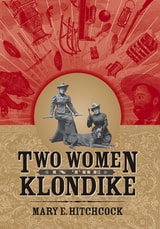
Two Women in the Klondike
Mary Hitchcock
University of Alaska Press, 2025
Two Women in the Klondike created a sensation when it was first published in 1899. The idea that two well-bred socialites could survive the dangers of the north thrilled nineteenth-century readers from San Francisco to New York.
When Mary Hitchcock heard about the discovery of gold in the Klondike in 1898, she left her privileged city life for the wilds of Alaska, planning to stake her own claims. She persuaded her friend Edith Van Buren to accompany her, and the two began preparations for "roughing it." The "necessities" that they brought up the Yukon River to Dawson City, Canada, included a portable bowling alley, an ice cream maker, a Great Dane named Ivan, and a full-size circus tent.
Hitchcock relates the struggles, surprises, and pleasures of traveling in the late nineteenth century in her trademark style. She describes in diary form the people she met and her impressions of rural Alaska and Dawson City. Invaluable for its detailed descriptions of manners, food, and personalities, Hitchcock's account of the Klondike Gold Rush is an outrageous adventure for general readers, armchair travelers, and anyone interested in the lives of American women in the late 1800s.
This new, abridged version includes a map of Hitchcock's northern travels and an introduction by Terrence Cole, professor of history at the University of Alaska Fairbanks.
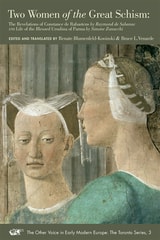
Two Women of the Great Schism
The Revelations of Constance de Rabastens by Raymond de Sabanac and Life of the Blessed Ursulina of Parma by Simone ZanacchiRaymond de Sabanac and Simone Zanacchi
Iter Press, 2010

Two-Moon Journey
The Potawatomi Trail of DeathPeggy King Anderson
Indiana Historical Society Press, 2018
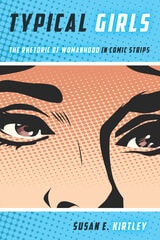
Typical Girls
The Rhetoric of Womanhood in Comic StripsSusan E. Kirtley
The Ohio State University Press, 2021
In the years following 1975, a group of female-created comic strips came to national attention in a traditionally male-dominated medium. Typical Girls: The Rhetoric of Womanhood in Comic Strips uncovers the understudied and developing history of these strips, defining and exploring the ramifications of this expression of women’s roles at a time of great change in history and in comic art. This impressive, engaging, and timely study illustrates how these comics express the complexities of women’s experiences, especially as such experiences were shaped by shifting and often competing notions of womanhood and feminism. Including the comics of Lynn Johnston (For Better or For Worse), Cathy Guisewite (Cathy), Nicole Hollander (Sylvia), Lynda Barry (Ernie Pook’s Comeek), Barbara Brandon-Croft (Where I’m Coming From), Alison Bechdel (Dykes to Watch Out For), and Jan Eliot (Stone Soup), Typical Girls is an important history of the representation of womanhood and women’s rights in popular comic strips.