Results by title
8642 books match the query '20th century' and 1764 start with t
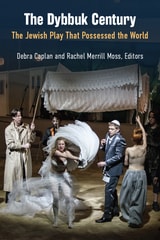
The Dybbuk Century
The Jewish Play That Possessed the WorldDebra Caplan and Rachel Merrill Moss, Editors
University of Michigan Press, 2023
A little over 100 years ago, the first production of An-sky’s The Dybbuk, a play about the possession of a young woman by a dislocated spirit, opened in Warsaw. In the century that followed, The Dybbuk became a theatrical conduit for a wide range of discourses about Jews, belonging, and modernity. This timeless Yiddish play about spiritual possession beyond the grave would go on to exert a remarkable and unforgettable impact on modern theater, film, literature, music, and culture.
The Dybbuk Century collects essays from an interdisciplinary group of scholars who explore the play’s original Yiddish and Hebrew productions and offer critical reflections on the play’s enduring influence. The collection will appeal to scholars, students, and theater practitioners, as well as general readers.

The Dynamics of European Integration
Causes and Consequences of Institutional ChoicesThomas König
University of Michigan Press, 2024
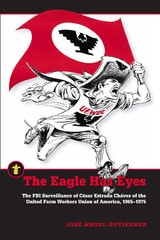
The Eagle Has Eyes
The FBI Surveillance of César Estrada Chávez of the United Farm Workers Union of America, 1965–1975José Angel Gutiérrez
Michigan State University Press, 2019
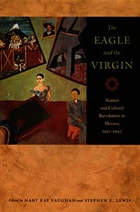
The Eagle and the Virgin
Nation and Cultural Revolution in Mexico, 1920–1940Mary Kay Vaughan and Stephen E. Lewis, eds.
Duke University Press, 2006
Contributors explore the nation-building efforts of the government, artists, entrepreneurs, and social movements; their contradictory, often conflicting intersection; and their inevitably transnational nature. Scholars of political and social history, communications, and art history describe the creation of national symbols, myths, histories, and heroes to inspire patriotism and transform workers and peasants into efficient, productive, gendered subjects. They analyze the aesthetics of nation building made visible in murals, music, and architecture; investigate state projects to promote health, anticlericalism, and education; and consider the role of mass communications, such as cinema and radio, and the impact of road building. They discuss how national identity was forged among social groups, specifically political Catholics, industrial workers, middle-class women, and indigenous communities. Most important, the volume weighs in on debates about the tension between the eagle (the modernizing secular state) and the Virgin of Guadalupe (the Catholic defense of faith and morality). It argues that despite bitter, violent conflict, the symbolic repertoire created to promote national identity and memory making eventually proved capacious enough to allow the eagle and the virgin to coexist peacefully.
Contributors. Adrian Bantjes, Katherine Bliss, María Teresa Fernández, Joy Elizabeth Hayes, Joanne Hershfield, Stephen E. Lewis, Claudio Lomnitz, Rick A. López, Sarah M. Lowe, Jean Meyer, James Oles, Patrice Olsen, Desmond Rochfort, Michael Snodgrass, Mary Kay Vaughan, Marco Velázquez, Wendy Waters, Adriana Zavala
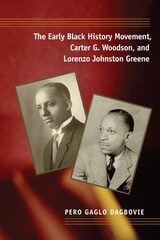
The Early Black History Movement, Carter G. Woodson, and Lorenzo Johnston Greene
Pero Gaglo Dagbovie
University of Illinois Press, 2007
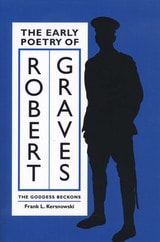
The Early Poetry of Robert Graves
The Goddess BeckonsBy Frank L. Kersnowski
University of Texas Press, 2002
Like many men of his generation, poet Robert Graves was indelibly marked by his experience of trench warfare in World War I. The horrific battles in which he fought and his guilt over surviving when so many perished left Graves shell-shocked and disoriented, desperately seeking a way to bridge the rupture between his conventional upbringing and the uncertainties of postwar British society.
In this study of Graves's early poetry, Frank Kersnowski explores how his war neurosis opened a door into the unconscious for Graves and led him to reject the essential components of the Western idea of reality—reason and predictability. In particular, Kersnowski traces the emergence in Graves's early poems of a figure he later called "The White Goddess," a being at once terrifying and glorious, who sustains life and inspires poetry. Drawing on interviews with Graves's family, as well as unpublished correspondence and drafts of poems, Kersnowski argues that Graves actually experienced the White Goddess as a real being and that his life as a poet was driven by the purpose of celebrating and explaining this deity and her matriarchy.

The Earps Invade Southern California
Bootlegging Los Angeles, Santa Monica, and the Old Soldiers' HomeDon Chaput
University of North Texas Press, 2020
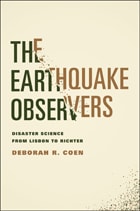
The Earthquake Observers
Disaster Science from Lisbon to RichterDeborah R. Coen
University of Chicago Press, 2012
In The Earthquake Observers, Deborah R. Coen acquaints readers not only with the century’s most eloquent seismic commentators, including Alexander von Humboldt, Charles Darwin, Mark Twain, Charles Dickens, Karl Kraus, Ernst Mach, John Muir, and William James, but also with countless other citizen-observers, many of whom were women. Coen explains how observing networks transformed an instant of panic and confusion into a field for scientific research, turning earthquakes into natural experiments at the nexus of the physical and human sciences. Seismology abandoned this project of citizen science with the introduction of the Richter Scale in the 1930s, only to revive it in the twenty-first century in the face of new hazards and uncertainties. The Earthquake Observers tells the history of this interrupted dialogue between scientists and citizens about living with environmental risk.
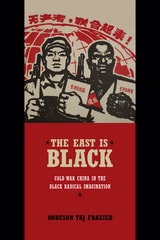
The East Is Black
Cold War China in the Black Radical ImaginationRobeson Taj Frazier
Duke University Press, 2015
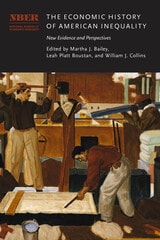
The Economic History of American Inequality
New Evidence and PerspectivesEdited by Martha J. Bailey, Leah Platt Boustan, and William J. Collins
University of Chicago Press, 2025
A meticulous examination of the history and roots of economic inequality within the United States.
This volume refines and extends the economic history literature on economic inequality in the United States. Economic inequality manifests itself on various dimensions, including access to resources and economic security, as well as access to education and opportunities for migration, marriage, and other important life decisions. Measuring inequality and studying its variation over time and in response to economic shocks such as recessions and wars deepen our understanding of how the economy operates and can inform the design of public policies. The studies in this compendium present comprehensive evidence on income distribution during the nineteenth and early twentieth centuries, drawing on new data on wages and prices. They also consider disparities in economic well-being that are reflected in outcomes other than wage and salary income, such as homeownership and marriage. The volume also presents new evidence on the effects of income inequality on social outcomes. It concludes with an intellectual history of “human capital,” a core concept in the economic analysis of the underpinnings of labor market inequality.
The Edge of the Storm
A NovelBy Agustín Yáñez
University of Texas Press, 1963
This tale of a repressive priest and his small Mexican village during the eighteen months preceding the Revolution of 1910 is a great novel, one that exposes the struggle between human desire and paralyzing fear—fear of humanity, fear of nature, fear of the wrath of God. Agustín Yáñez probes the actions of people caught in life’s currents, enthralling his readers with mounting dramatic tension as he shows that no power can forge saints from the human masses, that any attempt to do so, in fact, often has exactly the opposite result.
Yáñez brings to his work a deep understanding of people—his people—and he illuminates a great truth—that no one, anywhere, seems very strange when we understand the environment that has produced him or her.
The Editor Function
Literary Publishing in Postwar AmericaAbram Foley
University of Minnesota Press, 2021
Offering the everyday tasks of literary editors as inspired sources of postwar literary history
Michel Foucault famously theorized “the author function” in his 1969 essay “What Is an Author?” proposing that the existence of the author limits textual meaning. Abram Foley shows a similar critique at work in the labor of several postwar editors who sought to question and undo the corporate “editorial/industrial complex.” Marking an end to the powerful trope of the editor as gatekeeper, The Editor Function demonstrates how practices of editing and publishing constitute their own kinds of thought, calling on us to rethink what we read and how.
The Editor Function follows avant-garde American literary editors and the publishing practices they developed to compete against the postwar corporate consolidation of the publishing industry. Foley studies editing and publishing through archival readings and small press and literary journal publishing lists as unique sites for literary inquiry. Pairing histories and analyses of well- and lesser-known figures and publishing formations, from Cid Corman’s Origin and Nathaniel Mackey’s Hambone to Dalkey Archive Press and Semiotext(e), Foley offers the first in-depth engagement with major publishing initiatives in the postwar United States.
The Editor Function proposes that from the seemingly mundane tasks of these editors—routine editorial correspondence, line editing, list formation—emerge visions of new, better worlds and new textual and conceptual spaces for collective action.
The Education of a Radical
An American Revolutionary in Sandinista NicaraguaBy Michael Johns
University of Texas Press, 2012
“I went to Nicaragua with nothing but a tourist visa, $1,500 in cash, the name of someone at the Agrarian Reform Ministry, and the idea of being a revolutionary intellectual. . . . The idea took hold in a simple character flaw: wanting to believe that I knew better than everyone else.” —From the preface
When Michael Johns joined a Sandinista militia in 1983, a fellow revolutionary dubbed him a rábano, a radish: red on the outside but white on the inside. Now, more than twenty-five years later, Johns appreciates the wisdom of that label as he revisits the questions of identity he tried to resolve by working with the Sandinistas at that point in his life. In The Education of a Radical, Johns recounts his immersion in Marxism and the Nicaraguan sojourn it led to, with a painful maturation process along the way.
His conversion began in college, where he joined a student group called the Latin American Solidarity Association and traveled to Chiapas, Mexico, for research on his senior thesis. Overwhelmed by the poverty he witnessed (and fascinated by a new friend named Maricela who was trying to turn peasants into revolutionaries and who carried a heavily highlighted copy of Late Capitalism), he experienced an ideological transformation. When a Marxist professor later encouraged him to travel to Nicaragua, the real internal battle began for him, a battle that was intensified by the U.S. invasion of Grenada and its effect on the Sandinistas, who believed they were the next target for an imminent American invasion. Before he knew it, Johns was digging trenches and learning how to use an AK-47. His intellectual ideals came face-to-face with revolutionary facts, and the results would perplex him for years to come.
Bringing to life a vivid portrait of the sometimes painful process of reconciling reality with romanticized principles, The Education of a Radical encapsulates a trove of truths about humanity, economics, and politics in one man’s memorable journey.
The Education of an Anti-Imperialist
Robert La Follette and U.S. ExpansionRichard Drake
University of Wisconsin Press, 2013
“An excellent book. . . . As Drake fully documents, La Follette's warnings about [World War I] profiteers and the lust for power were fully justified. Then as now, the American people were lied to by the government and media and manipulated into the stink and blood of war."—Mark Taylor, The Daily Call
“Scholars will . . . value the insights into La Follette's foreign policy education.”—The Historian

The Eight Months of Prague Spring 1968
Jirí Hoppe
Karolinum Press, 2026
A detailed, empirically grounded account of the Prague Spring.
The Eight Months of Prague Spring 1968 focuses on the key political and social developments between January and August, while situating them within the broader context of the deepening crisis of Czechoslovak state socialism since 1967. Structured chronologically into five parts, the book traces the fall of Antonín Novotný, the rise of Alexander Dubček and the reform project known as “socialism with a human face,” the rapid emancipation of media and civil society, the escalating conflict with the Soviet Union and its allies, and the Warsaw Pact invasion, followed by the Moscow negotiations. Drawing primarily on edited archival sources and critically engaging with extensive Czech and international scholarship, the study analyzes the Prague Spring as a distinctive democratization process centered on the transformation of the Communist Party’s leading role. Emphasizing empathetic historical interpretation, it provides a nuanced portrayal of key actors and decision-making dynamics, highlighting both the possibilities and structural limits of reform within a non-democratic socialist system.
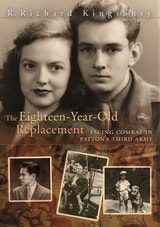
The Eighteen-Year-Old Replacement
Facing Combat in Patton's Third ArmyR. Richard Kingsbury
University of Missouri Press, 2008
When the United States entered the Second World War, eighteen-year-old enlistees were routinely assigned temporary duties and not sent into battle until they turned nineteen. But as the fighting dragged on, America was eventually forced to draft younger men into combat to replace wounded troops—and following the Battle of the Bulge, more than 300,000 eighteen-year-olds were sent as replacements to the army’s decimated divisions.
In The Eighteen-Year-Old Replacement, Richard Kingsbury brings an often-overlooked perspective to the annals of World War II. Torn from an ordinary teenager’s life in the Midwest, young Dick was drafted six weeks after D-Day and rushed with other eighteen-year-olds to the Siegfried Line to bolster Patton’s 94th Infantry Division. His reminiscence provides a moving, diarylike account of what he endured both physically and emotionally—and tells how he went from boyhood to manhood almost overnight.
In prose that is both succinct and evocative, Kingsbury recounts his experiences as a rifleman during the final bloody battles in Germany, giving readers a real feel for what combat was like for a raw recruit. He recalls his first night in a foxhole on the front line and the “unbelievable luxury” of sleeping in a barn’s hayloft. He relives freezing cold at the Bulge, which permanently damaged his legs, and the pounding of enemy artillery during Patton’s breakthrough of the German West Wall, which affected his hearing for life.
More poignantly, Kingsbury shares his anxieties over killing—as well as the distinct possibility of being killed as Wehrmacht tanks mercilessly blasted individual foxholes at Bannholz Woods. He vividly recalls Patton’s attack on Ludwigshafen, on the west bank of the Rhine, where he took a German bullet in his chest—and where three of the six newly arrived eighteen-year-olds were killed.
Interspersed with the accounts of battle are letters between Dick and Mary Jo, his sweetheart back home, capturing the blossoming of romance that transcended both distance and bloodshed. His book casts a new light on war—and courtship—in an era when boys were rushed from the home front to the front lines. By showing how crucial the contribution of these young men was to the war effort, this book gives the eighteen-year-old replacements the recognition they have long deserved.
The Eighth
Mahler and the World in 1910Stephen Johnson
University of Chicago Press, 2020
September 12, 1910: The world premiere of Gustav Mahler’s Eighth Symphony and the artistic breakthrough for which the composer had yearned all his life. Munich’s new Musik Festhalle was filled to capacity on two successive evenings for the performances, which were received with rapturous applause. Representatives of many European royal houses were in attendance, along with an array of stars from the musical and literary world, including Thomas Mann and the young Arnold Schoenberg. Also present were Alma Mahler, the composer’s wife, and Alma’s longtime lover, the architect Walter Gropius. Knowledge of their relationship would precipitate an emotional crisis in Mahler that, compounded with his heart condition and the loss of his young daughter Maria, would lead to his premature death the next year.
In The Eighth, Stephen Johnson provides a masterful account of the symphony’s far-reaching consequences and its effect on composers, conductors, and writers of the time. The Eighth looks behind the scenes at the demanding one-week rehearsal period leading up to the premiere—something unheard of at the time—and provides fascinating insight into Mahler’s compositional habits, his busy life as a conductor, his philosophical and literary interests, and his personal and professional relationships. Johnson expertly contextualizes Mahler’s work among the prevailing attitudes and political climate of his age, considering the art, science, technology, and mass entertainment that informed the world in 1910. The Eighth is an absorbing history of a musical masterpiece and the troubled man who created it.
The Elephants Teach
Creative Writing Since 1880David Gershom Myers
University of Chicago Press, 2006
Myers explores more than a century of debate over how writing should be taught and whether it can or should be taught in a classroom at all. Along the way, he incorporates insights from a host of poets and teachers, including Henry Wadsworth Longfellow, Ralph Waldo Emerson, Robert Frost, John Berryman, John Dewey, Lionel Trilling, Robert Lowell, Ezra Pound, and Saul Bellow. And from his exhaustive research, Myers extracts relevant background information on nineteenth-century educational theory; shifts in technology, publishing, and marketing; the growth of critical theory in this country; and the politics of higher education. While he shows how creative writing has become a machine for creating more creative writing programs, Myers also suggests that its history supplies a precedent for something different—a way for creativity and criticism, poetry and scholarship, to join together to produce not just writing programs but good writers.
Updated with fresh commentary on what’s happened to creative writing in the academy since the first edition was published ten years ago, The Elephants Teach will be indispensable for students and teachers of writing, literature, and literary history.
The Eleventh House
MemoirsHudson Strode, Introduction by Don Noble
University of Alabama Press, 1975
Why should Hudson Strode matter to readers today? Because his life was a masterclass in reinvention and a backstage pass to the Jazz Age’s wittiest salons. Strode wasn’t just a professor in Tuscaloosa; he was a cultural impresario who turned a modest Southern life into a global adventure. He taught generations of writers, staged Shakespeare with bravura, and wrote travel books that earned him a knighthood from the King of Sweden.
But the real allure? The gossip. Strode dined with Lady Astor, traded quips with H. L. Mencken, and sipped cocktails with Zelda and Scott Fitzgerald when they were the incandescent couple of the 1920s. He met Hemingway in Cuba, Robinson Jeffers in Carmel, and Isak Dinesen in Denmark—then wrote about them with candor and charm. His memoir brims with stories of literary giants, royal encounters, and the occasional eyebrow-raising escapade (ask him about the brothel in Birmingham).
For contemporary readers, The Eleventh House is both a captivating autobiography and a time capsule of ambition, art, and audacity. Strode’s world—where Southern gentility collided with European modernism and Jazz Age excess—feels startlingly relevant in an era obsessed with reinvention and celebrity culture. If you’ve ever wondered what it was like to gossip with the Fitzgeralds or watch the devil admire himself in a porch mirror, this memoir delivers.
Step inside Hudson Strode’s The Eleventh House. It’s witty, worldly, and just scandalous enough to keep you turning pages.
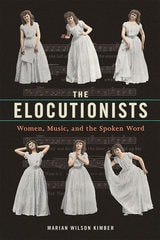
The Elocutionists
Women, Music, and the Spoken WordMarian Wilson Kimber
University of Illinois Press, 2017
Marian Wilson Kimber restores elocution with music to its rightful place in performance history. Gazing through the lenses of gender and genre, Wilson Kimber argues that these female artists transgressed the previous boundaries between private and public domains. Their performances advocated for female agency while also contributing to a new social construction of gender. Elocutionists, proud purveyors of wholesome entertainment, pointedly contrasted their "acceptable" feminine attributes against those of morally suspect actresses. As Wilson Kimber shows, their influence far outlived their heyday. Women, the primary composers of melodramatic compositions, did nothing less than create a tradition that helped shape the history of American music.
The Elsewhere
On Belonging at a Near DistanceAdam Zachary Newton
University of Wisconsin Press, 2005
The Elusive Ideal
Equal Educational Opportunity and the Federal Role in Boston's Public Schools, 1950-1985Adam R. Nelson
University of Chicago Press, 2005
An ambitious study that spans more than thirty years and covers all facets of educational policy, from legal battles to tax strategies, The Elusive Ideal provides a model from which future inquiries will proceed. A probing and provocative work of urban history with deep relevance for urban public schools today, Nelson's book reveals why equal educational opportunity remains such an elusive ideal.
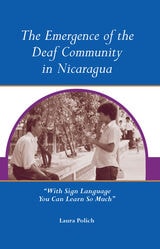
The Emergence of the Deaf Community in Nicaragua
“With Sign Language You Can Learn So Much”Laura Polich
Gallaudet University Press, 2005
The sudden discovery of Nicaraguan Sign Language (NSL) enthralled scholars worldwide who hoped to witness the evolution of a new language. But controversy erupted regarding the validity of NSL as a genuinely spontaneous language created by young children. Laura Polich’s fascinating book recounts her nine-year study of the Deaf community in Nicaragua and her findings about its formation and that of NSL in its wake.
Polich crafted The Emergence of the Deaf Community in Nicaragua from her copious research in Nicaragua’s National Archives, field observations of deaf pupils in 20 special education schools, polls of the teachers for deaf children about their education and knowledge of deafness, a survey of 225 deaf individuals about their backgrounds and living conditions, and interviews with the oldest members of the National Nicaraguan Association of the Deaf.
Polich found that the use of a “standardized” sign language in Nicaragua did not emerge until there was a community of users meeting on a regular basis, especially beyond childhood. The adoption of NSL did not happen suddenly, but took many years and was fed by multiple influences. She also discovered the process that deaf adolescents used to attain their social agency, which gained them recognition by the larger Nicaraguan hearing society. Her book illustrates tremendous changes during the past 60 years, and the truth in one deaf Nicaraguan’s declaration, “With sign language you can learn so much.”

The Emperor of Ice-Cream
Dan Gunn
Seagull Books, 2014
When she falls in love in Rome, it appears that happiness is Lucia’s for the asking, until unstoppable forces intervene—in both of her countries. With mounting tension, her tale leads through the rise of Fascism to the terrible moment in June 1940 when Mussolini declares war, and British Italians are interned. When hundreds are herded as ‘enemy aliens’ onto a ship bound for exile, among their number are two of her brothers. Determined to tell their story before it is too late, Lucia gives an account of one of the most shameful episodes in Britain’s Second World War.
Through his portrayal of Lucia’s singular vision and voice, Dan Gunn has created an unforgettable character who, while registering the buffets of history, is—just possibly—writing herself toward some overdue inner peace.
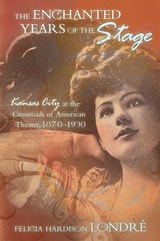
The Enchanted Years of the Stage
Kansas City at the Crossroads of American Theater, 1870-1930Felicia Hardison Londré
University of Missouri Press, 2007
Sarah Bernhardt, Sir Henry Irving, Edwin Booth . . . there was a time when they all played Kansas City. From star-studded engagements at ornate opera houses to risqué shows in Fourth Street honky-tonks, Kansas City was a cow town that wanted to civilize itself through the performing arts. And because it was a railway hub in the heyday of trouping, it opened its doors to America’s traveling performers.
This book chronicles the “first golden age” of Kansas City theater, from the opening of the Coates Opera House in 1870 through the gradual decline of touring productions after World War I. Drawing on the recollections of renowned theater critic David Austin Latchaw and on newspaper archives of the era, Felicia Londré has gleaned long-lost nuggets of theater life—both the legitimate stage and popular fare—to create a fascinating account of a city and its theater culture.
The Enchanted Years of the Stage is brimming with forgotten stories and historical illustrations that offer a new perspective on both the history of American theater and the humor and pathos of performers’ lives. It tells how James O’Neill once chased a messenger boy for ruining a big scene, while Louis James played practical jokes on fellow actors in the middle of Shakespeare performances; how police kept watch over the burlesque girls at the Folly to make sure their act wouldn’t reach the level of indecency allowed in St. Louis; how Orth Stein shot the manager of the Theatre Comique; and how Eddie Foy played his death scene in Kansas City—by dying there. Throughout the book, sidebars of Latchaw’s writing reflect the style and spirit of this bygone era.
Offering a richer view of American theater than have accounts centered on New York, Londré’s book also yields a wealth of new insights into the social and political fabric of an emerging metropolis and testifies to the importance of the arts in the growth and reputation of a great city. By conveying the richness and complexity of road shows in Kansas City—a microcosm of the burgeoning national stage—she gives us a key piece in the mosaic that was American theater in a neglected but unforgettable era.
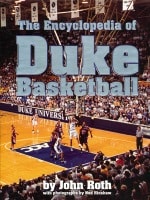
The Encyclopedia of Duke Basketball
John Roth
Duke University Press, 2006
The Encyclopedia of Duke Basketball is the ultimate reference source for true-blue fans, with profiles of great games, classic finishes (both wins and losses), and compelling personalities, including players, coaches, and opponents. While it is filled with a wealth of statistical information, the Encyclopedia goes well beyond the numerical record to deliver insights on people and performances and anecdotes that will surprise even the most seasoned Duke supporter.
The Encyclopedia features:
— A timeline of key events in men’s and women’s basketball history.
— Capsules of the most important men’s and women’s games in the program’s history, including the men’s buzzer-beating overtime win against Kentucky in 1992 and the women’s stunning victory over Tennessee to reach the Final Four in 1999.
— An alphabetical encyclopedia with entries on players from Alaa Abdelnaby to Bill Zimmer and on coaches, customs, opponents, venues, and records.
— Exclusive interviews in which standout players, including Danny Ferry, Mike Gminski, Grant Hill, Christian Laettner, and Jason Williams, recount moments they’ll never forget.
— A statistical record book covering every season through 2005–06.
—130 photographs of Duke basketball history.
A source of entertainment as well as information, this volume will be a great resource for fans hoping to settle arguments, relive favorite games, or simply enjoy hours of pleasurable reading.
The End and the Beginning
The Revolutions of 1989 and the Resurgence of HistoryVladimir Tismaneanu
Central European University Press, 2012
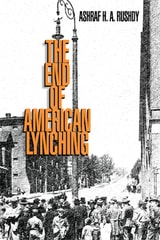
The End of American Lynching
Ashraf H. A. Rushdy
Rutgers University Press, 2012
The End of American Lynching questions how we think about the dynamics of lynching, what lynchings mean to the society in which they occur, how lynching is defined, and the circumstances that lead to lynching. Ashraf H. A. Rushdy looks at three lynchings over the course of the twentieth century—one in Coatesville, Pennsylvania, in 1911, one in Marion, Indiana, in 1930, and one in Jasper, Texas, in 1998—to see how Americans developed two distinct ways of thinking and talking about this act before and after the 1930s.
One way takes seriously the legal and moral concept of complicity as a way to understand the dynamics of a lynching; this way of thinking can give us new perceptions into the meaning of mobs and the lynching photographs in which we find them. Another way, which developed in the 1940s and continues to influence us today, uses a strategy of denial to claim that lynchings have ended. Rushdy examines how the denial of lynching emerged and developed, providing insight into how and why we talk about lynching the way we do at the dawn of the twenty-first century. In doing so, he forces us to confront our responsibilities as American citizens and as human beings.
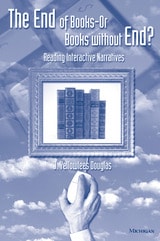
The End of Books--or Books Without End?
Reading Interactive NarrativesJ. Yellowlees Douglas
University of Michigan Press, 2001
The book examines criticism on interactive fiction from both proponents and skeptics and examines similarities and differences between print and hypertext fiction. It looks closely at critically acclaimed interactive works, including Stuart Moulthrop's Victory Garden and Michael Joyce's Afternoon: A Story that illuminate how these hypertext narratives "work." While she sees this as a still-evolving technology and medium, the author identifies possible developments for the future of storytelling from outstanding examples of Web-based fiction and CD-ROM narratives, possibilities that will enable narratives to both portray the world with greater realism an to transcend the boundaries of novels and films, character and plot alike.
Written to be accessible to a wide range of readers, this lively and accessibly-written volume will appeal to those interested in technology and cyberculture, as well as to readers familiar with literary criticism and modern fiction.
J. Yellowlees Douglas is the Director of the William and Grace Dial Center for Written and Oral Communication, University of Florida. She is the author of numerous articles and essays on the subject of hypertext and interactive literature.
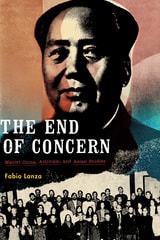
The End of Concern
Maoist China, Activism, and Asian StudiesFabio Lanza
Duke University Press, 2017
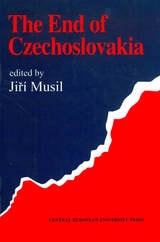
The End of Czechoslovakia
Jirí Musil
Central European University Press, 1995
Scholars and practitioners from both sides of the divide, Czech and Slovak, as well as international experts, take an in-depth look at the causes of Czechoslovakia's break-up, and explain why a seemingly successful country should disintegrate so quickly after the collapse of the communist regime. Besides exploring the political processes leading to the split, the authors analyse the underlying social, economic and cultural differences between the two nations and examine the historical roots of the problems. Particular attention is paid to changing Czech and Slovak attitudes towards the common state and towards each other, from the heyday of the First Republic to the disillusionment of the post-1989 period.
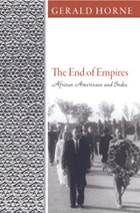
The End of Empires
African Americans and IndiaGerald Horne
Temple University Press, 2009
In the past fifty years, according to Christine So, the narratives of many popular Asian American books have been dominated by economic questions-what money can buy, how money is lost, how money is circulated, and what labor or objects are worth. Focusing on books that have achieved mainstream popularity, Economic Citizens unveils the logic of economic exchange that determined Asian Americans’ transnational migrations and national belonging.
With penetrating insight, So examines literary works that have been successful in the U.S. marketplace but have been read previously by critics largely as narratives of alienation or assimilation, including Fifth Chinese Daughter, Flower Drum Song, Falling Leaves and Turning Japanese. In contrast to other studies that have focused on the marginalization of Asian Americans, Economic Citizens examines how Asian Americans have entered into the public sphere.

The End of Expressionism
Art and the November Revolution in Germany, 1918-1919Joan Weinstein
University of Chicago Press, 1990
The End of Japanese Cinema
Industrial Genres, National Times, and Media EcologiesAlexander Zahlten
Duke University Press, 2017
A Study of the Weatherhead East Asian Institute, Columbia University
The End of Pax Americana
The Loss of Empire and Hikikomori NationalismNaoki Sakai
Duke University Press, 2022
The End of Slavery in Africa
Suzanne Miers and Richard Roberts
University of Wisconsin Press, 1988
The End of Victory Culture
Cold War America and the Disillusioning of a GenerationThomas M. Engelhardt
University of Massachusetts Press, 2007
In a substantial new afterword to his classic account of the collapse of American triumphalism in the wake of World War II, Tom Engelhardt carries that story into the twenty-first century. He explores how, in the aftermath of September 11, 2001, the younger George Bush headed for the Wild West (Osama bin Laden, “Wanted, Dead or Alive”); how his administration brought “victory culture” roaring back as part of its Global War on Terror and its rush to invade Saddam Husseins's Iraq; and how, from its “Mission Accomplished” moment on, its various stories of triumph crashed and burned in that land.

The End of the Cold War
European Unity, Socialism, and the Shift in Global PowerBogdan Denitch
University of Minnesota Press, 1990
The End of the Cold War was first published in 1990. Minnesota Archive Editions uses digital technology to make long-unavailable books once again accessible, and are published unaltered from the original University of Minnesota Press editions.
Against the backdrop of unprecedented change in the world political and social order, Bogdan Denitch charts the unique opportunities and potential pitfalls that accompany the increased economic and political integration of the European Community. Historically, any move toward unification has had broad ramifications. This, coming as it does in the wake of recent democratic upheavals in Europe, will bring to a close an entire era -- an era of a world dominated by superpowers and the cold war that defined there confrontations.
The End of the World
Cultural Apocalypse and TranscendenceErnesto de Martino
University of Chicago Press, 2023
A philosopher, historian of religions, and anthropologist, Ernesto de Martino (1908–1965) produced a body of work that prefigured many ideas and concerns that would later come to animate anthropology. In his writing, we can see the roots of ethnopsychiatry and medical anthropology, discussions of reflexivity and the role of the ethnographer, considerations of social inequality and hegemony from a Gramscian perspective, and an anticipation of the discipline’s “existential turn.” We also find an attentiveness to hope and possibility, despite the gloomy title of his posthumously published book La fine del mondo, or The End of the World. Examining apocalypse as an individual as well as a cultural phenomenon, treating subjects both classic and contemporary and both European and non-Western, ranging across ethnography, history, literature, psychiatry, and philosophy, de Martino probes how we relate to our world and how we might be better subjects and thinkers within it. This new translation offers English-language readers their first chance to engage with de Martino’s masterwork, which continues to appear prescient in the face of the frictions of globalization and environmental devastation.
The End
Hamburg 1943Hans Erich Nossack
University of Chicago Press, 2004
Novelist Hans Erich Nossack was forty-two when the Allied bombardments of German cities began, and he watched the destruction of Hamburg—the city where he was born and where he would later die—from across its Elbe River. He heard the whistle of the bombs and the singing of shrapnel; he watched his neighbors flee; he wondered if his home—and his manuscripts—would survive the devastation. The End is his terse, remarkable memoir of the annihilation of the city, written only three months after the bombing. A searing firsthand account of one of the most notorious events of World War II, The End is also a meditation on war and hope, history and its devastation. And it is the rare book, as W. G. Sebald noted, that describes the Allied bombing campaign from the German perspective.
In the first English-language edition of The End, Nossack's text has been crisply translated by Joel Agee and is accompanied by the photographs of Erich Andres. Poetic, evocative, and yet highly descriptive, The End will prove to be, as Sebald claimed, one of the most important German books on the firebombing of that country.
"A small but critical book, something to read in those quiet moments when we wonder what will happen next."—Susan Salter Reynolds, Los Angeles Times
The Ends of Freedom
Reclaiming America's Lost Promise of Economic RightsMark Paul
University of Chicago Press, 2023
Since the Founding, Americans have debated the true meaning of freedom. For some, freedom meant the provision of life’s necessities, those basic conditions for the “pursuit of happiness.” For others, freedom meant the civil and political rights enumerated in the Bill of Rights and unfettered access to the marketplace—nothing more. As Mark Paul explains, the latter interpretation—thanks in large part to a particularly influential cadre of economists—has all but won out among policymakers, with dire repercussions for American society: rampant inequality, endemic poverty, and an economy built to benefit the few at the expense of the many.
In this book, Paul shows how economic rights—rights to necessities like housing, employment, and health care—have been a part of the American conversation since the Revolutionary War and were a cornerstone of both the New Deal and the Civil Rights Movement. Their recuperation, he argues, would at long last make good on the promise of America’s founding documents. By drawing on FDR’s proposed Economic Bill of Rights, Paul outlines a comprehensive policy program to achieve a more capacious and enduring version of American freedom. Among the rights he enumerates are the right to a good job, the right to an education, the right to banking and financial services, and the right to a healthy environment.
Replete with discussions of some of today’s most influential policy ideas—from Medicare for All to a federal job guarantee to the Green New Deal—The Ends of Freedom is a timely and urgent call to reclaim the idea of freedom from its captors on the political right—to ground America’s next era in the country’s progressive history and carve a path toward a more economically dynamic and equitable nation.
The Enduring Importance of Leo Strauss
Laurence Lampert
University of Chicago Press, 2013
The Enduring Legacy
Oil, Culture, and Society in VenezuelaMiguel Tinker Salas
Duke University Press, 2009
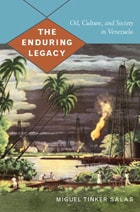
North American and British petroleum companies, seeking to maintain their stakes in Venezuela, promoted the idea that their interests were synonymous with national development. They set up oil camps—residential communities to house their workers—that brought Venezuelan employees together with workers from the United States and Britain, and eventually with Chinese, West Indian, and Mexican migrants as well. Through the camps, the companies offered not just housing but also schooling, leisure activities, and acculturation into a structured, corporate way of life. Tinker Salas contends that these practices shaped the heart and soul of generations of Venezuelans whom the industry provided with access to a middle-class lifestyle. His interest in how oil suffused the consciousness of Venezuela is personal: Tinker Salas was born and raised in one of its oil camps.
The Enemy of the New Man
Homosexuality in Fascist ItalyLorenzo Benadusi
University of Wisconsin Press, 2012
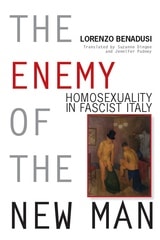
In this first in-depth historical study of homosexuality in Fascist Italy, Lorenzo Benadusi brings to light immensely important archival documents regarding the sexual politics of the Italian Fascist regime; he adds new insights to the study of the complex relationships of masculinity, sexuality, and Fascism; he explores the connections between new Fascist values and preexisting Italian traditional and Roman Catholic views on morality; he documents both the Fascist regime’s denial of the existence of homosexuality in Italy and its clandestine strategies and motivations for repressing and imprisoning homosexuals; he uncovers the ways that accusations of homosexuality (whether true or false) were used against political and personal enemies; and above all, he shows how homosexuality was deemed the enemy of the Fascist “New Man,” an ideal of a virile warrior and dominating husband vigorously devoted to the “political” function of producing children for the Fascist state.
Benadusi investigates the regulation and regimentation of gender in Fascist Italy, and the extent to which, in uneasy concert with the Catholic Church, the regime engaged in the cultural and legal engineering of masculinity and femininity. He cites a wealth of unpublished documents, official speeches, letters, coerced confessions, private letters and diaries, legal documents, and government memos to reveal and analyze how the orders issued by the regime attempted to protect the “integrity of the Italian race.” For the first time, documents from the Vatican archives illuminate how the Catholic Church dealt with issues related to homosexuality during the Fascist period in Italy.
The Enormous Vogue of Things Mexican
Cultural Relations between the United States and Mexico, 1920-1935Helen Delpar
University of Alabama Press, 1995
A landmark study of cultural exchange across the U.S.-Mexico border.
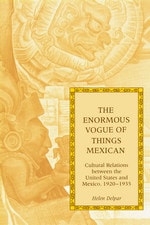
The Enormous Vogue of Things Mexican: Cultural Relations between the United States and Mexico, 1920–1935 explores a remarkable period when Mexico captured the imagination of the United States and became a powerful source of artistic, intellectual, and cultural inspiration. Historian Helen Delpar examines the flourishing exchange between the two nations during the interwar years, revealing how artists, writers, educators, political activists, archaeologists, and travelers helped forge unprecedented connections across the border.
In the decades following the Mexican Revolution, Americans increasingly looked to Mexico as a place of cultural authenticity, creative innovation, and social experimentation. Mexican art, music, literature, archaeology, and revolutionary ideals attracted widespread attention in the United States, while Mexican intellectuals and artists actively engaged with audiences north of the border. Delpar traces the individuals, institutions, and cultural movements that fueled this phenomenon, demonstrating how a growing fascination with Mexico reshaped American perceptions of its southern neighbor.
The book examines the rise of the celebrated Mexican mural movement, expanding interest in Indigenous cultures, and the influence of Mexican themes on American literature, visual arts, music, and education. It also explores the political and social forces that encouraged cultural exchange, including enthusiasm among American liberals for the Mexican Revolution and broader movements toward cultural nationalism in both countries.
By focusing on cultural relationships rather than diplomatic or economic ties, Delpar offers a fresh perspective on the history of U.S.-Mexican relations. Richly researched and engagingly written, The Enormous Vogue of Things Mexican remains an essential work for readers interested in cultural history, Latin American studies, art history, borderlands studies, and the evolving relationship between two neighboring nations whose histories have long been intertwined.
The Eric Voegelin Reader
Politics, History, ConsciousnessCharles R. Embry
University of Missouri Press, 2023
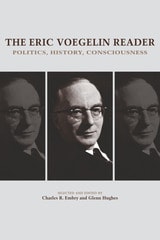
Drawing from the University of Missouri Press’s thirty-four-volume edition of The Collected Works of Eric Voegelin (1990-2009), Charles Embry and Glenn Hughes have assembled a selection of representative works of Voegelin, satisfying a longstanding need for a single volume that can serve as a general introduction to Voegelin’s philosophy. The collection includes writings that demonstrate the range and creativity of Voegelin’s thought as it developed from 1956 until his death in 1985 in his search for the history of order in human society.
The Reader begins with excerpts from Autobiographical Reflections (1973), which include an orienting mixture of biographical information, philosophical motivations, and the scope of Voegelin’s project. It reflects key periods of Voegelin’s philosophical development, pivoting on his flight from the Gestapo.
The next section focuses on Voegelin’s understanding of the contemporary need to re-ground political science in a non-positivistic, post-Weberian outlook and method. It begins with Voegelin’s historical survey of science and scientism, followed by his explanation of what political science now requires in his introduction to The New Science of Politics. Also included are two essays that exemplify the practice of this “new science.” Voegelin started his academic career as a political scientist, and these early essays indicate his wide philosophical vision.
Voegelin recognized that a fully responsible “new science of politics” would require the development of a philosophy of history. This led to the writing of his magnum opus, the five-volume Order and History (1956–1985). This section of the Reader includes his introductions to volumes 1, 2 and 4 and his most essential accounts of the theoretical requirements and historical scope of a philosophy of history adequate to present-day scholarship and historical discoveries.
In the course of his career, Voegelin came to understand that political science, political philosophy, and philosophy of history must have as their theoretical nucleus a sound philosophical anthropology based on an accurate philosophy of human consciousness. The next set of writings consists of one late lecture and four late essays that exemplify how Voegelin recovers the wisdom of classical philosophy and the Western religious tradition while criticizing modern misrepresentations of consciousness. The result is Voegelin’s contemporary accounts of the nature of reason, the challenge of truly rational discussion, and the search for divine origins and the life of the human spirit.
During his philosophical journey, Voegelin addressed the historical situatedness of human existence, explicating the historicity of human consciousness in a manner that gave full due to the challenges of acknowledging both human immersion in the story of history and the ability of consciousness to arrive at philosophically valid truths about existence that are transhistorical. The essays in this final section present the culmination of his philosophical meditation on history, consciousness, and reality.
The Errant Art of Moby-Dick
The Canon, the Cold War, and the Struggle for American StudiesWilliam V. Spanos
Duke University Press, 1995
Combining Heideggerian ontology with a sociopolitical perspective derived primarily from Foucault, the reading of Moby-Dick that forms the center of this book demonstrates that the traditional identification of Melville’s novel as a "romance" renders it complicitous in the discourse of the Cold War. At the same time, Spanos shows how New Americanist criticism overlooks the degree to which Moby-Dick anticipates not only America’s self-representation as the savior of the world against communism, but also the emergent postmodern and anti-imperial discourse deployed against such an image. Spanos’s critique reveals the extraordinary relevance of Melville’s novel as a post-Cold War text, foreshadowing not only the self-destructive end of the historical formation of the American cultural identity in the genocidal assault on Vietnam, but also the reactionary labeling of the current era as "the end of history."
This provocative and challenging study presents not only a new view of the development of literary history in the United States, but a devastating critique of the genealogy of ideology in the American cultural establishment.
The Ethics and Politics of Speech
Communication and Rhetoric in the Twentieth CenturyPat J. Gehrke
Southern Illinois University Press, 2009
In The Ethics and Politics of Speech, Pat J. Gehrke provides an accessible yet intensive history of the speech communication discipline during the twentieth century. Drawing on several previously unpublished or unexamined sources—including essays, conference proceedings, and archival documents—Gehrke traces the evolution of communication studies and the dilemmas that often have faced academics in this field. In his examination, Gehrke not only provides fresh perspectives on old models of thinking; he reveals new methods for approaching future studies of ethical and political communication.
Gehrke begins his history with the first half of the twentieth century, discussing the development of a social psychology of speech and an ethics based on scientific principles, and showing the importance of democracy to teaching and scholarship at this time. He then investigates the shift toward philosophical—especially existential—ways of thinking about communication and ethics starting in the 1950s and continuing through the mid-1970s, a period associated with the rise of rhetoric in the discipline. In the chapters covering the last decades of the twentieth century, Gehrke demonstrates how the ethics and politics of communication were directed back onto the practices of scholarship within the discipline, examining the increased use of postmodern and poststructuralist theories, as well as the new trend toward writing original theory, rather than reinterpreting the past. In offering a thorough history of rhetoric studies, Gehrke sets the stage for new questions and arguments, ultimately emphasizing the deeply moral and political implications that by nature embed themselves in the field of communication.
More than simply a history of the discipline's major developments, The Ethics and Politics of Speech is an account of the philosophical and moral struggles that have faced communication scholars throughout the last century. As Gehrke explores the themes and movements within rhetoric and speech studies of the past, he also provides a better understanding of the powerful forces behind the forging of the field. In doing so, he reveals history’s potential to act as a vehicle for further academic innovation in the future.

The Ethics of Autobiography
Replacing the Subject in Modern SpainAngel G. Loureiro
Vanderbilt University Press, 2000
To address this oversight, Loureiro draws from his own experiences as well as from a wide range of previous theoretical works on autobiography, especially from the writings of Emmanuel Levinas, who believed that the self does not begin as a self-positing consciousness but as a response to an address from the other. On this basis, Loureiro then brilliantly traces the complex interplays between the political, discursive, rhetorical, and ethical dimensions of autobiography.
After laying out these theoretical foundations, Loureiro puts them to work in analyzing four of the most fascinating autobiographies written by Spanish exiles: The Life of Joseph Blanco White, who lived from 1775 to 1841, Memoria de la Melancolia by Maria Teresa Leon (1904-1988), Coto vedado and En los reinos de taifa by Juan Goytisolo (born 1931), and Literature or Life by Jorge Semprun (born 1923). The lives of these authors, all of whom were exiled for political reasons, were disrupted by some of the most crucial events in Spain's tortuous road to modernity and democracy.
The book closes with a discussion of why there have been so few critical examinations of autobiographies written in modern Spain. Loureiro proposes that, even in today's Spain, stifling social and political forces smother ethical responsibility, which is an essential ingredient in creating autobiographies that dare to be more than a humdrum inventory of personal recollections. Only in exile have Spanish authors seemed able to find the conditions to write their lives in a truly responsible manner. This answer to a call that grounds the subject in an other is ultimately the only form of truth available in autobiography.
The Ethics of Postmodernity
Current Trends in Continental ThoughtGary B. Madison and Marty Fairbarn
Northwestern University Press, 1997
Contributors include Barry Allen, Caroline Bayard, Robert Bernasconi, Thomas W. Busch, M.C. Dillon, Marty Fairbairn, Paul Fairfield, Morny Joy, Richard Kearney, Gary B. Madison, Joseph Margolis, Tom Rockmore, Charles E. Scott, Evan Simpson, and Mark Williams.