Results by title
4743 books match the query 'Religion' and 1168 start with t

The Heavenly Contract
Ideology and Organization in Pre-Revolutionary PuritanismDavid Zaret
University of Chicago Press, 1985
The Heavens Declare
Natural Theology and the Legacy of Karl BarthRodney Holder
Templeton Press, 2012
In The Heavens Declare, author Rodney Holder re-examines Barth’s natural theology argument and then explores how it has been critiqued and responded to by others, starting with Dietrich Bonhoeffer and Wolfhart Pannenberg. Holder then considers the contributions of two notable British participants in the science-religion dialogue, Thomas Torrance and Alister McGrath, who, despite their repudiation of natural theology in the traditional sense, also provide many positive lessons. The book concludes by defending an overall position which takes into account the ideas of the aforementioned theologians as well as others who are currently engaged positively in natural theology, such as John Polkinghorne and Richard Swinburne.
Holder’s new study is sure to be of interest to theologians, philosophers of religion, and all scholars interested in the science-religion dialogue, especially those interested in natural theology as an enterprise in itself.
The Hebrew Bible and Philosophy of Religion
Jaco Gericke
SBL Press, 2012
The Hermeneutics of Torah
Proverbs 2, Deuteronomy, and the Composition of Proverbs 1–9Bernd U. Schipper
SBL Press, 2021
This revised and expanded English edition of Bernd U. Schipper’s 2012 Hermeneutik der Tora incorporates the results of his continued research and writings on Proverbs. For nearly a century, many biblical scholars have argued that the main theological traditions, such as the divine law, God’s torah, do not appear in the book of Proverbs. In this volume, however, Schipper demonstrates that Proverbs interacts in a sophisticated way with the concept of the torah. A detailed analysis of Proverbs 2 and other passages from the first part of the book of Proverbs shows that Proverbs engages in a postexilic discourse around “wisdom and torah” concerning the abilities of humans to fulfill the will of YHWH exemplified in the divine torah.
The Hermetic Deleuze
Philosophy and Spiritual OrdealJoshua Ramey
Duke University Press, 2012
Identifying key hermetic moments in Deleuze's thought, including his theories of art, subjectivity, and immanence, Ramey argues that the philosopher's work represents a kind of contemporary hermeticism, a consistent experiment in unifying thought and affect, percept and concept, and mind and nature in order to engender new relations between knowledge, power, and desire. By uncovering and clarifying the hermetic strand in Deleuze's work, Ramey offers both a new interpretation of Deleuze, particularly his insistence that the development of thought demands a spiritual ordeal, and a framework for retrieving the pre-Kantian paradigm of philosophy as spiritual practice.
The Hibernensis
Book 1: A Study and EditionRoy Flechner
Catholic University of America Press, 2019
Widely recognized as the single most important source for the history of the church in early medieval Ireland, the Hibernensis is also our best index for knowing what books were available in Ireland at the time of its compilation: it consists of excerpted material from the Bible, Church Fathers and doctors, hagiography, church histories, chronicles, wisdom texts, and insular normative material unattested elsewhere. This in addition to the staple sources of canonical collections, comprising the acta of church councils and papal letters. Altogether there are forty-two cited authors and 135 cited texts. But unlike previous canonical collections, the contents of the Hibernensis are not simply derivative: they have been modified and systematically organised, offering an important insight into the manner in which contemporary clerical scholars attempted to define, interpret, and codify law for the use of a growing Christian society.
The Hibernensis
Book 2: Translation, Commentary, and IndexesRoy Flechner
Catholic University of America Press, 2019
Widely recognized as the single most important source for the history of the church in early medieval Ireland, the Hibernensis is also our best index for knowing what books were available in Ireland at the time of its compilation: it consists of excerpted material from the Bible, Church Fathers and doctors, hagiography, church histories, chronicles, wisdom texts, and insular normative material unattested elsewhere. This in addition to the staple sources of canonical collections, comprising the acta of church councils and papal letters. Altogether there are forty-two cited authors and 135 cited texts. But unlike previous canonical collections, the contents of the Hibernensis are not simply derivative: they have been modified and systematically organised, offering an important insight into the manner in which contemporary clerical scholars attempted to define, interpret, and codify law for the use of a growing Christian society.
The High Middle Ages
Kari Elisabeth Børresen
SBL Press, 2015
An international collection of ecumenical, gender-sensitive interpretations
The latest volume in the Bible and Women series examines the relationship between women and the Bible's reception in the centuries of the High and Late Middle Ages in Europe. Contributors bring a variety of new insights to questions of how women of the Bible were treated in literary, mystical, and doctrinal texts as well as in art and music. Though the Bible was used to legitimize the subordination of women to men and to exclude them from power, during this period women produced works of theology and biblical interpretation. Contributors include Gemma Avenoza, Marina Benedetti, Dinora Corsi, Maria Laura Giordano, Elisabeth Gössmann, Maria Leticia Sánchez Hernández, Hildegund Keul, Linda Maria Koldau, Martina Kreidler-Kos, Rita Librandi, Gary Macy, Constant J. Mews, Magda Motté, Rosa María Parrinello, María Isabel Toro Pascua, Claudia Poggi, Carmel Posa, Marina Santini, Valeria Ferrari Schiefer, Andrea Taschl-Erber, Adriana Valerio, and Paola Vitolo.
Features
- Essays on the treatment of women in commentaries and didactic moral literature written by men
- Close study of women as scholars and interpreters of the Bible from the twelfth through the fifteen centuries
- Twenty-one essays from twenty-three scholars from around the world
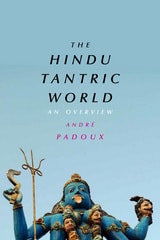
The Hindu Tantric World
An OverviewAndré Padoux
University of Chicago Press, 2017
This book offers a clear, well-grounded overview of Tantra that offers substantial new insights for scholars and practitioners. André Padoux opens by detailing the history of Tantra, beginning with its origins, founding texts, and major beliefs. The second part of the book delves more deeply into key concepts relating to the tantric body, mysticism, sex, mantras, sacred geography, and iconography, while the final part considers the practice of Tantra today, both in India and in the West. The result is an authoritative account of Tantra’s history and present place in the world.

The Historian and Believer
The Morality of Historical Knowledge and Christian BeliefVan A. Harvey
University of Illinois Press, 1952
theology--available again!
"As a critic of the contemporary
theological scene, Van Harvey has few, if any, competitors. This is nowhere
clearer than in The Historian and the Believer . . . the classic
discussion of its topic. Rich in insight and penetrating in argument,
it is one book that belongs in the library of every theologian and seminarian."
-- Schubert M. Ogden, author of Doing Theology Today
Is it possible to be both
a historian and a Christian? Van Harvey's classic The Historian and
the Believer posed that question when it was first published.
In this printing, the author
has provided a new introduction in which he reflects on how he would reframe
his original argument in order to bring out more fully the basic theological
intention underlying his view that Christian faith cannot rest on dubious
historical claims.
From reviews of the first
edition:
"Probably the most interesting
piece of American theological writing to appear this year." -- John
Reumann, Union Seminary Quarterly Review
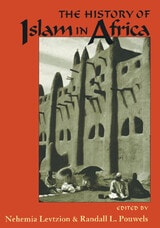
The History Of Islam In Africa
Nehemia Levtzion
Ohio University Press, 2000
A CHOICE Outstanding Academic Title
The history of the Islamic faith on the continent of Africa spans fourteen centuries. For the first time in a single volume, The History of Islam in Africa presents a detailed historic mapping of the cultural, political, geographic, and religious past of this significant presence on a continent-wide scale. Bringing together two dozen leading scholars, this comprehensive work treats the historical development of the religion in each major region and examines its effects.
Without assuming prior knowledge of the subject on the part of its readers, The History of Islam in Africa is broken down into discrete areas, each devoted to a particular place or theme and each written by experts in that particular arena. The introductory chapters examine the principal “gateways” from abroad through which Islam traditionally has influenced Africans. The following two parts present overviews of Islamic history in West Africa and the Sudanic zone, and in subequatorial Africa. In the final section, the authors discuss important themes that have had an impact on Muslim communities in Africa.
Designed as both a reference and a text, The History of Islam in Africa will be an essential tool for libraries, scholars, and students of this growing field.
Contributors: Edward A. Alpers, René A. Bravmann, Abdin Chande, Eric Charry, Allan Christelow, Roberta Ann Dunbar, Kenneth W. Harrow, Lansiné Kaba, Lidwien Kapteijns, Nehemia Levtzion, William F. S. Miles, David Owusu-Ansah, M. N. Pearson, Randall L. Pouwels, Stefan Reichmuth, David Robinson, Peter von Sivers, Robert C.-H. Shell, Jay Spaulding, David C. Sperling with Jose H. Kagabo, Jean-Louis Triaud, Knut S. Vikør, John O. Voll, and Ivor Wilks
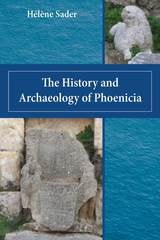
The History and Archaeology of Phoenicia
Hélène Sader
SBL Press, 2019
An insightful historical account of Phoenicia that illustrates its cities, culture, and daily life
Hélène Sader presents the history and archaeology of Phoenicia based on the available contemporary written sources and the results of archaeological excavations in Phoenicia proper. Sader explores the origin of the term Phoenicia; the political and geographical history of the city-states Arwad, Byblos, Sidon, and Tyre; and topography, climate, and natural resources of the Phoenician homeland. Her limited focus on Phoenicia proper, in contrast to previous studies that included information from Phoenician colonies, presents the bare realities of the opportunities and difficulties shaping Phoenician life. Sader’s evaluation and synthesis of the evidence offers a corrective to the common assumption of a unified Phoenician kingdom.
Features
- Historical as well as modern maps with the locations of all relevant archaeological sites
- Faunal and floral analyses that shed light on the Phoenician diet
- Petrographic analysis of pottery that sheds light on trading patterns and developments
The History of Byzantine and Eastern Canon Law to 1500
Wilfried Hartmann
Catholic University of America Press, 2012
The History of Courts and Procedure in Medieval Canon Law
Wilfried Hartmann
Catholic University of America Press, 2016
The History of Medieval Canon Law in the Classical Period, 1140-1234
From Gratian to the Decretals of Pope Gregory IX (History of Medieval Canon Law)Wilfried Hartmann
Catholic University of America Press, 2008
The Hittites and Their World
Billie Jean Collins
SBL Press, 2007
The Hodayot (Thanksgiving Psalms)
A Study Edition of 1QHaEileen M. Schuller
SBL Press, 2012
The Holocaust & the Exile of Yiddish
A History of the Algemeyne EntsiklopedyeBarry Trachtenberg
Rutgers University Press, 2022
The Holocaust & the Exile of Yiddish untangles the complicated saga of the Algemeyne entsiklopedye and its editors. The editors continued to publish volumes and revise the encyclopedia’s mission while their primary audience, Eastern European Jews, faced persecution and genocide under Nazi rule, and the challenge of reestablishing themselves in the first decades after World War II. Historian Barry Trachtenberg reveals how, over the course of the middle decades of the twentieth century, the project sparked tremendous controversy in Jewish cultural and political circles, which debated what the purpose of a Yiddish encyclopedia should be, as well as what knowledge and perspectives it should contain. Nevertheless, this is not only a story about destruction and trauma, but also one of tenacity and continuity, as the encyclopedia’s compilers strove to preserve the heritage of Yiddish culture, to document its near-total extermination in the Holocaust, and to chart its path into the future.
The Holocaust Averted
An Alternate History of American Jewry, 1938-1967Gurock, Jeffrey S
Rutgers University Press, 2015
This alternate history—where, among many scenarios, Hitler is assassinated, Japan does not bomb Pearl Harbor, and Franklin Delano Roosevelt is succeeded after two terms by Robert A. Taft—does cause us to review and better appreciate history. As Gurock tells his tale, he concludes every chapter with a short section that describes what actually happened and, thus, further educates the reader.
The Holocaust
Theoretical ReadingsLevi, Neil
Rutgers University Press, 2003
This agenda-setting reader brings together both classic and new writings to demonstrate how concerns arising from the Nazi genocide shaped contemporary literary and cultural theory. Wide in its thematic scope, it covers such vital questions as:
- Authenticity and experience
- Memory and trauma
- Historiography and the philosophy of history
- Fascism and Nazi anti-Semitism
- Representation and identity formation
- Race, gender, and genocide
- Implications of the Holocaust for theories of the unconscious, ethics, politics, and aesthetics
The readings, which are fully contextualized by a general introduction, section introductions, and bibliographical notes, represent the work of many influential writers and theorists, including Theodor Adorno, Giorgio Agamben, Hannah Arendt, Jean Baudrillard, Zygmunt Bauman, Walter Benjamin, Cathy Caruth, Jacques Derrida, Shoshana Felman, Saul Friedlander, Paul Gilroy, Lawrence Langer, Emmanuel Levinas, Primo Levi, Jean-François Lyotard, Hayden White, and James E. Young. This multidisciplinary anthology will be welcomed by students and scholars of the Holocaust.
The Holy Land Reborn
Pilgrimage and the Tibetan Reinvention of Buddhist IndiaToni Huber
University of Chicago Press, 2008
Focusing on the Tibetan creation and recreation of India as a destination, a landscape, and a kind of other, in both real and idealized terms, Huber explores how Tibetans have used the idea of India as a religious territory and a sacred geography in the development of their own religion and society. In a timely closing chapter, Huber also takes up the meaning of India for the Tibetans who live in exile in their Buddhist holy land.
A major contribution to the study of Buddhism, The Holy Land Reborn describes changes in Tibetan constructs of India over the centuries, ultimately challenging largely static views of the sacred geography of Buddhism in India.
The Holy Mass
Mike Aquilia
Catholic University of America Press, 2021
The Holy Spirit in Luke-Acts
The Role of the ReaderMarco Wittenberg
Central European University Press, 2026
The Holy Spirit in Puritan Faith and Experience
Geoffrey F. Nuttall
University of Chicago Press, 1992
In a new Introduction, Peter Lake discusses the relevance of Nuttall's book to, and its influence on, major works in seventeenth-century English history written since 1946.
The Homilies of Saint Jerome, Volume 1 (1–59 on the Psalms)
Saint Jerome
Catholic University of America Press, 1965
The Homilies of Saint Jerome, Volume 2
Saint Jerome
Catholic University of America Press, 1966
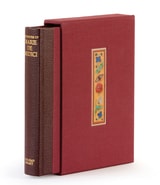
The Hours of Marie de Medici
A FacsimileMarie de Medici
Bodleian Library Publishing, 2016
At the turn of the fifteenth century, private devotionals became a specialty of the renowned Ghent–Bruges illuminators. Wealthy patrons who commissioned work from these artists often spared no expense in the presentation of their personal prayer books, or “books of hours,” from detailed decoration to luxurious bindings and embroidery.
This manuscript owes its name to the French queen, Marie de Medici, widow of King Henri IV. The manuscript was painted by an artist known as the David Master, one of the renowned Flemish illuminators of the sixteenth century. Fine architectural interiors, gorgeous landscapes, and detailed city scenes form the subjects of three full-size illuminations and forty-two full-page miniatures. It is one of the finest examples of medieval illumination in a personal prayer book and the most copiously illustrated work of the David Master to survive.
Together with a scholarly introduction that gives an overview of Flemish illumination and examines each of the illustrations in detail, this full-color facsimile limited edition, bound in linen with a leather quarter binding and beautifully presented in a slipcase, faithfully reproduces all 176 leaves of the original manuscript.

The House of the Lord
Steven Smith
Catholic University of America Press, 2017
The Huarochiri Manuscript
A Testament of Ancient and Colonial Andean ReligionTranslation from the Quechua by Frank Salomon and George L. Urioste
University of Texas Press, 1991
One of the great repositories of a people's world view and religious beliefs, the Huarochirí Manuscript may bear comparison with such civilization-defining works as Gilgamesh, the Popul Vuh, and the Sagas. This translation by Frank Salomon and George L. Urioste marks the first time the Huarochirí Manuscript has been translated into English, making it available to English-speaking students of Andean culture and world mythology and religions.
The Huarochirí Manuscript holds a summation of native Andean religious tradition and an image of the superhuman and human world as imagined around A.D. 1600. The tellers were provincial Indians dwelling on the west Andean slopes near Lima, Peru, aware of the Incas but rooted in peasant, rather than imperial, culture. The manuscript is thought to have been compiled at the behest of Father Francisco de Avila, the notorious "extirpator of idolatries." Yet it expresses Andean religious ideas largely from within Andean categories of thought, making it an unparalleled source for the prehispanic and early colonial myths, ritual practices, and historic self-image of the native Andeans.
Prepared especially for the general reader, this edition of the Huarochirí Manuscript contains an introduction, index, and notes designed to help the novice understand the culture and history of the Huarochirí-area society. For the benefit of specialist readers, the Quechua text is also supplied.
The Huguenot Experience of Persecution and Exile
Three Women’s StoriesCharlotte Arbaleste Duplessis-Mornay, Anne de Chaufepié, and Anne Marguerite Petit Du Noyer
Iter Press, 2019
Edited by Colette H. Winn. Translated by Lauren King and Colette H. Winn
The Other Voice in Early Modern Europe: The Toronto Series, Vol. 68
The Humble Approach Revised Edition
Scientists Discover GodJohn Marks Templeton
Templeton Press, 1998
For generations the discoveries of science tended to challenge the very existence of God. Templeton makes a striking argument for just the opposite point of view. He goes to the writings of many of the world's leading scientific thinkers—as diverse in background as Albert Einstein and Teilhard de Chardin—and discovers them in awe of the universe, perceiving the hand of Divine mystery at work.
The Humble Approach teaches that man can discover and comprehend only a few of the infinite aspects of God's nature, never enough to form a comprehensive theology. The humble approach may be a science still in its infancy, but it seeks to develop a way of knowing God appropriate to His greatness and our littleness.

The Humble Approach, Anniversary Edition
Scientists Discover GodJohn Marks Templeton
Templeton Press, 2027
For generations the discoveries of science tended to challenge the very existence of God. Templeton makes a striking argument for just the opposite point of view. He goes to the writings of many of the world's leading scientific thinkers—as diverse in background as Albert Einstein and Teilhard de Chardin—and discovers them in awe of the universe, perceiving the hand of Divine mystery at work.
The Humble Approach teaches that man can discover and comprehend only a few of the infinite aspects of God's nature, never enough to form a comprehensive theology. The humble approach may be a science still in its infancy, but it seeks to develop a way of knowing God appropriate to His greatness and our littleness.
The anniversary edition of this groundbreaking book features a new preface by His Holiness the Dalai Lama and a new introduction from Heather Dill, the director of the Templeton Prize. It also includes an updated list of the past winners of the Templeton Prize.
The Hungry God
Hindu Tales of Filicide and DevotionDavid Shulman
University of Chicago Press, 1993
The Hymns on Faith
Jeffrey T. St. Ephrem the Syrian
Catholic University of America Press, 2015
The Ice Broken, volume I
Puritan Influences on the Netherlands in the Seventeenth CenturyCentral European University Press, 2026
The Ice Broken, volume II
Puritan Influences on the Netherlands in the Seventeenth CenturyCentral European University Press, 2026
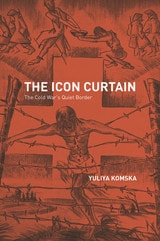
The Icon Curtain
The Cold War's Quiet BorderYuliya Komska
University of Chicago Press, 2015
Yuliya Komska transports readers to the western edge of the Bohemian Forest, one of Europe’s oldest borderlands, where in the 1950s civilians set out to shape the so-called prayer wall. A chain of new and repurposed pilgrimage sites, lookout towers, and monuments, the prayer wall placed two long-standing German obsessions, forest and border, at the heart of the century’s most protracted conflict. Komska illustrates how civilians used the prayer wall to engage with and contribute to the new political and religious landscape. In the process, she relates West Germany’s quiet sylvan periphery to the tragic pitch prevalent along the Iron Curtain’s better-known segments.
Steeped in archival research and rooted in nuanced interpretations of wide-ranging cultural artifacts, from vandalized religious images and tourist snapshots to poems and travelogues, The Icon Curtain pushes disciplinary boundaries and opens new perspectives on the study of borders and the Cold War alike.
The Idea of Democratic Capitalism
A Primer to Micheal Novak's Political, Economic, and Social ThoughtRobert Felice
Catholic University of America Press, 2026
The Idea of the Theater in Latin Christian Thought
Augustine to the Fourteenth CenturyDonnalee Dox
University of Michigan Press, 2004
---Margaret Knapp, Arizona State University
"...an elegantly concise survey of the way classical notions of theater have been interpreted in the Latin Middle Ages. Dox convincingly demonstrates that far from there being a single 'medieval' attitude towards theater, there was in fact much debate about how theater could be understood to function within Christian tradition, even in the so-called 'dark ages' of Western culture. This book makes an innovative contribution to studies of the history of the theater, seen in terms of the history of ideas, rather than of practice."
---Constant Mews, Director, Centre for the Study of Religion & Theology, University of Monash, Australia
"In the centuries between St. Augustine and Bartholomew of Bruges, Christian thought gradually moved from a brusque rejection of classical theater to a progressively nuanced and positive assessment of its value. In this lucidly written study, Donnalee Dox adds an important facet to our understanding of the Christian reaction to, and adaptation of, classical culture in the centuries between the Church Fathers and the rediscovery of Aristotle."
---Philipp W. Rosemann, University of Dallas
This book considers medieval texts that deal with ancient theater as documents of Latin Christianity's intellectual history. As an exercise in medieval historiography, this study also examines biases in modern scholarship that seek links between these texts and performance practices. The effort to bring these texts together and place them in their intellectual contexts reveals a much more nuanced and contested discourse on Greco-Roman theater and medieval theatrical practice than has been acknowledged. The book is arranged chronologically and shows the medieval foundations for the Early Modern integration of dramatic theory and theatrical performance.
The Idea of the Theater in Latin Christian Thought will be of interest to theater historians, intellectual historians, and those who work on points of contact between the European Middle Ages and Renaissance. The broad range of documents discussed (liturgical treatises, scholastic commentaries, philosophical tracts, and letters spanning many centuries) renders individual chapters useful to philosophers, aestheticians, and liturgists as well as to historians and historiographers. For theater historians, this study offers an alternative reading of familiar texts which may alter our understanding of the emergence of dramatic and theatrical traditions in the West. Because theater is rarely considered as a component of intellectual projects in the Middle Ages, this study opens a new topic in the writing of medieval intellectual history.
The Ideal Bishop
Michael G. Sirilla
Catholic University of America Press, 2017
The Identity of Israel’s God in Christian Scripture
Don Collett
SBL Press, 2021
A broad, sweeping volume that breaches the walls separating biblical and theological disciplines
Biblical scholars and theologians engage an important question: Who is Israel’s God for Christian readers of the Old Testament? For Christians, Scripture is the Old and New Testament bound together in a single legacy. Contributors approach the question from multiple disciplinary vantage points. Essays on both Testaments focus on figural exegesis, critical exegesis, and the value of diachronic understandings of the Old Testament’s compositional history for the sake of a richer synchronic reading. This collection is offered in celebration of the life and work of Christopher R. Seitz. His rich and wide-ranging scholarly efforts have provided scholars and students alike a treasure trove of resources related to this critical question.
The Idols of ISIS
From Assyria to the InternetAaron Tugendhaft
University of Chicago Press, 2020
Beginning with the Islamic State’s claim that the smashed objects were idols of the “age of ignorance,” Aaron Tugendhaft questions whether there can be any political life without idolatry. He then explores the various roles Mesopotamian sculpture has played in European imperial competition, the development of artistic modernism, and the formation of Iraqi national identity, showing how this history reverberates in the choice of the Mosul Museum as performance stage. Finally, he compares the Islamic State’s production of images to the ways in which images circulated in ancient Assyria and asks how digitization has transformed politics in the age of social media. An elegant and accessibly written introduction to the complexities of such events, The Idols of ISIS is ideal for students and readers seeking a richer cultural perspective than the media usually provides.
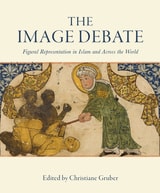
The Image Debate
Figural Representation in Islam and Across the WorldEdited by Christiane Gruber
Gingko, 2019
The Image Debate is a collection of thirteen essays which examine the controversy surrounding the use of images in Islamic and other religious cultures and seek to redress some of the misunderstandings that have arisen. Written by leading academics from the United States, Australia, Turkey, Israel and the United Kingdom, the book has a foreword by Stefano Carboni, Director of the Art Gallery of Western Australia, followed by an introduction by the editor Christiane Gruber, who sets the subject in context with a detailed examination of the debates over idols and the production of figural images in Islamic traditions.
Twelve further articles are divided into three sections: the first deals with pre-modern Islam: Mika Natif looks at tensions between the Hadith prohibition on images and the praxis of image-making under the Umayyad dynasty and argues that the Umayyad rulers used imagery to establish their political and religious authority; Finbarr Barry Flood examines the practice of epigraphic erasure, i.e., the removal of names of rulers and patrons from historical inscriptions from the medieval Islamic world; and Oya Pancaroğlu focuses on the figural conventions of an illustrated manuscript of Varqa and Gulshah, a medieval Persian romance composed in the masnavi (rhyming couplet) form by the 11th-century poet ‘Ayyuqi.
The second section addresses the situation outside Islam: Alicia Walker surveys attitudes toward the production and veneration of religious images in Byzantium from the earliest years of the Christian Roman Empire (early 4th century) to the aftermath of the Iconoclast controversy (late 9th century); Steven Fine explores the history of Jewish engagement with ‘art’ from Roman antiquity through the high middle ages through a detailed exploration of the 3rd-century Dura Europos synagogue and its wall paintings; Michael Shenkar examines evidence for the employment of figural images in the cultic practices of some of the major ancient Iranian cultural and political entities, offering a broad perspective on perceptions of images in ancient Iranian worship; and Robert DeCaroli delves into the question of why no image of the Buddha was made during the first five hundred years of Buddhism.
The third section brings the reader back to Islamic lands with five articles examining aspects of the issue in the modern and contemporary periods: Yousuf Saaed investigates South Asian mass-produced images, especially posters that include illustrations of local Sufi shrines, portraits of saints and Shi‘i iconography; James Bennett explores the visual depiction of Javanese shadow puppets (wayang kulit), including the sage Begawan Abiyasa, whose narratives convey key elements of Sufi mystical philosophy; Allen and Mary Roberts consider images of Cheikh Amadu Bamba, the founding Sufi saint of the Senegalese Mouride order; Rose Issa addresses how the term ‘Islamic’ relates to contemporary art, how artists manage to create work in countries in constant turmoil and to what extent such works reflect their conceptual, aesthetic, and socio-political concerns; and finally Shiva Balaghi traces the use of the figure, along its symbolic shadows and silhouettes, in works by notable Iranian artists living in Iran and in diaspora.
The Immortality of the Soul; The Magnitude of the Soul; On Music; The Advantage of Believing; On Faith in Things Unseen
Saint Augustine
Catholic University of America Press, 1947
The Incarnate Lord
Thomas Josepth White, OP
Catholic University of America Press, 2015
The Inconstancy of the Indian Soul
The Encounter of Catholics and Cannibals in 16-century BrazilEduardo Viveiros de Castro
Prickly Paradigm Press, 2011
In the mid-sixteenth century, Jesuit missionaries working in what is now Brazil were struck by what they called the inconstancy of the people they met, the indigenous Tupi-speaking tribes of the Atlantic coast. Though the Indians appeared eager to receive the Gospel, they also had a tendency to forget the missionaries’ lessons and “revert” to their natural state of war, cannibalism, and polygamy. This peculiar mixture of acceptance and rejection, compulsion and forgetfulness was incorrectly understood by the priests as a sign of the natives’ incapacity to believe in anything durably.
In this pamphlet, world-renowned Brazilian anthropologist Eduardo Viveiros de Castro situates the Jesuit missionaries’ accounts of the Tupi people in historical perspective, and in the process draws out some startling and insightful implications of their perceived inconstancy in relation to anthropological debates on culture and religion.
The Indian Christ, the Indian King
The Historical Substrate of Maya Myth and RitualBy Victoria Reifler Bricker
University of Texas Press, 1981
Victoria Bricker shows that "history" sometimes rests on mythological foundations and that "myth" can contain valid historical information. Her book, which is a highly original critique of postconquest historiography about the Maya, challenges major assumptions about the relationship between myth and history implicit in structuralist interpretations. The focus of the book is ethnic conflict, a theme that pervades Maya folklore and is also well documented historically.
The book begins with the Spanish conquest of the Maya. In chapters on the postconquest history of the Maya, five ethnic conflicts are treated in depth: the Cancuc revolt of 1712, the Quisteil uprising of 1761, the Totonicapan rebellion of 1820, the Caste War of Yucatan (1847-1901), and the Chamulan uprising in 1869. Analytical chapters consider the relationship between historical events and modern folklore about ethnic conflict. Bricker demonstrates that myths and rituals emphasize structure at the expense of temporal and geographical provenience, treating events separated by centuries or thousands of miles as equivalent and interchangeable.
An unexpected result of Bricker's research is the finding that many seemingly aboriginal elements in Maya folklore are actually of postconquest origin, and she shows that it is possible to determine precisely when and, more important, why they become part of myth and ritual. Furthermore, she finds that the patterning of the accretion of events in folklore over time provides clues to the function, or meaning, of myth and ritual for the Maya.
Bricker has made use of many unpublished documents in Spanish, English, and Maya, as well as standard synthetic historical works. The appendices contain extensive samples of the oral traditions that are explained by her analysis.
The Indiscrete Image
Infinitude and Creation of the HumanThomas A. Carlson
University of Chicago Press, 2008
Framed in response to Martin Heidegger’s influential account of the relation between technological modernity and theological tradition, The Indiscrete Image builds an understanding of creativity as conditioned by insurmountable unknowing and incalculable possibility through alternative readings of Christian theological tradition and technological culture—and the surprising resonance between these two. Carlson concludes that the always ongoing work of world creation, tied essentially to human self-creation, implies neither an idol’s closure nor an icon’s transcendence, but the “indiscrete image” whose love makes possible—by keeping open—both the human and its world.
The Indissolubility of Marriage and the Council of Trent
E. Christian Brugger
Catholic University of America Press, 2017
The Inner Life of Race
Souls, Bodies, and the History of Racial PowerLeerom Medovoi
Duke University Press, 2024