Results by title
342 books match the query '16th century' and 2 start with u
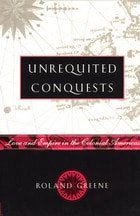
Unrequited Conquests
Love and Empire in the Colonial AmericasRoland Greene
University of Chicago Press, 2000
Love poetry dominated European literature during the Renaissance. Its attitudes, conventions, and values appeared not only in courtly settings but also in the transatlantic world, where cultures were being built, power exercised, and policies made. In this major contribution to our understanding of both the Age of Exploration and early modern lyric, Roland Greene argues that love poetry was not simply a reflection of the times but a means of cultural transformation.
European encounters with the Americas awakened many forms of desire, which pervaded the writings of explorers like Columbus and his contemporaries. These experiences in turn shaped colonial society in Brazil, Peru, and elsewhere. The New World, while it could be explored, conquered, and exploited, could never really be "known"—leaving Europe's desire continually unrequited and the project of empire unfulfilled.
Using numerous poetic examples and extensive historical documentation, Unrequited Conquests rewrites the relations between the Renaissance and colonial Latin America and between poetry and history.
[more]
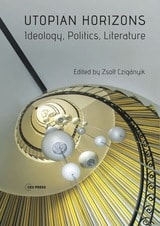
Utopian Horizons
Ideology, Politics, LiteratureZsolt Cziganyik
Central European University Press, 2017
The 500th anniversary of Thomas More’s Utopia has directed attention toward the importance of utopianism. This book investigates the possibilities of cooperation between the humanities and the social sciences in the analysis of 20th century and contemporary utopian phenomena. The papers deal with major problems of interpreting utopias, the relationship of utopia and ideology, and the highly problematic issue as to whether utopia necessarily leads to dystopia. Besides reflecting the interdisciplinary nature of contemporary utopian investigations, the eleven essays effectively represent the constructive attitudes of utopian thought, a feature that not only defines late 20th- and 21st-century utopianism, but is one of the primary reasons behind the rising importance of the topic.
The volume’s originality and value lies not only in the innovative theoretical approaches proposed, but also in the practical application of the concept of utopia to a variety of phenomena which have been neglected in the utopian studies paradigm, especially to the rarely discussed Central European texts and ideologies.
[more]