Results by title
1048 books match the query 'African American & Black' and 18 start with u
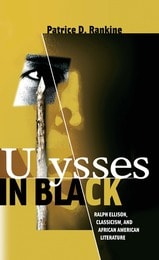
Ulysses in Black
Ralph Ellison, Classicism, and African American LiteraturePatrice D. Rankine
University of Wisconsin Press, 2008
In this groundbreaking work, Patrice D. Rankine asserts that the classics need not be a mark of Eurocentrism, as they have long been considered. Instead, the classical tradition can be part of a self-conscious, prideful approach to African American culture, esthetics, and identity. Ulysses in Black demonstrates that, similar to their white counterparts, African American authors have been students of classical languages, literature, and mythologies by such writers as Homer, Euripides, and Seneca.
Ulysses in Black closely analyzes classical themes (the nature of love and its relationship to the social, Dionysus in myth as a parallel to the black protagonist in the American scene, misplaced Ulyssean manhood) as seen in the works of such African American writers as Ralph Ellison, Toni Morrison, and Countee Cullen. Rankine finds that the merging of a black esthetic with the classics—contrary to expectations throughout American culture—has often been a radical addressing of concerns including violence against blacks, racism, and oppression. Ultimately, this unique study of black classicism becomes an exploration of America’s broader cultural integrity, one that is inclusive and historic.
Outstanding Academic Title, Choice Magazine
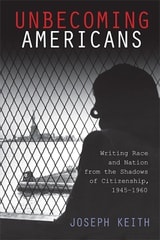
Unbecoming Americans
Writing Race and Nation from the Shadows of Citizenship, 1945-1960Keith, Joseph
Rutgers University Press, 2013
During the Cold War, Ellis Island no longer served as the largest port of entry for immigrants, but as a prison for holding aliens the state wished to deport. The government criminalized those it considered un-assimilable (from left-wing intellectuals and black radicals to racialized migrant laborers) through the denial, annulment, and curtailment of citizenship and its rights. The island, ceasing to represent the iconic ideal of immigrant America, came to symbolize its very limits.
Unbecoming Americans sets out to recover the shadow narratives of un-American writers forged out of the racial and political limits of citizenship. In this collection of Afro-Caribbean, Filipino, and African American writers—C.L.R. James, Carlos Bulosan, Claudia Jones, and Richard Wright—Joseph Keith examines how they used their exclusion from the nation, a condition he terms “alienage,” as a standpoint from which to imagine alternative global solidarities and to interrogate the contradictions of the United States as a country, a republic, and an empire at the dawn of the "American Century.”
Building on scholarship linking the forms of the novel to those of the nation, the book explores how these writers employed alternative aesthetic forms, including memoir, cultural criticism, and travel narrative, to contest prevailing notions of race, nation, and citizenship. Ultimately they produced a vital counter-discourse of freedom in opposition to the new formations of empire emerging in the years after World War II, forms that continue to shape our world today.
Unbought and Unbossed
Transgressive Black Women, Sexuality, and RepresentationTrimiko Melancon
Temple University Press, 2014
Drawing from black feminist and critical race theories, historical discourses on gender and sexuality, and literary criticism, Melancon explores the variety and complexity of black female identity. She illuminates how authors including Ann Allen Shockley, Alice Walker, and Gayl Jones engage issues of desire, intimacy, and independence to shed light on a more complex black identity, one ungoverned by rigid politics over-determined by race, gender and sexuality.
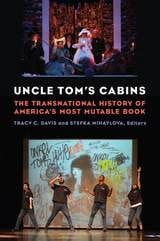
Uncle Tom's Cabins
The Transnational History of America's Most Mutable BookTracy C. Davis and Stefka Mihaylova, Editors
University of Michigan Press, 2018
Throughout these encounters, Stowe’s story of American slavery serves as a paradigm for understanding oppression, selectively and strategically refracting the African American slave onto other iconic victims and freedom fighters. The book brings together performance historians, literary critics, and media theorists to demonstrate how the myriad cultural and political effects of Stowe’s enduring story has transformed it into a global metanarrative with national, regional, and local specificity.
Under a Bad Sign
Criminal Self-Representation in African American Popular CultureJonathan Munby
University of Chicago Press, 2011
What accounts for the persistence of the figure of the black criminal in popular culture created by African Americans? Unearthing the overlooked history of art that has often seemed at odds with the politics of civil rights and racial advancement, Under a Bad Sign explores the rationale behind this tradition of criminal self-representation from the Harlem Renaissance to contemporary gangsta culture.
In this lively exploration, Jonathan Munby takes a uniquely broad view, laying bare the way the criminal appears within and moves among literary, musical, and visual arts. Munby traces the legacy of badness in Rudolph Fisher and Chester Himes’s detective fiction and in Claude McKay, Julian Mayfield, and Donald Goines’s urban experience writing. Ranging from Peetie Wheatstraw’s gangster blues to gangsta rap, he also examines criminals in popular songs. Turning to the screen, the underworld films of Oscar Micheaux and Ralph Cooper, the 1970s blaxploitation cycle, and the 1990s hood movie come under his microscope as well. Ultimately, Munby concludes that this tradition has been a misunderstood aspect of African American civic life and that, rather than undermining black culture, it forms a rich and enduring response to being outcast in America.
Under the Sun
A Black Journalist's JourneyHarold Jackson
University of Alabama Press, 2025
A determined journalist’s account of rising to Pulitzer Prize–winning heights
Under the Sun: A Black Journalist’s Journey is Harold Jackson’s powerful memoir that chronicles his path from a Birmingham, Alabama, housing project in the 1950s and ’60s to becoming a Pulitzer Prize–winning journalist. Growing up in the segregated South, Jackson didn’t see a writing career as feasible, especially with the financial struggles his family faced after his father’s death. However, his freshman English teacher’s encouragement set him on a course that would change his life.
Jackson’s journey began in high school, where he became one of the first Black students in the University of Alabama’s summer journalism workshop. It was there that he discovered his unique voice as a writer, setting the stage for a remarkable forty-five-year career as a newspaper writer and editor. Despite the pervasive racial prejudices of the time, Jackson learned to navigate the complexities of being Black in a predominantly white profession. He reflects on the duality of living as a Black person in America, a concept W. E. B. Du Bois described as “double consciousness,” and the ways journalism allowed Jackson to connect with people from all walks of life.
Through his work at prominent news venues such as the Birmingham Post-Herald, United Press International, the Philadelphia Inquirer, the Birmingham News, the Baltimore Sun, and the Houston Chronicle, Jackson’s story is not just one of professional success but also of personal growth and understanding. Under the Sun is a testament to his resilience, his ability to see past racial barriers, and his unwavering commitment to giving a voice to those who need it most.
Underground, Monroe, and The Mamalogues
Three PlaysLisa B. Thompson; Foreword by E. Patrick Johnson; Interview with Joan Morgan
Northwestern University Press, 2020
The thriller Underground explores the challenges of radical black politics among the black middle class in the post-Obama era. Monroe, a period drama about the Great Migration, depicts the impact of a lynching on a family and community in 1940s Louisiana. The Mamalogues, a satirical comedy, focuses on three middle-class black single mothers as they lean in, stress out, and guide precocious black children from diapers to college in a dangerous world. This collection will be compelling to readers interested in African American studies; drama, theater, and performance; feminist and gender studies; popular culture and media studies; and American studies.
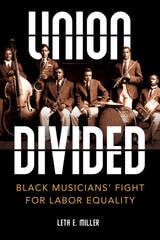
Union Divided
Black Musicians' Fight for Labor EqualityLeta E. Miller
University of Illinois Press, 2024
In the 1910s and 1920s, Black musicians organized more than fifty independent locals within the American Federation of Musicians (AFM) in an attempt to control audition criteria, set competitive wages, and secure a voice in national decision-making. Leta Miller follows the AFM’s history of Black locals, which competed directly with white locals in the same territories, from their origins and successes in the 1920s through Depression-era crises to the fraught process of dismantling segregated AFM organizations in the 1960s and 70s. Like any union, Black AFM locals sought to ensure employment and competitive wages for members with always-evolving solutions to problems. Miller’s account of these efforts includes the voices of the musicians themselves and interviews with former union members who took part in the difficult integration of Black and white locals. She also analyzes the fundamental question of how musicians benefitted from membership in a labor organization.
Broad in scope and rich in detail, Union Divided illuminates the complex working world of unionized Black musicians and the AFM’s journey to racial inclusion.
Unlikely Heroes
The Southern Judges Who Made Brown WorkJack Bass
University of Alabama Press, 1981
Unloose My Heart
A Personal Reckoning with the Twisted Roots of My Southern Family TreeMarcia Edwina Herman-Giddens
University of Alabama Press, 2023
A deeply personal memoir that unearths a family history of racism, slaveholding, and trauma as well as love and sparks of delight.
Marcia Herman’s family moved to Birmingham in 1946, when she was five years old, and settled in the steel-making city dense with smog and a rigid apartheid system. Marcia, a shy only child, struggled to fit in and understand this world, shadowed as it was by her mother’s proud antebellum heritage. In 1966, weary of Alabama’s toxic culture, Marcia and her young family left Birmingham and built a life in North Carolina.
Later in life, Herman-Giddens resumed a search to find out what she did not know about her family history. Unloose My Heart interweaves the story of her youth and coming of age in Birmingham during the Civil Rights Movement together with this quest to understand exactly who and what her maternal ancestors were and her obligations as a white woman within a broader sense of American family.
More than a memoir set against the backdrop of Jim Crow and the civil rights struggle, this is the work of a woman of conscience writing in the twenty-first century. Haunted by the past, Unloose My Heart is a journey of exploration and discovery, full of angst, sorrow, and yearning. Unearthing her forebears’ centuries-long embrace of plantation slavery, Herman-Giddens dug deeply to parse the arrogance and cruelty necessary to be a slaveholder and the trauma and fear that ripple out in its wake. All this forced her to scrutinize the impact of this legacy in her life, as well as her debt to the enslaved people who suffered and were exploited at her ancestors’ hands. But she also discovers lost connections, new cousins and friends, unexpected joys, and, eventually, a measure of peace in the process. With heartbreak, moments of grace, and an enduring sense of love, Unloose My Heart shines a light in the darkness and provides a model for a heartfelt reckoning with American history.

Unpeopled Eden
Rigoberto González
Four Way Books, 2013
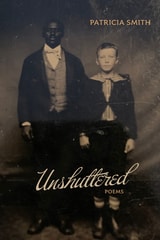
Unshuttered
PoemsPatricia Smith
Northwestern University Press, 2023
National Book Award winner Patricia Smith presents a portrait of Black America in the nineteenth century
Over the course of two decades, Patricia Smith has amassed a collection of rare nineteenth-century photographs of Black men, women, and children who, in these pages, regard us from the staggering distance of time.
Unshuttered is a vessel for the voices of their incendiary and critical era. Smith’s searing stanzas and revelatory language imbue the subjects of the photos with dynamism and revived urgency while she explores how her own past of triumphs and losses is linked inextricably to their long-ago lives:
We ache for fiction etched in black and white. Our eyes never touch. These tragic grays and bustles, mourners’
hats plopped high upon our tamed but tangled crowns, strain to disguise what yearning does with us.
Unstable Masks
Whiteness and American Superhero ComicsEdited by Sean Guynes and Martin Lund
The Ohio State University Press, 2020
In Unstable Masks: Whiteness and American Superhero Comics, Sean Guynes and Martin Lund bring together a series of essays that contextualize the histories and stakes of whiteness studies, superhero comics, and superhero studies for academics, fans, and media-makers alike. The volume illustrates how the American comic book superhero is fundamentally a figure of white power and white supremacy and ultimately calls for diversity in superhero comics as well as a democratized media culture.
Contributors not only examine superhero narratives but also delve into the production, distribution, audience, and reception of those narratives, highlighting the imbrication of forces that have helped to create, normalize, question, and sometimes even subvert American beliefs about whiteness and race. Unstable Masks considers the co-constitutive nature of identity, representation, narrative, production and consumption, and historical and cultural contexts in forging the stereotypes that decide who gets to be a superhero and who gets to be American on the four-color pages of comic books.
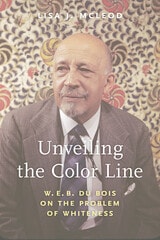
Unveiling the Color Line
W. E. B. Du Bois on the Problem of WhitenessLisa J. McLeod
University of Massachusetts Press, 2024
In The Souls of Black Folk, W. E. B. Du Bois brilliantly details the African American experience. Yet the renowned sociologist was also an astute chronicler of white people, particularly their racism. As Unveiling the Color Line demonstrates, Du Bois’s trenchant analysis of whiteness and white supremacy began in his earliest work—his 1890 speech on Jefferson Davis—and continued in every major book he published in his more than sixty-year career, up to The Black Flame Trilogy.
Lisa J. McLeod traces the development of Du Bois’s conception of whiteness, and the racism inherent to it, as an all-encompassing problem, whether predicated on ignorance, moral failure, or the inability to recognize the humanity in other people. In clear, elegant prose, McLeod investigates Du Bois’s complex and nuanced thinking, putting his insights into dialogue with contemporary racial theorists to demonstrate his continuing value to present-day critical thought and activism.
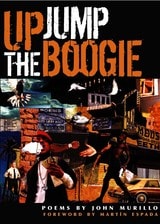
Up Jump the Boogie
John Murillo
Four Way Books, 2020
"The feel of now lives in John Murillo's UP JUMP THE BOOGIE, but it's tempered by bows to the tradition of soulful music and oral poetry. The lived dimensions embodied in this collection say that here's an earned street knowledge and a measured intellectual inquiry that dare to live side by side, in one unique voice. The pages of UP JUMP THE BOOGIE breathe and sing; the tributes and cultural nods are heartfelt, and in these honest poems no one gets off the hook."—Yusef Komunyakaa
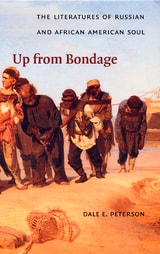
Up from Bondage
The Literatures of Russian and African American SoulDale E. Peterson
Duke University Press, 2000
Illuminating a remarkably widespread cross-pollination between the two cultural and intellectual traditions, Dale E. Peterson frames much of his argument around W. E. B. DuBois’s concept of “double-consciousness,” wherein members of an oppressed section of society view themselves simultaneously through their own self-awareness and through the internalized standards of the dominant culture. He shows how the writings of Dostoevsky, Hurston, Chesnutt, Turgenev, Ellison, Wright, Gorky, and Naylor—texts that enacted and described this sense of double awareness—were used both to perform and to contest the established genres of Western literacy. Woven through Peterson’s textual analyses is his consideration of cultural hybridism and its effects: The writers he examines find multiple ways to testify to and challenge the symptoms of postcolonial trauma. After discussing the strong and significant affinity expressed by contemporary African American cultural theorists for the dialogic thought of Russian linguist Mikhail Bakhtin, Peterson argues that a fuller appreciation of the historic connection between the two cultures will enrich the complicated meanings of being black or Russian in a world that has traditionally avoided acknowledging pluralistic standards of civilization and cultural excellence.
This investigation of comparable moments in the development of Russian and African American ethnic self-consciousness will be valuable to students and scholars of comparative literature, philosophy, cultural theory, ethnicity, linguistics, and postcolonialism, in addition to Slavic and African American studies.
Uplifting the People
Three Centuries of Black Baptists in AlabamaWilson Fallin Jr.
University of Alabama Press, 2007
Three centuries of faith, leadership, and community building in Alabama's Black Baptist tradition.
Uplifting the People is a history of the Alabama Missionary Baptist State Convention—its origins, churches, associations, conventions, and leaders. Fallin demonstrates that a distinctive Afro-Baptist faith emerged as slaves in Alabama combined the African religious emphasis on spirit possession, soul-travel, and rebirth with the evangelical faith of Baptists. The denomination emphasizes a conversion experience that brings salvation, spiritual freedom, love, joy, and patience, and also stresses liberation from slavery and oppression and highlights the exodus experience. In examining the social and theological development of the Afro-Baptist faith over the course of three centuries, Uplifting the People demonstrates how black Baptists in Alabama used faith to cope with hostility and repression.
Fallin reveals that black Baptist churches were far more than places of worship. They functioned as self-help institutions within black communities and served as gathering places for social clubs, benevolent organizations, and political meetings. Church leaders did more than conduct services; they protested segregation and disfranchisement, founded and operated schools, and provided community leaders for the civil rights movement of the mid-20th century.
Through black churches, members built banking systems, insurance companies, and welfare structures. Since the gains of the civil rights era, black Baptists have worked to maintain the accomplishments of that struggle, church leaders continue to speak for social justice and the rights of the poor, and churches now house day care and Head Start programs. Uplifting the People also explores the role of women, the relations between black and white Baptists, and class formation within the black church.
Urban Underworlds
A Geography of Twentieth-Century American Literature and CultureHeise, Thomas
Rutgers University Press, 2010
The quarantining of minority cultures helped to promote white, middle-class privilege. Following a diverse array of literary figures who differ with the assessment of the underworld as the space of the monstrous Other, Heise contends that it is a place where besieged and neglected communities are actively trying to take possession of their own neighborhoods.