Results by title
653 books match the query 'Animals' and 4 start with u
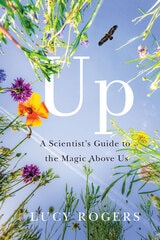
UP
A Scientist's Guide to the Magic Above UsLucy Rogers
Michigan State University Press, 2027
Engineer and bubble scientist Lucy Rogers invites us to explore the wonders of the air, sky, and space; understand the science; and appreciate the insights this offers about life on Earth. The sky is a world of endless wonder. From the intricate dance of clouds and the vibrant hues of the aurora borealis to the marvel of effortless soaring birds and the silent majesty of the stars, it is a living storybook. Join Rogers on a marvelous adventure through a kite market in India, creep through the Borneo jungle to witness millions of bats pour out of a cave at dusk, venture to Tornado Alley to chase the raw power of storms, and journey to Mexico to stand in awe of a total solar eclipse. Up is for anyone who has ever looked up at the sky in awe and needs to know the science behind its never-ending phenomena.

Understanding Dogs
Clinton R. Sanders
Temple University Press, 1999
In Understanding Dogs, sociologist and faithful dog companion Clinton R. Sanders explores the day-to-day experiences of living and working with domestic dogs. Based on a decade of research in veterinary offices and hospitals, dog guide training schools, and obediences classes -- and colored with his personal experiences and observations at and outside home with his own canine companions -- Sanders's book examines how everyday dog owners come to know their animal companions as thinking, emotional, and responsive individuals.
Linking animal companionship with social as well as personal identity, Understanding Dogs uses detailed ethnographic data in viewing human and animal efforts to understand, manipulate, care for, and interact with each other. From nineteenth-century disapproval of what was seen as irresponsibly indulgent pet ownership among the poor to Bill Clinton's caring and fun-loving image and populist connection to the "common person" as achieved through his labrador companion Buddy, Sanders looks at how dogs serve not only as social facilitators but also as adornments to social identity. He also reveals how, while we often strive to teach and shape our dogs' behavior, dogs often teach us to appreciate with more awareness a nourishing meal, physical warmth, a walk in the woods, and the simple joys of the immediate moment.
Sanders devotes chapters to the specialized work of guide dog trainers; the problems and joys experienced by guide dog owners; the day-to-day work of veterinarians dealing with the healing, death, and euthanizing of their animal patients; and the everyday interactions, assumptions, and approaches of people who choose, for various reasons and in various ways, to spend their lives in the company of dogs.
Understanding Dogs will interest those who live and work with animals as well as those studying the sociology of human-animal interactions.

Urban Wildlife Habitats
A Landscape PerspectiveLowell W. Adams
University of Minnesota Press, 1994
Urban Wildlife Habitats was first published in 1994. Minnesota Archive Editions uses digital technology to make long-unavailable books once again accessible, and are published unaltered from the original University of Minnesota Press editions.
In cities, towns, and villages, between buildings and parking lots, streets and sidewalks, and polluted streams and rivers, there is ever less space for the "natural," the plants and animals that once were at home across North America. In this first book-length study of the subject, Lowell W. Adams reviews the impact of urban and suburban growth on natural plant and animal communities and reveals how, with appropriate landscape planning and urban development, cities and towns can be made more accommodating for a wide diversity of species, including our own.
Soils and ground surface, air, water, and noise pollution, space and demographics are among the urban characteristics Adams considers in relation to wildlife. He describes changes in the composition and structure of vegetation, as native species are replaced by exotic ones, and shows how, with spreading urbanization of natural habitats, the diversity of species of plants and animals almost always declines, although the density of a few species increases. Adams contends, however, that it is possible for a wide variety of species to coexist in the metropolitan environment, and he cites a growing interest in the practice of "natural landscaping," which emphasizes the use of native species and considers the structure, pattern, and species composition of vegetation as it relates to wildlife needs. Urban habitats vary from small city parks in densely built downtowns to suburbs with large yards and considerable open space. Adams discusses the opportunities these areas—along with school yards, hospital grounds, cemeteries, individual residences, and vacant lots—provide for judicious wildlife management and for the salutary interaction of people with nature.Lowell W. Adams is vice president of the National Institute for Urban Wildlife in Columbia, Maryland.

Utah Mollusk Identification Guide
Eric J. Wagner
University of Utah Press, 2022
The Utah Mollusk Identification Guide offers the latest information for identifying aquatic and terrestrial snails, slugs, clams, and mussels within the state of Utah, providing comparative tables, taxonomic keys, and more than 230 images, including many type specimen images published for the first time. Amateur naturalists and biologists alike will benefit from detailed information regarding size, type, specimen location, junior synonyms (including taxonomy notes), and original descriptions for each of the 139 species. Clarifying notes from the author help to differentiate similar species.
In contrast to older guides, this book includes data on the external and internal anatomy of mollusks and updated taxonomic names. Family descriptions and miscellaneous data on ecology, life history, and genetics offer readers a wide lens to understand Utah’s mollusks. Data based on historical articles, museum records, personal observations, and collections point to the wide distribution of mollusks found in Utah. Although the focus is on Utah mollusks, the data, images, references, and taxonomy details within the guide will be of interest to many outside the state.