Results by title
435 books match the query 'Asian American & Pacific Islander Studies' and 14 start with u
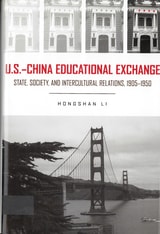
U.S.- China Educational Exchange
State, Society, and Intercultural Relations, 1905-1950Li, Hongshan
Rutgers University Press, 2007
U.S.-China relations became increasingly important and complex in the twentieth century. While economic, political, and military interactions all grew over time, the most dramatic expansion took place in educational exchange, turning it into the strongest tie between the two nations. By the end of the 1940s, tens of thousands of Chinese and American students and scholars had crisscrossed the Pacific, leaving indelible marks on both societies. Although all exchange programs were terminated during the cold war, the two nations reemerged as top partners within a decade after the reestablishment of diplomatic relations.
Approaching U.S.-China relations from a unique and usually overlooked perspective, Hongshan Li reveals that both the drastic expansion and complete termination of educational ties between the two nations in the first half of the twentieth century were largely the results of direct and deep intervention from the American and Chinese governments. Benefiting from government support and collaboration, educational exchange succeeded in diffusing knowledge and improving mutual understanding between the two peoples across the divide of civilizations. However, the visible hand of government also proved to be most destructive to the development of healthy intercultural relations when educational interactions were treated merely as an instrument for crisis management.
Unbound Spirit
Letters of Flora Belle JanFlora Belle Jan. Edited by Fleur Yano and Saralyn Daly. Introduction by Judy Wu.
University of Illinois Press, 2008
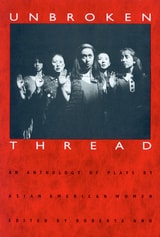
Unbroken Thread
An Anthology of Plays by Asian American WomenRoberta Uno
University of Massachusetts Press, 1993
This book contains plays by Genny Lim (Paper Angels), Wakako Yamauchi (The MusicLessons), Momoko Iko (Gold Watch),Velina Hasu Houston (Tea), Jeannie Barroga (Walls), and Elizabeth Wong (Letters to a Student Revolutionary). The volume includes an extended introduction, a profile of each playwright, and an appendix. The six plays of this anthology represent some of the best dramatic literature written by Asian American women since the 1970s. Each is a groundbreaking work and addresses in its own way the experiences of Asians in America. All six playwrights are American-born daughters of Asian immigrants, and their voices span the genres of naturalism, impressionism, ritual drama, postmodern collage, and media-influenced episodic drama.
Uncivil Youth
Race, Activism, and Affirmative GovernmentalitySoo Ah Kwon
Duke University Press, 2013
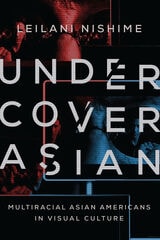
Undercover Asian
Multiracial Asian Americans in Visual CultureLeiLani Nishime
University of Illinois Press, 2014
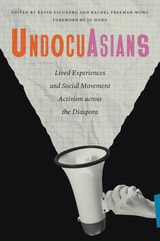
UndocuAsians
Lived Experiences and Social Movement Activism Across the DiasporaKevin Escudero
Rutgers University Press, 2026

Unfastened
Globality and Asian North American NarrativesEleanor Ty
University of Minnesota Press, 2010
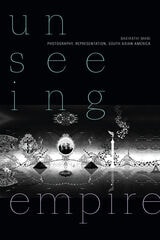
Unseeing Empire
Photography, Representation, South Asian AmericaBakirathi Mani
Duke University Press, 2020
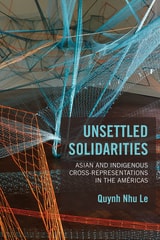
Unsettled Solidarities
Asian and Indigenous Cross-Representations in the AméricasQuynh Nhu Le
Temple University Press, 2019
Unsettled Solidarities examines contemporary Asian and Indigenous cross-representations within different settler states in the Américas. Quynh Nhu Le looks at literary works by both groups alongside public apologies, interviews, and hemispheric race theories to trace cross-community tensions and possibilities for solidarities amidst the uneven imposition of racialization and settler colonization.
Contrasting texts such as Maxine Hong Kingston’s China Men with Gerald Vizenor’s Hiroshima Bugi, and Karen Tei Yamashita’s Through the Arc of the Rain Forest with Leslie Marmon Silko’s Almanac of the Dead, among others, Le reveals how settler colonialism persists through the liberal ideological structuring or incorporation of critical and political resistance. She illuminates the tense collisions of Asian and Indigenous movements from the heroic/warrior traditions, reparations and redress, and transnational/cross-racial mobilization against global capital to mixed-race narratives.
Reading these tensions as formed through the unstable grammatical and emotional economies of liberalism, Le frames settler colonialism as a process that is invoked and yet ruptured by Asian and Indigenous peoples. In analyzing Asian/Indigenous crossings in the United States, Canada, Mexico, and Brazil, Unsettled Solidarities conveys the logics and instabilities that connect these settler empires.
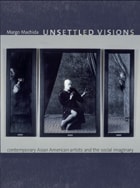
Unsettled Visions
Contemporary Asian American Artists and the Social ImaginaryMargo Machida
Duke University Press, 2008
Analyses of the work of individual artists are grouped around three major themes that Asian American artists engaged with during the 1990s: representations of the Other; social memory and trauma; and migration, diaspora, and sense of place. Machida considers the work of the photographers Pipo Nguyen-duy and Hanh Thi Pham, the printmaker and sculptor Zarina Hashmi, and installations by the artists Tomie Arai, Ming Fay, and Yong Soon Min. She examines the work of Marlon Fuentes, whose films and photographs play with the stereotyping conventions of visual anthropology, and prints in which Allan deSouza addresses the persistence of Orientalism in American popular culture. Machida reflects on Kristine Aono’s museum installations embodying the multigenerational effects of the internment of Japanese Americans during World War II and on Y. David Chung’s representations of urban spaces transformed by migration in works ranging from large-scale charcoal drawings to multimedia installations and an “electronic rap opera.”
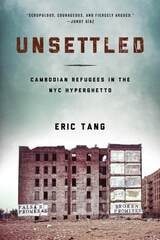
Unsettled
Cambodian Refugees in the New York City HyperghettoEric Tang
Temple University Press, 2015
After surviving the Khmer Rouge genocide, followed by years of confinement to international refugee camps, as many as 10,000 Southeast Asian refugees arrived in the Bronx during the 1980s and ‘90s. Unsettled chronicles the unfinished odyssey of Bronx Cambodians, closely following one woman and her family for several years as they survive yet resist their literal insertion into concentrated Bronx poverty.
Eric Tang tells the harrowing and inspiring stories of these refugees to make sense of how and why the displaced migrants have been resettled in the “hyperghetto.” He argues that refuge is never found, that rescue discourses mask a more profound urban reality characterized by racialized geographic enclosure, economic displacement and unrelenting poverty, and the criminalization of daily life.
Unsettled views the hyperghetto as a site of extreme isolation, punishment, and confinement. The refugees remain captives in late-capitalist urban America. Tang ultimately asks: What does it mean for these Cambodians to resettle into this distinct time and space of slavery’s afterlife?
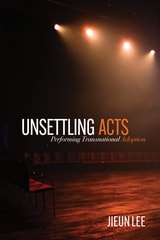
Unsettling Acts
Performing Transnational AdoptionJieun Lee
The Ohio State University Press, 2025
Analyzing contemporary theater and performance works about Korean transnational adoption, Jieun Lee’s Unsettling Acts: Performing Transnational Adoption challenges longstanding ideas about adoption. Lee contends that in staging adoptees’ birth family searches and reunions, theater and performance artists unsettle dominant discourses that have essentialized adoptees through ethnonationalist, gendered, and postwar humanitarian narratives in both birth and adoptive cultures. In doing so, Lee reveals how these performances engage in acts of disavowal of and resistance to mythologies of adoption and adoptee experience.
Lee examines twelve works—from South Korea, the United States, the United Kingdom, Belgium, and Denmark—including plays, musicals, solo performances, community-based theater, and performance art. Through her analysis, theater and performance become a means for reimagining adoptees’ identity, kinship, and sense of belonging. Further, these pieces encourage critical exploration of the history, politics, and social impacts of Korean transnational adoption. These works thus nurture a countermemory to engender redressive accountability and transpacific justice, pointing a way forward for remaking the transnational adoptee experience in the twenty-first century.
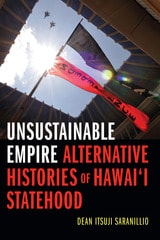
Unsustainable Empire
Alternative Histories of Hawai‘i StatehoodDean Itsuji Saranillio
Duke University Press, 2018
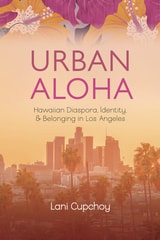
Urban Aloha
Hawaiian Diaspora, Identity, and Belonging in Los AngelesLani Cupchoy
University of Nevada Press, 2027
Urban Aloha reveals the vibrant, little-known story of Kānaka ʻŌiwi (Native Hawaiians) diaspora in Los Angeles, home to the largest Hawaiian community outside Hawai‘i. Moving beyond tourist clichés and the persistent myth that Hawaiian Gardens represents “the” Hawaiian enclave, author Lani Cupchoy traces how a diasporic community took root across the South Bay and San Gabriel Valley. Beginning with the peak migrations of the 1950s and 1960s, and driven by economic recession in the islands, the narrative follows families as they built new lives through civic clubs, newsletters, churches, restaurants, and backyard gatherings.
Drawing on oral histories, archival research, foodways, hula halau, and organizations such as the Hawaiian Inter-Club Council of Southern California, Urban Aloha explores how “Hawaiianness” shifts from identity to lived cultural community. Cupchoy examines how belonging is shaped not only by ancestry but by region, memory, leisure, and everyday practice. At once intimate and intellectually compelling, this book challenges manufactured fantasies of paradise and reveals a dynamic mainland community negotiating authenticity, representation, and cultural resilience. Richly researched and deeply human, Urban Aloha redefines what it means to be Hawaiian—on the continent and beyond.