Results by title
5550 books match the query 'Biography & Autobiography' and 35 start with u
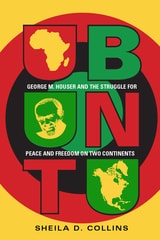
Ubuntu
George M. Houser and the Struggle for Peace and Freedom on Two ContinentsSheila D. Collins
Ohio University Press, 2020
This remarkable biography features a white American pacifist minister whose tireless work for justice and human rights helped reshape Black civil rights in the U.S. and Africa.
George M. Houser (1916–2015) was one of the most important civil rights and antiwar activists of the twentieth century. A conscientious objector during World War II, in 1942 Houser cofounded and led the Congress of Racial Equality (CORE), whose embrace of nonviolent protest strategies and tactics characterized the modern American Civil Rights Movement. Beginning in the 1950s, Houser played a critical role in pan-Africanist anticolonial movements, and his more than thirty-year dedication to the cause of human rights and self-determination helped prepare the ground for the toppling of the South African apartheid regime.
Throughout his life, Houser shunned publicity, preferring to let his actions speak his faith. Sheila Collins’s well-researched biography recounts the events that informed Houser’s life of activism—from his childhood experiences as the son of missionaries in the Philippines to his early grounding in the Social Gospel and the teachings of Mohandas Gandhi. In light of the corruption the U.S. and the world face today, Houser’s story of faith and decisive action for human rights and social justice is one for our time.

Ulysses S. Grant
A Photographic HistoryJames Bultema, with a Foreword by Frank J. Willilams
Southern Illinois University Press, 2022
As Grant battled relentlessly down the Tennessee River and across Tennessee, defending Shiloh, he was followed by an enterprising group of studio photographers hoping to profit from the public’s demand for images of the rising general from the West. They never stopped because Grant never stopped. Thus far, 307 distinct photographs have been found of Ulysses S. Grant, revealing him to be the most photographed American of the nineteenth century.
Readers of Ulysses S. Grant: A Photographic History travel alongside Grant through the Civil War and his two terms as president, on his unusual two-year journey around the world, and to his final days on Mount McGregor. The sheer volume of exposure shows the toll of duty, war, and command. From every angle, this collection captures Grant’s regard for soldier and family, his disregard of uniform, and his disheveled appearance that reflected his resilience. The reader will look into the eyes of a man who saw the worst and labored for the best.
This curated volume opens the largest collection of Grant photos to the public for the first time. Excerpts from Grant’s personal writings divulge his candid thoughts about the people he posed with and the situations he faced around the time the photographs were taken. An extraordinary addition to Grant scholarship, Ulysses S. Grant: A Photographic History will be the photographic reference work on Grant for decades to come as the simple man from Ohio continues to astonish the world.

Unbecoming
Eric Michaels
Duke University Press, 1997
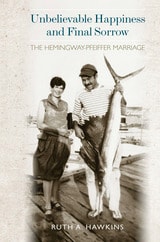
Unbelievable Happiness and Final Sorrow
The Hemingway-Pfeiffer MarriageRuth A. Hawkins
University of Arkansas Press, 2012
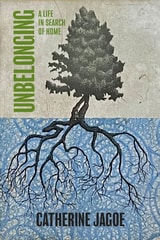
Unbelonging
A Life in Search of HomeCatherine Jagoe
University of Wisconsin Press, 2026
“Where are you from?” For Catherine Jagoe, a set of complicated assumptions often lies behind this seemingly banal question. While partly an immigrant narrative, Jagoe’s memoir in essays is not so much—or not only—about moving to the US and putting down roots but rather more about feeling perpetually in-between and never quite “home.” Throughout, Jagoe wrestles with what identity and fidelity mean for a woman with three nationalities, a job as a translator who frequently lives in a fourth country, a history of depression, and chronically divided allegiances. Together, these essays paint a deeply personal yet incredibly relatable portrait of what it means to be an American—and an immigrant—in the twenty-first century.
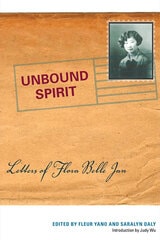
Unbound Spirit
Letters of Flora Belle JanFlora Belle Jan. Edited by Fleur Yano and Saralyn Daly. Introduction by Judy Wu.
University of Illinois Press, 2008
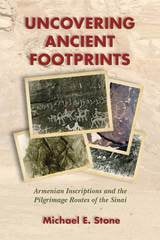
Uncovering Ancient Footprints
Armenian Inscriptions and the Pilgrimage Routes of the SinaiMichael E. Stone
SBL Press, 2017
Explore pilgrimage routes, epigraphy, and the history of writing with an expert guide
From the late 1970s through 1982, Michael E. Stone conducted a number of expeditions to the Sinai peninsula, searching for ancient inscriptions. In this book Stone describes his search, crowned by the discovery of the most ancient Armenian inscriptions known. Here Stone describes not only the inscriptions discovered along his journeys but also the Sinai, its past and present, its human inhabitants, its flora and fauna, and its history. Though once common, well-informed travel books to the Middle East with a broad academic interest and a specific focus have become rare. Stone’s diary of his expeditions in the Sinai fill this gap with vivid descriptions, poetry, and illustrations.
Features
- An account of five expeditions into the Sinai
- Thirteen poems written by Stone
- Twenty-six figures and five maps
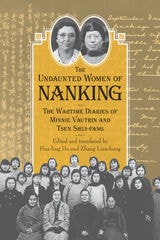
Undaunted Women of Nanking
The Wartime Diaries of Minnie Vautrin and Tsen Shui-fangEdited and Translated by Hua-ling Hu and Zhang Lian-hong
Southern Illinois University Press, 2010
One of the Chinese American Librarians Association’s Ten Best Books of 2010
During the infamous “Rape of Nanking,” a brutal military occupation of Nanking, China, that began on December 13, 1937, it is estimated that Japanese soldiers killed between 200,000 and 300,000 Chinese and raped between 20,000 and 80,000 women. To shelter civilian refugees, a group of Westerners established a Nanking Safety Zone. Among these humanitarians was Minnie Vautrin, an American missionary and acting president of Ginling College. She and Tsen Shui-fang, her Chinese assistant and a trained nurse, turned the college into a refugee camp, which protected more than 10,000 women and children during the height of the ordeal. The Undaunted Women of Nanking juxtaposes day-by-day the exhausted and terrified women’s wartime diaries, providing vital eyewitness accounts of the Rape of Nanking and a unique focus on the Ginling refugee camp and the sufferings of women and children. Vautrin's diary reveals the humanity and courage of a female missionary in a time of terror. Tsen Shui-fang’s diary, never before published in English and translated here for the first time, is the only known daily account by a Chinese national written during the crisis and not retrospectively. As such, it records a unique perspective: that of a woman grappling with feelings of anger, sorrow, and compassion as she witnesses the atrocities being committed in her war-torn country.
Editors Hua-ling Hu and Zhang Lian-hong have added many informative annotations to the diary entries from sources including the proceedings of the Tokyo War Crimes Trial of 1946, Vautrin’s correspondence, John Rabe’s diary, and other historical documents. Also included are biographical sketches of the two women, a note on the diaries, and information about the aftermath of the tragedy, as well as maps and photos—some of which appear in print in this book for the first time.
Under the Spell of Orpheus
The Persistence of a Myth in Twentieth-Century ArtJudith E. Bernstock. Foreword by Peter Selz
Southern Illinois University Press, 1991
This comprehensive view of the Orpheus myth in modern art focuses on an extremely rich artistic symbol and cuts through all the clichés to explore truly significant problems of meaning. The author takes a new approach to the iconography of major modern artists by incorporating psychological and literary analysis, as well as biography.
The three parts of the book explore the ways in which artists have identified with different aspects of the often paradoxical Orpheus myth. The first deals with artists such as Paul Klee, Carl Milles, and Barbara Hepworth. In the second, Max Beckmann, Oskar Kokoschka, and Isamu Noguchi are discussed. Artists examined in the final part include Pablo Picasso, Jacques Lipchitz, Ethel Schwabacher, and Cy Twombly. The author documents her argument with more than sixty illustrations.
Under the Sun
A Black Journalist's JourneyHarold Jackson
University of Alabama Press, 2025
A determined journalist’s account of rising to Pulitzer Prize–winning heights
Under the Sun: A Black Journalist’s Journey is Harold Jackson’s powerful memoir that chronicles his path from a Birmingham, Alabama, housing project in the 1950s and ’60s to becoming a Pulitzer Prize–winning journalist. Growing up in the segregated South, Jackson didn’t see a writing career as feasible, especially with the financial struggles his family faced after his father’s death. However, his freshman English teacher’s encouragement set him on a course that would change his life.
Jackson’s journey began in high school, where he became one of the first Black students in the University of Alabama’s summer journalism workshop. It was there that he discovered his unique voice as a writer, setting the stage for a remarkable forty-five-year career as a newspaper writer and editor. Despite the pervasive racial prejudices of the time, Jackson learned to navigate the complexities of being Black in a predominantly white profession. He reflects on the duality of living as a Black person in America, a concept W. E. B. Du Bois described as “double consciousness,” and the ways journalism allowed Jackson to connect with people from all walks of life.
Through his work at prominent news venues such as the Birmingham Post-Herald, United Press International, the Philadelphia Inquirer, the Birmingham News, the Baltimore Sun, and the Houston Chronicle, Jackson’s story is not just one of professional success but also of personal growth and understanding. Under the Sun is a testament to his resilience, his ability to see past racial barriers, and his unwavering commitment to giving a voice to those who need it most.

Undercurrents
From Oceanographer to University PresidentJohn V. Byrne
Oregon State University Press, 2018
As president of OSU, John Byrne used the lessons learned in industry and government to guide the university through a period of turbulence caused by severe state budget restrictions. During this period of economic contraction, OSU continued under Byrne’s leadership to grow in programs, facilities, and external funding. Byrne was one of the first to introduce Total Quality Management techniques to higher education. He emphasized the importance of international education and was a supporter of significant academic reform in higher education.
While focusing on his professional career, Byrne’s memoir also shares personal stories of a childhood and youth shaped by the Great Depression and World War II. Undercurrents demonstrates on every page the curiosity, intellect, and humanity that made John Byrne successful as a scientist, educator, and administrator. Anyone pursuing a career in science or academia, and anyone interested in the history and legacy of land grant universities will welcome this richly detailed and warmly written account of Byrne’s career.

Underneath the Palm Trees
EssaysEva Recinos
Northwestern University Press, 2027
A raw and captivating exploration of what it means to live in the in-betweens of the American dream
Arts and culture writer Eva Recinos came of age in the towering city of Los Angeles, fed the story of the American dream. A daughter of immigrants, Recinos grew up facing the dichotomy of that dream: experiencing what it was like to live in South Central LA right next door to one of the wealthiest private universities in America—which Recinos herself would eventually attend. Navigating depression, anxiety, grief, sexuality, and the pressures of being a first-generation daughter and student, Underneath the Palm Trees examines the dissonant effects of straddling two disparate worlds. Recinos’s is an emerging and powerful Latinx voice that uses this engaging collection of essays to capture America’s idiosyncrasies, the complexities of girlhood, and how we find ourselves in art.
Undertones of War
Edmund Blunden
University of Chicago Press, 2007
In Undertones of War, one of the finest autobiographies to come out of World War I, the acclaimed poet Edmund Blunden records his devastating experiences in combat. After enlisting at the age of twenty, he took part in the disastrous battles at the Somme, Ypres, and Passchendaele, describing them as “murder, not only to the troops but to their singing faiths and hopes.”
All the horrors of trench warfare, all the absurdity and feeble attempts to make sense of the fighting, all the strangeness of observing war as a writer—of being simultaneously soldier and poet—pervade Blunden’s memoir. In steely-eyed prose as richly allusive as any poetry, he tells of the endurance and despair found among the men of his battalion, including the harrowing acts of bravery that won him the Military Cross.
Now back in print for American readers, the volume includes a selection of Blunden’s war poems that unflinchingly juxtapose death in the trenches with the beauty of Flanders’s fields. Undertones of War deserves a place on anyone’s bookshelf between Siegfried Sassoon’s poetry and Robert Graves’s Goodbye to All That.
Undocuments
John-Michael Rivera
University of Arizona Press, 2021
How do you document the undocumented? UNDOCUMENTS both poses and attempts to answer this complex question by remixing the forms and styles of the first encyclopedia of the New World, the Florentine Codex, in order to tell a modern story of Greater Mexico. Employing a broad range of writing genres and scholarly approaches, UNDOCUMENTS catalogs, recovers, and erases documents and images by and about peoples of Greater Mexico from roughly the first colonial moment. This brave and bracing volume organizes and documents ancient New World Mexican peoples from the Florentine Codex (1592) to our current technology-heavy age, wherein modern lawmakers and powerful global figures desire to classify, deport, and erase immigrants and their experiences.
While grappling with anxiety and the physical and mental health consequences of the way the United States treats immigrant bodies, John-Michael Rivera documents and scrutinizes what it means to seek opportunities in America. With a focus on the poetics of Latinx documentality itself, this book is concerned with the complicated and at times contradictory ways peoples of Greater Mexico have been documented and undocumented within systems of colonial knowledges, and how these peoples have been rendered as specters of the bureaucratic state. Rivera takes us through the painful, anxiety-ridden, and complex nature of what it means to be documented or undocumented, and the cruelty married to each of these states of being.
Unexceptional Women
Female Proprietors in Mid-Nineteenth-Century Albany, New York, 1830–1885Susan Ingalls Lewis
The Ohio State University Press, 2009
Although the growing city did produce several remarkable businesswomen in trades as diverse as hotel management, plumbing, and the marketing of pianos on the installment plan, Albany’s female proprietors were most often self-employed artisans, shopkeepers, petty manufacturers, and service providers. These women used business as a method of self-employment and survival, as a means of both individual and family mobility, and as a strategy for immigrant assimilation into an urban economy and middle-class lifestyle.
Intriguingly, among the ranks of Albany’s female proprietors Lewis discovered substantial evidence of such supposedly recent phenomena as self-employment, dual-income marriages, working motherhood, home-based business, and the juggling of domestic and professional priorities. The stories of these businesswomen make fascinating reading while simultaneously providing the basis for a theoretical discussion of how to define and understand enterprise for mid-nineteenth-century women.
Unfriendly Fire
A Mother's MemoirPeg Mullen
University of Iowa Press, 1995
In 1968 Michael Mullen, a graduate student in biochemistry, was drafted; in 1969 he was sent to Vietnam as a foot soldier in Colonel Norman Schwarzkopf's Charlie Company; and in 1970 he was killed by the same “friendly fire” that destroyed thousands of other lives during the Vietnam War.
Back home on the family farm in Iowa, his parents made his death a crusade to awaken all parents to the insanity of war. C. D. B. Bryan's Friendly Fire and the TV movie of the same name documented these dramatic years, and Peg Mullen became a national symbol of grassroots activism. Now Peg Mullen shifts from symbol to reality as she tells her story in print for the first time.
Outspoken, fearless, and wickedly humorous, Peg Mullen had a duel mission in the years after Michael's death: to penetrate the lies and evasions behind the artillery misfire that killed her oldest son and to publicize the senseless horror of the Vietnam War. Unfriendly Fire draws on the many letters sent to the Mullens after Michael's death; in addition, Michael's own bitter, weary letters home are reprinted. In these the voices of parents, brothers, sisters, comrades, teachers, and Michael himself echo Peg Mullen's call for truth and peace.
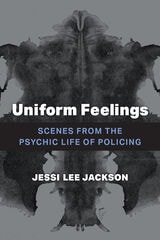
Uniform Feelings
Scenes from the Psychic Life of PolicingJessi Lee Jackson
University of Michigan Press, 2022

United States District Courts and Judges of Arkansas, 1836–1960
Frances Mitchell Ross
University of Arkansas Press, 2016
The book begins with statehood and continues with Congress’s decision to expand jurisdiction of the original 1836 District Court of Arkansas to include the vast Indian Territory to the west. The territory’s formidable size and rampant lawlessness brought in an overwhelming number of cases. The situation was only somewhat mitigated in 1851, when Congress split the state into eastern and western districts, which were still served by just one judge who travelled between the two courts.
A new judgeship for the Western District was created in 1871, and new seats for that court were established, but it wasn’t until 1896 that Congress finally ended all jurisdiction of Arkansas’s Western District Court over the Indian Territory.
Contributors to this collection include judges, practicing attorneys, academics, and thoughtful and informed family members who reveal how the judges made decisions on issues involving election laws, taxes, civil rights, railroads, liquor and prohibition, quack medicine, gangsters, bankruptcy, personal injury, the draft and Selective Service, school desegregation, prisons, and more. United States District Courts and Judges of Arkansas, 1836–1960 will be of value to anyone interested in Arkansas history—particularly Arkansas legal and judicial history as it relates to the local and national issues that came before these judges.
This project was supported in part by the United States District Court for the Eastern District of Arkansas and the United States District Court for the Western District of Arkansas.
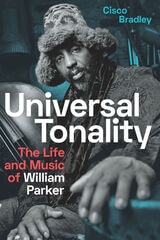
Universal Tonality
The Life and Music of William ParkerCisco Bradley
Duke University Press, 2021

Unlikely Angel
The Songs of Dolly PartonLydia R. Hamessley
University of Illinois Press, 2020
Lydia R. Hamessley's expert analysis and Parton’s characteristically straightforward input inform this comprehensive look at the process, influences, and themes that have shaped the superstar's songwriting artistry. Hamessley reveals how Parton’s loving, hardscrabble childhood in the Smoky Mountains provided the musical language, rhythms, and memories of old-time music that resonate in so many of her songs. Hamessley further provides an understanding of how Parton combines her cultural and musical heritage with an artisan’s sense of craft and design to compose eloquent, painfully honest, and gripping songs about women's lives, poverty, heartbreak, inspiration, and love.
Filled with insights on hit songs and less familiar gems, Unlikely Angel covers the full arc of Dolly Parton's career and offers an unprecedented look at the creative force behind the image.
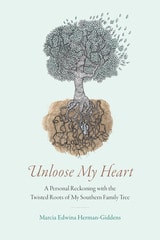
Unloose My Heart
A Personal Reckoning with the Twisted Roots of My Southern Family TreeMarcia Edwina Herman-Giddens
University of Alabama Press, 2023
A deeply personal memoir that unearths a family history of racism, slaveholding, and trauma as well as love and sparks of delight.
Marcia Herman’s family moved to Birmingham in 1946, when she was five years old, and settled in the steel-making city dense with smog and a rigid apartheid system. Marcia, a shy only child, struggled to fit in and understand this world, shadowed as it was by her mother’s proud antebellum heritage. In 1966, weary of Alabama’s toxic culture, Marcia and her young family left Birmingham and built a life in North Carolina.
Later in life, Herman-Giddens resumed a search to find out what she did not know about her family history. Unloose My Heart interweaves the story of her youth and coming of age in Birmingham during the Civil Rights Movement together with this quest to understand exactly who and what her maternal ancestors were and her obligations as a white woman within a broader sense of American family.
More than a memoir set against the backdrop of Jim Crow and the civil rights struggle, this is the work of a woman of conscience writing in the twenty-first century. Haunted by the past, Unloose My Heart is a journey of exploration and discovery, full of angst, sorrow, and yearning. Unearthing her forebears’ centuries-long embrace of plantation slavery, Herman-Giddens dug deeply to parse the arrogance and cruelty necessary to be a slaveholder and the trauma and fear that ripple out in its wake. All this forced her to scrutinize the impact of this legacy in her life, as well as her debt to the enslaved people who suffered and were exploited at her ancestors’ hands. But she also discovers lost connections, new cousins and friends, unexpected joys, and, eventually, a measure of peace in the process. With heartbreak, moments of grace, and an enduring sense of love, Unloose My Heart shines a light in the darkness and provides a model for a heartfelt reckoning with American history.

Unnatural Selection
A Memoir of Adoption and WildernessAndrea Ross
CavanKerry Press, 2021
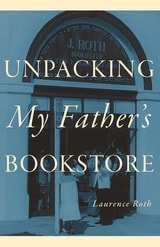
Unpacking My Father's Bookstore
Laurence Roth
Rutgers University Press, 2025
2026 Independent Publisher Book Awards (IPPY) Silver Medal in the West – Pacific Non-Fiction category
Unpacking My Father’s Bookstore brings to life the history of J. Roth / Bookseller of Fine & Scholarly Judaica, which was a microcosm of the Los Angeles Jewish community from 1966 to 1994 and one of the premier Jewish bookstores in the United States. Blending critical analysis with a personal account of growing up in his father’s bookstore, and connecting both to larger forces that helped shape Jewish and American book retailing in the twentieth-century, Laurence Roth crafts a richly felt narrative about his family’s Jewish experience in America. It is a reminder, too, that while most independent bookstores like J. Roth Bookseller disappear from history, these retailers often had outsized effects on their communities. Breaking with conventional modes of scholarship, Unpacking My Father’s Bookstore tells a unique and troubled story that rarely gets told, one that is both personal and analytical, theoretical but rooted in the everyday.
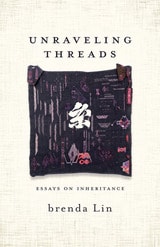
Unraveling Threads
Essays on Inheritancebrenda Lin
The Ohio State University Press, 2026
“Tactile memory feels like it is the easiest to lose,” brenda Lin writes in Unraveling Threads. But in these exquisite essays, she demonstrates just how the tactile bolsters personal, familial, and cultural memory. From the remnant of a baby’s umbilical cord to the antique hand-embroidered baby carriers her mother collects, Lin shows us how the tactile and handmade connect parents and children, homeland and diaspora, and give texture to caregiving’s many forms. As Lin writes, the radical for thread forms the basis of Chinese characters for women’s work, for practice through repetition, for inheritance. Threads form the mesh in the stent that keeps her father’s heart working. And yuan, the red thread of fate, is the first word she translated for her future husband. When Lin returns to Taiwan after decades away, this time with her young family, the threads of creativity and caretaking become the warp and weft of the continual process of homecoming. These essays on motherhood, language, art, and diaspora will resonate with anyone who has experienced the process of returning to, or building, a home.
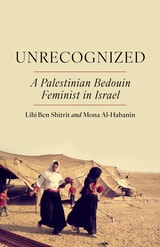
Unrecognized
A Palestinian Bedouin Feminist in IsraelLihi Ben Shitrit
Rutgers University Press, 2027
In 1998, when Mona Al-Habanin was twenty-eight years old and pregnant with her sixth child, she stood before a council of al-Naqab Bedouin shaykhs and faced the most difficult decision of her life: give up her children or be responsible for more killings in her tribe.
This book tells the extraordinary story of Mona Al-Habanin (b. 1970), the first Bedouin woman to run for elected office in Israel's Negev Desert. Through Mona's life, it illuminates Indigenous Bedouin women's traumas and resilience while documenting a genealogy of contemporary Palestinian Bedouin feminism. It traces her journey from desert tent dwelling through forced dislocation, her community's struggles with violence against women, and her battle for her children—against state-sanctioned tribal justice rooted in British colonial paradigms and Zionist settler-native relations—and to her turn to fierce and irreverent activism, taboo-breaking, and political trailblazing. This book tells the story of an unrecognized community under siege and of a new form of Indigenous feminism that bravely defies the violence of silencing.
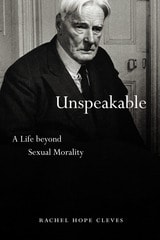
Unspeakable
A Life beyond Sexual MoralityRachel Hope Cleves
University of Chicago Press, 2020
Unspeakable approaches Douglas as neither monster nor literary hero, but as a man who participated in an exploitative sexual subculture that was tolerated in ways we may find hard to understand. Using letters, diaries, memoirs, police records, novels, and photographs—including sources by the children Douglas encountered—Cleves identifies the cultural practices that structured pedophilic behaviors in England, Italy, and other places Douglas favored. Her book delineates how approaches to adult-child sex have changed over time and offers insight into how society can confront similar scandals today, celebrity and otherwise.
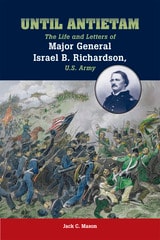
Until Antietam
The Life and Letters of Major General Israel B. Richardson, U.S. ArmyJack C. Mason
Southern Illinois University Press, 2009
While researching this book, Jack C. Mason made the kind of discovery that historians dream of. He found more than one hundred unpublished and unknown letters from Union general Israel B. Richardson to his family, written from his time as a West Point cadet until the day before his fatal wounding at the Battle of Antietam, the bloodiest day in American history. Using these freshly uncovered primary sources as well as extensive research in secondary materials, Mason has written the first-ever biography of Israel Bush Richardson.
Mason traces Richardson’s growth as a soldier through his experiences and the guidance of his superiors, and then as a leader whose style reflected the actions of the former commanders he respected. Though he was a disciplinarian, Richardson took a relaxed attitude toward military rules, earning him the affection of his men. Unfortunately, his military career was cut short just as high-ranking officials began to recognize his aggressive leadership. He was mortally wounded while leading his men at Antietam and died on November 3, 1862.
Until Antietam brings to life a talented and fearless Civil War infantry leader. Richardson’s story, placed within the context of nineteenth-century warfare, exemplifies how one soldier’s life influenced his commanders, his men, and the army as a whole.
Winner of the Army Historical Foundation 2009 Distinguished Book Award
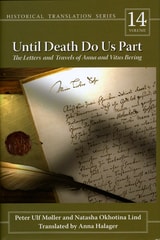
Until Death Do Us Part
The Letters and Travels of Anna and Vitus BeringEdited by Peter Ulf Møller and Natasha Okhotina Lind
University of Alaska Press, 2008
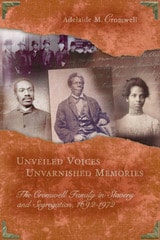
Unveiled Voices, Unvarnished Memories
The Cromwell Family in Slavery and Segregation, 1692-1972Adelaide M. Cromwell
University of Missouri Press, 2006
Unveiling the Prophet
The Misadventures of a Reluctant DebutanteLucy Ferriss
University of Missouri Press, 2005
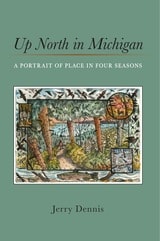
Up North in Michigan
A Portrait of Place in Four SeasonsJerry Dennis
University of Michigan Press, 2021
And yet the essence of this region, known to many as simply “Up North,” has proved remarkably perennial. Millions of acres of state and national forests and other public lands remain intact. Small towns peppered across the rural countryside have changed little over the decades, pushing back the machinery of progress with the help of dedicated land conservancies, conservation organizations, and other advocacy groups.
Up North in Michigan, the new collection from celebrated nature writer Jerry Dennis, captures its author’s lifelong journey to better know this place he calls home by exploring it in every season, in every kind of weather, on foot, on bicycle, in canoes and cars. The essays in this book are more than an homage to a particular region, its people, and its natural wonders. They are a reflection on the Up North that can only be experienced through your feet and fingertips, through your ears, mouth, and nose—the Up North that makes its way into your bones as surely as sand makes its way into wood grain.
The paperback contains a new chapter by Jerry Dennis that has been written since the publication of the hardcover.
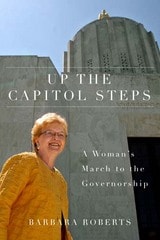
Up the Capitol Steps
A Woman's March to the GovernorshipBarbara Roberts
Oregon State University Press, 2011
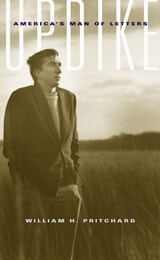
Updike
America's Man of LettersWilliam H. Pritchard
University of Massachusetts Press, 2005
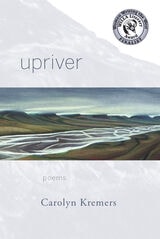
Upriver
Carolyn Kremers
University of Alaska Press, 2013