Results by title
343 books match the query 'Capitalism' and 8 start with u

Unbeatable
The Brutally Honest Case for Free MarketsBryan Caplan
University of Chicago Press, 2027
From economist and New York Times bestselling author Bryan Caplan, a provocative and powerful argument for ending the age of big government and embracing free markets as the best tool to foster prosperity for all.
“Markets do the good things that sound bad; governments do the bad things that sound good.” So begins the audacious argument from New York Times bestselling author Bryan Caplan in his essential treatise on modern economies, Unbeatable. Caplan’s case is not merely ideological: he shows compellingly that markets—by lowering prices, giving consumers what they want, and weighing risks—deliver the raw materials for human prosperity that history tells us are unbeatable by other means. Their more popular alternative, governments, focus on addressing crowd-pleasing complaints, incurring high costs and delivering dubious benefits. With this historical foundation, Caplan makes the case for unabashed support of free markets and fervent opposition to government intervention.
Unbeatable imagines a world where markets are allowed in all the places where we think we don’t want them—schools, immigration, social care, and housing policy—and sketches the positive social and economic transformations that would follow from privatization. These include the miracle effects of giving people money instead of Medicare and Social Security; the ability of open borders to solve demographic and labor problems; and the universal benefits of less regulation. In prose that is uncoded and uncommonly honest, Caplan explains how our aversion to markets emerged from our shared wish to avoid wrestling with tradeoffs—the social desirability bias that leads us to favor bad things that sound good over good things that sound bad. Markets, it turns out, can save us from those disappointments, especially compared to the alternatives. Unlike many free-market economists, Caplan freely concedes the ugly downsides of the policies he favors—but argues that the policies should be evaluated on their overall performance rather than their emotional appeal.
Unbeatable is the maximalist, politically unbeholden case for markets as tools for human flourishing. For readers with open hearts, it offers nothing short of an antidote to our economic discontents.
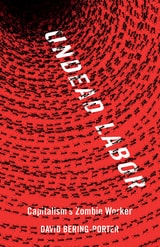
Undead Labor
Capitalism's Zombie WorkerDavid Bering-Porter
University of Minnesota Press, 2026
How the zombie represents capitalism’s fantasy of limitless labor
Much more than just an enduring figure of horror entertainment, the zombie is a uniquely modern symbol representing capitalism’s most brutal demands on human life. Examining the push to extract surplus value from human bodies in ways that exceed their natural limits, David Bering-Porter shows how this notion of the undead is both integral to and symptomatic of capitalism’s endless cycle of growth and consumption.
Bering-Porter demonstrates how the zombie has long been deeply intertwined with issues of race and exploitation, from its origins in the slave plantations of colonial Haiti to its traces in the continuing evolution of artificial intelligence systems, serving as capitalism’s ideal worker: one that never rests, never stops, and never dies. Featuring close readings of Marx alongside films such as I Walked with a Zombie, The Blob, and Night of the Living Dead, the book traces the concept of undead labor as it manifests across various historical epochs, providing insight into the manifold ways that capitalism has sought to transform living beings into instruments of limitless production.
As he weaves together critical race studies with an analysis of popular culture and media, Bering-Porter interrogates racialized capitalism and its fantasy of labor beyond all limits. By highlighting how the zombie is borne of the same ideology that has given rise to contemporary burnout culture and environmental collapse, Undead Labor uncovers the capitalist system’s relentless death drive with the hope that it finally may be put to rest.
Retail e-book files for this title are screen-reader friendly.
Underdeveloping the Amazon
Extraction, Unequal Exchange, and the Failure of the Modern StateStephen G. Bunker
University of Chicago Press, 1988

Understanding Capitalism
Critical Analysis From Karl Marx to Amartya SenDouglas Dowd
Pluto Press, 2002
Major economists and economic schools of thought are discussed in a chapter-by-chapter guide that covers Marx, Veblen, Gramsci, post-Keynesian theory, US institutionalists, Sweezy and the Monopoly Capital school, and recent Nobel Prize winner Amartya Sen. Contributors include Michael Lebowitz, Carl Boggs, Michael Keaney, Frederic Lee, John Bellamy Foster and Robin Hahnel, with an introduction by the editor, Douglas Dowd.
Unequal Thailand
Aspects of Income, Wealth and PowerEdited by Pasuk Phongpaichit and Chris Baker
National University of Singapore Press, 2015
The contributors to this important study—Thai scholars, reformers and civil servants—shed light on the many dimensions of inequality in Thailand, looking beyond simple income measures to consider land ownership, education, finance, business structures and politics. The contributors propose a series of reforms in taxation, spending and institutional reform that can address growing inequality.
Inequality is among the biggest threats to social stability in Southeast Asia, and this close study of a key Southeast Asian country will be relevant to regional policy-makers, economists and business decision-makers, as well as students of oligarchy and inequality more generally.

Union Renegades
Miners, Capitalism, and Organizing in the Gilded AgeDana M. Caldemeyer
University of Illinois Press, 2021
Nuanced and eye-opening, Union Renegades challenges popular notions of workers attitudes during the Gilded Age.
Unthinking Social Science
Limits Of 19Th Century ParadigmsImmanuel Wallerstein
Temple University Press, 2001

Unveiling Traditions
Postcolonial Islam in a Polycentric WorldAnouar Majid
Duke University Press, 2000
Majid moves beyond Edward Said’s unmasking of orientalism in the West to examine the intellectual assumptions that have prevented a more nuanced understanding of Islam’s legacies. In addition to questioning the pervasive logic that assumes the “naturalness” of European social and political organizations, he argues that it is capitalism that has intensified cultural misunderstanding and created global tensions. Besides examining the resiliency of orientalism, the author critically examines the ideologies of nationalism and colonialist categories that have redefined the identity of Muslims (especially Arabs and Africans) in the modern age and totally remapped their cultural geographies. Majid is aware of the need for Muslims to rethink their own assumptions. Addressing the crisis in Arab-Muslim thought caused by a desire to simultaneously “catch up” with the West and also preserve Muslim cultural authenticity, he challenges Arab and Muslim intellectuals to imagine a post-capitalist, post-Eurocentric future. Critical of Islamic patriarchal practices and capitalist hegemony, Majid contends that Muslim feminists have come closest to theorizing a notion of emancipation that rescues Islam from patriarchal domination and resists Eurocentric prejudices.
Majid’s timely appeal for a progressive, multicultural dialogue that would pave the way to a polycentric world will interest students and scholars of postcolonial, cultural, Islamic, and Marxist studies.