Results by title
788 books match the query 'Caribbean & Latin American' and 20 start with u
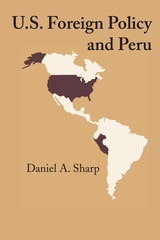
U.S. Foreign Policy and Peru
By Daniel A. Sharp
University of Texas Press, 1972
This book presents the first authoritative and comprehensive account of the development of the Peruvian revolution of 1968. The study resulted from a team experiment in applied political science, economics, and sociology that maintained effective communications between Peru and the United States at many levels during the difficult years following the revolution. Each chapter is the result of continuous interaction between a leading authority and the major sectors of both societies. History is here presented in its diplomatic, social, economic, and cultural context.
The Peruvian and U.S. governments helped to define the subjects of greatest interest to their respective countries, and a systematic effort was made to find the leading authorities on each issue. Since one purpose of this volume is to affect policy by identifying new alternative policies, the papers included here were prepared specifically to be of value to policy makers.
This book was produced by a citizens’ constituency on U.S. foreign policy under the auspices of the Adlai Stevenson Institute of International Affairs, the Chicago Council on Foreign Relations, and the Johnson Foundation.
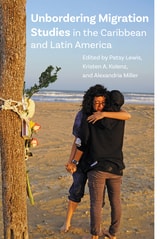
Unbordering Migration Studies in the Caribbean and Latin America
Patsy Lewis
Rutgers University Press, 2026
Unbordering Migration Studies in the Caribbean and Latin America brings together scholars and artists across regions, generations, disciplines, and modes of expression to decenter the US-Mexico border as both a site and a concept. Calling for renewed attention to the spaces, identities, and conflicts that remain understudied and excluded from our hemispheric knowledge of forced movement, the volume reveals a wider diversity of migratory realities and considers race, ethnicity, and class beyond the hegemonic formations that eclipse non-US histories. Through multidisciplinary and geographically expansive essays that draw from history, social anthropology, environmental studies, feminist studies, and lived experience, the volume examines diverse migratory flows from Chile and Argentina in the South to Georgia and New York in the North. Individually and collectively, the essays remap migratory movements other than through the most studied South-to-North trajectories and remove the US and US-based racial formations from the center of analysis. By tracking East-West flows, intraregional mobilities, and changing conceptions of racial identity, Unbordering Migration Studies in the Caribbean and Latin America complicates the concepts of forced mobility and border crossing by highlighting alternative liminalities in sites of transit, destination, and return. Demanding engagement with the submerged histories of racism and the production of ethnoracial categories beyond the Black/white binary, the collection brings into focus identities, sites, and forces that have not yet occupied the foreground of global migration study.
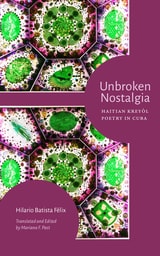
Unbroken Nostalgia
Haitian Kreyòl Poetry in CubaWritten by Hilario Batista Félix, edited and translated by Mariana F. Past
Amherst College Press, 2026
Unbroken Nostalgia: Haitian Kreyòl Poetry in Cuba is the first English translation and scholarly edition of the collection Nostalji san pwen ni vigil: pwezi kreyòl nan peyi Kiba (2016) by Hilario Batista Félix. A poet, journalist, and language activist, Batista (1955– ) embodies and expresses Cuba’s cultural and linguistic diversity as a descendant of Haitian migrant workers to Eastern Cuba during the mid-twentieth century; his poems bridge regions usually separated by language—the Spanish and Creolophone/Francophone Caribbean—and vividly depict the distinct heritage of Haitian Cubans and their shared dreams and challenges. A scholarly introduction by translator and editor Mariana F. Past provides biographical information about the author, situates his work within Haitian diasporic literature, and addresses patterns of Haitian migration to Cuba. Batista’s original poems appear alongside facing-page English translations with annotations that clarify historical figures and events, geographical features, and Haitian cultural and religious practices. Grounded in oral storytelling traditions, Unbroken Nostalgia brings to light the collective memory and complicated hybridity of the Haitian community in Cuba and upholds Haitian Kreyòl as a language of resistance.
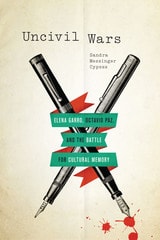
Uncivil Wars
Elena Garro, Octavio Paz, and the Battle for Cultural MemoryBy Sandra Messinger Cypess
University of Texas Press, 2012
The first English-language book to place the works of Elena Garro (1916–1998) and Octavio Paz (1914–1998) in dialogue with each other, Uncivil Wars evokes the lives of two celebrated literary figures who wrote about many of the same experiences and contributed to the formation of Mexican national identity but were judged quite differently, primarily because of gender.
While Paz’s privileged, prize-winning legacy has endured worldwide, Garro’s literary gifts garnered no international prizes and received less attention in Latin American literary circles. Restoring a dual perspective on these two dynamic writers and their world, Uncivil Wars chronicles a collective memory of wars that shaped Mexico, and in turn shaped Garro and Paz, from the Conquest period to the Mexican Revolution; the Spanish Civil War, which the couple witnessed while traveling abroad; and the student massacre at Tlatelolco Plaza in 1968, which brought about social and political changes and further tensions in the battle of the sexes. The cultural contexts of machismo and ethnicity provide an equally rich ground for Sandra Cypess’s exploration of the tandem between the writers’ personal lives and their literary production. Uncivil Wars illuminates the complexities of Mexican society as seen through a tense marriage of two talented, often oppositional writers. The result is an alternative interpretation of the myths and realities that have shaped Mexican identity, and its literary soul, well into the twenty-first century.
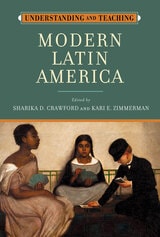
Understanding and Teaching Modern Latin America
Edited by Sharika D. Crawford and Kari E. Zimmerman
University of Wisconsin Press, 2026
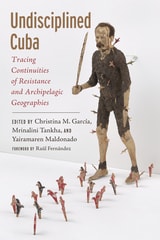
Undisciplined Cuba
Tracing Continuities of Resistance and Archipelagic GeographiesChristina M. García
Rutgers University Press, 2027
Undisciplined Cuba brings scholars of diverse disciplines and moves through multiple temporalities and geographies, allowing Cuba to emerge as a negotiated reality. Rather than rehearse narratives of exceptionalism and Cold War relationships that have detached the nation from its Antillean neighbors, this edited volume understands Cuba as deeply embedded in the Caribbean archipelago. Its chapters encompass feminist activism, public health, cinema for social justice, marine geopoetics, racial geographies, and literary corporealities. Drawing from an archipelagic framework and a decolonial practice of undisciplining, the anthology counters the tendency to treat landscapes, and cultural and political manifestations as artifacts of a national identity or evidence of a discrete geopolitical entity. Instead, Undisciplined Cuba attends to processes, to dynamic relations and continuities of resistance that defy periodization and institutional representation. The book offers a granular view of Cuba and an approach to Caribbean studies that imagines networks in excess of traditional categories of thought.
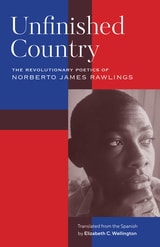
Unfinished Country
The Revolutionary Poetics of Norberto James RawlingsNorberto James Rawlings; Translated from the Spanish by Elizabeth C. Wellington
Vanderbilt University Press, 2026
The story of Afro-Caribbean poet Norberto James Rawlings is one of migration, loss, adaptation, and reinvention that goes back for generations. Most well-known for “The Immigrants,” a poem about a Black minority community of Anglophone sugar plantation workers, James Rawlings’s poetry has been performed, monumentalized, and celebrated in the Dominican Republic and beyond. Over time his work transcended the acclaim of his most famous poem, offering expansive reflections on the world outside the island of his birth, expressed with an expatriate’s longing. Bringing this selection of James Rawlings’s work into English for the first time, this volume will expand the entry points into one of the most important Caribbean writers yet to punctuate the mainstream.
Unfolding the City
Women Write the City in Latin AmericaAnne Lambright
University of Minnesota Press, 2007
Unlawful Violence
Mexican Law and Cultural ProductionRebecca Janzen
Vanderbilt University Press, 2022
The abundance of laws and constitutional amendments that have cropped up in response are mirrored in Mexico's fragmented cultural production of the same period. Contemporary Mexican literature grapples with this splintered reality through non-linear stories from multiple perspectives, often told through shifts in time. The novels, such as Jorge Volpi's Una novela criminal [A Novel Crime] (2018) and Julián Herbert's La casa del dolor ajeno [The House of the Pain of Others] (2015) take multiple perspectives and follow non-linear plotlines; other examples, such as the very short stories in ¡Basta! 100 mujeres contra la violencia de género [Enough! 100 Women against Gender-Based Violence] (2013), present perspectives from multiple authors.
Few scholars compare cultural production and legal texts in situations like Mexico, where extreme violence coexists with a high number of human rights laws. Unlawful Violence measures fictional accounts of human rights against new laws that include constitutional amendments to reform legal proceedings, laws that protect children, laws that condemn violence against women, and laws that protect migrants and Indigenous peoples. It also explores debates about these laws in the Mexican house of representatives and senate, as well as interactions between the law and the Mexican public.
Unraveling the Real
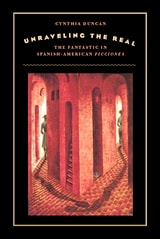
The Fantastic in Spanish-American FiccionesAuthored by Cynthia Duncan
Temple University Press, 2010
In literary and cinematic fictions, the fantastic blurs the lines between reality and fantasy. Lacking a consensus on definition, critics often describe the fantastic as supernatural, or similar to, but quite different from fantasy, science fiction, and magical realism.
In Unraveling the Real Cynthia Duncan provides a new theoretical framework for discussing how the fantastic explores both metaphysical and socially relevant themes in Spanish American fictions. Duncan deftly shows how authors and artists have used this literary genre to convey marginalized voices as well as critique colonialism, racism, sexism, and classism. Selecting examples from the works of such noted writers as Jorge Luis Borges, Julio Cortázar, and Carlos Fuentes, among others, she shows how capacious the concept is, and why it eludes standard definition.
Challenging the notion that the fantastic is escapist in nature, Unraveling the Real shows how the fantastic has been politically engaged throughout the twentieth century, often questioning what is real or unreal. Presenting a mirror image of reality, the fantastic does not promoting a utopian parallel universe but rather challenges the way we think about the world around us and the cultural legacy of colonialism.
Unruly Domestication
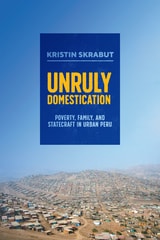
Poverty, Family, and Statecraft in Urban PeruKristin Skrabut
University of Texas Press, 2024
2024 Flora Tristán Book Award, Sección Perú, Latin American Studies Association
How the international war on poverty shapes identities, relationships, politics, and urban space in Peru.
Unruly Domestication investigates how Peru’s ongoing, internationally endorsed "war on poverty" shapes politics, intimate identities, and urban space in Lima. Drawing on a decade of embedded, ethnographic research in Lima’s largest and most recently founded “extreme poverty zone,” Kristin Skrabut demonstrates how Peru’s efforts to fight poverty by formalizing property, identity, and family status perpetuate environmentally unsustainable urban sprawl, deepen discrimination against single mothers, and undermine Peruvians’ faith in public officials and in one another. In the process, Skrabut reveals myriad entanglements of poverty, statecraft, and private life, exploring how families are made and unmade through political practices, how gender inequalities are perpetuated through policy, and how Peruvians’ everyday pursuits of state-sanctioned domestic ideals reproduce informality and landscapes of poverty in the urban periphery.
The only full-length ethnography written about Lima’s iconic and policy-inspiring shantytowns in thirty years, Unruly Domestication provides valuable insight into the dynamics of housing and urban development in the Global South, elucidating the most intimate and profound effects of global efforts to do good.
Unseen Art
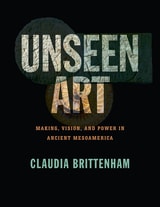
Making, Vision, and Power in Ancient MesoamericaClaudia Brittenham
University of Texas Press, 2023
In Unseen Art, Claudia Brittenham unravels one of the most puzzling phenomena in Mesoamerican art history: why many of the objects that we view in museums today were once so difficult to see. She examines the importance that ancient Mesoamerican people assigned to the process of making and enlivening the things we now call art, as well as Mesoamerican understandings of sight as an especially godlike and elite power, in order to trace a gradual evolution in the uses of secrecy and concealment, from a communal practice that fostered social memory to a tool of imperial power.
Addressing some of the most charismatic of all Mesoamerican sculptures, such as Olmec buried offerings, Maya lintels, and carvings on the undersides of Aztec sculptures, Brittenham shows that the creation of unseen art has important implications both for understanding status in ancient Mesoamerica and for analyzing art in the present. Spanning nearly three thousand years of the Indigenous art of Mexico, Guatemala, Honduras, and Belize, Unseen Art connects the dots between vision, power, and inequality, providing a critical perspective on our own way of looking.
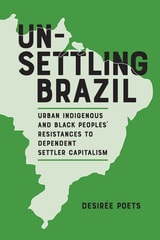
Unsettling Brazil
Urban Indigenous and Black Peoples' Resistances to Dependent Settler CapitalismDesirée Poets
University of Alabama Press, 0
Analyzes favela, quilombola, and indigenous communities’ responses to settler colonialism in urban Brazil. Based on ethnographic research and her experiences growing up in Brazil, the author tells the stories of communities in Rio de Janeiro, São Paulo, and Belo Horizonte
Unsettling Brazil offers a powerful account of five urban Indigenous and Black communities and movements in Brazil that illuminates their struggle for land, dignity, and their ways of life amid historic and ongoing settler colonialism, marked by militarization and dependent capitalist development. The in-depth case studies are the Indigenous movement Aldeia Maracanã and the quilombola community Sacopã in Rio, the Quilombo dos Luízes in Belo Horizonte, the Indigenous movement behind the Pindorama scholarship program in São Paulo, and the Complexo da Maré favela in Rio. For each, Poets vividly documents the intersectional and transnational structures of power that perpetuate the erasure, dispossession, and exploitation of nonwhite populations and the creative ways that Black and Indigenous communities have mobilized to unsettle these structures.
Drawing on the knowledge produced by Black and Indigenous organizers and thinkers, Poets argues for an interdisciplinary framework that prioritizes the voices and experiences of these communities. Addressing increasingly salient calls for decolonization, Poets ponders the paradoxical role of rights, citizenship, and the state in the fight for freedom and justice. Unsettling Brazil urges readers to confront the uncomfortable truths about the nation's history and stands in solidarity with those fighting to reclaim their heritage, identity, and land.
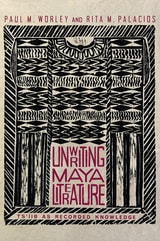
Unwriting Maya Literature
Ts'íib as Recorded KnowledgePaul M. Worley and Rita M. Palacios
University of Arizona Press, 2019
As ts’íib refers to a broad range of artistic production from painted codices and textiles to works composed in Latin script, as well as plastic arts, the authors argue that texts by contemporary Maya writers must be read as dialoguing with a multimodal Indigenous understanding of text. In other words, ts’íib is an alternative to understanding “writing” that does not stand in opposition to but rather fully encompasses alphabetic writing, placing it alongside and in dialogue with a number of other forms of recorded knowledge. This shift in focus allows for a critical reexamination of the role that weaving and bodily performance play in these literatures, as well as for a nuanced understanding of how Maya writers articulate decolonial Maya aesthetics in their works.
Unwriting Maya Literature places contemporary Maya literatures within a context that is situated in Indigenous ways of knowing and being. Through ts’íib, the authors propose an alternative to traditional analysis of Maya cultural production that allows critics, students, and admirers to respectfully interact with the texts and their authors. Unwriting Maya Literature offers critical praxis for understanding Mesoamerican works that encompass non-Western ways of reading and creating texts.
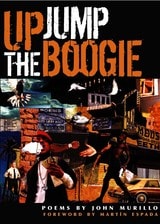
Up Jump the Boogie
John Murillo
Four Way Books, 2020
"The feel of now lives in John Murillo's UP JUMP THE BOOGIE, but it's tempered by bows to the tradition of soulful music and oral poetry. The lived dimensions embodied in this collection say that here's an earned street knowledge and a measured intellectual inquiry that dare to live side by side, in one unique voice. The pages of UP JUMP THE BOOGIE breathe and sing; the tributes and cultural nods are heartfelt, and in these honest poems no one gets off the hook."—Yusef Komunyakaa
Ups and Downs of Life in the Indies
P. A. Daum
University of Massachusetts Press, 1987
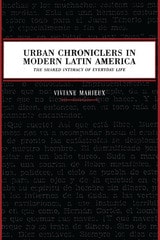
Urban Chroniclers in Modern Latin America
The Shared Intimacy of Everyday LifeBy Viviane Mahieux
University of Texas Press, 2011
An unstructured genre that blends high aesthetic standards with nonfiction commentary, the journalistic crónica, or chronicle, has played a vital role in Latin American urban life since the nineteenth century. Drawing on extensive archival research, Viviane Mahieux delivers new testimony on how chroniclers engaged with modernity in Mexico City, Buenos Aires, and São Paulo during the 1920s and 1930s, a time when avant-garde movements transformed writers' and readers' conceptions of literature. Urban Chroniclers in Modern Latin America: The Shared Intimacy of Everyday Life examines the work of extraordinary raconteurs Salvador Novo, Cube Bonifant, Roberto Arlt, Alfonsina Storni, and Mário de Andrade, restoring the original newspaper contexts in which their articles first emerged.
Each of these writers guided their readers through a constantly changing cityscape and advised them on matters of cultural taste, using their ties to journalism and their participation in urban practice to share accessible wisdom and establish their role as intellectual arbiters. The intimate ties they developed with their audience fostered a permeable concept of literature that would pave the way for overtly politically engaged chroniclers of the 1960s and 1970s. Providing comparative analysis as well as reflection on the evolution of this important genre, Urban Chroniclers in Modern Latin America is the first systematic study of the Latin American writers who forged a new reading public in the early twentieth century.
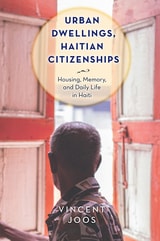
Urban Dwellings, Haitian Citizenships
Housing, Memory, and Daily Life in HaitiVincent Joos
Rutgers University Press, 2022
Urban Latin America
The Political Condition from Above and BelowBy Alejandro Portes and John Walton
University of Texas Press, 1976
Much research on the city in developing societies has focused mainly on one of three areas—planning, demography, or economics—and has emphasized either power elites or the masses, but not both. The published literature on Latin America has reflected these interests and has so far failed to provide a comprehensive view of Latin American urbanization. Urban Latin America is an attempt to integrate research on Latin American social organization within a single theoretical framework: development as fundamentally a political problem. Alejandro Portes and John Walton have included material on both elites and marginal populations and on the three major areas of research in order to formulate and address some of the key questions about the structure of urban politics in Latin America.
Following an introduction that delineates the scope of Latin American urban studies, Portes discusses the Latin American city as a creation of European colonialism. He goes on to examine political behavior among the poor, with central reference to system support and countersystem potential. Walton provides material for a comparative study of four cities: Monterrey and Guadalajara in Mexico and Medellín and Cali in Colombia. He also summarizes a large number of urban elite studies and develops a theoretical interpretation of their collective results, based on class structure and vertical integration. Material in each chapter is cross-referenced to other chapters, and the authors have used a common methodological approach in synthesizing and interpreting the research literature. In the final chapter they generalize current findings, elaborating on the interface between elite and mass politics in the urban situation. They make some observations on approaching changes and pinpoint possible research strategies for the future.
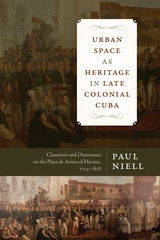
Urban Space as Heritage in Late Colonial Cuba
Classicism and Dissonance on the Plaza de Armas of Havana, 1754-1828By Paul Niell
University of Texas Press, 2015
According to national legend, Havana, Cuba, was founded under the shade of a ceiba tree whose branches sheltered the island’s first Catholic mass and meeting of the town council (cabildo) in 1519. The founding site was first memorialized in 1754 by the erection of a baroque monument in Havana’s central Plaza de Armas, which was reconfigured in 1828 by the addition of a neoclassical work, El Templete. Viewing the transformation of the Plaza de Armas from the new perspective of heritage studies, this book investigates how late colonial Cuban society narrated Havana’s founding to valorize Spanish imperial power and used the monuments to underpin a local sense of place and cultural authenticity, civic achievement, and social order.
Paul Niell analyzes how Cubans produced heritage at the site of the symbolic ceiba tree by endowing the collective urban space of the plaza with a cultural authority that used the past to validate various place identities in the present. Niell’s close examination of the extant forms of the 1754 and 1828 civic monuments, which include academic history paintings, neoclassical architecture, and idealized sculpture in tandem with period documents and printed texts, reveals a “dissonance of heritage”—in other words, a lack of agreement as to the works’ significance and use. He considers the implications of this dissonance with respect to a wide array of interests in late colonial Havana, showing how heritage as a dominant cultural discourse was used to manage and even disinherit certain sectors of the colonial population.