Results by title
501 books match the query 'Catholic Church' and 8 start with u
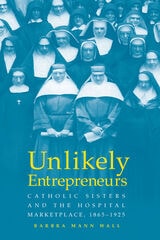
UNLIKELY ENTREPRENEURS
Catholic Sisters & the Hospital Marketplace, 1865–1925Barbra Mann Wall
The Ohio State University Press, 2005
In Unlikely Entrepreneurs, Barbra Mann Wall looks at the development of religious hospitals in the late nineteenth and early twentieth centuries and the entrepreneurial influence Catholic sisters held in this process. When immigrant nuns came to the United States in the late nineteenth century, they encountered a market economy that structured the way they developed their hospitals. Sisters enthusiastically engaged in the market as entrepreneurs, but they used a set of tools and understanding that were counter to the market. Their entrepreneurship was not to expand earnings but rather to advance Catholic spirituality.
Wall places the development of Catholic hospital systems (located in Illinois, Indiana, Minnesota, Texas, and Utah) owned and operated by Catholic sisters within the larger social, economic, and medical history of the time. In the modern health care climate, with the influences of corporations, federal laws, spiraling costs, managed care, and medical practices that rely less on human judgments and more on technological innovations, the “modern” hospital reflects a dim memory of the past. This book will inform future debates on who will provide health care as the sisters depart, how costs will be met, who will receive care, and who will be denied access to health services.
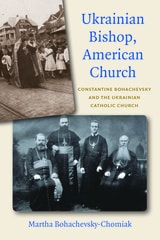
Ukrainian Bishop, American Church
Martha Bohachevsky-Chomiak
Catholic University of America Press, 2018
Un Catecismo para los Negocios
Andrew V. Abela
Catholic University of America Press, 2016
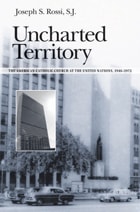
Uncharted Territory
The American Catholic Church at the United Nations, 1946-1972Joseph S. Rossi S.J.
Catholic University of America Press, 2006
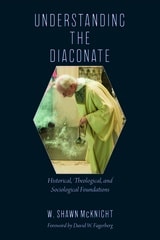
Understanding the Diaconate
Historical, Theological, and Sociological FoundationsW. Shawn McKnight
Catholic University of America Press, 2018
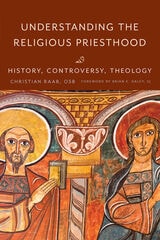
Understanding the Religious Priesthood
History, Controversy, TheologyChristian, OSB Raab
Catholic University of America Press, 2020
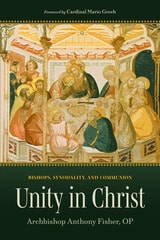
Unity in Christ
Bishops, Synodality, and CommunionArchbishop Anthony Fisher, OP
Catholic University of America Press, 2023
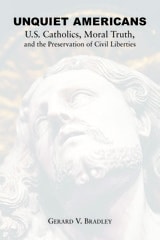
Unquiet Americans
U.S. Catholics, Moral Truth, and the Preservation of Civil LibertiesGerard V. Bradley
St. Augustine's Press, 2013
Before the Second Vatican Council, America’s Catholics operated largely as a coherent voting bloc, usually in connection with the Democratic Party. Their episcopal leaders generally spoke for Catholics in political matters; at least, where America’s bishops asserted themselves in public affairs there was little audible dissent from the faithful.
More than occasionally, the immigrant Church’s eagerness to demonstrate its patriotic bona fides furthered its tendency to speak with one voice about national matters, and in line with the broader societal consensus. And, notwithstanding the considerable conflict which Catholics encountered, and generated, in American political life, there was before the Council broad agreement in American culture about the centrality of Biblical morality to the success of Americans’ experiment with republican government.
In other words: before the Council, American Catholics’ relationship to the political common good was mediated, somewhat uncritical, and insulated from conflict (both within and without the Church) over such fundamental matters as protection of innocent life, marriage and family life, and (to a lesser extent) religious liberty.
This has all changed since the mid-1960s. For the first time in the Church’s pilgrimage on these shores, controversial questions about the basic moral requirements of the political common good are front and center for America’s Catholics. These questions require Catholics to confront matters which heretofore they either took for granted, read off from the background culture, or which they left to the bishops to handle. But the Council Fathers rightly recognized that Jesus calls upon a formed and informed laity to act as leaven in the public realm, to bring Gospel values to the temporal sphere. In this book of essays touching upon Catholic social doctrine, the truth about human equality and political liberty, and religious faith as it bears upon public life and the public engagement of lay Catholics, Gerard Bradley supplies indispensable aid to those seeking to answer Jesus’ call.