Results by title
233 books match the query 'Cold War' and 11 start with u
US-Singapore Relations, 1965-1975
Strategic Non-alignment in the Cold WarDaniel Wei Boon Chua
National University of Singapore Press, 2017
Un-American
W.E.B. Du Bois and the Century of World RevolutionBill V Mullen
Temple University Press, 2015
Un-American is Bill Mullen’s revisionist account of renowned author and activist W.E.B. Du Bois’s political thought toward the end of his life, a period largely dismissed and neglected by scholars. He describes Du Bois’s support for what the Communist International called “world revolution” as the primary objective of this aged radical’s activism. Du Bois was a champion of the world’s laboring millions and critic of the Cold War, a man dedicated to animating global political revolution.
Mullen argues that Du Bois believed that the Cold War stalemate could create the conditions in which the world powers could achieve not only peace but workers’ democracy. Un-American shows Du Bois to be deeply engaged in international networks and personal relationships with revolutionaries in India, China, and Africa. Mullen explores how thinkers like Karl Marx, Jawaharlal Nehru, Mohandas Gandhi, and C.L.R. James helped him develop a theory of world revolution at a stage in his life when most commentators regard him as marginalized. This original political biography also challenges assessments of Du Bois as an American “race man.”
Uncertain Perceptions
U.S. Cold War Crisis Decision MakingRobert B. McCalla
University of Michigan Press, 1992
Under the Radar
Cancer and the Cold WarLeopold, Ellen
Rutgers University Press, 2008
In Under the Radar, Ellen Leopold shows how nearly every aspect of our understanding and discussion of cancer bears the imprint of its Cold War entanglement. The current biases toward individual rather than corporate responsibility for rising incidence rates, research that promotes treatment rather than prevention, and therapies that can be patented and marketed all reflect a largely hidden history shaped by the Cold War. Even the language we use to describe the disease, such as the guiding metaphor for treatment, "fight fire with fire," can be traced back to the middle of the twentieth century.
Writing in a lucid style, Leopold documents the military, governmental, industrial, and medical views of radiation and atomic energy to examine the postwar response to cancer through the prism of the Cold War. She explores the role of radiation in cancer therapies today, using case studies and mammogram screening, in particular, to highlight the surprising parallels. Taking into account a wide array of disciplines, this book challenges our understanding of cancer and how we approach its treatment.
- Examines the postwar response to cancer through the prism of the Cold War
- Goes beyond medical science to look at the influence of Cold War policies on the way we think about cancer today
- Links the experience of postwar cancer patients with the broader evolution of what have become cancer industries
- Traces the history of human-made radiation as a state-sponsored environmental toxin
Under the Radar
Tracking Western Radio Listeners in the Soviet UnionR. Eugene Parta
Central European University Press, 2022
Western democracy is currently under attack by a resurgent Russia, weaponizing new technologies and social media. How to respond? During the Cold War, the West fought off similar Soviet propaganda assaults with shortwave radio broadcasts. Founded in 1949, the US-funded Radio Free Europe/Radio Liberty broadcast uncensored information to the Soviet republics in their own languages. About one-third of Soviet urban adults listened to Western radio. The broadcasts played a key role in ending the Cold War and eroding the communist empire.
R. Eugene Parta was for many years the director of Soviet Area Audience Research at RFE/RL, charged among others with gathering listener feedback. In this book he relates a remarkable Cold War operation to assess the impact of Western radio broadcasts on Soviet listeners by using a novel survey research approach. Given the impossibility of interviewing Soviet citizens in their own country, it pioneered audacious interview methods in order to fly under the radar and talk to Soviets traveling abroad, ultimately creating a database of 51,000 interviews which offered unparalleled insights into the media habits and mindset of the Soviet public. By recounting how the “impossible” mission was carried out, Under the Radar also shows how the lessons of the past can help counter the threat from a once and current adversary.
Underground Modernity
Urban Poetics in East-Central Europe, Pre- and Post-1989Alfrun Kliems
Central European University Press, 2021
The literary scholar Alfrun Kliems explores the aesthetic strategies of Eastern European underground literature, art, film and music in the decades before and after the fall of communism, ranging from the ‘father’ of Prague Underground, Egon Bondy, to the neo-Dada Club of Polish Losers in Berlin.
The works she considers are "underground" in the sense that they were produced illegally, or were received as subversive after the regimes had fallen. Her study challenges common notions of ‘Underground’ as an umbrella term for nonconformism. Rather, it depicts it as a sociopoetic reflection of modernity, intimately linked to urban settings, with tropes and aesthetic procedures related to Surrealism, Dadaism, Expressionism, and, above all, pop and counterculture.
The author discusses these commonalities and distinctions in Czech, Polish, Slovak, Ukrainian, Russian, and German authors, musicians, and filmmakers. She identifies intertextual relations across languages and generations, and situates her findings in a transatlantic context (including the Beat Generation, Susan Sontag, Neil Young) and the historical framework of Romanticism and modernity (including Baudelaire and Brecht).
Despite this wide brief, the book never loses sight of its core message: Underground is no arbitrary expression of discontent, but rather the result of a fundamental conflict at the socio-philosophical roots of modernity.

Underground Symphony
The Plastic PeopleFrantišek Stárek and Martin Valenta
Karolinum Press, 2026
First-hand insight into the Czechoslovak underground music scene and the numerous obstacles placed in its way by communist-era security services.
Underground Symphony: The Plastic People traces the history of the rock band The Plastic People of the Universe against the backdrop of political developments in communist Czechoslovakia. It begins with the band’s formation in the 1960s, when psychedelic rock was first introduced to Czechoslovakia, through the emergence of the first concepts of cultural opposition and politically oriented dissent, particularly Charter 77, ending with a detailed account of the band’s breakup in the second half of the 1980s.
The authors rely on primary sources, many of which have not been published; for example, the Plastic People’s chronicles, extensive interviews with band members and friends, and contemporary writings by individual participants (in samizdat publications, private correspondence, diaries, etc.). They also “mine” archival sources from the State Security (Archive of Security Services, National Archives, etc.). The result is an insightful study of the legendary underground band and its era.
Understanding and Teaching the Cold War
Edited by Matthew Masur
University of Wisconsin Press, 2016
Teaching the Cold War is both necessary and challenging. Understanding and Teaching the Cold War is designed to help collegiate and high school teachers navigate the complexity of the topic, integrate up-to-date research and concepts into their classes, and use strategies and tools that make this important history meaningful to students.
The volume opens with Matthew Masur’s overview of models for approaching the subject, whether in survey courses or seminars. Two prominent historians, Carole Fink and Warren Cohen, offer accounts of their experience as longtime scholars and teachers of the Cold War from European and Asian perspectives. Sixteen essays dig into themes including the origins and end of the conflict, nuclear weapons, diplomacy, propaganda, fear, popular culture, and civil rights, as well as the Cold War in Eastern Europe, Western Europe, East Asia, Africa, Latin America, and the nonaligned nations. A final section provides practical advice for using relevant, accessible primary sources to implement the teaching ideas suggested in this book.
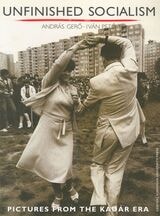
Unfinished Socialism
Pictures from the Kádár EraAndrás Gero
Central European University Press, 1999
This extraordinary book provides a snapshot of socialism throughout the Kádár regime in Hungary (1956-1989) and captures the essence of the world behind the ‘iron curtain’ in a stunning, and often stark, collection of photographs.
Unfinished Socialism is a visually stunning anthropological study containing 450 photographs, many previously unpublished, which portray life in Hungary from every angle: from the May Day March to pop music and from the homeless to sport.
With an introduction that will help the reader understand and appreciate the true meaning of the photographs, this political, social and cultural study of the Kádár years transports the reader back to a time of great significance in Hungary’s long and turbulent history.
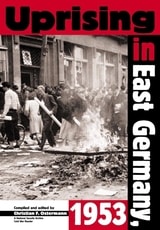
Uprising in East Germany, 1953
The Cold War, the German Question, and the First Major Upheaval behind the Iron CurtainThe National Security Archive Ostermann
Central European University Press, 2001
This volume is the second in the series Cold War Documentary Readers, a project of the US National Security Archive and the Cold War International History Project.
The volume is the first documented account of this early Cold War crisis from both sides of the Iron Curtain. Based on the recent unprecedented access to the once-closed archives of several member states of the Warsaw Pact, this collection of primary-source documents presents one of the most notorious events of post-war European history in a highly readable format.
Previously unreleased Kremlin records, once highly classified American documents, materials from the Soviet Foreign Ministry, and transcripts of internal East German Communist Party Politburo meetings in the days leading to the uprising in the German Democratic Republic (GDR) are among the highlights of this sensational documentary.
In this volume, as in the previous one in the series, each part is preceded by a detailed introductory essay to provide the necessary historical and political context. The individual documents are introduced by short headnotes summarizing the contents and orienting the reader. A chronology, glossary and bibliography offer further background information.
Upstaging the Cold War
American Dissent and Cultural Diplomacy, 1940-1960Andrew J. Falk
University of Massachusetts Press, 2010
Traditional interpretations of the 1950s have emphasized how American anti-communists deployed censorship and the blacklist to silence dissent, particularly in the realm of foreign policy. Yet those efforts at repression did not always succeed. Throughout the early years of the Cold War, a significant number of writers and performers continued to express controversial views about international relations in Hollywood films, through the new medium of television, on the Broadway stage, and from behind the scenes.
By promoting superpower cooperation, decolonization, nuclear disarmament, and other taboo causes, dissident artists such as Lillian Hellman, Arthur Miller, Rod Serling, Dalton Trumbo, Reginald Rose, and Paddy Chayefsky managed both to stretch the boundaries of Cold War ideology and to undermine some of its basic assumptions. Working at times under assumed names and in some cases outside the United States, they took on the role of informal diplomats who competed with Washington in representing America to the world.
Ironically, the dissidents' international appeal eventually persuaded the U.S. foreign policy establishment that their unconventional views could be an asset in the Cold War contest for “hearts and minds,” and their artistic work an effective means to sell American values and culture abroad. By the end of the 1950s, the Eisenhower administration not only appropriated the work of these talented artists but enlisted some of them to serve as official voices of Cold War cultural diplomacy.